15 Shrubs for Clay Soil: The Best Choices for Wet Ground
Clay soil has a reputation that is, to be fair, largely earned. It is heavy, slow to drain, prone to waterlogging in winter, and bakes into something close to concrete in a dry summer. Roots struggle to penetrate it. Water pools on the surface for days after rain. In spring, it warms up slowly, delaying growth while neighbouring gardens on sandy loam are already in full bloom.
And yet, clay soil has genuine advantages that are easy to overlook when you are staring at a cracked, compacted border. It holds nutrients exceptionally well. It retains moisture through dry spells once plants are established. And when you choose the right plants for it — shrubs that are naturally adapted to its weight and occasional wetness — a clay soil garden can be just as beautiful, productive, and rewarding as any other.
The key is plant selection. Many of the world’s most impressive garden shrubs tolerate or actively prefer heavier soils. This guide covers 15 of the best shrubs for clay soil, selected for their adaptability, ornamental value, and suitability across a wide range of climates — from the heavy clays of the English Midlands and the mid-Atlantic United States to the wet soils of coastal Canada, temperate New Zealand, and beyond.
Understanding Clay Soil Before You Plant
Clay soil is defined by its particle size. Clay particles are the smallest in the soil classification system, which is why they pack so tightly and drain so slowly. A soil is generally classified as clay if it contains more than 25–30 percent clay particles by weight.
The challenges of clay soil are real but manageable. Compaction is the most serious issue — clay soil compacts easily under foot traffic or heavy machinery, creating an environment where roots cannot penetrate and water cannot move. Working clay soil when it is wet makes compaction significantly worse, which is why experienced clay soil gardeners learn to work their ground only when it is moist but not saturated.
Improving clay soil with organic matter — well-rotted compost, leaf mould, or composted bark — helps enormously over time. But it is a long-term process. The fastest path to a productive clay soil garden is to work with it by choosing plants that are naturally suited to the conditions, rather than waiting until the soil has been transformed.
Drainage matters too. On flat sites, clay soil may need the addition of raised beds, French drains, or at minimum a deep planting hole backfilled with improved soil to give roots an early advantage. On sloped sites, natural drainage is often sufficient once the right plants are established.
1. Dogwood — Flowering Dogwood (Cornus spp.)
Dogwoods are among the most clay-tolerant and ornamentally rewarding shrubs available to gardeners in temperate climates. Several species in the Cornus genus grow naturally in wet, heavy soils along riverbanks, floodplains, and woodland edges — exactly the kind of conditions that clay soil gardens can create.
Shrubby dogwoods such as Cornus alba (red-stemmed dogwood), Cornus sanguinea (common dogwood), and Cornus sericea (red osier dogwood) are particularly valuable. Their vivid winter stem colour — red, orange, yellow, or greenish depending on the cultivar — provides striking interest during the quietest months of the garden year. They grow vigorously in Zones 2–8, making them suitable for the coldest gardens in Canada, Scandinavia, Scotland, and the northern United States.
Cornus alba ‘Sibirica’ is one of the most widely planted cultivars in the UK and continental Europe, valued for its brilliant crimson winter stems. Cornus sericea ‘Flaviramea’ offers contrasting bright yellow stems and is popular in North American gardens. Both perform best when cut back hard every one to two years in early spring, which encourages vigorous new growth with the brightest stem colour.
Best for: UK, Scandinavia, Canada, northern and eastern United States, continental Europe, temperate New Zealand.
2. Elder — Common Elder (Sambucus nigra)
Elder is a native European shrub of remarkable adaptability. It grows naturally in hedgerows, woodland edges, disturbed ground, and roadside verges across the UK and continental Europe, often in heavy, wet, and compacted soils where other shrubs would struggle. This natural toughness translates directly to the garden, where elder tolerates clay soil with ease.
It grows rapidly to 4–6 metres and produces flat-topped clusters of fragrant white flowers in early summer, followed by deep purple-black berries in late summer and autumn that are traditionally used in cordials, wines, and preserves. It grows in Zones 5–7 and is widely grown across the UK, Ireland, France, Germany, Scandinavia, and temperate parts of North America and Australasia.
Ornamental cultivars have expanded elder’s appeal considerably. Sambucus nigra f. porphyrophylla ‘Black Lace’ offers deeply cut, almost black-purple foliage with pink flowers — a striking combination that makes it one of the most fashionable large shrubs in contemporary UK and European garden design. Sambucus nigra ‘Black Beauty’ offers similarly dark foliage in a slightly less finely cut form.
Elder responds well to coppicing — cutting back hard to a low framework every few years — which keeps it manageable and encourages the most attractive foliage on ornamental cultivars.
Best for: UK, Ireland, continental Europe, Scandinavia, temperate North America, New Zealand.
3. Viburnum (Viburnumspp.)
Viburnums are among the most clay-tolerant of all ornamental shrubs, and they are also among the most varied and beautiful. The genus contains roughly 150–175 species, spanning a huge range of sizes, flower types, berry colours, and seasonal interests. Many grow naturally in moist, heavy soils, making them natural candidates for clay soil gardens.
Viburnum opulus — the guelder rose — is native to Europe and northern Asia and is one of the most tolerant of wet, heavy clay. It produces white lacecap flowers in spring, vivid red translucent berries in autumn, and good autumn leaf colour. It grows in Zones 3–8 and is widely grown in the UK, northern Europe, and northern North America. Viburnum lantana — the wayfaring tree — is more tolerant of dry, chalky clay and grows across a similar geographic range.
In North America, Viburnum dentatum (arrowwood viburnum) is a native species well-suited to heavier soils, growing in Zones 3–8. Viburnum trilobum (American highbush cranberry) tolerates moist clay soils in Zones 2–7 and is an excellent choice for cold-climate gardens in Canada and the northern United States.
All viburnums offer spring flowers attractive to pollinators, and many provide autumn berries and foliage colour. They grow in full sun to partial shade and require minimal maintenance once established.
Best for: UK, continental Europe, Scandinavia (V. opulus, V. lantana); eastern and northern North America (V. dentatum, V. trilobum); widely adaptable across temperate zones.
4. Forsythia (Forsythia × intermedia)
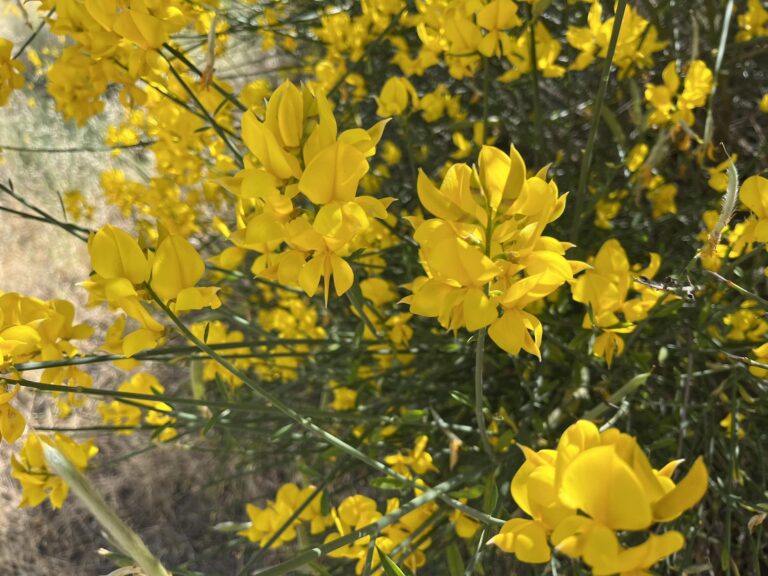
Forsythia is one of the most reliable and forgiving shrubs for difficult soils, and clay is no exception. It tolerates heavy, poorly drained ground with a resilience that few ornamental shrubs can match, and it rewards this tolerance with one of the most cheerful displays in the early spring garden — a blaze of yellow flowers on bare stems that arrives when little else is in bloom.
It grows vigorously in Zones 5–8 and is extremely cold-hardy, making it suitable for gardens in Canada, Scandinavia, the northern United States, and upland regions of the UK and continental Europe. It grows in full sun to partial shade and requires relatively little maintenance, though pruning immediately after flowering — removing a proportion of the oldest stems — encourages consistent blooming year after year.
In the UK, forsythia has sometimes been dismissed as over-familiar, but its combination of toughness, cold hardiness, clay tolerance, and spring colour makes it genuinely difficult to replace in challenging garden conditions. For gardeners new to clay soil, it is one of the most forgiving and confidence-building plants to start with.
Best for: Canada, northern and eastern United States, UK, Scandinavia, central and northern Europe.
5. Weigela (Weigela florida)
Weigela is a deciduous shrub that produces prolific trumpet-shaped flowers in pink, red, white, or bicolour from late spring to early summer, with often a second, lighter flush later in the season. It is pleasantly tolerant of clay soils, growing naturally in the heavy, moist soils of its native China, Korea, and Japan, and performs reliably in temperate gardens worldwide.
It grows in Zones 4–8 and is widely planted in the UK, continental Europe, eastern North America, and temperate parts of Australasia. Modern cultivars have expanded its appeal significantly. ‘Wine and Roses’ combines dark purple foliage with vivid pink flowers. ‘Midnight Wine’ is a dwarf purple-leaved form. ‘My Monet’ offers variegated cream and green foliage — all are widely available in North American and European nurseries.
Weigela grows in full sun to partial shade. Pruning after the main flowering flush, removing a third of the oldest stems, encourages strong new growth and good flowering the following year. On clay soils, planting on a slight mound or incorporating grit into the planting hole can help in particularly poorly drained situations.
Best for: UK, continental Europe, eastern North America, temperate Australia and New Zealand.
6. Mahonia (Mahonia spp.)
Mahonia is a steadfast, architectural evergreen that tolerates clay soil, deep shade, and dry conditions — a combination of difficult circumstances that would defeat most other shrubs. Its bold, pinnate, holly-like leaves give it a strong presence in the winter garden, and its clusters of yellow flowers, produced from late autumn through early spring depending on species and cultivar, are among the most valuable early-season nectar sources for bees.
Mahonia aquifolium — Oregon grape — is native to the Pacific Northwest of North America and grows in Zones 5–9. It is widely planted in the UK and continental Europe as ground cover and informal hedging, tolerating deep shade under large trees where most other plants fail. Mahonia japonica and the popular hybrid Mahonia × media ‘Charity’ are larger, more architectural shrubs with strongly fragrant yellow flower racemes in winter. These grow in Zones 7–9 and are particularly popular in UK and Irish gardens.
The blue-black berries that follow the flowers are attractive to birds and have traditionally been used in preserves. Mahonia spreads slowly by suckers and, over time, forms a useful ground-covering colony in difficult shaded areas.
Best for: UK, Ireland, continental Europe, Pacific Northwest of North America, parts of temperate Australia and New Zealand.
7. Spiraea (Spiraea spp.)
Spireas are compact, reliable shrubs that tolerate a wide range of soil conditions, including clay. They are among the most widely planted garden shrubs in temperate climates worldwide, valued for their low maintenance, seasonal colour, and adaptability. On clay soils — where many more demanding ornamentals struggle — spireas perform consistently well.
Spring-flowering spireas such as Spiraea nipponica ‘Snowmound’ and Spiraea arguta (bridal wreath spiraea) produce cascading white flowers on arching stems in spring and are widely grown in the UK, continental Europe, and North America. Summer-flowering species such as Spiraea japonica and its cultivars produce flat-topped clusters of pink, red, or white flowers from early through late summer and are among the most cold-tolerant of all summer-blooming shrubs, growing in Zones 3–9.
Cultivars such as ‘Anthony Waterer,’ ‘Little Princess,’ and ‘Double Play Gold’ are widely available across North America, the UK, and Europe. They grow in full sun to partial shade and respond well to pruning — spring-flowering types pruned immediately after bloom, summer-flowering types cut back hard in early spring.
Best for: Canada, northern and eastern United States, UK, continental Europe, temperate Australia and New Zealand.
8. Lonicera — Shrubby Honeysuckle (Lonicera spp.)
Shrubby honeysuckles — as distinct from the climbing honeysuckle vines — are tough, adaptable shrubs that grow readily in clay soil and reward the gardener with fragrant flowers and berries attractive to birds. Several species are grown specifically for their winter or early spring fragrance, which is one of the most distinctive and welcome scents in the cold-season garden.
Lonicera fragrantissima and Lonicera × purpusii ‘Winter Beauty’ are widely grown in the UK and continental Europe for their powerfully fragrant white flowers produced from midwinter through early spring on bare stems. They grow in Zones 5–8 and tolerate clay, partial shade, and urban conditions well. They grow to about 2 metres and suit mixed borders, informal hedging, and sheltered positions where their winter fragrance can be fully appreciated.
Lonicera nitida — box honeysuckle — is a smaller, compact species widely used for hedging and topiary in the UK, Europe, and temperate parts of Australasia. It tolerates heavy clay, shade, and clipping extremely well, making it a popular and practical alternative to boxwood in gardens where boxwood blight is a concern.
Best for: UK, Ireland, continental Europe, temperate North America, parts of temperate Australia and New Zealand.
9. Ribes — Flowering Currant (Ribes sanguineum)
Flowering currant is one of the most reliable shrubs for difficult clay soils in mild temperate climates. Native to the Pacific Coast of North America — from British Columbia down through California — it grows naturally in moist, heavy ground and performs with equal ease in the wet clay soils of the UK and western Europe.
It produces pendulous clusters of pink, red, or white flowers in early spring, often before the leaves fully emerge, providing an important early nectar source for bees. It grows in Zones 6–8 and reaches 2–3 metres in height, making it suitable for the back of mixed borders or as informal screening. Popular cultivars include ‘Pulborough Scarlet’ (deep red), ‘King Edward VII’ (crimson), and ‘White Icicle’ (white).
In the UK, flowering currant is a familiar and much-loved spring shrub with a distinctive, slightly resinous fragrance that many gardeners associate closely with the early garden season. It requires minimal maintenance — a light prune after flowering to maintain shape — and tolerates both partial shade and full sun on clay soil without difficulty.
Best for: UK, Ireland, western continental Europe, Pacific Northwest of North America, mild coastal gardens.
10. Buddleja — Butterfly Bush (Buddleja davidii)
Butterfly bush is a vigorous, adaptable shrub that tolerates clay soil with characteristic resilience. While it performs most spectacularly on free-draining, even poor soils in full sun, it adapts to heavier conditions and continues to flower prolifically from midsummer through early autumn in shades of purple, pink, white, and red.
Its strong summer flowering — attractive to butterflies, bees, and other pollinators — and its tolerance of difficult soils make it a practical choice for clay gardens that are short on summer colour. It grows in Zones 5–9 and is widely planted across the UK, continental Europe, and the eastern and southern United States. Sterile cultivars such as those in the ‘Buzz’ series and ‘Miss Molly’ are preferred in regions where invasiveness is a concern, including the Pacific Northwest, New Zealand, and parts of Australia.
On clay soils, good site preparation — incorporating organic matter and ensuring the planting hole drains freely — helps establishment. Once established, butterfly bush requires hard pruning in late winter or early spring to encourage the vigorous new growth that carries the summer flowers.
Best for: UK, continental Europe, eastern and southern United States; sterile cultivars in Pacific Northwest and New Zealand.
11. Skimmia (Skimmia japonica)
Skimmia is a compact, rounded evergreen shrub well-suited to clay soil and shade — a combination of conditions found in countless back gardens across the UK and similar temperate climates. Its tolerance of heavy, wet soil and its ability to perform in both partial and full shade make it one of the most practical evergreens for difficult urban and suburban positions.
It produces attractive red berries in autumn and winter — among the showiest of any small evergreen shrub — and fragrant white flower clusters in spring. Both male and female plants are needed for berry production, with the male cultivar ‘Rubella’ widely grown for its ornamental red winter buds. It grows in Zones 6–9 and is particularly well-suited to the mild, moist climates of the UK, Ireland, coastal Scandinavia, and the Pacific Northwest.
On clay soils, skimmia benefits from the addition of organic matter at planting to improve drainage around the roots. Once established, it is slow-growing, largely pest-free, and requires almost no maintenance, making it a genuinely low-effort choice for difficult positions.
Best for: UK, Ireland, coastal Scandinavia, Pacific Northwest of North America, mild urban gardens worldwide.
12. Pyracantha — Firethorn (Pyracantha spp.)
Pyracantha is a vigorous, thorny evergreen shrub that tolerates clay soil well and rewards the gardener with one of the most spectacular berry displays available from any shrub. Its clusters of red, orange, or yellow berries arrive in late summer and persist through winter, providing vital food for fieldfares, redwings, blackbirds, and waxwings in the UK and Europe.
It is native to parts of southern Europe, western Asia, and China and grows in Zones 6–9. It is widely planted across the UK, continental Europe, New Zealand, South Africa, and temperate parts of North America. It adapts to heavy clay soil with reasonable tolerance, particularly when the planting site is prepared with some organic matter to relieve compaction around establishing roots.
Pyracantha is extremely versatile. It can be grown as a free-standing shrub, a dense security hedge, or trained flat against a wall or fence — a particularly effective use in UK and European gardens where wall-trained pyracantha creates a spectacular year-round display. White spring flowers attract pollinators; the winter berry display sustains wildlife through the hardest months. Pruning is best done after fruiting to avoid removing the developing berries.
Best for: UK, continental Europe, New Zealand, South Africa, temperate gardens in North America and Australasia.
13. Osmanthus (Osmanthus spp.)
Osmanthus is an evergreen shrub that is not as widely known as it deserves to be, but it quietly earns the admiration of gardeners who grow it. On clay soils, it performs with notable reliability, and it offers the bonus of powerfully fragrant white or cream flowers — a scent that some describe as reminiscent of ripe apricots or jasmine — at a time of year, typically autumn, when garden fragrance is otherwise scarce.
Osmanthus heterophyllus — the holly osmanthus — has holly-like foliage and white autumn flowers, and grows in Zones 7–9. It is widely grown in the UK, where it suits both formal and informal garden settings, and in Japan, its country of origin, where it holds considerable cultural significance. Osmanthus × burkwoodii is a popular hybrid with slightly more rounded leaves and fragrant spring flowers, growing in Zones 6–8 and widely available in UK and European nurseries.
Osmanthus grows in full sun to partial shade, tolerates clay soils with adequate drainage, and is largely untroubled by pests and diseases. It is slow-growing, which means patience is needed, but it is long-lived and becomes increasingly distinguished with age.
Best for: UK, Ireland, continental Europe, Pacific Northwest of North America, parts of temperate Australasia.
14. Hawthorn (Crataegus monogynaand related species)
Hawthorn is one of the toughest native shrubs in the temperate world. It grows in virtually any soil — including the heaviest, most compacted clay — and in exposed positions that would challenge almost any cultivated garden plant. It has formed the backbone of British and Irish hedgerow landscapes for centuries, and its tolerance of difficult conditions is simply unmatched among native shrubs.
Crataegus monogyna — common hawthorn — grows in Zones 4–7 and produces white or pale pink flowers in late spring (famously scented, though opinions on that scent differ) followed by deep red haws in autumn that are an essential winter food for thrushes, fieldfares, and redwings. It is native to Europe and western Asia and has naturalised widely in North America, temperate Australia, and New Zealand.
For formal garden use, ornamental hawthorn cultivars offer a more refined aesthetic. Crataegus laevigata ‘Paul’s Scarlet’ produces vivid double crimson flowers and is a popular street and garden tree across the UK and continental Europe. Crataegus persimilis ‘Prunifolia’ is a North American species valued for its reliable clay tolerance, autumn berries, and brilliant autumn foliage.
In a clay soil garden where establishing plants has been a persistent struggle, hawthorn is one of the most reassuring choices you can make.
Best for: UK, Ireland, continental Europe, Scandinavia, temperate North America, Australia and New Zealand (as a non-invasive landscape shrub).
15. Serviceberry (Amelanchier spp.)
Serviceberry closes this list as one of the finest all-round shrubs for clay soil in temperate gardens. It is a genuinely multi-season plant: cloud-like white flowers in early spring, edible blue-black berries in early summer, attractive summer foliage, and vivid orange, red, and yellow autumn colour that rivals the best of the season.
Several species perform well on heavy, moist soils. Amelanchier canadensis — shadblow serviceberry — is native to eastern North America, where it grows naturally in wet, swampy ground along stream edges and low-lying woodland. It grows in Zones 3–7 and is extremely cold-hardy, making it a good choice for clay soil gardens in Canada, the northern United States, and cold-climate regions of Europe. Amelanchier lamarckii is widely grown in the UK and northern Europe on heavier soils and is naturalised across parts of the Netherlands and Belgium.
Serviceberries grow in full sun to partial shade and tolerate both clay and periodically wet soils well. Their ecological value is high — their berries are consumed eagerly by a wide range of birds, including thrushes, waxwings, starlings, and robins — and their ornamental value is consistent across all four seasons.
Best for: Eastern North America, Canada, UK, northern and central Europe, Scandinavia.
Improving Clay Soil Over Time
While the 15 shrubs on this list will grow in clay soil, giving them the best possible start makes a real difference to their long-term performance.
Add organic matter generously. Well-rotted garden compost, leaf mould, or composted bark incorporated into the planting area improves drainage, encourages earthworm activity, and — over time — gradually changes the structure of clay soil. Annual mulching with organic material continues this improvement year after year.
Never work clay soil when it is wet. Working wet clay compacts it, destroys its structure, and makes establishment of new plants far harder. Wait until it reaches a workable, moist-but-not-saturated state before digging, planting, or amending.
Plant in autumn where possible. Autumn planting allows shrubs to establish root systems during the cooler, wetter months before the growth demands of spring and summer begin. In clay soil regions — which includes much of the UK, Ireland, the American Midwest and Northeast, and parts of northern Europe — autumn is generally the best planting season for new shrubs.
Consider raised planting. Planting shrubs slightly proud of the surrounding soil level — perhaps 10–15 centimetres above grade — improves drainage around the root zone in very heavy clay and can make the difference between a plant that thrives and one that slowly declines.
Suggested For You:
20 Evergreen Shrubs for Borders: Structure, Colour, and Year-Round Presence
15 Deer Resistant Shrubs: The Best Choices for Gardens Under Pressure
15 Shrubs That Bloom All Summer: A Complete Guide for Gardeners
10 Shrubs with Red Berries: A Complete Guide for Gardeners Worldwide
20 Shrubs for Shade: The Best Choices for Every Garden and Climate
Final Thoughts
Clay soil is a genuine challenge. It tests patience, resists easy improvement, and has defeated many well-intentioned gardeners who tried to force it into something it is not. But the gardeners who learn to work with clay — who choose plants suited to its weight and its occasional wetness — often find that their gardens are more resilient, more wildlife-friendly, and more naturally beautiful than they might have been on easier ground.
The 15 shrubs in this guide are proof that clay soil is not a barrier to a beautiful garden. It is simply a set of conditions that calls for the right plants. Find those plants, prepare the ground with care, and the results will follow.
References
- University of Minnesota Extension — Choosing Plants for Clay Soils https://extension.umn.edu/planting-and-growing-guides/choosing-plants-clay-soils
- Penn State Extension — Soil Quality and Shrub Establishment in Heavy Soils https://extension.psu.edu/soil-preparation-for-shrubs
- North Carolina State University Cooperative Extension — Shrubs for Wet and Heavy Soils https://plants.ces.ncsu.edu/find_a_plant/?habit=shrub&soil=clay
- Royal Horticultural Society (RHS) — Shrubs for Clay Soils: Growing Guidance https://www.rhs.org.uk/soil-composts-mulches/clay-soil-plants
- University of Illinois Extension — Improving Clay Soil and Plant Selection https://web.extension.illinois.edu/lawnandgarden/clay-soil-plants.cfm

Tim M Dave is a gardening expert with a passion for houseplants, particularly cacti and succulents. With a degree in plant biology from the University of California, Berkeley, he has vast experience in gardening. Over the years, he has cultivated a vast collection of desert plants and learned a great deal about how to grow and care for these unique companions.