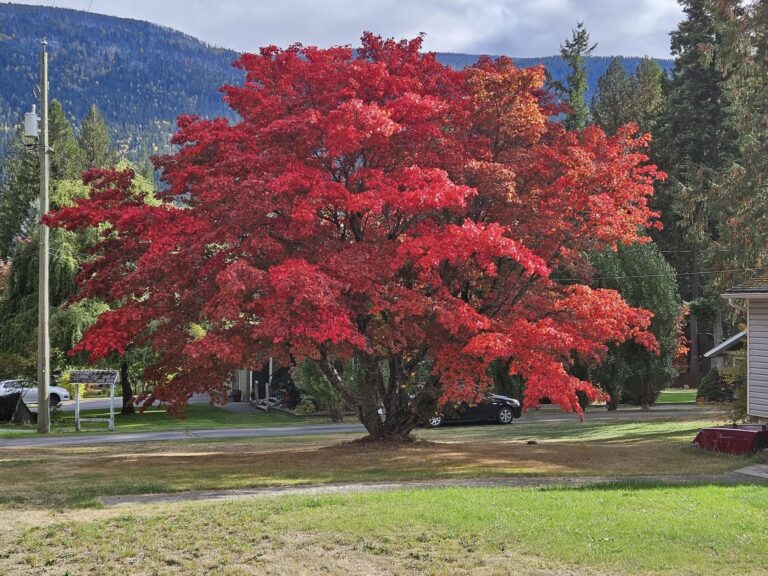
Understanding Quaking Aspen (Populus tremuloides): Identification, History, Problems, and Cultivation Details
There is a moment in early autumn, somewhere in the Rocky Mountains or the northern Great Lakes, when an entire hillside seems to catch fire — not with flames, but with shimmering gold. The trees responsible for this spectacle are Quaking Aspens (Populus tremuloides).
But the Quaking Aspen is far more than a pretty autumn tree. It holds the distinction of being the most widely distributed tree in North America. It is part of what may be the largest living organism ever documented on Earth.
This tree is a pioneer species, an ecological engine, a cultural symbol, and a cornerstone of entire forest communities across the continent. Once you spot it anywhere, it’s never easy to forget.
This article covers the Quaking Aspen in full — its biology, ecology, geography, cultural significance, and everything a gardener needs to know.
Before we dive in, lets quickly understand what this tree is all about:
| Scientific Name | Populus tremuloides |
| Family | Salicaceae |
| Common Names | Quaking Aspen, Trembling Aspen, Golden Aspen, Popple |
| Native Range | Transcontinental North America (Zones 1–7) |
| Mature Height | 40–70 feet |
| Light | Full sun (shade-intolerant) |
| Soil | Adaptable; prefers moist, well-drained |
| Growth Rate | Fast (2–3 feet/year in good conditions) |
| Reproduction | Primarily clonal (root suckering) |
| Wildlife Value | Extremely high (400+ Lepidoptera species) |
| Notable Record | Pando clone — largest known living organism |
What Is the Quaking Aspen?
The Quaking Aspen belongs to the family Salicaceae — the willow family — and the genus Populus, which includes cottonwoods, poplars, and other aspens. Its full scientific name, Populus tremuloides, reflects one of its most famous traits: tremuloides means “trembling” in Latin.
The name refers to the leaves. Quaking Aspen leaves are attached to their stems by long, flattened petioles (leaf stalks) that are oriented perpendicular to the leaf blade. This design means that even the faintest breeze causes the leaves to flutter, shimmer, and “quake” — a visual effect that gives the tree its most evocative common name.
Other common names include:
- Trembling Aspen — for the same leaf-trembling reason
- Golden Aspen — for its spectacular fall color
- Popple — a folk name used in parts of the upper Midwest and Canada
- White Poplar — sometimes used, though technically a different species
Native Range: The Most Widespread Tree in North America
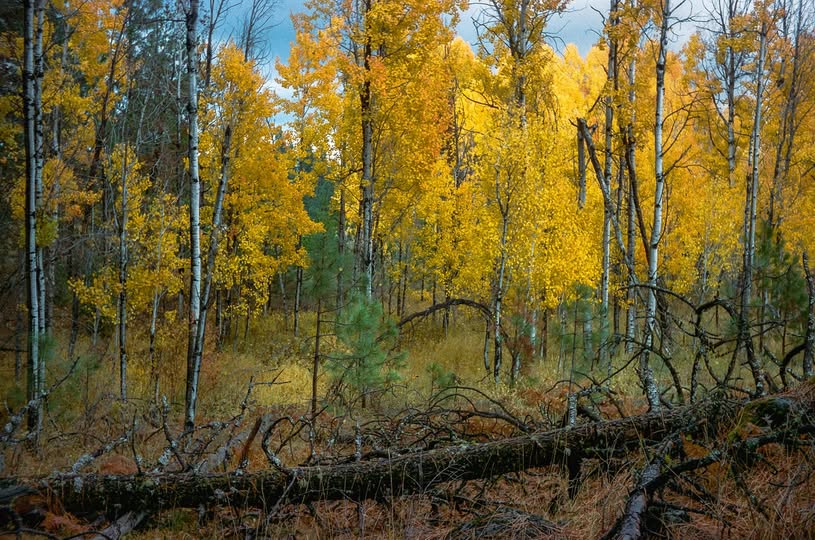
The Quaking Aspen holds a remarkable geographical record. Its native range covers more of North America than any other tree species — stretching from Newfoundland and Labrador in the east, across Canada to Alaska in the west, south through the Rocky Mountains into northern Mexico, and east across the Great Lakes to New England and the Appalachians.
It grows at sea level and at elevations exceeding 10,000 feet (3,000 meters). It thrives from the dry interior West to the humid northeastern forests, from boreal spruce-fir forests to southwestern mountain woodlands.
In the western United States, Quaking Aspen forms striking groves on mountain slopes, often contrasting sharply with surrounding coniferous forests. In the Great Lakes region and New England, it is a dominant pioneer species on disturbed and cutover land. In Canada, it covers vast tracts of the boreal transition zone.
This extraordinary range reflects the tree’s ecological flexibility — its ability to colonize, adapt, and persist across an almost unmatched diversity of climates and conditions.
Physical Characteristics
Size and Form
The Quaking Aspen is a medium-sized tree, typically reaching 40 to 70 feet (12–21 meters) in height, with a narrow, rounded to columnar crown. In dense stands, trees grow tall and straight, competing for light. In open settings, the crown spreads more broadly.
Individual trunks are usually 4 to 12 inches (10–30 cm) in diameter, though older trees in favorable conditions can grow larger. The overall form is graceful and upright — slender, almost elegant, especially when seen against a mountain backdrop.
Bark — Smooth, White, and Photosynthetic
The bark of the Quaking Aspen is one of its defining features. Young and middle-aged trees have smooth, pale greenish-white to cream-colored bark that almost glows in forest settings.
This pale bark contains chlorophyll, which allows the tree to photosynthesize through its bark — a rare and ecologically significant adaptation that supports early spring growth before leaves have fully emerged.
As trees age, the bark develops dark, rough, furrowed patches near the base. The upper trunk and branches typically remain smooth and pale throughout the tree’s life.
The bark is frequently marked by horizontal dark scars called lenticels, and by the black, knot-like scars left where lower branches have been shed. These markings give each trunk a distinctive, almost handwritten character.
Leaves — The Trembling Feature
The leaves are simple, nearly circular to broadly ovate, with finely toothed margins. They measure approximately 1.5 to 3 inches (4–7 cm) in diameter — roughly the size of a silver dollar or slightly larger.
The flattened petiole is the key to the trembling effect. This laterally compressed leaf stalk allows leaves to pivot and flutter in air movements too slight to affect other trees. The result is a constant, gentle shimmer that makes aspen groves visually unlike any other forest type.
In autumn, the leaves turn brilliant yellow, gold, and occasionally orange or red — creating the famous fall color displays that draw visitors to the Rocky Mountains and boreal regions every year.
Flowers and Seeds
Quaking Aspen is dioecious — male and female catkins are borne on separate trees. Flowering occurs very early in spring, before leaf emergence, when trees are still bare.
- Male catkins are dense, drooping, and reddish
- Female catkins are longer and greenish
After pollination, female catkins develop into small capsules containing cottony seeds — similar to cottonwood trees. These seeds are released in late spring in enormous quantities, the cotton-like fluff drifting on the wind and covering the ground like snow.
The seeds are tiny and short-lived, viable for only a few days to weeks unless they land on bare, moist soil.
The Clone: Pando and the World’s Largest Living Organism
This is where the Quaking Aspen’s story becomes genuinely extraordinary.
While individual aspen trees live relatively short lives — typically 60 to 130 years in most conditions — the root system beneath a grove can be vastly older. Quaking Aspens reproduce primarily by vegetative sprouting from their roots.
When a tree dies or is cut, the roots send up new shoots. The grove continues, even as individual stems come and go.
A grove connected by a single root system is called a clone — because every stem is genetically identical. These clones can cover enormous areas and persist for thousands of years.
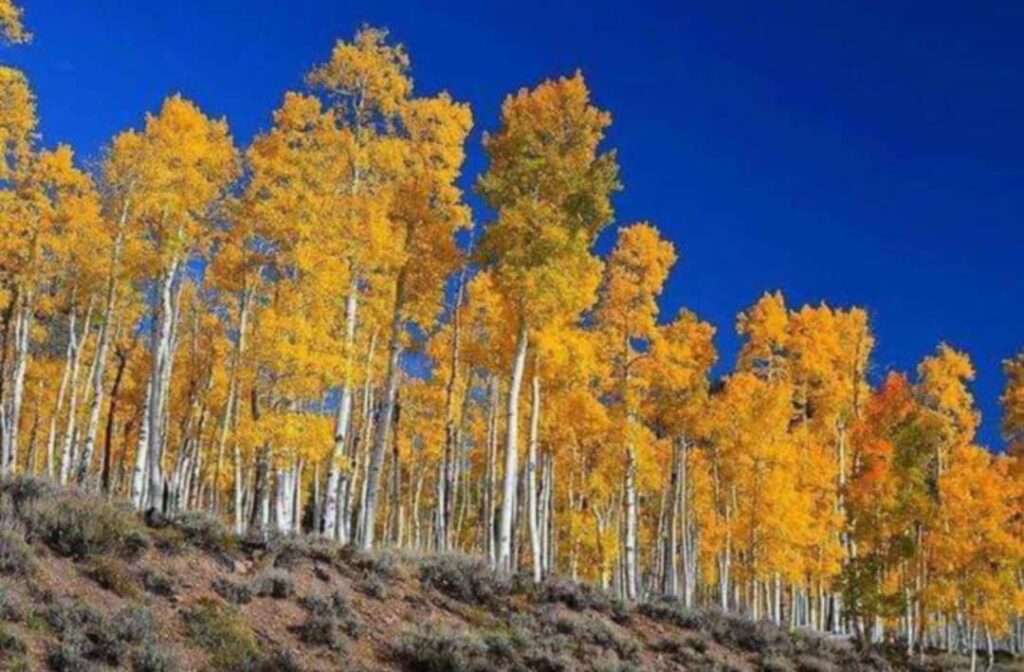
The most famous example is Pando, a Quaking Aspen clone located in the Fishlake National Forest in south-central Utah. Pando — Latin for “I spread” — consists of an estimated 47,000 individual stems sharing a single root system.
It covers approximately 106 acres (43 hectares), weighs an estimated 6,000,000 kilograms (13 million pounds), and is believed to be approximately 80,000 years old, though some estimates place it older.
By mass and possibly by age, Pando is considered the largest and oldest known living organism on Earth.
I find that concept deeply shocking. What looks like a forest of thousands of separate trees is, in a deeper sense, a single individual — one organism that has survived ice ages, droughts, and millennia of environmental change.
Ecological Role and Wildlife Value
The Quaking Aspen is not merely abundant. It is one of the most ecologically productive tree species in North America, supporting an extraordinary web of life.
Biodiversity Hotspot
Studies across the Rocky Mountain West consistently show that aspen groves support significantly greater biodiversity than surrounding coniferous forests. A single aspen grove can host more species of birds, mammals, insects, and plants than much larger areas of spruce or fir forest.
Aspen groves are biodiversity islands within the broader forest landscape — richer, warmer, and more structurally complex than conifer stands.
Birds
More than 100 bird species use aspen groves in the western United States. These include:
- Red-naped Sapsucker — closely associated with aspen; drills sap wells in the bark
- Tree Swallow — nests in aspen cavities
- Mountain Bluebird — uses aspen snags and cavities
- Warbling Vireo — nests in aspen canopy
- Hairy Woodpecker, Downy Woodpecker — forage in aspen stands
- Ruffed Grouse — depends heavily on aspen catkins as winter food
Mammals
Beaver are perhaps the most important aspen associates — they depend on aspen for food and dam construction, and their activity creates wetland habitats that benefit dozens of other species. Moose, elk, and white-tailed deer browse heavily on aspen bark, twigs, and leaves, particularly in winter. Black bears feed on the inner bark.
Small mammals — red squirrels, chipmunks, and snowshoe hares — use aspen groves extensively for food and cover.
Insects and Pollinators
Quaking Aspen supports over 400 species of Lepidoptera (moths and butterflies) as a larval host plant — one of the highest counts of any tree in North America. It is a host plant for species including the Mourning Cloak butterfly, the Western Tiger Swallowtail, and numerous moth species.
Fire Ecology
Aspen plays a critical role in fire-adapted landscapes. Its high moisture content makes it significantly more fire-resistant than surrounding conifers. Aspen groves frequently survive fires that kill adjacent spruce and fir, and the root systems sprout vigorously after fire, rapidly recolonizing burned areas.
In this way, aspen groves act as natural firebreaks and as post-fire recovery engines — reshaping forest structure after disturbance.
Soil, Climate, and Growing Conditions
Soil Requirements
Quaking Aspen is highly adaptable to soil conditions. It grows in sandy soils, loam, clay, and gravelly mountain soils. It tolerates slightly acidic to slightly alkaline conditions (pH 5.5–7.5). It performs best in moist, well-drained soils with good organic content, but tolerates occasional flooding and moderate drought once established.
It does not perform well in dense shade or in waterlogged, anaerobic soils.
Light Requirements
Quaking Aspen is shade-intolerant. It needs full sun or near-full sun to grow vigorously. This is why it thrives in open areas, burned land, and forest edges rather than in the deep shade of mature forest interiors.
Hardiness
It is among the most cold-hardy trees in North America, surviving temperatures well below -50°F (-46°C) in the northern boreal zone. It is hardy in USDA Zones 1 through 7, making it suitable across most of Canada and the northern United States.
In warmer climates (Zones 8 and above), it generally does not perform well — it requires cold winters for proper dormancy and struggles with heat and humidity.
Landscape Uses and Garden Considerations
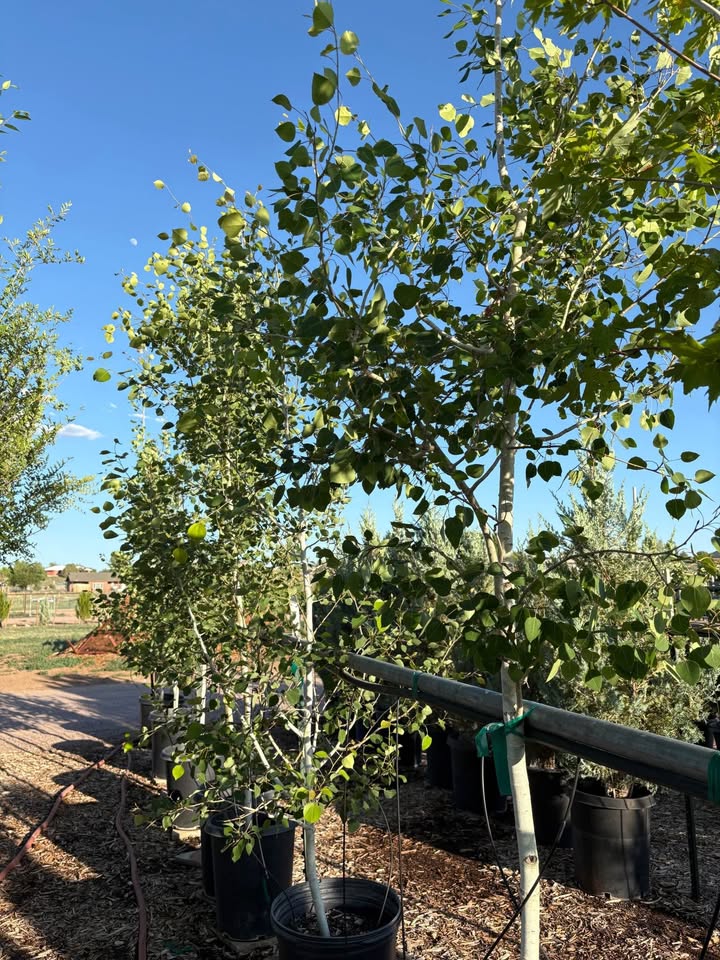
The Quaking Aspen is widely planted as an ornamental tree, particularly in the western and northern United States and in Canada. Its appeal is obvious: striking pale bark, shimmering summer foliage, brilliant fall color, and graceful form.
Best Landscape Applications
- Screening and privacy plantings — fast growth and upright form make it effective as a living screen
- Naturalized and wildlife gardens — outstanding habitat value
- Mountain and western landscapes — thrives in the dry, cold climates where many ornamentals fail
- Riparian plantings — tolerates moist streamside conditions
- Reclamation and restoration plantings — excellent for disturbed sites
Cautions for Landscape Use
The same suckering habit that makes aspen ecologically remarkable can create management challenges in suburban settings. Root suckers spread aggressively — sometimes appearing 30 to 40 feet from the parent tree, emerging through lawns, garden beds, and even pavement.
This is a critical consideration for homeowners. In open, naturalized settings, the spreading habit is an asset. In confined residential yards, it can become a maintenance burden.
Root barriers can help limit spread, but they are rarely 100% effective. The best landscape advice is to use Quaking Aspen in spaces large enough to accommodate its natural spreading behavior, or to accept regular sucker removal as part of the maintenance program.
Lifespan in Landscape Settings
Individual aspen trees in landscape settings typically live 40 to 80 years, with many succumbing earlier to canker diseases, borers, or environmental stress. Planting in groups rather than as isolated specimens significantly improves long-term survival, as the root system is shared and more resilient.
Pests, Diseases, and Decline
Quaking Aspen faces several significant threats, both in natural forests and in landscape settings.
Cytospora Canker
Cytospora canker (Cytospora chrysosperma) is the most common and damaging disease of aspens. It causes sunken, discolored lesions on the bark, girdling branches and eventually killing them. It spreads most aggressively on stressed trees — those weakened by drought, insect damage, or poor growing conditions.
There is no effective chemical treatment for Cytospora canker. Prevention through proper site selection and avoiding stress is the best management strategy.
Aspen Leaf Miner and Other Insects
The Aspen Leaf Miner (Phyllocnistis populiella) creates distinctive silvery trails in leaf tissue and can cause significant defoliation in outbreak years. Forest tent caterpillar (Malacosoma disstria) periodically strips aspen foliage over large areas, though healthy trees typically recover.
Bronze Poplar Borer and other borers attack stressed trees, particularly in warm, dry climates at the southern edge of the aspen’s range.
Sudden Aspen Decline
Across the western United States, a phenomenon called Sudden Aspen Decline (SAD) has been documented since the early 2000s.
Large areas of aspen, particularly in Colorado, Utah, and New Mexico, have experienced rapid dieback attributed to prolonged drought, higher temperatures, and associated pest and disease pressure.
Sudden Aspen Decline is one of the most visible signals of climate-driven forest change in the American West. The long-term trajectory of aspen distribution under continued warming is a subject of active scientific research and conservation concern.
Cultural and Historical Significance
Indigenous Uses
Native peoples across North America utilized Quaking Aspen extensively:
- Inner bark (cambium) was eaten raw or cooked — it is nutritious and available year-round
- Bark tea was used medicinally for fever, pain, and urinary complaints — the bark contains salicin, a compound chemically related to aspirin
- Wood was used for fuel, tools, and construction
- Leaves and bark were used as animal fodder
The medicinal use of aspen bark parallels the historical use of willow bark — both contain salicylates, the chemical precursors to modern aspirin.
Cultural Symbolism
In Western culture, the trembling of aspen leaves has inspired a rich tradition of metaphor and symbolism. The constant movement has been interpreted as nervousness, sensitivity, vulnerability, and even spiritual responsiveness — trees that seem to feel what the air only hints at.
In Celtic and Norse traditions, the aspen was associated with communication between worlds — its constant motion suggesting a tree perpetually listening or speaking.
Scientific Significance
Beyond Pando, Quaking Aspen has become an important model organism in forest ecology and climate research.
Studies of aspen clone boundaries, regeneration dynamics, and responses to drought and fire provide critical insights into how forests function and how they may respond to a changing climate.
Quaking Aspen vs. Bigtooth Aspen
A closely related species, the Bigtooth Aspen (Populus grandidentata), shares much of the Quaking Aspen’s eastern range. The two are easily distinguished:
| Feature | Quaking Aspen | Bigtooth Aspen |
| Leaf shape | Nearly circular, fine teeth | Ovate, large coarse teeth |
| Leaf size | Smaller | Larger |
| Petiole | Very flat, long | Flat, slightly shorter |
| Range | Transcontinental | Primarily eastern North America |
| Bark | Whiter, smoother | Slightly darker |
Both species provide similar ecological services and have similar management considerations.
Conservation Status and Threats
The Quaking Aspen is currently listed as a species of least concern globally, with a vast and widespread population. However, several concerns are mounting:
- Sudden Aspen Decline across the Interior West
- Overgrazing by livestock and deer, which suppresses regeneration
- Conifer encroachment as fire suppression allows spruce and fir to shade out aspen in successional stands
- Climate warming, which is shifting the species’ viable range northward and upward in elevation
- Pando’s own decline — the famous Utah clone is losing regenerating stems due to deer browsing and drought
Active management — including controlled burning, fencing to exclude browsers, and conifer removal — is often necessary to maintain healthy aspen communities in landscapes where natural disturbance regimes have been suppressed.
Final Thoughts
The Quaking Aspen is a tree that rewards deeper attention at every scale. In a time of widespread ecological simplification, the Quaking Aspen stands as proof of what complexity, resilience, and deep time look like in a living system.
Whether you encounter shimmering gold on a Colorado slope in October, or read about Pando’s improbable ancient life, or plant one in a mountain garden where little else will grow — the Quaking Aspen is worth knowing well.
References
- USDA Forest Service — Rocky Mountain Research Station — Ecology and Management of Quaking Aspen https://www.fs.usda.gov/rm/pubs/rmrs_gtr119.pdf
- North Carolina State University Cooperative Extension — Populus tremuloides Plant Profile https://plants.ces.ncsu.edu/plants/populus-tremuloides/
- Virginia Tech Department of Forest Resources and Environmental Conservation — Dendrology Fact Sheet: Populus tremuloides https://dendro.cnre.vt.edu/dendrology/syllabus/factsheet.cfm?ID=92
- University of Wisconsin–Madison Arboretum — Quaking Aspen (Populus tremuloides) https://arboretum.wisc.edu/learn/plants-of-the-arboretum/trees-and-shrubs/quaking-aspen/
- Colorado State University Extension — Aspen in Colorado: Ecology and Management https://extension.colostate.edu/topic-areas/natural-resources/aspen-ecology-management-and-sudden-aspen-decline-6-310/

Tim M Dave is a gardening expert with a passion for houseplants, particularly cacti and succulents. With a degree in plant biology from the University of California, Berkeley, he has vast experience in gardening. Over the years, he has cultivated a vast collection of desert plants and learned a great deal about how to grow and care for these unique companions.