Pothos vs Philodendron: Key Differences Every Plant Owner Should Know
Walk into any plant shop or garden centre and you will almost certainly find both of them side by side — trailing vines with lush, heart-shaped leaves, sitting in similar pots, looking remarkably alike. It happens all the time: someone buys what they think is a pothos and takes home a philodendron, or vice versa.
Both are beloved houseplants for good reason. They are forgiving, adaptable, and genuinely beautiful in a home setting. But knowing which one you have is important because pothos and philodendrons are distinct plants with real differences in appearance, care, growth habit, and propagation.
This guide covers every meaningful difference between pothos and philodendron, from their botanical origins and leaf characteristics to their care requirements, toxicity, and ideal growing conditions.
Botanical Background: Two Distinct Plants
The confusion between pothos and philodendron is understandable when you look at them casually. But botanically, they are not closely related — or at least, not as closely as their similar appearance suggests.
Pothos (Epipremnum aureum) belongs to the family Araceae and the genus Epipremnum. Native to the Solomon Islands, it was for a long time incorrectly classified under the genus Scindapsus and later Pothos — which is why the common name “pothos” persists even though the plant is now correctly placed in Epipremnum. Other common names include devil’s ivy, golden pothos, and Ceylon creeper.
Philodendron is a large and diverse genus also within the family Araceae. The name comes from the Greek philo (love) and dendron (tree), reflecting the plant’s natural tendency to climb trees in its tropical habitat.
There are over 480 recognised species of philodendron, native primarily to Central and South America, the Caribbean, and parts of Africa. The most commonly kept as houseplants are the heartleaf philodendron (Philodendron hederaceum) and the split-leaf philodendron (Philodendron bipinnatifidum, now reclassified as Thaumatophyllum bipinnatifidum).
Both genera belong to the same family — Araceae — which explains the family resemblance. But they diverged from a common ancestor long ago, and the differences between them become clear once you know what to look for.
How to Tell Them Apart: Key Visual Differences
This is the section that most people searching “pothos vs philodendron” are looking for. The two plants look similar, but there are reliable visual markers that distinguish them once you train your eye.
Leaf Texture
Pothos leaves are thick, waxy, and slightly stiff. Run your finger across a pothos leaf and you will feel a subtle, firm texture — almost like the surface of a stiff piece of leather. The waxy coating gives the leaf a reflective sheen in good light.
Philodendron leaves are thinner, softer, and more matte. They feel more papery and pliable than pothos leaves. The surface has less sheen and a more velvety or muted quality depending on the variety.
This texture difference is one of the most reliable identification methods, and it holds true even when the plants are similar in size and colour.
Leaf Shape
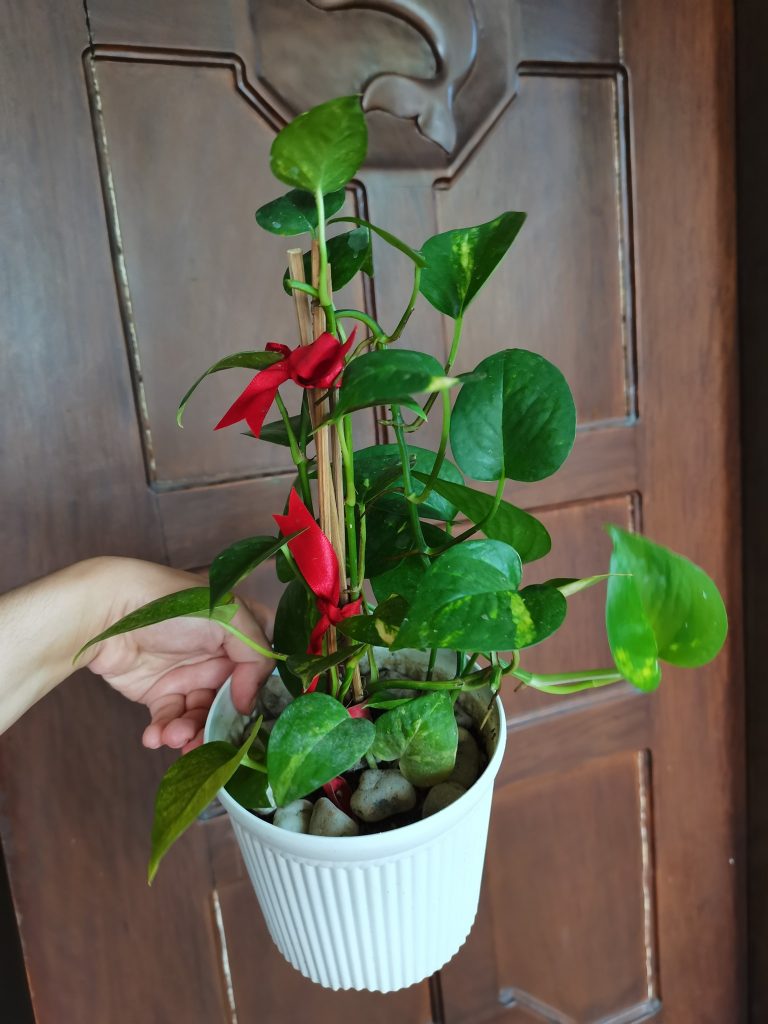
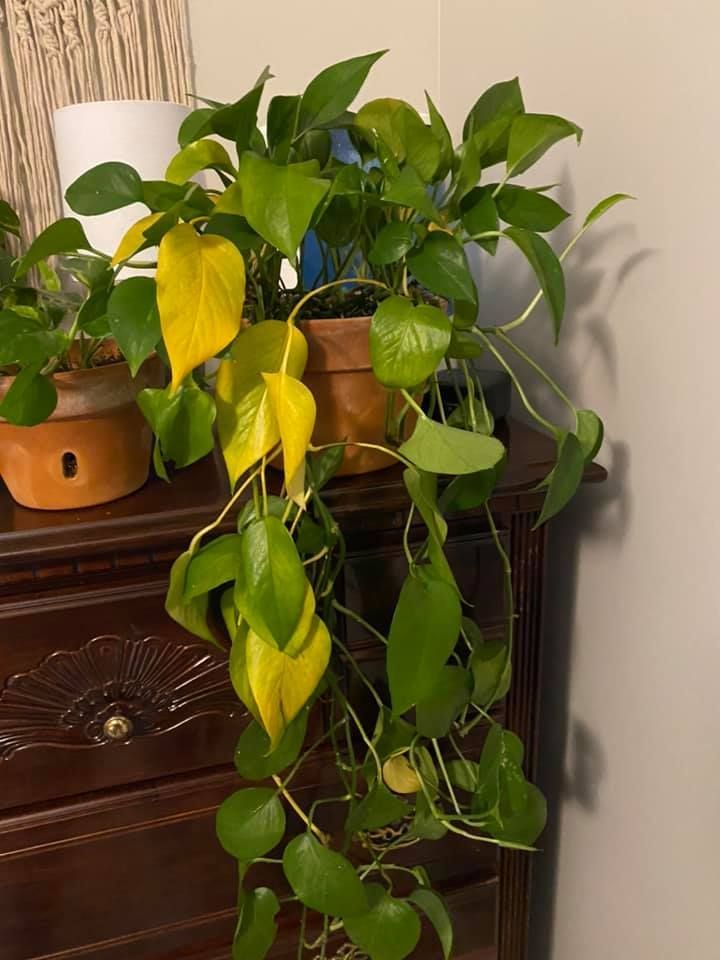
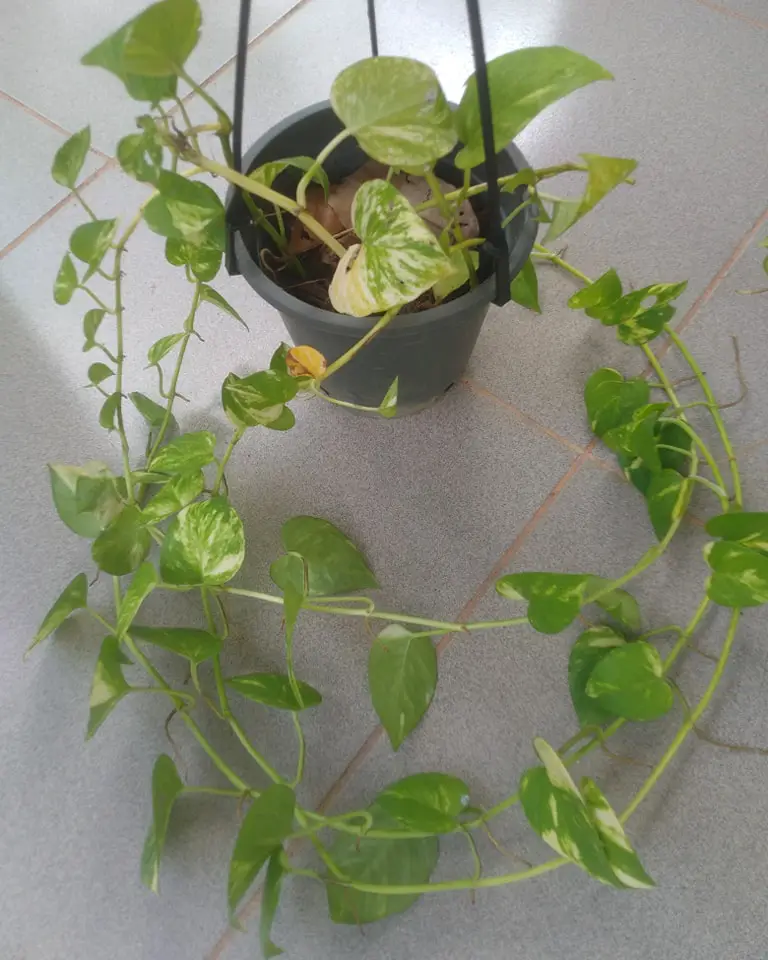
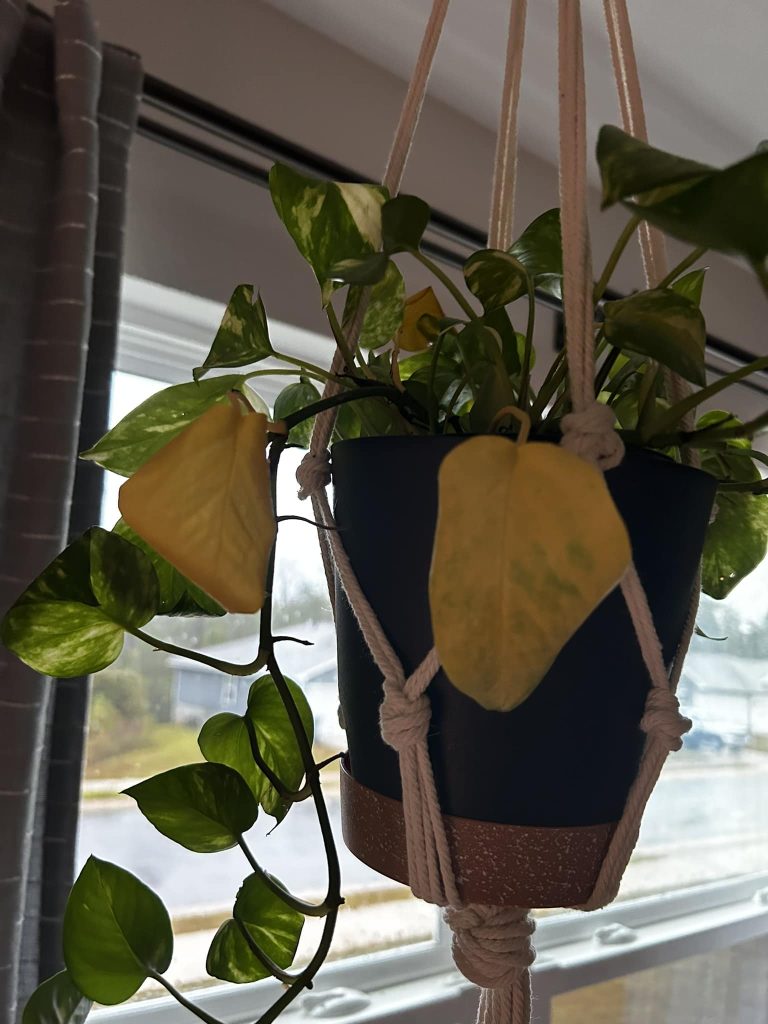
Pothos leaves are typically asymmetrical. One side of the leaf base is often slightly larger than the other, giving the leaf a gently uneven, lopsided appearance. The leaf itself tends to be broader and more rounded at the base.
Heartleaf philodendron leaves are more uniformly heart-shaped — symmetrical, with a clean, even indentation at the base where the stem attaches. The shape is more classic and balanced than a pothos leaf.
The difference is subtle but visible once you look directly at the leaf base. Place a pothos leaf and a heartleaf philodendron leaf side by side, and the asymmetry of the pothos becomes clear.
Petiole Structure
The petiole is the stalk that connects the leaf to the vine. This is one of the clearest and most reliable points of difference between the two plants.
Pothos petioles are grooved along one side — specifically, the upper surface of the petiole is slightly indented or channelled, creating a concave groove that runs its length. The petiole is also thicker relative to the leaf size.
Philodendron petioles are smooth and round in cross-section — no groove, no channel. They are uniformly cylindrical. This smooth, round petiole is a consistent feature across heartleaf philodendron varieties.
When you can examine the plant in person, this petiole check is the fastest and most reliable identification method available.
Cataphylls (Leaf Sheaths)
This is a botanical feature that most houseplant guides overlook, but it is one of the clearest differences between the two genera.
Philodendrons produce cataphylls — small, papery, modified leaves that protect emerging new growth at the node. When a new leaf begins to develop on a philodendron, it is enclosed in this thin, brownish sheath. Once the leaf has fully unfurled, the cataphyll dries up and falls away or remains attached as a papery remnant. This feature is consistent across philodendron species.
Pothos do not produce cataphylls. New leaves on a pothos emerge directly from the node without any sheath or protective covering. The new leaf simply unfurls from the growing point without that dry, papery remnant.
If you observe new growth on your plant and find small dry brown sheaths at the node, it is a philodendron. If new leaves emerge cleanly without any sheath, it is most likely a pothos.
New Leaf Colour
Pothos new growth typically emerges in the same colour range as the mature leaves — green, variegated, or pale depending on the variety.
Heartleaf philodendron new growth often emerges in a noticeably different, lighter shade — frequently a pale bronze, pinkish, or warm tan colour — before maturing to green. This transient colouring of new leaves is characteristic of many philodendron species and is rarely seen in pothos.
Aerial Roots
Both plants produce aerial roots — roots that grow from the stem nodes and help the plant attach to surfaces when climbing.
Pothos aerial roots are typically single, stubby, and emerge from the node as a single structure. They are thick and nub-like, not particularly long unless given a surface to cling to.
Philodendron aerial roots are often multiple per node, thinner, and more prominent. On mature heartleaf philodendron vines, you will frequently see two or more slender roots emerging from a single node, sometimes trailing significantly in search of a surface.
Common Varieties: Pothos
Understanding the range of varieties available helps with identification and buying decisions.
- Golden Pothos (Epipremnum aureum) — the original and most widely sold; green leaves with yellow or gold marbling or streaks
- Marble Queen Pothos — heavily variegated white and green, sometimes more white than green on well-lit plants
- Neon Pothos — uniformly bright lime-green leaves; no variegation; extremely vivid in good light
- Manjula Pothos — wide, heart-shaped leaves with creamy white, green, and silver-white patches; less trailing than other varieties
- Cebu Blue Pothos — silvery-blue juvenile leaves that develop fenestrations (splits) on mature vines; one of the more unusual pothos varieties
- Pearls and Jade Pothos — smaller leaves with white and grey-green variegation, developed by the University of Florida
- Baltic Blue Pothos — dark green with developing fenestrations as the plant matures; increasingly popular
- Glacier Pothos — small leaves with silver-grey and green-white variegation; compact growth habit
Common Varieties: Philodendron
Philodendron comes in the following types.
- Heartleaf Philodendron (Philodendron hederaceum) — the most widely sold; rich green, heart-shaped leaves; highly adaptable and tolerant
- Brasil Philodendron — a variegated heartleaf with bold lime-green and dark green stripes through the centre of each leaf
- Lemon-Lime Philodendron — bright yellow-green to chartreuse foliage; a striking colour variation
- Micans Philodendron (Philodendron hederaceum var. hederaceum) — velvety, dark leaves with a bronze or iridescent sheen; one of the most beautiful trailing philodendrons
- Birkin Philodendron — upright growth with dark green leaves and fine white pinstriping; a sport of the Congo variety
- Prince of Orange Philodendron — new leaves emerge bright orange, maturing to green; dramatic colour progression
- Gloriosum Philodendron — large, velvety, ground-crawling leaves with bold white veins; a collector’s favourite
- White Princess Philodendron — green leaves with white variegation; slower-growing but visually striking
Care Requirements: Side by Side
This is where the practical comparison becomes most useful for gardeners trying to choose between or properly care for each plant.
Light
Pothos is famously tolerant of low light. It will survive in quite dim conditions — which is part of its enduring appeal as an office or bathroom plant. However, “tolerates low light” does not mean “thrives in low light.” In dim conditions, pothos vines become leggy and variegation fades. Bright, indirect light produces the best leaf colour, variegation clarity, and growth rate.
Highly variegated varieties — Marble Queen, Manjula, and Glacier — require more light than solid-green or lightly variegated varieties to maintain their pattern. Very low light causes variegated pothos to revert toward plain green.
Philodendron (heartleaf) is also highly adaptable to lower light conditions and in practical terms performs similarly to pothos in most home settings. It tends to maintain its colour reasonably well in medium-indirect light. Variegated philodendrons — Brasil, Micans, and White Princess — benefit from brighter indirect light to maintain clear patterning.
Neither plant should receive direct sun for extended periods. Direct sunlight scorches the leaves of both.
Verdict: Both are low-to-medium light tolerant, with pothos edging ahead slightly in surviving genuinely dim conditions. Neither truly thrives without bright indirect light.
Watering
Pothos is tolerant of irregular watering. Its thick, semi-succulent leaves store some moisture, and it recovers from underwatering reasonably well. Water when the top two to three centimetres of soil feel dry. It is more tolerant of drying out than of being consistently overwatered — root rot from waterlogged soil is the most common cause of pothos decline.
Philodendron (heartleaf) prefers slightly more consistent moisture than pothos. Its thinner leaves do not store water as effectively, and it tends to show signs of drought stress — drooping, crisp leaf edges — sooner than pothos. Water when the top two centimetres of soil are dry, but do not allow it to dry out as deeply as you might with pothos. It is similarly sensitive to overwatering and root rot.
Verdict: Pothos is slightly more forgiving if you forget to water. Philodendron benefits from slightly more attentive moisture management.
Soil
Both plants thrive in a well-draining, airy potting mix. A standard houseplant potting mix amended with perlite — roughly 70% potting mix and 30% perlite by volume — suits both perfectly. This combination holds enough moisture to keep roots hydrated while draining quickly enough to prevent waterlogging.
Neither plant tolerates heavy, compacted soil that retains moisture for extended periods. Avoid garden soil or unamended topsoil for both.
Fertilising
Both plants benefit from monthly fertilisation during the growing season — spring through early autumn. A balanced, water-soluble fertiliser at half the recommended strength is appropriate for both. Neither is a heavy feeder, and over-fertilisation — which causes salt buildup in the soil and brown leaf tips — is a more common problem than under-fertilising.
Do not fertilise in winter when growth naturally slows.
Temperature and Humidity
Both plants are tropical in origin and prefer warm, humid conditions. The ideal temperature range for both is between 18°C and 29°C (65°F to 85°F). Both are damaged by temperatures below 10°C (50°F) and should be kept away from cold drafts and air conditioning vents.
Standard household humidity is adequate for both, though they will produce larger, more vigorous growth in higher humidity — 50% to 70% relative humidity is ideal. Bathrooms and kitchens, which tend to be more humid than other rooms, suit both plants well.
Philodendron — particularly the velvet-leaved varieties like Micans and Gloriosum — tends to respond more dramatically to increased humidity, producing richer colour and larger leaves. Pothos, with its waxy, moisture-retaining leaves, is somewhat more tolerant of dry indoor air.
Propagation
Both plants propagate very easily from stem cuttings, which is one of the reasons they are so widely shared among plant enthusiasts.
Pothos propagation: Cut a vine below a node, ensure the cutting has at least one to two nodes and one or two leaves. Place in water with the nodes submerged, or directly into moist soil. Roots develop within two to four weeks in water, slightly longer in soil. Pothos roots quickly and reliably — it is one of the easiest houseplants to propagate.
Philodendron propagation: The method is identical — node cuttings in water or moist soil. Heartleaf philodendron roots with similar speed and reliability to pothos. Ensure each cutting has at least one node and ideally one leaf. Cuttings without leaves can still root if they have a healthy node, though they root more slowly.
Verdict: Both propagate with equal ease. Neither requires rooting hormone, special equipment, or expertise. This makes both excellent plants for beginners and for building a large collection from a single purchased plant.
Growth Rate and Habit
Pothos is a vigorous grower in good conditions. It produces long, trailing vines readily and fills out quickly when pruned and propagated back into the pot. It is slightly faster-growing than heartleaf philodendron under comparable conditions in most home environments.
Heartleaf philodendron grows enthusiastically but tends to produce slightly thinner vines with longer internodal spacing than pothos under comparable conditions. With support — a moss pole or trellis — it climbs readily and produces increasingly larger leaves as it ascends, mimicking its natural behaviour in tropical forests.
Both can be trained to climb, to trail, or to grow in hanging baskets with equal success.
Toxicity: An Important Distinction
Both pothos and philodendron are toxic to cats, dogs, and humans if ingested. Both contain insoluble calcium oxalate crystals that cause immediate oral irritation, drooling, swelling, and gastrointestinal distress upon ingestion.
Neither plant causes life-threatening poisoning in typical domestic exposures — the immediate pain of the calcium oxalate crystals usually prevents large ingestion — but both should be kept out of reach of pets and children.
The ASPCA lists both Epipremnum aureum (pothos) and philodendron species as toxic to cats and dogs. If you suspect a pet has ingested either plant, contact your veterinarian or the ASPCA Animal Poison Control Center at (888) 426-4435.
Verdict: Equal caution is warranted for both. Neither has a significant toxicity advantage over the other in a pet-friendly home.
Which One Should You Choose?
This is ultimately a personal decision, and the honest answer is that both plants are excellent choices for nearly every growing situation. But a few distinctions may tip the decision.
Choose pothos if:
- You want a highly forgiving plant that tolerates inconsistent watering and genuinely lower light
- You prefer thicker, waxier foliage with a glossy appearance
- You want a plant that fills out quickly when propagated
- You are new to houseplants and want maximum resilience
Choose heartleaf philodendron if:
- You prefer softer, more velvety foliage
- You want a plant that climbs well and produces larger leaves on a support
- You are drawn to the wider variety of colours and leaf forms in the philodendron genus
- You appreciate the subtle elegance of new leaves emerging with a bronze or pinkish tone
Choose both if: You enjoy houseplants and have space for more than one trailing vine — because the two plants complement each other beautifully in a mixed collection, and there is genuinely no good reason to choose only one.
A Quick Comparison Table For Pothos and Philodendron
| Feature | Pothos | Heartleaf Philodendron |
| Scientific name | Epipremnum aureum | Philodendron hederaceum |
| Family | Araceae | Araceae |
| Origin | Solomon Islands | Central/South America |
| Leaf texture | Thick, waxy, glossy | Thin, soft, matte |
| Leaf shape | Asymmetrical base | Symmetrical heart shape |
| Petiole | Grooved (concave) | Smooth and round |
| Cataphylls | Absent | Present |
| New leaf colour | Similar to mature leaves | Often bronze or pinkish |
| Aerial roots | Single per node, stubby | Multiple per node, slender |
| Light tolerance | Very low to bright indirect | Low to bright indirect |
| Watering | Tolerates more drought | Slightly more moisture needed |
| Propagation | Very easy | Very easy |
| Toxicity | Toxic to pets and humans | Toxic to pets and humans |
| Growth rate | Fast | Moderate to fast |
Frequently Asked Questions
Can pothos and philodendron be kept in the same pot?
Yes, with some care. Both have similar light, water, and soil requirements, making them compatible companions. Ensure the pot has adequate drainage and that neither plant is significantly outcompeting the other for root space.
Is a golden pothos the same as a heartleaf philodendron?
No. They are different plants from different genera, though both belong to the family Araceae. Golden pothos is Epipremnum aureum; heartleaf philodendron is Philodendron hederaceum.
Which is easier to keep alive — pothos or philodendron?
Both are among the easiest houseplants available. Pothos has a slight edge in tolerating neglect — particularly inconsistent watering and lower light. For beginners, either plant is an excellent choice.
Do pothos and philodendron need different fertilisers?
No. A standard balanced houseplant fertiliser at half strength, applied monthly during the growing season, suits both equally well.
Can I use the same soil mix for both?
Yes. A well-draining mix of standard potting compost and perlite (roughly 70:30) is appropriate for both plants.
Which plant grows larger leaves?
Philodendron, when given a moss pole or climbing support, tends to produce significantly larger leaves than pothos under comparable conditions. This is particularly true for Philodendron hederaceum and the larger-leafed species like Gloriosum.
Suggested For You:
Are Pothos Toxic to Cats? What Every Pet Owner Must Know
Pothos Cultivation: History, Care and Common Problems
9 Reasons Your Pothos Leaves are Turning Yellow + How to Fix
15 Types of Pothos: Variety Identification and Pictures
Understanding Overwatered Pothos: Signs + How to Save The Plant
10 Proven Ways to Make Pothos Fuller: Tips for Thick, Lush Growth
Final Thoughts
Pothos and philodendron are not the same plant — but they are equally deserving of a place in your home. They share a family, a general appearance, and an accommodating nature that makes both of them ideal companions for plant owners at every level of experience.
The differences between them are real and worth knowing. Once you have examined the petiole groove, noticed the cataphylls on a new leaf, or compared the waxy firmness of a pothos leaf against the softer surface of a philodendron, you will never confuse them again. And that moment of recognition — the quiet satisfaction of actually knowing your plants — is one of the small pleasures that makes houseplant keeping genuinely rewarding.
Whether you choose one, the other, or both, you are in good company. Pothos and philodendron are two of the most reliably wonderful houseplants in the world — and they have earned that reputation honestly.
References
- University of Florida IFAS Extension — Pothos (Epipremnum aureum): Florida Foliage Plant Guide. https://edis.ifas.ufl.edu/publication/EP337
- University of Florida IFAS Extension — Philodendron Species for Florida. https://edis.ifas.ufl.edu/publication/EP271
- ASPCA Animal Poison Control Center — Toxic and Non-Toxic Plant Database. https://www.aspca.org/pet-care/animal-poison-control/toxic-and-non-toxic-plants
- Cornell University — L.H. Bailey Hortorium: Plant Taxonomy and Araceae Family Reference. https://www.hortus3.cornell.edu
- Clemson University Cooperative Extension — Houseplant Care: Tropical Foliage Plants. https://hgic.clemson.edu/factsheet/pothos/

Tim M Dave is a gardening expert with a passion for houseplants, particularly cacti and succulents. With a degree in plant biology from the University of California, Berkeley, he has vast experience in gardening. Over the years, he has cultivated a vast collection of desert plants and learned a great deal about how to grow and care for these unique companions.