15 Best Plants for Your Office Desk (And Why They Actually Help You Work Better)
Most office desks tell the same story. A monitor, a keyboard, a coffee mug, maybe a stack of papers that has been there since March. Functional, yes. Inspiring? Rarely.
Adding a plant changes the equation in ways that go beyond aesthetics. Research from multiple universities has shown that the presence of plants in a workspace measurably reduces stress, improves concentration, and increases productivity. These are not minor effects.
In one widely cited study from the University of Exeter, adding plants to a previously bare office increased worker productivity by 15%.
The challenge, of course, is that most office environments are not ideal for plants. Low light, dry air from climate control systems, inconsistent watering, and limited desk space all work against a thriving plant.
The fifteen plants in this guide are chosen specifically because they handle these conditions well — and look good doing it.
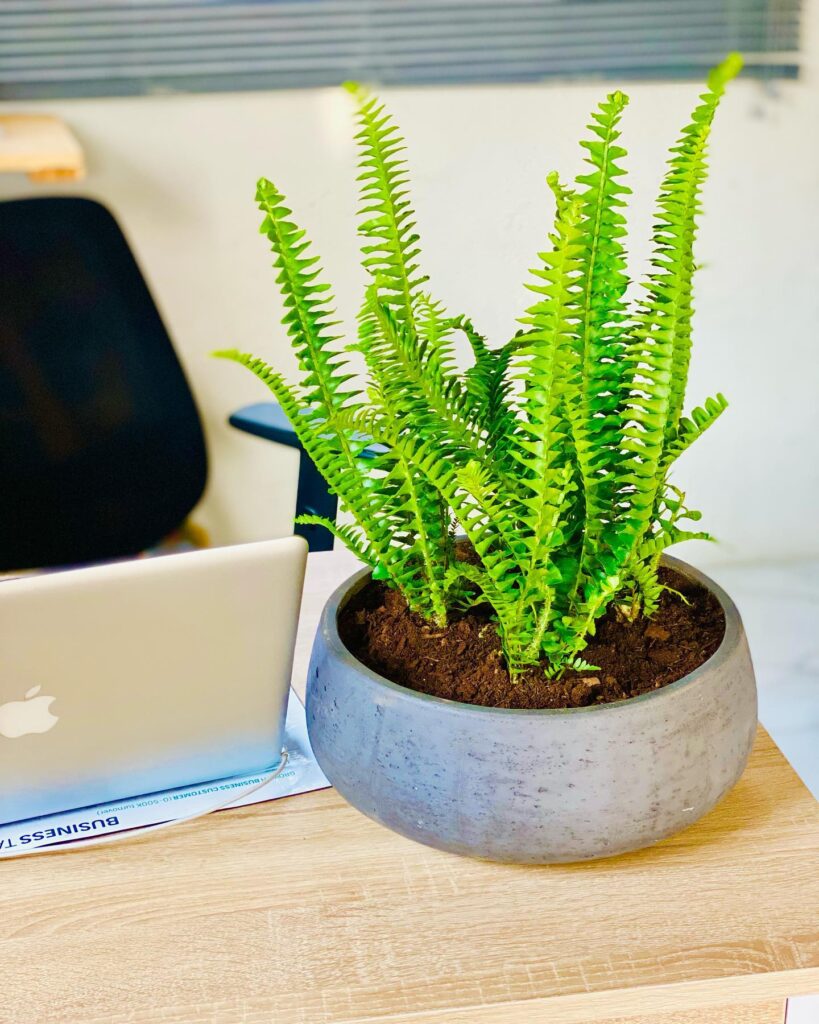
1. Pothos (Epipremnum aureum)
Pothos is the starting point for almost every office plant conversation — and for very good reason.
It tolerates low light, inconsistent watering, dry air, and general neglect better than almost any other trailing plant. Its heart-shaped leaves come in green, golden, marble, and neon varieties, giving a range of aesthetic options to suit different desk styles.
Placed in a small pot on the desk edge or on a nearby shelf, pothos trails gracefully as it grows. It can also be trained upward on a small moss pole if a more upright form is preferred.
NASA’s Clean Air Study included pothos among the most effective plants for removing formaldehyde, xylene, and benzene from indoor air — pollutants commonly found in office environments.
Best for: Any office regardless of light level. Ideal for beginners and those who travel frequently.
Care note: Water when the top inch of soil feels dry. Trim long vines to maintain shape. Toxic to cats and dogs.
2. Snake Plant (Dracaena trifasciata)
The snake plant is the most architecturally striking low-maintenance plant available. Its tall, upright, sword-shaped leaves with distinctive banding or yellow margins make it look deliberate and designed rather than simply placed.
It tolerates very low light — genuinely very low, including fluorescent office lighting alone. It needs watering only once every two to three weeks in most indoor conditions, and it releases oxygen at night rather than during the day, which is a useful quality in an enclosed office.
A compact cultivar like ‘Hahnii’ (Bird’s Nest Sansevieria) stays small enough to sit directly on a desk. Taller varieties work better on a nearby floor or cabinet.
Best for: Low-light offices, modern and minimalist desk aesthetics, infrequent-care situations.
Care note: Allow soil to dry completely between waterings. Overwatering is the most common cause of failure. Toxic to cats and dogs.
3. ZZ Plant (Zamioculcas zamiifolia)
The ZZ plant has become one of the most popular office plants of the last decade, and experience confirms why. It is arguably the most forgiving plant on this list — it tolerates low light, dry conditions, and extended periods without water through the water-storage capacity of its thick rhizomes.
Its waxy, deep-green leaflets have an almost polished quality that looks sophisticated in professional environments. The plant grows slowly, which means it stays desk-appropriate for years without needing to be moved to a larger space.
The one caution: ZZ plant is toxic if ingested and the sap can cause mild skin irritation in sensitive individuals. Wash hands after handling.
Best for: Very low-light offices, modern and corporate settings, low-maintenance priorities.
Care note: Water every two to three weeks. Avoid overwatering. Keep away from children and pets.
4. Peace Lily (Spathiphyllum spp.)
Among flowering plants suitable for office desks, the peace lily stands alone for its ability to bloom in low-light conditions. It produces elegant white flowers even in the dim conditions common to many offices, making it a rare combination of practicality and beauty.
Its broad, glossy leaves droop noticeably when it needs water — a clear, forgiving communication that makes caring for it almost effortless. It is one of the top-ranked plants in air quality research for removing ammonia, benzene, and formaldehyde from indoor air.
Compact varieties like ‘Petite’ are particularly well-suited to desk placement. Larger varieties work better on a desk corner or nearby surface.
Best for: Low-light offices, desks with some space to spare, anyone wanting flowers on their desk without much effort.
Care note: Keep soil moist but not waterlogged. Avoid cold air from air conditioning vents. Toxic to cats and dogs.
5. Lucky Bamboo (Dracaena sanderiana)
Lucky bamboo is one of the most practical desk plants available because it requires no soil at all. It grows in water — typically in a glass vessel with pebbles for stability — making it genuinely mess-free and very easy to maintain in an office setting.
The architectural quality of its upright, segmented stems works particularly well in modern and minimalist workspaces. It is widely associated with positive energy and good fortune in feng shui practice, which has made it popular in professional settings across many cultures.
Simply top up the water when it drops low and change it completely every two to three weeks. Keep it in indirect light and it will thrive for years without any additional input.
Best for: Any office with moderate indirect light, minimalist desk setups, no-soil growing.
Care note: Use filtered or distilled water if possible — chlorine can cause tip browning. Keep away from direct sun, which scorches the leaves.
6. Succulents (Echeveria, Haworthia, Sedum spp.)
Succulents have become synonymous with office desks in recent years, and the reason is simple: they are compact, sculptural, and can survive extended neglect with equanimity.
Echeveria rosettes, Haworthia zebra plants, and Sedum varieties all stay small enough to fit in a three-inch pot indefinitely. They require watering only every two to three weeks and need only a modest amount of natural light to thrive.
The caveat is that succulents do need some natural light — they will not survive long under fluorescent lighting alone. A desk near a window, even a moderately lit one, keeps them healthy. Rotate them occasionally so all sides receive even light.
Best for: Desks near windows, creating a small grouped display, minimal-care households.
Care note: Water only when soil is completely dry. Use a well-draining cactus mix. Never let water sit in the pot saucer.
7. Chinese Evergreen (Aglaonema spp.)
Chinese evergreen is one of the most underappreciated office plants available. It tolerates low light, dry air, and inconsistent watering while producing some of the most visually interesting foliage of any desk-sized plant.
Modern cultivars come in an extraordinary range of colour combinations — deep green with silver, bright pink, red, or cream variegation — giving significant flexibility to match different office colour schemes and personal aesthetics. The ‘Pink Aglaonema’ and ‘Silver Bay’ cultivars are particularly popular in professional settings.
It grows slowly and stays compact, making it reliably desk-appropriate for extended periods without intervention.
Best for: Low-light offices, adding colour and interest to a desk, professional environments.
Care note: Water when the top inch of soil is dry. Avoid cold draughts from air conditioning. Toxic to cats and dogs.
8. Aloe Vera (Aloe barbadensis miller)
Aloe vera is both a practical and an attractive office desk plant. Its thick, pointed leaves store water internally, making it highly drought-tolerant, and the clear gel within the leaves has genuine first-aid value for minor cuts and skin irritation — not irrelevant in a working environment.
It grows slowly, stays compact for years in a small pot, and asks very little in return. It does need some natural light — a window desk is ideal — and it strongly dislikes being overwatered.
There is something quietly satisfying about having a plant on your desk that is both beautiful and genuinely useful. Aloe delivers on both counts without drama.
Best for: Bright desks near windows, practical-minded plant owners, minimalist aesthetics.
Care note: Water every two to three weeks. Use well-draining soil. Do not allow water to pool in the pot saucer.
9. Air Plants (Tillandsia spp.)
Air plants are arguably the most desk-friendly plants in existence. They require no soil, no pot, and minimal maintenance — they simply sit in a small glass holder, shell, or decorative ceramic dish on the desk surface and absorb moisture from the surrounding air.
In the climate-controlled environment of a typical office, they benefit from a weekly misting or a brief soak every seven to ten days. Their unusual, sculptural forms — some with silvery spikes, others with soft curling foliage — add a distinctive quality that most conventional potted plants cannot match.
The complete absence of soil means zero mess, zero spilled water, and zero soil pests. For a shared office desk or a hot-desk environment, air plants are genuinely ideal.
Best for: Any office, shared desks, small spaces, creative and unconventional displays.
Care note: Mist two to three times per week, or soak briefly once a week. Allow to dry within a few hours after watering. Provide indirect light where possible.
10. Spider Plant (Chlorophytum comosum)
Spider plants are cheerful, resilient, and genuinely interesting to observe as they grow. They produce long, arching green-and-white striped leaves and eventually send out trailing runners with small plantlets — a process that gives the plant ongoing visual dynamism over time.
They adapt well to the moderate-to-low light of most offices, tolerate inconsistent watering, and require no specialist knowledge to maintain. They are also completely non-toxic, making them one of the safest choices for offices with pets or where children occasionally visit.
The plantlets that develop on the runners can be propagated easily — a process many people find genuinely enjoyable and that provides a steady supply of plants for gifts or expanding a workspace display.
Best for: Moderate-light offices, non-toxic household requirements, those who enjoy propagating.
Care note: Water when the top inch of soil is dry. Allow occasional drying between waterings. Trim runners if a tidier appearance is preferred.
11. Rubber Plant (Ficus elastica)
The rubber plant is the statement piece of office desk plants — or more accurately, the statement piece of the office corner nearest your desk. Its large, glossy leaves in deep green, burgundy, or variegated forms create a bold, dramatic presence that elevates the entire feel of a workspace.
In a small pot, young rubber plants stay desk-appropriate for a year or two before they need to graduate to a floor position. A small cultivar like Ficus elastica ‘Tineke’ or ‘Ruby’ stays more compact than standard varieties.
It tolerates moderate light and is relatively undemanding about watering once established. The glossy leaves benefit from an occasional wipe with a damp cloth to remove office dust and maintain their visual impact.
Best for: Corner desks with space, larger home offices, adding a bold visual anchor.
Care note: Water when the top two inches of soil are dry. Wipe leaves regularly. Avoid moving the plant frequently — it dislikes sudden environmental changes. Toxic to cats and dogs.
12. Moss Terrarium (Various species)
A moss terrarium is not a single plant species — it is a miniature planted landscape enclosed in glass. A well-designed terrarium creates a self-sustaining micro-environment that requires almost no maintenance once established, making it one of the most fascinating and low-effort options for an office desk.
Small terrariums — ten to twenty centimetres in diameter — fit comfortably on a desk without occupying excessive space. The enclosed glass retains moisture, meaning watering is needed only every few weeks at most. The visual effect is striking: a small, complete world sitting beside your keyboard.
Closed terrariums planted with mosses, ferns, and small tropical species are particularly self-sufficient. Open terrariums with succulents and cacti require a little more watering but suit drier office environments well.
Best for: Creative professionals, anyone wanting something visually distinctive, low-maintenance priorities.
Care note: Closed terrariums need almost no watering. Open terrariums need light watering every one to two weeks. Keep in indirect light.
13. Philodendron (Philodendron hederaceum and related species)
Heartleaf philodendron is a close relative of pothos and shares many of its most useful qualities for office life. It tolerates low light, handles inconsistent watering gracefully, and produces trailing vines of heart-shaped leaves that drape elegantly over the edge of a desk or shelf.
The difference from pothos is largely aesthetic — philodendron leaves tend to have a slightly warmer, more matte green tone compared to the glossier, lighter pothos. Both are equally capable as low-light, low-maintenance desk plants.
Philodendron grows moderately fast in reasonable light, giving it a sense of ongoing activity that many people find rewarding. Trimming the vines regularly keeps it compact and manageable.
Best for: Low-to-moderate light offices, trailing displays, beginners.
Care note: Water when the top inch of soil is dry. Feed monthly with a diluted balanced fertiliser during the growing season. Toxic to cats and dogs.
14. Cactus (Various species)
A small cactus on an office desk is a near-perfect arrangement — it needs almost no water, requires very little attention, and comes in an enormous variety of shapes and sizes that range from sculptural columns to globular forms covered in geometric spines.
The golden barrel cactus, cereus cactus, and small columnar species all stay desk-appropriate for years. They need bright, direct or indirect light — a sunny windowsill is ideal — and watering only once every three to four weeks in most conditions.
In a shared office, a small labelled cactus with a note about its watering schedule is also a gentle and effective way to prevent well-meaning colleagues from over-watering it in your absence.
Best for: Sunny window desks, absolute minimum maintenance, striking visual accents.
Care note: Use a cactus-specific well-draining soil. Water sparingly — once a month in winter. Never let water sit in the pot base.
15. Lemon Balm (Melissa officinalis)
Lemon balm is the one herb on this list that earns its place not just through appearance but through a well-documented effect on the working mind.
Research published in the journal Nutrients found that lemon balm supplementation measurably improved mood, calmness, and cognitive performance — and simply brushing the leaves releases a pleasant, mild lemon fragrance that many people find calming and focusing during a long working day.
It grows happily in a small pot on a bright desk, needs moderate watering, and can be harvested occasionally for tea — a unique dual-purpose quality that no other plant on this list offers.
It does need reasonable natural light and regular watering, making it less suited to very dim or highly inconsistent environments. But for a well-lit home office or a desk near a window, it is a genuinely rewarding choice.
Best for: Bright home offices or window desks, those seeking a functional and fragrant plant.
Care note: Water regularly — do not allow to dry out completely. Pinch back flower stems to maintain bushy leaf growth. Full sun or very bright indirect light preferred.
What Makes a Good Office Desk Plant?
Before choosing a plant, it helps to think about what the office environment actually involves — and what it demands of a plant placed there.
Small size matters. A desk is a working surface, not a garden bed. Plants that stay compact — or that grow slowly enough to remain manageable for years — are far more practical than fast-growing species that quickly take over.
Tolerance for low or artificial light is essential. Many offices have little to no natural light. Even offices with windows often have indirect or filtered light rather than direct sun. A plant that needs six hours of bright sunlight will not survive long on most office desks.
Low watering needs are a genuine advantage. Weekends, travel, deadlines — office plants get forgotten. A plant that can go a week or two without water without visibly suffering is far better suited to office life than one that needs daily attention.
Clean growth habits help. Plants that drop leaves, shed debris, or attract insects are unwelcome on a working desk. The best office plants are tidy by nature — they stay where you put them and do not create mess.
Air quality contribution is a real bonus. Offices can accumulate volatile organic compounds (VOCs) from furniture, carpeting, and office equipment. Several plants on this list are documented to reduce specific indoor air pollutants, which has genuine practical value in an enclosed workspace.
Office Desk Plants at a Glance
| Plant | Light Need | Watering | Difficulty | Best Feature |
| Pothos | Low–Medium | Every 1–2 weeks | Very Easy | Tolerates any condition |
| Snake Plant | Low | Every 2–3 weeks | Very Easy | Architectural, night oxygen |
| ZZ Plant | Low | Every 2–3 weeks | Very Easy | Most forgiving of all |
| Peace Lily | Low–Medium | Every 1 week | Easy | Flowers in low light |
| Lucky Bamboo | Medium (indirect) | Top up weekly | Very Easy | No soil needed |
| Succulents | Medium–High | Every 2–3 weeks | Easy | Compact, sculptural |
| Chinese Evergreen | Low–Medium | Every 1–2 weeks | Easy | Colourful foliage options |
| Aloe Vera | Medium–High | Every 2–3 weeks | Easy | Practical first-aid use |
| Air Plants | Medium (indirect) | Weekly mist | Easy | No soil, zero mess |
| Spider Plant | Low–Medium | Every 1 week | Very Easy | Non-toxic, self-propagating |
| Rubber Plant | Medium | Every 2 weeks | Easy | Bold statement foliage |
| Moss Terrarium | Low–Medium | Every 2–3 weeks | Easy | Self-sustaining micro-garden |
| Philodendron | Low–Medium | Every 1–2 weeks | Very Easy | Trailing, warm green tones |
| Cactus | High | Monthly | Very Easy | Near-zero maintenance |
| Lemon Balm | High | Every 3–4 days | Moderate | Fragrant, mood-boosting |
How to Care for Office Desk Plants: Key Principles
Choosing the right plant is the most important step. But a few consistent habits make a significant difference to how well office plants perform over time.
Water on a schedule, not a feeling. Most office plants die from overwatering rather than neglect. Set a weekly or fortnightly reminder to check soil moisture rather than watering by impulse. Checking is not the same as watering — only water when the soil at the required depth feels dry.
Match the plant to your specific light conditions honestly. Stand at your desk at midday and observe the quality of light actually falling on the surface. Is it direct sun, bright indirect light, or dim ambient light? Then choose accordingly. The table above gives honest light requirements for each species.
Use a pot with drainage. For any plant in soil, a pot with a drainage hole and a saucer prevents waterlogging. This single factor eliminates root rot — the most common cause of failure for indoor plants — more effectively than anything else.
Feed during the growing season. Most office plants benefit from a diluted liquid fertiliser once a month from spring through early autumn. This is not strictly necessary for survival, but it noticeably improves growth and vigour over time.
Wipe leaves periodically. Office environments accumulate dust quickly. Dusty leaves reduce a plant’s ability to absorb light efficiently. A quick wipe with a damp cloth every few weeks keeps plants looking clean and functioning well.
Why Desk Plants Are Worth the Effort
It is worth being clear about what the research actually says — because the evidence for desk plants is stronger than most people realise.
A study from Washington State University found that plants in a computer lab reduced physiological stress as measured by blood pressure and skin conductance. Participants in the room with plants recovered from stress faster than those in the room without them.
The University of Exeter study referenced at the start of this article found not just a productivity improvement but also higher self-reported levels of workplace satisfaction and concentration among employees with plants in their workspace.
Even a single small plant on a desk has been shown in controlled studies to measurably reduce self-reported fatigue and anxiety during prolonged computer work — a finding with obvious relevance for most modern office workers.
The investment in a small desk plant — both financial and in terms of time — is minimal. The return, measured in focus, calm, and simple daily pleasure, is disproportionately large.
Frequently Asked Questions
What is the best office desk plant for low light? Pothos, snake plant, ZZ plant, cast iron plant, and peace lily are the strongest performers in low-light conditions. All five are tolerant of the dim, artificial light common to many office environments.
What is the best low-maintenance plant for an office desk? ZZ plant and snake plant are the most forgiving — both can go two to three weeks without water and tolerate very low light without significant decline. Air plants and lucky bamboo are also excellent low-maintenance choices.
Can plants really improve productivity at work? Yes — this is supported by peer-reviewed research. Studies from the University of Exeter, Washington State University, and other institutions have found measurable improvements in productivity, concentration, and stress reduction in workplaces with plants present.
How do I keep my office plant alive over a long weekend or vacation? Choose a naturally drought-tolerant species (snake plant, ZZ plant, cactus, succulents). Water thoroughly before leaving. For longer absences, a simple self-watering insert or a wick-watering system can maintain moisture for one to two weeks without intervention.
Are office desk plants safe for shared workspaces? Most plants on this list are safe in shared environments. However, some — including pothos, ZZ plant, and peace lily — are toxic if ingested by pets or small children. In offices where pets visit or children are present, choose spider plant, air plants, Boston fern, or lemon balm, all of which are non-toxic or low-risk.
Final Thoughts
An office desk is where a significant portion of your waking life is spent. It is worth making it a place that supports rather than drains you.
A well-chosen plant does not demand much. A small pot, a modest amount of light, water every week or two — that is genuinely the full extent of the commitment for most of the plants on this list. In return, you get colour, life, cleaner air, and a reliable daily reminder that growth is happening, even when the inbox says otherwise.
Start with one plant that matches your light conditions honestly. The pothos, snake plant, or ZZ plant are the safest first choices for most office environments. Once you see how little they ask and how much they contribute, a second plant tends to follow naturally.
That is the quiet logic of desk plants. They earn their space. Then they earn more.
References
- University of Exeter — The Relative Benefits of Green Versus Lean Office Space https://business.exeter.ac.uk/research/centres/cowo/
- Washington State University — Interior Plants May Improve Worker Productivity and Reduce Stress in a Windowless Environment https://research.libraries.wsu.edu
- North Carolina State University Extension — Foliage Plants for Indoor Use https://plants.ces.ncsu.edu/
- Clemson University Cooperative Extension — Houseplant Care https://hgic.clemson.edu/category/houseplants/
- University of Georgia Extension — Indoor Plants for Interior Spaces https://extension.uga.edu/publications/detail.html?number=B989

Tim M Dave is a gardening expert with a passion for houseplants, particularly cacti and succulents. With a degree in plant biology from the University of California, Berkeley, he has vast experience in gardening. Over the years, he has cultivated a vast collection of desert plants and learned a great deal about how to grow and care for these unique companions.