25 Low Maintenance Shrubs: Beautiful Choices That Take Care of Themselves
Not every gardener has hours to spare each weekend. Life moves fast, seasons overlap, and the garden — however much we love it — sometimes has to wait. The good news is that a beautiful, well-structured garden does not require constant attention. It requires the right plants.
Low maintenance shrubs are the backbone of a garden that looks after itself. They establish without fuss, grow without constant intervention, tolerate imperfect conditions, and deliver consistent seasonal interest year after year without demanding much in return. They do not need daily deadheading, complex pruning schedules, weekly feeding, or specialist soil preparation. They grow, they flower, they do what shrubs are supposed to do — and they do it reliably.
This guide covers 25 of the best low maintenance shrubs, selected for their ease of care, ornamental value, and adaptability across a wide range of climates and growing conditions. Whether you garden in the cool, moist climate of the Pacific Northwest, the humid Southeast of the United States, the temperate gardens of the United Kingdom and Ireland, the continental summers of central Canada, the warm coastal gardens of New Zealand and southern Australia, or the Mediterranean landscapes of southern Europe and South Africa, this list offers reliable, practical options suited to your region.
What “Low Maintenance” Actually Means
Low maintenance is a relative term, and it is worth being honest about what it means in practice.
No shrub is zero maintenance. Every plant benefits from some care — a light prune occasionally, mulching around the roots, watering during the first growing season after planting. What distinguishes a genuinely low maintenance shrub is that it performs well without regular intervention beyond these basics. It does not need annual dividing like many perennials. It does not require specialist pruning at precise times to flower. It does not demand specific soil amendments, weekly irrigation, or constant pest monitoring.
The shrubs on this list are chosen because they meet these standards across a wide range of garden conditions. Many are native or near-native to the regions where they perform best. Several are noted for pest and disease resistance. All have earned consistent, positive reports from gardeners and horticulturists across multiple countries and climates.
1. Forsythia (Forsythia × intermedia)
Forsythia is one of the most forgiving shrubs in temperate horticulture. It grows in almost any soil, tolerates urban pollution, handles partial shade, and produces a brilliant flush of yellow spring flowers on bare stems that announces the season with unmistakable cheer. It grows in USDA Hardiness Zones 5–8 and is extremely cold-hardy, performing reliably in Canada, Scandinavia, the northern United States, and upland regions of the UK and continental Europe.
Its only real maintenance need is a prune after flowering every few years to prevent it becoming too large and woody. Beyond this, forsythia largely takes care of itself. For gardeners new to shrub planting — or those returning to gardening after a long absence — it is one of the most confidence-building plants to start with.
Best for: Canada, northern and eastern United States, UK, Scandinavia, central and northern Europe.
2. Spirea (Spiraea japonica and related species)
Spiraeas are among the most widely planted low maintenance shrubs in the world, and their popularity is fully deserved. They are compact, colourful, and tolerant of a wide range of soils, temperatures, and urban conditions. Summer-flowering spiraeas such as Spiraea japonica and its cultivars bloom from early through late summer in shades of pink, red, and white. They grow in Zones 3–9 — an exceptionally wide range.
Popular cultivars such as ‘Anthony Waterer,’ ‘Little Princess,’ and ‘Double Play Gold’ are available at nurseries across North America, the UK, Europe, temperate Australia, and New Zealand. Annual pruning in early spring — cutting plants back by roughly half — keeps them compact and encourages the best flowering. Beyond this, they need very little.
Best for: Canada, northern and eastern United States, UK, continental Europe, temperate Australia and New Zealand.
3. Potentilla — Shrubby Cinquefoil (Dasiphora fruticosa)
Potentilla is a plant that asks almost nothing and gives a great deal in return. It flowers continuously from late spring through autumn, grows in poor or alkaline soils, tolerates cold winters and summer drought, and requires only a light trim to remain tidy. It grows in Zones 2–7, making it one of the hardiest flowering shrubs available to gardeners in cold climates.
For gardens in Canada, Scandinavia, Scotland, the northern United States, and high-altitude regions of Europe, shrubby cinquefoil is a near-perfect low maintenance shrub. Cultivars in yellow, white, orange, pink, and red are widely available in North American and European nurseries.
Best for: Canada, Scandinavia, northern UK, northern and mountain United States, northern and central Europe.
4. Viburnum (Viburnumspp.)
Viburnum is a genus that rewards gardeners who value dependability. Its members range from compact, shade-tolerant species to large, multi-season specimens, and nearly all share the same key quality: they grow and perform without demanding significant care. Many viburnums offer spring flowers, autumn berries, and good seasonal foliage colour — a three-season return that few other genera can match at such low cost.
Viburnum opulus (guelder rose) and Viburnum lantana (wayfaring tree) are native European species suited to the UK and continental Europe, growing in Zones 3–8. Viburnum dentatum (arrowwood) and Viburnum trilobum (American highbush cranberry) are North American natives suited to eastern Canada and the northern and eastern United States. All tolerate a range of soil types, including clay, and perform reliably without intervention.
Best for: UK, continental Europe, Scandinavia; eastern and northern North America; widely adaptable across temperate zones.
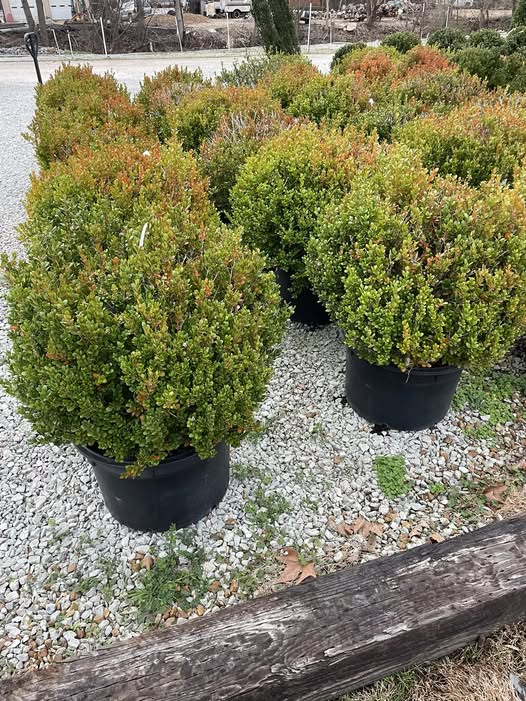
5. Boxwood (Buxus sempervirens)
Boxwood has been a garden staple for centuries — and longevity of that kind is rarely accidental. It grows slowly, holds its shape well, tolerates shade, survives on little water once established, and responds to clipping without complaint. In formal borders, knot gardens, and container plantings across the UK, continental Europe, and the eastern United States, it provides the structural bones around which everything else is arranged.
It grows in Zones 5–8. Gardeners in areas where boxwood blight (Calonectria pseudonaviculata) or box tree moth (Cydalima perspectalis) is prevalent should consider blight-resistant cultivars from the ‘NewGen’ series or explore alternative evergreen options such as Ilex crenata (Japanese holly) as a substitute.
Best for: UK, continental Europe, eastern North America, formal and traditional garden settings worldwide.
6. Holly (Ilex spp.)
Holly is a shrub of remarkable self-sufficiency. Once established in a suitable position, it grows steadily, holds its glossy evergreen foliage through all seasons, produces winter berries on female plants, and requires almost no routine care beyond perhaps a light trim every few years to manage its size. It tolerates shade, clay soil, urban conditions, and coastal exposure with equal ease.
American holly (Ilex opaca), English holly (Ilex aquifolium), and winterberry (Ilex verticillata) are among the most widely grown species across North America and Europe respectively. They grow across a wide hardiness range — from Zones 3 to 9 depending on species — and are irreplaceable in wildlife-friendly gardens, where their berries sustain birds through winter.
Best for: UK, continental Europe, eastern North America, Japan, temperate Australasia.
7. Mahonia (Mahonia spp.)
Mahonia earns its place on this list through sheer reliability in difficult conditions. It grows in deep shade, tolerates dry soil under trees, handles urban pollution, and asks for almost nothing in the way of care. In winter, when most other shrubs offer nothing, large mahonias like Mahonia × media ‘Charity’ produce long, sweetly fragrant yellow flower racemes that bees emerge to visit on mild days.
It grows in Zones 5–9 depending on species and is widely grown in the UK, Ireland, continental Europe, and the Pacific Northwest of North America. Mahonia aquifolium — Oregon grape — is a cold-hardier species suited to Canada and the northern United States, where it grows in Zones 5–9. Neither species requires regular pruning; an occasional tidy to remove any untidy stems is all that is needed.
Best for: UK, Ireland, continental Europe, Pacific Northwest of North America, Canada (hardier species).
8. Hydrangea — Panicle Hydrangea (Hydrangea paniculata)
Among the hydrangeas, the panicle hydrangea is the one most deserving of the low maintenance label. It blooms reliably from midsummer through early autumn on new wood — meaning it can be pruned in late winter without losing the current year’s flowers, which removes one of the most common sources of anxiety in hydrangea care. It is exceptionally cold-hardy, growing in Zones 3–8, and tolerates a range of soils and light conditions.
Popular cultivars include ‘Limelight,’ ‘Little Lime,’ ‘Pinky Winky,’ and ‘Quick Fire.’ All are widely available in nurseries across North America, the UK, and continental Europe. The dried flower heads persist attractively into winter, extending the season of interest without any additional effort.
Best for: Canada, northern and eastern United States, UK, northern and central Europe, Scandinavia.
9. Lavender (Lavandula spp.)
Lavender is not technically a set-and-forget shrub — it benefits from a trim after flowering to prevent woodiness — but this light annual shaping takes minutes and is well within the definition of low maintenance. In return, lavender delivers fragrant foliage year-round, prolific summer flowers in purple, pink, or white, and exceptional attraction to pollinators, all with minimal water and on the poorest, most free-draining soils.
English lavender (Lavandula angustifolia) grows in Zones 5–8 and suits the UK, northern Europe, and cooler parts of North America. Lavandin hybrids and French lavender suit warmer, drier climates in southern Europe, California, South Africa, and coastal Australia. In the right climate and soil — full sun, sharp drainage — lavender plants can perform beautifully for a decade or more.
Best for: UK, Mediterranean Europe, California, South Africa, southern and coastal Australia, New Zealand.
10. Abelia (Abelia × grandiflora)
Abelia is a semi-evergreen shrub that blooms continuously from early summer through autumn, requires very little pruning, tolerates a range of soils and light conditions, and delivers an exceptionally long season of small, fragrant flowers that bees find irresistible. It grows in Zones 6–9 and is popular in the southeastern United States, UK, parts of continental Europe, and mild temperate regions of Australia and New Zealand.
The cultivar ‘Kaleidoscope’ — with its variegated gold and green foliage turning orange in autumn — is particularly popular as a dual-purpose foliage and flowering shrub. Abelia requires only a light spring tidy to maintain shape. Beyond this, it performs year after year without intervention.
Best for: Southeastern United States, UK, continental Europe, mild temperate Australia and New Zealand.
11. Caryopteris — Bluebeard (Caryopteris × clandonensis)
Caryopteris is a late-summer shrub that fills the gap when many other flowering shrubs have already finished. Its aromatic silver stems and vivid blue or violet flower clusters arrive in August and September, sustaining bees and butterflies into the early autumn. It grows in Zones 5–9, tolerates poor, dry, and alkaline soils, and is cut back hard in early spring — a simple, annual task that takes ten minutes and produces the most prolific flowering.
Popular cultivars include ‘Worcester Gold’ (blue flowers, golden foliage) and ‘Heavenly Blue’ (compact, free-flowering). It is widely grown across the UK, continental Europe, and the United States, where it is particularly valued in Midwest and Mid-Atlantic gardens.
Best for: UK, continental Europe, eastern and midwestern United States, parts of South Africa and temperate Australasia.
12. Escallonia (Escallonia spp.)
Escallonia is tough, glossy-leaved, and admirably self-sufficient in the right climate. It produces small pink, red, or white flowers from early summer through autumn, grows in exposed coastal positions without complaint, and tolerates salt spray, wind, and urban pollution that would damage less robust shrubs. It grows in Zones 7–10 and is exceptionally popular in coastal UK gardens — particularly southwest England, Wales, Ireland, and Scotland — as well as in New Zealand, coastal Australia, and the Pacific Coast of North America.
Used as informal hedging or a free-standing border shrub, escallonia needs only an annual tidy after its main flowering period to maintain a good shape. It is one of the most reliable choices for coastal and exposed gardens where the plant selection is often limited.
Best for: Coastal UK and Ireland, New Zealand, coastal Australia, Pacific Northwest of North America, Mediterranean climates.
13. Rosemary (Salvia rosmarinus)
Rosemary is a shrub that the Mediterranean landscape has tested for millennia and found worthy. In gardens across southern Europe, California, South Africa, and coastal Australia, it thrives without irrigation, without feeding, and without significant pruning — simply growing and performing with the quiet persistence of a plant perfectly matched to its environment.
In the UK and similar temperate climates, a light trim after flowering keeps plants tidy and prevents excessive woodiness. Beyond this, rosemary is genuinely low effort. Its evergreen aromatic foliage, early spring flowers for pollinators, culinary usefulness, and deer resistance make it one of the most versatile and practical shrubs available in appropriate climates.
Best for: Mediterranean Europe, California, South Africa, coastal and southern Australia, southern UK, New Zealand.
14. Smoke Bush (Cotinus coggygria)
Smoke bush is a statement shrub that earns its keep through visual impact rather than constant care. Its large rounded leaves — deep purple in the most popular cultivars — colour spectacularly in autumn, and its hazy, smoke-like midsummer flower plumes create an effect that is genuinely unique in the shrub world. It grows in Zones 4–8 and is widely planted across continental Europe, the UK, and the eastern and central United States.
Its maintenance needs are minimal: hard pruning every few years in late winter keeps it bushy and encourages the largest, most colourful leaves if that is the priority. Left unpruned, it develops into a substantial specimen with smaller but more abundant flowering plumes. Either approach works; the choice depends on the gardener’s preference.
Best for: UK, continental Europe, eastern and central United States, temperate Australasia, South Africa.
15. Skimmia (Skimmia japonica)
Skimmia is slow-growing, compact, and largely self-sufficient once established. Its glossy evergreen leaves require no clipping, its spring flowers are fragrant and attractive to early pollinators, and its vivid red winter berries — produced on female plants when a male is nearby — persist for months without fuss. It grows in Zones 6–9, handles deep shade, clay soil, urban pollution, and root competition under large trees with consistent reliability.
In the UK and similar mild temperate climates, skimmia is one of the most practical small evergreen shrubs for shaded, difficult positions where other plants struggle. It simply grows, slowly and steadily, requiring almost nothing beyond the occasional check that it has not dried out in its first season.
Best for: UK, Ireland, coastal Scandinavia, Pacific Northwest of North America, mild urban and suburban gardens worldwide.
16. Weigela (Weigela florida)
Weigela is an unfussy deciduous shrub that produces prolific trumpet-shaped flowers in pink, red, white, or bicolour in late spring and early summer, often with a secondary flush later in the season. It tolerates clay soils, urban conditions, and partial shade without significant decline in performance, and it grows in Zones 4–8, covering a wide geographic range across North America, the UK, Europe, and temperate Australasia.
Maintenance consists of removing about one-third of the oldest stems after flowering every few years to maintain vigour and shape. This is neither difficult nor time-consuming, and the flowering reward for this modest effort is generous. Modern cultivars such as ‘Wine and Roses’ and ‘My Monet’ combine attractive foliage with prolific flowering for additional ornamental value.
Best for: UK, continental Europe, eastern North America, temperate Australia and New Zealand.
17. Butterfly Bush (Buddleja davidii)
Butterfly bush is one of the most naturally resilient and self-sufficient flowering shrubs available to temperate gardeners. It grows in poor soils, tolerates drought, performs in urban conditions, and flowers prolifically from midsummer through early autumn in shades of purple, pink, white, and red — all while sustaining butterflies, bees, and other pollinators in remarkable numbers.
Its primary maintenance requirement is hard pruning in late winter, which takes fifteen to twenty minutes and rewards the gardener with the most vigorous and free-flowering growth of the season. It grows in Zones 5–9. As noted in other guides in this series, sterile cultivars are the responsible choice in regions where invasiveness is a concern — including the Pacific Northwest, New Zealand, and parts of Australia.
Best for: UK, continental Europe, eastern and southern United States; sterile cultivars where invasiveness is a concern.
18. Photinia (Photinia × fraseri ‘Red Robin’)
Photinia ‘Red Robin’ is a widely planted evergreen shrub valued for its vivid red new growth, which emerges in several flushes through the growing season and gradually matures to deep, glossy green. It grows in Zones 7–9 and is popular across the UK, continental Europe, New Zealand, temperate Australia, and South Africa.
Its maintenance is pleasingly straightforward: a clip two or three times during the growing season encourages repeated flushes of the colourful new growth that makes it such a popular choice. As a hedge, informal screen, or large border specimen, it requires no specialist care — simply a willingness to keep it at the desired size.
Best for: UK, continental Europe, New Zealand, temperate Australia, South Africa, warmer parts of North America.
19. Choisya — Mexican Orange Blossom (Choisya ternata)
Choisya is one of the most rewarding and least demanding medium-sized evergreen shrubs for temperate gardens. Its glossy, aromatic foliage forms a naturally rounded mound that holds its shape without clipping. Its fragrant white flowers appear in spring and often again in late summer, bringing two seasons of floral interest without any deliberate effort to produce them.
It grows in Zones 7–10 and is widely grown in the UK, Ireland, continental Europe, the Pacific Northwest of North America, and mild parts of Australasia. It tolerates most well-drained soils, handles partial shade, and is largely pest and disease free. Beyond an occasional light tidy to remove any frost-damaged stems in spring, choisya requires almost nothing.
Best for: UK, Ireland, continental Europe, Pacific Northwest of North America, temperate Australia and New Zealand.
20. Barberry (Berberis spp.)
Barberries are among the toughest and most self-sufficient ornamental shrubs available. Their thorny habit makes them useful for security hedging and deters browsing by deer and rabbits. Their tolerance of poor soils, urban pollution, and a wide range of light conditions from full sun to partial shade makes them practically universal. And their ornamental qualities — yellow spring flowers, red or black autumn berries, and vivid autumn foliage — give them genuine seasonal interest.
Berberis vulgaris — European barberry — grows in Zones 3–7 and is widely grown in the UK and continental Europe. Berberis darwinii — Darwin’s barberry — is an evergreen species with orange-yellow flowers and a particularly attractive compact habit, growing in Zones 7–9 and popular in the UK, New Zealand, and coastal Australia. Always verify invasive species status before planting in North America, Australia, and New Zealand.
Best for: UK, continental Europe (B. vulgaris); UK, New Zealand, coastal Australia (B. darwinii); check local regulations for North America.
21. Pyracantha — Firethorn (Pyracantha spp.)
Pyracantha is a hardworking evergreen shrub that asks for very little and contributes a great deal. Its white spring flowers support early pollinators. Its clusters of red, orange, or yellow berries from late summer through winter sustain fieldfares, redwings, and blackbirds. Its thorny, dense habit provides nesting cover for birds and security at boundaries. And all of this requires almost no active management beyond an annual tidy to keep it at the desired size.
It grows in Zones 6–9 and is widely planted across the UK, continental Europe, New Zealand, South Africa, and temperate North America. Pruning is best done after fruiting to avoid removing developing berries. Few shrubs in temperate horticulture deliver as much wildlife value with as little gardener effort.
Best for: UK, continental Europe, New Zealand, South Africa, temperate North America and Australasia.
22. Hawthorn (Crataegus monogynaand related species)
Hawthorn is an extraordinarily tough and self-sufficient native shrub that grows in almost any soil — clay, chalk, loam, or sandy — in almost any position from full sun to partial shade. It has formed the backbone of British, Irish, and European hedgerow landscapes for centuries without any management beyond occasional cutting. In the garden, it requires equally little.
It grows in Zones 4–7 and is native to Europe and western Asia, naturalised across temperate North America and Australasia. Its white or pink spring flowers are excellent for pollinators, and its red autumn haws are critical winter food for thrushes, fieldfares, and redwings. For wildlife gardening with minimal effort, hawthorn is one of the most valuable and accessible choices available.
Best for: UK, Ireland, continental Europe, Scandinavia, temperate North America, temperate Australasia.
23. Elderberry (Sambucus nigra)
Common elder is one of the fastest-growing and most adaptable native shrubs in the temperate world. It grows in heavy clay, tolerates shade, handles poor soils, and establishes in difficult positions where other shrubs would hesitate. Its flat-topped cream flower clusters in early summer are among the most important nectar sources for insects, and its deep purple-black autumn berries are consumed eagerly by birds and traditionally used in cordials and wines by gardeners who appreciate the seasonal harvest.
It grows in Zones 5–7 and is widely grown across the UK, Ireland, continental Europe, and temperate parts of North America. Ornamental cultivars such as ‘Black Lace’ and ‘Black Beauty’ add dramatic dark-purple foliage to the usual elderberry qualities. Coppicing every few years keeps plants manageable and encourages the most attractive foliage on ornamental forms.
Best for: UK, Ireland, continental Europe, Scandinavia, temperate North America, New Zealand.
24. Rugosa Rose (Rosa rugosa)
Rugosa rose is a rose for people who do not want to fuss over roses. Unlike many hybrid tea and floribunda roses, which demand regular spraying, feeding, and complex pruning, rugosa roses are extraordinarily self-sufficient. They resist disease — their thick, textured leaves are naturally less susceptible to blackspot and mildew than those of modern garden roses — and they flower repeatedly from late spring through autumn without deadheading.
They grow in Zones 2–7, making them among the hardiest roses available, and perform reliably across coastal and inland gardens in Canada, the northern United States, the UK, Scandinavia, and northern and central Europe. Their large, fragrant flowers are followed by substantial red-orange hips in autumn that are rich in Vitamin C and highly attractive to birds. Annual pruning to remove dead or crossing stems takes perhaps half an hour. Beyond this, rugosa roses are genuinely self-sustaining.
Best for: Canada, Scandinavia, northern United States, UK, northern and central Europe, coastal gardens worldwide.
25. Serviceberry (Amelanchier spp.)
Serviceberry closes this list as one of the finest and most genuinely low maintenance shrubs in the temperate world. It offers white spring flowers, edible summer berries in blue-black that birds consume with enthusiasm, attractive summer foliage, and vivid orange, red, and yellow autumn colour — a four-season display that requires virtually no deliberate management to sustain.
Several species grow in Zones 3–7, making them suitable for cold-climate gardens in Canada, the northern United States, Scandinavia, and the UK. Amelanchier canadensis and Amelanchier lamarckii are both widely available in North American and European nurseries. They grow in full sun to partial shade, tolerate moist and clay soils, and establish readily without special preparation.
For a gardener seeking maximum ornamental return for minimum effort — particularly in a wildlife-friendly or naturalistic garden — serviceberry is close to ideal.
Best for: Eastern North America, Canada, UK, northern and central Europe, Scandinavia.
Simple Maintenance Habits That Make a Real Difference
Even the most low maintenance shrubs benefit from a handful of basic habits carried out at the right time.
Mulch once a year. A 5–8 centimetre layer of organic mulch — well-rotted compost, leaf mould, or bark — applied around the base of shrubs in spring retains soil moisture, suppresses weeds, moderates soil temperature, and gradually improves soil structure. It is a single annual task with compounding benefits over time.
Water during the first growing season. Even drought tolerant and low maintenance shrubs need support while their root systems establish. Consistent watering through the first summer after planting dramatically improves long-term performance. After the first full season in the ground, most of the shrubs on this list are genuinely independent.
Prune at the right time and only when needed. Most low maintenance shrubs need pruning less frequently than gardeners assume. Spring-flowering shrubs — forsythia, weigela, viburnum — are pruned after flowering. Summer-flowering shrubs on new wood — spirea, buddleja, caryopteris — are pruned in late winter. Evergreens — boxwood, holly, mahonia — need only occasional tidying. Pruning at the wrong time is the most common cause of reduced flowering.
Feed sparingly. Many low maintenance shrubs — particularly those from lean, poor soils such as lavender, rosemary, potentilla, and broom — actually perform better without rich feeding. A single application of a balanced slow-release fertiliser in early spring is sufficient for most border shrubs. Over-feeding often produces excessive leafy growth at the expense of flowers and increases maintenance demands.
Planning a Low Maintenance Shrub Garden
The most effortless gardens are not accidents. They are the result of deliberate choices made at the beginning — choosing the right plants, placing them in appropriate positions, and giving them a good start.
Group plants with similar needs together. A dry, sunny border might combine lavender, rosemary, caryopteris, and smoke bush — all demanding similar conditions, all tolerating the same dry summer heat. A shaded, moist border might bring together mahonia, skimmia, viburnum, and serviceberry — each suited to lower light and heavier soil.
Avoid the temptation to plant too densely. Shrubs in good soil grow. A border that looks sparse in year one often needs significant intervention by year three if plants are positioned too closely. Follow spacing guidance, fill gaps with temporary perennials or annuals while shrubs establish, and resist the urge to overcrowd.
Finally, accept that low maintenance does not mean no maintenance. A garden that is genuinely pleasurable to spend time in — one that feels cared for, purposeful, and alive — still requires a few hours each season. The difference is that those hours feel like gardening rather than management. That distinction, for many people, is the whole point.
Suggested For You:
15 Flowering Shrubs for Zone 5: The Best Choices for Cold-Climate Gardens
15 Drought Tolerant Shrubs: The Best Choices for Dry Gardens and Water-Wise Landscapes
20 Evergreen Shrubs for Borders: Structure, Colour, and Year-Round Presence
15 Shrubs for Clay Soil: The Best Choices for Wet Ground
15 Deer Resistant Shrubs: The Best Choices for Gardens Under Pressure
Final Thoughts
A low maintenance garden is an act of intelligence, not laziness. It reflects an understanding of what plants need, where they grow best, and how to choose them so that the garden sustains itself rather than consuming the gardener.
The 25 shrubs in this guide represent some of the most dependable and self-sufficient choices available across the temperate world. From the cold, dark winters of Canada and Scandinavia to the warm coastal gardens of New Zealand and South Africa, from the formal borders of the English countryside to the naturalistic landscapes of the American Midwest, these plants have demonstrated, in garden after garden and climate after climate, that beauty and ease are not opposites.
Choose them well, plant them thoughtfully, and they will reward you for decades.
References
- Penn State Extension — Low Maintenance Shrubs for Pennsylvania Landscapes https://extension.psu.edu/low-maintenance-shrubs-for-the-landscape
- University of Illinois Extension — Easy Care Shrubs for Midwest Gardens https://web.extension.illinois.edu/lawnandgarden/shrubs.cfm
- North Carolina State University Cooperative Extension — Landscape Shrubs: Selection and Care https://plants.ces.ncsu.edu/find_a_plant/?habit=shrub
- Royal Horticultural Society (RHS) — Easy Care Shrubs: Low Maintenance Planting Guide https://www.rhs.org.uk/plants/types/shrubs/easy-care
- University of Minnesota Extension — Selecting Low Maintenance Shrubs for Minnesota Landscapes https://extension.umn.edu/planting-and-growing-guides/shrubs

Tim M Dave is a gardening expert with a passion for houseplants, particularly cacti and succulents. With a degree in plant biology from the University of California, Berkeley, he has vast experience in gardening. Over the years, he has cultivated a vast collection of desert plants and learned a great deal about how to grow and care for these unique companions.