8 Common Little Gem Magnolia: Problems, Causes, and Solutions
There is something deeply satisfying about a Little Gem magnolia in full form. Its dense, glossy foliage and large, creamy-white blooms make it one of the most versatile and admired evergreen trees in Southern landscapes.
Many gardeners choose it specifically because it seems low-maintenance. Compact, tidy, and reliably beautiful.
Then something goes wrong.
Leaves start turning yellow. Brown patches appear on the foliage. Blooms become sparse. The canopy thins unexpectedly. And suddenly, the tree that was supposed to be easy feels like a puzzle no one prepared you for.
The truth is that Little Gem magnolia (Magnolia grandiflora ‘Little Gem’) does have a specific set of needs — and when those needs are not met, it shows. This guide covers every significant Little Gem magnolia problem, explains what causes each one, and how to solve them.
A Brief Introduction to the Little Gem Magnolia
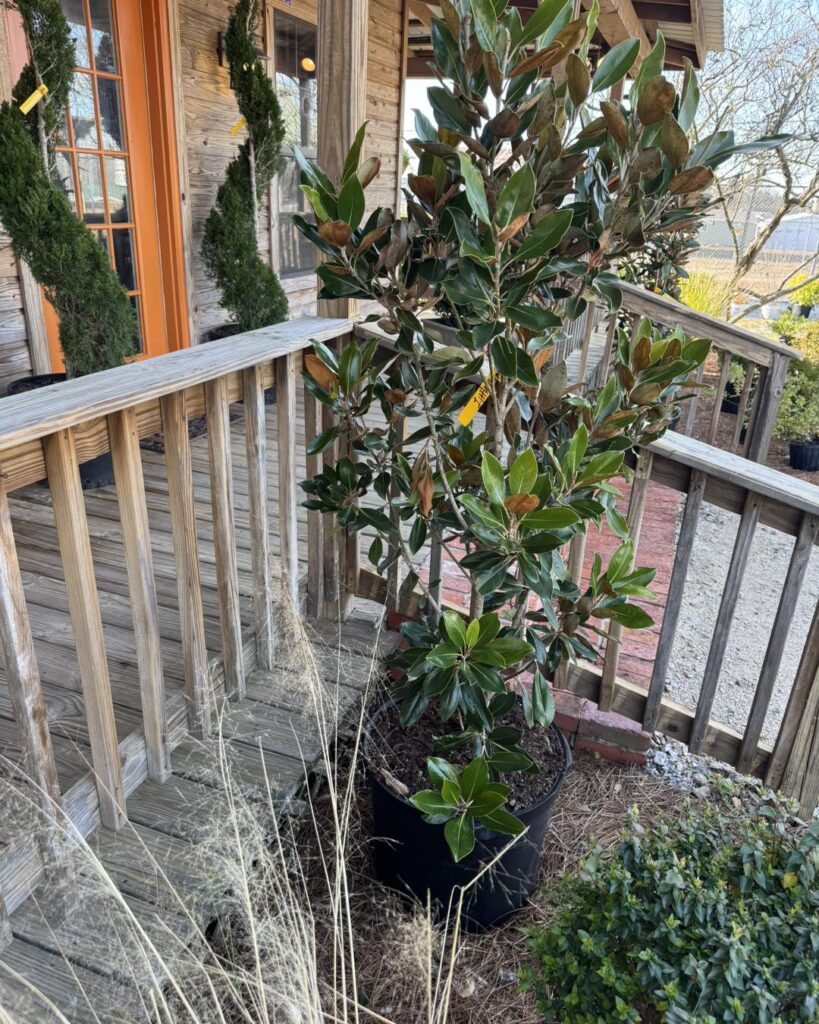
Little Gem is a dwarf cultivar of the Southern magnolia (Magnolia grandiflora), developed in the 1950s in Norcross, Georgia. Unlike the standard Southern magnolia, which can reach 60 to 80 feet in height, Little Gem typically grows 15 to 25 feet tall with a narrow, columnar form. It is slower growing, more compact, and begins blooming at a younger age.
It thrives in USDA hardiness zones 7 through 9, though some gardeners successfully grow it in zone 6 with winter protection. It prefers full sun to partial shade, moist but well-drained acidic soil, and protection from strong, drying winds.
Its evergreen nature is one of its biggest selling points. But those glossy leaves are also the first place problems tend to appear — which makes learning to read them an essential skill for any Little Gem owner.
1. Leaf Yellowing — The Most Common Complaint
Walk through any neighborhood where Little Gem magnolias grow, and you will almost certainly see at least one with yellow leaves. It is by far the most frequently reported problem. The challenge is that yellowing has many possible causes, and identifying the right one matters enormously.
Natural Leaf Drop
Before assuming something is wrong, it is worth understanding that Little Gem — despite being evergreen — does shed older leaves. This typically happens in spring or early summer, as the tree pushes out fresh new growth. The older, inner leaves turn yellow and drop.
If the yellowing is limited to older leaves near the interior of the canopy and new growth looks healthy, this is completely normal.
Many gardeners panic during this period. It helps to remember that “evergreen” does not mean “leaves never fall.” It means the tree retains green foliage year-round — but older leaves are continuously replaced.
Iron Chlorosis
When younger leaves — particularly the new growth — begin turning yellow while the veins remain distinctly green, iron chlorosis is the most likely culprit. This condition occurs when the tree cannot absorb sufficient iron from the soil.
The most common reason is soil pH that is too high. Little Gem magnolias require slightly acidic soil, ideally between pH 5.0 and 6.5. In alkaline soils (pH above 7.0), iron becomes chemically unavailable to the roots even when it is physically present in the soil.
This is particularly common in areas with naturally alkaline soil, near concrete foundations or sidewalks that leach lime into the surrounding ground, or in gardens where lime has been applied excessively.
Treatment involves lowering the soil pH through applications of elemental sulfur or acidifying fertilizers. For faster results, chelated iron applied as a soil drench or foliar spray provides more immediate relief. A soil test is the best starting point — it removes the guesswork entirely.
Magnesium Deficiency
Magnesium deficiency produces a similar pattern to iron chlorosis but typically affects older, lower leaves first. The tissue between the leaf veins turns yellow while the veins stay green. This is called interveinal chlorosis, and the distinction between which leaves are affected first can help identify the nutrient involved.
Applications of Epsom salt (magnesium sulfate) dissolved in water, applied as a soil drench around the root zone, can correct this deficiency relatively quickly.
Overwatering and Poor Drainage
Saturated soil is one of the most damaging conditions for a Little Gem magnolia. When roots sit in waterlogged soil, they are deprived of oxygen and begin to deteriorate. One of the earliest signs is generalized yellowing of the foliage across the canopy, often accompanied by a general look of wilting even when the soil is wet.
This is a common mistake in newly planted trees, where well-meaning gardeners water too frequently out of concern for establishment. Little Gem needs regular moisture but must never sit in standing water. If your soil drains poorly, amending it with organic matter or raising the planting bed may be necessary.
2. Brown Leaves and Leaf Scorch
Brown leaves on a Little Gem are usually a sign of physical stress rather than disease. Several specific causes are worth examining.
Sunscald and Heat Stress
Little Gem tolerates full sun, but in exceptionally hot and dry climates — or during extreme summer heat waves — the leaf margins can scorch. The edges and tips turn brown and papery, while the center of the leaf may remain green. This is classic leaf scorch, caused by excessive transpiration when the tree loses water faster than the roots can replace it.
Young, recently transplanted trees are most vulnerable. Their root systems are not yet fully established, and they struggle to supply water to the foliage under high heat demand.
Deep, infrequent watering — allowing moisture to penetrate 18 to 24 inches into the soil — is more effective than frequent shallow watering. Mulching the root zone with 3 to 4 inches of organic material helps retain soil moisture and moderate soil temperatures.
Wind Damage and Winter Burn
In colder areas at the edge of Little Gem’s hardiness range, winter desiccation is a serious problem. Cold, dry winds in winter draw moisture from the evergreen leaves faster than the dormant roots can replenish it. The result is brown, papery foliage — often across the entire windward side of the canopy — known as winter burn.
This is not a disease. The tree is otherwise alive and healthy, but the foliage has been desiccated. New growth in spring typically fills in the gaps, though severely affected trees may look ragged for a full season.
Planting Little Gem in a location sheltered from prevailing winter winds — near a building or a dense windbreak — reduces this risk significantly. Anti-desiccant sprays applied in late autumn provide some protection for trees in exposed positions.
Salt Damage
Little Gem is moderately sensitive to salt. Road salt spray in winter, or soil contaminated by road runoff, can cause marginal leaf burn similar to drought scorch. The damage is typically concentrated on the side of the tree closest to the road or walkway.
If salt is a recurring issue, deep watering in early spring can flush accumulated sodium below the active root zone. Choosing salt-tolerant groundcovers or barriers between the road and the tree can also help.
3. Fungal Diseases
Fungal diseases can affect Little Gem magnolias, though a well-maintained tree in suitable conditions is reasonably resistant. Problems most commonly arise when the tree is under stress or when cultural conditions favor fungal development.
Algal Leaf Spot (Cephaleuros virescens)
Algal leaf spot is sometimes mistaken for a fungal disease, but it is actually caused by a parasitic green alga. It produces circular, crusty, orange-gray or rust-colored patches on the upper surface of magnolia leaves. It is most prevalent in hot, humid climates — which is, of course, exactly where Little Gem is most commonly planted.
The alga does not typically cause serious harm to a healthy, well-maintained tree. It tends to become a more significant problem on stressed or overcrowded plants where air circulation is poor.
Improving air circulation through careful pruning, avoiding overhead irrigation, and maintaining overall tree vigor are the primary management strategies. Copper-based fungicides can suppress algal leaf spot in severe cases.
Leaf Blight and Phyllosticta Leaf Spot
Several fungal species can cause leaf spots on magnolia, including Phyllosticta spp. These produce small, dark spots on the foliage, sometimes surrounded by a yellow halo. As the disease progresses, spots may enlarge and merge, causing sections of the leaf to die.
Leaf spot diseases are most active in warm, wet weather. They rarely threaten the life of the tree but can affect its appearance significantly.
Raking and removing fallen infected leaves promptly reduces the inoculum available for future infection. Fungicide sprays containing chlorothalonil or copper can suppress outbreaks during high-risk periods, though they are rarely necessary for established, vigorous trees.
Root Rot (Phytophthora spp.)
Phytophthora root rot is one of the most serious diseases that can affect Little Gem magnolia. It is caused by a water mold rather than a true fungus, but it behaves similarly and is often grouped with fungal diseases in practical management discussions.
The organism thrives in saturated or poorly drained soil. It attacks the roots and crown of the tree, causing them to decay. Above ground, the symptoms are easy to confuse with drought stress or nutrient deficiency — yellowing, wilting, dieback, and general decline.
Diagnosis typically requires examining the roots. Infected roots are dark brown to black and lack the firm, white interior of healthy roots. The crown tissue at the soil line may show dark discoloration beneath the bark.
Prevention is far more effective than treatment. Good drainage, avoiding overwatering, and not planting in sites with a history of Phytophthora problems are the key preventive measures. In early-stage infections, phosphonate fungicides applied as a soil drench have shown some efficacy, but they are not a cure for advanced root rot.
4. Insect Pests
Scale Insects
Scale insects — particularly magnolia scale (Neolecanium cornuparvum) and tea scale (Fiorinia theae) — are the most commonly encountered insect pests on Little Gem magnolia. They attach to branches and the undersides of leaves, sucking plant sap and excreting honeydew.
Magnolia scale is the largest soft scale insect in North America. An infestation can go unnoticed until it becomes severe, at which point the tree shows yellowing, branch dieback, and a shiny, sticky coating on leaves and surfaces below the tree.
Sooty mold — a black fungal growth — typically develops on the honeydew, further reducing the tree’s ability to photosynthesize.
Dormant oil sprays applied before new growth emerges in spring are highly effective at killing overwintering scale insects. Summer horticultural oil sprays target active crawlers. Systemic insecticides containing imidacloprid, applied as a soil drench, provide season-long protection for trees with persistent scale problems.
Tulip Poplar Weevil (Odontopus calceatus)
Despite its name, this small weevil also feeds on magnolias. Adults chew small, irregular holes in leaves in spring, while larvae mine between leaf surfaces. The feeding damage can cause portions of the leaf to turn brown and die.
Light infestations cause cosmetic damage only. Severe infestations on young trees may require treatment with contact insecticides. Maintaining a healthy, vigorous tree is the best defense — weevil feeding tends to be more damaging on already-stressed plants.
Magnolia Borer (Euzophera semifuneralis)
The magnolia borer is a moth whose larvae tunnel into the heartwood of magnolia stems. Entry holes are typically found near the base of the tree or at the base of major branches. Signs include sawdust-like frass around entry points, weeping sap, and branch dieback.
Borer damage weakens the structural integrity of affected branches and creates entry points for secondary pathogens. Young trees and those weakened by other stressors are most vulnerable.
Preventive trunk wraps and avoiding unnecessary wounds are the primary cultural controls. Insecticide applications timed to coincide with adult flight periods (typically late spring to early summer) can reduce larval establishment.
Spider Mites
In hot, dry weather — especially when trees are drought-stressed — spider mites can colonize the undersides of Little Gem leaves. Feeding damage produces a stippled, bronzed appearance on the upper leaf surface. With a magnifying glass, you can see tiny mites and their fine webbing on the undersides of affected leaves.
Overhead irrigation can reduce mite populations by washing them off and increasing humidity. Miticides or insecticidal soap sprays are effective for more serious infestations. Avoid broad-spectrum insecticides that kill natural mite predators, as this often worsens spider mite problems.
5. Environmental and Physical Stress Problems
Transplant Shock
Transplant shock is extremely common with Little Gem magnolia and is probably responsible for more tree losses than any disease or pest. Magnolias — including Little Gem — have fleshy, brittle roots that do not recover as easily from transplanting as many other ornamental trees.
Symptoms of transplant shock include wilting, leaf scorch, premature leaf drop, and a prolonged period of stunted growth after planting. Some trees may drop all of their leaves shortly after planting, then gradually refoliate if the roots are intact and conditions are favorable.
Choosing the right planting time is important. Early spring or early autumn, when temperatures are mild and rainfall is more reliable, gives the tree the best chance to establish. Watering deeply and consistently for the first two to three growing seasons is essential. Avoid fertilizing in the first year — it encourages top growth at a time when the tree needs to focus energy on root development.
Poor Planting Practices
Many Little Gem problems trace directly to how the tree was planted. Planting too deeply is one of the most common errors. The root flare must sit at or just above the surrounding soil surface. When the trunk is buried, the bark remains moist, oxygen exchange is impaired, and the tree becomes chronically stressed.
Planting in a hole that is too narrow also restricts root expansion and slows establishment. The planting hole should be two to three times wider than the root ball, though no deeper, to encourage lateral root spread into loosened surrounding soil.
Compacted Soil
Like the Yoshino cherry, Little Gem suffers in heavily compacted soil. Compaction restricts root penetration, reduces water infiltration, and limits oxygen availability to roots. Urban planting sites and areas subject to foot traffic are particularly prone to compaction.
Vertical mulching, soil aeration, and maintaining a generous mulched area around the tree can all improve conditions in compacted sites.
6. Nutrient Deficiencies Beyond Iron
While iron chlorosis is the most discussed nutrient issue, Little Gem can also suffer from nitrogen, phosphorus, and manganese deficiencies — particularly in sandy, low-organic soils that drain nutrients quickly.
Nitrogen deficiency produces general yellowing of older leaves followed by pale, stunted new growth. A light application of slow-release, acidifying fertilizer in early spring addresses this effectively.
Manganese deficiency resembles iron chlorosis closely but tends to affect younger leaves less severely. It is also linked to high soil pH. Chelated manganese applications or pH correction are the appropriate responses.
A proper soil test, rather than guesswork, is the most reliable way to identify which nutrients are deficient and in what degree.
7. Bloom Problems
Failure to Flower
One of the most frustrating experiences for a Little Gem owner is a tree that simply does not bloom — or blooms very sparsely. Several factors can contribute to this.
Insufficient sunlight is often the cause. Little Gem planted in deep shade will produce far fewer blooms than one in full or partial sun. If the tree is gradually being shaded out by surrounding growth, selective pruning of neighboring plants may be needed.
Excessive nitrogen fertilization promotes lush vegetative growth at the expense of flowering. If you have been applying high-nitrogen lawn fertilizer near the tree’s root zone, this may be suppressing bloom.
Young trees sometimes take a few years to settle into reliable blooming, especially after transplanting. A Little Gem in its second or third year after transplant that has not yet bloomed abundantly is often simply still establishing itself.
Bud Drop
Occasionally, Little Gem sets flower buds that then drop before opening. This can be caused by sudden temperature fluctuations, drought stress during bud development, or pest damage to the buds. Maintaining consistent soil moisture during the spring bud development period reduces the risk of bud drop.
8. Sooty Mold
Sooty mold deserves its own mention, as it is one of the most visually alarming things a homeowner can see on a Little Gem. The black, soot-like coating appears on leaves and branches and can cover large areas of the canopy. It is ugly and, in severe cases, can reduce photosynthetic efficiency.
Sooty mold does not directly infect the tree. It grows on the honeydew excreted by sap-feeding insects — most commonly scale insects, aphids, or whiteflies. Treating the underlying pest population is the only effective solution.
Once the insects are controlled and honeydew stops accumulating, the sooty mold will gradually weather away.
Washing affected leaves with a gentle stream of water or a mild soap solution can remove sooty mold more quickly if the infestation is caught early.
Quick Diagnostic Reference Table
| Symptom | Most Likely Cause |
| Yellow leaves, green veins (new growth) | Iron chlorosis, high soil pH |
| Yellow leaves, green veins (old growth) | Magnesium deficiency |
| General yellowing + soggy soil | Overwatering, root rot |
| Brown leaf edges and tips | Leaf scorch, drought, salt damage |
| Brown foliage on windward side in winter | Winter burn / desiccation |
| Orange-gray crusty patches on leaves | Algal leaf spot |
| Black coating on leaves | Sooty mold (insect honeydew) |
| Sticky branches, sticky ground beneath | Scale insects or aphids |
| Wilting, dieback, dark roots | Phytophthora root rot |
| Sparse flowering or no blooms | Insufficient sun or excess nitrogen |
| Holes in leaves, browning patches | Weevil feeding or borer activity |
| Stippled, bronzed leaves | Spider mites |
Preventive Care: Building a Resilient Little Gem
The vast majority of Little Gem magnolia problems are either preventable or much easier to manage when the tree is otherwise healthy and well-maintained. A few consistent habits make an enormous difference.
- Test your soil before planting and every two to three years thereafter. Maintaining a pH between 5.0 and 6.5 resolves or prevents most nutrient-related issues.
- Mulch generously around the root zone — 3 to 4 inches of organic mulch, pulled back from the trunk — to retain moisture, moderate temperature, and suppress weeds.
- Water deeply and infrequently rather than shallowly and often. Deep roots are more resilient roots.
- Plant in the right location. Full sun to partial shade, good drainage, and shelter from harsh winter winds covers most of the basics.
- Inspect leaves and bark regularly — catching scale insects or early canker while populations are small is far easier than managing an established infestation.
- Prune minimally and purposefully. Remove dead, crossing, or damaged wood during dry weather. Do not prune simply for the sake of it.
- Avoid high-nitrogen fertilizers near the root zone, particularly if the tree is already producing healthy vegetative growth.
Suggested For You:
20 Best Flowering Trees for Garden UK: A Complete Guide
20 Low Maintenance Garden Trees for Beginners: A Complete Guide
15 Trees with Year Round Interest: A Complete Guide
8 Major Yoshino Cherry Tree Problems and How to Fix Them
Understanding Halesia Carolina: History, Features, Care and Uses
Final Thoughts
The Little Gem magnolia is genuinely one of the finest small evergreen trees available to gardeners. When it is healthy and well-suited to its site, it asks very little and gives a great deal — glossy foliage year-round, magnificent white blooms from spring through summer, and an elegant, manageable form that fits almost any landscape.
But it is not invincible. Like all plants, it responds to the conditions it is given. Soil quality, drainage, light, pests, and planting practices all shape how it performs. The problems covered in this guide are real — but not one of them is beyond the reach of an attentive, informed gardener.
Understanding what can go wrong is the foundation of keeping things right. With that knowledge, a Little Gem magnolia can truly live up to its name — for decades.
References
- Clemson Cooperative Extension — Magnolia Diseases https://hgic.clemson.edu/factsheet/magnolia-diseases/
- University of Florida IFAS Extension — Magnolia grandiflora: Southern Magnolia https://edis.ifas.ufl.edu/publication/ST401
- North Carolina State University Extension — Magnolia Insect Pests
- University of Georgia Extension — Iron Deficiency in Landscape Plants https://extension.uga.edu/publications/detail.html?number=B1412
- Texas A&M AgriLife Extension — Phytophthora Root Rot of Ornamental Plants https://agrilifeextension.tamu.edu/library/gardening/phytophthora-root-rot/

Tim M Dave is a gardening expert with a passion for houseplants, particularly cacti and succulents. With a degree in plant biology from the University of California, Berkeley, he has vast experience in gardening. Over the years, he has cultivated a vast collection of desert plants and learned a great deal about how to grow and care for these unique companions.