Linden Tree (Tilia cordata): Plant History, Features, Problems, Care and More
Walk through almost any historic European city in July and you will notice something remarkable — a fragrance drifting through the warm air, sweet and honeyed, with a quiet depth that perfumers have chased for centuries.
Follow it to its source and you will find a linden tree (Tilia cordata) in full bloom overhead, its small pale-yellow flowers alive with bees. This is a tree that has shaped European landscapes, medicine, folklore, and culture for thousands of years.
It lines the boulevards of Berlin. It fills the apothecary shelves of traditional herbalists from France to Ukraine. It is the tree most associated with calm, healing, and the height of summer across much of the temperate world.
Yet outside Europe, Tilia cordata remains underappreciated — often overlooked in favour of showier ornamentals that deliver far less in return.
This guide corrects that. Here is everything you need to know about the small-leaved linden: what it is, where it grows, how to grow it well, and why it deserves a place in far more gardens and streetscapes than it currently occupies.
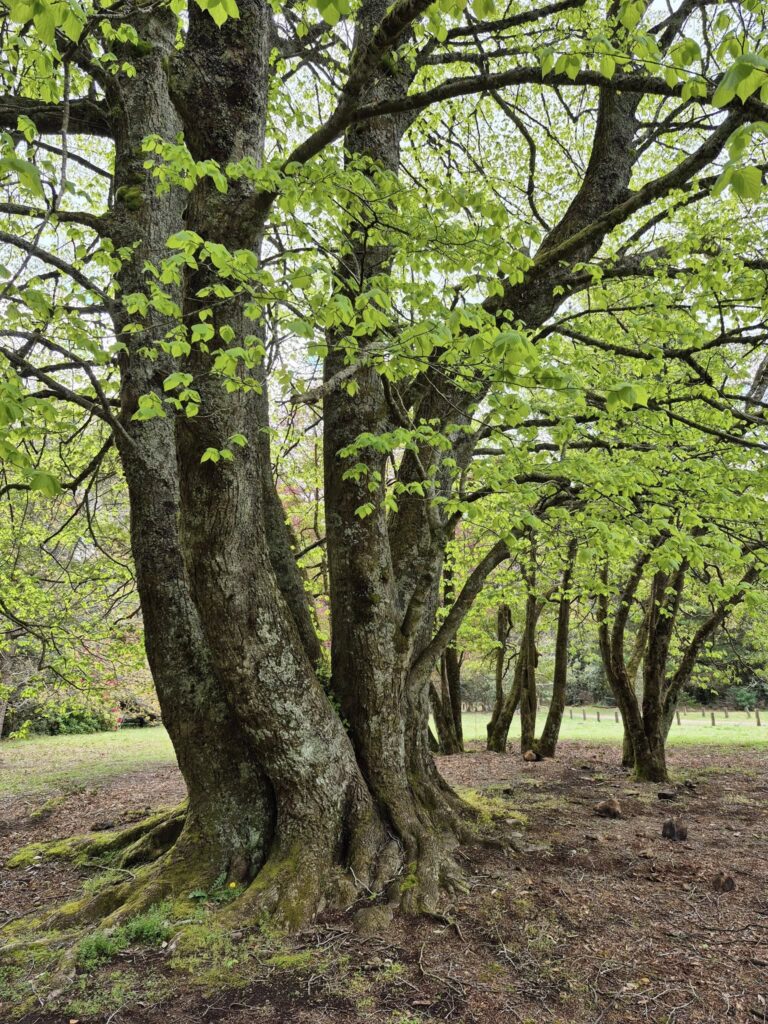
What Is Tilia cordata? Botanical Identity and Background
Tilia cordata, commonly called the small-leaved linden, small-leaved lime, or littleleaf linden, belongs to the family Malvaceae — the mallow family, which also includes hibiscus, hollyhock, and cotton. The name cordata is Latin for “heart-shaped,” describing the distinctive form of its leaves.
Despite the common name “lime tree” used widely in Britain, Tilia cordata has no botanical relationship to the citrus fruit. The name derives from an older English word, lind, which gave us both “linden” and “lime” as names for the same genus.
The species is native across much of Europe and into western Asia — from Britain and Ireland in the west, through central Europe, Scandinavia (as far north as southern Sweden and Norway), and east into Russia, the Caucasus, and Turkey. It is one of the most widely distributed broadleaf trees in the European temperate zone.
In its natural habitat, Tilia cordata grows in mixed deciduous woodland alongside oak, ash, and hornbeam. It thrives in moist, fertile soils, often colonising valley sides and riverbanks where water and nutrients are plentiful.
Mature trees reach 18 to 25 metres (60 to 82 feet) in height, with a broadly oval to rounded crown. In ideal conditions — deep soil, adequate moisture, no competition — they can grow larger. Some of the oldest specimens in central Europe are believed to be over 1,000 years old, their trunks massive and fissured, their canopies enormous.
In cultivation, growth is slow to moderate — roughly 30 to 60 centimetres (1 to 2 feet) per year — but the result is a tree of extraordinary longevity and architectural presence.
The Leaves, Flowers, and Fruit: Identification Features
Leaves: The leaves of Tilia cordata are the defining identification feature. They are small to medium in size — typically 3 to 8 centimetres across — and distinctly heart-shaped, with a pointed tip, serrated margins, and an asymmetrical base.
The upper surface is dark, glossy green; the underside is paler and characteristically bears small tufts of rusty-orange hairs in the vein axils — a feature unique to this species and not found on other European lindens.
Flowers: The flowers appear in mid to late summer — typically June to July in most of its European range, July to August in northern latitudes. They are small, pale yellow, and intensely fragrant, produced in pendulous clusters of 4 to 15 on a distinctive strap-like bract that is unique to the linden genus.
This bract — part leaf, part wing — later assists in seed dispersal, acting as a propeller to carry the fruit on the wind.
The fragrance of linden flowers is extraordinary. It is sweet, warm, and honeyed, with a faintly medicinal undertone. On a still July evening beneath a mature linden in full bloom, the scent hangs in the air almost visibly. It is, for many people, the definitive scent of summer.
Fruit: The fruit is a small, round, woody nutlet, borne attached to the bract. It is not ornamentally significant but provides food for birds and small mammals.
Bark: On young trees, the bark is smooth and grey-green. With age, it becomes grey and deeply furrowed, developing a rugged, textured appearance that gives mature specimens considerable winter interest.
Climate and Hardiness: Where Tilia cordata Grows Best
Tilia cordata is one of the most cold-hardy of all linden species, which is a significant practical advantage. It is fully hardy in USDA Zones 3 through 7 — tolerating winter temperatures down to approximately -40°C (-40°F) at the cold extreme of Zone 3.
This exceptional cold hardiness, combined with its tolerance of urban conditions, makes it one of the most widely recommended street trees in temperate North America, Europe, and parts of Central Asia.
It prefers:
- Cool to moderately warm summers — it performs best where summer temperatures remain below 35°C (95°F) for extended periods
- Cold winters — unlike many broadleaf trees, it is genuinely adapted to cold-temperate climates and requires a proper dormancy period
- Adequate moisture — it is not a drought-tolerant species, and prolonged summer drought causes leaf scorch and premature leaf drop
In hotter climates — Zone 8 and above in most parts of the United States — Tilia cordata struggles with summer heat and drought. For warmer regions, American linden (Tilia americana) or the silver linden (Tilia tomentosa) are better-adapted alternatives.
In North America, Tilia cordata has proven especially successful as a street and park tree in the northeastern United States and the upper Midwest — cities like Minneapolis, Chicago, Toronto, Boston, and New York — where the climate closely mirrors its European native range.
Soil Requirements: Fertile, Moist, and Well-Drained
Tilia cordata is not a particularly fussy tree regarding soil type, but it has clear preferences that, when respected, produce a much stronger and more attractive specimen.
Ideal soil conditions:
- Deep and fertile: the tree roots deeply and extensively; shallow soils restrict growth and reduce drought resilience
- Moist but well-drained: consistent soil moisture is important, but the roots do not tolerate waterlogging for extended periods
- Neutral to slightly alkaline pH: Tilia cordata performs well across a pH range of 6.0 to 8.0, making it more tolerant of alkaline conditions than many ornamental trees — a significant advantage in urban environments with lime-rich or concrete-adjacent soils
- Loamy texture: clay-loam and silt-loam soils are ideal; heavy clays and very sandy soils both limit performance
One of the great practical virtues of small-leaved linden is its alkaline tolerance. Many ornamental trees — including many maples and oaks — develop chlorosis and decline in the moderately alkaline soils common in urban environments.
Tilia cordata handles these conditions considerably better, which is a major reason for its widespread use as a street and urban landscape tree across Europe.
Light Requirements: Full Sun for Best Performance
Tilia cordata is a full-sun tree. It grows most vigorously, flowers most abundantly, and develops the most attractive, dense crown in open positions receiving at least six hours of direct sunlight daily.
It tolerates partial shade — particularly in its youth, as a woodland tree — but flowering and growth both diminish in heavy shade.
For street and park plantings, an open, full-sun position is standard and appropriate. For garden use, avoid planting in the shade of buildings or larger trees; the small-leaved linden eventually becomes the dominant tree in its own right and needs space to express its full character.
Planting Tilia cordata Tree: A Practical Guide
As with all long-lived trees, the investment of care at planting shapes decades of future performance. Tilia cordata is not difficult to establish, but it responds generously to good practice.
Step-by-step planting guide:
- Select an appropriate site — consider mature size (a full-grown linden is a large tree), proximity to buildings and utilities, light availability, and soil drainage; plant away from structures, drains, and paving where surface roots may eventually cause disruption
- Dig a wide, shallow planting hole — two to three times the diameter of the root ball, and no deeper than the root ball itself
- Preserve the root flare — the visible flare at the base of the trunk must sit at or just above finished soil level; deep planting suppresses this critical zone and leads to long-term decline
- Backfill with native soil — linden does not benefit from heavily enriched backfill; use the removed soil, possibly incorporating some compost in very poor or sandy conditions
- Firm gently and water thoroughly — eliminate air pockets and saturate the root zone immediately after planting
- Apply organic mulch — spread 7 to 10 centimetres (3 to 4 inches) of shredded bark or wood chip mulch across the entire root zone, extending well beyond the planting hole; keep mulch 10 to 15 centimetres clear of the trunk
- Stake if necessary — in exposed or windy sites, stake with a low, angled stake for no more than 12 to 18 months; remove promptly to allow the trunk to develop natural movement and taper
Best planting time: Bare-root trees should be planted in late autumn to early spring while fully dormant. Container-grown specimens can be planted at any time the ground is workable, but early autumn planting gives the root system the longest establishment period before summer heat.
Watering: Establishment Is the Critical Phase
Tilia cordata is not drought-tolerant, particularly as a young, newly planted tree. Its natural habitat — moist, fertile woodland soils — does not expose it to the sustained dry periods that more xeric species are adapted to endure.
Watering guidelines:
- Year one: water deeply once or twice a week during dry periods; the priority is deep penetration into the root zone, not surface dampness
- Years two and three: reduce frequency but maintain depth; water every 10 to 14 days during dry spells
- Established trees (5+ years): largely self-sufficient in climates with regular summer rainfall; supplement during prolonged dry periods, particularly in hot summers
Signs of drought stress in linden:
- Premature leaf scorch — brown, crispy leaf margins appearing in summer
- Early leaf drop — the tree sheds leaves before autumn as a water-conservation response
- Wilting of leaf tips on the outer canopy
Adequate mulching dramatically reduces the frequency and volume of supplemental irrigation needed by maintaining soil moisture and moderating root zone temperature.
Fertilising: Supporting Growth in Challenging Soils
In natural woodland or rural settings with fertile, undisturbed soils, Tilia cordata rarely needs supplemental fertilisation. Annual leaf decomposition cycles provide sufficient nutrients.
In urban and suburban settings — with compacted, impoverished, or disturbed soils — an annual fertilisation programme supports health and vigour.
Recommendations:
- Apply a slow-release, balanced granular fertiliser (such as 10-10-10) in early spring before new growth begins
- For trees in marginally alkaline soils showing early chlorosis symptoms, a chelated iron and manganese supplement applied in spring improves micronutrient availability
- Never fertilise in late summer or autumn — this stimulates late-season growth that does not harden sufficiently before winter dormancy
Avoid overly high-nitrogen formulations, which promote soft, fast growth at the expense of structural strength and root-to-shoot balance.
Pruning and Training: Working With the Tree’s Natural Form
Tilia cordata has a naturally pleasing, broadly oval to rounded form that requires minimal corrective pruning in most landscape settings. The main pruning objectives are safety, maintaining structure, and — in formal settings — achieving a desired shape.
When to prune:
- Late winter to early spring, while still dormant, is the ideal time for structural pruning — wounds close efficiently as growth resumes
- Summer pruning can be used to remove water sprouts (epicormic shoots) that linden produces prolifically, particularly on older trees or those under stress; these vigorous, upright shoots arise from the trunk and main branches and should be removed regularly before they grow large
Linden and epicormic growth: Tilia cordata is notable for its tendency to produce epicormic shoots — sometimes called water sprouts or suckers — from the trunk and main branches. This is a natural response to pruning, stress, or simply vigorous root activity. While these shoots are easily removed when small, they can become a persistent management task on heavily pruned or pollarded specimens.
Pollarding: In Europe, linden has been managed by pollarding for centuries — cutting back to a fixed framework of branch stubs each year to produce a dense head of young growth. This traditional practice keeps large trees at a manageable size, provides a regular harvest of young branches for fodder or medicinal leaf harvest, and creates distinctive, sculptural forms that are a feature of many European town squares and avenues. Pollarding must be established from an early age; attempting to pollard a mature, unpruned tree is damaging and rarely successful.
Tilia cordata as a Street and Urban Tree
Few trees have contributed as much to the urban landscape as Tilia cordata. It has been the defining avenue and boulevard tree of European cities for centuries — most famously on Berlin’s Unter den Linden (“Under the Lindens”), planted in the 17th century.
Its combination of qualities makes it exceptionally well-suited to urban use:
- Alkaline soil tolerance — performs where many ornamentals fail
- Cold hardiness — survives harsh continental winters
- Pollution tolerance — copes with urban air quality better than many species
- Consistent, attractive form — develops a dense, symmetrical crown without excessive intervention
- Fragrant summer flowers — an extraordinary amenity value seldom offered by street trees
- Deep roots — less likely than shallow-rooted species to disrupt paving, though adequate soil volume is always important for long-term health
Named cultivars bred specifically for street use have further extended its range of application:
| Cultivar | Key Features | Mature Size |
| ‘Greenspire’ | Strongly upright; excellent straight trunk; most widely planted | 12–15 m |
| ‘Chancellor’ | Narrow, upright form; good for restricted spaces | 12–15 m |
| ‘Rancho’ | Compact, refined form; good for smaller streets | 9–12 m |
| ‘PNI 6025’ (Glenleven) | Fast-growing; open crown; good fragrance | 15–18 m |
| ‘Winter Orange’ | Bright orange-yellow winter twigs; ornamental interest year-round | 10–12 m |
| ‘Erecta’ | Very upright, columnar form | 15–18 m |
For North American urban planners and landscape architects, ‘Greenspire’ is the most widely specified and planted cultivar — reliable, consistent, and well-documented in performance across a range of cold-temperate climates.
Medicinal and Apicultural Value
Tilia cordata carries significant practical value beyond its aesthetic and ecological roles.
Medicinal Uses
Linden flowers (flores tiliae) have been used in European traditional medicine for centuries and remain one of the most commonly used medicinal herbs in France, Germany, Eastern Europe, and beyond.
Traditional and documented uses:
- Linden flower tea (tilleul in French) is consumed for its mild sedative and anxiolytic effects — helping to ease nervous tension, restlessness, and mild anxiety
- It is widely used to support sleep quality, particularly in combination with other mild sedative herbs
- Diaphoretic properties — linden flower tea traditionally used to induce mild perspiration during colds and fevers, supporting the body’s natural temperature regulation
- Soothing for the upper respiratory tract — used in traditional European herbalism for coughs, catarrh, and mild throat irritation
The main active compounds include flavonoids (particularly quercetin and kaempferol glycosides), volatile oils, mucilages, and phenolic acids. The European Medicines Agency (EMA) has formally assessed linden flower as a traditional herbal medicine for symptomatic relief of minor colds and mental stress, acknowledging its long history of use.
Linden flowers should always be harvested when just opening — fully open flowers lose potency rapidly. Drying should be done quickly at low temperatures (below 35°C) to preserve volatile compounds.
Apicultural Value
Tilia cordata is, without question, one of the most important honey plants in Europe. Beekeepers position hives near linden groves deliberately — during the short but intense linden flowering season, nectar flow can be exceptional.
Linden honey is prized for its distinctive character: pale to light amber in colour, with a rich, slightly minty fragrance and a clean, sweet flavour. It crystallises relatively quickly and is considered one of the finest monofloral honeys produced in Europe, commanding premium prices in specialist markets.
A single mature linden tree in full bloom can produce nectar that supports significant foraging activity for an entire hive. In regions with significant linden populations — parts of Ukraine, Hungary, Poland, and Germany — linden honey production is an economically important activity.
Wildlife and Ecological Value
Beyond its apicultural importance, Tilia cordata supports a rich community of wildlife.
The flowers attract enormous numbers of bees, hoverflies, butterflies, and other pollinators during the July flowering season. The buzzing of a linden tree in full flower is a distinctive and memorable sound — a single mature tree can host thousands of foraging bees simultaneously.
The leaves are consumed by the caterpillars of numerous moth species, including several that feed almost exclusively on Tilia. Among these are species of aesthetic and conservation value in European woodland ecosystems.
The seeds are eaten by birds and small mammals. Nuthatches, tits, and finches all forage in linden canopies in autumn.
The bark and decaying wood of old linden trees provide habitat for saproxylic (dead-wood-dependent) beetles — many of which are rare or declining and depend on the presence of ancient, veteran trees for survival.
Encouraging veteran lindens to persist in the landscape — rather than felling when they become hollow or structurally complex — is one of the most valuable contributions to invertebrate conservation that landowners can make in temperate Europe.
Common Problems and Solutions
Tilia cordata is generally robust, but several issues arise in cultivation.
Aphids: Several aphid species are linden specialists, including the lime leaf aphid (Eucallipterus tiliae) and the lime aphid (Tuberculatus annulatus). Aphids on lindens produce large quantities of honeydew — the sticky substance drips from trees onto cars, garden furniture, and paving below. This is a persistent complaint with urban linden plantings. Natural predators — ladybirds, lacewings, parasitic wasps — usually control aphid populations over the summer without chemical intervention, but the honeydew nuisance can be significant at peak times.
Gall mites (Eriophyes tiliae): Produce distinctive, finger-like red or green galls on the upper leaf surface — a very common and easily identified feature on linden leaves. The galls are caused by microscopic mites. They are almost entirely cosmetic and cause no meaningful harm to the tree. No treatment is needed or recommended.
Sooty mould: Black, soot-like fungal growth on leaves and surfaces beneath the tree, caused by honeydew from aphids or other sucking insects. Control the insect source; the mould is secondary and will diminish when honeydew production stops.
Leaf scorch: Brown, dry leaf margins in summer, most commonly caused by drought stress or desiccating wind. Improve irrigation and mulching; consider sheltered planting positions in exposed sites.
Verticillium wilt: Occasionally affects linden, causing sudden branch dieback with characteristic streaking in the wood. Remove affected branches well below visible symptoms. No cure; maintain tree vigour to support natural resistance.
Cultural Significance: A Tree Woven Into European Identity
No tree is more deeply embedded in the cultural landscape of central Europe than Tilia cordata. Its significance extends far beyond the botanical.
In Slavic tradition, the linden — known as lipa in most Slavic languages — is considered a sacred and protective tree. Villages across Poland, the Czech Republic, Slovakia, and the Balkans have linden trees planted at their centres — community gathering places beneath which decisions were made, festivals held, and marriages blessed.
The word lipa appears in numerous place names across central and eastern Europe, a living map of where the tree was once most revered.
In Germanic tradition, the linden (Linde) was associated with love, justice, and community. Courts were held beneath lindens; lovers met beneath them. The famous medieval German poem about the linden — the Linden Song — captures this association with romantic meeting and sheltered intimacy.
Berlin’s Unter den Linden — “Under the Lindens” — is among the most famous boulevards in Europe, its rows of linden trees forming a green corridor through the heart of the city since the 17th century. The linden also appears on numerous European city coats of arms and is the national tree of the Czech Republic and Slovakia.
In French culture, the linden (tilleul) is inseparable from the pharmacy and the kitchen. Linden flower tea (tisane de tilleul) remains one of the most widely consumed herbal teas in France — a daily ritual for millions, particularly in the evening before sleep.
Frequently Asked Questions
Is Tilia cordata the same as a lime tree? In British English, yes — “lime tree” refers to the linden genus (Tilia), not the citrus lime. Tilia cordata is called the small-leaved lime in Britain and the small-leaved linden or littleleaf linden in North America. The name “linden” is standard in American English and internationally.
How long does Tilia cordata live? Under favourable conditions, small-leaved linden is an extraordinarily long-lived species — specimens exceeding 500 years are documented, and some ancient lindens in central Europe are estimated at over 1,000 years old. Even in cultivation, a well-planted tree can easily exceed 200 years.
Can I grow linden in a small garden? A standard Tilia cordata grows into a large tree over time and is not suited to small gardens. However, compact cultivars like ‘Rancho’ or linden grown as a pleached hedge (horizontal trained branches on a clear stem) are both popular solutions for smaller, more formal spaces. Pleached linden “stilts” — a classic formal hedging technique — allow the fragrance and ornamental value to be enjoyed in a fraction of the space a freestanding tree would require.
Why is my linden dripping sticky substance? This is honeydew produced by aphids feeding on the foliage above. It is one of the most common complaints about urban linden plantings. Natural predators usually reduce aphid populations by late summer. Parking cars beneath linden trees in July is generally inadvisable.
When is the best time to harvest linden flowers for tea? Harvest when flowers are just beginning to open — not fully open, and not yet setting seed. This is typically a 10 to 14 day window in June to July. Dry quickly at low temperature, away from direct sunlight, and store in an airtight container for up to one year.
Final Thoughts
Tilia cordata is a tree for the long view. It will not dazzle you with the immediate spectacle of a cherry in blossom or a maple in October flame. What it offers is something more sustained — decades of summer fragrance, exceptional wildlife value, extraordinary longevity, and a deep cultural resonance that connects it to the oldest layers of European civilisation.
Plant it in full sun, give it fertile and reasonably moist soil, mulch its root zone generously, and be patient. In ten years, it will be a fine young tree. In fifty, it will be a presence. In a century, it may well be the most remarkable living thing in the neighbourhood.
Few planting decisions carry quite that weight — or reward it quite so fully.
References
- North Carolina State University Extension – Tilia cordata: Littleleaf Linden Plant Profile https://plants.ces.ncsu.edu/plants/tilia-cordata/
- University of Florida IFAS Extension – Tilia cordata: Littleleaf Linden https://edis.ifas.ufl.edu/publication/ST625
- Virginia Cooperative Extension, Virginia Tech – Tilia cordata Fact Sheet https://dendro.cnre.vt.edu/dendrology/syllabus/factsheet.cfm?ID=91
- University of Minnesota Extension – Linden Trees for Minnesota Landscapes https://extension.umn.edu/trees-and-shrubs/linden
- Penn State Extension – Littleleaf Linden (Tilia cordata) in the Urban Landscape https://extension.psu.edu/littleleaf-linden

Tim M Dave is a gardening expert with a passion for houseplants, particularly cacti and succulents. With a degree in plant biology from the University of California, Berkeley, he has vast experience in gardening. Over the years, he has cultivated a vast collection of desert plants and learned a great deal about how to grow and care for these unique companions.