Jane vs Ann Magnolia Tree: Comparisons + Which One to Choose for Your Garden?
If you have been researching magnolia trees for a small garden or a tight landscape space, there is a good chance you have come across the names Jane and Ann. Both are compact, stunning, and highly regarded by gardeners across North America.
I have seen this question come up repeatedly among gardeners who want the beauty of a magnolia without the overwhelming size of the classic Southern magnolia. These trees tend to create a moment of genuine confusion — because at first glance, they look remarkably similar.
The Jane and Ann are two of the eight cultivars in the famous Little Girl Series — a group of hybrid magnolias developed specifically for smaller spaces and later flowering. Choosing between them, however, requires a closer look.
This article breaks down every meaningful difference and similarity between the Jane and Ann magnolia trees — size, flower colour, bloom time, growth habit, hardiness, and care — so you can make the right choice for your specific landscape.
Background: The Little Girl Series
Before diving into the comparison, it helps to understand where both trees come from.
The Little Girl Series was developed in the 1950s and 1960s at the U.S. National Arboretum in Washington, D.C. The breeding programme was led by botanists Francis de Vos and William Kosar. Their goal was to create magnolia hybrids that bloomed later in spring than traditional magnolias, thereby reducing the risk of frost damage to the flowers.
Both Jane and Ann are hybrids of Magnolia liliiflora and Magnolia stellata ‘Rosea’. This parentage gives them their compact size, their upright to spreading habit, and their relatively late bloom time — all traits that distinguish them from larger magnolia species.
The eight cultivars in the series are named after women: Ann, Betty, Jane, Judy, Pinkie, Randy, Ricki, and Susan. Among these, Jane and Ann are two of the most widely planted and are frequently compared because of their overlapping characteristics.
Jane Magnolia Tree: An Overview
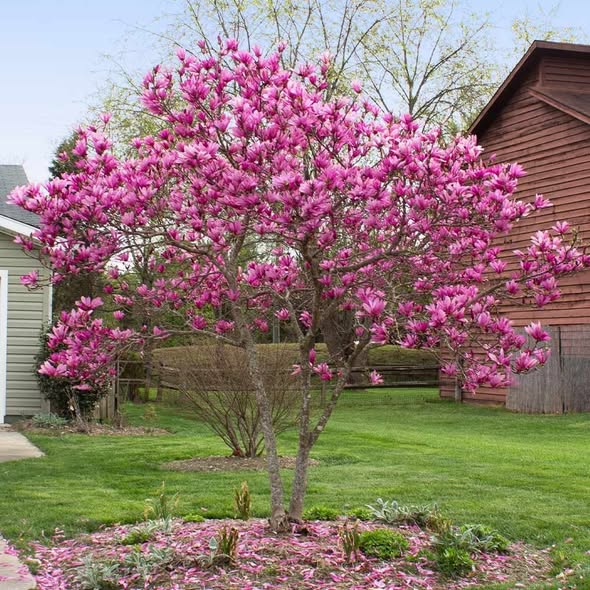
The Jane magnolia (Magnolia × ‘Jane’) is one of the most popular of the Little Girl cultivars. It is widely praised for its rich colour, reliable flowering, and manageable size.
Size and Growth Habit
Jane magnolia is a large shrub to small tree, typically reaching 10 to 15 feet in height with a spread of 8 to 10 feet. Some well-established specimens in ideal conditions have been recorded slightly taller, but this is the reliable mature range for most landscapes.
Its growth habit is upright and somewhat open, becoming more rounded with age. It tends to have a multi-stemmed base, though it can be trained to a single trunk with some effort in the early years.
Growth rate: moderate, adding roughly 12 to 18 inches per year under good growing conditions.
Flowers
The flowers of the Jane magnolia are one of its most distinctive features. They are deep reddish-purple on the outside of the petals and pale pink to white on the inside — a striking two-tone combination that creates a beautiful contrast when the blooms open fully.
Each flower has 6 to 8 petals (technically tepals) that are somewhat narrow and elongated, giving them a slightly more upright, tulip-like shape.
Bloom time: late spring — typically 2 to 3 weeks later than early-blooming magnolias like the saucer magnolia (M. × soulangeana). This later bloom is one of the Jane’s most valued traits, as it significantly reduces the chance of frost damage to the flowers.
Jane also has a notable tendency to rebloom occasionally in late summer or early autumn, though this secondary flush is generally lighter than the spring display.
Fragrance
Jane magnolia flowers are mildly to moderately fragrant — pleasant but not overwhelming. This makes them enjoyable near patios, windows, or walkways without being overpowering.
Foliage and Autumn Interest
The leaves are a clean, medium to dark green throughout the growing season. Autumn colour is generally yellow to yellow-brown — not spectacular, but tidy.
Cold Hardiness
Jane magnolia is hardy in USDA Zones 4 through 8. Its Zone 4 hardiness makes it one of the better options for colder northern gardens where many other magnolia cultivars would struggle.
Ann Magnolia Tree: An Overview
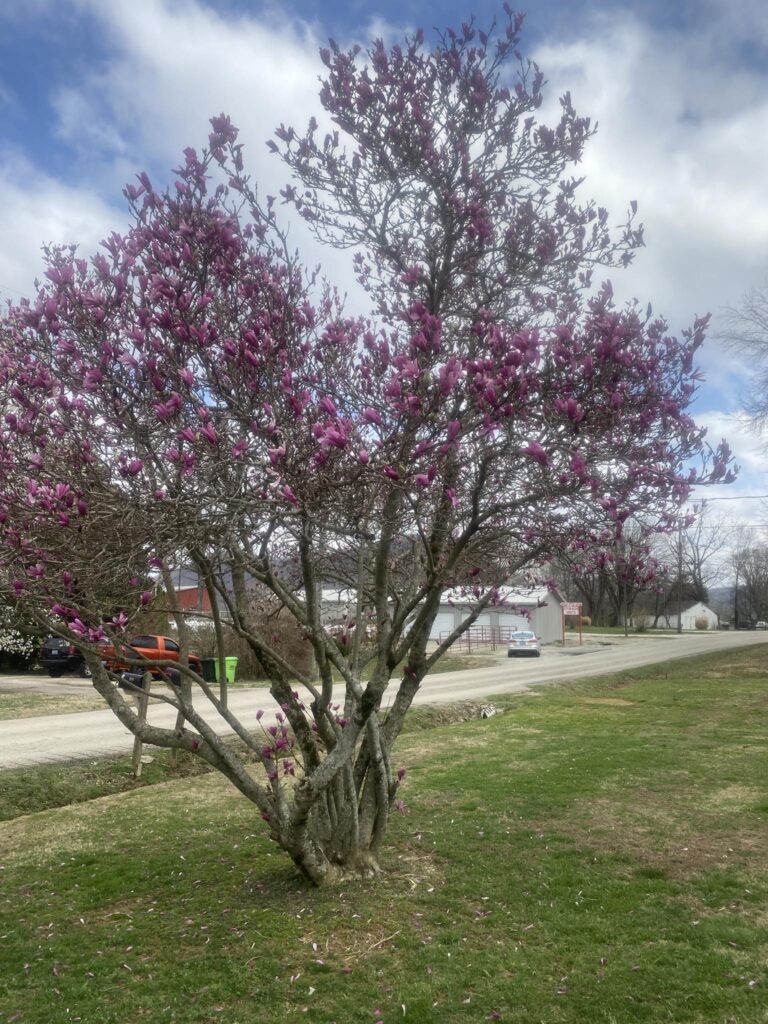
The Ann magnolia (Magnolia × ‘Ann’) is the other standout of the Little Girl Series. It is frequently chosen for its rich flower colour and its very compact, manageable form.
Size and Growth Habit
Ann magnolia is generally slightly smaller than Jane, reaching a mature height of 8 to 10 feet with a spread of 8 to 10 feet. Some sources cite heights up to 12 feet in ideal conditions, but the tree typically stays compact and shrub-like.
Its growth habit is upright and dense, tending to be multi-stemmed and broadly rounded. It has a naturally tidy, bushy form that requires minimal shaping to look presentable in a formal or informal landscape.
Growth rate: moderate, similar to Jane at roughly 12 inches per year under average conditions.
Flowers
The Ann magnolia’s flowers are reddish-purple to deep violet-purple on the outside with a lighter, almost white interior. Many gardeners describe the colour as slightly darker and more intense than Jane’s, though the difference in person is subtle and varies by growing conditions and individual plant.
The flowers are more upright and narrower than some other magnolia cultivars — sometimes described as resembling a wine goblet before they open fully. Each flower carries 6 tepals.
Bloom time: Ann is also a late bloomer within the magnolia world — typically 1 to 3 weeks after early magnolias — for the same reason as Jane: the deliberate breeding aim of the Little Girl Series. However, Ann often blooms very slightly earlier than Jane within the series, which can make a small difference in frost-prone locations.
Ann also has a reputation for occasional reblooming in late summer, though this is less consistent than Jane’s.
Fragrance
Ann magnolia flowers carry a light, sweet fragrance — mild and pleasant, very similar to Jane. Neither tree is what you would call powerfully fragrant, but both offer a gentle scent that is enjoyable up close.
Foliage and Autumn Interest
Ann’s foliage is similar to Jane’s — clean, medium green leaves that turn yellow to yellowish-brown in autumn. Nothing remarkable, but nothing unsightly either.
Cold Hardiness
Ann magnolia is hardy in USDA Zones 4 through 8, identical to Jane. Both trees share strong cold hardiness, which is one of the defining strengths of the Little Girl Series as a whole.
Jane vs Ann Magnolia: A Direct Comparison
Now that we have looked at each tree individually, here is a clear, point-by-point comparison of the key differences and similarities.
1. Size
Jane is typically larger than Ann.
Jane generally reaches 10 to 15 feet tall, while Ann stays closer to 8 to 10 feet. The difference is meaningful in practice. If you have a very tight space — a small courtyard, a narrow side garden, or a spot beside a pathway — Ann’s more compact form is the better fit.
For a slightly larger space where you want more vertical presence, Jane fills the role better.
2. Flower Colour
Both trees produce reddish-purple flowers with lighter interiors, and the difference in colour is slight. Ann is often described as having a slightly deeper, more violet-purple tone, while Jane leans more toward reddish-purple or wine-red.
In a garden setting, the difference is subtle enough that most people would not notice without a side-by-side comparison. Both are visually striking.
3. Bloom Time
Both are late-blooming magnolias relative to early species. Ann tends to bloom a few days to a week earlier than Jane within the Little Girl Series.
In frost-prone locations, this slight difference could matter. If late frosts are a regular concern in your area, Jane’s slightly later bloom may give its flowers better protection.
4. Reblooming
Both Jane and Ann can produce a secondary flush of blooms in late summer or autumn. Jane is generally more reliably noted for this characteristic, though neither tree produces a secondary bloom with the same density as the spring display.
If occasional late-season flowers are important to you, Jane has a slight edge.
5. Growth Habit
Both trees are multi-stemmed and shrub-like, but there are minor differences. Jane tends to be more open and upright, while Ann is denser and more rounded. For formal hedging or a more structured landscape look, Ann’s compact rounded form often works better. For a more naturalistic, open silhouette, Jane is preferable.
6. Cold Hardiness
Both are equally hardy: USDA Zones 4 through 8. No meaningful difference here. Both outperform most other magnolia cultivars in cold tolerance.
7. Fragrance
Both offer mild, pleasant fragrance. There is no meaningful difference between the two in this regard.
8. Soil and Care Requirements
Here again, the two trees are essentially identical in their preferences and care needs. Both perform best in:
- Full sun to partial shade (full sun produces the best flowering)
- Moist, well-draining, slightly acidic soil (pH 5.5 to 6.5)
- Regular watering during the first two to three years after planting
- Light, minimal pruning — only to remove dead or crossing wood, done after flowering
Neither tree tolerates waterlogged soil or prolonged drought well. Both benefit from a generous mulch layer to retain moisture and regulate soil temperature.
Landscape Uses: Where Each Tree Shines
Jane Magnolia in the Landscape
Jane’s slightly taller stature and more open canopy make it well-suited for:
- Specimen planting in a lawn or garden bed where its flowers can be seen from a distance
- Background planting in a mixed border, where its height adds vertical structure
- Near a patio or seating area, where the mild fragrance and spring colour can be appreciated up close
- Foundation planting for larger homes where a 10- to 15-foot tree will not look out of proportion
Ann Magnolia in the Landscape
Ann’s compact, dense form makes it an excellent choice for:
- Small gardens and courtyards where space is genuinely limited
- Foundation planting near lower structures, such as bungalows or ranchers, where a shorter tree is more proportionate
- Low hedges or informal screens — planted in a row, Ann magnolias create a beautiful spring flowering barrier
- Container planting in large pots or raised planters (with proper care and watering)
- Urban gardens and tight townhouse landscapes where space is at a premium
Common Problems: Jane and Ann
Since both trees share the same parentage and growing requirements, they share the same vulnerabilities. Here is a brief overview of the most common problems.
Scale Insects
Both Jane and Ann can be affected by magnolia scale (Neolecanium cornuparvum), the largest scale insect in North America. It appears as waxy, pink to cream-coloured bumps on branches.
Management: Horticultural oil sprays in late winter or summer (targeting the crawlers stage) are the most effective treatment.
Fungal Leaf Diseases
Cercospora leaf spot and other fungal leaf diseases can cause spots, yellowing, and early defoliation in humid climates.
Management: Improve air circulation. Rake and dispose of fallen leaves. Apply fungicides if infections are recurring and severe.
Powdery Mildew
Both trees can develop powdery mildew on foliage in warm, humid weather.
Management: Neem oil or potassium bicarbonate-based fungicides. Avoid overhead watering.
Frost Damage to Flowers
Despite their later bloom time, both Jane and Ann can occasionally have their flowers caught by a late spring frost. The blooms turn brown and fall quickly — upsetting but not harmful to the tree’s long-term health.
Management: Plant in a sheltered location. Cover small trees with frost cloth if a hard frost is forecast during bloom.
Iron Chlorosis
In soils with a pH that is too high (alkaline), both trees may develop iron chlorosis — yellowing between the leaf veins while veins remain green.
Management: Soil test first. Lower pH with sulfur applications. Apply iron chelates for a faster short-term fix.
Which One Should You Choose?
After everything covered above, the choice between Jane and Ann really comes down to two things: available space and personal aesthetic preference.
Choose Jane if:
- You have a slightly larger space and want more vertical presence
- You want a tree that tends to rebloom more reliably in late summer
- You prefer a more open, airy silhouette in the landscape
- You enjoy the slightly warmer, reddish-purple flower tone
Choose Ann if:
- Your space is genuinely small and compact form is a priority
- You want a denser, naturally rounded shape that needs less pruning to look tidy
- You are planting near a low structure and need a tree that will not outgrow its spot
- You prefer a slightly more violet-purple flower colour
If you simply cannot decide — and honestly, both are excellent trees — Jane is generally the more widely available of the two at nurseries across North America, which may be the practical deciding factor.
Care Tips for Both Jane and Ann Magnolias
Whichever tree you choose, the care principles are the same.
Planting: Plant in early spring or autumn. Dig the hole two to three times wider than the root ball but no deeper. Set the root flare at or slightly above soil level.
Watering: Water deeply and regularly for the first two to three growing seasons. Once established, both trees are reasonably adaptable but should not be allowed to dry out completely during extended droughts.
Mulching: Apply a 3- to 4-inch layer of organic mulch around the root zone, keeping it several inches away from the trunk. This is one of the most valuable things you can do for any magnolia.
Fertilizing: A light application of a balanced, slow-release fertilizer in early spring is sufficient for most sites. Avoid high-nitrogen fertilizers, which can push excessive leafy growth at the expense of flowering.
Pruning: Both trees require very little pruning. Remove dead, damaged, or crossing branches immediately after flowering to avoid cutting off next year’s flower buds, which form later in the season.
Suggested For You:
Kwanzan Cherry Tree (Prunus serrulata ‘Kwanzan): Size, Common Problems, and Full Care Guide
19 Common Eastern Redbud Tree Problems: Identifying and Solving Them
Ann Magnolia Tree Size: How Big Does It Really Grow and Why It Matters
Understanding The Crape Myrtle (Lagerstroemia indica): History, Care and Cultivation
15 Small Trees with Non-Invasive Roots: Perfect for Compact Yards and Landscaping
Final Thoughts
Jane and Ann magnolias are two of the finest small ornamental trees available to gardeners in temperate climates. Their shared heritage gives them both outstanding cold hardiness, late bloom timing, and stunning spring colour. Their differences — though subtle — are real and worth considering.
Jane gives you a little more height, a slightly more open form, and arguably more reliable reblooming. Ann gives you a more compact, dense, and rounded tree suited to tighter spaces.
Whichever you choose, you are selecting a tree with a long track record of excellence in North American landscapes. Plant it well, give it time to establish, and it will reward you every spring with one of the most beautiful flowering displays the garden world has to offer.
References
- United States National Arboretum – Magnolia Little Girl Hybrids https://www.usna.usda.gov/Gardens/collections/magnolia.html
- NC State Extension – Magnolia × ‘Jane’ Plant Profile https://plants.ces.ncsu.edu/plants/magnolia-jane/
- University of Florida IFAS Extension – Magnolia Species and Cultivar Selection https://edis.ifas.ufl.edu/publication/ST381
- Penn State Extension – Magnolias for the Home Landscape https://extension.psu.edu/magnolias-for-the-landscape
- Missouri Botanical Garden – Magnolia × ‘Ann’ Plant Finder https://www.missouribotanicalgarden.org/PlantFinder/PlantFinderDetails.aspx?taxonid=277913

Tim M Dave is a gardening expert with a passion for houseplants, particularly cacti and succulents. With a degree in plant biology from the University of California, Berkeley, he has vast experience in gardening. Over the years, he has cultivated a vast collection of desert plants and learned a great deal about how to grow and care for these unique companions.