15 Invasive Ground Cover Plants: Species You Should Know Before You Plant
Not every plant that grows fast and covers ground is a good thing. Some of the most problematic plants in gardens and natural landscapes today were introduced deliberately — chosen for exactly the qualities that now make them difficult to control.
Invasive ground cover plants are a serious issue, not just in private gardens, but in woodland edges, riverbanks, roadsides, and nature reserves across the world. They spread quickly, compete aggressively, and resist removal with a persistence that can exhaust even experienced gardeners.
In this guide, I will help you identify fifteen invasive ground cover plants, explain how and why they spread, and discuss the impact they have on local ecosystems. Some of these plants may surprise you. Several are still widely sold in nurseries today.
1. English Ivy (Hedera helix)
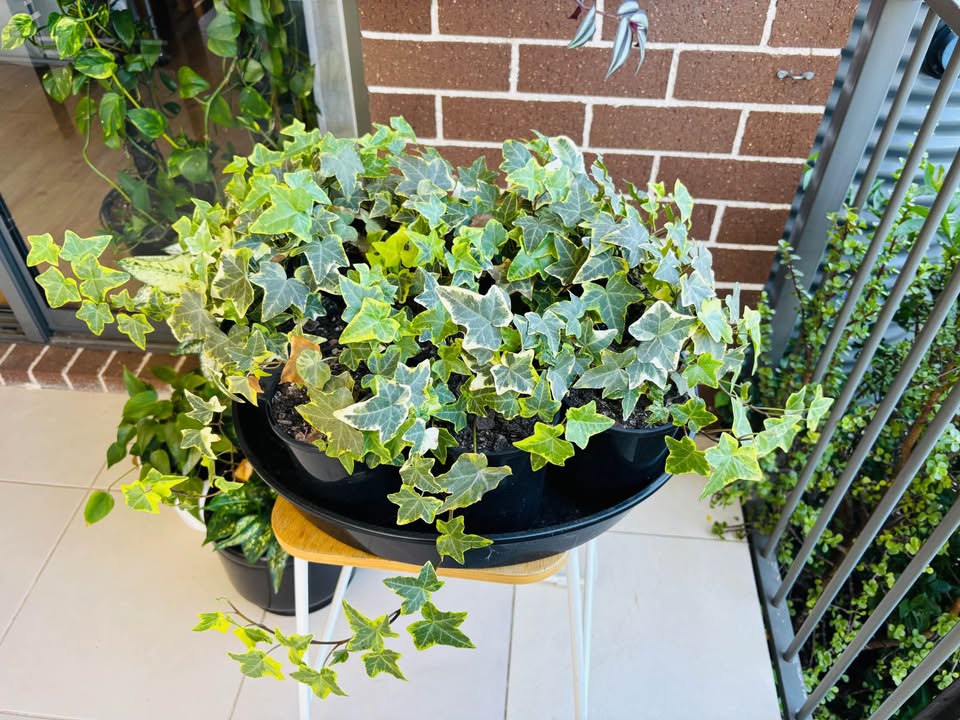
English ivy is perhaps the most widely planted ground cover in the world and, in many countries outside its native European range, one of the most ecologically damaging. In North America particularly, it is classified as invasive in numerous states, spreading from gardens into native forests where it forms dense, impenetrable mats on the ground.
Its spread is twofold. It creeps horizontally across the soil through its trailing stems, rooting at intervals. It also climbs trees, eventually girdling them or adding enough weight to topple them in storms — a phenomenon sometimes called “ivy deserts” in affected forest areas.
Birds consume and distribute its berries widely. Once established in a woodland, it is extraordinarily difficult to eradicate. Regular cutting, combined with herbicide treatment of regrowth, is typically required over several years.
2. Japanese Honeysuckle (Lonicera japonica)
Japanese honeysuckle is a fragrant, vigorous vine that grows low and sprawling in open areas, functioning effectively as a ground cover. The scent of its cream and yellow flowers is beautiful — which is part of why it was introduced so widely as an ornamental plant.
In the southeastern United States, it is now listed as invasive in over two dozen states. It spreads through stolons, underground rhizomes, and bird-distributed seeds, allowing it to colonise forest edges, roadsides, and disturbed areas with remarkable speed.
It climbs over native vegetation, shading out smaller plants and shrubs below. Its dense, evergreen or semi-evergreen growth prevents native seedlings from establishing. Once it forms large mats, removal requires sustained effort and often multiple seasons of management.
3. Creeping Liriope (Liriope spicata)
Creeping liriope is widely used in landscaping as a shade-tolerant, low-maintenance ground cover. It looks tidy, grows reliably, and requires little attention. These same qualities make it a problem in warmer climate zones where it spreads aggressively beyond garden boundaries.
Unlike the clumping form (Liriope muscari), the creeping species spreads through underground rhizomes that are difficult to remove completely. It can establish in woodland and semi-wild areas adjacent to gardens, displacing native herbaceous plants and ferns.
In several southeastern US states, it is flagged as a plant of concern. Gardeners in affected regions are encouraged to choose the clumping form instead, which stays contained and presents no invasive risk.
4. Periwinkle (Vinca major and Vinca minor)
Both greater periwinkle (Vinca major) and lesser periwinkle (Vinca minor) are valued garden ground covers. They are shade-tolerant, evergreen, and produce attractive blue or white flowers in spring. However, outside their native Mediterranean range, both species — particularly Vinca major — are classified as invasive in parts of North America, Australia, and New Zealand.
They spread through trailing stems that root wherever they touch the soil. In natural areas, particularly along stream banks and in riparian woodland, they form dense, persistent mats that exclude native vegetation entirely.
Vinca minor is generally considered lower-risk than Vinca major, but both should be planted with caution and kept away from areas where they could escape into wild landscapes.
5. Yellow Archangel (Lamiastrum galeobdolon)
Yellow archangel is a striking plant with silver-marked leaves and yellow flowers. It was widely sold as an ornamental ground cover, particularly in the variegated form ‘Herman’s Pride’ and the trailing form ‘Florentinum’. In the Pacific Northwest of North America, it is now considered one of the most problematic invasive ground covers in forested areas.
It spreads aggressively through long, arching stolons that root readily. In the moist, mild climate of western Oregon and Washington, it colonises forest floors and riparian areas, forming dense mats that shade out native vegetation including trilliums, native violets, and woodland ferns.
Some nurseries continue to sell it. Gardeners in affected regions are strongly advised against planting any form of this species. It is on the Washington State Noxious Weed List and similar lists in Oregon and British Columbia.
6. Goutweed / Bishop’s Weed (Aegopodium podagraria)
Goutweed is a cautionary tale in plant selection. The variegated form — with its attractive green and white leaves — is still sold in many nurseries despite being genuinely problematic in temperate gardens and natural areas across North America, northern Europe, and parts of Asia.
It spreads through an extensive system of underground rhizomes that break apart easily during digging, with each fragment capable of producing a new plant. Even a small piece left in the soil will regenerate. Complete eradication from an established planting typically takes three to five years of persistent effort.
In natural areas, it spreads into disturbed roadsides, woodland edges, and floodplains. It is highly competitive, particularly in shaded conditions, and once established it is extremely difficult to reverse.
7. Kudzu (Pueraria montana)
Kudzu deserves a mention even though it ultimately grows far larger than a typical ground cover. It was widely introduced as a ground cover for erosion control — particularly in the southeastern United States during the mid-twentieth century — and has since become one of the most notorious invasive plants in North American history.
It is capable of growing up to 30 cm in a single day under optimal conditions, smothering everything below it — trees, shrubs, fences, and buildings. It climbs over and kills native vegetation on a vast scale and is extremely difficult to control once established.
Its story is an important reminder that fast, vigorous coverage is not the same as good ground cover. Erosion control decisions made without ecological consideration can have consequences that persist for generations.
8. Creeping Buttercup (Ranunculus repens)
Creeping buttercup was introduced in the previous article as a plant with potential ornamental use in wet, difficult areas. However, it is important to address its invasive status directly. In North America, New Zealand, and parts of Australia, it is classified as an invasive weed, particularly in agricultural land, pastures, and wet meadows.
It spreads through runners and self-seeding with considerable vigour. In agricultural contexts, it is toxic to grazing livestock in large quantities. In natural meadows, it can displace native wetland flora.
The double-flowered ornamental form ‘Flore Pleno’ is sterile and therefore lower-risk, but the species itself should be planted with full awareness of its potential in your specific region.
9. Ribbon Grass / Reed Canary Grass (Phalaris arundinacea)
Reed canary grass, including its ornamental striped form sometimes called ribbon grass or gardener’s garters, is a vigorous, spreading grass that has become invasive across large areas of North America, particularly in wetlands and along watercourses.
The ornamental variegated form is widely sold in garden centres as an attractive, easy ground cover for moist areas. In garden beds it is manageable. The problem arises when it escapes — either through garden waste disposal, flooding, or deliberate planting near natural water bodies.
In wetland ecosystems, it forms dense, monoculture stands that displace native wetland plants, reduce biodiversity, and degrade habitat for wetland birds and amphibians. Its removal from established wetland sites is difficult and costly.
10. Crown Vetch (Coronilla varia)
Crown vetch was once widely recommended for erosion control on highway embankments and disturbed slopes. Its nitrogen-fixing roots, fast spreading habit, and pink-and-white flowers made it seem like an ideal solution. In hindsight, it has proved to be one of the more ecologically disruptive introductions in the northeastern United States.
It spreads through both rhizomes and seeds, forming dense mats up to 60 cm deep that smother native vegetation. It has colonised roadsides, meadows, and woodland edges extensively, preventing native plant regeneration.
It is now classified as invasive or as a plant of concern in multiple US states. Native legumes such as wild indigo (Baptisia spp.) or native vetches offer erosion control without the ecological risks.
11. Japanese Knotweed (Reynoutria japonica)
Japanese knotweed is arguably the most notorious invasive plant in Europe. While it grows tall at maturity, young spring growth spreads along the ground before ascending, and its dense colonies effectively function as ground cover — excluding all other vegetation beneath and around them.
It can penetrate concrete, tarmac, and building foundations, leading to costly structural damage. Its presence on a property can affect house sales and mortgage applications in the United Kingdom and other countries. It is listed as one of the world’s 100 worst invasive species by the IUCN.
Control requires specialist treatment — typically injected herbicide applied directly to the canes — over a minimum of three to five years. Soil containing rhizome fragments is classified as controlled waste in the UK and must be disposed of accordingly.
12. Chameleon Plant (Houttuynia cordata)
Chameleon plant is sold as an ornamental ground cover for its highly colourful foliage — a striking patchwork of red, yellow, and green. It is particularly promoted for moist, shaded areas. However, it is one of the most persistently invasive ground covers for garden beds, and in warmer climates it has naturalised in wild areas.
It spreads through underground rhizomes that are extremely difficult to remove completely. Each fragment left in the soil regenerates. In the southeastern United States it has naturalised along stream banks and in disturbed moist habitats.
I have heard more than one experienced gardener describe planting chameleon plant as one of their greatest garden regrets. Its appeal on the nursery bench is genuine. Its behaviour in the ground is another matter entirely.
13. Common Ivy / Atlantic Ivy (Hedera hibernica)
Often confused with English ivy, Atlantic ivy is actually a separate species from the Iberian Peninsula and is considered even more vigorous and ecologically problematic in some regions. In Ireland, the UK, and parts of North America, it is considered more invasive than Hedera helix due to its faster growth and greater tolerance of exposed conditions.
Like English ivy, it spreads across the ground by rooting stems and is distributed into natural areas by birds that consume its berries. In woodland settings, it shades out native bulbs, ferns, and woodland wildflowers.
The two species are not always clearly labelled in nurseries, which means gardeners may purchase one believing it to be the other. If you are in a region where either species is flagged as invasive, it is safest to avoid the genus altogether as a ground cover.
14. Purple Loosestrife (Lythrum salicaria)
Purple loosestrife is a tall, striking plant with vivid magenta-purple flower spikes. In its native European habitat it is a valued wetland wildflower. In North America, where it was introduced in the nineteenth century, it has become one of the most damaging invasive plants in wetland ecosystems.
A single plant can produce over two million seeds annually, which are distributed readily by wind and water. It colonises marshes, wet meadows, and the margins of lakes and rivers, forming dense stands that displace native wetland plants including cattails, bulrushes, and native sedges.
The loss of native wetland vegetation has knock-on effects for wetland birds, amphibians, and invertebrates that depend on native plant communities for food and habitat. Sterile cultivars exist and are considered lower-risk, but the species itself should not be planted near natural water bodies.
15. Ground Elder (Aegopodium podagraria)
While ground elder appears on this list separately from its variegated form discussed under goutweed, the plain green species warrants its own entry because of its particular persistence as a garden and landscape weed. Originally introduced to Britain by the Romans as a medicinal and culinary herb, it has naturalised extensively and is one of the most difficult plants to eradicate from gardens.
It spreads through white, brittle rhizomes that break apart at the slightest disturbance. Any fragment left in the soil — however small — regenerates. It thrives in shaded, moist conditions, colonising borders, hedgerows, and waste ground.
In a garden context, eradication requires consistent removal of all top growth over multiple seasons to exhaust the rhizome reserves. Chemical control is possible on bare ground but impractical in mixed borders. Prevention — through careful sourcing of soil and compost — is far preferable to any attempt at cure.
What Makes a Ground Cover Plant Invasive?
The word “invasive” is sometimes used loosely to mean any plant that spreads more than expected. In a precise sense, however, an invasive plant is one that establishes outside its native range, spreads aggressively, and causes measurable ecological or economic harm.
Not every vigorous spreader qualifies. The key factors are:
- Origin: Is it a non-native species introduced to a new environment?
- Spread: Does it propagate beyond the planted area into wild or semi-wild spaces?
- Impact: Does it displace native plant communities, reduce biodiversity, or degrade habitat?
Some plants on this list are invasive in specific regions but well-behaved in others. Context matters. Always check regional invasive species guidance before planting, as what is harmless in one country or climate zone may be destructive in another.
Why Are These Plants Still Being Sold?
This is a question that frustrates ecologists and conservation gardeners alike. The answer is largely commercial and regulatory. Invasive species legislation varies considerably between countries, regions, and even municipalities. A plant banned for sale in one US state may be freely available in a neighbouring one. A species listed as invasive in Australia may face no restrictions in the UK.
Nurseries sometimes continue selling plants that are recognised as problematic because the legal prohibition has not yet been implemented in their jurisdiction. Consumer demand also plays a role — attractive plants with bold foliage or easy establishment remain popular, regardless of ecological concerns.
The responsibility ultimately falls on gardeners to research plants before purchasing, to consult regional invasive species lists, and to make planting decisions that consider the wider landscape, not just the immediate garden.
How to Manage and Remove Invasive Ground Covers
Removal of invasive ground cover depends on the species, the extent of the infestation, and the surrounding environment. Some general principles apply across most situations.
Act early. A small, newly established patch is always far easier to remove than one that has been spreading for several years. As soon as you identify a potentially invasive plant in or near your garden, take action rather than waiting.
Remove the entire root system. For rhizomatous spreaders like goutweed, ground elder, and chameleon plant, physical removal must target the roots, not just the foliage. Cutting back the top growth weakens the plant over time but rarely achieves eradication without also removing the underground portion.
Do not compost invasive plants. Rhizome fragments, seeds, and stolons can survive domestic composting conditions and be redistributed when finished compost is used. Bag the material for collection or, where permitted, burn it.
Consider herbicide treatment for large infestations. Glyphosate-based herbicides are effective on many invasive ground covers, but should be applied carefully to avoid affecting surrounding vegetation. For sensitive environments near waterways or in mixed planting, specialist advice is recommended.
Monitor for regrowth consistently. Most invasive ground covers do not surrender after a single removal attempt. Consistent monitoring and follow-up action over multiple growing seasons is essential for genuine control.
Choosing Alternatives
For every invasive ground cover on this list, there are native or non-invasive alternatives that perform a similar garden function without the ecological risk.
- Instead of English ivy, go for native ferns, Epimedium, or native ginger (Asarum)
- Instead of yellow archangel, go for native Lamium species or Ajuga reptans
- Instead of goutweed, go for sweet woodruff (Galium odoratum) or Pachysandra terminalis
- Instead of periwinkle, go for native Phlox stolonifera or Mitchella repens
- Instead of crown vetch, go for native Baptisia or buffalo clover (Trifolium reflexum)
Native ground covers generally provide superior ecological value — they support local insect populations, integrate into existing food webs, and rarely become unmanageable. Choosing them wherever possible is a straightforward way to garden responsibly.
Final Thoughts
I find the subject of invasive plants genuinely sobering. The plants on this list were not, for the most part, introduced through carelessness. Many were planted by well-intentioned gardeners, conservation engineers, and landscape designers who chose them precisely because they grew so reliably. The problems came later.
The most important lesson from this list is the value of research before planting. A plant that looks beautiful in a nursery pot can become a significant problem in the ground. Checking your regional invasive species list before introducing any new ground cover to your garden is a small investment of time with potentially large ecological returns.
Plant generously, plant boldly — but plant with knowledge. The garden benefits, and so does everything beyond its boundaries.
References
- United States Department of Agriculture (USDA) — Invasive Species Information Center https://www.invasivespeciesinfo.gov/plants/main.shtml
- University of Florida IFAS Extension — Invasive and Non-Native Plants https://edis.ifas.ufl.edu/topic_invasive_nonnative_plants
- Penn State Extension — Invasive Plants of Pennsylvania https://extension.psu.edu/invasive-plants
- Royal Horticultural Society (RHS) — Invasive Non-Native Plants https://www.rhs.org.uk/prevention-protection/invasive-non-native-plants
- University of Georgia Center for Invasive Species and Ecosystem Health — Invasive Plants Atlas of the United States https://www.invasiveplantatlas.org

Tim M Dave is a gardening expert with a passion for houseplants, particularly cacti and succulents. With a degree in plant biology from the University of California, Berkeley, he has vast experience in gardening. Over the years, he has cultivated a vast collection of desert plants and learned a great deal about how to grow and care for these unique companions.