Beginners Guide: Tips for Growing Ponytail Palm in Your Home
The ponytail palm (Beaucarnea recurvata) isn’t a true palm—it’s actually a succulent related to agaves. Native to Mexico, it’s built to store water in its bulbous base, making it ideal for forgetful waterers like me. Its long, curly leaves spill over like a ponytail, giving it a playful look that brightens any room.
In the U.S., it’s a favorite for its adaptability to indoor conditions and forgiving nature.
Why do I love it? It’s pet-friendly, according to the ASPCA, and it thrives in the varied climates, from sunny California to drafty New York apartments.
Here’s why this plant is a must-have:
- Low maintenance: It forgives missed waterings and doesn’t demand constant attention.
- Unique aesthetic: Its quirky shape adds personality to any space.
- Air purification: Like many houseplants, it helps clean indoor air, per NASA’s Clean Air Study.
- Long-lived: With proper care, it can live for decades.
I keep mine on a sunny windowsill, and it’s been a conversation starter at every gathering. Ready to grow your own? Let’s break it down.
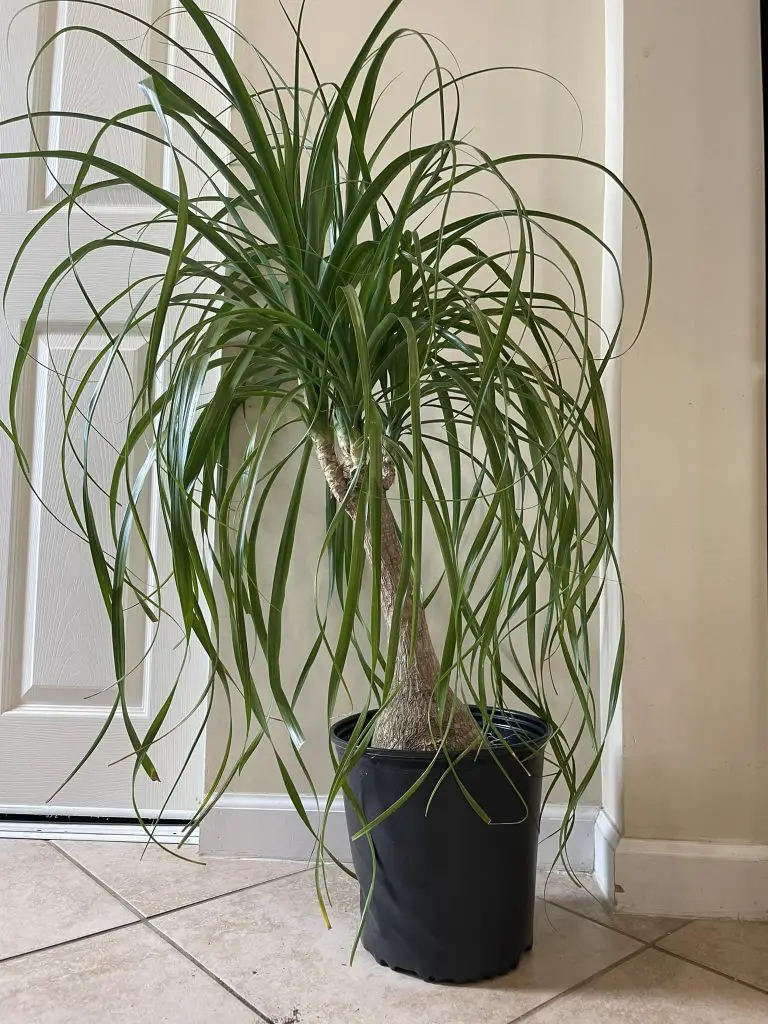
How to Grow a Ponytail Palm
My go-to step-by-step care guide
1. Choosing the Right Ponytail Palm
When I bought my first ponytail palm, I picked a small one from a local nursery. You can find them at places like The Home Depot or online at The Sill. Look for:
- A firm, bulbous base (soft spots signal rot).
- Bright green, curly leaves.
- A size that fits your space—smaller ones are great for beginners.
Pro tip: Avoid plants with yellowing leaves, as they may be stressed.
2. Light Requirements
Ponytail palms crave bright, indirect light. In my home, I place mine near a south-facing window with sheer curtains. It gets plenty of light without scorching.
If you’re in a darker climate, like Seattle, consider a grow light. I use a full-spectrum LED grow light for cloudy days, and my plant thrives.
- Ideal spot: Near east, west, or south-facing windows.
- Signs of too little light: Slow growth or stretched leaves.
- Signs of too much light: Brown, crispy leaf tips.
Rotate your plant every few weeks for even growth. Mine started leaning toward the sun until I got into this habit!
3. Watering Wisely
Here’s where most people mess up. Ponytail palms store water in their bulbous base, so overwatering is their kryptonite. I water mine every 2–3 weeks in summer and once a month in winter.
The University of Wisconsin-Madison Extension suggests letting the soil dry out completely between waterings.
- How to water: Soak the soil, then let it drain fully. Never let the pot sit in water.
- My trick: I stick my finger an inch into the soil. If it’s dry, I water. If not, I wait.
- Signs of overwatering: Yellow leaves or a mushy base.
- Signs of underwatering: Shriveled leaves or a wrinkled bulb.
In humid areas like Florida, water less frequently. In dry climates like Arizona, check the soil weekly.
4. Soil and Potting
Ponytail palms need well-draining soil. I use a cactus or succulent mix. You can also mix potting soil with sand or perlite for better drainage.
- Pot choice: Choose a pot with drainage holes. I learned this the hard way after my first plant got root rot in a decorative pot.
- Repotting: Repot every 2–3 years or when roots crowd the pot. Spring is the best time.
When I repotted mine, I was shocked at how compact the roots were. Be gentle, and don’t bury the bulb too deep—it likes to sit partially above the soil.
5. Temperature and Humidity
Ponytail palms are forgiving of most indoor conditions. They prefer temperatures between 65–80°F, which suits most American homes. I keep mine away from drafty windows in winter, as they dislike temperatures below 50°F.
- Humidity: They tolerate low humidity, making them great for dry states like Nevada. If your home is super dry, a pebble tray with water can help.
- Winter Care: In colder regions like Minnesota, move them away from chilly windowsills.
6. Fertilizing for Growth
I fertilize my ponytail palm sparingly—once in spring and once in summer with a diluted liquid fertilizer. Overfertilizing can burn the roots, so less is more.
- When to fertilize: Only during the growing season (spring and summer).
- Signs of overfertilizing: Brown leaf tips or salt buildup on soil.
In fall and winter, skip fertilizing. Your plant is resting, just like I do after a big Thanksgiving meal.
7. Pruning and Maintenance
Ponytail palms rarely need pruning. If the leaf tips turn brown, I trim them with clean scissors, leaving a thin brown edge to avoid cutting healthy tissue. Remove dead leaves at the base to keep it tidy.
My Tip: Dust the leaves monthly with a damp cloth. It keeps them shiny and helps with photosynthesis.
Styling Your Ponytail Palm
This plant is a decor chameleon. In my living room, it sits in a terracotta pot on a wooden stand, adding a boho vibe. Here are ideas for styling:
- Modern minimalist: Pair with a sleek white ceramic pot for a clean look.
- Southwestern flair: Use a colorful, patterned pot to channel desert vibes, perfect for Arizona or New Mexico homes.
- Small spaces: Place a small ponytail palm on a bookshelf or desk in apartments.
I’ve seen stunning setups on Pinterest that inspired me to experiment with pot styles.
Common Problems and Solutions
Even easy plants have hiccups. Here’s what I’ve faced and how I fixed it:
- Brown leaf tips: Usually from overwatering or low humidity. Trim the tips and adjust watering.
- Yellow leaves: Overwatering or poor drainage. Check the soil and ensure the pot drains well.
- Pests: Spider mites or mealybugs can appear. I wipe them off with a damp cloth or use neem oil, following Penn State Extension’s advice.
- Slow growth: Normal for ponytail palms, but ensure it’s getting enough light.
When my plant got spider mites, I panicked. A quick spray of neem oil and better airflow fixed it in a week.
Propagating Your Ponytail Palm
Propagation is tricky but rewarding. Ponytail palms rarely produce offsets (pups) indoors, but if yours does, here’s what I did:
- Find a pup: Look for small shoots at the base.
- Separate carefully: Use a clean knife to cut the pup, keeping some roots.
- Plant in soil: Pot in a cactus mix and water sparingly.
- Wait patiently: It can take months to establish, per Missouri Botanical Garden.
I haven’t mastered this yet, but I’m hopeful my plant will produce a pup someday!
Ponytail Palm FAQs
Q: How fast do ponytail palms grow?
A: Slowly! Mine grows about an inch a year indoors. Outdoors in warm climates like Florida, they can grow faster.
Q: Can ponytail palms bloom indoors?
A: Rarely. They need to be mature (10+ years) and in ideal conditions, per North Carolina State Extension.
Q: Are ponytail palms safe for pets?
A: Yes, they’re non-toxic to cats and dogs, according to the ASPCA.
Q: Why is my ponytail palm’s base soft?
A: This signals root rot from overwatering. Cut back on water and ensure proper drainage. If it’s severe, repot in fresh soil.
Q: Can I grow a ponytail palm outdoors?
A: In USDA zones 9–11 (think Southern California or Texas), yes! Keep it in a sunny, well-drained spot.
Ponytail Palm Care in Different U.S. Regions
The U.S. spans diverse climates, so here’s how to adapt care:
- Northeast (e.g., New York): Low winter light and dry indoor heat can slow growth. Use a grow light and a pebble tray for humidity.
- South (e.g., Florida): High humidity means less frequent watering. Outdoors, they thrive in partial shade.
- Midwest (e.g., Illinois): Protect from cold drafts in winter. A south-facing window is ideal.
- West (e.g., California): Outdoor growing works in warm areas. Indoors, watch for sunburn in intense sunlight.
I’ve moved my plant between states, and adjusting light and water based on the region made all the difference.
Fun Facts About Ponytail Palms
- They can live up to 100 years with proper care!
- In the wild, they can grow 30 feet tall, but indoors, they stay manageable at 3–8 feet.
- Their bulbous base is called a caudex, which stores water like a camel’s hump.
I love telling guests these tidbits—it makes my plant feel like a mini celebrity.
Where to Buy Ponytail Palms
You can find ponytail palms at:
- Local Nurseries: Support small businesses for healthy plants.
- Online Retailers: The Sill and Etsy offer great options.
- Big-Box Stores: Lowe’s or Walmart often stock affordable plants.
I snagged mine at a local nursery for $15, and it’s been worth every penny.
Final Thoughts
When I started growing my ponytail palm, I was a plant-care rookie. I overwatered it, placed it in a dim corner, and nearly gave up. But after researching and tweaking my routine, it’s now my proudest plant. It’s survived moves, curious cats, and my busy schedule. If I can do it, so can you.
Have questions or tips of your own? Share them in the comments—I’d love to hear your ponytail palm stories!

Tim M Dave is a gardening expert with a passion for houseplants, particularly cacti and succulents. With a degree in plant biology from the University of California, Berkeley, he has vast experience in gardening. Over the years, he has cultivated a vast collection of desert plants and learned a great deal about how to grow and care for these unique companions.
