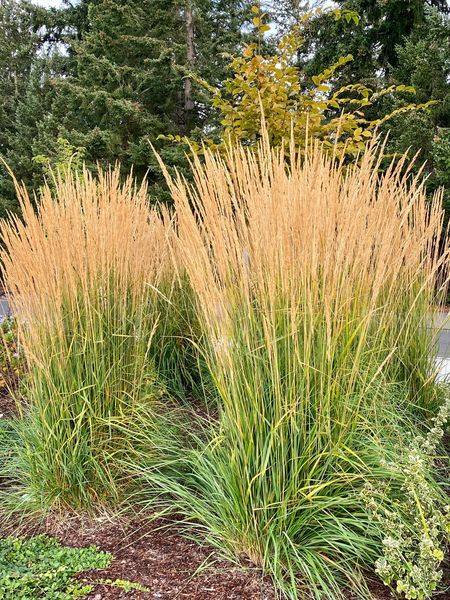
15 Evergreen Ornamental Grasses: Year-Round Beauty for Every Landscape
Most ornamental grasses follow a familiar seasonal rhythm. They grow vigorously through spring and summer, flower in late summer or autumn, and then die back to the ground as winter sets in. That cycle is beautiful — there is genuine poetry in the way a frozen grass catches early morning frost in January.
But not every garden benefits from plants that disappear for months at a time. Sometimes, what a landscape truly needs is plants that hold their form, their color, and their character through every season of the year.
That is where evergreen ornamental grasses earn their reputation.
Evergreen grasses and sedges maintain their foliage year-round, providing structure, texture, and color even in the depths of winter when the rest of the garden has gone quiet. They anchor the landscape visually, frame bare-stemmed shrubs, and give planting beds a sense of permanence that deciduous plants simply cannot offer through the cold months. In mild climates, they are the backbone of the garden. In colder regions, they offer an invaluable contrast to the stark simplicity of winter.
This guide covers 15 of the best evergreen ornamental grasses — including true grasses, sedges, and closely related grass-like plants — with detailed growing information, design guidance, and practical care advice. Whether you are planting a formal border, a naturalistic garden, or a container display that must look good in February as well as July, these are the plants to know.
What Does “Evergreen” Actually Mean for Ornamental Grasses?
The term “evergreen” in the context of ornamental grasses needs a small but important clarification. Unlike broadleaf evergreen shrubs — whose leaves persist for several years before being replaced — most evergreen grasses and sedges produce new foliage each year while retaining their older leaves through winter rather than shedding them entirely.
In practice, this means that evergreen grasses often carry some older, worn foliage by late winter that benefits from light tidying before the new growth season begins. This is not the same as the full cutback that deciduous grasses need — it is a lighter, more selective process of combing out dead material and trimming back the oldest, most tired leaves while leaving the healthy green growth intact.
Some plants described as “evergreen” in warmer climates behave as semi-evergreen in colder zones, retaining their foliage through mild winters but losing some or all of it during severe cold spells. In the individual plant entries below, these nuances are noted where relevant.
Understanding this helps set realistic expectations. Evergreen grasses in winter do not look the same as they do in midsummer — they may be slightly less lush, slightly faded at the tips — but they hold their essential form and color in a way that makes them irreplaceable in the winter landscape.
Why Evergreen Grasses Are Worth Prioritizing in Landscape Design
Evergreen grasses offer several specific advantages that go beyond simply “looking good in winter.” These qualities make them particularly valuable in thoughtful landscape planning.
Year-round structure. Structure is what separates a garden that looks intentional from one that looks neglected. Evergreen grasses provide that structure through every season — their clumps, mounds, and arching forms define spaces and frame views even when flowering plants are dormant.
Reduced bare-soil exposure. Bare soil in winter is not just unattractive — it is ecologically problematic. It erodes under rain, compacts under frost, and loses organic matter. Evergreen grasses cover the soil year-round, protecting its structure and biology.
Wildlife habitat. Dense, evergreen grass clumps provide shelter and overwintering habitat for small mammals, beneficial insects, and birds at precisely the time of year when these resources are most needed.
Low seasonal maintenance. Without the need for annual cutbacks in many climates, evergreen grasses reduce the maintenance burden compared to deciduous species. A light tidy in early spring is typically all they require.
Container continuity. In container gardening, evergreen grasses are invaluable. They provide color and form in pots and planters through winter when most other container plants have either died or gone dormant.
15 Best Evergreen Ornamental Grasses
1. ‘Evergold’ Sedge (Carex oshimensis ‘Evergold’)
‘Evergold’ is one of the most beloved and widely planted ornamental sedges in the world, and its enduring popularity is entirely deserved. Its arching, narrow leaves carry a broad, creamy-yellow central stripe flanked by rich, dark green margins — a variegation that remains vivid, clean, and attractive throughout the year without fading or reverting.
In winter, when most of the garden has retreated to bare stems and empty soil, a clump of ‘Evergold’ glows with a warm, golden quality that lifts the entire planting. In summer, it provides a cool, fresh contrast to hot-colored flowering plants. It is, in every honest sense, a four-season plant.
It thrives in partial shade to shade, making it particularly valuable in the darker areas of the garden where year-round interest is hardest to achieve. It is compact — typically eighteen inches in height — and holds its mounded form without any pruning. It is also largely deer-resistant and performs well in containers as well as in the open garden. Few plants deliver so much for so little effort.
Hardiness: USDA Zones 5–9 | Height: 12–18 inches | Light: Partial shade to full shade | Soil: Moist, well-drained
2. ‘Ice Dance’ Sedge (Carex morrowii ‘Ice Dance’)
‘Ice Dance’ is a vigorous, spreading sedge with dark green, arching leaves edged in clean, bright white. Its strong, clearly defined variegation gives it a crisp, well-dressed appearance throughout the year, and its spreading habit makes it one of the most practical evergreen ground-cover grasses available.
It establishes quickly and spreads steadily by stolons, filling shaded areas with a weed-suppressing carpet of variegated foliage that requires almost no attention once established. It tolerates dry shade better than many sedges — a quality that makes it invaluable under mature trees where root competition and rain shadow create difficult conditions.
In design terms, ‘Ice Dance’ is an exceptionally versatile plant. It works beautifully as a mass groundcover under trees and shrubs, as a neat edging along shaded paths, in containers for year-round interest, and as a foil for dark-leafed companion plants in mixed borders. Its white margins catch available light in shaded spots and brighten the entire composition.
Hardiness: USDA Zones 5–9 | Height: 12–18 inches | Light: Partial to full shade | Soil: Moist to dry; tolerates poor soil
3. Leatherleaf Sedge (Carex buchananii)
Leatherleaf sedge stands apart from almost every other evergreen grass by virtue of its extraordinary color. Its narrow, upright, finely textured leaves are a warm copper-bronze — a tone that intensifies in cool weather and never entirely disappears, even in the height of summer. In a garden dominated by green, a clump of leatherleaf sedge is immediately and unmistakably distinctive.
This warm, reddish-brown coloration works with remarkable versatility in planting design. It reads as autumn foliage even in spring and summer, creating a permanent note of seasonal warmth that makes the surrounding greens appear fresher by contrast. It pairs beautifully with golden, lime, and chartreuse companions, and it provides a striking counterpoint to silver-blue grasses like blue fescue.
It is native to New Zealand and is reliably evergreen in mild climates. In colder regions (Zone 6 and below), it may suffer some foliage damage in severe winters but typically recovers well in spring. It performs in both full sun and partial shade, though its color is most intense in sunnier positions.
Hardiness: USDA Zones 6–9 | Height: 2–3 feet | Light: Full sun to partial shade | Soil: Moist, well-drained
4. Blue Fescue (Festuca glauca ‘Elijah Blue’)
Blue fescue is among the most instantly recognizable of all ornamental grasses. Its compact, spiky tussocks of intensely silver-blue, fine-textured foliage have a clean, almost sculptural quality that works with equal effectiveness in formal and informal garden contexts. And as an evergreen, it delivers that distinctive color and form across all twelve months of the year.
‘Elijah Blue’ is the most widely available and most reliably colored cultivar. ‘Boulder Blue’ and ‘Siskiyou Blue’ are also excellent, each with subtle variations in blue intensity and compactness. All three form low, rounded mounds that stay well within the bounds of a moderate-sized pot or border space.
In winter, the blue tones of the foliage often deepen slightly, taking on a more silvery, frosted quality that is particularly beautiful when combined with the warm, amber tones of dried grasses or the dark forms of evergreen shrubs. It needs full sun and excellent drainage — the conditions it dislikes most are shade and wet soils.
Hardiness: USDA Zones 4–8 | Height: 8–12 inches | Light: Full sun | Soil: Well-drained, dry to moderately moist
5. Japanese Forest Grass (Hakonechloa macra ‘Aureola’)
Japanese forest grass is not typically classified as fully evergreen — in cold climates, it dies back in winter — but in USDA Zones 7 and warmer, it retains much of its foliage through the year, behaving as semi-evergreen to nearly evergreen. For gardens in these zones, it earns its place on any evergreen grass list through sheer ornamental excellence.
Its cascading, golden-yellow and green striped leaves create a waterfall-like effect that is among the most beautiful forms in the ornamental grass world. The foliage glows in shaded positions with a warmth that feels almost like sunlight. In autumn, it flushes with pink and bronze. In mild winters, it holds much of this color into the new year.
For gardens in Zones 7–9 where year-round interest is a priority, Japanese forest grass in partial shade is one of the single finest plant choices available. It combines form, color, movement, and seasonal performance in a way that very few plants in any category can match.
Hardiness: USDA Zones 4–9 (semi-evergreen in Zones 7–9) | Height: 1–2 feet | Light: Partial shade to shade | Soil: Moist, well-drained, humus-rich
6. Compact Oregon Grape Grass — New Zealand Wind Grass (Anemanthele lessoniana)
New Zealand wind grass — also known as pheasant’s tail grass — is a medium-sized, arching evergreen grass with extremely fine-textured, flowing foliage that moves with exceptional grace in the breeze. Its foliage color is one of its most remarkable qualities: a complex mixture of green, orange, red, and bronze tones that shifts with the seasons and the light, ensuring that the plant looks different — and fascinating — at every time of year.
In spring, new growth is bright green. Through summer, orange and bronze tones develop. By autumn and winter, the plant is suffused with warm red and copper hues. In low winter light, a clump of wind grass in full color can stop a garden visitor in their tracks.
It thrives in full sun to partial shade and is tolerant of a range of soil types, including dry, sandy, and coastal conditions. It self-seeds modestly, which helps it naturalize naturally in suitable climates. It is a genuinely spectacular grass that rewards placement where its movement and color can be fully appreciated.
Hardiness: USDA Zones 8–10 | Height: 2–3 feet | Light: Full sun to partial shade | Soil: Well-drained; tolerates dry conditions
7. Pennsylvania Sedge (Carex pensylvanica)
Pennsylvania sedge is a native North American evergreen sedge with a deceptively modest appearance and an almost heroic tolerance for difficult conditions. Its fine, soft, bright green foliage forms a low, dense carpet — typically under ten inches tall — that stays green through most of the year, even in the challenging combination of dry soil and deep shade that defeats most other plants.
It is one of the most effective lawn substitutes available for shaded areas where turf grass has given up. It grows slowly but steadily, eventually forming dense, weed-suppressing colonies that require no mowing, minimal watering once established, and essentially no fertilization. A single trim in early spring refreshes the foliage and is the sum total of its annual maintenance requirement.
Its ecological value is significant: it is a native plant that supports native insects and provides low-level habitat for ground-dwelling birds and small mammals. For gardeners interested in creating low-maintenance, ecologically conscious landscapes, Pennsylvania sedge is one of the most valuable plants available.
Hardiness: USDA Zones 3–8 | Height: 6–10 inches | Light: Partial to full shade | Soil: Dry to moist; tolerates poor, compacted soil
8. Rosy Sedge (Carex rosea)
Rosy sedge is a delicate, fine-textured native sedge from the woodland understory of eastern North America — a fact that speaks directly to its preference for shaded, naturalistic settings. It forms small, graceful clumps of arching, medium-green foliage that remain evergreen through mild winters and semi-evergreen in colder climates.
In spring, it produces small, rosy-tinted flower heads that give the plant its charming common name. Its compact size — rarely exceeding eighteen inches — makes it ideal for the front of a shaded border, as informal edging along a woodland path, or as a naturalizing groundcover beneath deciduous trees where its native character feels genuinely at home.
It is notably cold-hardy for an evergreen sedge, and it tolerates dry shade once established — a combination that extends its usefulness to a wide range of garden conditions. For native plant gardens and woodland landscapes, rosy sedge is among the finest small evergreen grasses available.
Hardiness: USDA Zones 3–8 | Height: 12–18 inches | Light: Partial to full shade | Soil: Moist to dry, well-drained
9. Berkeley Sedge (Carex divulsa)
Berkeley sedge is a tough, adaptable, evergreen sedge from Europe that has become increasingly popular in California and the Pacific Northwest as a lawn substitute and low-maintenance groundcover. Its fine, dark green, arching foliage forms a graceful, flowing carpet that tolerates a remarkable range of conditions — from full sun to deep shade, from dry soil to regular moisture, and from coastal fog to inland heat.
It does not require mowing, though an occasional trim to remove older, tired foliage keeps it looking its best. It tolerates foot traffic better than many ornamental grasses, making it suitable for high-traffic pathway edges and open areas where a low, informal evergreen cover is needed.
Its natural, soft appearance suits cottage, Mediterranean, and naturalistic garden styles particularly well. In a formal garden context, it is better used in drifts or masses rather than as a clipped edge plant. It self-seeds modestly and, in ideal conditions, will gradually spread to fill available space.
Hardiness: USDA Zones 7–10 | Height: 12–18 inches | Light: Full sun to full shade | Soil: Adaptable; tolerates dry to moist conditions
10. Variegated Liriope (Liriope muscari ‘Variegata’)
Liriope — commonly called lilyturf — occupies a botanical position between the grass family and the lily family, but in horticultural practice it is universally grouped with ornamental grasses and functions identically in landscape design. Variegated liriope brings year-round interest through its broad, strap-like, dark green leaves edged with creamy-yellow margins, and its late-summer spikes of small, violet-purple flowers are a genuine ornamental bonus.
It is among the most widely planted evergreen groundcover plants in warm-climate landscapes — and with good reason. It tolerates heat, drought, deep shade, poor soil, and salt spray with a stoicism that few other evergreen plants can match. Once established, it is essentially self-sufficient.
In cooler climates, the foliage may look somewhat tired and flattened by late winter, but it recovers with fresh new growth in spring. A light shear in late winter removes the worn older foliage and allows the new season’s growth to emerge cleanly. It is an invaluable, dependable evergreen presence in difficult conditions.
Hardiness: USDA Zones 5–10 | Height: 12–18 inches | Light: Full sun to full shade | Soil: Adaptable; drought-tolerant once established
11. Greater Wood Rush (Luzula sylvatica)
Greater wood rush is a shade specialist among evergreen grass-like plants — it genuinely thrives in conditions of deep shade and moist, cool soil that would challenge or defeat most other ornamental grasses. Its broad, strap-like, dark green leaves edged with fine white hairs form spreading clumps that gradually colonize shaded woodland-garden conditions in a deeply natural, unhurried way.
In spring, it produces small, chestnut-brown flower clusters on upright stems that have a quiet, botanical charm. ‘Marginata’ is a popular cultivar with more clearly defined cream-colored leaf margins that brightens dark corners more effectively than the species form.
It tolerates dry shade better than most wood rushes and is largely deer-resistant. For deeply shaded areas under dense deciduous or evergreen tree canopies — places where few other plants survive, let alone look good year-round — greater wood rush is one of the most dependable evergreen plants available. It fills a niche that very few other ornamental grasses even attempt to occupy.
Hardiness: USDA Zones 4–9 | Height: 12–18 inches | Light: Partial to full shade | Soil: Moist to dry; tolerates poor soil
12. Mexican Feather Grass (Nassella tenuissima)
Mexican feather grass — also known as silky thread grass or fine-leaved feather grass — is one of the most ethereally beautiful evergreen ornamental grasses available. Its extraordinarily fine, hair-like leaves and flower stems create a soft, flowing, gossamer effect that moves with extraordinary delicacy at the slightest air movement. In winter, when the foliage takes on warm golden and buff tones, this movement quality becomes even more pronounced and beautiful.
It is reliably evergreen in its preferred climate range — warm, dry, well-drained conditions in full sun — and in these conditions it is among the most self-sufficient of all ornamental grasses. Rich soil and excess moisture encourage floppy, untidy growth that undermines its natural grace. Lean, well-drained soil produces the upright, fine-textured form that makes it so distinctive.
One important note: in mild, Mediterranean-type climates it can self-seed prolifically, and it is listed as invasive in parts of California, Texas, and Australia. Always consult local invasive species guidance before planting. Where it can be grown responsibly, it is a genuinely spectacular evergreen grass.
Hardiness: USDA Zones 6–10 | Height: 18–24 inches | Light: Full sun | Soil: Well-drained, lean; drought-tolerant
13. New Zealand Hair Sedge (Carex comans)
New Zealand hair sedge brings a unique character to the evergreen grass palette. Its extraordinarily fine, hair-like leaves form flowing, slightly weeping clumps with a soft, natural quality that is quite unlike the more upright or architectural forms of many other sedges. It is available in both green and bronze forms — the latter with warm, tawny-copper foliage that provides a quiet, sustained warmth throughout the year.
The green form works well as a fresh, light-colored ground cover or front-of-border plant in partial shade settings. The bronze form — often listed as Carex comans ‘Bronze’ — functions beautifully as a color accent in mixed plantings, where its warm tones create subtle contrast against green or golden companions.
It is semi-evergreen in colder climates and fully evergreen in mild maritime climates. It performs best with consistently moist soil and performs particularly well in partial shade in regions with hot summers, where afternoon shade prevents the leaf tips from browning. In cool, mild climates, it tolerates full sun without difficulty.
Hardiness: USDA Zones 7–9 | Height: 12–18 inches | Light: Partial shade to full sun | Soil: Moist, well-drained
14. Compact Inkberry Sedge — Gem Box Inkberry (Ilex glabra ‘Gem Box’) — note on substitution
In the context of purely grass-like evergreen plants, Carex flacca (blue sedge or glaucous sedge) deserves particular recognition as an underused evergreen with outstanding ornamental and practical qualities. Its narrow, steel-blue leaves have a color comparable to blue fescue but with a wider climate tolerance — it grows well in both sun and partial shade and tolerates both dry and moist conditions with equal ease.
It forms low, spreading mats of blue-tinted foliage that provide year-round color interest while serving as an effective, weed-suppressing groundcover. Its modest height — typically under a foot — makes it ideal for front-of-border use, rock gardens, and as a low-growing contrast element among taller grasses and perennials.
It spreads steadily but not aggressively by rhizomes, gradually filling spaces between other plants in a natural, organic way. It is a useful all-rounder that fills the role of blue fescue in shadier or moister settings where fescue would struggle — an important niche in a well-planned evergreen grass palette.
Hardiness: USDA Zones 4–9 | Height: 8–12 inches | Light: Full sun to partial shade | Soil: Dry to moist; adaptable
15. Dwarf Mondo Grass (Ophiopogon japonicus ‘Nanus’)
Dwarf mondo grass completes this list as one of the most versatile, widely adaptable, and genuinely low-maintenance evergreen grass-like plants available. Botanically a member of the asparagus family, it functions identically to a true grass in every landscape application. Its very short, dark, glossy green blades form an incredibly dense, uniform carpet that stays under three inches tall — making it a perfect, no-mow lawn alternative for small shaded areas, between stepping stones, or as a formal edging plant.
Black mondo grass (Ophiopogon planiscapus ‘Nigrescens’) is a related cultivar with striking near-black foliage that is exceptional as a color accent plant in contemporary and minimalist garden designs. Both forms are fully evergreen across their hardiness range and remarkably tolerant of heat, drought, foot traffic, and shade.
Mondo grass spreads slowly but steadily by short rhizomes, eventually forming a dense, seamless cover that requires no mowing, no edging, and minimal watering once established. In return for this almost complete self-sufficiency, it provides a clean, fresh, permanently green presence that is genuinely year-round.
Hardiness: USDA Zones 6–11 | Height: 2–4 inches (dwarf); 6–10 inches (standard) | Light: Partial to full shade | Soil: Moist, well-drained; tolerates dry conditions once established
Design Principles for Evergreen Grasses in the Landscape
Using evergreen grasses well in the landscape requires a slightly different approach than designing with deciduous plants. Because they are present and visible year-round, their placement, scale, and relationships with neighboring plants matter in every season simultaneously.
Think about winter first. It sounds counterintuitive, but planning an evergreen grass planting with the winter garden in mind first — and then ensuring the summer garden also looks good — tends to produce better results than the reverse. Winter exposes every weakness in a planting design: the gaps, the poor proportions, the lack of structure. Evergreen grasses fill those weaknesses with form and color precisely when they are most needed.
Use contrast deliberately. The varied foliage colors of evergreen grasses — blue, gold, bronze, cream-variegated, dark green — create powerful visual combinations when placed thoughtfully. Pair ‘Evergold’ sedge with dark evergreen shrubs for warmth. Place blue fescue beside bronze leatherleaf sedge for a cool-warm color tension that holds interest through all seasons. Use black mondo grass against pale gravel or light-colored paving for a crisp, contemporary contrast.
Layer heights for depth. A single plane of evergreen grasses — all the same height — creates a flat, uninspiring effect. Combining low groundcover sedges at the front, medium-height variegated sedges in the middle, and taller evergreen grasses at the back or center creates depth, visual interest, and a naturalistic quality that feels considered rather than planted.
Repeat key varieties for cohesion. Repeating the same evergreen grass at intervals through a planting border or across a garden space creates visual rhythm and a sense of intentional design. Three or five clumps of ‘Evergold’ sedge spaced through a shade border, for example, ties the planting together with a unifying golden note that draws the eye along the length of the bed.
Annual Care for Evergreen Ornamental Grasses
The care routine for evergreen grasses is notably lighter than for their deciduous counterparts, but it is not entirely absent. A few annual tasks keep them in excellent condition.
Early spring tidy. In late winter or early spring, use a gloved hand or a fine-toothed rake to comb out dead and tired foliage from within the clump. For plants that have accumulated significant older material, trim the outermost, most weathered leaves back with scissors or hand pruners. The goal is to refresh the plant’s appearance and allow new growth to emerge cleanly — not to cut it back to the ground.
Division every three to five years. Evergreen grasses and sedges gradually expand their clumps and can become congested or hollow in the center over time. Dividing in early spring — lifting the clump, splitting it into sections with a sharp spade, and replanting the vigorous outer portions — refreshes the plants and provides additional specimens for other parts of the garden.
Fertilization in spring. A light application of a balanced, slow-release fertilizer in early spring supports fresh, vigorous new growth. Most evergreen grasses do not need heavy feeding and perform better in lean to moderately fertile conditions. Excessive nitrogen produces lush, floppy growth that detracts from the compact, tidy forms that make these plants so appealing.
Suggested For You:
15 Low Maintenance Ornamental Grasses: Beauty Without the Work
20 Small Ornamental Grasses for Borders: The Complete Planting Guide
20 Ornamental Grasses for Full Sun: The Complete Growing and Design Guide
15 Tall Ornamental Grasses for Privacy: A Complete Screening Guide
15 Ornamental Grasses for Winter Interest: Identification and Features
Final Thoughts
There is a quiet confidence to a garden that looks good in winter. It is the confidence of a space that was planned with the whole year in mind — not just the bright, exuberant months, but the grey and quiet ones too. Evergreen ornamental grasses are fundamental to achieving that confidence.
They do not shout. They do not demand attention with extravagant flowers or dramatic seasonal transformations. What they offer is something more lasting: presence, structure, texture, and color that persists through every day of the year, through every season, in every kind of light.
Plant them thoughtfully, care for them simply, and they will reward you with a garden that feels genuinely complete — not just in summer, but always.
References
- Penn State Extension – Ornamental Grasses: Culture and Landscape Use https://extension.psu.edu/ornamental-grasses
- North Carolina State University Extension – Evergreen Ornamental Grasses and Sedges https://content.ces.ncsu.edu/ornamental-grasses
- University of California Agriculture and Natural Resources – Grasses and Sedges for California Landscapes https://ucanr.edu/sites/scmg/Grasses_and_Sedges
- University of Wisconsin-Madison Extension – Year-Round Interest with Ornamental Grasses https://extension.wisc.edu/publications/ornamental-grasses-home-landscape
- USDA Plant Hardiness Zone Map – Official Reference for Cold Tolerance in Plant Selection https://planthardiness.ars.usda.gov

Tim M Dave is a gardening expert with a passion for houseplants, particularly cacti and succulents. With a degree in plant biology from the University of California, Berkeley, he has vast experience in gardening. Over the years, he has cultivated a vast collection of desert plants and learned a great deal about how to grow and care for these unique companions.