Tips for Buying Succulent Plant Grow Lights: Your Guide for Vibrant Plants
Succulents thrive in bright, direct sunlight—think 6-8 hours daily. In their native habitats, they bask in the intense desert sun. But in American homes, especially in regions with long winters like the Pacific Northwest or Northeast, getting enough sunlight is tough.
My apartment in Chicago, for example, has north-facing windows that barely let in enough light to keep my Echeverias happy. Without sufficient light, succulents stretch (a condition called etiolation), lose their vibrant colors, and weaken.
That’s where grow lights come in. They are designed to mimic natural sunlight, thus providing the right spectrum and intensity for photosynthesis. Grow lights are crucial during winter, when days are shorter, or in homes with small windows or shaded rooms.
According to Iowa State University Extension, succulents need at least 10 hours of bright, indirect light indoors to thrive, and grow lights can bridge the gap when natural light falls short.
Types of Grow Lights for Succulents
Choosing the right grow light can feel overwhelming with so many options. I’ve tested a few types, and here’s what I’ve learned about the most popular ones for succulents:
1. LED grow lights
LEDs are my go-to for succulents. They’re energy-efficient, long-lasting, and provide a full spectrum of light. This includes the blue and red wavelengths that succulents love. Blue light (400-520 nm) promotes compact leaf growth, while red light (610-720nm) encourages flowering.
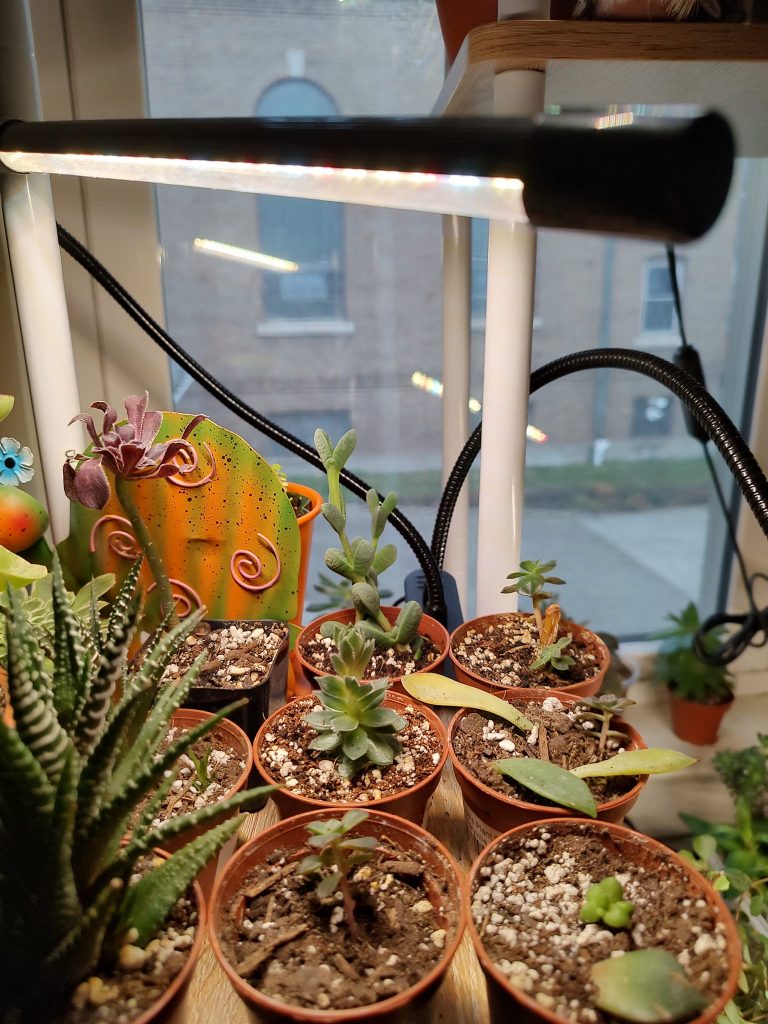
I use a full-spectrum LED panel for my collection, and my Sedums have never looked better. LEDs also produce less heat, so I don’t worry about scorching my plants if I place them close.
Pros: Energy-efficient, customizable spectrum, low heat.
Cons: Higher upfront cost.
2. Fluorescent grow lights
Fluorescent lights, like T5 or T8 tubes, are budget-friendly and widely available. They’re great for beginners or those with smaller setups. I started with a T8 fluorescent setup for my Haworthias, and it worked well for a 1×4-foot shelf.
Fluorescent lights often emit “cool” or “daylight” spectrums (around 6500K), which mimic natural sunlight. However, they’re less efficient than LEDs and may need replacing sooner.
Pros: Affordable, easy to find.
Cons: Less efficient, shorter lifespan.
3. Compact fluorescent lights (CFLs)
CFLs are perfect for small spaces or a few plants. I used a CFL bulb in a desk lamp for a single Echeveria on my office desk, and it stayed vibrant all winter. They emit more heat than LEDs or fluorescent tubes, so I keep them 10-12 inches away from my plants to avoid burns.
Pros: Compact, fits standard fixtures.
Cons: Higher heat output, less coverage.
4. High-Intensity Discharge (HID) lights
HID lights, like Metal Halide or High-Pressure Sodium, are powerful but overkill for most home setups. They’re better suited for commercial greenhouses due to their high cost and heat output. I’ve never used them at home, but they’re worth mentioning for large-scale growers.
Pros: Intense light for large areas.
Cons: Expensive, high heat, not ideal for homes.
My take: For most American homes, I recommend LEDs or fluorescents for their balance of efficiency, cost, and performance
Key Features to Look for in a Succulent Grow Light
When shopping for a grow light, I focus on a few key features to ensure my succulents get what they need. Here’s what to consider:
Light Spectrum
Succulents need full-spectrum lights that include blue (400-520 nm) for vegetative growth and red (610-720nm) for flowering. A color temperature of 5000-6500K mimics natural daylight, which is ideal. I’ve noticed my plants stay compact and colorful under 6500K LEDs.
Lumens and Intensity
Lumens measure light brightness. Succulents need 2000-8000 lumens per square foot, depending on the species. For example, my full-sun-loving Sempervivum thrives at 3000-5000 lumens, while my low-light-tolerant Gasterias do fine at 2000.
Always check the lumens rating on the product to avoid under- or over-lighting.
Wattage and efficiency
Wattage indicates energy use, not light output. Look for lights with high lumens per watt for efficiency. My 32-watt LED panel covers a 2×2-foot area and keeps my electric bill low.
Adjustability
I love grow lights with adjustable arms or chains, like the AeroGarden Trio, which I tested for my small collection. They let me tweak the height (6-24 inches) to suit different plants. Flexible fixtures are great for spaces with varied setups, from bookshelves to dedicated plant corners.
Timers
Timers automate light cycles, mimicking natural day-night patterns. I set my lights for 12-14 hours daily, giving my succulents a rest period to prevent stress. The TORCHSTAR LED Grower has a built-in timer with 4-, 8-, and 12-hour settings, which I find super convenient.
Heat output
Too much heat can burn succulents. LEDs and fluorescents are low-heat options, but CFLs and HIDs need more distance (10-24 inches). I always monitor my plants for signs of heat stress, like browning tips.
Top Grow Light Recommendations for Homes in the U.S.
After testing several models, here are my top picks for succulent grow lights:
Mars Hydro LED Grow Light
- Why I Love It: Full-spectrum, energy-efficient, and great for medium to large collections. I use it in my basement for a 2.5×2.5-foot setup.
- Best For: Dedicated plant spaces or grow tents.
- Price: ~$80-$150.
- Where to Buy: Amazon or Mars Hydro.
AeroGarden Trio Grow Light
- Why I Love It: Stylish, adjustable, and beginner-friendly. It blends into my living room decor and has multiple light settings.
- Best For: Small collections or decorative setups.
- Price: ~$100.
- Where to Buy: AeroGarden.
GE Grow Light LED Flood Bulb
- Why I Love It: Affordable and fits standard lamps. I used it in a clamp-on desk lamp for a single plant.
- Best For: Beginners or small spaces.
- Price: ~$20-$30.
- Where to Buy: Amazon or Home Depot.
TORCHSTAR LED Indoor Herb Garden
- Why I Love It: Sleek design with dimmable levels and a timer. It’s perfect for my modern apartment.
- Best For: Contemporary homes with small to medium collections.
- Price: ~$60-$90.
- Where to Buy: Amazon.
Setting Up Your Grow Light for Success
Setting up a grow light is easier than it sounds. Here’s how I do it:
- Choose the right spot
Find a stable surface, like a shelf or table, away from drafts or heat sources. I keep my succulents on a bookshelf near a window for supplemental light. - Adjust the distance
Place the light 6-24 inches above your succulents, depending on the type. LEDs can be 18-24 inches away, while fluorescents work at 6-12 inches. I adjust my lights weekly to ensure even exposure. - Set a timer
Mimic natural daylight with 12-14 hours of light daily. I use an outlet timer to automate this, so I don’t forget to turn the lights off. - Rotate your plants
Indoor lights don’t move like the sun, so I rotate my plants weekly to prevent lopsided growth. This keeps my Echeverias symmetrical. - Monitor and adjust
Watch for signs of too much or too little light. Stretching means more light is needed, while browning indicates too much intensity or heat. I learned this the hard way when my Sempervivum got scorched!
Benefits of Grow Lights in Your Home
Grow lights aren’t just about plant health—they enhance your home’s vibe. Here’s why I love them:
- In states like Michigan or Minnesota, where winters are dark, grow lights keep my succulents thriving. This gives a year-round greenery:
- Modern grow lights, like the AeroGarden Trio, double as stylish decor, fitting seamlessly into my living room.
- Having vibrant plants indoors lifts my spirits, especially during gloomy months. Architectural Digest notes that succulents add joy to home spaces.
- Whether you’re in a tiny apartment or a spacious house, grow lights work in any setup.
Common Mistakes to Avoid
I’ve made plenty of mistakes with grow lights. Here’s what to watch out for:
- Placing lights too close burns plants; too far, and they stretch. Stick to 6-24 inches.
- Avoid lights labeled only “red” or “blue” unless you’re targeting specific growth stages. Full-spectrum is best.
- Grow lights don’t change watering needs. I water my succulents every 1-2 weeks, ensuring the soil dries completely.
- Succulents need 10-12 hours of darkness daily to rest. I forgot this once, and my plants looked stressed.
Where to Buy Succulents and Grow Lights
Ready to start your indoor succulent journey? Here are my favorite places to shop:
- Harddy offers a wide range of hardy and exotic succulents with referral programs for deals. Simply Succulents is great for bulk purchases.
- Amazon, Home Depot, or specialized sites like Mars Hydro have reliable options.
- Check Succulents Box for pots, soil, and care guides.
FAQs About Succulent Grow Lights
Q: Do succulents really need grow lights indoors?
A: Not always. If your home gets 6-8 hours of bright, indirect sunlight, your succulents may be fine. But in low-light conditions, like winter or shaded rooms, grow lights prevent etiolation and keep colors vibrant.
Q: How long should I leave grow lights on?
A: Aim for 12-14 hours daily to mimic natural daylight. Use a timer to automate this and ensure a 10-12-hour dark period.
Q: Can I use a regular light bulb for succulents?
A: Regular bulbs don’t provide the right spectrum or intensity. Stick to full-spectrum grow lights with at least 2000 lumens per square foot.
Q: How far should the grow light be from my succulents?
A: It depends on the light type. LEDs work at 18-24 inches, fluorescents at 6-12 inches, and CFLs at 10-12 inches. Adjust based on plant response.
Q: Are grow lights expensive to run?
A: LEDs are energy-efficient, costing pennies per day. My 32-watt LED runs 12 hours daily and barely impacts my bill. Fluorescents are slightly less efficient but still affordable.
Q: Can grow lights help my succulents flower?
A: Yes! Lights with red wavelengths (610-720nm) or a 3000K color temperature encourage flowering. My Sedums bloomed beautifully under a 3000K bulb.
Final Thoughts
Grow lights have transformed my succulent collection, making my home a green oasis even in the darkest months. Whether you’re a beginner with a single plant or a collector with shelves of succulents, the right grow light can keep your plants thriving.
Stick to full-spectrum LEDs or fluorescents, prioritize lumens and adjustability, and don’t skip the timer. With these tips, you’ll have vibrant, happy succulents that brighten your space year-round.
For more succulent care tips, explore Succulent Plant Care or The Next Gardener. Happy growing!

Tim M Dave is a gardening expert with a passion for houseplants, particularly cacti and succulents. With a degree in plant biology from the University of California, Berkeley, he has vast experience in gardening. Over the years, he has cultivated a vast collection of desert plants and learned a great deal about how to grow and care for these unique companions.