Butterfly Bush (Buddleja davidii): History, Cultivation and Problems
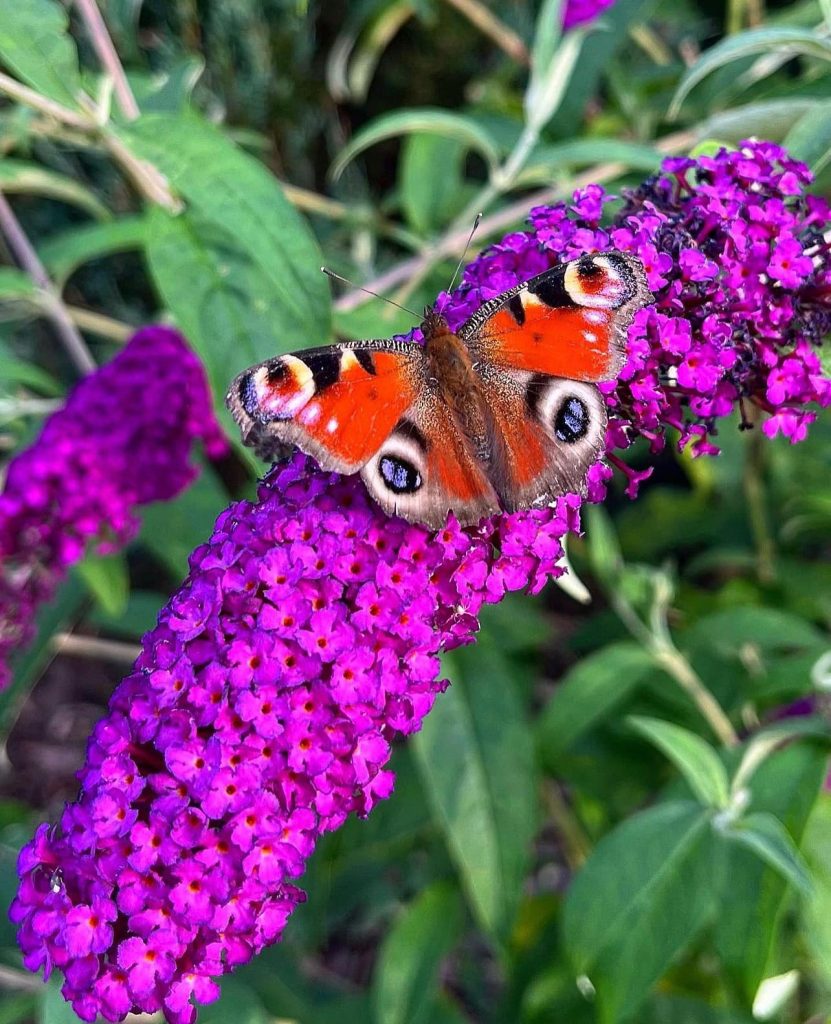
The butterfly bush, also known as Buddleja or Buddleia, is one of the most beloved flowering shrubs in gardens worldwide. This is because of their long flowering period and intoxicating fragrance that attracts hundreds of swallowtails, painted ladies, and hummingbirds.
This plant was first discovered in China by the French missionary and botanist Père Armand David in the 1860s (hence the species name davidii). It was introduced to Europe in the 1890s by the famous Veitch nursery and quickly became a Victorian garden favorite.
The genus Buddleja (sometimes spelled Buddleia) was named in honor of the English botanist Reverend Adam Buddle by none other than Carl Linnaeus himself. Let’s explore more about this popular shrub, learn how to grow it, and understand some of its problems.
Key Features and Characteristics
| Feature | Details |
| Scientific name | Buddleja davidii |
| Common names | Butterfly bush, summer lilac, orange-eye butterfly bush |
| USDA Hardiness Zones | 5–9 (some cultivars hardy to zone 4 with protection) |
| Flower color variation | Purple, violet, pink, magenta, white, blue, yellow, deep red (newer cultivars) |
| Bloom time | Mid-summer to first frost (June–October in most climates) |
| Sun exposure | Full sun (at least 6–8 hours direct sunlight daily) |
| Mature height | 5–12 ft (1.5–3.7 m) – dwarf cultivars stay 2–4 ft (0.6–1.2 m) |
| Mature width | 4–10 ft (1.2–3 m) |
| Growth rate | Fast (2–3 ft per year when young) |
| Lifespan | 10–20 years with good care; treated as herbaceous perennial in cold climates |
| Toxicity | Generally non-toxic to humans; mildly toxic to cats, dogs, and horses if ingested in large amounts. |
| Fragrance | Sweet, honey-like (strongest in evening) |
| Attracts | Butterflies, hummingbirds, bees; deer-resistant |
Physical Characteristics in Detail
Here are some of the identification features of the butterfly bush plant.
Leaves
The leaves are opposite, lance-shaped, 4–10 inches long, dark green above and grayish-white beneath due to fine hairs. The silvery underside is one of the easiest ways to identify Buddleja in winter.
Flowers
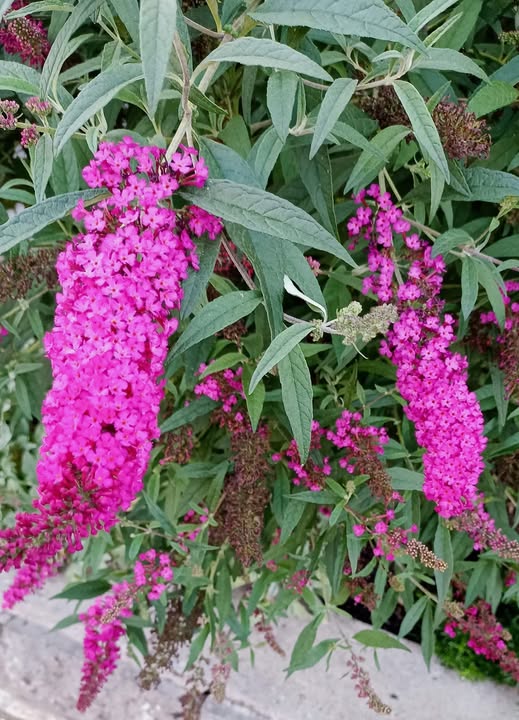
The iconic arching panicles can reach 4–18 inches (10–45 cm) long. Each tiny tubular flower has four petals and an orange “eye” in the center (except in white cultivars). Newer breeding has produced completely sterile cultivars that bloom non-stop without setting seed.
Growth Habit
The butterfly bush is deciduous in cold climates, semi-evergreen in zones 8–9. In my zone 6b garden, the tops die back every winter, but it resprouts vigorously from the base — sometimes reaching 8 feet in a single season.
Planting and Care Guide (Step-by-Step)
Spring or early fall is the best planting time. I personally prefer early fall planting (6–8 weeks before first frost) because the roots establish during mild weather.
Soil Requirements
This plant tolerates almost anything except constantly wet soil. Ideal pH 6.0–7.5. It thrives in poor, rocky soil — the leaner the soil, the more compact the plant stays.
Watering
Water deeply once a week the first season. After establishment, summer lilacs are extremely drought-tolerant. I only water mine during extreme heat waves.
Fertilizing
The butterfly bush has minimal fertilizer needs. One application of balanced slow-release fertilizer in early spring is plenty. Over-fertilizing produces tons of leaves and few flowers.
Pruning (The Most Important Step!)
This is where most people go wrong.
- In cold climates (zones 5–7): Cut back to 12–18 inches in late winter/early spring. I use electric hedge trimmers, it takes 60 seconds.
- In mild climates (zones 8–9): Light shaping in early spring, plus deadheading.
- For sterile cultivars: Light trimming encourages repeat bloom.
Deadheading
Not required on sterile hybrids, but removing spent flowers on older seed-producing types prevents invasive spread.
Winter Care
In zone 5, mulch the base with 4–6 inches of leaves or straw. I lost my first plant to winter kill because I skipped this step.
Popular Cultivars (My Personal Top 10)
- ‘Black Knight’ – Deepest purple, almost black (my all-time favorite)
- ‘Miss Ruby’ – Vibrant magenta-red, sterile
- Lo & Behold ‘Blue Chip’ – Dwarf (24–30 inches), non-invasive
- Pugster series – Compact, huge flowers, cold-hardy
- ‘White Profusion’ – Pure white with strong fragrance
- ‘Pink Delight’ – Classic clear pink
- ‘Nanho Purple’ – Slender habit, great for small gardens
- ‘Adokeep’ (Buzz series) – Patio-sized, continuous bloom
- ‘Attraction’ – Red-purple bicolor
- ‘Asian Moon’ – Sterile hybrid with almost no seed
Common Problems and Solutions
| Problem | Symptoms | Solution |
| Invasive seeding | Thousands of seedlings everywhere | Choose sterile cultivars (Lo & Behold, Flutterby, Miss Molly, etc.) |
| Dieback in winter | Stems black and brittle | Normal in zones 5–6; cut back hard in spring |
| Powdery mildew | White coating on leaves | Improve air circulation; avoid overhead watering; fungicide if severe |
| Spider mites | Yellow stippling, fine webbing | Hose off with strong water; insecticidal soap |
| Aphids | Curled leaves, sticky honeydew | Ladybugs love them; neem oil or insecticidal soap |
| Root rot | Wilting despite wet soil | Plant in well-drained location; never let it sit in water |
| Not blooming | Lots of leaves, few flowers | Too much fertilizer or shade; move to full sun and stop feeding |
Is Butterfly Bush Invasive?
This is a burning question everywhere. Older varieties of Buddleja davidii are considered invasive or noxious in many U.S. states and parts of Europe because they seed aggressively. However, modern sterile cultivars (marked “non-invasive” or seedless) produce little or no viable seed.
Look for the following trademarks:
- Lo & Behold
- Pugster
- Flutterby
- Miss series
- Chip series
In my own garden, I grow only sterile types and have never had a single seedling.
Despite the controversy, butterfly bush remains one of the top nectar sources for butterflies in late summer when many native plants have finished blooming. Studies (University of Delaware, 2013) ranked it among the top three plants visited by butterflies in observational trials.
Companion Planting Ideas
Here are plants that go well with the butterfly bush.
- Perovskia (Russian sage) — same silvery foliage
- Echinacea (coneflower)
- Sedum ‘Autumn Joy’
- Agastache (hyssop)
- Ornamental grasses (Miscanthus, Panicum)
Frequently Asked Questions (FAQs)
Q1. How big does a butterfly bush get?
Standard cultivars reach 6–12 ft tall and wide. Dwarf series stay under 3–4 ft.
Q2. When should I prune my butterfly bush?
In cold climates: late winter or early spring (February–March). In mild climates: lightly after each flush of bloom.
Q3. Why is my butterfly bush not flowering?
Usually too much shade or nitrogen fertilizer. Move to full sun and stop feeding.
Q4. Are all butterfly bushes invasive?
No. Only older seed-producing types. Choose sterile hybrids labeled non-invasive.
Q5. Is butterfly bush toxic to dogs or cats?
Mildly toxic if large quantities are eaten. Symptoms are vomiting or diarrhea. Most pets leave it alone.
Q6. Can I grow butterfly bush in a container?
Yes! The dwarf series (Pugster, Lo & Behold, Buzz) thrive in pots.
Q7. Does butterfly bush attract hummingbirds?
Absolutely — especially red and pink cultivars.
Q8. How long do butterfly bushes live?
10–20 years with proper pruning and care.
Final Thoughts
Fifteen years ago, I planted my first ‘Black Knight’ on a whim. Today, that same spot is a daily butterfly spectacle from July through October. If you give Buddleja full sun, decent drainage, and an annual haircut, it will reward you with one of the longest, most colorful shows in the garden.
References
- Missouri Botanical Garden – Buddleja davidii Plant Finder
- Royal Horticultural Society (RHS) – Buddleja davidii Profile
- University of Florida IFAS Extension – “Butterfly Bush: A Popular Plant with an Invasive Reputation” (2021)
- Tallamy, D. & Darke, R. (2014). The Living Landscape. Timber Press.
- Proven Winners – Lo & Behold and Pugster Series Technical Sheets
- USDA National Invasive Species Information Center – Buddleja davidii

Tim M Dave is a gardening expert with a passion for houseplants, particularly cacti and succulents. With a degree in plant biology from the University of California, Berkeley, he has vast experience in gardening. Over the years, he has cultivated a vast collection of desert plants and learned a great deal about how to grow and care for these unique companions.