15 Best Flowers for Pollinators: (Bees, Butterflies, Moths, Hummingbirds and More)
Walk through a garden that is truly alive — one buzzing with bees, flickering with butterflies, and visited by hoverflies and hummingbirds — and you quickly understand what so many modern gardens are missing.
Pollinators are in trouble. Populations of wild bees, butterflies, moths, and other pollinating insects have declined sharply across North America, Europe, and beyond over the past several decades. Habitat loss, pesticide use, monoculture farming, and climate disruption have all played a role.
The consequences extend far beyond the garden fence: roughly one-third of the world’s food supply depends on animal pollination.
The good news is that gardeners can make a real difference. A thoughtfully planted garden — even a small one — can serve as a genuine refuge and feeding station for pollinators throughout the growing season. The key is knowing which flowers to grow.
This guide covers the 15 best flowers to attract pollinators, along with growing conditions, seasonal value, and practical tips for getting the most from each plant.
Why Flower Choice Matters
Not all flowers are equally useful to pollinators. Highly bred, double-flowered ornamentals — roses with densely packed petals, for example — may look spectacular to us, but they often provide little accessible nectar or pollen.
In some cases, the reproductive structures have been replaced entirely by extra petals through selective breeding, leaving nothing for pollinators to collect.
Pollinators are drawn to flowers by three primary factors: colour, scent, and reward. The reward — nectar and pollen — is what keeps them coming back. Single-flowered, open-structured blooms almost always outperform their double-flowered counterparts for pollinator value.
Different pollinators also have different preferences. Bees tend to favour blue, purple, and yellow flowers with tubular or landing-platform shapes. Butterflies prefer flat-topped or clustered flowers that give them somewhere to perch.
Moths are drawn to pale, night-scented flowers. Hoverflies prefer open, shallow blooms with easily accessible pollen.
Growing a diverse mix of flower shapes, sizes, and colours — with something blooming from early spring through to late autumn — is the most effective strategy of all.
The 15 Best Flowers for Pollinators
1. Lavender (Lavandula spp.)
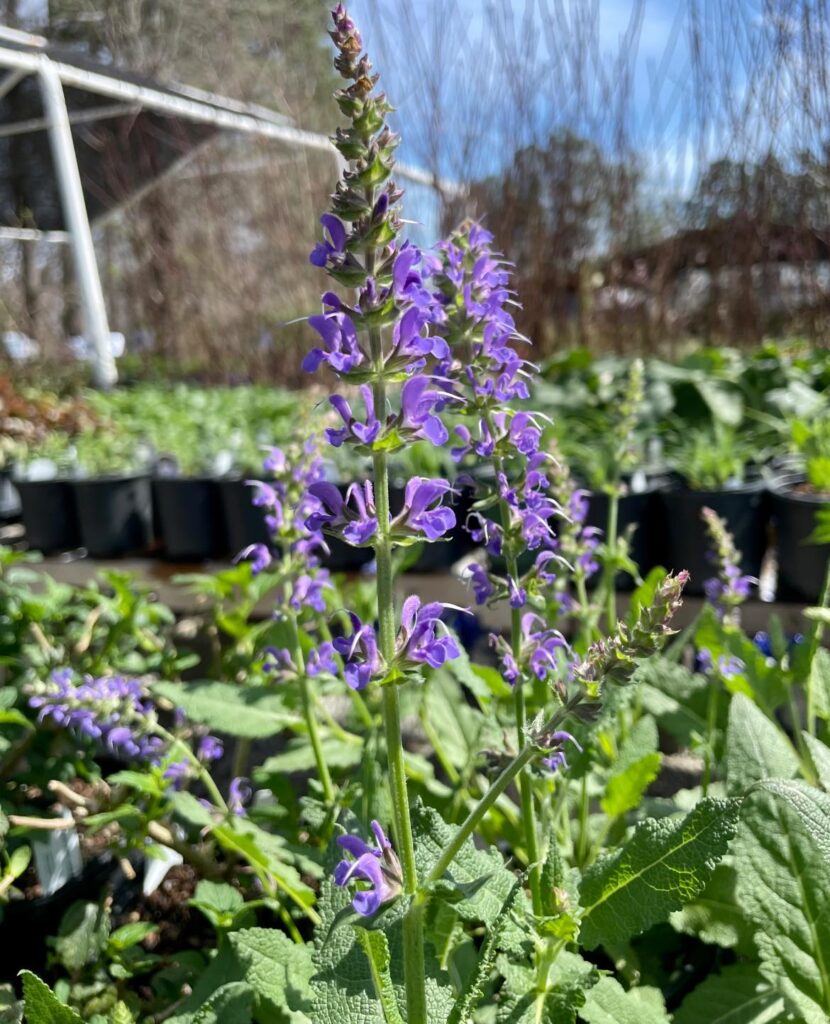
Few plants attract as many bees as lavender. On a warm summer day, a lavender hedge can be almost deafening with the sound of foraging bumblebees and honeybees. The flowers are rich in nectar and produce it continuously over a long season.
Best varieties for pollinators: Lavandula angustifolia (English lavender) and Lavandula x intermedia (lavandin) are the most reliably productive for nectar.
Growing conditions: Lavender demands full sun and well-drained, even poor soil. It thrives in chalky, sandy, or gravelly conditions that would disappoint most other plants. Heavy clay soils are its enemy — if your soil is dense, grow lavender in raised beds or containers with added grit. Hardy to around -15°C (USDA zone 5), English lavender is the most cold-tolerant option.
Pollinator value: Exceptionally high. Bees, butterflies, and hoverflies all visit regularly.
2. Borage (Borago officinalis)
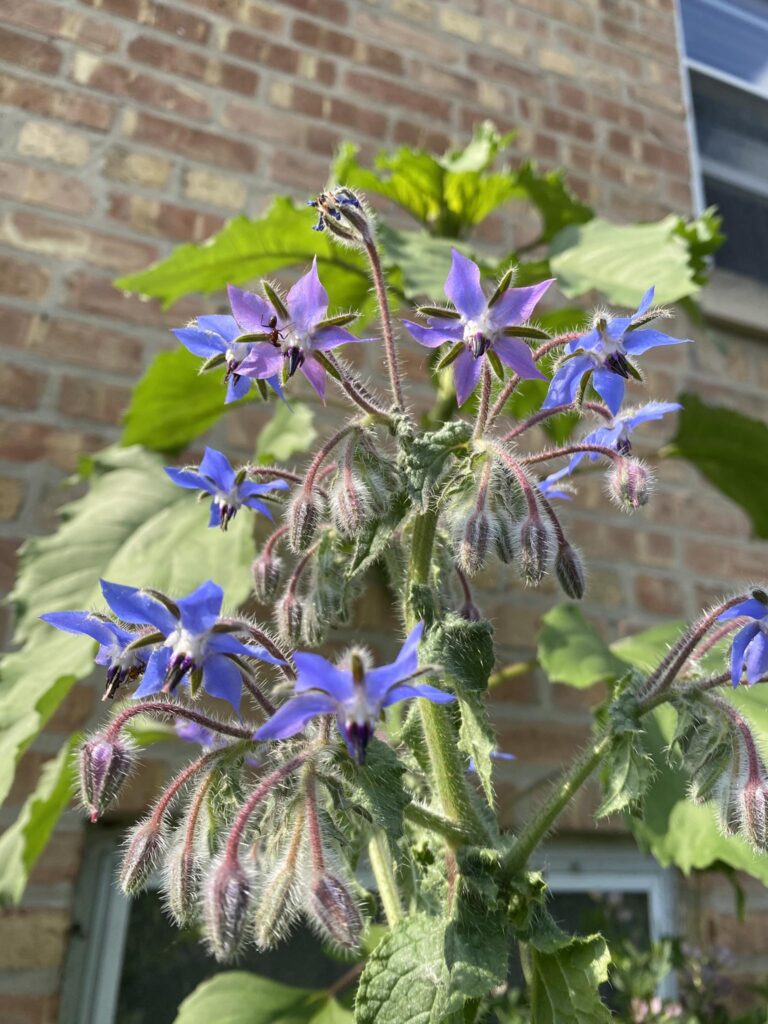
Borage is one of the most generous plants in the garden. Its vivid blue, star-shaped flowers produce nectar continuously — literally refilling within minutes of being emptied by a visiting bee. It is an annual that self-seeds prolifically, so once established, it returns year after year with almost no effort from the gardener.
Growing conditions: Borage grows in full sun to partial shade and tolerates poor, dry soils remarkably well. Direct-sow seed in spring or autumn. It grows quickly, reaching 60–90 cm in height, and begins flowering within a few weeks of germination.
Pollinator value: Extremely high. Honeybees in particular are strongly attracted to borage, and it has historically been planted near hives for this reason.
3. Echinacea / Coneflower (Echinacea purpurea)
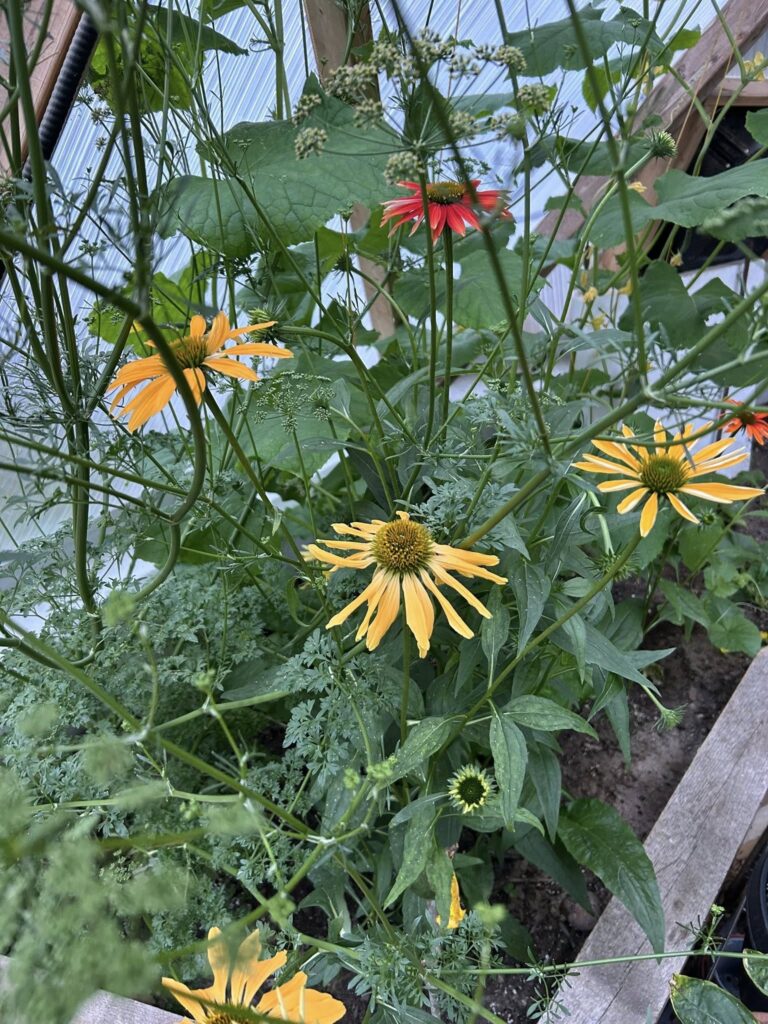
Echinacea is a native North American prairie plant that has earned a permanent place in pollinator gardens worldwide. Its large, daisy-like flowers with prominent central cones are visited by a wide range of bees and butterflies throughout summer and into early autumn.
Growing conditions: Echinacea thrives in full sun and well-drained soil. It is drought-tolerant once established, making it an excellent choice for gardens with dry summers. It is hardy to USDA zone 3 (-40°C) and long-lived, spreading slowly into impressive clumps over time. Avoid over-fertilising — too much nitrogen produces lush foliage at the expense of flowers.
Pollinator value: High. Particularly attractive to bumblebees, mining bees, and several butterfly species. The seed heads also provide food for birds in autumn — leave them standing rather than cutting back.
4. Catmint (Nepeta spp.)
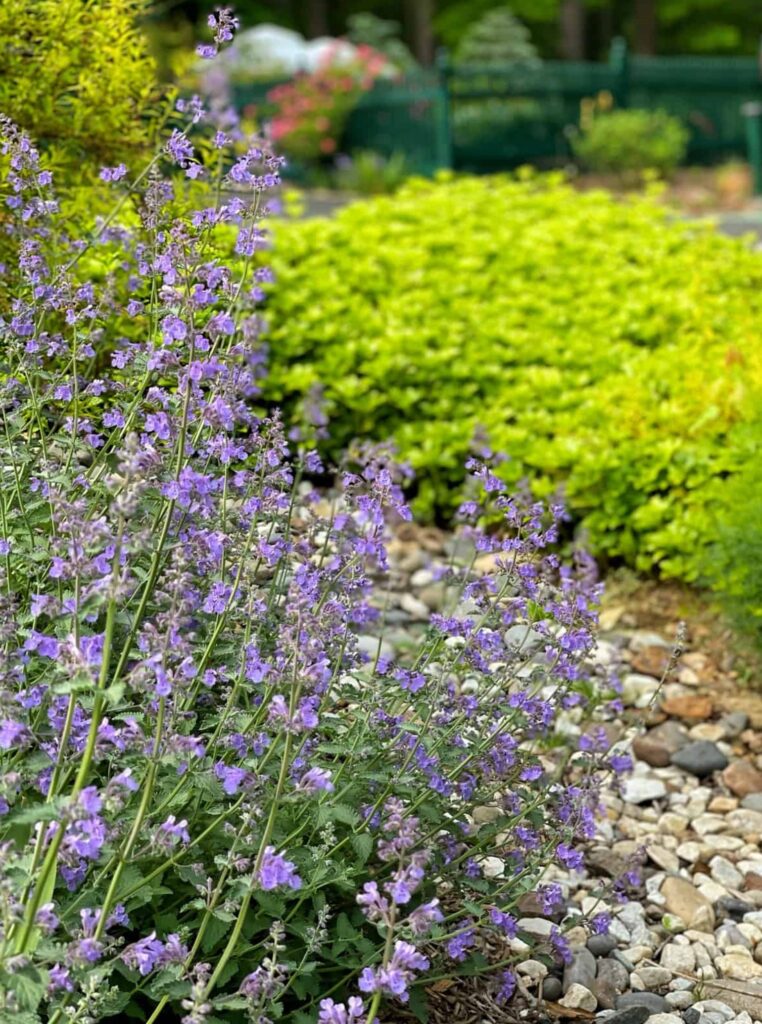
Catmint is one of the easiest and most rewarding plants in the pollinator garden. It flowers prolifically over a very long season — often from late spring through to early autumn if cut back after the first flush — and its lavender-blue flowers are consistently among the most visited in any mixed border.
Best varieties: Nepeta x faassenii ‘Walker’s Low’ is widely regarded as one of the finest pollinator plants available. Nepeta racemosa is another excellent option.
Growing conditions: Full sun to light shade, well-drained soil. Catmint is very drought-tolerant and thoroughly hardy (USDA zone 4). It forms tidy, mounded clumps of 40–60 cm and requires little maintenance beyond an occasional cut-back to encourage repeat flowering.
Pollinator value: Very high. Bumblebees, honeybees, solitary bees, and butterflies all visit catmint with notable enthusiasm.
5. Foxglove (Digitalis purpurea)
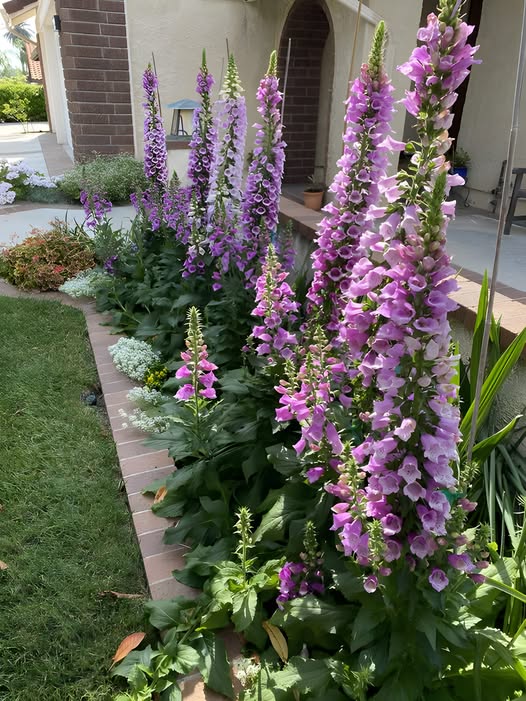
Foxgloves have a special relationship with bumblebees. The long, tubular flowers are precisely sized for bumblebees to enter, and watching a large bumblebee disappear entirely into a foxglove bloom — emerging minutes later dusted in pollen — is one of the genuine pleasures of the early summer garden.
Growing conditions: Foxgloves are biennials — they produce leafy rosettes in their first year and flower in their second. They prefer partial shade and moist, humus-rich soil, though they tolerate a range of conditions. Self-seeding is reliable if seed heads are left in place. Hardy across most temperate zones (USDA zone 4–9).
Pollinator value: High for bumblebees specifically. The tubular flowers exclude smaller insects, making foxgloves a targeted resource for larger bee species.
6. Phacelia (Phacelia tanacetifolia)
If you speak to a beekeeper about which annual they would choose to support their hives, many will say phacelia without hesitation. This fast-growing annual produces masses of blue-purple, bell-shaped flowers that are extraordinarily rich in nectar and pollen. It is also used as a green manure crop, making it doubly useful in the vegetable garden.
Growing conditions: Direct-sow in spring or early autumn in a sunny position with any reasonable, well-drained soil. Phacelia grows quickly — flowering can begin within six to eight weeks of sowing — and continues for several weeks. It is frost-sensitive but germinates readily and is very low maintenance.
Pollinator value: Exceptional. Consistently rated as one of the highest-value plants for bees in scientific research. Also attractive to hoverflies and other beneficial insects.
7. Allium (Allium spp.)
Alliums — the ornamental onion family — offer something that relatively few plants can: spectacular, ball-shaped flower heads that bloom in late spring and early summer, filling the gap between the spring bulb season and the main summer flowering period.
Best varieties for pollinators: Allium hollandicum ‘Purple Sensation’, Allium cristophii (star of Persia), and Allium sphaerocephalon (drumstick allium) are all excellent.
Growing conditions: Plant bulbs in autumn at a depth of two to three times the bulb’s diameter. Alliums require full sun and well-drained soil — they are intolerant of waterlogging, particularly when dormant. Hardy to USDA zone 4–5 depending on variety. Allow foliage to die back naturally after flowering.
Pollinator value: High. The densely packed flowerlets within each globe provide an abundant food source, and alliums are frequently visited by bees, butterflies, and hoverflies simultaneously.
8. Cosmos (Cosmos bipinnatus)
Cosmos is a half-hardy annual that delivers extraordinary value for pollinators from midsummer right through until the first frosts. Its simple, open, daisy-like flowers are accessible to a wide range of insects, and it flowers in such abundance that it rarely goes unvisited.
Growing conditions: Sow under cover in mid-spring or direct-sow after the last frost date. Cosmos prefers full sun and, crucially, poor to moderately fertile soil — rich soil produces abundant foliage but few flowers. It grows to 90–120 cm and may need light staking in exposed positions.
Pollinator value: High and broad-spectrum. Bees, butterflies, hoverflies, and even some moth species visit cosmos regularly. Stick with single-flowered varieties — avoid the ‘double’ forms, which offer much less pollinator value.
9. Verbena bonariensis
There is something almost architectural about Verbena bonariensis. Its tall, branched stems — often reaching 150 cm or more — carry small but richly nectar-filled clusters of purple flowers that butterflies, in particular, find irresistible.
Growing conditions: Verbena bonariensis thrives in full sun and well-drained soil. It is a tender perennial, hardy to around -10°C (USDA zone 7) in sheltered conditions, but often treated as an annual in colder climates. It self-seeds freely in warm gardens, naturalising beautifully through mixed borders. Exceptionally drought-tolerant once established.
Pollinator value: Very high for butterflies, including species such as the Painted Lady, Red Admiral, and Small Tortoiseshell. Also visited regularly by bees and hoverflies.
10. Sunflower (Helianthus annuus)
Sunflowers are one of the most recognised and most loved pollinator plants in the world — and with good reason. A single sunflower head is not one flower but hundreds of tiny individual florets, each producing nectar and pollen.
Growing conditions: Direct-sow in full sun after the last frost date. Sunflowers require well-drained, moderately fertile soil and grow best in warm, sheltered positions. They are fast-growing and largely trouble-free. Choose single-headed, open-centred varieties — pollen-free varieties bred for the cut-flower trade have little to offer pollinators.
Pollinator value: High. Bees of many species visit enthusiastically, and the seed heads attract birds in autumn. As a children’s gardening project, sunflowers are also an excellent gateway to wider interest in pollinator gardening.
11. Marjoram / Oregano (Origanum vulgare)
Wild marjoram is, hectare for hectare, one of the most valuable pollinator plants in temperate Europe. In Mediterranean herb gardens and wildflower meadows alike, its small pink-purple flowers attract an extraordinary diversity of insects.
Growing conditions: Full sun and well-drained, even poor soil — marjoram is a Mediterranean native and thrives in the same conditions as lavender. It is fully hardy (USDA zone 5) and forms spreading clumps of 30–45 cm. As a culinary herb, it pulls double duty in the kitchen and the garden.
Pollinator value: Exceptional. Scientific surveys of pollinator-friendly plants consistently rank wild marjoram among the very highest for the diversity and abundance of visiting insects — particularly bees, butterflies, and hoverflies.
12. Scabious (Scabiosa and Knautia spp.)
Field scabious and its close relatives are quintessential pollinator plants. Their pincushion-shaped flowers, held on long, slender stems, are visited by an impressive range of insects and flower for months during summer.
Best varieties: Scabiosa atropurpurea (sweet scabious) is an annual with rich, deep-coloured flowers. Knautia macedonica is a robust perennial with crimson-red blooms. Scabiosa columbaria is a British native with pale lavender flowers.
Growing conditions: Full sun, well-drained and ideally alkaline soil. Scabious is drought-tolerant and hardy (USDA zone 4–5 depending on variety). Regular deadheading prolongs the flowering season significantly.
Pollinator value: Very high. Bumblebees, solitary bees, butterflies, and hoverflies all visit regularly. Scabious is particularly valuable in late summer when many other flowers are fading.
13. Rudbeckia / Black-Eyed Susan (Rudbeckia fulgida)
Rudbeckia brings late-season colour and pollinator value to the garden at a time when both are sorely needed. Its golden-yellow, daisy-like flowers with dark central cones bloom from late summer through October — an important late-season nectar source as pollinators prepare for winter.
Growing conditions: Full sun to partial shade, moist but well-drained soil. Rudbeckia is a North American native that is robust, reliable, and fully hardy (USDA zone 3). It spreads steadily by rhizome and division, making it an economical choice that gradually fills a border.
Pollinator value: High. Bees and butterflies are regular visitors. Leave the seed heads standing through winter — they provide food for goldfinches and other seed-eating birds.
14. Hyssop (Hyssopus officinalis)
Hyssop is a semi-evergreen herb that is seriously underused in pollinator planting schemes. Its spikes of deep blue-violet flowers bloom from midsummer into early autumn and are intensely attractive to bees and butterflies alike.
Growing conditions: Full sun, well-drained and alkaline soil. Hyssop is a Mediterranean subshrub that grows to 60 cm and is hardy to around USDA zone 4. It makes an excellent low hedge or edging plant in herb gardens and tolerates dry conditions well. Trim lightly after flowering to maintain compact shape.
Pollinator value: High. Honeybees, bumblebees, and several butterfly species visit hyssop enthusiastically. It also attracts the hummingbird hawkmoth — a day-flying moth that is a remarkable sight in any garden.
15. Agastache / Anise Hyssop (Agastache spp.)
Agastache has risen rapidly in popularity among wildlife gardeners, and it is not difficult to see why. Its tall spikes of tubular flowers — typically in shades of orange, blue, purple, and pink — are among the most intensely visited of any garden plant in high summer.
Best varieties for pollinators: Agastache foeniculum (anise hyssop) is the hardiest species. Agastache ‘Blue Fortune’ is a reliable, long-flowering hybrid. Agastache aurantiaca varieties attract both bees and hummingbirds.
Growing conditions: Full sun and well-drained soil. Most agastache varieties are hardy to USDA zone 5–6, with A. foeniculum hardy to zone 4. They dislike waterlogging in winter. In colder climates, treat tender varieties as annuals or overwinter under cover. Deadhead regularly to extend the flowering season.
Pollinator value: Exceptional. Agastache is consistently among the most heavily visited plants in scientific pollinator surveys, attracting bees, butterflies, and hummingbirds in large numbers.
Designing a Pollinator-Friendly Garden
Choosing the right plants is the foundation, but how you arrange and manage them matters too.
Aim for Continuous Bloom
The goal is to have something flowering from early spring through to late autumn. This means thinking in three broad seasons:
- Early season (March–May): Alliums, foxgloves, borage, early catmint
- Midsummer (June–August): Lavender, echinacea, cosmos, phacelia, scabious, verbena, hyssop, agastache
- Late season (September–October): Rudbeckia, late cosmos, agastache, marjoram seed heads
Gaps in the flowering calendar are gaps in the food supply for pollinators. Even a small window of several weeks with nothing in flower can be damaging, particularly in early spring when queen bumblebees are emerging and need urgent food.
Plant in Blocks and Drifts
Scattered individual plants are harder for pollinators to locate and less energy-efficient to forage from than grouped plantings. Planting in blocks or drifts of at least three to five plants of the same species significantly increases pollinator visits, as the visual and scent signal is stronger and foraging becomes more efficient.
Reduce or Eliminate Pesticide Use
Even insecticides labelled as “safe for bees” carry risks if applied incorrectly or during flowering. Herbicides that eliminate “weeds” also eliminate many valuable early-season pollinator plants such as dandelions, clover, and ground ivy.
Where pest control is necessary, use targeted, systemic treatments applied in the evening when pollinators are less active, and never spray open flowers.
Leave Some Areas Undisturbed
Not all pollinators visit flowers. Many solitary bees nest in bare soil, hollow stems, or soft wood. Leave a small undisturbed corner of the garden, resist the urge to cut back all stems in autumn, and consider installing a simple bee hotel to supplement natural nesting sites.
Avoid Double Flowers
This point cannot be overstated. When buying plants, always choose single-flowered varieties over double or highly bred ornamental forms. The simpler the flower structure, the more accessible it is to pollinators. A single-flowered marigold is worth ten double ones in terms of wildlife value.
Common Mistakes to Avoid
- Planting only for summer. Many gardens peak in July and August but offer almost nothing in April or September and October. Extend your planting palette deliberately into the shoulder seasons.
- Choosing plants for colour alone. A stunning red geranium may look beautiful but offers virtually nothing to most pollinators. Research before you buy.
- Tidying up too early. Autumn and winter clearance removes both food sources (seed heads) and nesting habitats (hollow stems, leaf litter). Delay cutting back until late winter or early spring.
- Growing everything in straight rows. Pollinators navigate by sight and scent. Dense, informal plantings that mimic natural flowering communities are more attractive than neat, widely spaced beds.
Summary: Building Your Pollinator Flower List
| Plant | Season | Best For | Sun Requirement |
| Lavender | Summer | Bees | Full sun |
| Borage | Summer | Honeybees | Full sun / part shade |
| Echinacea | Summer–Autumn | Bees, butterflies | Full sun |
| Catmint | Spring–Autumn | Bees, butterflies | Full sun / light shade |
| Foxglove | Early summer | Bumblebees | Part shade |
| Phacelia | Summer | Bees, hoverflies | Full sun |
| Allium | Late spring | Bees, butterflies | Full sun |
| Cosmos | Summer–Autumn | Broad spectrum | Full sun |
| Verbena bonariensis | Summer–Autumn | Butterflies | Full sun |
| Sunflower | Midsummer | Bees | Full sun |
| Marjoram | Summer | Broad spectrum | Full sun |
| Scabious | Summer–Autumn | Bees, butterflies | Full sun |
| Rudbeckia | Late summer–Autumn | Bees, butterflies | Full sun / part shade |
| Hyssop | Summer–Autumn | Bees, hawkmoths | Full sun |
| Agastache | Midsummer–Autumn | Bees, hummingbirds | Full sun |
The return on growing these flowers is immediate and deeply satisfying. Within a single season of thoughtful planting, you will notice the difference — more movement, more sound, more life. That is a result worth working for.
References
- University of California Cooperative Extension — Selecting Plants for Pollinators: A Regional Guide for Farmers, Land Managers, and Gardeners https://ucanr.edu/blogs/blogcore/postdetail.cfm?postnum=14066
- Penn State Extension — Attracting Native Pollinators to Your Garden https://extension.psu.edu/attracting-native-pollinators-to-your-garden
- University of Minnesota Extension — Lawns and Gardens: Attracting Pollinators https://extension.umn.edu/attract-pollinators/flowers-and-pollinators
- Cornell University College of Agriculture and Life Sciences — Pollinator Conservation: Garden Plants for Bees and Butterflies https://www.hort.cornell.edu/pollinators/
- North Carolina State University Extension — Planting for Pollinators: Best Practices for Home Gardeners https://entomology.ces.ncsu.edu/urban-pest-management/pollinators/

Tim M Dave is a gardening expert with a passion for houseplants, particularly cacti and succulents. With a degree in plant biology from the University of California, Berkeley, he has vast experience in gardening. Over the years, he has cultivated a vast collection of desert plants and learned a great deal about how to grow and care for these unique companions.