American Holly (Ilex opaca): Identification, Cultivation, Cultural Significance and More
Scientific Classification
- Kingdom: Plantae
- Order: Aquifoliales
- Family: Aquifoliaceae
- Genus: Ilex
- Species: Ilex opaca
- Common Names: American Holly, Christmas Holly, White Holly
- Native Range: Eastern & Central United States
- USDA Hardiness Zones: 5b – 9
Few trees carry as much symbolic weight as the American Holly (Ilex opaca). Walk through any woodland along the Eastern Seaboard in December, and you will almost certainly encounter its glossy, spiny leaves and clusters of brilliant red berries standing firm against the cold.
But American Holly is far more than a holiday decoration. It is a keystone native species of exceptional ecological value, a critical food source for wildlife, a historically significant plant in American culture, and one of the most rewarding trees a gardener can grow.
This guide covers everything you need to know — from its biology to its landscape use.
At a Glance: American Holly is the largest native holly species in the United States, capable of reaching heights of 15 to 18 metres. It is dioecious — meaning individual trees are either male or female — and only female trees produce the iconic red berries, provided a male is nearby for pollination.
How to Identify American Holly
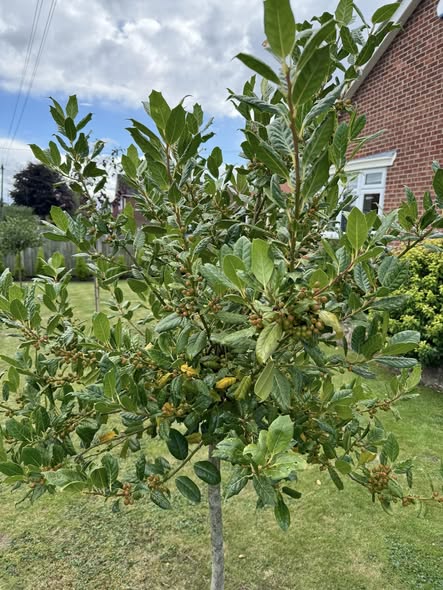
Learning to identify Ilex opaca is straightforward once you know what to look for. This evergreen tree has a distinctive pyramidal or conical crown when young, which becomes more irregular and open as the tree matures. Its silhouette alone is recognisable from a distance in winter woodland.
Leaves
The leaves are perhaps the most iconic feature. They are dark, glossy green on the upper surface and pale, dull green beneath. Each leaf is elliptical to oblong in shape, typically 5 to 10 centimetres long, with a leathery texture and distinctly spiny margins.
The spines are sharp and alternately arranged — touching one by accident is a quick reminder that nature does not invite casual handling.
The leaves remain on the tree year-round, making Ilex opaca one of the few native broadleaf evergreens that thrive through harsh Eastern winters. This persistent foliage is a major reason the tree is so valued both ecologically and aesthetically.
Berries (Drupes)
The bright red fruits — technically drupes, not berries — are 4 to 8 millimetres in diameter and appear in clusters along the branches of female trees from autumn through late winter. Each drupe contains several hard seeds. The vivid colour is not just beautiful; it is a biological signal to birds and other wildlife.
It is worth noting that the fruits are mildly toxic to humans and pets. Ingestion can cause nausea, vomiting, and diarrhoea. This is an important fact for families with young children or curious animals in the garden.
Bark and Trunk
The bark of a mature American Holly is light grey, thin, and relatively smooth, often developing warty or bumpy textures with age. The trunk is typically straight, and the wood underneath is creamy white and close-grained — qualities that made it historically prized for carving and inlay work.
Flowers
Flowers are small, white, four-petalled, and appear from April to June. They are easy to miss — modest in size but critically important, as they are the mechanism by which pollination occurs. Bees are the primary pollinators, making American Holly a quiet contributor to broader ecosystem health during spring.
Native Range and Natural Habitat
American Holly is native to a broad swath of the eastern United States, stretching from coastal Maine south to central Florida and west to eastern Texas and Missouri. Its adaptability across this range speaks to its resilience as a species.
| Region | Typical Habitat | Abundance |
| Mid-Atlantic States | Mixed forests, forest margins, sandy loam soils | Common |
| Southeast Coastal Plain | Moist bottomlands, pocosins, pine flatwoods | Very Common |
| Appalachian Foothills | Cove forests, stream banks, rich slopes | Occasional |
| Gulf Coast | Hammocks, maritime forests, floodplain edges | Common |
| New England | Sandy coastal forests, sheltered lowlands | Uncommon to Rare |
In natural settings, American Holly favours moist, well-drained, acidic soils. It grows well in partial shade beneath a taller canopy but also thrives in full sun at forest edges. You will often find it on the fringes of wetlands or along stream corridors where soils remain reliably moist.
In maritime environments, it forms part of the classic shrub-tree layer in coastal plain forests — a habitat type that has declined significantly due to development along the Eastern Seaboard.
Understanding where American Holly naturally grows is the first step to understanding why protecting remnant populations matters.
Ecological Importance
“American Holly is not merely a tree. It is a year-round anchor of Eastern woodland ecosystems — a provider, a shelter, and a signal of ecological health.”
Few trees in the Eastern United States serve as many ecological functions simultaneously. Ilex opaca is an exceptional keystone species in its native range, offering resources that sustain dozens of animal species across all seasons.
Wildlife Food Source
The red drupes of American Holly are a critical winter food for many birds. More than 18 species of songbirds and game birds are known to consume the fruits, including the American Robin, Cedar Waxwing, Eastern Bluebird, Hermit Thrush, Northern Mockingbird, and Wild Turkey.
The fruits typically persist on the tree until late winter, offering sustenance when other food sources are exhausted.
White-tailed deer browse on the leaves and young twigs. Small mammals, including raccoons and squirrels, occasionally consume the fruits as well. The tree is a food web node, not just a point source.
Nesting and Shelter
The dense, evergreen canopy of American Holly provides year-round shelter and nesting habitat. Its spiny leaves deter many predators, making it a preferred nesting site for a range of songbirds.
During ice storms and heavy snowfall, the canopy creates a microhabitat that protects both birds and small mammals from the cold.
Pollinator Support
During its spring bloom, American Holly provides nectar and pollen for native bees — including several specialist bee species in the genus Colletes — as well as honeybees and various flies. This makes it a valuable addition to any native pollinator garden or wildlife-friendly landscape.
Soil and Hydrology
Like many native trees, American Holly contributes to soil structure and organic matter through leaf litter decomposition. Its roots help stabilise streambanks and reduce erosion, particularly in the moist riparian habitats where it naturally grows.
In coastal plain ecosystems, it plays a quiet but measurable role in maintaining water quality.
Cultural and Historical Significance
The relationship between humans and American Holly stretches back thousands of years. Indigenous peoples across the Eastern United States used various parts of the tree for medicinal and practical purposes.
Several tribes prepared infusions from the leaves and bark to treat fevers, respiratory ailments, and digestive complaints. The wood, being hard and uniform in grain, was fashioned into tools and ornamental objects.
European settlers quickly adopted the holly into their own traditions. Its evergreen foliage and red berries aligned naturally with Christmas decorating customs carried from England — customs that referenced holly’s long association with winter solstice celebrations in pre-Christian Europe.
By the 18th and 19th centuries, the commercial harvest of wild holly for the holiday trade had become a significant seasonal industry along the Eastern Seaboard, particularly in Delaware, Maryland, and New Jersey.
The demand was intense enough that by the early 20th century, over-harvesting had noticeably depleted wild populations in some areas. Conservation advocates began pushing for regulations, and holly cultivation for the nursery trade gradually replaced the most destructive forms of wild collection.
Delaware is so strongly associated with American Holly that the state chose it as the Delaware State Tree in 1939 — a recognition of both its ecological abundance in the region and its cultural importance to generations of Delawareans.
Growing American Holly: Cultivation Guide
American Holly is one of the most rewarding native trees to cultivate — but it requires an understanding of its preferences to perform at its best. Get the conditions right, and it will reward you with decades of beauty and wildlife value.
Soil Requirements
This tree strongly prefers acidic soil, with a pH between 4.5 and 6.0. It grows best in moist, well-drained loam or sandy loam soils rich in organic matter. Poor drainage is tolerated briefly but can cause root rot over time.
If your soil is alkaline, consider amending it with sulphur or organic matter before planting, or choose a naturally suitable site.
Light and Exposure
Ilex opaca grows in full sun to partial shade. Full sun encourages the densest foliage and the most prolific berry production. Partial shade is acceptable, especially in hotter southern climates where afternoon shade can reduce heat stress. Avoid deep shade, which results in thin, sparse growth and few fruits.
Watering and Establishment
Newly planted trees need regular, deep watering for the first two to three years. Once established, American Holly is moderately drought-tolerant, though prolonged dry spells during summer can cause leaf scorch. A 7 to 10 centimetre layer of organic mulch around the root zone helps retain soil moisture and keeps roots cool.
Planting for Berry Production
This is a point many gardeners overlook. Because American Holly is dioecious, you need at least one male plant within approximately 45 metres of your female trees to ensure pollination and berry production.
The standard recommendation is one male for every three to five female trees. Identify the sex of your plants before purchase — reputable nurseries will label them clearly.
Fertilisation
American Holly is not a heavy feeder. An application of slow-release, acid-forming fertiliser in early spring — such as one formulated for azaleas and rhododendrons — is generally sufficient. Over-fertilising with nitrogen can promote lush foliage at the expense of fruit production.
Pruning
Pruning is generally minimal. The best time to prune is in late winter, just before new growth begins. Light shaping can maintain a desirable form, and any dead, damaged, or crossing branches should be removed. Avoid heavy pruning in late summer or autumn, as this can stimulate new growth vulnerable to frost damage.
Pests and Diseases
American Holly is relatively pest-resistant, but a few problems are worth monitoring:
- Holly Leafminer (Phytomyza ilicicola) — Larvae tunnel through leaves, leaving yellowish blotches. Generally cosmetic but worth treating in severe infestations.
- Holly Scale (Dynaspidiotus britannicus) — Scale insects can weaken branches. Treat with horticultural oil during the dormant season.
- Phytophthora Root Rot — Caused by waterlogged soils. Prevented by ensuring good drainage at the planting site.
- Tar Spot (Phacidium curtisii) — A fungal disease producing black spots on leaves. Rake and dispose of infected leaf litter; improve air circulation.
- Spider Mites — More common in dry conditions. Regular irrigation and strong water sprays on foliage help manage populations.
Notable Cultivars and Varieties
Over a century of nursery cultivation has produced an impressive range of Ilex opaca cultivars, offering gardeners choices in size, form, berry colour, and cold hardiness. Here are some of the most widely grown and recommended:
- ‘Canary’ — A female cultivar notable for its bright yellow berries rather than the typical red. Compact growth habit; excellent for adding seasonal contrast.
- ‘Jersey Knight’ — A vigorous male cultivar with exceptional cold hardiness, making it an ideal pollinator for gardens in Zone 5 and 6.
- ‘Jersey Princess’ — A popular female counterpart to ‘Jersey Knight’, producing heavy crops of glossy red berries on a dense, pyramidal form.
- ‘Satyr Hill’ — A female cultivar with particularly heavy berry production and strong heat tolerance, well-suited to the Mid-Atlantic and Southeast.
- ‘Merry Christmas’ — A compact female form with dense foliage and abundant red berries, ideal for smaller gardens.
- ‘Old Heavy Berry’ — As the name suggests, this female cultivar is prized for its unusually prolific and large berry clusters — a particular favourite for holiday decoration.
Landscape Uses
American Holly is one of the most versatile native trees available to the landscape designer or home gardener in the Eastern United States.
As a specimen tree, a well-sited American Holly in full sun becomes a stunning focal point in any landscape — pyramidal, evergreen, and draped in red from autumn onward. Few native trees match it for year-round visual presence.
Beyond specimen planting, Ilex opaca is widely used as a privacy screen or windbreak. Its dense, evergreen growth makes it an effective natural barrier when planted in a row. Unlike many fast-growing screening plants, it remains handsome and low-maintenance for decades.
It is also an excellent choice for wildlife gardens and native plant landscapes. Paired with other native species such as Eastern Red Cedar, Serviceberry, and native viburnums, American Holly creates a rich, multi-layered habitat that supports biodiversity through all four seasons.
In larger settings, it works well as part of naturalistic woodland plantings, where it can fill the understory or sub-canopy layer beneath oaks, tulip poplars, and other forest trees. This mirrors its natural growth habit and results in a planting that essentially takes care of itself once established.
Conservation Status and Threats
American Holly is not currently considered threatened or endangered at the species level. Its IUCN conservation status is Least Concern, and it remains abundant across much of its native range. However, regional pressures are worth noting.
Habitat loss continues to be the most significant threat. Coastal plain forests, which represent some of the richest American Holly habitat, have been heavily impacted by residential and commercial development across the Eastern Seaboard.
Deer browse is a significant problem in regions with high white-tailed deer populations. In areas where deer are overabundant, regeneration of American Holly can be severely suppressed, as young trees and seedlings are browsed before they can mature.
There is also concern about climate-related range shifts. As winter temperatures warm at the northern end of the tree’s range, it may face competition from more southerly species moving northward.
At the southern end, increased drought frequency could stress populations in already warm, dry sites.
The good news is that American Holly is widely cultivated, with extensive populations in nurseries, gardens, parks, and urban green spaces across its native range and beyond. This cultivated presence provides a buffer against population decline, even as wild habitats come under pressure.
Conclusion
Spending time with a well-grown American Holly — whether in the wild or in a garden — leaves a quiet impression. There is something deeply grounding about a tree that looks its best in the coldest, barest season, offering colour and food when almost everything else has shut down.
That resilience, I think, is what has made Ilex opaca such an enduring presence in American culture and ecology alike.
Whether you are a landowner looking to restore native habitat, a gardener seeking a low-maintenance evergreen with genuine wildlife value, or simply someone who wants to understand a tree they have admired all their life — American Holly repays your attention generously.
Plant it in the right spot, give it a year or two to establish, and it will reward you for decades. Few investments in the landscape are as lasting or as meaningful.
References
- Virginia Tech Department of Forest Resources & Environmental Conservation. Ilex opaca — American Holly: Dendrology Fact Sheet. Virginia Polytechnic Institute and State University. https://dendro.cnre.vt.edu/dendrology/syllabus/factsheet.cfm?ID=117
- University of Florida IFAS Extension. Ilex opaca: American Holly. Environmental Horticulture Department, University of Florida. https://edis.ifas.ufl.edu/publication/ST306
- NC State Extension. Ilex opaca — American Holly. Plants Database, North Carolina State University. https://plants.ces.ncsu.edu/plants/ilex-opaca/
- USDA Forest Service, Fire Effects Information System. Ilex opaca — Species Account. Rocky Mountain Research Station, United States Department of Agriculture. https://www.fs.usda.gov/database/feis/plants/tree/ileopp/all.html
- University of Connecticut Plant Database. Ilex opaca — American Holly. Department of Plant Science and Landscape Architecture, UConn. https://hort.uconn.edu/detail.php?pid=193

Tim M Dave is a gardening expert with a passion for houseplants, particularly cacti and succulents. With a degree in plant biology from the University of California, Berkeley, he has vast experience in gardening. Over the years, he has cultivated a vast collection of desert plants and learned a great deal about how to grow and care for these unique companions.