Explained: Why Are My ZZ Plant Leaves Curling?
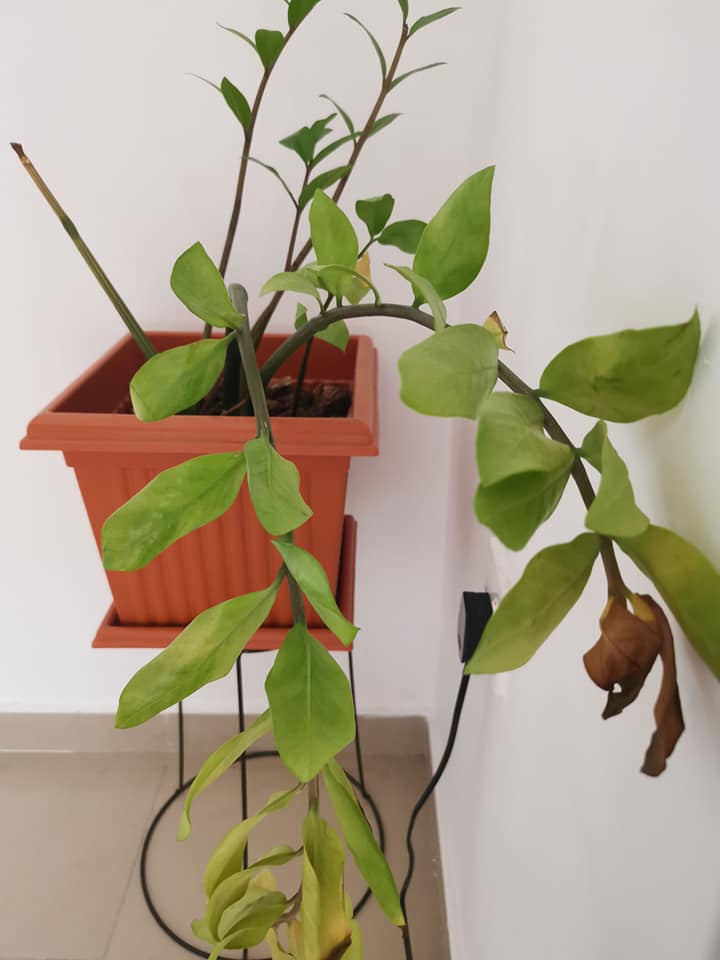
I still remember the day I noticed my ZZ plant’s leaves curling inward. It was thriving in my Chicago apartment, its glossy green leaves a perfect accent to my living room. Then, out of nowhere, those leaves started looking like tiny green tacos. Panic set in—what did I do wrong?
If your ZZ plant’s leaves are curling, you’re probably feeling the same way. Don’t worry! In this guide, I’ll walk you through why ZZ plant leaves curl, how to fix it, and how to keep your plant happy.
I got my ZZ because I needed a plant that could handle my busy schedule and occasional neglect. They thrive in low to bright indirect light and need minimal watering, thanks to water-storing rhizomes.
But when those leaves started curling, it was a sign that my plant was stressed. Let’s figure out why and how to fix it.

Why Are My ZZ Plant Leaves Curling?
Curling leaves on a ZZ plant can signal several issues. Here are the most common culprits, along with fixes.
Underwatering – Thirsty ZZ Plants
I’ll admit, I’ve forgotten to water my ZZ plant for weeks during busy times. Underwatering is a top cause of curling leaves. When a ZZ plant doesn’t get enough water, it pulls moisture from its leaves, causing them to curl inward to conserve water.
Signs of underwatering:
- Leaves curling inward or upward
- Dry, shriveled leaves
- Soil pulling away from the pot’s edges
Solution
- Water thoroughly, letting water run through the drainage holes. Empty the saucer after 30 minutes to avoid soggy roots.
- Check the soil every 2–4 weeks. If it’s dry an inch down, water again. In dry climates like Arizona, you might water every 2 weeks.
- If the soil is bone-dry, soak the pot in a bucket of water for 10 minutes to rehydrate it.
Pro Tip: I set a calendar reminder to check my ZZ’s soil every three weeks. It’s saved me from underwatering disasters! For more watering tips, see the University of Florida’s houseplant guide.
Overwatering – Too much love
Overwatering is another common reason for curling leaves. I learned this the hard way when I drowned my ZZ plant, thinking it needed weekly water. Excess water causes root rot, stressing the plant and making leaves yellow or curl.
Signs of overwatering:
- Leaves curling with a soft, mushy texture
- Soggy soil that never dries
- Yellowing leaves or a musty smell
Solution
- Stop watering and let the soil dry out completely.
- Check for root rot by gently removing the plant from its pot. Trim any black, mushy roots with sterile scissors and repot in fresh, well-draining soil (I use a mix of potting soil and perlite).
- Water sparingly—every 2–4 weeks, depending on your home’s humidity. In humid areas like Florida, water less often.
Low humidity – Dry air stress
ZZ plants tolerate low humidity, but the dry air in many homes—especially during winter with heaters blasting—can cause leaves to curl. I noticed this in my Colorado apartment, where the air gets desert-like in January.
Signs of low humidity:
- Leaves curling inward, especially at the tips
- Dry, crispy leaf edges
- Slow growth
Solution
- Mist the leaves lightly once a week when the air gets extremely dry or place a humidifier nearby. I use a small humidifier f to keep my ZZ happy.
- Group your ZZ with other plants to create a microclimate with higher humidity.
- Place a tray of water with pebbles near the plant (don’t let the pot sit in water).
Too much sunlight – Sunburn stress
ZZ plants love low to medium indirect light, but direct sunlight can stress them, causing leaves to curl as a defense mechanism. This happened when I moved my ZZ to a south-facing window in my rental.
Signs of too much sunlight:
- Leaves curling inward or bleaching
- Brown, crispy tips
- Faded leaf color
Solution
- Move the plant to a spot with bright, indirect light, like a north or east-facing window.
- Use a sheer curtain to filter harsh sunlight if bright windows are your only option.
- Trim severely damaged leaves to encourage new growth.
For light requirements, the Royal Horticultural Society has great advice.
Too little light – Energy starvation
While ZZ plants can survive in low light, too little light—like in a windowless office or basement—can cause curling as the plant struggles to photosynthesize.
Signs of low light:
- Leaves curling or stretching toward the light
- Pale, weak growth
- Leggy stems
Solution
- Relocate to a spot with bright, indirect light.
- If natural light is limited, use a grow light. I use a small LED grow light during dark Pacific Northwest winters.
Pests – Tiny terrors
Pests like spider mites, mealybugs, or scale can cause leaves to curl by sucking sap from the plant. I once found tiny webs on my ZZ and had to act fast to save it. In most cases, pest can sneak in your home through open windows or on new plants that you bring in.
Signs of pests:
- Curling leaves with spots, webbing, or sticky residue
- Visible bugs or white cottony patches
- Yellowing alongside curling
Solution
- Wipe leaves with a damp cloth to remove pests.
- Spray with neem oil or insecticidal soap weekly until pests are gone. I mix a teaspoon of neem oil with a quart of water for a DIY spray.
- Isolate the plant to protect other houseplants.
For pest control tips, visit Clemson University’s houseplant pest guide.
Temperature stress – Too hot or too cold
ZZ plants prefer temperatures between 65–75°F, common in most homes in the U.S. But drafts from windows or hot air from heaters can cause leaves to curl.
Signs of temperature stress:
- Curling leaves, especially near drafts or heat sources
- Wilting or drooping stems
- Slow growth
Solution
- Keep your ZZ away from drafty windows, AC vents, or heaters.
- Maintain a stable temperature, ideally 65–75°F.
- In cold climates, move the plant to a warmer spot during winter.
Nutrient deficiency – Starving plants
ZZ plants aren’t heavy feeders, but a lack of nutrients can cause curling leaves. If your plant hasn’t been repotted or fertilized in years, it might be hungry.
Signs of nutrient deficiency:
- Curling leaves with yellowing
- Stunted growth
- Pale leaves
Solution
- Fertilize lightly with a diluted liquid houseplant fertilizer (like 10-10-10) every 3–6 months during spring and summer.
- Repot every 2–3 years with fresh soil to replenish nutrients.
Should You Cut Curling ZZ Plant Leaves?
Curling leaves don’t always need to be cut. Here’s when to trim and when to hold off:
- Cut if the leaves are severely curled, crispy, or damaged beyond recovery. Removing them redirects energy to healthy growth.
- Don’t cut if leaves are only slightly curled and still green. Fix the underlying issue (like watering or light) first.
How to Cut:
- Use clean, sterilized scissors or pruning shears.
- Cut curling leaves at the base of the stem or near the soil line.
- Dispose of leaves in the trash to avoid spreading pests or disease.
For pruning tips, check out Purdue University’s plant care guide.
How to Prevent Curling Leaves in the Future
Once you’ve fixed the curling, keep your ZZ plant thriving with these tips:
- Water every 2–4 weeks when the soil is dry. I stick my finger an inch into the soil to check.
- Place in bright, indirect light. Avoid direct sun or dark corners.
- In dry climates like Nevada, use a humidifier or mist occasionally.
- Keep your ZZ in a stable 65–75°F environment, away from drafts or heaters.
- Inspect monthly for bugs, especially in humid areas like Louisiana.
- Feed lightly in spring/summer to prevent nutrient issues.
- Refresh the soil every 2–3 years to keep roots healthy.
FAQs
Here are quick answers to the frequently asked questions about ZZ Plant leaves curling.
Q: Can curled ZZ plant leaves uncurl?
A: If the curling is mild and you fix the cause (like underwatering), leaves may uncurl. Severely curled leaves won’t recover and should be trimmed.
Q: How often should I water my ZZ plant to prevent curling?
A: Water every 2–4 weeks when the soil is dry. In humid climates like Miami, water less often; in dry areas like Denver, check more frequently.
Q: Is my ZZ plant dying if its leaves are curling?
A: Not necessarily. Curling is a stress signal, but fixing the cause (water, light, etc.) can save your plant. If most leaves are curling and mushy, check for root rot.
Q: Are ZZ plants safe for pets?
A: No, ZZ plants are toxic if ingested by pets or kids. Keep them out of reach. See the ASPCA’s toxic plant list.
Q: Can low light cause ZZ plant leaves to curl?
A: Yes, too little light can cause curling as the plant stretches for energy. Move it to brighter, indirect light or use a grow light.
Common Myths About ZZ Plants
Myth 1: ZZ plants don’t need water.
Truth: They need infrequent watering—every 2–4 weeks when the soil is dry.
Myth 2: ZZ plants can live in total darkness.
Truth: They need some light, preferably indirect, to avoid curling or weak growth.
Myth 3: Curling leaves always means pests.
Truth: Curling is more often caused by water or light issues, though pests are a possibility.
Suggested For You:
Explained: Why Are My ZZ Plant Leaves Turning Yellow?
7 Expert Tips to Revive Your Droopy ZZ Plant
Is Your Zanzibar Gem Thirsty? How to Revive an Underwatered ZZ Plant
Is Your ZZ Plant Suffering from Root Rot? Signs and How to Save Your Plant
Beginners Guide: How to Save Your Overwatered ZZ Plant
Final Thoughts
Curling ZZ plant leaves can be alarming, but they’re usually a fixable cry for help. Whether it’s underwatering, low humidity, or too much sun, you can get your plant back on track with simple tweaks. I’ve been there, stressing over my ZZ’s curling leaves, but with the right care, it’s now thriving.
So, check your plant’s soil, adjust its spot, and give it some love. Your ZZ will thank you with lush, uncurled leaves!

Tim M Dave is a gardening expert with a passion for houseplants, particularly cacti and succulents. With a degree in plant biology from the University of California, Berkeley, he has vast experience in gardening. Over the years, he has cultivated a vast collection of desert plants and learned a great deal about how to grow and care for these unique companions.