Understanding White Oak (Quercus alba): Identification, Uses, Problems and Cultivation Details
There are trees that simply define a landscape. Trees so deeply woven into the ecology, history, and cultural identity of a place that their absence would leave something fundamental missing. The White Oak (Quercus alba) is one of those trees.
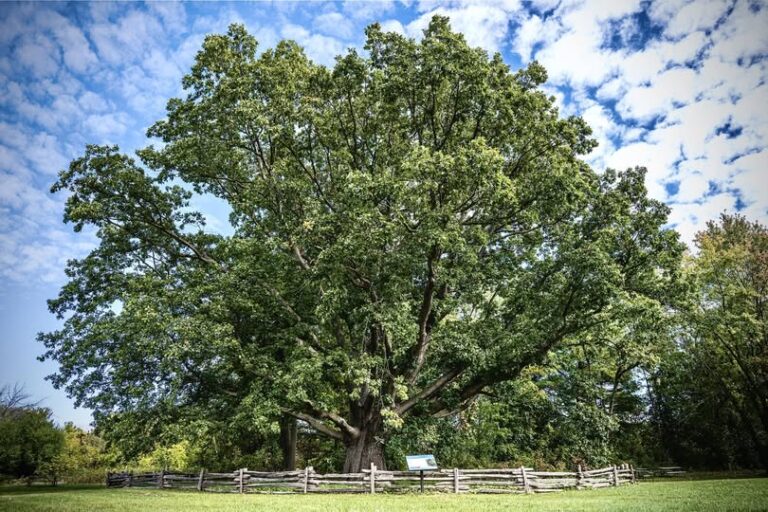
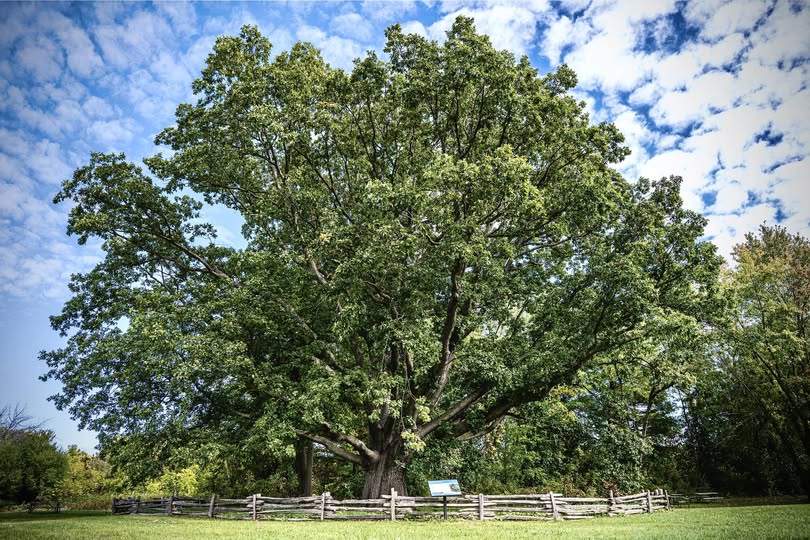
Stand beneath a mature White Oak — one with a trunk three feet across, branches spreading sixty feet in every direction, and bark the color of pale ash — and you feel the full weight of what a tree can be. Not just large. Not just old. But genuinely ancient in presence.
White Oak is the cornerstone species of eastern North American forests. It feeds more wildlife than almost any other tree. Its wood has built more barns, barrels, ships, and homes than any other native hardwood.
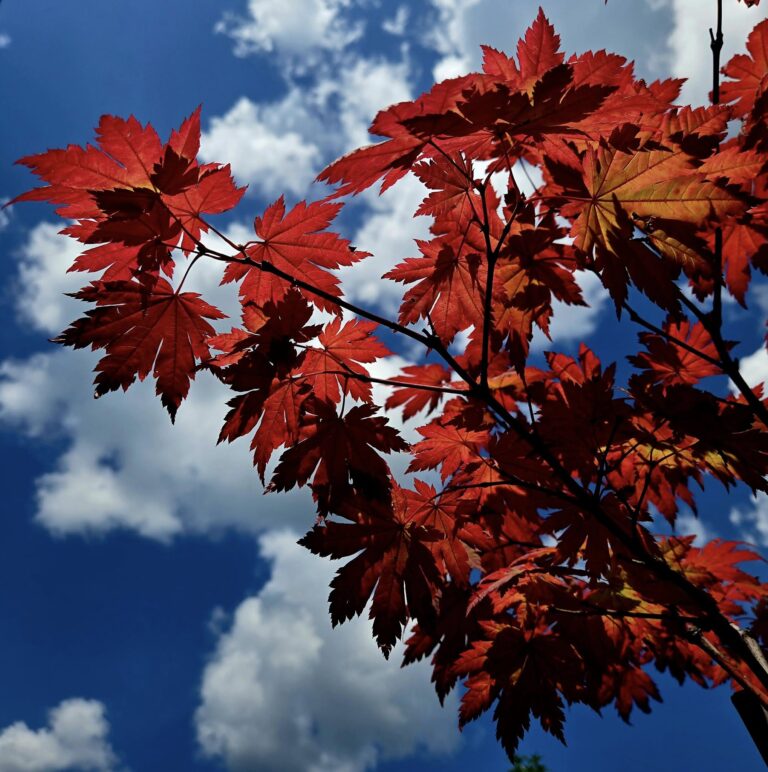
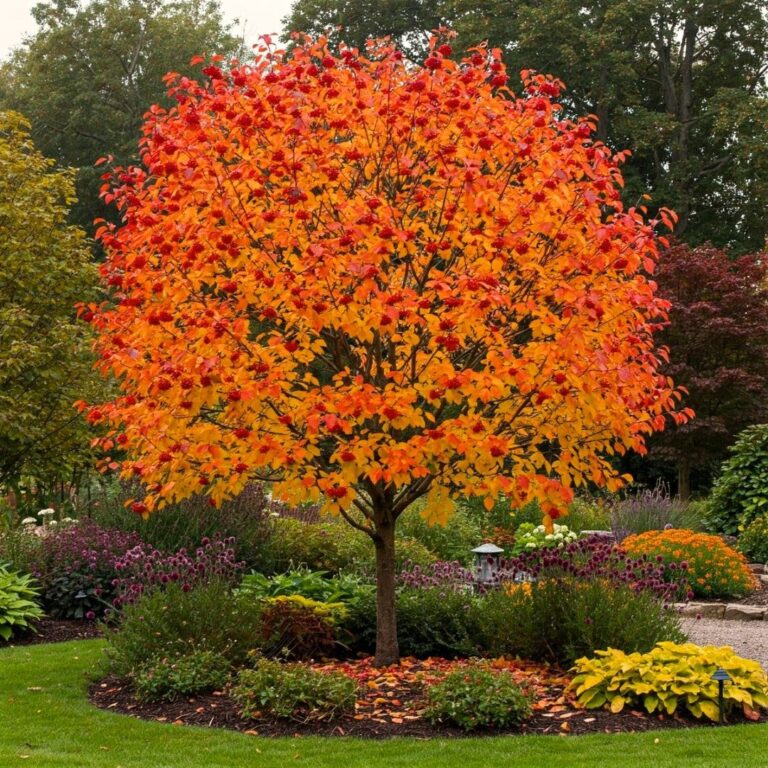
In the autumn, White Oak leaves turn a rich burgundy-wine red that lingers on the tree long after every other oak has gone bare.
Let’s dive into the world of White Oak — its biology, ecology, history, landscape value, and practical cultivation.
What Is the White Oak?
The White Oak belongs to the family Fagaceae (the beech and oak family), and is the defining species of the white oak group (section Quercus). This group includes all oaks with rounded leaf lobes, acorns that mature in a single season, and inner acorn shells that are smooth rather than hairy.
Its scientific name, Quercus alba, is precise and telling. Quercus is the classical Latin word for oak. Alba means “white” — a reference to the tree’s distinctive pale, light-gray bark, which is noticeably lighter than most other oaks and appears almost white on young branches and in certain lighting conditions.
Common names are straightforward and consistent:
- White Oak — the universal standard name
- Stave Oak — historically used in some timber-producing regions, referring to the wood’s use in barrel staves
- Ridge White Oak — an older regional name in parts of Appalachia
Few trees have a common name as fitting as this one. The pale bark genuinely does appear white at times — especially on younger branches against a dark forest background or a gray winter sky.
| Scientific Name | Quercus alba |
| Family | Fagaceae |
| Oak Group | White Oak (section Quercus) |
| Native Range | Eastern North America (Zones 3–9) |
| Mature Height | 80–100 feet |
| Crown Spread | 80–100 feet |
| Lifespan | 400–600+ years |
| Bark | Pale gray-white, plated |
| Fall Color | Deep wine-red to burgundy |
| Acorn Maturity | 1 year (white oak group) |
| Wood Use | Barrels, flooring, furniture, ships |
| Wildlife Value | Exceptional — highest among eastern oaks |
Native Range and Natural Habitat
The White Oak is one of the most widely distributed trees in eastern North America.
Its native range extends from southern Maine and Quebec west through southern Ontario and Minnesota, south through Iowa and eastern Nebraska, and continues south and east through the entire eastern United States to northern Florida and eastern Texas.
It is absent only from the very coldest boreal regions, the deepest coastal swamps of the Gulf, and the driest portions of the Great Plains.
Within this vast range, White Oak occupies a remarkably wide variety of habitats. It grows on dry, rocky ridgetops and in rich, moist bottomlands. It establishes on sandy coastal plains and on deep Appalachian mountain soils.
This tree tolerates wet sites better than most upland oaks, and it handles periodic drought with quiet resilience.
It is a dominant or co-dominant species in oak-hickory forests, mixed mesophytic forests, and oak-pine woodlands across much of its range. In open savannas, particularly in the Midwest, it was historically the defining tree of the oak savanna ecosystem, growing widely spaced with open grassland beneath.
Few trees are as ecologically central to eastern North American forests as the White Oak.
Physical Characteristics
Size and Form
The White Oak is a large to very large tree at maturity. In typical forest conditions, it reaches 80 to 100 feet (24–30 meters) in height, with trunk diameters commonly reaching 3 to 4 feet (90–120 cm).
Under especially favorable open-grown conditions, exceptional specimens can exceed 100 feet in height and develop trunks 6 feet or more in diameter.
The crown of an open-grown White Oak is one of the most magnificent sights in the temperate forest world. Wide, spreading, and irregular, it can span 80 to 100 feet or more — as wide as the tree is tall.
The large lower limbs sweep outward and slightly upward in great arcs, creating an umbrella-like canopy of extraordinary presence.
Forest-grown trees develop taller, narrower crowns as they compete for light, but even these maintain the characteristic broad-limbed, open structure that distinguishes White Oak from more densely branched species.
Lifespan — A Tree That Outlives Everything
The White Oak is remarkably long-lived. Individual trees routinely reach 400 to 600 years of age. Well-documented specimens in the eastern United States exceed 500 years, and some trees of exceptionally large diameter may be older.
The Wye Oak, a famous Maryland specimen now preserved as a managed remnant, was estimated to be over 460 years old when it fell in a storm in 2002. Its trunk was nearly 6 feet in diameter.
Trees of this age carry ecological, historical, and emotional weight that no words fully capture. A White Oak that germinated before the first European settlements in North America and has stood through every chapter of American history represents something extraordinary in the natural world.
Bark — The Pale, Plated Signature
The bark is light gray to pale ash-white, broken into loose, scaly, plate-like blocks separated by shallow fissures. On young branches, the bark can appear almost white. On the main trunk of old trees, it becomes more deeply furrowed but retains its pale, ashy color.
This light bark contrasts sharply with the dark gray to nearly black bark of oaks in the red oak group — making mature White Oak one of the most distinctive-barked trees in the eastern forest.
Leaves — Rounded Lobes, No Points
White Oak leaves are simple, alternate, and deeply lobed, measuring 5 to 9 inches (13–23 cm) in length. The lobes are rounded, with no bristle tips — the defining visual difference between the white oak group and the red oak group. The number of lobes varies, but typically ranges from 7 to 9.
In spring, the emerging leaves are one of the most beautiful sights the oak has to offer. They unfurl in a silvery, pale pink to lavender hue — soft and almost translucent — before hardening into the deep green of summer.
In summer, leaves are dark green above and pale, grayish-green below.
In autumn, they turn deep wine-red to burgundy — a color that is rich rather than blazing, sophisticated rather than showy, and remarkably persistent. White Oak holds its dead leaves through much of winter in a phenomenon called marcescence, which is especially common in younger trees and lower branches.
Flowers
White Oak is monoecious, bearing separate male and female flowers on the same tree. Both appear in early to mid-spring, coinciding with leaf emergence.
- Male catkins are slender, yellowish-green, and hang in drooping clusters
- Female flowers are tiny, reddish, and borne singly or in small clusters in leaf axils
The flowers are wind-pollinated and not ornamentally showy, but they are significant ecologically as an early nectar and pollen source for native bees.
Acorns — One-Year Maturity, Lower Tannins
White Oak acorns are oblong to oval, ¾ to 1 inch (2–2.5 cm) long, with a shallow, warty cup enclosing roughly the lower quarter of the nut. They are brownish at maturity and relatively low in tannins compared to red oak acorns.
This lower tannin content is ecologically crucial. It means White Oak acorns are sweet enough for many animals to consume preferentially over the more bitter red oak acorns. They are so palatable that squirrels, deer, and other wildlife often eat them immediately rather than caching them — a behavioral distinction with significant ecological implications.
Unlike red oaks, White Oak acorns mature in a single growing season — produced and fully ripened by autumn of the same year. They fall in September and October and germinate almost immediately if conditions are favorable, sometimes sprouting before winter arrives.
Ecological Value: The Most Important Tree in Eastern North America
This is not hyperbole. By several ecological measures, the White Oak is the single most important tree species in eastern North American forests.
Acorns as an Ecological Foundation
The acorn crop produced by White Oak trees is a foundational food resource for an extraordinary number of species. Researchers have estimated that in a good mast year, a single large White Oak can produce 20,000 or more acorns.
Species that depend heavily on White Oak acorns include:
- White-tailed deer — perhaps the most acorn-dependent large mammal in the East
- Wild turkey — acorns are their primary autumn and winter food
- Black bear — consumes enormous quantities in fall hyperphagia
- Blue jay — the primary disperser of White Oak acorns; caches thousands each fall
- Wood duck — feeds heavily on acorns in flooded bottomland forests
- Red-headed, Red-bellied, and other woodpeckers
- Gray squirrel, fox squirrel, and flying squirrel
- White-footed mouse, deer mouse, and other small rodents
- Raccoon, opossum, and wild boar
The “mast year” phenomenon — when oaks synchronously produce exceptionally large acorn crops every few years — drives population cycles of deer, turkey, squirrel, and bear. A landscape without White Oak is a landscape impoverished at its very foundation.
Caterpillar and Insect Support
Based on the research of entomologist Doug Tallamy and colleagues at the University of Delaware, oaks collectively support more species of native Lepidoptera than any other tree genus in North America — over 900 species of moths and butterflies.
White Oak, as the most widespread and abundant species in the group, carries the largest share of that load.
This is not an abstract ecological statistic. Caterpillars are the primary food that songbirds feed to their nestlings. Trees without caterpillar support cannot sustain breeding bird populations.
This means, a landscape planted with White Oak is a landscape that hums with birds in ways that exotic or non-native plantings simply cannot replicate.
Cavity and Structural Habitat
Old White Oaks develop hollows, cavities, dead limbs, and complex bark architecture that provide nesting and roosting habitat for dozens of species:
- Barred Owl, Great Horned Owl, Eastern Screech-Owl
- Wood Duck, Hooded Merganser, Common Goldeneye
- Pileated Woodpecker, Red-headed Woodpecker
- Flying squirrel, gray squirrel, and fox squirrel
- Little Brown Bat and other bat species
- Various native bee species that nest in hollow wood
A single ancient White Oak in a woodland can support more individual animals than an entire plantation of young trees. This is the ecological argument for preserving old oaks — and for planting new ones today so the next generation has old ones to inherit.
White Oak Wood: The Standard of Hardwood Excellence
If White Oak’s ecological value is extraordinary, its timber value is equally remarkable. For centuries, White Oak has been the premier hardwood of eastern North America — the default material for applications demanding strength, durability, and quality.
Wood Characteristics
White Oak wood is:
- Heavy and hard — with a Janka hardness of 1,360 lbf
- Tyloses-filled vessels — microscopic structures in the wood’s pores that block liquid movement, making White Oak uniquely suitable for watertight cooperage
- Straight-grained and attractive — with a characteristic “ray fleck” pattern visible in quartersawn lumber
- Extremely durable in contact with soil and water — resistant to rot for decades
The tyloses are the critical feature for barrel-making. Because the pores are effectively plugged, White Oak barrels hold liquid without leaking — a property no other commercially available wood quite replicates.
This is why virtually every barrel used for aging bourbon, whiskey, wine, and spirits worldwide is made from White Oak.
Historical Uses
The list of historical White Oak applications is essentially a list of everything wooden that early American civilization depended upon:
- Ship construction — planking, frames, keels, and decking of wooden sailing vessels
- Barrel and cask making — cooperage for wine, spirits, beer, and food storage
- Agricultural buildings — barns, granaries, fence posts, and split-rail fencing
- Home construction — flooring, beams, siding, and framing
- Furniture — tables, chairs, cabinetry, and architectural millwork
- Railroad ties — one of the most durable options available
- Tool handles and farm implements
The importance of White Oak to early American economic and material life cannot be overstated. For three centuries, it was the most commercially valuable tree in eastern North America.
Modern Uses
Today, White Oak remains one of the most commercially important hardwoods in the United States. Primary modern uses include:
- Bourbon and whiskey barrels — the law requires new charred White Oak barrels for straight bourbon production
- Fine hardwood flooring — one of the most popular flooring materials in the country
- Cabinetry and furniture
- Architectural millwork and paneling
- Veneer production
The bourbon industry alone consumes millions of White Oak barrels annually — representing a significant ongoing economic relationship between this single tree species and a multibillion-dollar American industry.
Landscape and Garden Uses
For landowners with the space and patience for a long-term investment, the White Oak is among the finest trees that can be planted anywhere in eastern North America.
Shade Tree
A mature White Oak provides exceptional, high-quality shade — deep and broad, with a graceful, open canopy that admits some filtered light without creating the dense, lawn-killing shade of maples. This makes it compatible with understory plantings and lawn grasses beneath its canopy.
Wildlife Garden and Food Plot
For anyone managing land with wildlife in mind, White Oak is the single highest-value tree planting available. Even a small grove of five to ten trees will dramatically increase deer, turkey, and songbird use of a property within 20 to 30 years.
Many food plot managers specifically plant White Oak for its reliably palatable acorns, which attract deer with almost unmatched consistency during hunting season.
Heritage and Legacy Planting
White Oak is one of those trees most appropriately thought of as a gift to future generations.
A tree planted today will not reach its full ecological potential for 50 to 100 years. But a landowner who plants White Oak is making a commitment to the landscape that extends beyond their own lifetime — and that commitment has real value.
Ornamental Value
Beyond ecology and timber, White Oak has genuine ornamental merit:
- Pale, architecturally striking bark in all seasons
- Silvery-pink spring leaf emergence — soft and beautiful
- Dark green, deeply lobed summer foliage
- Deep wine-red to burgundy fall color — rich and lasting
- Bold winter silhouette with persistent marcescent leaves on young trees
USDA Hardiness Zones 3 through 9 cover the full range of White Oak adaptability.
How to Plant and Grow White Oak
Site Selection
White Oak is adaptable, but it performs best in:
- Full sun — minimum 6 hours of direct sunlight daily
- Well-drained to moderately moist, acidic soils (pH 5.5–7.0)
- Deep soils — the taproot runs deep; avoid shallow soils over hardpan
It tolerates a broader range of soil types than most oaks, including moderately wet sites, clay-loam, and sandy soils. Avoid permanently waterlogged conditions.
Planting Instructions
- Plant in early spring or autumn. Autumn planting allows root establishment before winter.
- Start with small trees — 1 to 3-gallon container stock or bare-root transplants establish far better than large balled-and-burlapped trees. The taproot of oak does not tolerate heavy root disturbance.
- Dig the planting hole two to three times wider than the root ball but no deeper.
- Set the root flare at or slightly above grade. Deep planting is a leading cause of long-term oak decline.
- Backfill with native soil. Do not add excessive organic amendments to the backfill.
- Mulch generously — 3 to 4 inches of wood chip mulch extending to the drip line, keeping mulch away from the trunk.
- Water regularly during the first two to three growing seasons. Once established, supplemental irrigation is rarely needed.
Patience as a Virtue
White Oak is a moderately slow-growing tree — typically adding 1 to 1.5 feet per year under good conditions, faster in youth and slower as it matures. This pace is worth accepting. The wood, the structure, and the ecological value of a White Oak are built slowly — and they last for centuries.
Do not judge a young White Oak by its first few years. It is investing heavily in root development before it expresses itself above ground. Once established, growth accelerates noticeably.
Pests, Diseases, and Challenges
White Oak is significantly more resistant to Oak Wilt (Bretziella fagacearum) than red oaks — an important practical advantage. While white oaks can contract the disease, it spreads more slowly through the white oak group and is less reliably fatal.
Common Issues
- Anthracnose (Discula quercina) — causes brown, blotchy leaf scorch in wet springs; usually cosmetic and self-limiting on healthy trees
- Oak leaf blister — causes raised, blister-like distortions on leaves in cool, wet conditions; rarely serious
- Galls — numerous types produced by gall wasps; generally harmless to healthy trees
- Spongy Moth (Lymantria dispar) — can cause heavy defoliation in outbreak years; healthy trees typically recover from a single defoliation event
- Two-lined chestnut borer — attacks stressed trees; maintain tree vigor to prevent infestation
- Hypoxylon canker — a stress-associated fungal disease; most common on trees weakened by drought or construction damage
The most effective long-term pest and disease management for White Oak is simply maintaining tree health — proper planting depth, adequate soil volume, mulching, and avoiding soil compaction around the root zone.
Final Thoughts
Planting a White Oak is an act of faith — faith that the land will endure, that someone will be there to benefit from it in a hundred years, and that the slow work of building an ecological community is worth doing even when the results lie beyond your own lifetime.
Few gestures a person can make toward the natural world are as lasting, as generous, or as ecologically meaningful. Shade, shelter, food, and habitat all produced simultaneously
The White Oak asks for patience. In return, it gives everything.
References
- Virginia Tech Department of Forest Resources and Environmental Conservation — Dendrology Fact Sheet: Quercus alba https://dendro.cnre.vt.edu/dendrology/syllabus/factsheet.cfm?ID=36
- North Carolina State University Cooperative Extension — Quercus alba Plant Profile https://plants.ces.ncsu.edu/plants/quercus-alba/
- University of Florida IFAS Extension — Quercus alba: White Oak https://hort.ifas.ufl.edu/database/documents/pdf/tree_fact_sheets/quealba.pdf
- USDA Forest Service — Silvics of North America — Quercus alba L. — White Oak https://www.srs.fs.usda.gov/pubs/misc/ag_654/volume_2/quercus/alba.htm
- University of Kentucky Cooperative Extension — White Oak (Quercus alba) https://forestry.ca.uky.edu/sites/forestry.ca.uky.edu/files/for-58.pdf

Tim M Dave is a gardening expert with a passion for houseplants, particularly cacti and succulents. With a degree in plant biology from the University of California, Berkeley, he has vast experience in gardening. Over the years, he has cultivated a vast collection of desert plants and learned a great deal about how to grow and care for these unique companions.