Understanding Weeping Higan Cherry (Prunus subhirtella ‘Pendula’): History, Features, Problems, and More
The Weeping Higan Cherry, known botanically as Prunus subhirtella ‘Pendula’, is a deciduous ornamental tree native to Japan. It belongs to the rose family (Rosaceae) and is one of the most widely cultivated cherry trees in temperate gardens worldwide.
The name “Higan” is derived from the Japanese word for the spring and autumn equinox festivals — Ohigan — during which the tree traditionally blooms. The cultivar name ‘Pendula’ refers directly to its most distinctive feature: gracefully drooping, pendulous branches that cascade downward, creating a weeping canopy.
It is not the same as the more famous Prunus serrulata varieties associated with Japan’s sakura (cherry blossom) festivals. The Higan Cherry is an older, hardier species, with origins that predate many modern ornamental cherry cultivars.
Key Characteristics at a Glance
Understanding the tree’s basic profile helps you decide whether it is right for your garden.
Mature Height: 20 to 30 feet (6 to 9 metres), though many specimens remain shorter in cultivation.
Mature Spread: 15 to 25 feet (4.5 to 7.5 metres), forming a broad, weeping canopy.
Growth Rate: Moderate — typically 13 to 24 inches per year under good conditions.
Bloom Time: Early spring, often before the leaves emerge. In mild climates, some blooming can also occur sporadically in autumn.
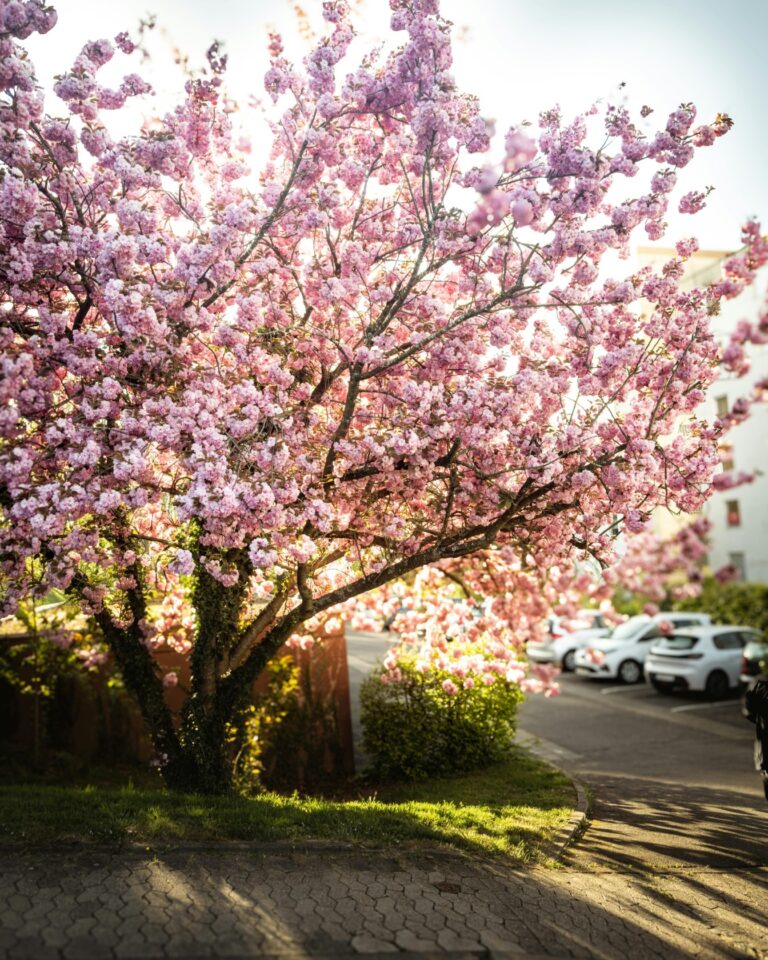
Flower Colour: Pale pink to deep pink, depending on the variety. Single flowers with five petals are most common.
Foliage: Small, dark green, ovate leaves that turn yellow-orange in autumn before dropping.
USDA Hardiness Zones: 4 to 8, making it adaptable to a wide range of temperate climates.
Lifespan: Typically 15 to 25 years in landscape settings, though some specimens live considerably longer when well maintained.
Origins and Cultural Significance
Prunus subhirtella has a long history of cultivation in Japan, where it was grown in temple gardens and along riverbanks long before Western horticulture took notice. Japanese botanists documented the species for centuries before European plant collectors introduced it to Western gardens in the 19th century.
The weeping form — ‘Pendula’ — appears to have been selected and propagated in Japan specifically for its dramatic cascading habit. It is almost always sold as a grafted tree, with the weeping variety grafted onto an upright rootstock, which gives it its distinctive “umbrella” shape.
In Japanese culture, cherry blossoms carry deep philosophical meaning — they represent the fragile beauty of life, blooming brilliantly and briefly before falling. The Higan Cherry embodies this symbolism particularly well: its flowers last only one to two weeks at peak bloom.
In the United States, Weeping Higan Cherries gained widespread visibility through the famous plantings at the Tidal Basin in Washington, D.C., where they grow alongside the more commonly photographed Yoshino Cherry (Prunus × yedoensis). This exposure helped cement its reputation as a premier ornamental tree for American gardens.
Popular Varieties of Weeping Higan Cherry
While ‘Pendula’ is the most common weeping form, several named varieties offer slightly different ornamental qualities.
‘Pendula Rosea’ produces darker, rose-pink flowers and is one of the most widely sold forms in nurseries. It offers a richer colour than the species type and blooms reliably each spring.
‘Pendula Plena Rosea’ (also called ‘Yae-shidare-higan’) features double flowers — each bloom has more than five petals — giving it a fuller, more lush appearance. It blooms slightly later than single-flowered forms.
‘Snow Fountains’ (sometimes listed under Prunus × snofozam) is a closely related weeping cherry with pure white flowers and a more compact growth habit, reaching only 8 to 15 feet tall. It is an excellent choice for smaller gardens.
‘Autumnalis’ is a particularly interesting variety that blooms in both autumn and spring, providing two seasonal flowering displays. Flowers are semi-double and pale pink. This trait — autumn flowering — is unique among ornamental cherries and makes it especially valuable to gardeners who want year-round interest.
Ideal Growing Conditions
Getting the conditions right from the start is the single most important factor in growing a healthy Weeping Higan Cherry. This tree is not difficult to grow, but it does have clear preferences.
Sunlight
Full sun is essential. Weeping Higan Cherries require at least six hours of direct sunlight per day to bloom well and maintain a strong, healthy canopy. Partial shade will result in fewer flowers, weaker branch structure, and greater susceptibility to disease.
Choose the sunniest, most open position in your garden. Avoid planting near large trees or buildings that cast afternoon shade.
Soil
This tree prefers moist, well-drained, slightly acidic to neutral soil (pH 6.0 to 7.0). It does not tolerate waterlogged soil or heavy clay, both of which encourage root rot.
If your soil is poor or compacted, amend it with organic matter before planting. Sandy or loamy soils are ideal. The tree can tolerate slightly alkaline soils, but chlorosis (yellowing leaves caused by iron deficiency) may occur in highly alkaline conditions.
Water
Consistent moisture is important, especially during the first two to three years after planting while the root system establishes. Once established, Weeping Higan Cherry has moderate drought tolerance, though extended dry periods will stress the tree.
Water deeply and infrequently — this encourages deep root growth. Shallow, frequent watering creates surface-dependent roots that are vulnerable to drought and winter freeze-thaw cycles.
Climate
Prunus subhirtella ‘Pendula’ is hardy in USDA Zones 4 to 8, tolerating winter temperatures as low as -30°F (-34°C) in Zone 4. However, late spring frosts can damage open flowers, as the tree often blooms before the last frost date in northern climates.
Air circulation matters. Avoid planting in enclosed, humid spots where air does not move freely, as still, moist air promotes fungal diseases such as brown rot and leaf spot.
Planting Instructions
The right start makes a significant difference in how quickly and vigorously a Weeping Higan Cherry establishes.
The best time to plant is in early spring, just before bud break, or in autumn after the leaves have dropped. Container-grown trees can be planted throughout the growing season, though summer planting requires more attentive watering.
Step one: Dig a planting hole that is two to three times the width of the root ball but only as deep as the root ball itself. The graft union — the swollen knot near the base of the trunk where the weeping top was grafted onto the rootstock — must sit above the soil line. Burying the graft union can cause the rootstock to take over, eliminating the weeping habit.
Step two: Place the tree in the hole and backfill with the original soil. Do not add fertilizer to the planting hole; this can burn young roots.
Step three: Water thoroughly and apply a 2 to 3 inch layer of organic mulch (wood chips, shredded bark) around the base. Keep mulch 6 inches away from the trunk to prevent moisture buildup and rot.
Step four: Water weekly for the first growing season unless rainfall is sufficient.
Fertilisation and Nutrition
Weeping Higan Cherries are not heavy feeders. Over-fertilisation — particularly with high-nitrogen products — promotes lush leafy growth at the expense of flowers and can make the tree more attractive to certain pests.
A light application of a balanced, slow-release fertiliser (such as a 10-10-10 formulation) in early spring, just before growth resumes, is generally sufficient. Soil testing every few years helps you identify specific deficiencies and avoid unnecessary applications.
If the tree shows yellowing leaves (chlorosis), a foliar spray of chelated iron or a soil application of sulphur to lower pH can correct the problem.
Pruning the Weeping Higan Cherry
Pruning is one area where many gardeners feel uncertain. The good news is that Weeping Higan Cherry requires relatively little pruning compared to many other ornamental trees.
The primary goals of pruning are: removing dead, damaged, or diseased wood; maintaining airflow through the canopy; and preventing branches from touching the ground, which can introduce disease.
Prune immediately after flowering in spring. Pruning in late summer or autumn can remove next year’s flower buds and leave fresh wounds exposed to winter pathogens.
Use sharp, clean tools and make cuts just outside the branch collar (the slightly swollen area at the base of each branch). Avoid leaving stubs, which are entry points for disease.
Watch for watersprouts — vigorous, straight, upright shoots that sometimes emerge from the graft union or main trunk. These should be removed promptly because they disrupt the weeping form and sap the tree’s energy.
Common Pests and Diseases
Like all members of the Prunus genus, Weeping Higan Cherry is susceptible to a number of pests and diseases. Awareness and early action prevent most serious problems.
Pests
Tent caterpillars are among the most common insect pests. They build silky web nests in branch forks in spring and can defoliate large sections of the canopy. Remove nests manually when small, or use an appropriate biological insecticide (such as Bacillus thuringiensis) on young caterpillars.
Aphids cluster on new growth in spring, causing distorted leaves and sticky honeydew residue. A strong spray of water or an application of insecticidal soap usually controls minor infestations.
Borers — particularly the peach tree borer and the lesser peach tree borer — can cause serious damage. Prevention is far more effective than treatment. Keep the tree stress-free through proper watering, avoid wounding the bark with lawn equipment, and apply appropriate pesticide treatments around the trunk base in late spring if borers are a known problem in your area.
Diseases
Cytospora canker causes sunken, discoloured areas on the bark and can girdle branches. It is most common in stressed trees. There is no effective chemical treatment; affected branches must be pruned out well below visible symptoms.
Brown rot (Monilinia spp.) attacks flowers and young shoots in wet spring weather. It spreads rapidly and can cause blossom blight. Good air circulation and avoiding overhead irrigation are the best preventive measures. Fungicide applications at bud swell can help in high-risk years.
Leaf spot diseases, caused by various fungal pathogens, produce brown or purple spots on the foliage in summer. They rarely threaten the tree’s life but cause early leaf drop in severe cases. Raking and disposing of fallen leaves reduces overwintering spores.
Black knot fungus (Apiosporina morbosa) produces distinctive black, warty galls on branches. Prune out and destroy affected material as soon as it is identified, cutting at least 4 inches below visible gall tissue.
Landscape Uses
One of the reasons Weeping Higan Cherry has remained a favourite in landscape design for so long is its versatility. It works effectively in a wide range of garden settings.
As a specimen tree, it is unmatched. A single mature tree in a lawn creates a dramatic focal point, particularly in early spring when its blossoms emerge against bare soil or early bulb plantings.
Near water, its weeping branches are especially evocative, imitating the appearance of a weeping willow while providing seasonal floral interest that willows cannot offer.
In smaller gardens, compact varieties like ‘Snow Fountains’ offer the same beauty in a more manageable scale. A weeping cherry in a modest front garden, underplanted with spring bulbs, creates an outstanding seasonal display.
In parks and public spaces, the Weeping Higan Cherry performs well along paths and near benches, where people can walk beneath its canopy and experience the blossoms at close range.
It pairs beautifully with other spring-flowering trees and shrubs — magnolias, forsythia, and early-blooming rhododendrons all make natural companions. For ground-level interest beneath the canopy, bulbs such as daffodils, muscari, and tulips provide complementary colour.
Autumn and Winter Interest
While spring bloom is the main event, Weeping Higan Cherry offers genuine year-round interest.
In autumn, the foliage turns warm shades of yellow, orange, and occasionally bronze before dropping. The display is not as dramatic as a sugar maple, but it contributes pleasantly to an autumn garden palette.
In winter, the tree’s skeletal structure becomes visible — the sweeping, layered scaffold of arching branches is architecturally elegant, particularly when dusted with snow or catching low winter light.
The ‘Autumnalis’ variety extends the season further with a second flush of blooms in autumn, which is a remarkable feature and one worth considering if you want more than a single season of floral impact.
Environmental Benefits
Beyond their aesthetic value, Weeping Higan Cherries contribute meaningfully to garden ecosystems.
Pollinators — bees, butterflies, and hoverflies — rely heavily on early-blooming trees like this one. In early spring, when few other floral resources are available, a blooming Weeping Higan Cherry can be a critical food source for emerging pollinator populations.
Birds are attracted to the small, dark cherries (drupes) that form after flowering. While not as productive a fruit source as some other Prunus species, the berries provide food for fruit-eating birds in summer and early autumn.
The tree’s canopy also provides nesting sites and structural habitat for small birds, particularly when underplanted with shrubs that offer additional cover.
Buying and Selecting a Tree
When purchasing a Weeping Higan Cherry, quality selection at the nursery saves problems later.
Look for a tree with a clear, single leader on the rootstock below the graft union. The trunk should be straight and free of cracks, cankers, or visible pest damage. Avoid trees with circling roots that are visibly girdling the trunk inside the container.
The graft union should be intact and well-healed — a healthy, slightly swollen knob at the top of the upright trunk, from which the weeping branches descend. A poorly made or poorly healed graft is a long-term structural weakness.
Buy from a reputable nursery that can tell you the specific variety, rootstock, and expected mature size. Named varieties (‘Pendula Rosea’, ‘Pendula Plena Rosea’, etc.) have more predictable characteristics than unnamed “weeping cherry” stock.
Frequently Asked Questions
How fast does a Weeping Higan Cherry grow? Moderately fast — expect 13 to 24 inches of new growth per year under good conditions. Young trees establish quickly and begin producing significant bloom displays within two to three years of planting.
How long do the blossoms last? Peak bloom typically lasts one to two weeks. Warm temperatures accelerate petal drop; cool, calm weather extends it. The entire flowering season, from first bud to last petal, spans roughly three to four weeks.
Does it produce edible fruit? The small, dark cherries are not toxic, but they are too bitter and small to be enjoyable for human consumption. Birds and wildlife eat them readily.
Can it be grown in a container? Small weeping varieties such as ‘Snow Fountains’ can be grown in large containers for several years, but eventually require transplanting into the ground. Container culture limits growth and lifespan and requires more attentive watering and fertilisation.
Why is my weeping cherry not blooming? The most common causes are insufficient sunlight, over-fertilisation with nitrogen, frost damage to flower buds, or pruning at the wrong time (late summer or autumn). Check each of these factors before assuming a disease or structural problem.
Final Thoughts
The Weeping Higan Cherry is not a tree you grow for practicality. You grow it because gardens need beauty, and because few plants deliver that beauty as reliably, as dramatically, or as gracefully as this one does each spring.
Planted in the right location, given reasonable care, and allowed to mature over years, it becomes a landmark in any garden — the tree people remember, the tree that marks the arrival of spring, and the tree beneath whose curtain of blossoms a quiet moment becomes something memorable.
If you have the space, the sun, and the right soil, there is no better investment in your garden’s long-term beauty than a Weeping Higan Cherry.
References
- North Carolina State University Extension – Prunus subhirtella Plant Profile https://plants.ces.ncsu.edu/plants/prunus-subhirtella/
- University of Connecticut Plant Database – Prunus subhirtella ‘Pendula’ https://hort.uconn.edu/detail.php?pid=295
- Virginia Tech Dendrology – Prunus subhirtella Fact Sheet https://dendro.cnre.vt.edu/dendrology/syllabus/factsheet.cfm?ID=107
- University of Florida IFAS Extension – Prunus subhirtella: Higan Cherry https://edis.ifas.ufl.edu/publication/ST492
- Pennsylvania State University Extension – Ornamental Cherry Tree Care and Pest Management https://extension.psu.edu/ornamental-cherry-trees

Tim M Dave is a gardening expert with a passion for houseplants, particularly cacti and succulents. With a degree in plant biology from the University of California, Berkeley, he has vast experience in gardening. Over the years, he has cultivated a vast collection of desert plants and learned a great deal about how to grow and care for these unique companions.