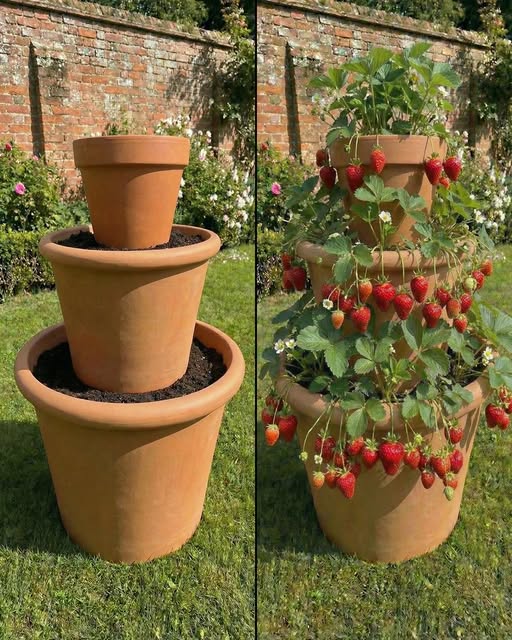
Understanding Types of Strawberries: Varieties, Flavors, and Which One to Grow
Walk into any farmers market in June and the strawberry tables will stop you in your tracks. The colors alone — deep crimson, pale blush, creamy white — are enough to make you pause. But what surprises most people is learning that what they thought was one simple fruit is actually a world of distinct types, each with its own flavor, texture, growing season, and best use.
Strawberries are not one-size-fits-all. The variety you choose determines when you harvest, how long the season lasts, how large the berries grow, how sweet or tart they taste, and whether they hold up for preserves or are best eaten straight from the plant.
Understanding the types — from broad categories down to named cultivars — makes you a better grower, a smarter shopper, and a more adventurous cook.
This guide covers every major type of strawberry: the three main production categories, the most widely grown and recommended cultivars.
The Three Main Categories of Strawberries
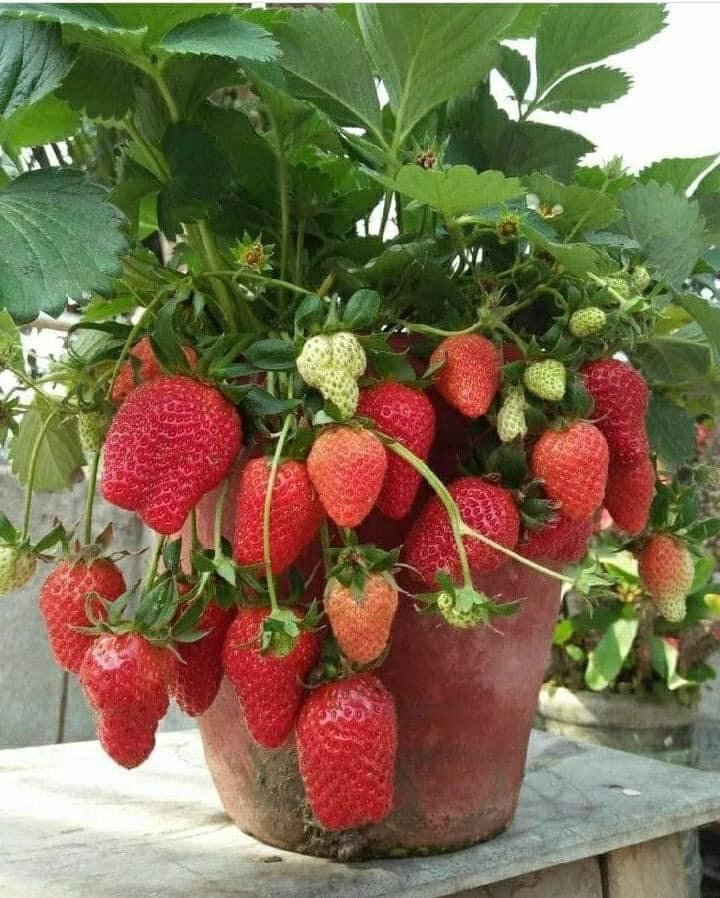
All cultivated strawberries belong to one of three production categories, defined by their fruiting pattern and response to day length. This is the most important classification to understand, because it determines your harvest calendar.
1. June-Bearing Strawberries
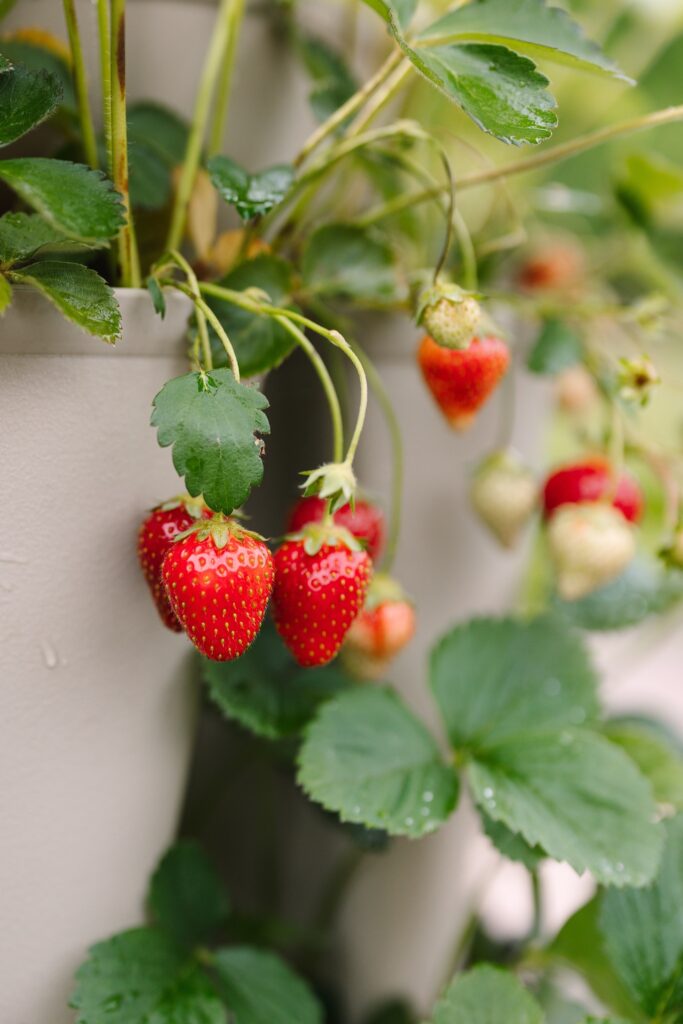
June-bearing strawberries — also called short-day strawberries — produce one large, concentrated crop per season. In most parts of the United States, this happens in late spring to early summer, roughly May through June depending on climate and variety.
In warmer regions like California and Florida, the season may begin as early as March or April.
This single harvest is their defining trait. The berries tend to be large, firm, and abundantly flavored. Because everything ripens within a two to three week window, June-bearers are the preferred choice for making jam, preserves, and frozen strawberries — you get a large quantity at once rather than a trickle over months.
June-bearing varieties are further divided into early, midseason, and late subcategories based on exactly when within the spring season they ripen. Planting a mix of early, mid, and late varieties extends the total harvest window by three to four weeks without needing to switch to a different production type.
Best suited for: Large-scale home production, preservation and canning, gardeners who prefer one intensive harvest period.
Popular June-bearing cultivars:
- Chandler — One of the most widely grown commercial and home varieties in the U.S., especially in California. Produces very large, glossy, deep-red berries with classic sweet flavor. Excellent fresh and for preserves.
- Camarosa — A California favorite; firm, large, and productive. Slightly more tart than Chandler. Good shelf life, which makes it popular at markets.
- Earliglow — An early-season variety with outstanding flavor — many consider it among the best-tasting strawberries available. Berries are smaller but intensely sweet. Excellent disease resistance.
- Allstar — Midseason; large, firm, light-red berries with mild, sweet flavor. Very consistent producer across a range of climates.
- Jewel — A mid-to-late season variety from Cornell University; widely grown in the Northeast and Midwest. Large, attractive berries with good flavor and excellent disease resistance.
- Honeoye — Early-season; very productive with large, firm berries. Flavor is good though slightly tart. One of the most popular varieties for northern growers.
- Sparkle — Late-season; soft, very flavorful berries. A classic variety for home gardens in the Northeast, particularly valued for jam-making.
2. Everbearing Strawberries
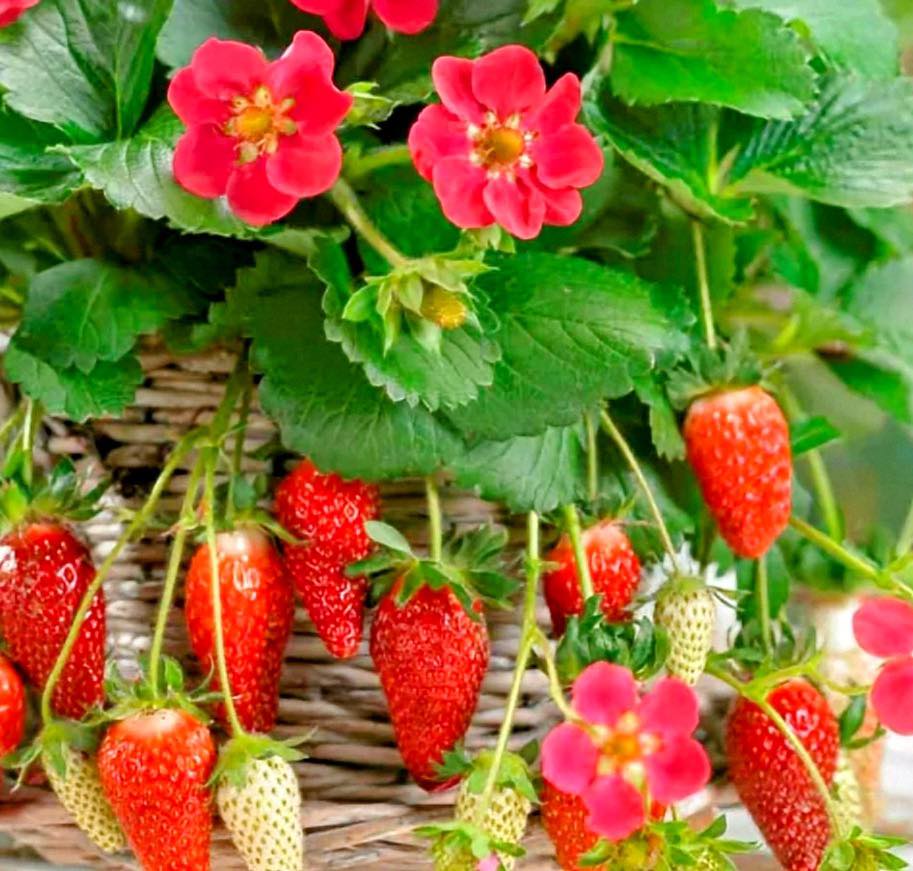
Everbearing strawberries produce two to three distinct flushes of fruit across the growing season — typically a moderate crop in late spring, a smaller midsummer flush, and another crop in late summer or early fall. They do not fruit continuously (that distinction belongs to day-neutral varieties), but they do extend the season in a way June-bearers cannot.
Historically, the term “everbearing” was applied loosely to any strawberry that fruited outside the typical June window. Modern horticultural classification distinguishes everbearers from true day-neutrals, but in everyday gardening language the terms are sometimes used interchangeably.
For practical purposes, the main point is this: everbearing varieties give you strawberries across a longer window, which suits home gardeners who want a continuous but moderate supply rather than one intensive burst.
Best suited for: Home gardeners who want fresh berries throughout summer, container and raised bed growing, families who want ongoing harvests.
Popular everbearing cultivars:
- Ozark Beauty — One of the most reliable and widely grown everbearing varieties. Produces large, sweet, wedge-shaped berries. Vigorous, cold-hardy, and adaptable to a wide range of climates. An excellent choice for beginner gardeners.
- Fort Laramie — Extremely cold-hardy; one of the few varieties that performs well in USDA zones 3 and 4. Produces medium-large berries with good flavor. A go-to choice for northern and mountain gardeners.
- Quinault — Produces very soft, sweet berries ideal for fresh eating. Compact habit suits containers and small garden beds well. Popular in the Pacific Northwest.
- Seascape — Though technically classified as day-neutral, Seascape is often grouped with everbearers in home gardening literature. Highly productive with large, firm, flavorful berries. Outstanding performance in coastal California climates.
3. Day-Neutral Strawberries
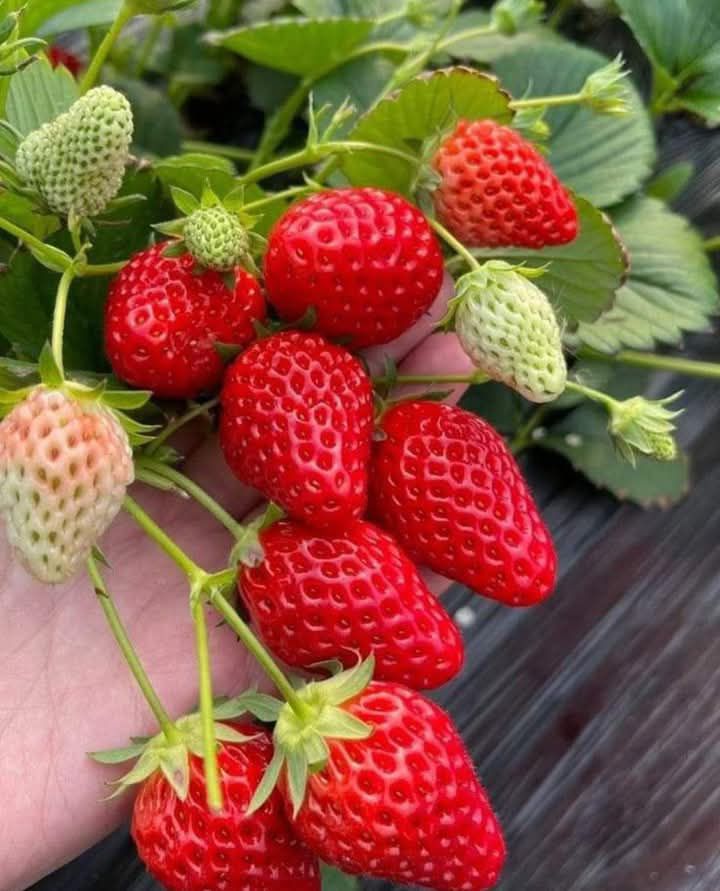
Day-neutral strawberries are the most continuous producers of the three types. Unlike June-bearers (which require short days to initiate flowering) and traditional everbearers (which respond to longer days), day-neutral varieties flower and fruit regardless of day length, as long as temperatures remain within a moderate range — roughly 35 to 85°F (2 to 29°C).
In practice, this means they produce fruit almost continuously from late spring through the first frost, with only a brief slowdown during the hottest part of midsummer. For home gardeners who want strawberries across the entire growing season, day-neutrals are unmatched.
Individual berries are often smaller than June-bearing types, but the cumulative yield across a full season is competitive. Flavor is generally excellent — some of the best-tasting strawberries available belong to this category.
Best suited for: Container growing, season-long fresh eating, small gardens where continuous yield is more valuable than a single large harvest.
Popular day-neutral cultivars:
- Albion — Widely considered one of the finest strawberries available for home growing. Produces large, firm, deep-red berries with exceptional sweetness and a classic strawberry fragrance. Heat-tolerant compared to other day-neutrals. Outstanding for fresh eating and farmers markets.
- Monterey — A newer California variety with very large, attractive berries. Excellent flavor, slightly softer than Albion. Productive and vigorous.
- San Andreas — Firm, large berries with very good flavor. Somewhat more heat-tolerant than Albion; excellent choice for warmer climates.
- Tristar — A classic day-neutral variety valued for its outstanding flavor and reliability in a wide range of climates, including colder northern regions. Berries are smaller than Albion but intensely flavorful.
- Tribute — A vigorous, disease-resistant day-neutral; medium-large berries with good flavor. Performs well in the Mid-Atlantic and Northeast regions.
- Evie-2 — A British-bred day-neutral that has gained a strong following in American home gardens for its exceptional sweetness and reliable continuous production.
Wild Strawberries: The Originals
Long before cultivated varieties were developed, wild strawberries fed people across Europe, Asia, and the Americas. They deserve a section of their own — not only because of their history, but because they are genuinely worth growing.
Fragaria vesca — Woodland Strawberry
Fragaria vesca, commonly called the woodland or wild strawberry, is native across the Northern Hemisphere. It is a small, delicate plant that produces tiny red berries — often no larger than a fingernail — with an intensity of flavor that commercial strawberries rarely match.
If you have ever eaten a truly wild strawberry, you understand why so many food writers describe them as the most flavorful strawberry in existence.
Woodland strawberries are shade-tolerant, which makes them one of the few fruiting plants that genuinely thrive under trees. They spread by runners and reseed freely. In a garden setting, they make beautiful, low-maintenance ground cover that produces edible fruit from summer through fall.
The variety Fragaria vesca ‘Alexandria’ is particularly popular in home gardens — it is runnerless, which keeps it tidy, and produces reliably from seed.
Fragaria virginiana — North American Wild Strawberry
Fragaria virginiana is native to North America and is one of the parent species of the modern cultivated strawberry (Fragaria × ananassa, which is a hybrid of F. virginiana and the South American F. chiloensis).
The North American wild strawberry produces small, very sweet berries with exceptional flavor and is extremely cold-hardy. It grows naturally in meadows, forest edges, and roadsides from Canada to the southern Appalachians.
Fragaria chiloensis — Beach Strawberry
Fragaria chiloensis, the beach or Chilean strawberry, is native to the Pacific coast of both North and South America. It is a robust, spreading plant with large, leathery leaves — well adapted to coastal conditions, sandy soils, and salt spray.
The berries are typically white to pale pink, firm, and mildly flavored. It is one of the direct ancestors of every modern cultivated strawberry, and it continues to influence breeding programs focused on disease resistance and climate adaptation.
Alpine Strawberries: A Category Worth Its Own Discussion
Alpine strawberries (Fragaria vesca var. semperflorens) deserve special attention because they occupy a unique position in the strawberry world — wild in origin, but cultivated extensively and available in several distinct named forms.
Unlike most cultivated strawberries, alpine strawberries do not produce runners. They grow as compact, clump-forming plants and are typically grown from seed. They produce small, elongated berries continuously from summer through fall. The flavor is intense — often described as a concentrated version of classic strawberry taste, with a slight winey or musky quality in some varieties.
Named alpine varieties include:
- Alexandria — The most widely grown alpine variety; vigorous, productive, and reliably grown from seed. Deep red berries with excellent flavor.
- Yellow Wonder — A yellow-fruited alpine with a completely different flavor profile: sweet, almost vanilla-like, with notes of pineapple. Birds do not recognize yellow berries as ripe fruit and largely leave them alone, which is a practical advantage many gardeners appreciate.
- White Soul — Produces creamy white berries with an exceptional, perfumed sweetness. Very ornamental. One of the most interesting strawberries to grow from a culinary standpoint.
- Mignonette — A compact, early-bearing alpine with deep red berries. Good for edging beds and container growing.
- Baron Solemacher — A classic European alpine variety; heavy-bearing with very flavorful red berries. Long history of cultivation in cottage gardens.
White and Specialty Strawberries
In recent years, white-fleshed and white-skinned strawberries have attracted significant attention from home gardeners and culinary enthusiasts. These are not albino versions of red strawberries — they are distinct varieties with their own flavor profiles, and some of them are truly extraordinary.
Pineberry
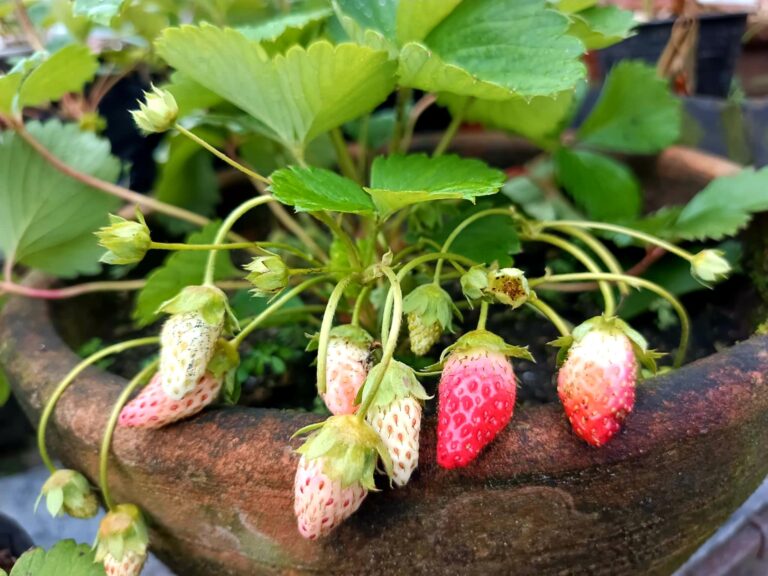
The pineberry is arguably the most famous white strawberry in home cultivation. It is a hybrid derived from Fragaria chiloensis — the original beach strawberry. Pineberries are small, pale white to blush pink, with red seeds, creating a striking appearance that is essentially the color inversion of a standard strawberry.
The flavor is unlike any other strawberry. It is sweet and floral, with a distinctive pineapple-like note that gives the variety its name. Pineberries require red-fruited strawberry plants nearby for pollination, which means they must be planted with a compatible variety.
Japanese White Strawberries
White strawberries have been cultivated in Japan for decades, where they command extraordinarily high prices — premium varieties like Hatsukoi no Kaori (“Scent of First Love”) and Shiroi Houseki (“White Jewel”) sell for the equivalent of several dollars per single berry in Japanese markets.
These varieties have a low level of the compound (pelargonidin) that gives strawberries their red color. They are delicate, very sweet, and intensely aromatic. Several Japanese white varieties are now available to home growers in North America and Europe, though they require careful cultivation and perform best in controlled environments such as greenhouses or high tunnels.
Malwina
A deep-purple-red German variety worth mentioning for its unusual appearance and outstanding flavor. Malwina is a late-season June-bearer with very large, dark berries and one of the highest flavor ratings of any cultivar in European trials.
Choosing the Right Type for Your Region
Geography matters significantly in strawberry growing. Here is a practical regional guide:
Pacific Coast (California, Oregon, Washington): Day-neutral varieties thrive here, particularly Albion, Seascape, San Andreas, and Monterey. The mild, fog-influenced climate of the California coast is among the best strawberry-growing environments in the world.
Northeast and Great Lakes: June-bearers dominate — Jewel, Honeoye, Earliglow, and Sparkle are proven performers. For cold tolerance, Fort Laramie (everbearing) and Tristar (day-neutral) are reliable choices.
Southeast and Gulf Coast: Varieties bred for heat tolerance and disease resistance perform best — Chandler, Camarosa, and Camino Real are widely grown commercially and in home gardens. The season runs earlier here, often February through April.
Midwest: A transitional zone where both June-bearers and day-neutrals perform well. Allstar, Ozark Beauty, and Tristar are popular. Good drainage is essential given the region’s heavy soils.
Mountain West and High Plains: Cold-hardiness is the priority. Fort Laramie, Tristar, and alpine varieties perform best. Short growing seasons favor early-bearing June types or day-neutrals that begin producing quickly.
A Brief Note on Flavor
No discussion of strawberry types is complete without addressing flavor directly. The sweetest, most intensely flavored strawberries are almost never the largest ones. Commercial breeding has historically prioritized size, firmness, and shelf life over flavor — traits that travel and store well but do not necessarily taste the best.
Home gardeners are free from those constraints entirely. If flavor is your priority, grow Earliglow, Tristar, alpine varieties, or pineberries. Accept that the berries may be smaller or softer. The trade-off is worth it.
I have tasted enough different varieties over the years to say with complete confidence: a fully ripe Earliglow or alpine berry, warm from the garden, is one of the finest things a kitchen garden can produce.
Frequently Asked Questions
What is the sweetest type of strawberry?
Alpine strawberries and day-neutral varieties such as Albion and Tristar are consistently rated highest for flavor by home gardeners and horticultural researchers. Earliglow, despite being a June-bearer, is frequently cited as one of the best-tasting varieties available.
What is the difference between June-bearing and everbearing strawberries?
June-bearing varieties produce one large crop in late spring. Everbearing varieties produce two to three smaller flushes across the season. Day-neutral varieties produce fruit almost continuously from late spring through first frost.
Are white strawberries a different species?
Most white strawberries (including pineberries and Japanese white varieties) belong to the same species as red strawberries (Fragaria × ananassa or Fragaria chiloensis). Their pale color results from low concentrations of anthocyanin pigments, not a different species classification.
Which strawberry is best for containers?
Day-neutral and alpine varieties are generally best for containers — their compact growth habit, continuous production, and moderate runner production suit container life well. Albion, Tristar, Alexandria, and Yellow Wonder are all excellent container choices.
Suggested For You:
You Can Grow Strawberries from a Strawberry — Here Is Exactly How to Do It
From Patio to Harvest: The Best Strawberry Pot Planting Ideas That Actually Work
15 Dwarf Fruit Trees for Garden Beds: A Complete Growing Guide
Final Thoughts
The world of strawberries is richer than most people realize. From the single-burst abundance of a June-bearing Chandler, to the season-long generosity of an Albion, to the jewel-like intensity of a wild alpine — each type has something distinctive to offer, and choosing among them is one of the genuine pleasures of gardening.
If you are new to growing strawberries, start with a day-neutral variety for continuous harvest and one alpine variety for pure flavor discovery. From there, the range opens up naturally. There are few plants that reward curiosity as generously as strawberries do.
References
- Poling, E. B. (1993). Strawberries. North Carolina State University Cooperative Extension. https://content.ces.ncsu.edu/strawberries
- Strik, B. C., & Finn, C. E. (2008). Strawberry Production Guide for the Pacific Northwest. Oregon State University Extension Service. https://catalog.extension.oregonstate.edu/pnw583
- Pritts, M., & Handley, D. (Eds.). (1998). Strawberry Production Guide for the Northeast, Midwest, and Eastern Canada. Cornell Cooperative Extension. https://www.fruit.cornell.edu/strawberry/
- Lester, G., & Saftner, R. (2011). Organically Versus Conventionally Grown Produce: Common Production Inputs, Nutritional Quality, and Nitrogen Fertility. USDA Agricultural Research Service. https://www.ars.usda.gov/research/publications/publication/?seqNo115=265002
- Hancock, J. F. (1999). Strawberries (Crop Production Science in Horticulture). Michigan State University / CAB International. Referenced via Michigan State University Extension: https://www.canr.msu.edu/strawberries/

Tim M Dave is a gardening expert with a passion for houseplants, particularly cacti and succulents. With a degree in plant biology from the University of California, Berkeley, he has vast experience in gardening. Over the years, he has cultivated a vast collection of desert plants and learned a great deal about how to grow and care for these unique companions.