15 Stunning Types of Fir Trees: Pictures, Uses, and Care Details
Fir trees are among the most recognizable conifers in the world. Whether you have seen them towering over a mountain trail, standing as Christmas trees in a living room, or lining a city park, firs carry a certain quiet elegance that is hard to ignore.
I have always found them fascinating — partly because they look so similar at first glance, yet differ so greatly once you study them closely.
This guide covers 15 distinct types of fir trees, breaking down their appearance, native range, growth habits, and practical uses. But before we look at each of them, here is a quick summary about them.
| Common Name | Scientific Name | Height (ft) | Hardiness Zone |
| Balsam Fir | Abies balsamea | 45–75 | 3–5 |
| Fraser Fir | Abies fraseri | 30–50 | 4–7 |
| Douglas Fir | Pseudotsuga menziesii | 70–250 | 4–6 |
| White Fir | Abies concolor | 40–70 | 3–7 |
| Noble Fir | Abies procera | 100–200 | 5–6 |
| Grand Fir | Abies grandis | 100–200 | 6–9 |
| Pacific Silver Fir | Abies amabilis | 100–150 | 5–6 |
| Subalpine Fir | Abies lasiocarpa | 60–100 | 2–5 |
| Red Fir | Abies magnifica | 60–150 | 6–8 |
| Korean Fir | Abies koreana | 30–50 | 5–7 |
| Spanish Fir | Abies pinsapo | 50–80 | 6–9 |
| Nikko Fir | Abies homolepis | 40–80 | 4–6 |
| Nordmann Fir | Abies nordmanniana | 60–200 | 4–6 |
| Greek Fir | Abies cephalonica | 50–100 | 5–7 |
| Siberian Fir | Abies sibirica | 60–100 | 1–5 |
What Is a Fir Tree? A Quick Overview
Fir trees belong to the genus Abies, a group of evergreen conifers in the family Pinaceae. There are roughly 50 recognized species of true firs, and they are found across the Northern Hemisphere — from North America and Europe to Asia and North Africa.
Key features that distinguish true firs:
- Flat, single needles that attach directly to the branch (not in clusters)
- Upright cones that disintegrate on the tree rather than falling whole
- Smooth, resin-filled blisters on young bark
- A conical or spire-shaped crown
One important note: Douglas fir is not a true fir. It belongs to the genus Pseudotsuga, but it is widely grouped with firs in popular usage. It is included in this article because of its cultural and ecological significance.
Types of Fir Trees
The following are popular varieties of the fir trees:
1. Balsam Fir (Abies balsamea)
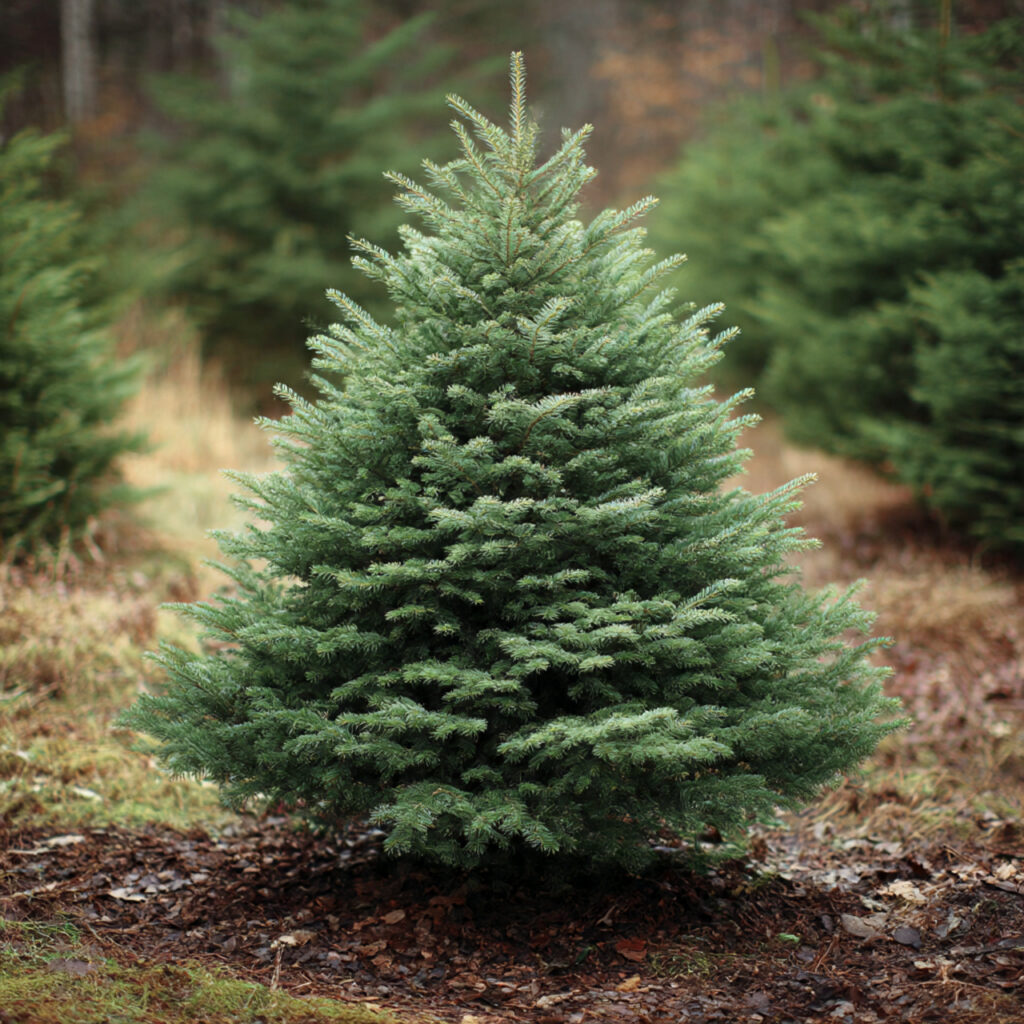
The Balsam Fir is perhaps the most iconic fir tree in eastern North America. It thrives in cold, humid climates — from the forests of Canada down through the northeastern United States, including Minnesota and Maine.
Its needles are flat, dark green on top, and pale with white bands underneath. The bark of young trees is thin and covered in resin blisters — which, when pressed, release the sharp, refreshing scent that most people associate with the holidays.
Common uses:
- One of the most popular Christmas tree species in North America
- Source of Canada balsam resin, used historically in microscopy and optical lens mounting
- Habitat for woodland wildlife, including crossbills and spruce grouse
The Balsam Fir grows slowly and typically reaches 45 to 75 feet at maturity. It prefers moist, well-drained soils and does not tolerate heat or drought well.
2. Fraser Fir (Abies fraseri)
Named after Scottish botanist John Fraser, the Fraser Fir is native to the high-elevation forests of the southern Appalachian Mountains. It is found primarily in Virginia, North Carolina, and Tennessee — often at altitudes above 5,500 feet.
What makes the Fraser Fir special is its superior needle retention. Even weeks after being cut, its branches hold their needles far better than most other species. This quality, combined with its pleasant scent and compact, symmetrical shape, has made it the most commercially popular Christmas tree in the United States.
The tree grows between 30 and 50 feet tall and features needles with a distinctive silvery-white underside. Unfortunately, the species is threatened in the wild by the balsam woolly adelgid, an invasive insect pest.
3. Douglas Fir (Pseudotsuga menziesii)
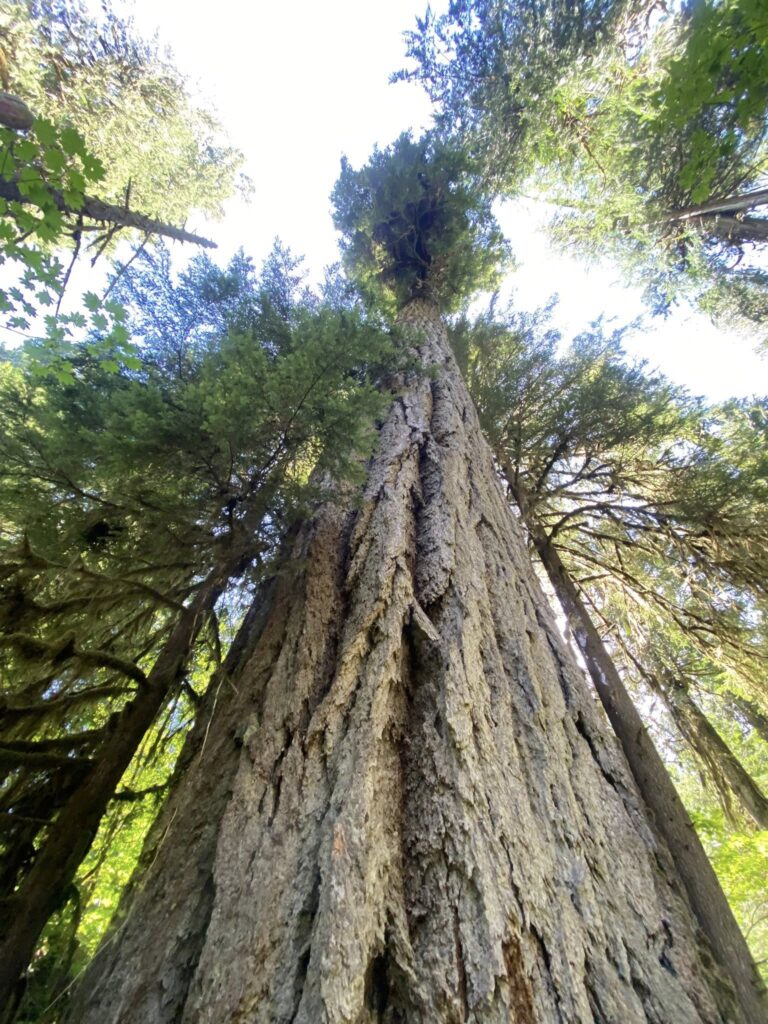
Technically not a true fir, the Douglas Fir deserves its place on this list. It is one of the tallest and most commercially significant trees in North America, and its name appears in nearly every conversation about Western forests.
Native to western North America — from British Columbia south through California and into Mexico — the Douglas Fir can grow to a remarkable 250 feet in height. Its needles are soft and flat, and its cones are unique.
They have three-pronged bracts protruding between the scales, which look like the tails of small mice tucked inside.
It is the leading timber tree in the United States, valued for strong, durable wood used in construction, flooring, plywood, and furniture. It is also widely planted as a Christmas tree and as a landscape specimen.
The coastal variety (P. menziesii var. menziesii) tends to grow much taller and faster than the Rocky Mountain variety (P. menziesii var. glauca), which is smaller and more drought-tolerant.
4. White Fir (Abies concolor)
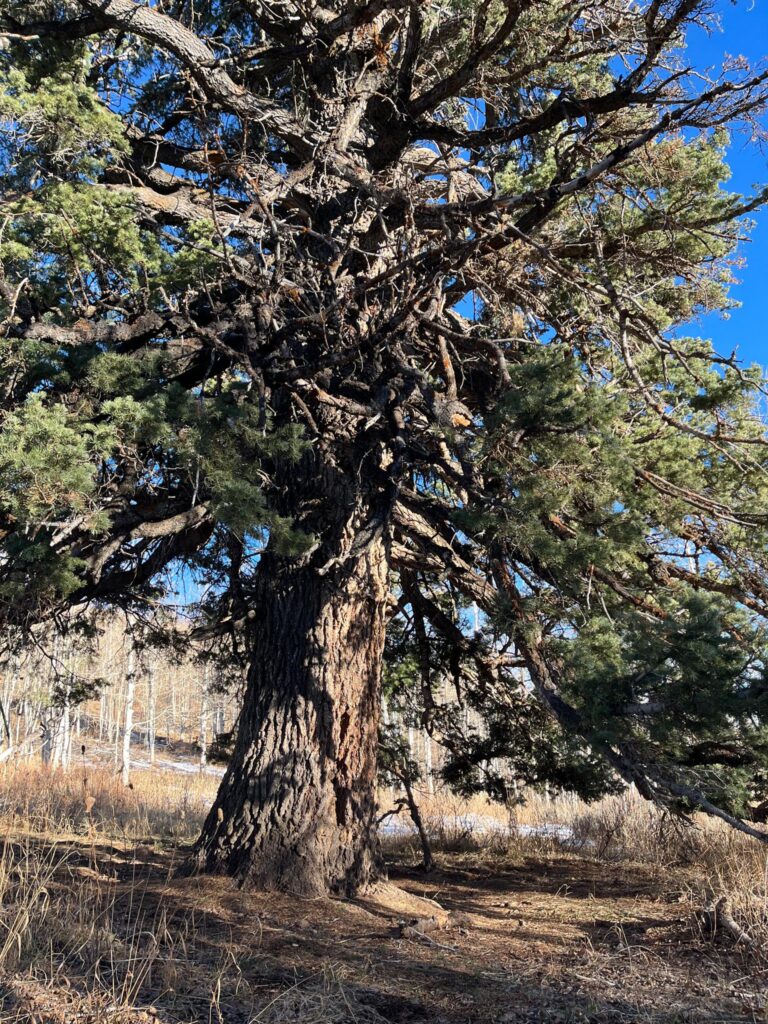
The White Fir is one of the most adaptable fir species. Native to the mountains of the western United States and northern Mexico, it tolerates a wide range of conditions — including drier soils that would stress most firs.
Its needles are long, curved, and blue-green to silvery-blue — giving it an almost frosted appearance. This color is part of why it is a popular ornamental tree in landscapes across North America and Europe. Gardeners love it for its soft texture and elegant color.
White Fir grows 40 to 70 feet tall, is moderately fast-growing, and is relatively resistant to urban pollution. It handles USDA Hardiness Zones 3 through 7, making it one of the more versatile species for planting in varied climates.
It is also grown commercially as a Christmas tree, though it has weaker needle retention than Fraser Fir.
5. Noble Fir (Abies procera)
The Noble Fir lives up to its name. Native to the Cascade Range and the Coast Ranges of Oregon and Washington, it is one of the largest true firs in the world, often exceeding 200 feet in height in old-growth stands.
Its needles are blue-green and curve upward, giving the branches a brushed, uniform look. The cones are the largest of any North American fir — sometimes reaching 10 inches in length — and are densely packed with papery bracts.
Noble Fir branches are stiff and strong, making them ideal for Christmas wreaths and garlands. The branches hold weight well and have a long vase life after being cut. This is why it is one of the most harvested firs for the holiday floral industry.
Its wood is also valued for lumber and plywood production, and it is sometimes planted as an ornamental where space allows.
6. Grand Fir (Abies grandis)
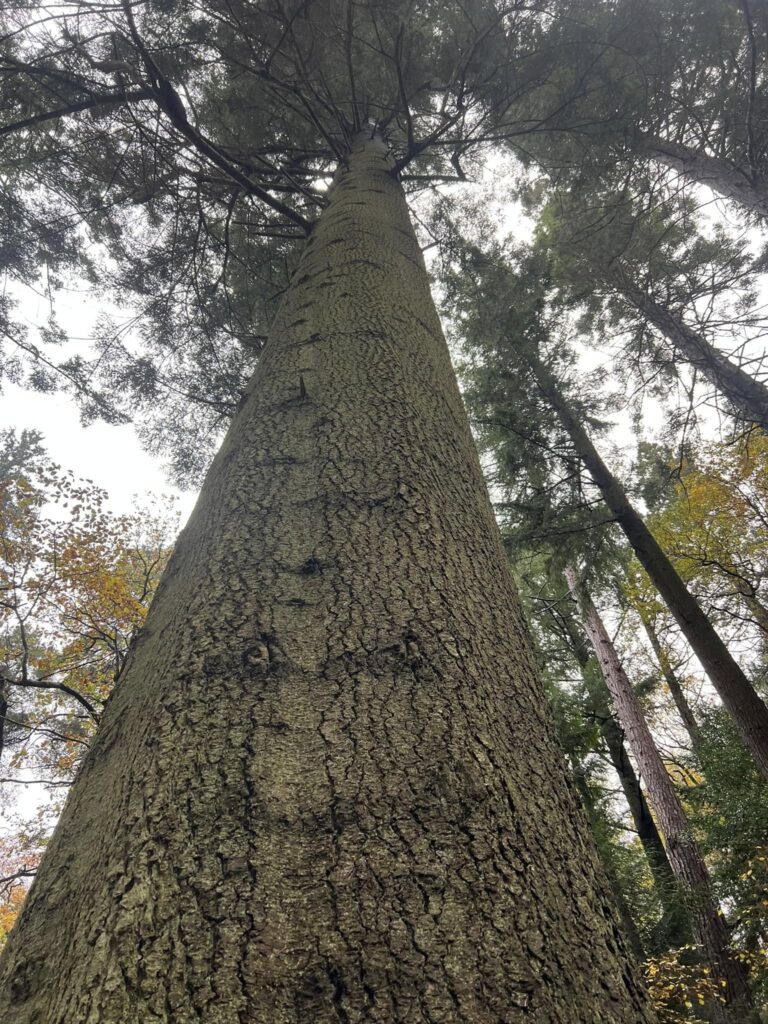
The Grand Fir is aptly named — it is one of the fastest-growing true firs and can reach 200 feet under ideal conditions. It is native to the Pacific Northwest, from southern British Columbia through Idaho and south to northern California.
One of its most distinctive traits is the two-ranked arrangement of its needles, which spread flat on either side of the branch like a comb. The needles are dark, glossy green above and pale beneath, and they release a strong citrus-like fragrance when crushed.
Grand Fir thrives in moist, well-drained coastal climates. It is commonly found alongside Douglas Fir and Western Red Cedar in the lush forests of the Pacific Northwest. Its wood is light, used mainly in pulp production and some construction, though it is less prized than Douglas Fir for structural use.
As a landscape tree, it is valued for its rapid growth and dense, lush canopy.
7. Pacific Silver Fir (Abies amabilis)
The name amabilis means “lovely” in Latin — and the Pacific Silver Fir earns it. Native to the Pacific Coast from southern Alaska to northwestern California, this fir is found at mid- to high elevations and is one of the most cold-tolerant species of the Pacific Northwest.
Its needles are deep green and lustrous on top, with silvery-white bands below that give the tree its common name. Young bark is smooth and gray-white, becoming rough and furrowed with age.
The Pacific Silver Fir grows 100 to 150 feet tall and is an important tree in high-elevation forest ecosystems. It provides critical habitat for wildlife, including marten, black bear, and mountain goat. While not widely planted ornamentally, it is respected in forestry circles for its ecological role in old-growth Pacific forests.
8. Subalpine Fir (Abies lasiocarpa)
Also known as the Alpine Fir, this species is a survivor. It grows at some of the highest elevations of any North American fir — from Yukon in Canada all the way to Arizona and New Mexico in the United States.
In exposed, wind-battered sites near the treeline, the Subalpine Fir takes on a striking krummholz form — a twisted, shrubby growth habit caused by constant wind and ice. In sheltered valleys, however, it grows as a tall, narrow, spire-shaped tree reaching 60 to 100 feet.
Its needles are blue-green and aromatic, and its dark purple cones are small and cylindrical. Because of its extreme cold tolerance — thriving in USDA Zones 2 through 5 — it is one of the few conifers suited to very harsh northern landscapes.
It is not widely used commercially, but it plays an essential ecological role in alpine and subalpine ecosystems.
9. Red Fir (Abies magnifica)
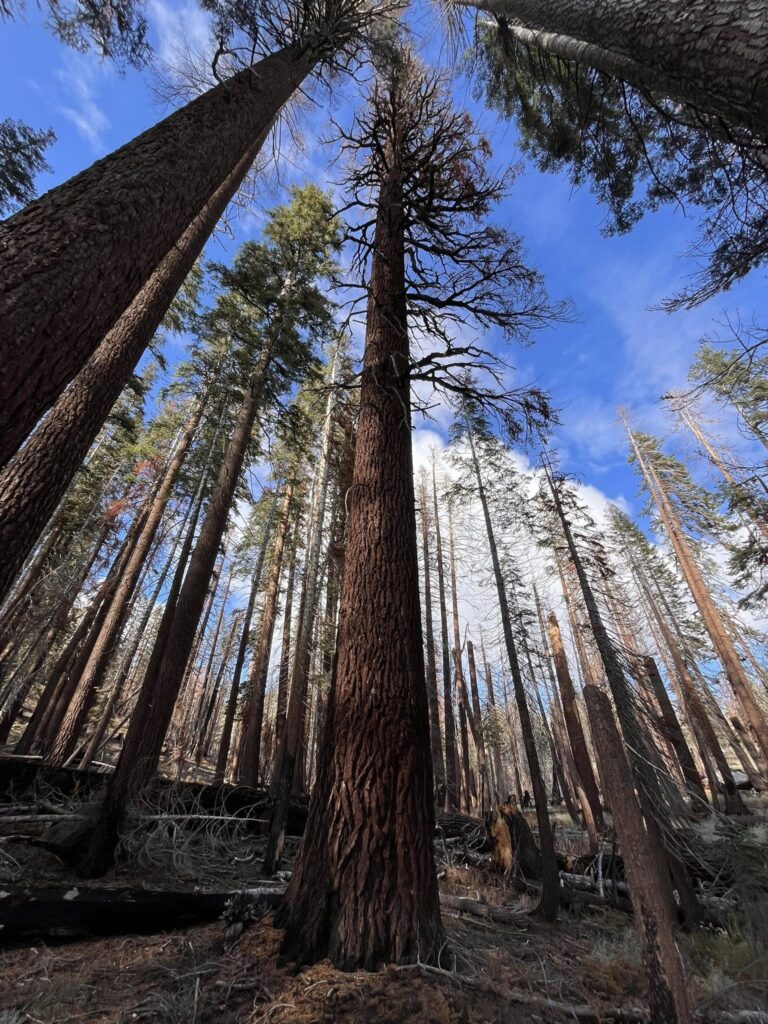
The Red Fir is a grand, high-altitude species native to the Sierra Nevada and Cascade ranges of California and Oregon. It typically grows between 6,000 and 9,000 feet in elevation and forms dense, pure stands sometimes called “red fir forests.”
Its bark, which turns deeply reddish-brown and ridged with age, gives the tree its name. The needles are blue-green and four-angled, curving upward around the branch. Its large cones can reach 8 inches in length.
John Muir famously called the Red Fir forest one of the most beautiful in California — and it is hard to disagree. These forests are quiet, cathedral-like places with a thick duff layer underfoot.
Red Fir wood is used in general construction and has historically been logged in Sierra Nevada forests. Today, many old-growth Red Fir stands are protected within national parks and wilderness areas.
10. Korean Fir (Abies koreana)
If you are looking for a compact, ornamental fir for a home garden, the Korean Fir should be near the top of your list. Native to the higher elevations of South Korea, this species is slow-growing and typically stays between 30 and 50 feet tall — though many cultivars remain much smaller.
What sets the Korean Fir apart is its prolific cone production, even on young trees. The cones are stunning — deep violet to purple-blue, cylindrical, and upright — appearing at an early age and in remarkable quantities. Few ornamental trees produce a display quite like it.
The needles are dark green above and bright white below, creating a beautiful contrast. Korean Fir cultivars like ‘Silberlocke’ (with upswept, silvery needles) and ‘Horstmann’s Silberlocke’ are extremely popular in European and North American gardens.
It tolerates a range of soil types and does well in USDA Zones 5 through 7. It is an excellent choice for gardeners who want a fir with visual impact in a smaller space.
11. Spanish Fir (Abies pinsapo)
The Spanish Fir is a rare and striking species with a very limited natural range. It grows natively in only a few mountain areas of southern Spain and northern Morocco, making it one of the rarest firs in Europe.
Its needles are distinctive — short, stiff, and arranged radially around the branch like the bristles of a bottle brush. This sets it apart visually from most other firs, whose needles lie flat. The needles are blue-green and sharp to the touch.
Despite its rarity in the wild, the Spanish Fir is widely cultivated as an ornamental tree across Europe and the Mediterranean world. It tolerates heat and drier conditions better than most firs, making it suitable for warmer climates where other species struggle.
It grows to 50 to 80 feet and is hardy to USDA Zone 6. The cultivar ‘Glauca’ is especially popular for its intense blue-silver needle color.
12. Nikko Fir (Abies homolepis)
The Nikko Fir originates from the mountains of central and southern Japan, where it grows at altitudes of 3,000 to 8,000 feet. It is named after Nikko, a historic town and mountainous region in Tochigi Prefecture.
Its needles are deep green and glossy, arranged in two flat rows. The undersides are pale with two prominent white bands. Young bark is smooth and grayish, becoming more scaly with age. The cones are cylindrical and blue-purple when young, turning brown at maturity.
The Nikko Fir is prized in Western horticulture for its tolerance of urban conditions — including pollution, compacted soils, and warmer temperatures. This resilience makes it a practical choice for parks and large gardens, especially in the northeastern United States and Western Europe.
It grows between 40 and 80 feet and is hardy to USDA Zone 4. It is considered one of the best-performing firs for urban landscapes.
13. Nordmann Fir (Abies nordmanniana)
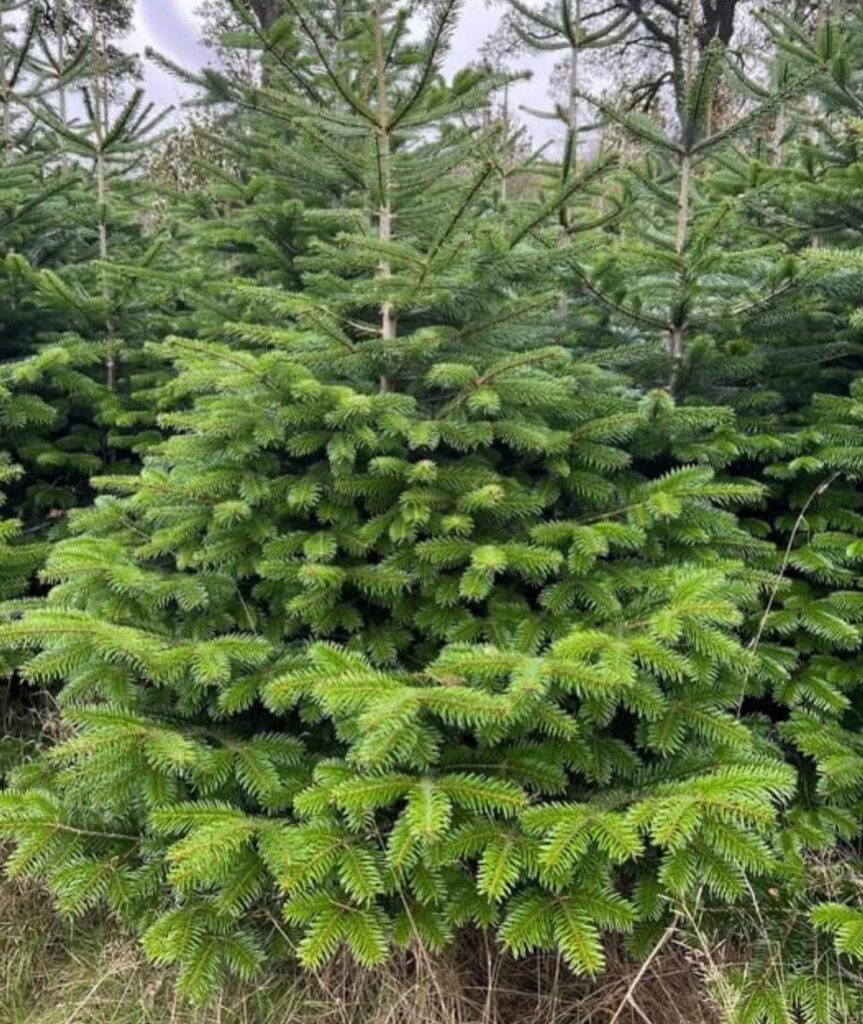
The Nordmann Fir is the most popular Christmas tree in the United Kingdom and much of continental Europe — and for good reason. Native to the mountains of the Caucasus region (Georgia, Turkey, and Russia), it produces exceptionally soft, non-prickly needles that hold on the branch for weeks after cutting.
The needles are dark, glossy green on top and silvery-white below. They lie flat along the branch in a neat, comb-like arrangement. The tree has a dense, full form that looks beautiful when decorated.
In its native habitat, the Nordmann Fir is a giant forest tree, often reaching 200 feet or more. In cultivation for Christmas trees, it is harvested at 6 to 8 feet — usually taking 10 to 12 years to reach that size because of its slow growth.
Beyond the holiday market, it is planted as an ornamental specimen tree in large gardens, parks, and estates. Its lush, dense canopy and graceful form make it one of the most handsome firs in cultivation. Read more on its problems and fixes.
14. Greek Fir (Abies cephalonica)
The Greek Fir is native to the mountains of Greece, including the island of Kefalonia (from which it takes its species name). It is one of the most heat- and drought-tolerant true firs, adapted to the dry Mediterranean summers of southern Europe.
Its needles are stiff, pointed, and slightly prickly — harder in texture than most other firs. They are dark green and shiny, with white bands below. This species tends to branch low to the ground and develops a broad, full crown in the open.
The Greek Fir grows 50 to 100 feet tall and is hardy in USDA Zones 5 through 7. It tolerates alkaline soils better than most firs, which tend to prefer slightly acidic conditions.
In its native Greece, it forms extensive mountain forests. In cultivation, it is used as an ornamental tree in parks and large landscapes across Europe. It is also cultivated as a Christmas tree in parts of southern Europe.
15. Siberian Fir (Abies sibirica)
The Siberian Fir is one of the toughest conifers on the planet. Native to a vast swath of Siberia, Russia, and Central Asia, it survives temperatures that can drop to -60°F (-51°C) — making it suitable for USDA Zones as cold as Zone 1.
Its needles are soft, flexible, and aromatic — among the most fragrant of any fir species. The essential oil extracted from its needles and branches is used in aromatherapy, cosmetics, and traditional medicine across Russia and Central Asia. In fact, Siberian Fir oil is a significant commercial product in the Russian forestry industry.
The tree grows 60 to 100 feet tall and is slender in form, with a narrow, pointed crown. It grows in dense, boreal forests alongside Scots Pine and Siberian Spruce.
As an ornamental, it is beginning to gain recognition in cold-climate gardening for its cold hardiness, elegant form, and appealing fragrance. If you live somewhere with brutal winters, the Siberian Fir might just be the perfect specimen tree.
How to Tell Fir Trees Apart: Quick Identification Tips
With so many species looking similar, identification can feel overwhelming. Here are some practical tips:
- Look at the needles. Fir needles are flat and attach singly to the branch. If needles are round and sharp, it may be a spruce. If they are in bundles, it is a pine.
- Check the underside of the needles. Most firs have white or pale bands (stomatal lines) on the underside. The intensity of these bands varies by species.
- Examine the bark. Young firs have smooth bark with resin blisters. Older trees develop ridged or scaly bark whose color varies by species.
- Study the cones. True fir cones stand upright on branches and disintegrate in place. The shape, size, and color of cones vary significantly between species.
- Consider the location. Native range is often the fastest clue. A large fir in the Appalachian highlands is likely a Fraser Fir; one growing in a Korean mountain village is almost certainly a Korean Fir.
Ecological and Economic Importance of Fir Trees
Fir trees are much more than attractive conifers. They are foundational species in forest ecosystems across the Northern Hemisphere. Their dense canopies regulate temperature and moisture in the forest understory. Their seeds are a critical food source for birds like Clark’s Nutcracker, Red Crossbill, and Chickadees. Their bark and branches shelter countless invertebrates.
Economically, firs contribute billions of dollars in revenue annually through:
- Timber production (especially Douglas Fir)
- Christmas tree farming (Fraser, Nordmann, and Balsam Firs)
- Essential oil extraction (Siberian and Balsam Firs)
- Nursery and ornamental horticulture (Korean, Nordmann, and White Firs)
- Resin and turpentine products
Fir forests also store enormous quantities of carbon, making their conservation a matter of global climate importance. Old-growth fir stands in the Pacific Northwest, in particular, are among the most carbon-dense ecosystems on Earth.
Growing Fir Trees: General Care Guidelines
If you are considering planting a fir tree, here are the basics:
Sunlight: Most firs prefer full sun to partial shade. Korean Fir and Nikko Fir tolerate more shade than most.
Soil: Firs generally prefer cool, moist, well-drained, slightly acidic soils. Spanish Fir and Greek Fir are exceptions — they tolerate alkaline, drier soils.
Watering: Young trees need regular watering until established. Mature firs are more drought-tolerant, though none enjoy prolonged dry spells.
Climate: Match the species to your hardiness zone. Siberian Fir thrives in extreme cold; Spanish Fir handles Mediterranean heat. Getting this right is the most important decision you can make.
Spacing: Give large species like Grand Fir or Noble Fir at least 20 to 30 feet of space. Compact species like Korean Fir cultivars can fit in smaller gardens.
Final Thoughts
Fir trees are extraordinary. Whether you are planting one in your garden, walking beneath a canopy of old-growth Silver Fir, or simply choosing the right Christmas tree at a local farm, there is real pleasure in knowing what you are looking at and why it matters.
Each of the 15 species in this guide has its own character — its own preferred climate, its own form, its own contribution to the ecosystems and cultures where it grows.
I find that knowing the difference between a Balsam Fir and a Nordmann Fir, or between a Korean Fir and a White Fir, makes every encounter with these trees more meaningful.
Take the time to learn them. They are worth it.
References
- Virginia Tech Department of Forest Resources and Environmental Conservation — Dendrology Fact Sheets https://dendro.cnre.vt.edu/dendrology/
- University of Florida IFAS Extension — Landscape Plants https://hort.ifas.ufl.edu/database/trees/trees_common.shtml

Tim M Dave is a gardening expert with a passion for houseplants, particularly cacti and succulents. With a degree in plant biology from the University of California, Berkeley, he has vast experience in gardening. Over the years, he has cultivated a vast collection of desert plants and learned a great deal about how to grow and care for these unique companions.