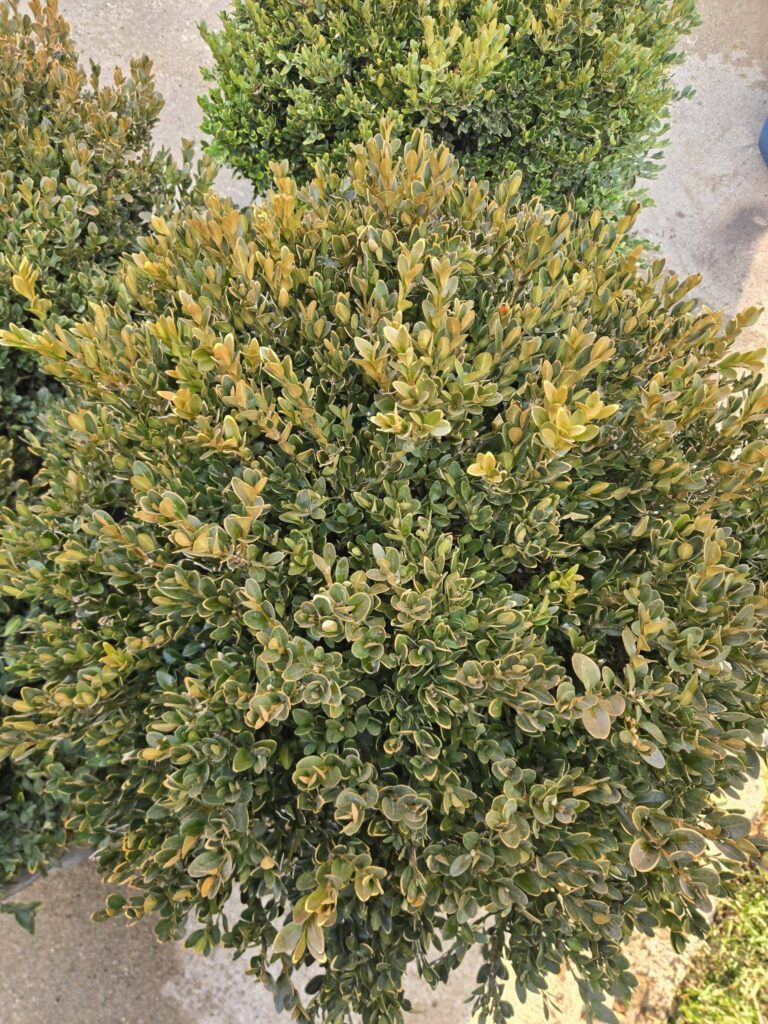
25 Types of Boxwood Shrubs: Variety Identification, Hardiness, and How to Grow Them
Boxwood shrubs are among the most versatile, enduring plants in landscape design. Whether you are shaping a formal English garden or lining a simple walkway, there is a boxwood variety suited for the task.
With over 70 recognized species in the Buxus genus and hundreds of named cultivars, choosing the right one can feel overwhelming.
This guide breaks it all down. Below you will find 25 of the most important and widely grown types of boxwood shrubs, complete with their characteristics, growth habits, and best uses. By the end, you will know exactly which variety belongs in your garden.
What Is a Boxwood Shrub?
Boxwood (Buxus spp.) is a genus of slow-growing, broadleaf evergreen shrubs native to Europe, Asia, Africa, and Central America. They are prized for their dense, compact foliage, their tolerance for heavy pruning, and their year-round green color.
Gardeners have used boxwoods for centuries — from the grand topiaries of Versailles to modest suburban hedges. Their adaptability is unmatched. Some thrive in full sun, others prefer shade. Some stay under 12 inches tall; others grow into small trees.
Most boxwoods thrive in USDA hardiness zones 5 through 9, though some cultivars tolerate colder or warmer conditions. They prefer well-drained soil, partial to full sun, and modest moisture.
Boxwoods are also relatively low-maintenance once established — a reason many gardeners keep returning to them year after year.
One thing that unites them all: boxwoods are workhorses of the landscape.
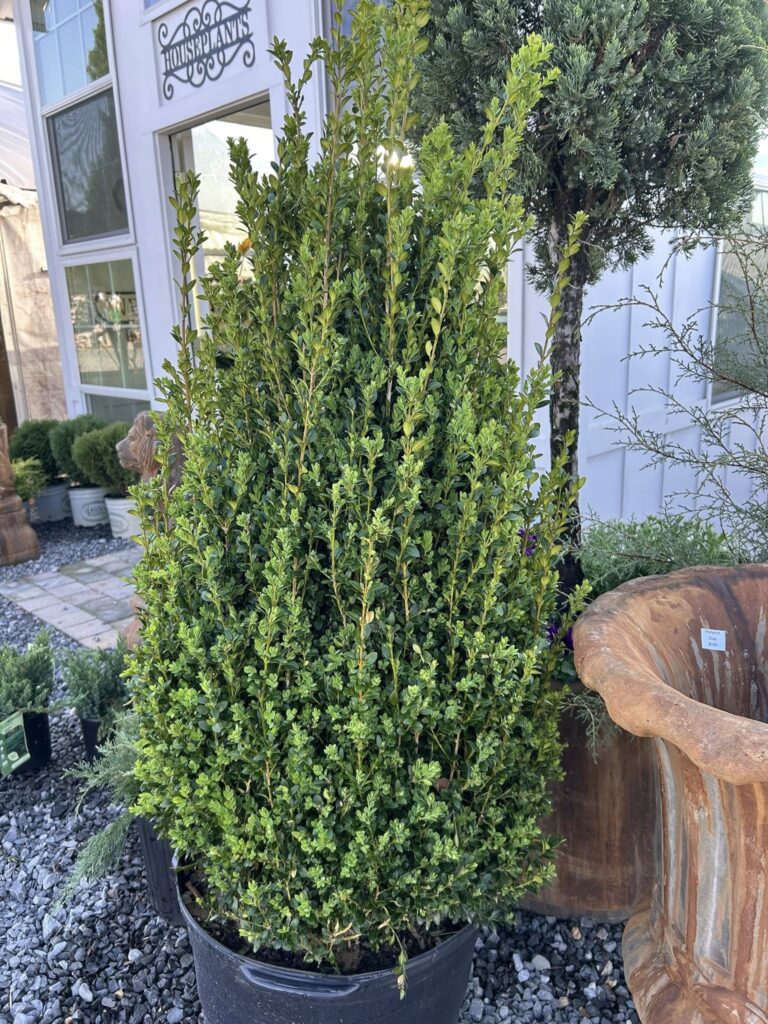
The 3 Main Species Groups
Before listing individual varieties, it helps to understand the three primary species from which most cultivars descend:
- Buxus sempervirens — Common or English boxwood. The most widely planted group worldwide.
- Buxus microphylla — Japanese or littleleaf boxwood. More cold-hardy than sempervirens.
- Buxus sinica var. insularis — Korean boxwood. Extremely cold-hardy, ideal for northern climates.
Most named cultivars fall under one of these species or are hybrids between them.
Types of Boxwood Shrubs
1. Buxus sempervirens (Common Boxwood)
This is the classic. Buxus sempervirens has been cultivated for over 2,000 years and remains the benchmark against which all other boxwoods are measured. It grows 5 to 15 feet tall in its natural state, though regular pruning keeps it tightly compact.
The leaves are dark green, glossy on top and pale beneath. It tolerates heavy clipping beautifully, which is why it dominated European estate gardens for centuries. The downside is its susceptibility to boxwood blight (Calonectria pseudonaviculata), a fungal disease now widespread in North America.
Best use: Formal hedges, topiaries, specimen plantings.
Hardiness: USDA Zones 5–8.
2. Buxus sempervirens ‘Suffruticosa’ (Dwarf English Boxwood)
If you picture a low, rounded hedge lining a garden path, you are probably imagining ‘Suffruticosa’. This is the classic edging boxwood — slow-growing, compact, and refined.
It typically reaches 2 to 3 feet tall over many years. The leaves are small and rounded, with a slightly sweet scent when crushed. I find this variety has an old-world charm that newer cultivars simply cannot replicate.
Best use: Parterres, formal edging, knot gardens.
Hardiness: USDA Zones 5–8.
3. Buxus microphylla var. japonica (Japanese Boxwood)
Japanese boxwood is a workhorse in warmer climates. It handles heat and humidity far better than common boxwood, making it popular throughout the American South and Pacific regions.
The foliage tends to turn bronze or yellowish in winter, which some gardeners dislike. However, its vigor and adaptability more than compensate. It grows 4 to 6 feet tall without pruning.
Best use: Hedges, foundation plantings, mass plantings.
Hardiness: USDA Zones 6–9.
4. Buxus microphylla ‘Winter Gem’
‘Winter Gem’ earned its name honestly. Unlike many boxwoods that bronze or fade in cold weather, this cultivar retains its bright green color through winter, even in Zone 5.
It is a moderate grower, reaching 4 feet tall and wide at maturity. The foliage is dense and fine-textured. This is one of the most popular boxwoods in nurseries across North America, and for good reason.
Best use: Year-round hedges, specimen shrubs. Hardiness: USDA Zones 4–9.
5. Buxus microphylla ‘Green Mountain’
‘Green Mountain’ has a naturally upright, pyramidal form — a rarity in the boxwood world. It requires minimal pruning to maintain its tidy silhouette. Growing to about 5 feet tall and 3 feet wide, it works beautifully as a living architectural accent.
The foliage stays dark green into winter with little bronzing. It is a hybrid involving B. sempervirens, which contributes to its good cold hardiness.
Best use: Flanking entryways, formal accents, mixed borders.
Hardiness: USDA Zones 4–9.
6. Buxus microphylla ‘Green Velvet’
If you want a boxwood that practically takes care of itself, ‘Green Velvet’ deserves consideration. It forms a naturally rounded, globe-shaped mound with almost no intervention. Growing 3 to 4 feet in both height and width, it has a soft, velvety texture.
The deep green color holds well through cold months. It is a hybrid with good disease resistance relative to older sempervirens types.
Best use: Low hedges, mass plantings, foundation shrubs.
Hardiness: USDA Zones 4–9.
7. Buxus microphylla ‘Green Gem’
Compact, tidy, and nearly perfect in shape, ‘Green Gem’ is a slow-growing cultivar that reaches just 2 feet in height and width. It is one of the best choices for very small spaces, container gardens, or tight borders.
The foliage is dense and glossy. In winter, it may develop a slight bronze tint in the coldest zones, but recovers a rich green color by spring.
Best use: Containers, small hedges, rock gardens.
Hardiness: USDA Zones 4–9.
8. Buxus sinica var. insularis (Korean Boxwood)
Korean boxwood is one of the hardiest boxwoods available. It endures temperatures down to -20°F (-29°C) with proper siting, making it a go-to choice for gardeners in Zones 4 and even 3.
The leaves are small and slightly concave, giving the plant a unique, slightly puckered texture. It grows 2 to 4 feet tall and tends to have a more informal, slightly open habit than other boxwoods.
Best use: Cold-climate hedges, naturalistic plantings.
Hardiness: USDA Zones 4–9.
9. Buxus sinica var. insularis ‘Tide Hill’
‘Tide Hill’ is a low-growing Korean boxwood that spreads horizontally to 3 or 4 feet while staying under 2 feet tall. This sprawling habit makes it excellent for ground cover applications or sloped areas.
It is extremely cold-hardy and retains its color better in winter than many other boxwoods in its class.
Best use: Ground cover, slope stabilization, low borders.
Hardiness: USDA Zones 4–8.
10. Buxus sempervirens ‘Vardar Valley’
Collected from the Vardar River valley in the Balkans, this cultivar is one of the hardiest sempervirens types available. It forms a low, spreading mound — typically 2 to 3 feet tall and 3 to 4 feet wide — with attractive dark green foliage.
‘Vardar Valley’ holds its color well in winter and tolerates harsher conditions than standard B. sempervirens. It is particularly popular in mid-Atlantic and Midwestern gardens.
Best use: Low hedges, foundation plantings.
Hardiness: USDA Zones 5–8.
11. Buxus sempervirens ‘Graham Blandy’
For something truly distinctive, ‘Graham Blandy’ offers a dramatically narrow, columnar form. It grows 7 to 9 feet tall but only 12 to 18 inches wide — almost like a green exclamation point in the landscape.
This cultivar is ideal for creating vertical accents in tight spaces, flanking a doorway, or adding formality without taking up much ground space.
Best use: Vertical accents, narrow borders, formal entries.
Hardiness: USDA Zones 5–8.
12. Buxus sempervirens ‘Elegantissima’
‘Elegantissima’ stands apart from most boxwoods because of its cream-and-green variegated foliage. The leaves are edged in white or cream, giving the plant a lighter, more decorative appearance.
It grows slowly to about 3 to 5 feet tall. The variegation makes it particularly attractive in shaded areas where the lighter foliage can brighten a dark corner.
Best use: Accent shrubs, shade gardens, mixed borders.
Hardiness: USDA Zones 5–8.
13. Buxus sempervirens ‘Aureovariegata’ (Golden Variegated Boxwood)
Similar in concept to ‘Elegantissima’ but with golden-yellow variegation rather than white, ‘Aureovariegata’ brings warm color to the evergreen border. The leaves are splashed and streaked with yellow, especially vivid on new growth in spring.
It grows 3 to 4 feet tall and wide and prefers partial shade to prevent leaf scorch on the variegated portions.
Best use: Colorful accents, partial shade gardens.
Hardiness: USDA Zones 5–8.
14. Buxus sempervirens ‘Rotundifolia’
As the name suggests, ‘Rotundifolia’ has noticeably larger, rounder leaves than most boxwoods. This gives the plant a bolder, more robust texture. It grows 6 to 8 feet tall with an upright, rounded habit.
This is a good option when you want the classic boxwood form but with more visual weight and presence in the landscape.
Best use: Tall hedges, large specimen shrubs.
Hardiness: USDA Zones 5–8.
15. Buxus sempervirens ‘Handsworthiensis’
‘Handsworthiensis’ is an old English cultivar with an upright, vigorous habit. It grows 8 to 10 feet tall with large, dark green leaves and strong upright branching. It forms a solid, dense screen quickly relative to other boxwoods.
This is the variety to choose when you need a tall privacy hedge and prefer the character of a traditional English boxwood over newer hybrids.
Best use: Privacy screens, tall formal hedges.
Hardiness: USDA Zones 5–8.
16. Buxus sempervirens ‘Arborescens’ (Tree Boxwood)
‘Arborescens’ is the tree form of common boxwood, capable of reaching 12 to 15 feet when left unpruned. It can even be trained into a small multi-stemmed tree by removing lower branches over time.
This is one of the few boxwoods that functions as a small tree specimen rather than a clipped shrub, adding an unusual architectural element to formal garden settings.
Best use: Small specimen trees, topiary standards.
Hardiness: USDA Zones 6–8.
17. Buxus sempervirens ‘Pendula’ (Weeping Boxwood)
Unusual and striking, ‘Pendula’ has weeping, drooping branches that cascade downward from an upright central stem. It is typically staked when young to develop a leader, then allowed to weep naturally.
Mature plants reach 4 to 6 feet tall with graceful arching stems. This is a genuine conversation piece in the garden — I have seen it used beautifully as a focal point near a garden bench or entryway.
Best use: Accent specimen, containers, focal points.
Hardiness: USDA Zones 5–8.
18. Buxus microphylla ‘Faulkner’
‘Faulkner’ is a medium-sized, naturally globe-shaped cultivar that grows to about 3 feet tall and wide. Its leaves are finer in texture than sempervirens types, giving it a softer overall appearance.
It is more heat-tolerant than many boxwoods and shows good winter color retention. Nurseries in mild climates often stock this as a reliable alternative to older varieties.
Best use: Hedges, informal borders, container planting.
Hardiness: USDA Zones 6–9.
19. Buxus microphylla ‘Compacta’ (Kingsville Dwarf Boxwood)
‘Compacta’ — sometimes called Kingsville dwarf — is among the smallest boxwood cultivars in existence. It grows only 8 to 12 inches tall over many years, with tiny leaves and an incredibly dense, slow habit.
It is prized in bonsai culture and for use in miniature gardens or troughs. Despite its delicate appearance, it is surprisingly cold-hardy.
Best use: Bonsai, miniature gardens, troughs, small borders.
Hardiness: USDA Zones 5–9.
20. Buxus microphylla ‘Chicagoland Green’
Developed for the harsh Midwest climate, ‘Chicagoland Green’ offers excellent cold hardiness and winter color retention. It grows to about 4 feet tall and wide with dense, bright green foliage that stays attractive even through Chicago winters.
It is a reliable performer where many other boxwoods struggle and is frequently recommended by extension services in cold-climate states.
Best use: Cold-climate hedges, mass plantings.
Hardiness: USDA Zones 4–9.
21. Buxus balearica (Balearic Boxwood)
Native to the Balearic Islands, southern Spain, and Sardinia, Buxus balearica has the largest leaves of any commonly cultivated boxwood — up to 1.5 inches long. It grows into a large shrub or small tree, reaching 6 to 10 feet tall.
It is best suited to mild, Mediterranean-type climates and is less cold-hardy than most North American favorites. In the right setting, it creates a bold, lush effect quite unlike typical boxwood.
Best use: Warm-climate specimen shrubs, large hedges.
Hardiness: USDA Zones 7–9.
22. Buxus harlandii (Harland Boxwood)
Buxus harlandii is native to southern China and Hong Kong and is rarely seen outside of botanical gardens and specialist collections in the West. Its narrow, strap-like leaves set it apart visually from all other boxwood species.
It is very heat-tolerant and grows well in tropical and subtropical climates where most boxwoods fail. As interest in diverse Buxus species grows, this one is slowly gaining attention among collectors.
Best use: Tropical/subtropical gardens, specialist collections.
Hardiness: USDA Zones 8–11.
23. NewGen Independence™ Boxwood
A breakthrough in boxwood breeding, NewGen Independence™ was developed specifically for resistance to boxwood blight and boxwood leafminer — two of the most damaging pests and diseases threatening boxwoods today.
It grows 3 to 4 feet tall with a rounded, compact habit and retains good green color through winter. For gardeners in blight-prone areas, this represents a genuinely exciting option. It does not require the same vigilance as susceptible cultivars.
Best use: Blight-prone regions, low-maintenance hedges.
Hardiness: USDA Zones 5–8.
24. NewGen Freedom™ Boxwood
A companion to Independence™ in the NewGen series, NewGen Freedom™ is the most blight-resistant boxwood commercially available according to trials at Cornell University and other institutions. It grows 4 to 5 feet tall with an upright-rounded form.
Beyond disease resistance, it has excellent cold hardiness and strong leafminer resistance. For many gardeners facing repeated boxwood losses, this cultivar offers a way to keep boxwoods in the landscape without the ongoing anxiety of disease management.
Best use: Replacement plantings in blight-affected gardens, hedges.
Hardiness: USDA Zones 5–8.
25. Buxus sempervirens ‘Dee Runk’
‘Dee Runk’ is another narrow, columnar cultivar — similar in spirit to ‘Graham Blandy’ but slightly faster-growing and broader. It reaches 6 to 8 feet tall and about 2 feet wide, with a strong upright form that requires very little corrective pruning.
It works beautifully flanking a formal entryway, in rows along a driveway, or anywhere that vertical structure is needed without bulk. The foliage is dark green and dense.
Best use: Formal entries, vertical accents, paired specimens.
Hardiness: USDA Zones 5–8.
Key Factors When Choosing a Boxwood Variety
With 25 options in front of you, narrowing the choice comes down to a few key questions:
1. How cold does your winter get? For Zone 4 or colder, stick with ‘Chicagoland Green’, ‘Winter Gem’, Korean boxwood, or ‘Green Mountain’.
2. Is boxwood blight present in your area? If yes, prioritize NewGen Freedom™ or NewGen Independence™. Check your local extension service for regional disease pressure maps.
3. What size do you need at maturity? From the 8-inch ‘Compacta’ to the 15-foot ‘Arborescens’, size at maturity varies dramatically. Always check the expected mature size before planting — boxwoods transplant poorly once established.
4. Do you need a specific shape? For columns, try ‘Graham Blandy’ or ‘Dee Runk’. For globes, try ‘Green Velvet’ or ‘Green Gem’. For natural spreading, try ‘Vardar Valley’ or ‘Tide Hill’.
5. Do you want color interest beyond solid green? ‘Elegantissima’ and ‘Aureovariegata’ bring variegation that can lighten a dark space or add contrast to an all-green planting.
General Boxwood Care Tips
Most boxwoods share similar care requirements:
- Sun: Full sun to partial shade. Most prefer morning sun with afternoon shade in hot climates.
- Soil: Well-drained, slightly acidic to neutral soil (pH 6.5–7.0). Boxwoods hate wet feet.
- Watering: Regular water during the establishment period (first 2 years). Once established, they are moderately drought-tolerant.
- Fertilizing: Apply a balanced slow-release fertilizer in early spring. Avoid late-season nitrogen, which promotes tender growth vulnerable to winter injury.
- Pruning: Prune in late spring after the flush of new growth hardens, or in late summer. Avoid pruning after early September in cold climates.
- Mulching: A 2- to 3-inch layer of mulch helps retain moisture and moderate soil temperature, but keep mulch away from the trunk to prevent rot.
- Disease management: Rake and remove fallen leaves promptly. Improve air circulation with proper spacing. Scout regularly for boxwood blight, leafminer, and spider mites.
A Note on Boxwood Blight
Boxwood blight has changed the game for gardeners across North America and Europe. Caused by the fungus Calonectria pseudonaviculata, it causes rapid defoliation and can kill established plants within a season. Dark streaks appear on stems; leaves develop tan spots with a dark border and drop prematurely.
If you are planting new boxwoods, this is the single most important factor to research for your region. Use disease-resistant varieties wherever possible. If growing susceptible types, avoid overhead irrigation, disinfect pruning tools between plants, and remove fallen leaf litter meticulously.
Final Thoughts
Boxwood shrubs have survived trends, fashions, and even plant diseases that threatened to end their reign in the garden. They endure because nothing else quite does what a boxwood does — year-round structure, responsive to the shears, and unmatched formality when needed, quiet elegance when not.
Whether you choose the ancient ‘Suffruticosa’, the cold-tough Korean boxwood, or the cutting-edge NewGen Freedom™, you are planting something that will outlast most of what else you put in the ground.
Choose wisely, plant in well-drained soil, and give it a little patience. A well-grown boxwood rewards you for decades.
References
- University of Maryland Extension — Boxwood Problems https://extension.umd.edu/resource/boxwood-problems
- NC State Extension — Plants Database — Buxus sempervirens https://plants.ces.ncsu.edu/plants/buxus-sempervirens/
- Penn State Extension — Boxwood Blight https://extension.psu.edu/boxwood-blight
- Clemson University Cooperative Extension — Boxwood https://hgic.clemson.edu/factsheet/boxwood/
- University of Florida IFAS Extension — Buxus microphylla: Japanese Boxwood https://edis.ifas.ufl.edu/publication/ST098

Tim M Dave is a gardening expert with a passion for houseplants, particularly cacti and succulents. With a degree in plant biology from the University of California, Berkeley, he has vast experience in gardening. Over the years, he has cultivated a vast collection of desert plants and learned a great deal about how to grow and care for these unique companions.