20 Flowering Trees with White Flowers in Spring
Spring brings a magical transformation to landscapes with some trees displaying white blossoms. White flowers in spring not only signal the end of winter but also create breathtaking displays. They attract pollinators, enhance curb appeal, and offer seasonal interest through fruit, foliage, or bark.
For gardeners seeking trees that flower white in spring, the options are diverse. They can range from compact specimens ideal for small yards to larger shade providers. Many thrive in temperate climates, with USDA hardiness zones indicating suitable regions.
Here are 20 stunning trees known for their white spring flowers. Each profile includes key features like scientific name, typical USDA zones, any color variations in blooms, sun needs, mature size, approximate lifespan, and toxicity info.
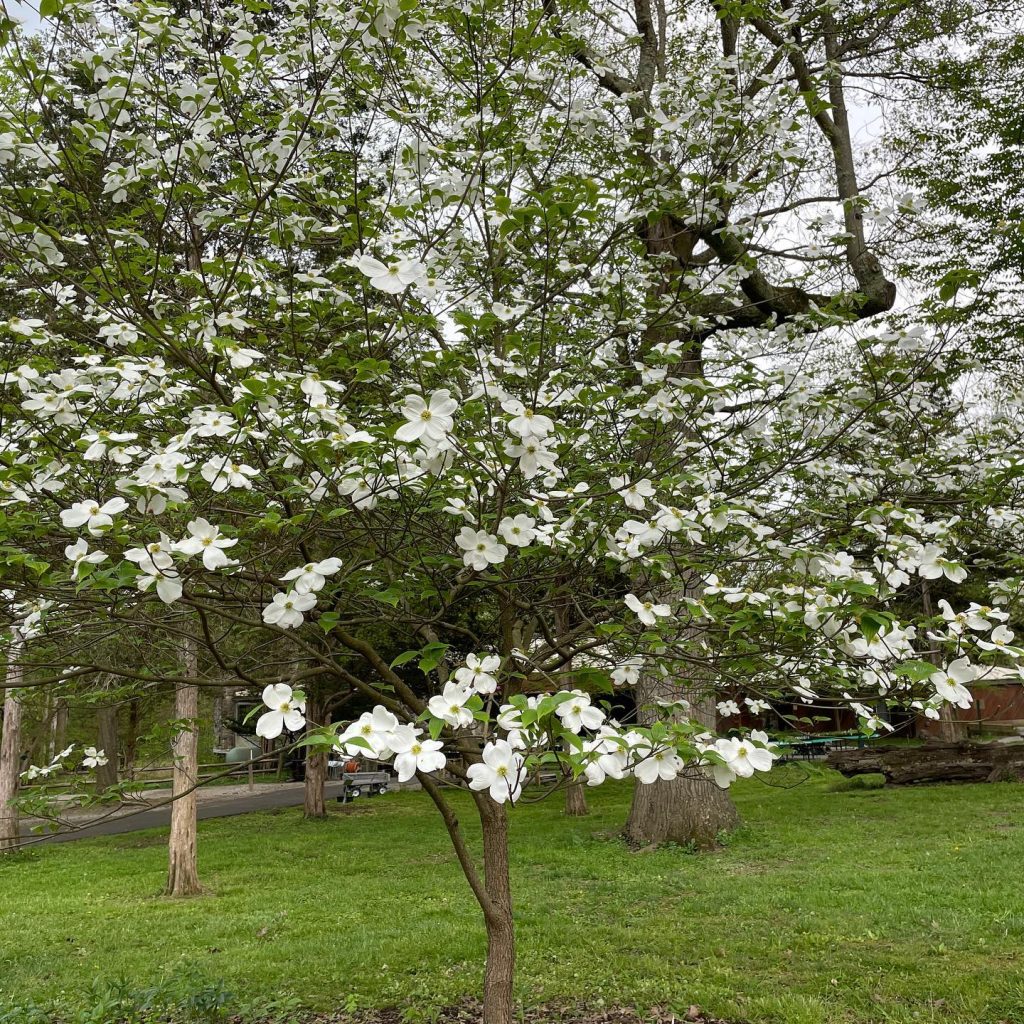
1. Flowering Dogwood (Cornus florida)
Scientific name: Cornus florida.
USDA zones: 5-9.
Color variation: Primarily pure white bracts, though some cultivars offer pink-tinged edges or deeper pink forms (white is the classic).
Sun exposure: Partial shade preferred, especially in hotter areas to avoid leaf scorch; tolerates full sun in cooler climates.
Mature size: 15-30 feet tall and wide, often with a flat-topped or tiered crown.
Lifespan: Typically 50-80 years, though susceptible to anthracnose disease in some regions.
Toxicity: Berries are toxic to humans if ingested in large amounts, but birds eat them safely. Leaves and bark have been used historically in herbal remedies but are not recommended for consumption.
The flowering dogwood is one of North America’s most beloved spring trees. Its showy “blooms” are actually four large white bracts surrounding tiny true flowers. This creates a cross-like pattern that covers the branches before leaves emerge. In early spring, the tree seems covered in snow, drawing admiration from afar.
This native tree thrives in well-drained, slightly acidic soil rich in organic matter. It pairs beautifully with underplantings of shade-loving perennials. After blooming, glossy red berries appear in fall, alongside burgundy foliage. Low-maintenance once established, it benefits from mulch to retain moisture and protect shallow roots.
Dogwoods symbolize renewal in many cultures, and their graceful form makes them perfect as lawn specimens or woodland edges. In landscapes, they add structure without overwhelming smaller spaces. Pruning is minimal—remove dead wood after flowering.
2. Star Magnolia (Magnolia stellata)

Scientific name: Magnolia stellata.
USDA zones: 4-8.
Color variation: Mostly pure white, some cultivars like ‘Royal Star’ have fuller petals or slight pink tinges.
Sun exposure: Full sun to partial shade; protect from harsh afternoon sun in warmer zones.
Mature size: 15-20 feet tall and 10-15 feet wide, often shrub-like but trainable as a small tree.
Lifespan: 50-100 years or more with good care.
Toxicity: Generally non-toxic to humans and pets, though large quantities of any magnolia part might cause mild upset.
Few trees announce spring as dramatically as the star magnolia. With its star-shaped, multi-petaled white flowers open on bare branches in very early spring. The blossoms, up to 3-4 inches across, have a citrusy fragrance. Their pure white petals contrast sharply with reddish buds, creating a sparkling effect.
This compact Japanese native suits smaller gardens or as a focal point near patios. Plant in moist, well-drained, acidic soil. Mulch heavily to keep roots cool. Flowers can be frost-sensitive, so plant in a sheltered spot. After bloom, dark green leaves emerge, turning yellow in fall.
Star magnolia flowers attract bees early in the season. Minimal pruning is needed—just shape young trees. Resistant to many pests, though scale or leaf spot can appear. Its winter silhouette of gray branches adds interest. A reliable choice for northern gardeners seeking early white magic.
3. Serviceberry (Amelanchier arborea or A. canadensis)

Scientific name: Amelanchier arborea (downy) or A. canadensis (shadblow).
USDA zones: 4-9.
Color variation: Pure white blooms; no major variations.
Sun exposure: Full sun to partial shade.
Mature size: 15-25 feet tall, often multi-stemmed.
Lifespan: 30-50 years commonly.
Toxicity: Non-toxic; berries are edible and delicious for humans (birds love them too).
Serviceberry earns its “stunning” label with fluffy clusters of white flowers blanketing the tree in mid-spring. The five-petaled blooms draw pollinators, creating a buzzing hub. Native to eastern North America, it offers multi-season appeal. Edible berries follow, then brilliant orange-red fall color.
Easy to grow in average soil, it tolerates wet or dry conditions once established. Great for naturalized areas or as a specimen. Prune to maintain shape. Berries make jams or pies. A wildlife favorite throughout the year.
4. Saucer Magnolia (Magnolia × soulangeana)
This hybrid magnolia produces large, tulip-like white flowers tinged with pink at the base, opening on bare branches in early to mid-spring. The showy blooms, often 6-10 inches across, fill the air with a sweet lemony scent, making it a standout in any landscape.
Scientific name: Magnolia × soulangeana.
USDA zones: 4-9.
Color variation: White with pink-purple base; some cultivars more white-dominant.
Sun exposure: Full sun to partial shade.
Mature size: 20-30 feet tall and wide.
Lifespan: 50-100+ years.
Toxicity: Non-toxic.
Saucer Magnolia is a popular hybrid renowned as one of the most commonly cultivated early-spring flowering magnolias. It produces large, goblet- or saucer-shaped flowers that appear before the leaves in early to mid-spring (typically March–April, depending on climate).
The fragrant blooms feature white interiors with pinkish-purple to rosy exteriors, creating a striking bicolor effect. Flowers emerge on bare branches, often in profusion on young trees, though sparse later blooms may occur on new growth. A key challenge is vulnerability to late frosts, which can brown or destroy buds.
At maturity, it forms a multi-stemmed small tree or large shrub, reaching 20–30 feet (6–9 m) tall and 15–25 feet (4.5–7.5 m), with a rounded to spreading form and medium growth rate. It thrives in full sun to partial shade, preferring rich, slightly acidic (pH <6.0), well-drained, organically rich soils.
Protect from strong winds and cold, dry exposure to prevent bud damage. Prune lightly in midsummer after flowering if needed, as it dislikes root disturbance and heavy pruning. Hardy in USDA zones 4–9, it tolerates air pollution and serves well as a specimen lawn tree.
5. Yoshino Cherry (Prunus × yedoensis – white forms)
Scientific name: Prunus × yedoensis.
USDA zones: 5-8.
Color variation: Pale white to light pink.
Sun exposure: Full sun.
Mature size: 20-40 feet tall, 15-30 feet wide.
Lifespan: 30-50 years.
Toxicity: Seeds and leaves mildly toxic if ingested in quantity.
The Yoshino Cherry, also known as Somei-yoshino, is a graceful hybrid flowering cherry. It’s iconic for its profuse early-spring display and widely planted in places like Washington D.C.’s Tidal Basin.
Its flowering behavior is a spectacular feature in any garden or landscape.
Fragrant, single white (or very pale pink-tinged, fading to white) blossoms appear in clusters of 3–6 along bare branches in early to mid-spring (typically March–April). The flowers emerge before or with leaf break, creating a cloud-like effect of soft white blooms that blanket the tree, lasting about 1–2 weeks.
The almond-scented petals often drop quickly like snow, especially after rain or wind. Small, bitter black cherries follow in summer, attracting birds. At maturity, it forms a medium-sized deciduous tree, 30–40 feet (9–12 m) tall and wide. With moderate to fast growth rate, it forms a broad, rounded to spreading, open crown.
Yoshino Cherry prefers full sun for best flowering, though it tolerates light shade. Plant in well-drained, moderately fertile, slightly acidic to neutral soil with consistent moisture—avoid waterlogged or extremely dry conditions. Protect young trees from strong winds.
Hardy in USDA zones 5–8 (sometimes 9), it performs best in areas with cool springs to delay bloom and reduce frost risk. Prune sparingly after flowering if needed; it’s susceptible to pests like aphids, borers, and diseases such as leaf spot or canker—healthy cultural practices help.
6. Fringe Tree (Chionanthus virginicus)
Scientific name: Chionanthus virginicus.
USDA zones: 3-9.
Color variation: Creamy white.
Sun exposure: Full sun to partial shade.
Mature size: 12-20 feet tall and wide.
Lifespan: 50+ years.
Toxicity: Non-toxic.
Fringe Tree is a lovely native North American deciduous shrub or small tree. Many people call it old man’s beard or grancy graybeard because of its unique, fringe-like flowers. It’s truly enchanting when in bloom. The flowering behavior stands out beautifully.
In late spring to early summer (usually May to June), the tree produces airy, drooping clusters of creamy-white, strap-like petals that hang like soft fringe or delicate lace. These slightly fragrant blooms appear after leaves begin to emerge or around the same time.
Male plants tend to show longer, more showy petals, while female ones produce small dark blue fruits later in summer that birds enjoy. The display lasts about two weeks, and petals often fall gently like snow. It’s a quiet, refined beauty—worth the wait, as young trees may take several years to flower well.
Fringe Tree grows slowly to moderately, reaching 12–20 feet tall and wide (sometimes up to 30 feet in the wild). It forms a spreading, rounded or open shape, often multi-stemmed. Plant it in full sun to partial shade for the best blooms. It prefers moist, well-drained, slightly acidic soil rich in organic matter.
Keep the soil consistently moist, especially when young, but avoid soggy spots. It’s hardy in USDA zones 3–9 and quite adaptable once established. Prune lightly right after flowering if needed. Overall, it’s low-maintenance and adds elegance to gardens, woodlands, or as a specimen tree.
7. Sweetbay Magnolia (Magnolia virginiana)
Scientific name: Magnolia virginiana.
USDA zones: 5-10.
Color variation: Pure white.
Sun exposure: Full sun to partial shade.
Mature size: 10-35 feet (often shrubby in north).
Lifespan: 80-120 years.
Toxicity: Non-toxic.
Sweetbay Magnolia is a graceful native North American tree, often called swamp magnolia or beaver tree. It brings quiet charm to gardens, especially with its lovely fragrance and adaptability to wet places. I find its understated elegance quite special.
The flowering behavior delights many. Creamy-white, cup-shaped blooms appear from late spring into early summer (often May to June, sometimes sporadically through September). Each flower measures 2–3 inches across, with 9–12 petals and a sweet lemon scent that fills the air.
They open in the morning, close at night, and last about two to three days before dropping. Flowers emerge after leaves appear, scattered among glossy dark green foliage with silvery undersides that shimmer in the breeze. Later, cone-like fruits hold bright red seeds that attract birds.
Sweetbay Magnolia grows moderately fa st (1–2 feet per year) and reaches 10–35 feet tall and wide. Sometimes it reaches up to 60 feet in warm southern areas. In cooler northern zones, it stays smaller and more shrub-like, often multi-stemmed and deciduous. Farther south, it becomes evergreen and tree-like.
This tree prefers full sun to partial shade, with more sun encouraging better blooms. Plant it in moist to wet, well-drained, acidic, organically rich soil. It tolerates boggy or swampy conditions better than most magnolias. Keep soil consistently moist, especially when young.
It’s hardy in USDA zones 5–10, low-maintenance, and resistant to most pests and diseases. Prune lightly after flowering if needed. Sweetbay Magnolia suits rain gardens, pond edges, or as a specimen near patios. Its gentle beauty and wildlife value make it a rewarding choice.
8. Kousa Dogwood (Cornus kousa)
Scientific name: Cornus kousa.
USDA zones: 5-8.
Color variation: White to pinkish.
Sun exposure: Full sun to partial shade.
Mature size: 15-30 feet.
Lifespan: 50-80 years.
Toxicity: Berries are edible but tart.
Kousa Dogwood is a beautiful small tree from East Asia. It is often praised as a tougher alternative to the native flowering dogwood. Its graceful form and year-round interest make it a favorite in many gardens. I always appreciate how reliably it performs.
The flowering behavior impresses with subtlety and timing. In late spring to early summer (usually June), showy white (sometimes pink-tinged in cultivars) bracts appear—actually modified leaves—surrounding tiny true flowers.
Each “bloom” measures 3–4 inches across, with pointed tips, and they nestle among the fresh green leaves rather than on bare branches. The display lasts several weeks, often covering the tree generously. Later, edible red, raspberry-like fruits develop in autumn, attracting birds.
The tree also offers attractive mottled peeling bark and vivid reddish-purple fall color. Kousa Dogwood grows slowly to moderately, reaching 15–30 feet tall and wide at maturity. Young trees have a vase shape that rounds out with age. It prefers full sun to partial shade—more sun brings better flowers and color.
Plant in well-drained, organically rich, acidic to neutral soil with medium moisture. It handles some drought once established but dislikes wet feet. Mulch helps retain moisture. Hardy in USDA zones 5–8, it’s more disease-resistant (especially to anthracnose) and more adaptable than many dogwoods.
9. Carolina Silverbell (Halesia tetraptera)
Scientific name: Halesia tetraptera
USDA zones: 4-8.
Color variation: Pure white.
Sun exposure: Partial shade preferred.
Mature size: 30-40 feet tall.
Lifespan: 50-100 years.
Toxicity: Non-toxic.
Also known as mountain silverbell or common silverbell, Carolina Silverbell is a charming tree native to North America. It offers delicate beauty and fits naturally in woodland settings. I find its quiet grace particularly appealing, not to mention its captivating flowering.
In mid-spring (April to May), pendulous clusters of small, bell-shaped white flowers (sometimes lightly pink-tinged) dangle from branches. This happens often just before or as leaves emerge. Each flower measures about 1 inch across, creating a soft, snowy effect when viewed from below.
The display lasts a couple of weeks and attracts early pollinators like bees. Later, distinctive four-winged pale green to tan fruits hang through fall and winter, adding subtle interest.
Carolina Silverbell grows moderately to reach 20–40 feet tall and wide (sometimes up to 50–60 feet in ideal conditions), with a broad, rounded, open form. It prefers partial shade to full sun, though more shade suits its woodland nature.
Plant in moist, well-drained, acidic, organically rich soil. Avoid dry, alkaline, or compacted conditions, as it suffers from drought, heat, and high pH (leading to yellow leaves). Consistent moisture helps, especially when young.
Hardy in USDA zones 4–8 (or 5–9), it’s low-maintenance with few pests or diseases. Prune lightly after flowering to shape or remove dead branches. Protect from strong winds due to the softer wood.
This understated tree shines in naturalized gardens, understory plantings, or near patios.
10. Hawthorn (Crataegus phaenopyrum)
Scientific name: Crataegus phaenopyrum (Washington Hawthorn).
USDA zones: 4-7.
Color variation: White.
Sun exposure: Full sun.
Mature size: 15-25 feet.
Lifespan: 50-100 years.
Toxicity: Berries are edible but tart; thorns.
Hawthorn, commonly called Washington Hawthorn, is a sturdy small deciduous tree native to the southeastern United States. It stands out for its tough nature, attractive features across seasons, and usefulness in landscapes. Many gardeners value its reliability and wildlife benefits.
This tree brings cheerful color in late spring to early summer (typically May to June). Dense clusters of small, creamy-white flowers appear in flat-topped groups, covering the branches generously. Though the scent can be unpleasant up close, the blooms attract bees and pollinators effectively.
Flowers often give way to shiny red, round fruits (haws) about ¼ inch across that persist into winter, providing food for birds when other sources dwindle.
Washington Hawthorn reaches 20–35 feet tall and wide, with a dense, rounded crown and low-branching habit. It features sharp thorns (1–3 inches long), so place it thoughtfully away from paths. Plant in full sun for the best flowering and fruiting—partial shade reduces blooms.
It adapts to many soils but prefers moist, well-drained conditions. Hardy in USDA zones 4–8, Washington Hawthorn handles heat well and shows good resistance to some diseases like cedar-apple rust. Prune minimally in late winter to shape or remove damaged branches.
11. Crabapple (Malus ‘Spring Snow’)
Scientific name: Malus ‘Spring Snow’ or similar.
USDA zones: 4-8.
Color variation: White.
Sun exposure: Full sun.
Mature size: 15-25 feet.
Lifespan: 30-50 years.
Toxicity: Seeds toxic; fruit edible in some.
Crabapple Malus ‘Spring Snow’ is a popular fruitless cultivar of flowering crabapple. It offers clean, low-mess beauty and reliable spring color. Gardeners often choose it when they want charm without fallen fruit. Its blooms shine brightly in mid-spring (usually April to May).
Profuse clusters of fragrant, pure white single flowers cover the branches generously. They emerge from pinkish buds, creating a snowy effect and lightly scents the air. The blooms last one to two weeks, attracting pollinators like bees and butterflies.
Since the tree is nearly or completely sterile, no messy fruit follows—only the petals drop gently. ‘Spring Snow’ matures to 20–25 feet tall and 15–20 feet wide, with a dense, upright to broad-rounded or oval shape. It grows at a moderate rate.
Plant in full sun for the best flowering—at least six to eight hours of direct light daily. It prefers well-drained soil and tolerates a range of types, including compacted urban conditions and pollution. Moisture should be medium; avoid consistently wet spots.
Hardy in USDA zones 3–7 (or up to 8), it’s adaptable but somewhat susceptible to apple scab. So, choose resistant sites or monitor health. Additionally, prune minimally in late winter to shape or remove issues. Overall, it’s low-maintenance and suits patios, streets, or lawns.
12. Black Locust (Robinia pseudoacacia – white forms)
Scientific name: Robinia pseudoacacia.
USDA zones: 4-9.
Color variation: White.
Sun exposure: Full sun.
Mature size: 30-50 feet.
Lifespan: 50-100 years.
Toxicity: Leaves, bark, seeds toxic.
Black Locust, often called false acacia or white locust in its typical forms, is a fast-growing deciduous tree native to parts of the eastern United States. The standard white forms produce beautiful, fragrant, pea-like flowers in long, drooping clusters (racemes) that usually appear in late spring to early summer.
The blooming period is quite short, often lasting only 7–10 days, though the sweet scent fills the air and attracts bees eagerly. It’s always a lovely sight when the tree covers itself in creamy-white blossoms, sometimes with a pale yellow mark on the upper petal.
Good weather is key for strong flowering and nectar production; in some years, it disappoints if conditions aren’t right. This tree thrives in full sun and adapts to many soils, preferring well-drained, even poor or dry ones. It fixes nitrogen thanks to its legume family roots, so it improves soil as it grows.
Black Locust handles tough sites well but dislikes heavy, wet ground. Growth is rapid—up to 4 feet or more per year. It reaches 30–80 feet tall, though it often spreads by suckers, forming thickets.
Overall, black locust is tough and useful for erosion control or honey, but it can become invasive in some areas.
13. Anise Magnolia (Magnolia salicifolia)
Scientific name: Magnolia salicifolia.
USDA zones: 5-8.
Color variation: White.
Sun exposure: Full sun to partial shade.
Mature size: 20-30 feet.
Lifespan: 50+ years.
Toxicity: Non-toxic.
Anise Magnolia, also known as willow-leafed magnolia, is a graceful deciduous tree native to Japan. It grows to about 20–40 feet tall, often with a narrow to broad pyramidal shape. It features slender, willow-like leaves that give it a fine, elegant texture.
The flowering is one of its real charms. In early spring—usually March to May—the fragrant white flowers open on bare branches before the leaves appear. Each bloom is cup-shaped or star-like, 3–6 inches across, with 6 narrow tepals that are mostly creamy white, sometimes tinged pink at the base.
This tree prefers full sun to part shade and moist, well-drained soil that’s slightly acidic and rich in organic matter. It tolerates neutral soils too but dislikes wet, heavy ground. Shelter from strong winds and late frosts helps protect the early buds, which can be damaged easily.
Once established,Anise Magnolia is fairly hardy (USDA zones 5–9, depending on the source), with moderate growth and beautiful golden-yellow fall color. The crushed leaves and bark also release that distinctive anise fragrance. Overall, this magnolia brings understated beauty, especially as a specimen tree. It’s not the flashiest magnolia, but its early, scented display feels special every year.
14. Flatwoods Plum (Prunus umbellata)
Scientific name: Prunus umbellata.
USDA zones: 7-9.
Color variation: White.
Sun exposure: Full sun.
Mature size: 10-20 feet.
Lifespan: 20-40 years.
Toxicity: Leaves/seeds mildly toxic.
Also called hog plum or sloe plum, Flatwoods Plum,is a small native deciduous tree or large shrub from the southeastern United States. It typically reaches 10–20 feet tall with a similar spread. This tree often develops a rounded or flat-topped crown and sometimes a short, thickened trunk.
In the wild, it grows in sandy, upland woodlands, flatwoods, sandhills, or open savannas. Its flowering is a true highlight. In early spring—usually March to April, sometimes as early as late February—the bare branches burst into clusters of small, white, five-petaled flowers arranged in umbels (umbrella-like groups).
The blooms are about half an inch across, creamy white with bright yellow anthers, and they create a soft, billowy cloud effect that covers the tree. Pollinators like bees and butterflies flock to the nectar. It’s always refreshing to see this early show, especially since the flowers appear before the leaves.
Flatwoods Plum thrives in full sun to partial shade and adapts to a wide range of well-drained soils, including sandy, loamy, or even clay types. Additionally, it prefers dry to average moisture and handles drought quite well once established, though it may need extra water in very sandy spots.
This tree is hardy in USDA zones 7–9 or 8–9, with moderate growth rate. Fall color is usually yellow, and it produces small purple plums in late summer that attract wildlife. Unlike some plums, it usually doesn’t sucker aggressively, so it’s easier to manage as a specimen or accent plant.
15. Mexican Plum (Prunus mexicana)
Scientific name: Prunus mexicana.
USDA zones: 6-9.
Color variation: White.
Sun exposure: Full sun to partial shade.
Mature size: 15-35 feet.
Lifespan: 30-50 years.
Toxicity: Similar to other plums.
The Mexican Plum (Prunus mexicana) is a lovely native North American tree. It’s often admired for its graceful form and early-season charm. It grows as a small to medium-sized deciduous tree, usually reaching 15–30 feet tall with a rounded, open crown. It’s perfect for gardens where space matters.
One of its real delights comes in late winter to early spring, typically February through April, depending on the region. The tree bursts into bloom before the leaves emerge, covering bare branches with clusters of fragrant, five-petaled white (sometimes pale pink) flowers.
These blossoms are a welcome sight and a vital early food source for bees and pollinators. This plum is quite adaptable and forgiving. It thrives in full sun to partial shade, though it flowers and fruits best with plenty of sunlight.
Soil-wise, it handles a wide range—from sandy to clay, acidic to slightly alkaline—as long as drainage is good. It prefers dry to medium moisture and is notably drought-tolerant once established, making it a smart choice for low-water landscapes.
Hardy in USDA zones 5–9, Mexican Plum suits many central and southern U.S. areas. Generally, this tree brings subtle beauty and wildlife value without demanding too much care. It’s rewarding to watch it wake up in the garden each spring.
16. Chinese Fringe Tree (Chionanthus retusus)
Scientific name: Chionanthus retusus.
USDA zones: 6-8.
Color variation: White.
Sun exposure: Full sun.
Mature size: 15-25 feet.
Lifespan: 50+ years.
Toxicity: Non-toxic.
The Chinese Fringe Tree is a truly elegant small tree, native to China, Korea, and Japan. It often grows 15–25 feet tall and wide, sometimes reaching 30 feet under ideal conditions. It features a rounded, spreading form that makes it perfect as a specimen or accent in modest gardens.
Its greatest charm appears in late spring to early summer. The tree produces abundant clusters of delicate, fringe-like white flowers with long, narrow petals that give a soft, cloud-like effect. These mildly fragrant blooms emerge after the leaves, creating a stunning contrast against the glossy, dark green foliage.
Male plants tend to have showier flowers, while females produce attractive dark blue fruits later, loved by birds. This tree is fairly easy to please. Plant it in full sun for the heaviest flowering, though it tolerates partial shade (where leaves may look especially lush).
It prefers moist, well-drained soil and adapts to various types—loamy, clay, or sandy—as long as drainage is good. Avoid very dry sites; it dislikes prolonged drought once established but handles moderate conditions well. Hardy in USDA zones 5–9, it suits many temperate climates and even tolerates urban pollution.
17. Japanese Snowbell (Styrax japonicus)
Scientific name: Styrax japonicus.
USDA zones: 5-8.
Color variation: White.
Sun exposure: Partial shade.
Mature size: 20-30 feet.
Lifespan: 50+ years.
Toxicity: Non-toxic.
The Japanese Snowbell is a small deciduous tree native to East Asia. It typically reaches 20–30 feet tall and wide, with a pleasing rounded crown and low, horizontal branching that gives it an elegant, layered look. I find it ideal for patios, pathways, or smaller gardens.
It’s true magic unfolds in late spring to early summer, usually May through June. Clusters of delicate, bell-shaped white flowers hang downward on long pedicels beneath the foliage. Each bloom is mildly fragrant, waxy, and about ¾ inch across, with yellow stamens adding subtle contrast.
The blooms dangle like little snowdrops or bells, creating a soft, airy display that’s especially striking against the dark green, glossy leaves. Pollinators adore them, and small olive-like fruits follow later.
This tree is less demanding once established. It prefers full sun to partial shade—more sun brings heavier blooms. Partial shade suits warmer areas and keeps the foliage lush. Plant in moist, well-drained, acidic soil enriched with organic matter; it dislikes soggy roots or very dry conditions.
Consistent moisture helps during establishment, but mature trees tolerate moderate drought. Hardy in USDA zones 5–8, it appreciates shelter from harsh winter winds. Pruning is rarely needed beyond shaping in late winter.
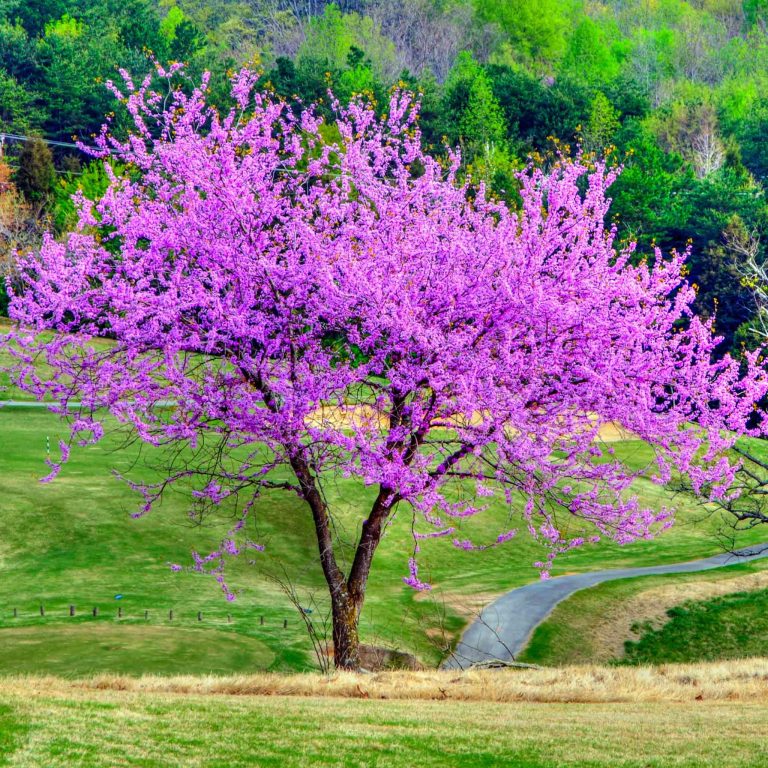
18. Eastern Redbud (Cercis canadensis ‘Alba’)
Scientific name: Cercis canadensis f. alba.
USDA zones: 4-9.
Color variation: White (vs typical pink).
Sun exposure: Full sun to partial shade.
Mature size: 20-30 feet.
Lifespan: 50-70 years.
Toxicity: Non-toxic.
Also known as White Eastern Redbud, the Eastern Redbud cultivar ‘Alba’ is a charming deciduous tree native to eastern and central North America. It grows to 20–30 feet tall with a similar or slightly wider spread. It often develops a graceful, rounded or flat-topped crown and a multi-trunked habit that adds natural elegance to landscapes.
Its standout feature is the early spring flowering, usually March to April (sometimes into May depending on climate). Masses of small, pea-like pure white flowers appear in clusters directly on the bare branches and even the trunk before any leaves emerge.
This creates a striking, cloud-like display against the dark bark—a pure, serene alternative to the typical pink-purple form. The blooms attract early pollinators like bees and butterflies.
The Eastern Redbud tree prefers full sun to light shade. More sun encourages denser flowering, while afternoon shade helps in hotter southern regions. Choose moist, well-drained soil—rich and loamy is ideal, though it adapts to various types (including slightly alkaline or sandy) as long as drainage is good.
This tree dislikes wet, poorly drained sites. Hardy in USDA zones 4–9, it handles a wide range but benefits from consistent moisture when young. Plant it young, as it resents transplanting once established, and prune sparingly—just remove dead or crossing branches.
19. Flowering Pear (Pyrus calleryana – white forms like ‘Cleveland Select’)
Scientific name: Pyrus calleryana.
USDA zones: 5-9.
Color variation: White.
Sun exposure: Full sun.
Mature size: 25-40 feet.
Lifespan: 30-50 years.
Toxicity: Non-toxic.
The Flowering Pear, often called Callery Pear, is a fast-growing deciduous tree native to China and Vietnam. It typically reaches 30–40 feet tall (sometimes up to 50 feet) with a pyramidal to rounded shape. It’s a popular choice for streets, yards, and urban spaces—though its reputation has shifted over time.
The most dramatic moment comes in early spring, usually February to April depending on the region. Before the leaves appear, branches burst into dense clusters of creamy white, five-petaled flowers. These blooms create a spectacular snowy effect across the tree, drawing admiration.
However, they carry a strong, unpleasant fishy or rancid odor—something many people notice up close.
The Flowering Pear is remarkably adaptable and tough. It thrives in full sun for the best flowering and form. Soil preferences are flexible: it handles clay, loam, or sandy types, acidic to alkaline. Additionally, it tolerates drought, pollution, and urban stress once established.
For better growth, provide well-drained conditions and moderate moisture when young. Hardy in USDA zones 5–9, it grows quickly but can develop weak branch angles (especially in older cultivars like ‘Bradford’), leading to splits in storms or with age.
Many experts now discourage planting it due to its invasive potential in some areas, where escaped seedlings outcompete natives. Despite the controversies, its early spring show remains undeniably striking—a bold announcement of the season’s arrival.
20. Seven-Son Flower (Heptacodium miconioides)
Scientific name: Heptacodium miconioides.
USDA zones: 5-9.
Color variation: White.
Sun exposure: Full sun to partial shade.
Mature size: 15-20 feet.
Lifespan: 40-60 years.
Toxicity: Non-toxic.
The Seven-Son Flower is a delightful, somewhat underappreciated large shrub or small tree native to China. It usually grows 15–25 feet tall (sometimes up to 30 feet) with a fountain-like, multi-stemmed habit that can be trained into a single-trunk form.
Its flowering is a late-season gift, arriving in late summer to early fall. Clusters of small, creamy-white, sweetly fragrant flowers appear in terminal panicles, often in groups of seven (hence the name). They provide valuable nectar for butterflies, bees, and hummingbirds when many other plants have finished blooming.
After the petals drop, the show continues with persistent, rosy-pink to purplish-red sepals that surround tiny fruits. This gives the tree a second flush of color into late fall.
This plant prefers full sun to partial shade, with good flowering in sunnier spots. Plant in moist but well-drained soil. It handles loam, sandy, or even clay types, and tolerates moderate drought once established. Mulch helps retain moisture and suppress weeds.
Hardy in USDA zones 5–9, it grows at a moderate pace (about 12–24 inches per year) and needs little fertilizer or pruning. Just remove dead branches in late winter. The peeling, exfoliating bark adds winter interest too. There’s real charm in its quiet reliability—it blooms when the garden needs a lift.
Suggested For You:
15 Stunning Trees with Yellow Flowers: Perfect Picks to Brighten Your Landscape
15 Fast Growing Trees for Backyard Privacy: Living Screen to Block Neighbours View
15 Low-Maintenance Maple Tree Varieties for Small Yards (Names and Pictures)
15 Stunning Trees with Blue Flowers: A Complete Guide
15 Common Types of Jacaranda Trees: A Comprehensive Guide
Final thought
These 20 trees provide a range of sizes, bloom times, and additional seasonal interest, allowing gardeners to select based on climate, space, and preferences. White spring blooms create serene, luminous displays that welcome the season with grace and light. Consider soil, exposure, and local conditions for success.
These trees vary in origin—some native to North America, others from Asia or Europe—but all deliver remarkable spring shows.

Tim M Dave is a gardening expert with a passion for houseplants, particularly cacti and succulents. With a degree in plant biology from the University of California, Berkeley, he has vast experience in gardening. Over the years, he has cultivated a vast collection of desert plants and learned a great deal about how to grow and care for these unique companions.