15 Beautiful Trees With White Bark: Perfect Picks for Garden and Landscape Settings
Trees with white bark bring a unique elegance to any garden. In winter, their smooth, glowing trunks always stand out against those bare branches or evergreen backdrops. Below, explore 15 standout varieties ideal for landscaping, each with key details to help you choose the right one for your space.
1. American Paper Birch (Betula papyrifera)
The American Paper Birch (Betula papyrifera), often called the paper birch or canoe birch, is one of the most iconic garden trees with luminous white bark. Its bark peels in horizontal sheets of creamy white, giving winter gardens a striking focal feature.
Native to northern North America, this deciduous tree thrives in USDA zones 2–7, making it suitable for cooler temperate regions with cold winters and moderate summers.
Color Variation & Bark: Young bark is a bright, almost paper-white shade, often highlighted by brown-orange inner layers where the outer bark has peeled. The bark’s whiteness contrasts beautifully with dark evergreens in winter.
Sun Exposure: American paper birch prefers full sun to light shade and performs best in well-drained, moist soils.
Mature Size & Form: Typically, the tree reaches between 50 and 72 feet (15–22 m) in height with a 25–50-foot (7.5–15 m) spread at maturity. Its canopy is rounded yet open, allowing dappled light beneath.
Lifespan: In ideal conditions, these birches can live 40–70 years, though stress from drought or pests may shorten this.
Toxicity: There are no significant toxicity concerns for humans or pets, though seeds and bark are not considered edible.
American paper birch is widely used as a specimen tree or in mixed borders. Its bark provides winter interest, and its yellow autumn foliage adds seasonal contrast before leaf drop.
2. Silver Birch (Betula pendula)
The Silver Birch (Betula pendula) is prized for its slender, graceful silhouette and silvery-white bark. This feature becomes more pronounced with age. This deciduous tree, native to northern Europe and parts of Asia, is popular in ornamental landscaping across temperate climates.
Scientific name: Betula pendula
Hardiness: USDA zones 2–7.
Color Variation & Bark: The bark transitions from reddish when young to a striking silver-white as the tree matures, often peeling in thin, papery layers that shimmer in winter light.
Sun Exposure: Prefers full sun, which maximizes bark brightness and overall plant vigor.
Mature Size: Usually 30–40 feet (9–12 m) tall with a spreading, open canopy. Some cultivars may be more compact, suitable for smaller gardens.
Lifespan: Typical lifespan ranges 30–50 years, though individual specimens may live longer in optimal conditions.
Toxicity: Not generally considered toxic, though seeds and leaves are not edible.
Silver birch is widely used as a specimen tree or in groups to create light, airy woodland effects. Its delicate, serrated leaves turn a warm yellow in the fall before dropping to reveal the elegant bark through winter.
3. Himalayan Birch (Betula utilis var. jacquemontii)
The Himalayan Birch is considered among the most striking birches for garden use, thanks to its exceptionally bright white bark. This tree is a natural variety of Betula utilis and originates from the rugged slopes of the western Himalayas.
Scientific name: Betula utilis var. jacquemontii
Hardiness: Suitable for USDA zones 5–6, sometimes up to zone 7 in cooler microclimates.
Color Variation & Bark: Its bark is one of the whitest among birches, peeling in thin, paper-like layers. Younger bark may appear slightly yellow before maturing to pure white.
Sun Exposure: Thrives in full sun, though light afternoon shade can benefit in warmer areas.
Mature Size: Reaches about 30–40 feet (9–12 m) tall with an elegant pyramidal shape.
Lifespan: Lifespan is typically 40–60 years, though susceptibility to pests like the bronze birch borer can affect longevity.
Toxicity: Non-toxic but not recommended for consumption.
The Himalayan Birch adds dramatic winter contrast and works beautifully as a specimen or focal point in temperate gardens. Its bark captivates the eye even after leaf fall.
4. Japanese White Birch (Betula platyphyllaor Betula platyphylla var. japonica)
The Japanese White Birch is another excellent birch cultivar for ornamental gardens, valued for its elegant bark and refined branching. Native to East Asia, it brings subtle grace to landscapes.
Scientific: Often referred to as Betula platyphylla or B. platyphylla var. japonica
Hardiness: hardy in USDA zones 3–8.
Color Variation & Bark: Its bark is a soft white with slight silvery tones, contrasted against dark, slender branches.
Sun Exposure: Prefers full sun to partial shade, tolerating light afternoon shade in warmer regions.
Mature Size: Grows up to 50 feet (15 m) tall under ideal conditions, with a well-proportioned canopy.
Lifespan: Can live 40–60 years in favorable environments.
Toxicity: Not known to be toxic to humans or pets.
This species is ideal for larger gardens or naturalistic landscapes where its airy form and bright trunk add structure year-round.
5. White Satin Birch (Betula spp.cultivar group)
The White Satin Birch refers to a group of birch cultivars selected for their exceptionally bright, cream-white bark and tidy form. While closely related to other birches, these cultivars are bred specifically for ornamental appeal.
Scientific name: Cultivar group within Betula species
Hardiness: Generally hardy in USDA zones 2–7.
Color Variation & Bark: The bark is strikingly white with subtle tan or pinkish hues emerging as the tree ages, peeling in layers that catch winter light beautifully.
Sun Exposure: Best in full sun.
Mature Size: Around 30–35 feet (9–11 m) tall, with a modest canopy suitable for medium-sized gardens. Some cultivars may stay slightly smaller.
Lifespan: These birches often live 50–70 years with proper care.
Toxicity: Non-toxic and safe for gardens shared with people and pets.
White Satin Birches make excellent specimen trees or accents in mixed borders, where their winter bark draws attention long after leaves have fallen.
6. Erman’s Birch (Betula ermanii)
Erman’s Birch is an ornamental birch species from northeastern Asia, cherished for its pale, smooth bark and attractive seasonal foliage. Some cultivars, such as ‘Polar Bear’ and ‘Grayswood Hill,’ are particularly valued in landscape design across the U.S.
Scientific name: Betula ermanii
Hardiness: Hardy typically in USDA zones 2–7.
Color Variation & Bark: The bark ranges from creamy white to soft cream-pink tones, with smooth texture and subtle peeling characteristics.
Sun Exposure: Thrives in full sun and tolerates light shade.
Mature Size: Usually 30–40 feet (9–12 m) tall with an upright yet open form.
Lifespan: These birches often live 40–60 years.
Toxicity: Non-toxic; not edible.
Erman’s Birch is superb for landscapes where winter bark interest and ornamental form are priorities. Its leaves turn golden in autumn before falling to showcase the pale bark.
7. River Birch (Betula nigra)
While not as brilliantly white as some paper birches, River Birch offers textured bark that exfoliates to reveal creamy white and beige tones beneath. This quality makes it valuable in gardens where bark texture is as important as color.
Scientific name: Betula nigra
Hardiness: Hardy in USDA zones 4–9.
Color Variation & Bark: The bark peels in a patchwork of tan, cream, and light beige layers, creating visual interest throughout the year.
Sun Exposure: Prefers full sun but tolerates partial shade.
Mature Size: A robust tree reaching 40–70 feet (12–21 m) with a broad, rounded canopy.
Lifespan: Often lives 40–60 years.
Toxicity: Non-toxic.
River Birch adapts well to moist soil and is often used along streams or in rain gardens, where its textured bark and graceful form enhance both aesthetics and habitat.
8. Quaking Aspen (Populus tremuloides)
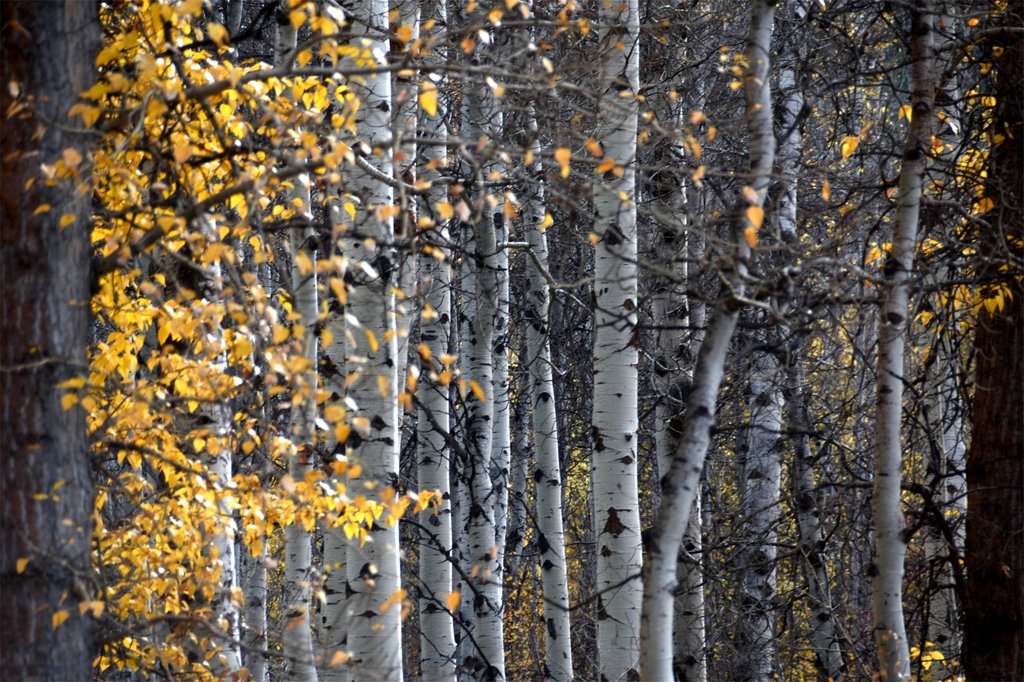
Quaking Aspen (Populus tremuloides) is admired for its trembling leaves and pale bark that ranges from creamy white to light gold. Native across much of North America, it is a garden and woodland favorite where climatic conditions fit.
Scientific name: Populus tremuloides
Hardiness: Extremely hardy in USDA zones 1–8.
Color Variation & Bark: Bark is typically pale white to golden-cream and may develop darker horizontal scars. The shimmering leaves in summer add dynamic movement.
Sun Exposure: Requires full sun.
Mature Size: Commonly reaches 40–60 feet (12–18 m) tall with a narrow canopy.
Lifespan: Individual stems may live 40–70 years, but clonal colonies persist much longer.
Toxicity: Not generally considered toxic; not edible.
Aspen’s delicate foliage and pale bark create an ethereal landscape effect. It excels planted in groups or groves, where rustling leaves add sensory interest.
9. American Sycamore (Platanus occidentalis)
The American Sycamore (Platanus occidentalis) is a majestically tall shade tree with distinctive mottled bark that reveals broad patches of white and light gray as older bark flakes away.
This tree is native to eastern and central North America. It thrives particularly in riparian areas, floodplains, and low moist woods across much of the eastern United States
Scientific name: Platanus occidentalis
Hardiness: Hardy in USDA zones 4b–9a.
Color Variation & Bark: The exfoliating bark produces a camouflage pattern of white, cream, and pale green on upper trunks and limbs.
Sun Exposure: Thrives in full sun.
Mature Size: A large tree, typically 70–100 feet (21–30 m) or more in height with an expansive canopy.
Lifespan: Sycamores often live 100+ years.
Toxicity: Not known to be toxic; avoid ingesting seeds or bark.
This species is excellent for large landscapes or shade avenues, where its broad crown and sculptural bark become signature features.
10. London Plane (Platanus × acerifolia)
The London Plane is a hybrid of the American Sycamore and Oriental Plane, widely planted in urban parks due to its tolerance of pollution and pruning. Its bark peels to reveal cream and pale green layers.
Scientific name: Platanus × acerifolia
Hardiness: Hardy in USDA zones 5–9.
Color Variation & Bark: Bark exhibits mottled patches of cream, pale green, and light brown due to exfoliation.
Sun Exposure: Prefers full sun.
Mature Size: Typically 70–100 feet (21–30 m) tall with an impressive spread.
Lifespan: Long-lived, often exceeding 100 years.
Toxicity: Not considered toxic; ornamental seed balls may cause minor irritation if handled excessively.
This tree is valued for urban landscapes, parks, and large estates where its textured pale bark adds visual depth.
11. White Poplar (Populus alba)
White Poplar (Populus alba) earns its name from the whitish underside of leaves and pale bark on younger stems, creating a silvery appearance in light. Though vigorous and fast-growing, it may be invasive in some regions.
Scientific name: Populus alba
& Hardiness: Hardy across USDA zones 3–9.
Color Variation & Bark: Young bark is pale gray to whitish, often becoming more textured with age.
Sun Exposure: Prefers full sun.
Mature Size: Can grow 50–70 feet (15–21 m) tall with a broad spread.
Lifespan: Typically 30–50 years.
Toxicity: Non-toxic; seed hairs can be allergenic.
White Poplar works best in large, informal landscapes where its rapid growth and light bark enhance the vista. In some areas, check local regulations due to its potential invasiveness.
12. Ghost Gum (Corymbia aparrerinja, formerly Eucalyptus aparrerinja)
The Ghost Gum is an evergreen Australian native with a smooth, startlingly white trunk that stands out in warm-climate gardens. Its waxy leaves and white bark create a sculptural presence.
Scientific name: Corymbia aparrerinja
Hardiness: Thrives in USDA zones 9–11.
Color Variation & Bark: The bark is smooth and bone-white, sometimes with pink tinges, making it one of the most dramatic white-barked trees.
Sun Exposure: Requires full sun.
Mature Size: Can reach 40–60 feet (12–18 m) with a rounded canopy.
Lifespan: These trees are long-lived in suitable climates, often 50+ years.
Toxicity: Not typically toxic, though eucalyptus oils can cause irritation if ingested.
Ghost Gum is ideal for large, warm climates or coastal gardens, providing year-round structure and bold contrast.
13. Spinning Gum (Eucalyptus perriniana)
Spinning Gum is an ornamental eucalyptus with smooth, pale bark that can appear nearly white, especially on younger stems. It suits cooler temperate climates of Australia and similar regions.
Scientific name: Eucalyptus perriniana
Hardiness: Hardy generally in USDA zones 8–10.
Color Variation & Bark: Bark is bone-white, smooth, and often accented by bluish foliage.
Sun Exposure: Prefers full sun.
Mature Size: Typically reaches 20–40 feet (6–12 m).
Lifespan: Moderate, often 30–50 years.
Toxicity: Eucalyptus oils can be toxic if ingested in large amounts.
Spinning Gum adds architectural interest in gardens where its pale bark and blue-green leaves create an elegant palette.
14. Brittle Gum (Eucalyptus mannifera)
The Brittle Gum is another ornamental eucalyptus with pale, powdery bark that may appear white or creamy, depending on light and age. It is valued for its smooth trunk and attractive foliage.
Scientific name: Eucalyptus mannifera
Hardiness: Suited to USDA zones 8–10.
Color Variation & Bark: Bark ranges from white to cream, often with subtle texture.
Sun Exposure: Requires full sun.
Mature Size: Reaches 30–60 feet (9–18 m).
Lifespan: Often 40–60 years.
Toxicity: Eucalyptus bark and leaves contain oils that can be toxic if ingested.
Brittle Gum is appropriate in warm-climate landscapes where its pale trunk and aromatic leaves offer year-round appeal.
15. White Ash (Eucalyptus fraxinoides)
Often called white ash or white mountain ash, Eucalyptus fraxinoides is a medium to tall eucalyptus species with light bark and striking form. Though its lower trunk bark may be grayer, the upper smooth bark often appears pale, adding contrast in garden settings.
Scientific name: Eucalyptus fraxinoides
Hardiness: Generally hardy in USDA zones 8–11.
Color Variation & Bark: Exhibits smoother, lighter-colored bark above and rougher, grayer bark lower down.
Sun Exposure: Prefers full sun.
Mature Size: Typically grows 60–80 feet (18–24 m).
Lifespan: Eucalyptus species can live 50+ years in suitable climates.
Toxicity: Like other eucalyptus, leaves and oils can be toxic if ingested.
White Ash delivers structural height and pale bark contrast in larger gardens or parks within warm temperate regions.
Conclusion
Trees with white bark bring year-round structural and visual interest to gardens and landscapes. From the elegant birches that anchor temperate designs to the striking evergreen eucalyptus of warm climates, each species offers a unique combination of texture, seasonal contrast, and habitat value.
When selecting a tree, consider USDA zone suitability, sun exposure, mature size, and site conditions to ensure healthy growth and lasting beauty.

Tim M Dave is a gardening expert with a passion for houseplants, particularly cacti and succulents. With a degree in plant biology from the University of California, Berkeley, he has vast experience in gardening. Over the years, he has cultivated a vast collection of desert plants and learned a great deal about how to grow and care for these unique companions.