15 Stunning Trees with Red Leaves Year-Round
Many gardeners seek trees that offer vibrant color throughout the year, not just in autumn. While truly evergreen trees with solid red foliage are rare, several deciduous and semi-evergreen varieties maintain rich red, burgundy, or purple leaves from spring through fall.
These fifteen selections stand out for their consistent hues and ornamental qualities.
1. Bloodgood Japanese Maple
Scientific name: Acer palmatum ‘Bloodgood’
USDA Zones: 5–8
Color variation: Deep burgundy to purple-red
Sun exposure: Full sun to partial shade (best color in sun)
Mature size: 15–20 feet tall and wide
Lifespan: 50–100 years with proper care
Toxicity: Non-toxic to humans and pets
The Bloodgood Japanese Maple (Acer palmatum ‘Bloodgood’) is one of the most reliable and popular choices for year-round red foliage. Its palmate leaves emerge deep purple-red in spring, maintain a rich burgundy hue through summer—especially in full sun—and turn vivid crimson in fall before dropping.
This upright, rounded tree offers elegant branching and a vase-like shape when young, maturing into a broader canopy.
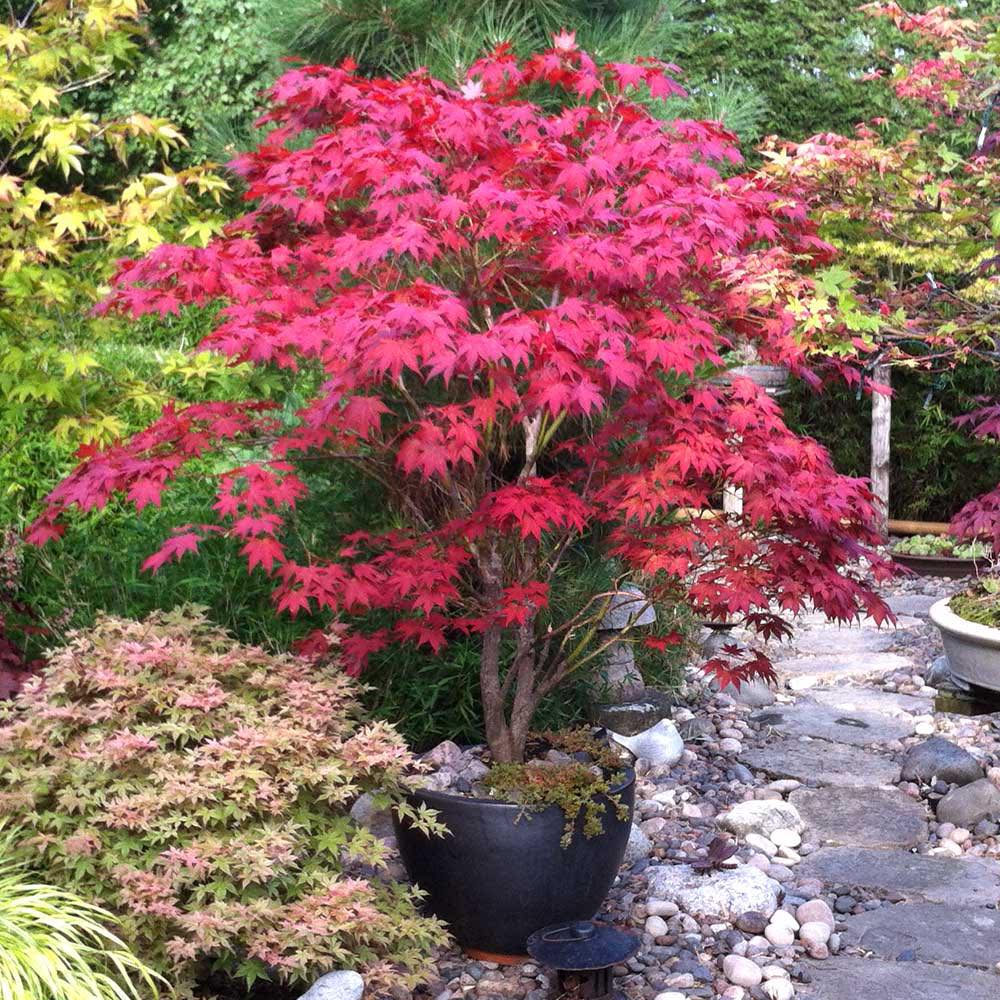
2. Crimson Queen Japanese Maple
Scientific name: Acer palmatum dissectum ‘Crimson Queen’
USDA Zones: 5–8
Color variation: Rich crimson-red
Sun exposure: Partial shade preferred
Mature size: 8–10 feet tall, 10–12 feet wide
Lifespan: 50–80 years
Toxicity: Non-toxic
Crimson Queen (Acer palmatum dissectum ‘Crimson Queen’) is a stunning weeping laceleaf Japanese maple renowned for its finely dissected, feathery leaves that hold a deep crimson-red color throughout the growing season.
The foliage cascades gracefully, creating a mound-like or dome-shaped habit that’s perfect for cascading over walls, rocks, or as a focal point in beds.
3. Red Dragon Japanese Maple
Scientific name: Acer palmatum dissectum ‘Red Dragon’
USDA Zones: 5–8
Color variation: Deep cherry-red to scarlet
Sun exposure: Partial to full shade
Mature size: 6–8 feet tall and wide
Lifespan: 40–70 years
Toxicity: Non-toxic
Red Dragon (Acer palmatum dissectum ‘Red Dragon’) is a superior weeping laceleaf cultivar prized for retaining its dark scarlet to cherry-red foliage, even in shaded conditions. The deeply dissected leaves emerge bright red, deepen over summer, and turn brilliant scarlet in fall.
Its pendulous branches form an attractive, mounded shape with a slow growth rate.
4. Crimson King Norway Maple
Scientific name: Acer platanoides ‘Crimson King’
USDA Zones: 3–7
Color variation: Deep purple-red
Sun exposure: Full sun to partial shade
Mature size: 35–45 feet tall, 25–35 feet wide
Lifespan: 60–100 years
Toxicity: Mildly toxic if ingested in large quantities
Crimson King Norway Maple (Acer platanoides ‘Crimson King’) is a vigorous, large shade tree with bold, maroon-purple leaves that emerge in spring and hold their deep color reliably through summer and into fall. Its dense, rounded canopy provides excellent shade, making it suitable for streets or lawns.
5. Purple Leaf Plum
Scientific name: Prunus cerasifera ‘Atropurpurea’ or ‘Thundercloud’
USDA Zones: 4–9
Color variation: Burgundy to purple
Sun exposure: Full sun
Mature size: 15–25 feet tall and wide
Lifespan: 20–40 years
Toxicity: Leaves and pits contain cyanogenic compounds; toxic to pets and livestock
Purple Leaf Plum (Prunus cerasifera ‘Atropurpurea’ or ‘Thundercloud’) delights with dark purple-red foliage from spring to fall, complemented by early pink blossoms and occasional small plums. This rounded, deciduous tree has an upright habit and provides moderate shade.
6. Forest Pansy Redbud
Scientific name: Cercis canadensis ‘Forest Pansy’
USDA Zones: 5–9
Color variation: Purple-red to maroon
Sun exposure: Full sun to partial shade
Mature size: 20–30 feet tall, 25–35 feet wide
Lifespan: 30–50 years
Toxicity: Non-toxic
Forest Pansy Redbud (Cercis canadensis ‘Forest Pansy’) features heart-shaped leaves that emerge glossy bright red-purple in spring, deepening to maroon through summer before turning yellow in fall. Pink-lavender flowers appear on bare branches early, adding spring charm.
7. Copper Beech
Scientific name: Fagus sylvatica ‘Purpurea’ or ‘Atropurpurea’
USDA Zones: 4–7
Color variation: Deep coppery-purple
Sun exposure: Full sun to partial shade
Mature size: 50–60 feet tall, 35–45 feet wide
Lifespan: 150–300 years
Toxicity: Non-toxic (beechnuts mildly toxic if eaten raw in quantity)
Copper Beech (Fagus sylvatica ‘Purpurea’) is a majestic, long-lived tree with glossy, coppery-purple leaves that hold their rich color from spring through summer, turning bronze in fall. Its smooth gray bark and broad, oval canopy create a stately presence.
8. Grace Smoke Tree
Scientific name: Cotinus ‘Grace’
USDA Zones: 4–9
Color variation: Vibrant red-purple
Sun exposure: Full sun
Mature size: 15–20 feet tall and wide
Lifespan: 30–50 years
Toxicity: Mildly toxic; can irritate skin
Grace Smoke Tree (Cotinus ‘Grace’) boasts large, rounded leaves that start vibrant red-purple and maintain rich burgundy tones, paired with airy, smoky pink flower plumes in summer. This hybrid has an upright, rounded habit and vigorous growth. It is drought-tolerant once established.
9. Red Robin Photinia (trained as small tree)
Scientific name: Photinia × fraseri ‘Red Robin’
USDA Zones: 7–9
Color variation: Bright red new leaves
Sun exposure: Full sun to partial shade
Mature size: 10–15 feet tall (as tree form)
Lifespan: 20–40 years
Toxicity: Berries and leaves toxic if ingested
Red Robin Photinia (Photinia × fraseri ‘Red Robin’), often trained as a small tree, is evergreen with brilliant red new growth that matures to glossy green; regular pruning keeps red dominant. It offers year-round structure and vivid color in milder climates. Its white spring flowers add appeal.
10. Black Pearl Chinese Fringe Flower (small tree form)
Scientific name: Loropetalum chinense ‘Black Pearl’
USDA Zones: 7–10
Color variation: Dark burgundy-purple
Sun exposure: Full sun to partial shade
Mature size: 10–15 feet tall
Lifespan: 20–40 years
Toxicity: Non-toxic
Black Pearl Chinese Fringe Flower (Loropetalum chinense ‘Black Pearl’) is an evergreen with deep burgundy-purple foliage year-round, accented by vibrant pink fringe-like flowers in spring. Trained as a small tree, it has an upright, rounded shape. It’s low-maintenance and heat-tolerant.
11. Fireglow Japanese Maple
Scientific name: Acer palmatum ‘Fireglow’
USDA Zones: 5–8
Color variation: Fiery red to purple
Sun exposure: Full sun to partial shade
Mature size: 10–15 feet tall
Lifespan: 50–80 years
Toxicity: Non-toxic
Fireglow Japanese Maple (Acer palmatum ‘Fireglow’) features intense fiery red to purple leaves that hold color exceptionally well in sun, with upright growth and palmate foliage turning scarlet in fall. It’s heat-resistant, and great for patios or focal points
12. Emperor I Japanese Maple
Scientific name: Acer palmatum ‘Emperor I’
USDA Zones: 5–8
Color variation: Dark red-purple
Sun exposure: Full sun to partial shade
Mature size: 15–20 feet tall
Lifespan: 50–100 years
Toxicity: Non-toxic
The Emperor I Japanese Maple (Acer palmatum ‘Emperor I’) is a highly prized cultivar, often considered an improved version of the popular ‘Bloodgood’. Its deep red-purple palmate leaves emerge later in spring than many similar varieties, helping it avoid damage from late frosts—a key advantage in cooler climates.
13. Purple Ghost Japanese Maple
Scientific name: Acer palmatum ‘Purple Ghost’
USDA Zones: 5–8
Color variation: Deep purple-red
Sun exposure: Partial shade
Mature size: 10–15 feet tall
Lifespan: 40–70 years
Toxicity: Non-toxic
The Purple Ghost Japanese Maple (Acer palmatum ‘Purple Ghost’) is a captivating cultivar celebrated for its deeply lobed leaves that display striking deep purple-red coloration with prominent darker veins, creating a dramatic reticulated or “ghostly” pattern.
Emerging in spring with intense purple tones edged in black-red, the foliage holds its rich color well through summer—particularly in partial shade—before turning vibrant scarlet in fall. This upright, compact tree develops a rounded to broadly vase-shaped habit, making it an excellent choice for smaller gardens, containers, or as a standout specimen.
14. Royal Purple Smoke Tree
Scientific name: Cotinus coggygria ‘Royal Purple’
USDA Zones: 4–8
Color variation: Rich maroon-purple
Sun exposure: Full sun
Mature size: 10–15 feet tall and wide
Lifespan: 30–50 years
Toxicity: Mildly toxic; sap can irritate
The Royal Purple Smoke Tree (Cotinus coggygria ‘Royal Purple’) is a standout deciduous shrub or small tree prized for its velvety, rich maroon-purple leaves that emerge in spring, deepen intensely in full sun through summer, and turn scarlet in autumn.
Its most magical feature appears in midsummer: large, airy panicles of tiny flowers fade into hazy, smoke-like pinkish-purple plumes that create a dreamy, ethereal effect lasting weeks. This tree is low-maintenance and drought-tolerant, making it a dramatic specimen for borders, foundations, or mixed plantings
15. Tamukeyama Japanese Maple
Scientific name: Acer palmatum dissectum ‘Tamukeyama’
USDA Zones: 5–8
Color variation: Dark crimson-red
Sun exposure: Partial shade
Mature size: 6–10 feet tall, 10–12 feet wide
Lifespan: 50–80 years
Toxicity: Non-toxic
The Tamukeyama Japanese Maple (Acer palmatum dissectum ‘Tamukeyama’) is a timeless, durable weeping laceleaf cultivar introduced in the 1700s, renowned for its deeply dissected, feathery leaves that hold a rich crimson-purple to dark red hue throughout the growing season.
Emerging bright red in spring, the foliage deepens and endures summer sun without fading, then ignites into brilliant scarlet in fall. With cascading branches,this non-toxic beauty offers refined texture and reliable color for small gardens or landscapes.
Final thought
Trees with many colors are a magical charm in any landscape. They bring enduring color to gardens, acting as focal points or providing contrast among greener plants. To enjoy the hues year-round, choose based on your climate and space.

Tim M Dave is a gardening expert with a passion for houseplants, particularly cacti and succulents. With a degree in plant biology from the University of California, Berkeley, he has vast experience in gardening. Over the years, he has cultivated a vast collection of desert plants and learned a great deal about how to grow and care for these unique companions.