15 Stunning Trees With Peeling Bark (Pictures): Identification and Uses
Peeling bark is one of the most visually striking features a tree can have. The curling strips, patchwork colours, and exposed inner layers create textures that no painter could fully replicate.
For gardeners, landscapers, and nature lovers alike, these trees offer year-round visual interest — especially in winter, when foliage is gone and the bark becomes the centrepiece.
But peeling bark is not just decorative. It serves real biological purposes — shedding parasites, regulating temperature, and allowing the trunk to expand as the tree grows. Understanding why bark peels helps us appreciate these trees on a deeper level.
This guide covers 15 trees with peeling bark, ranging from iconic landscape specimens to rare tropical giants. Each entry includes key identification details, native range, and practical growing notes.
Before we dive in, here is a quick summary of these beautiful exfoliating plants.
| Name | Bark Colour / Texture | USDA Zones |
| Paper Birch(Betula papyrifera) | Chalky white, peels in papery sheets | 2 – 6 |
| River Birch(Betula nigra) | Salmon-pink to cinnamon, curling flakes | 4 – 9 |
| Sycamore(Platanus occidentalis) | Mottled white, grey, and green patches | 4 – 9 |
| London Plane Tree(Platanus × acerifolia) | Cream, olive, grey patchwork | 5 – 9 |
| Arbutus / Madrone (Arbutus menziesii) | Cinnamon-red, smooth under peeling green | 7 – 9 |
| Himalayan Birch (Betula utilis var. jacquemontii) | Brilliant white, tissue-thin peeling | 5 – 7 |
| Eucalyptus / Gum Trees (Eucalyptus spp.) | Multicolour — white, cream, grey, ochre | 8 – 11 |
| Lacebark Pine (Pinus bungeana) | Olive, grey, cream, rust mosaic | 4 – 8 |
| Paperbark Maple (Acer griseum) | Cinnamon-brown, paper-thin curling sheets | 4 – 8 |
| Crape Myrtle (Lagerstroemia indica) | Tan, grey, cinnamon exfoliating patches | 6 – 9 |
| Tibetan Cherry (Prunus serrula) | Polished mahogany-red, horizontal lenticels | 5 – 8 |
| Seven-Son Flower (Heptacodium miconioides) | Tan and pale brown, peeling in strips | 5 – 9 |
| Persian Ironwood (Parrotia persica) | Mottled grey, green, cream, brown | 4 – 8 |
| Shagbark Hickory (Carya ovata) | Grey, long shaggy vertical plates | 4 – 8 |
| Stewardia / Stewartia (Stewartia pseudocamellia) | Orange, grey, cream, rust patchwork | 5 – 8 |
Why Do Trees Have Peeling Bark?
Before diving into the list, it is worth understanding the “why” behind peeling bark.
Bark is living tissue — or at least, the inner layers are. The outer bark (the part we see) is essentially dead cork tissue produced by a layer called the phellogen, or cork cambium. As the trunk expands in girth each growing season, the outer bark must either crack, shed, or stretch.
Different tree species have evolved different strategies. Some develop thick, deeply furrowed bark that cracks outward. Others shed their outer layers in sheets, plates, curls, or flakes.
Trees that peel bark do so for several reasons:
- To shed accumulated lichens, mosses, and bark-boring insects that can harbour disease
- To allow rapid thermal regulation — a smooth, light-coloured trunk reflects heat more effectively
- To accommodate rapid trunk expansion without stress cracking
- As a natural result of producing new cork tissue faster than old tissue can be reabsorbed
The result is often visually spectacular — and that is why so many of these trees are prized in gardens and public landscapes worldwide.
Stunning Trees With Peeling Bark
1. Paper Birch (Betula papyrifera)
The most iconic peeling bark tree in North America.
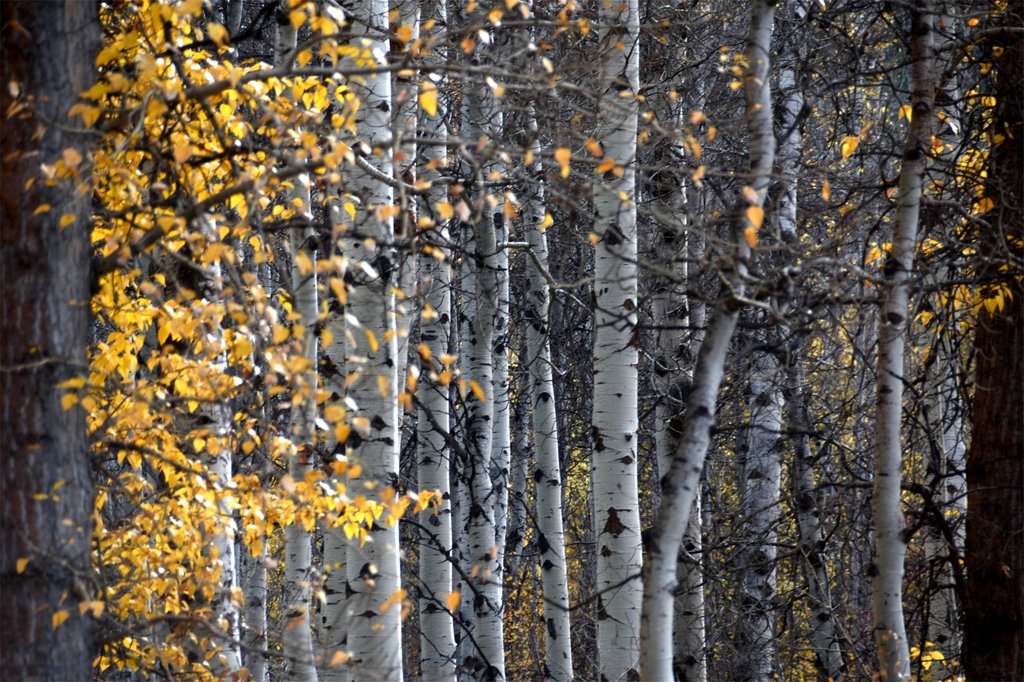
The paper birch is the tree most people picture when they think of white peeling bark. Its trunk is chalky white to cream, peeling in horizontal papery sheets that reveal tan-pink or orange inner layers beneath.
Native to northern North America — from Alaska across Canada and into the northeastern United States — it thrives in cool, moist conditions. It is one of the first trees to recolonise disturbed or burned land, making it an important pioneer species in boreal forests.
In landscape use, paper birch is stunning when planted in clumps of three to five. The multi-stemmed form maximises bark display, particularly in winter.
Key facts:
- Height: 15 – 25 metres
- Best in Zones 2 – 6; struggles in heat
- Short-lived in urban settings (40 – 50 years), longer in cool natural settings
- Bark should never be stripped — it can permanently damage the tree
2. River Birch (Betula nigra)
The heat-tolerant birch with the most ornate peeling bark.
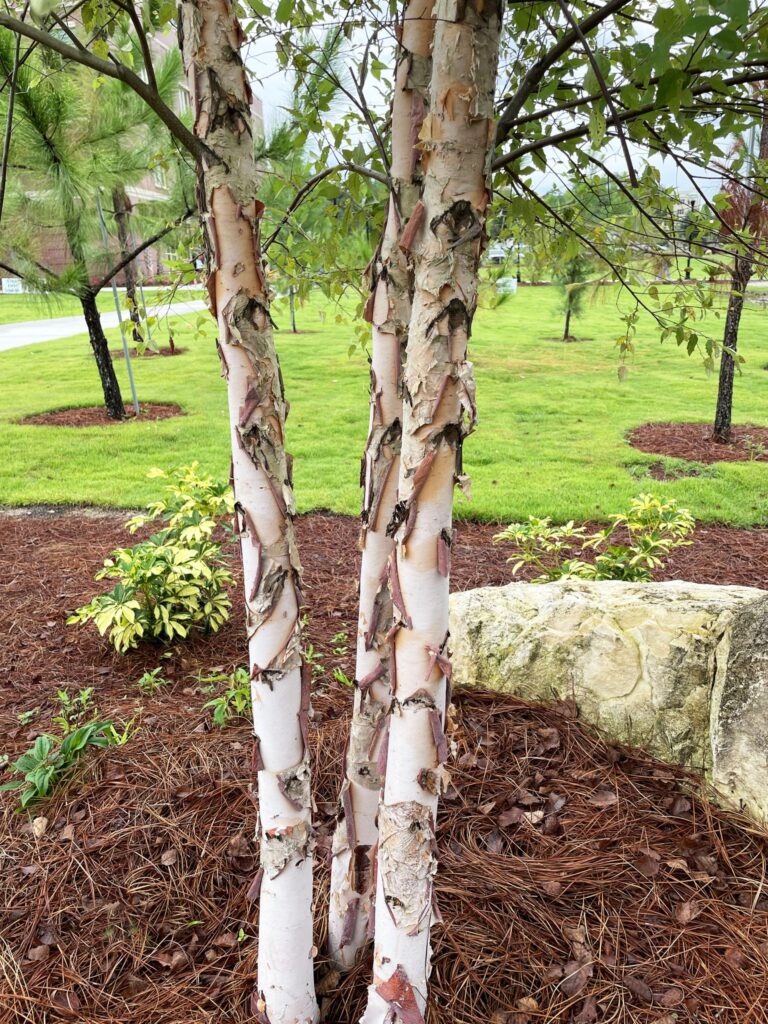
River birch is native to the floodplains and stream margins of the eastern United States. Unlike paper birch, it tolerates heat, humidity, and wet soils — making it a far more versatile landscape tree for warmer regions.
Its bark is its greatest selling point. Young trees display salmon-pink to cinnamon-coloured bark that curls back in ragged, papery flakes, exposing buff-white inner bark. On older trunks, the bark transitions to darker, shaggy plates.
The cultivar ‘Heritage’ (Betula nigra ‘Heritage’) is widely considered the finest ornamental selection, with especially vivid exfoliation and faster growth.
Key facts:
- Height: 10 – 20 metres
- Best in Zones 4 – 9
- Tolerates periodic flooding and clay soils
- Among the most widely planted ornamental birches in warm climates
3. American Sycamore (Platanus occidentalis)
A native giant with a patchwork trunk unlike any other tree.
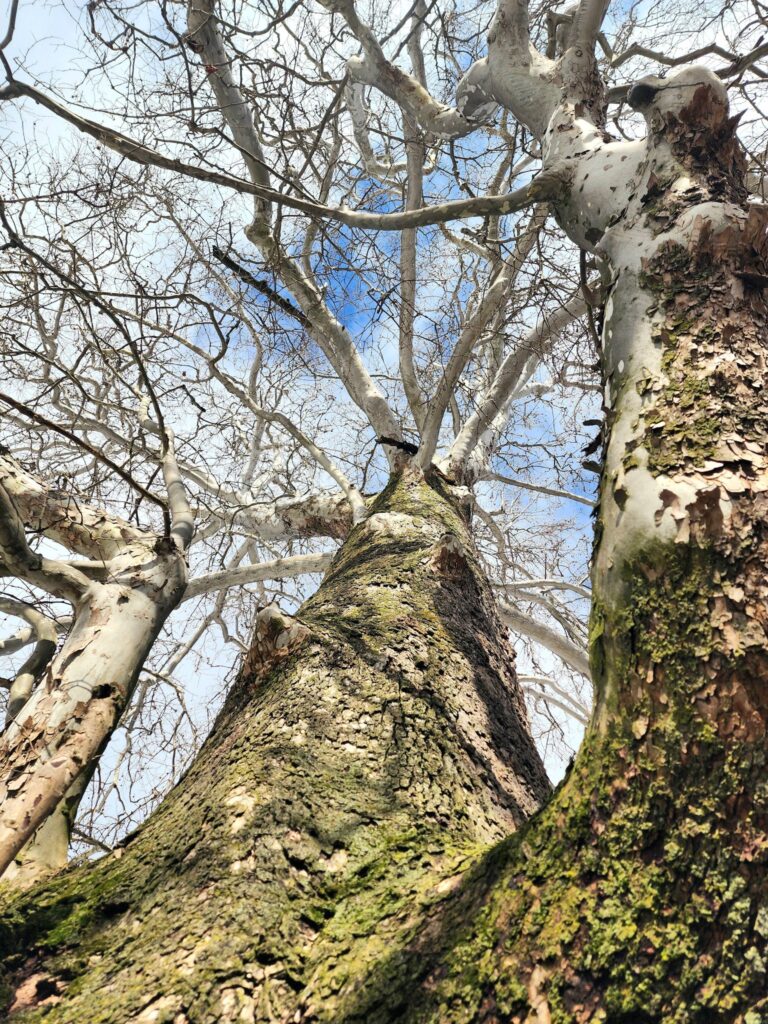
The American sycamore is one of the largest native hardwood trees in North America. It produces a spectacular mottled trunk of white, olive-green, tan, and grey — the result of bark that sheds in irregular plates, exposing the pale smooth layer beneath.
The effect is most dramatic on the upper portions of the trunk and major branches, where the white inner bark is most visible. From a distance, a mature sycamore appears to glow pale in the landscape.
It naturally grows along rivers and streams and can reach enormous dimensions — some historic specimens exceed 3 metres in trunk diameter. In urban settings, it is robust and pollution-tolerant.
Key facts:
- Height: 20 – 35 metres
- Best in Zones 4 – 9
- Susceptible to anthracnose fungal disease in wet springs
- Excellent shade and wildlife tree
4. London Plane Tree (Platanus × acerifolia)
The world’s most widely planted urban tree — and a bark masterpiece.
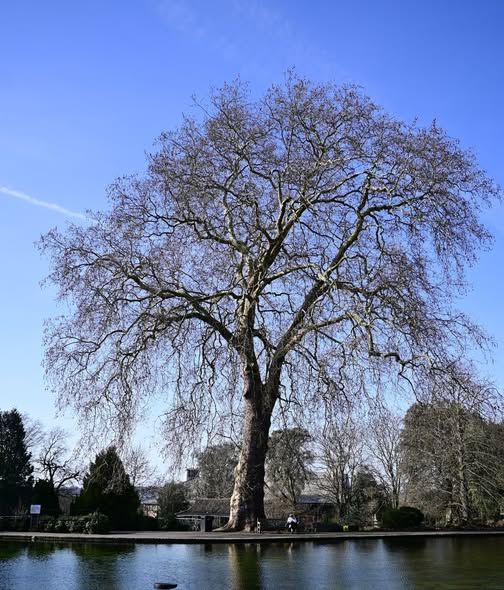
The London plane is a hybrid of the American sycamore and the Oriental plane (Platanus orientalis). It combines the size and vigour of the sycamore with better pollution tolerance, making it the dominant street and park tree in cities across Europe, North America, and beyond.
Its bark tells the story of a trunk constantly outgrowing its outer layer. Large plates of grey-brown bark shed to reveal cream, olive, and grey-green inner bark, creating a camouflage-like mosaic that becomes more complex and beautiful with age.
In London, Paris, New York, and dozens of other major cities, the plane tree’s mottled trunks are an inseparable part of the urban streetscape.
Key facts:
- Height: 20 – 35 metres
- Best in Zones 5 – 9
- Exceptional pollution and compaction tolerance
- Can live 300 – 500+ years in suitable conditions
5. Pacific Madrone / Arbutus (Arbutus menziesii)
The most unusual peeling bark in North American forests.
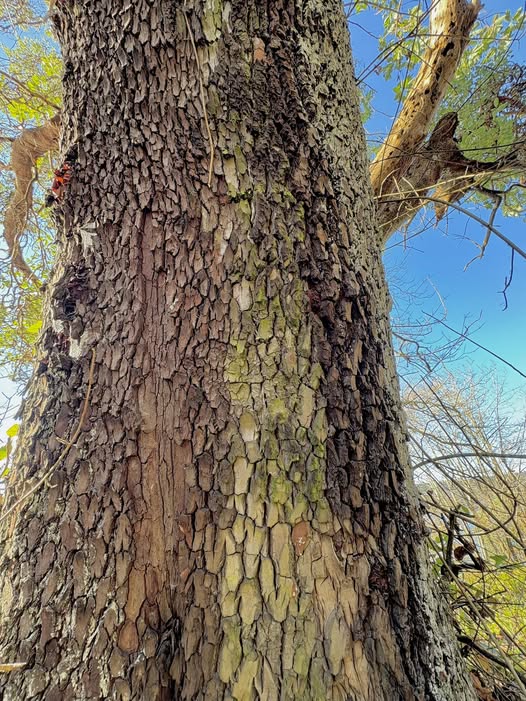
The Pacific madrone is a broadleaf evergreen native to the coastal ranges of western North America, from British Columbia to Baja California. It is one of the most distinctive trees on the continent — and its bark is the reason.
In late summer and autumn, the outer bark peels away in papery flakes, revealing a surface that shifts from green (when fresh and exposed) through orange and cinnamon to deep mahogany-red. The result is a smooth, almost waxy trunk in rich warm tones.
Madrone is notoriously difficult to transplant or cultivate outside its native range. It grows best in dry, well-drained, rocky soils with minimal irrigation once established. Attempts to plant it in lawns or irrigated gardens typically fail. It is a tree that rewards patience and appropriate placement.
Key facts:
- Height: 10 – 30 metres
- Best in Zones 7 – 9 (coastal conditions preferred)
- Drought-tolerant once established; intolerant of summer irrigation
- Produces white bell-shaped flowers and orange-red berries
6. Himalayan Birch (Betula utilis var. jacquemontii)
The whitest bark of any tree on the planet.
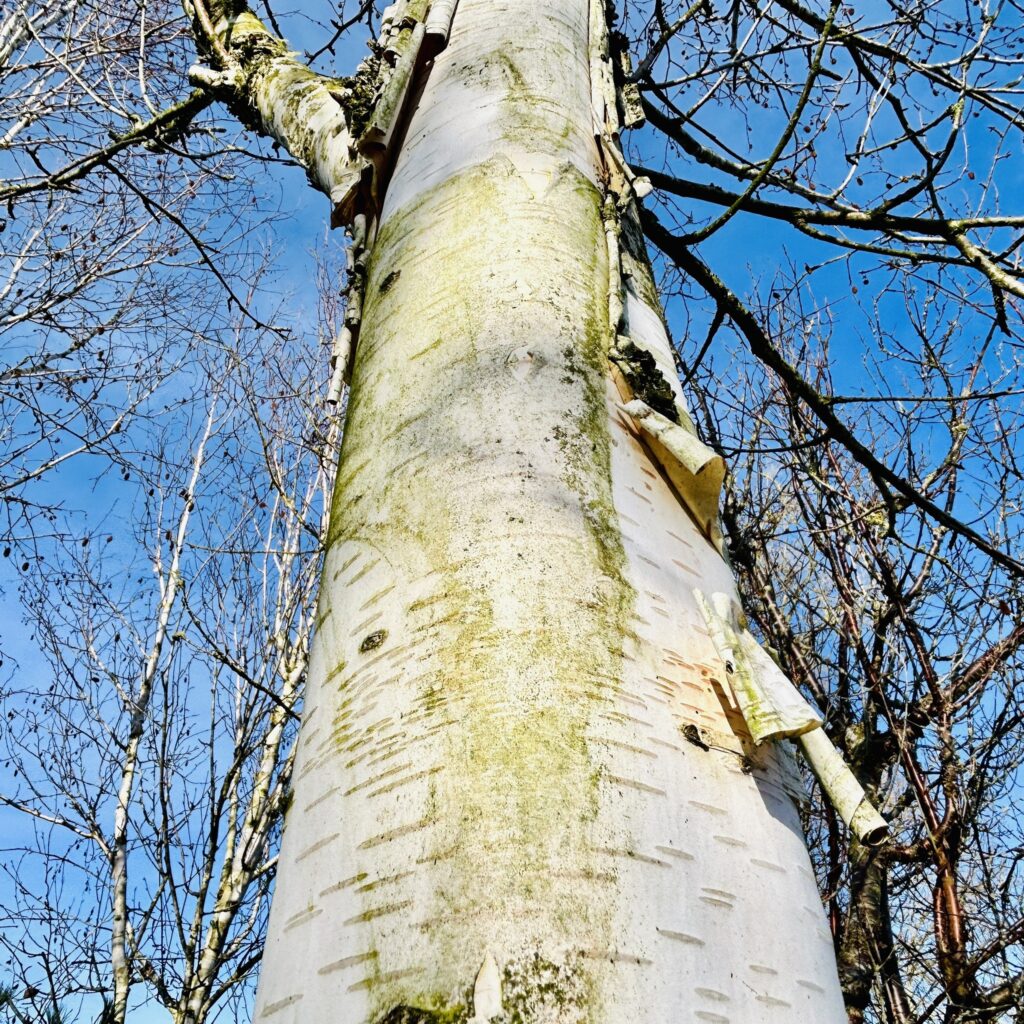
If paper birch is impressive, the Himalayan birch — specifically the variety jacquemontii — takes the concept of white bark to an entirely new level. Its trunk appears almost luminous, a brilliant pure white that stands out even against snow.
Native to the western Himalayas, it peels in tissue-thin horizontal layers, revealing fresh white bark beneath. In a winter garden, with bare branches and low light, a well-grown specimen is breathtaking.
Several excellent cultivars exist, including ‘Doorenbos’, ‘Grayswood Ghost’, and ‘Silver Shadow’, all selected for the intensity and clarity of their white bark.
Key facts:
- Height: 12 – 18 metres
- Best in Zones 5 – 7
- Prefers cool, moist conditions
- Slower-growing than river or paper birch
7. Eucalyptus / Gum Trees (Eucalyptus spp.)
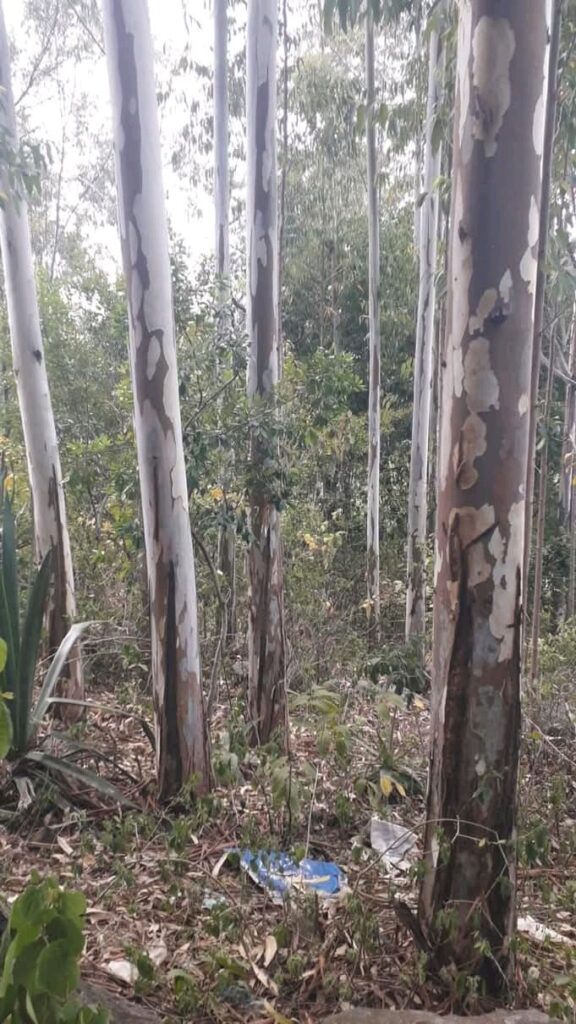
A whole genus defined by dramatic bark shedding.
The eucalyptus genus contains over 700 species, and many of them peel bark as a defining characteristic. The shedding patterns and colour combinations vary enormously across species:
- Ghost gum (Corymbia aparrerinja): Pure white, smooth trunk; bark falls in small flakes
- Rainbow eucalyptus (Eucalyptus deglupta): Vivid streaks of green, blue, purple, orange, and maroon after peeling — the most colourful bark of any tree on Earth
- Spotted gum (Corymbia maculata): Grey-green mottled patches with a clean, smooth surface
- Lemon-scented gum (Corymbia citriodora): Powder-white to pale grey; very smooth after peeling
Rainbow eucalyptus is arguably the most spectacular-barked tree in the world. Native to the Philippines and Indonesia, it is cultivated in tropical landscapes worldwide for its extraordinary multicoloured trunk.
Key facts:
- Height: Varies by species — 10 to 60+ metres
- Zones 8 – 11 for most; tropical species require frost-free climates
- Fast-growing; drought-tolerant once established
- Invasive in some regions — check local regulations before planting
8. Lacebark Pine (Pinus bungeana)
The most ornate bark of any pine tree in the world.
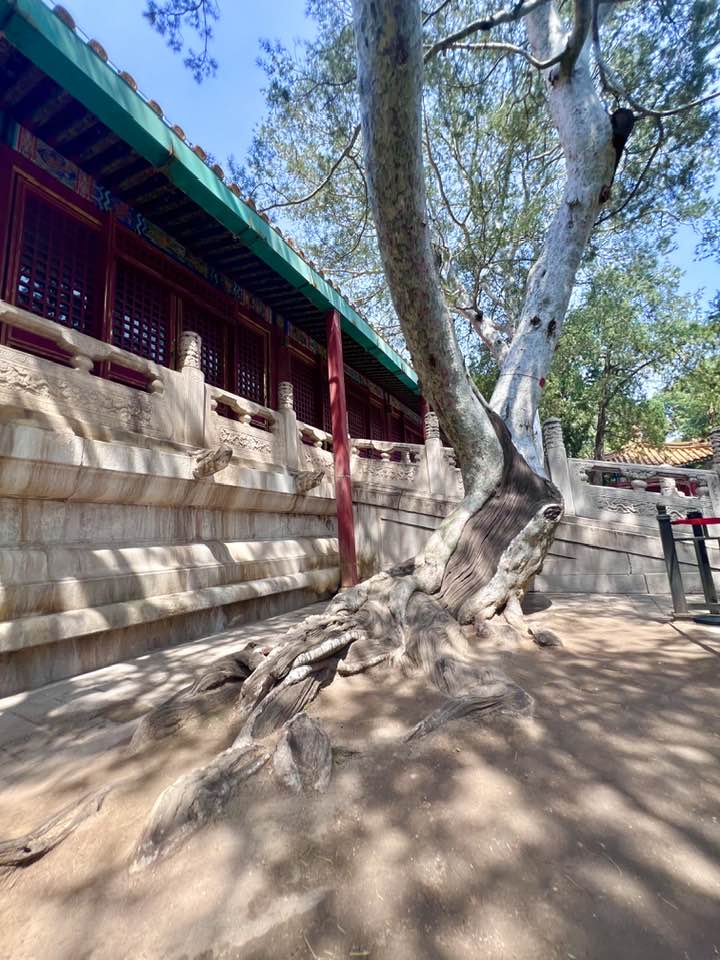
The lacebark pine is native to the mountains of central China, where it has been cultivated in temple gardens and palace landscapes for over a thousand years. The reason is simple: no other pine has bark like this.
As the tree matures, outer bark peels away to reveal an inner surface that is smooth and multicoloured — patches of olive green, cream, grey, rust, and white create an almost mosaic or camouflage effect on the trunk. The older and larger the tree, the more dramatic the display.
It grows slowly but lives for centuries. A mature lacebark pine in full display is one of the most remarkable sights in the plant world.
Key facts:
- Height: 10 – 20 metres (slow-growing)
- Best in Zones 4 – 8
- Drought-tolerant once established
- Single or multi-stemmed; both forms display excellent bark
9. Paperbark Maple (Acer griseum)
Widely regarded as the most beautiful bark of any temperate tree.
There is strong consensus among horticulturists that the paperbark maple — native to central China — produces the most spectacular bark display of any commonly grown landscape tree. Its cinnamon-brown bark peels in paper-thin, translucent sheets that curl back from the trunk and branches to reveal a deeper, richer orange-brown beneath.
In winter sunlight, the curling bark catches and reflects light in a way that makes the tree appear to glow. It is a tree that looks more valuable the more carefully you look at it.
The paperbark maple is also an outstanding autumn colour tree, producing scarlet and deep red foliage in autumn. It offers exceptional year-round multi-season interest.
Key facts:
- Height: 6 – 9 metres (small tree; ideal for gardens of all sizes)
- Best in Zones 4 – 8
- Slow-growing; ultimately long-lived
- Partial shade to full sun; prefers moist, well-drained soil
10. Crape Myrtle (Lagerstroemia indica and hybrids)
The southern landscape staple with surprisingly beautiful bark.

Crape myrtles are most famous for their summer flowers — but their bark is also a genuine asset, particularly in winter. As the outer bark ages and flakes, it reveals a smooth inner surface in warm tones of cinnamon, tan, and soft grey, creating a mottled patchwork on the trunk and branches.
On multi-stemmed or unpruned specimens, the sinuous branching structure combined with the exfoliating bark creates a sculptural quality. Large cultivars such as ‘Natchez’ and ‘Tuscarora’ display particularly impressive bark.
One important cultural note: the practice of “crape murder” — severe, indiscriminate topping of crape myrtles — destroys the natural branching and bark display. Allow crape myrtles to grow naturally for the best bark effect.
Key facts:
- Height: 3 – 12 metres depending on cultivar
- Best in Zones 6 – 9
- Drought-tolerant once established
- Full sun; excellent heat tolerance
11. Tibetan Cherry (Prunus serrula)
A cherry tree grown not for its flowers, but for its extraordinary trunk.
Most cherry trees are planted for spring blossom. The Tibetan cherry is planted for its bark — and it delivers one of the most striking trunk effects in the temperate garden.
The bark is a deep, polished mahogany-red, almost lacquered in appearance. It peels in horizontal strips, punctuated by the distinctive horizontal lenticels (breathing pores) common to the cherry family. When the sun catches a well-grown stem, the effect is genuinely dazzling.
Native to western China, it grows to a modest size and is excellent for small to medium gardens. It does produce small white flowers in spring, but they are secondary to the bark display.
Key facts:
- Height: 6 – 10 metres
- Best in Zones 5 – 8
- Full sun to partial shade; moist, well-drained soil
- Best displayed as a multi-stemmed specimen to maximise bark visibility
12. Seven-Son Flower (Heptacodium miconioides)
An underused small tree with excellent exfoliating bark and late-season flowers.
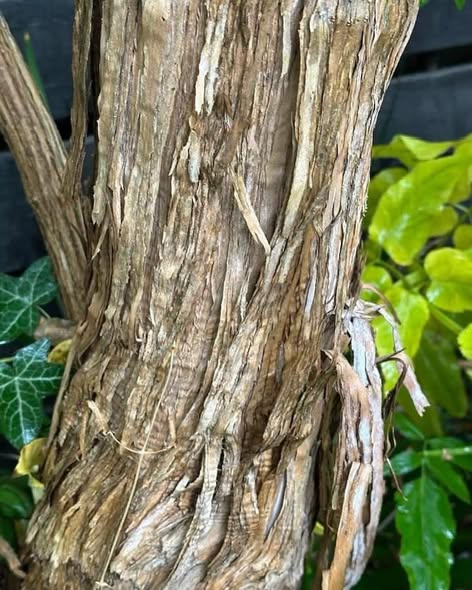
Seven-son flower is not well known outside horticultural circles, which is a shame. It is a genuinely exceptional small tree offering late summer white flowers, attractive fruit, and outstanding exfoliating bark.
The bark peels in long tan and pale brown strips, revealing inner bark of a contrasting paler tone. The trunk and main stems take on a shredded, layered quality that provides excellent winter interest.
Native to the mountains of eastern China, it was introduced to Western horticulture relatively recently and is still gaining the recognition it deserves.
Key facts:
- Height: 4 – 6 metres
- Best in Zones 5 – 9
- Adaptable to a range of soils; tolerates partial shade
- Late-season flowering makes it valuable for pollinators
13. Persian Ironwood (Parrotia persica)
Outstanding bark, outstanding autumn colour — a genuinely four-season tree.
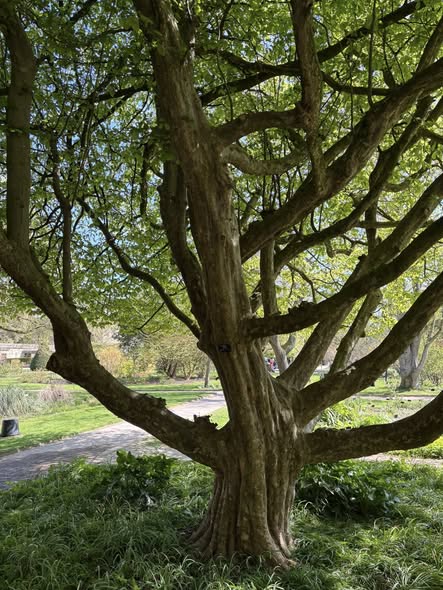
The Persian ironwood, native to northern Iran and the Caucasus region, is one of the most all-round exceptional ornamental trees available to temperate gardeners. Its bark develops a flaking, mottled pattern of grey, green, cream, and warm brown as it ages — similar in some ways to a plane tree but with a finer, more intricate texture.
Combined with some of the finest autumn colour in any temperate tree (rich crimson, orange, gold, and purple simultaneously), early spring red flowers, and a handsome spreading form, the Persian ironwood has virtually no weaknesses as a landscape tree.
Key facts:
- Height: 8 – 12 metres
- Best in Zones 4 – 8
- Very drought-tolerant once established
- Excellent urban tree; tolerates a range of soils
14. Shagbark Hickory (Carya ovata)
The most dramatic shaggy bark of any North American tree.
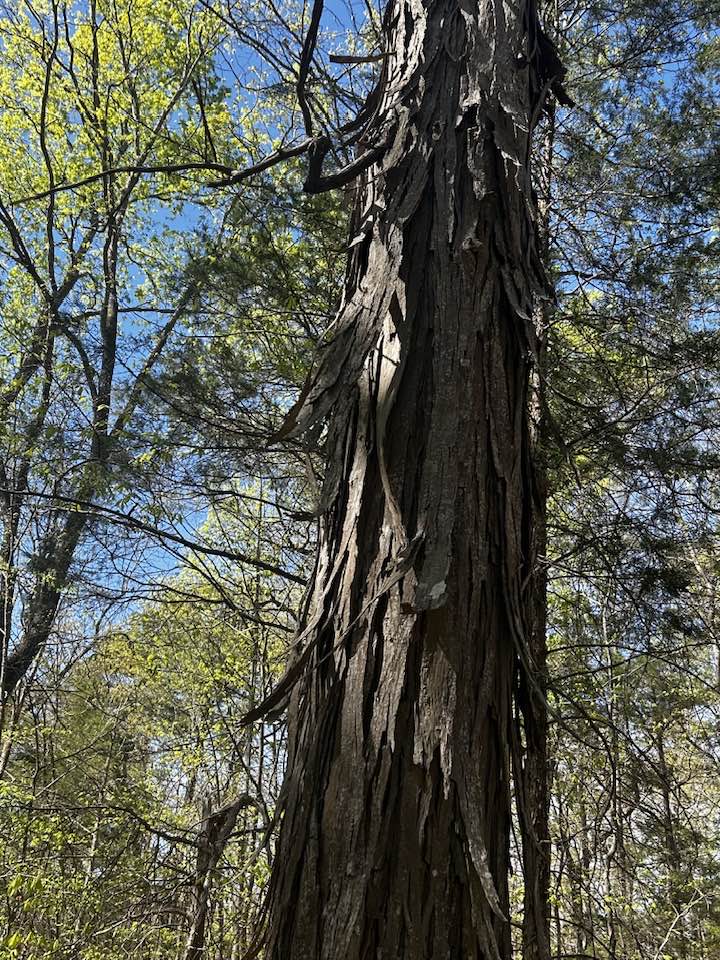
The shagbark hickory takes a different approach to peeling bark. Rather than shedding in patches or horizontal layers, its grey bark peels in long, vertical plates that curl away from the trunk at both ends — giving the tree a uniquely shaggy, almost dishevelled appearance.
These long, rough plates (sometimes 60 cm or more in length) remain attached in the middle while the ends curl outward, creating deep shadows and extraordinary texture. It is one of the most distinctive trunk silhouettes in any winter landscape.
Native to the eastern United States, it is also a significant nut tree — shagbark hickory nuts are edible and prized for their rich flavour.
Key facts:
- Height: 18 – 24 metres
- Best in Zones 4 – 8
- Deep taproot; difficult to transplant; best grown from seed in situ
- Long-lived; very winter-hardy
15. Japanese Stewartia (Stewartia pseudocamellia)
One of the finest four-season trees ever introduced to cultivation.
The Japanese stewartia consistently tops lists of the best ornamental trees for temperate gardens — and its bark is the primary reason. The trunk develops a flaking mosaic of orange, rust-brown, cream, and grey patches that intensifies with age, creating an effect reminiscent of a abstract painting.
Add to this: white camellia-like flowers in summer, exceptional autumn colour in scarlet and orange, and an elegant architectural form, and you have a tree that earns its space in any garden.
It grows slowly, requires good soil preparation, and does not tolerate stress well in establishment — but the long-term reward is exceptional.
Key facts:
- Height: 8 – 12 metres
- Best in Zones 5 – 8
- Moist, acidic, humus-rich soil; partial shade to full sun
- Considered one of the finest ornamental trees in the world
How to Choose the Right Peeling Bark Tree for Your Garden
With fifteen excellent options, the choice depends on several practical factors.
Consider your climate zone first
Paper birch and Himalayan birch suit cooler northern climates (Zones 2–6). River birch and crape myrtle perform best in warmer zones (4–9). Eucalyptus species generally require frost-free conditions.
Consider the scale
Sycamores and London planes are stately trees for large properties, parks, and avenues. Paperbark maple, Tibetan cherry, and stewartia are ideal for smaller gardens and residential settings.
Consider your primary season of interest
All 15 trees offer year-round interest through their bark. But if summer flowers matter to you, consider crape myrtle or stewartia. If autumn colour is a priority, Persian ironwood and paperbark maple are outstanding.
Plant in the right soil and light
Most peeling bark trees prefer full sun. Pacific madrone and paperbark maple have specific requirements that must be met for success.
Caring for Peeling Bark Trees: Important Notes
A few points are worth emphasising for the health and beauty of these trees.
- Never peel bark yourself. It can seem tempting to pull at a loose strip of birch or maple bark — but doing so can damage the living tissue beneath, creating entry points for disease and insects. Let the tree shed on its own schedule.
- Avoid wounding the trunk. On smooth-barked trees like madrone and Tibetan cherry, any mechanical damage creates a permanent scar. Keep lawnmowers and string trimmers away from the base.
- Water deeply when establishing. Most peeling bark trees establish best with deep, infrequent watering rather than frequent shallow irrigation. This encourages a deeper, more drought-resilient root system.
- Mulch, but keep it clear of the trunk. A 5–8 cm layer of organic mulch in a wide circle around the tree conserves moisture and suppresses competition — but mulch piled against the trunk can cause rot.
Final Thoughts
Trees with peeling bark offer something no other landscape feature can easily replicate — a constantly changing, texturally rich surface that evolves with the seasons and the decades.
From the luminous white of the Himalayan birch to the kaleidoscopic trunk of the rainbow eucalyptus, from the coppery curl of the paperbark maple to the shaggy grey plates of the hickory, each of these trees is distinctive, beautiful, and worthy of a place in the landscape.
I have always found that peeling bark trees generate more curiosity and conversation than almost any other garden feature. People want to touch them. They lean in. They look closer. That is the mark of a living thing that genuinely captures the human imagination.
Plant one — or several — and they will reward you for a lifetime.
References
- University of Florida IFAS Extension — Environmental Horticulture Landscape tree selection and bark characteristics — species profiles for warm and temperate climates. https://edis.ifas.ufl.edu/
- NC State Extension — Plants Database Comprehensive plant profiles including bark descriptions, growth habits, and regional suitability. https://plants.ces.ncsu.edu/
- University of Maryland Extension — Home and Garden Information Center Ornamental tree selection and care, including multi-season interest trees. https://extension.umd.edu/
- Cornell University Cooperative Extension — Horticulture Section Tree identification, ornamental features, and landscape use guidance for temperate regions. https://cals.cornell.edu/cornell-cooperative-extension
- University of Wisconsin-Madison Division of Extension — Horticulture Ornamental trees for the upper Midwest, including cold-hardy species with exceptional bark. https://hort.extension.wisc.edu/

Tim M Dave is a gardening expert with a passion for houseplants, particularly cacti and succulents. With a degree in plant biology from the University of California, Berkeley, he has vast experience in gardening. Over the years, he has cultivated a vast collection of desert plants and learned a great deal about how to grow and care for these unique companions.