15 Trees That Grow Well in Pots in a Garden: A Complete Guide
Container gardening has changed the way people think about what a garden can be. A paved courtyard, a narrow balcony, a terraced rooftop — none of these are obstacles to growing trees anymore. The right tree in the right pot can anchor a garden space with genuine presence, produce fruit, offer seasonal colour, or simply stand as something quietly impressive in a corner that would otherwise be bare.
Growing trees in pots is not a compromise. It is a different way of gardening, with its own logic and rewards. Container-grown trees tend to be more manageable, more portable, and in some cases more productive than their open-ground counterparts — fig trees, for instance, fruit more prolifically when their roots are restricted. The key is choosing species that genuinely suit container life, and then giving them what they need to thrive.
This guide covers 15 of the best trees that grow well in pots in a garden. Each entry describes the tree’s character, container requirements, and what makes it particularly suited to pot culture. Whether your garden is a small urban courtyard or a larger space where you want the flexibility that containers provide, you will find something practical and inspiring here.
What Makes a Tree Suitable for Container Growing?
Not every tree takes well to pot life. Trees with very vigorous root systems, a strong preference for spreading laterally underground, or an inability to tolerate the moisture fluctuations that container growing inevitably brings — these are poor candidates for pots, regardless of how appealing they might seem.
The best trees for containers share certain traits. They tend to have naturally moderate or slow growth rates that do not outpace the container too rapidly. They tolerate some restriction of the root system without stress. They adapt to the regular watering and feeding that replaces the natural nutrient cycling they would experience in open ground. And they have sufficient ornamental or productive value to justify the ongoing commitment that container growing requires.
Dwarf and semi-dwarf varieties perform particularly well, as do trees that have been grafted onto size-limiting rootstocks. But even some naturally larger species can be kept in containers for many years with appropriate repotting, pruning, and root management.
The container itself matters considerably. Good drainage is non-negotiable — no tree tolerates waterlogged roots for long. A container that is too small stresses the roots and limits growth; one that is too large can hold excess moisture and encourage root rot before the tree’s root system is large enough to use the available space efficiently. Matching pot size to tree size, and gradually increasing the container as the tree grows, is one of the most important principles of successful container tree growing.
15 Best Trees That Grow Well in Pots
1. Japanese Maple — Acer palmatum
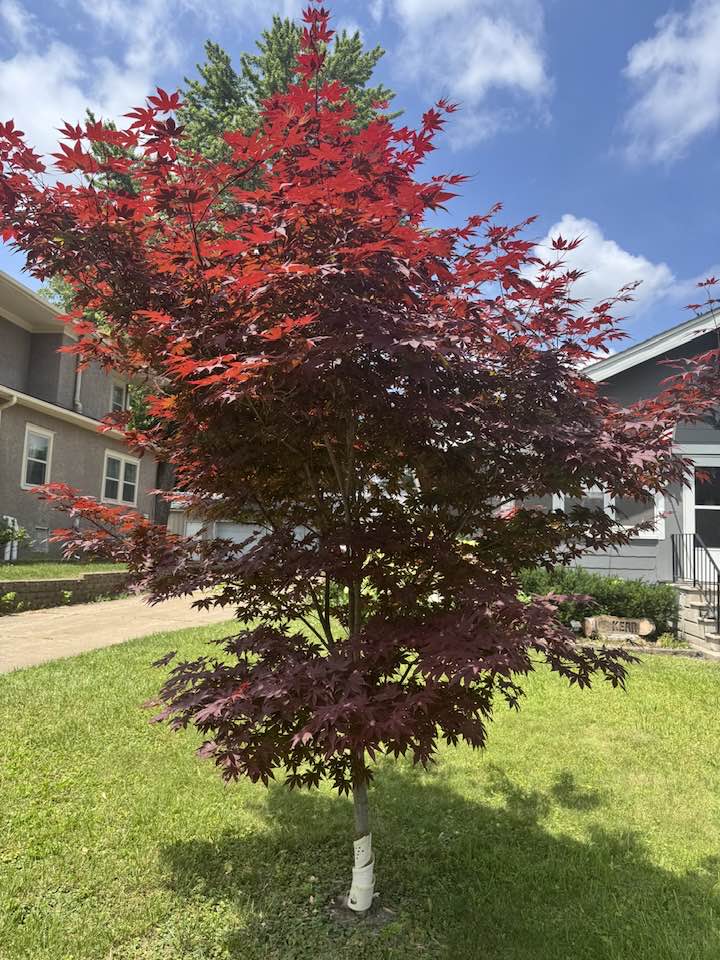
The Japanese maple is perhaps the finest ornamental tree for container growing in a garden. Its finely cut leaves, graceful branching habit, and extraordinary autumn colour make it one of the most beautiful small trees available to gardeners anywhere in the world. Grown in a pot, it becomes almost sculptural — a living focal point that changes appearance as the seasons progress.
Japanese maples grow slowly to moderately, which is exactly the kind of pace that suits container life. Most garden varieties reach 1.5 to 3 meters over many years, and their root systems adapt well to restriction. The preferred varieties for containers include ‘Dissectum’ types with deeply cut, feathery foliage, and upright forms like ‘Bloodgood’ with deep purple-red leaves throughout summer.
They prefer well-drained, slightly acidic, moisture-retentive compost. Shelter from strong winds and harsh afternoon sun is important — the leaves scorch easily in exposed positions. A pot raised slightly off the ground to improve drainage, placed in a sheltered courtyard or against a wall, is ideal. Keep the compost consistently moist but never waterlogged.
Container size: Start at 30–40 cm; increase gradually to 60–80 cm as the tree matures
Best for: Sheltered gardens, courtyards, partial shade (USDA zones 5–9)
2. Dwarf Apple — Malus domestica on M27 or M9 Rootstock
Growing an apple tree in a pot is one of the most satisfying things a container gardener can attempt. A dwarf apple on M27 or M9 rootstock stays compact — typically 1.2 to 1.8 meters — produces full-sized, excellent-quality fruit, and creates a beautiful seasonal display from spring blossom through to autumn harvest. Varieties such as ‘Fuji’, ‘Cox’s Orange Pippin’, and ‘Braeburn’ all perform well in containers.
Container-grown apple trees do need watering consistently during the growing season — drought stress leads directly to fruit drop. A loam-based compost such as John Innes No. 3 is preferable to peat-free alternatives for long-term container growing, as it holds structure better and provides more consistent nutrition. Feed with a balanced general-purpose fertiliser through spring and summer.
Most apple varieties need a pollination partner. In a garden setting with multiple containers, this is easily arranged by placing two compatible varieties in pots near one another. Alternatively, look for self-fertile varieties such as ‘Scrumptious’ or ‘James Grieve’ if space for a second tree is limited.
Container size: Minimum 45–50 cm diameter; 60 cm or larger for best results
Best for: Temperate gardens, patio and terrace planting (USDA zones 4–8)
3. Fig — Ficus carica
The fig is one of the trees that genuinely performs better in a pot than in open ground. When roots are unrestricted, fig trees tend to produce excessive leafy growth at the expense of fruit. Containing the root system in a pot effectively focuses the tree’s energy on fruiting, which is precisely what most gardeners want. Compact varieties such as ‘Brown Turkey’, ‘Petite Negra’, and ‘Little Miss Figgy’ are ideal for container culture.
Figs are self-fertile, drought-tolerant once established, and largely pest-resistant — all significant advantages for container growing. They prefer full sun and well-drained compost. In cooler climates, move the pot to a sheltered position or unheated greenhouse in winter to protect against frost damage to the developing embryo fruits, which overwinter on the branches.
A mature fig in a terracotta pot, placed against a sun-warmed wall in summer, is a remarkably productive and attractive garden feature. Repot every two to three years or when roots begin to emerge heavily from the drainage holes.
Container size: 40–60 cm; larger pots reduce fruiting, so avoid oversizing
Best for: Warm temperate and Mediterranean climates; sheltered walls in cooler gardens (USDA zones 7–11)
4. Olive — Olea europaea
The olive is one of the most requested container trees in modern gardens, and it is not difficult to understand why. Its silver-green foliage, gnarled trunk (in older specimens), and timeless Mediterranean character make it a universally appealing feature plant. Compact or slow-growing varieties such as ‘Arbequina’ are well suited to containers, and with proper care, olive trees can live in pots for decades.
Olives are among the most drought-tolerant trees available, which makes them somewhat forgiving of inconsistent watering — though they still perform best with regular moisture during the growing season. They require full sun and excellent drainage. A gritty, free-draining compost mix is ideal; adding 20 to 30 percent perlite or horticultural grit to a loam-based compost improves drainage considerably.
In USDA zones 8 and above, olives can live outdoors in containers year-round in a sunny position. In cooler zones, they need winter shelter in a frost-free greenhouse or conservatory. Olive trees in pots rarely need repotting more than every three to four years; root restriction is generally beneficial.
Container size: 40–60 cm; terracotta pots suit the drainage requirements well
Best for: Sunny, sheltered gardens; Mediterranean and warm temperate climates (USDA zones 8–11)
5. Dwarf Citrus — Lemon, Lime, Mandarin, and Kumquat
Dwarf citrus trees in containers are a staple of conservatories and warm gardens worldwide, and for good reason. The combination of glossy evergreen leaves, intensely fragrant blossom, and bright, jewel-like fruit creates a sensory experience that few other garden plants can match. Meyer lemon, Tahitian lime, Miho Wase mandarin, and Nagami kumquat are among the best-performing varieties in containers.
Citrus trees prefer bright light, warmth, and consistent moisture. They dislike cold draughts, waterlogged compost, or prolonged dry spells. Feed regularly with a dedicated citrus fertiliser during the growing season — citrus are hungry feeders, and deficiencies in magnesium, iron, or nitrogen show quickly as yellowing leaves.
In USDA zones 9 to 11, container citrus can live outdoors year-round. In cooler climates, they spend summer outside in a sunny position and winter in a bright, frost-free indoor space. Regular inspection for scale insects, spider mites, and mealybugs keeps common pest problems under control.
Container size: 30–50 cm; pot size matched to tree size, increasing gradually
Best for: Warm temperate to subtropical climates; conservatories in cooler zones (USDA zones 9–11)
6. Bay Laurel — Laurus nobilis
Bay laurel is one of the most practical and versatile trees for container growing in a garden. It is fully evergreen, responds beautifully to clipping into formal shapes — pyramids, standards, and lollipop forms are all traditional and effective — and provides a useful culinary herb from its aromatic leaves throughout the year. As a structural container plant, a pair of clipped bay trees flanking a doorway or entrance path is a classic and genuinely effective garden design device.
Bay grows at a moderate rate and tolerates pot restriction well over many years. It prefers well-drained, fertile compost and full sun to partial shade. In mild climates, it is an excellent outdoor container tree; in colder areas, it benefits from winter shelter, as prolonged frost can damage or kill the above-ground growth, though established plants often recover from the roots.
Feed with a balanced fertiliser in spring and summer, water regularly but avoid waterlogging, and trim once or twice a year to maintain the desired shape. Bay is remarkably low-maintenance relative to the impact it creates.
Container size: 40–60 cm for a standard or shaped specimen
Best for: Formal garden schemes, culinary use; mild to warm temperate climates (USDA zones 8–11)
7. Dwarf Cherry — Prunus avium or Prunus cerasus on Gisela 5 Rootstock
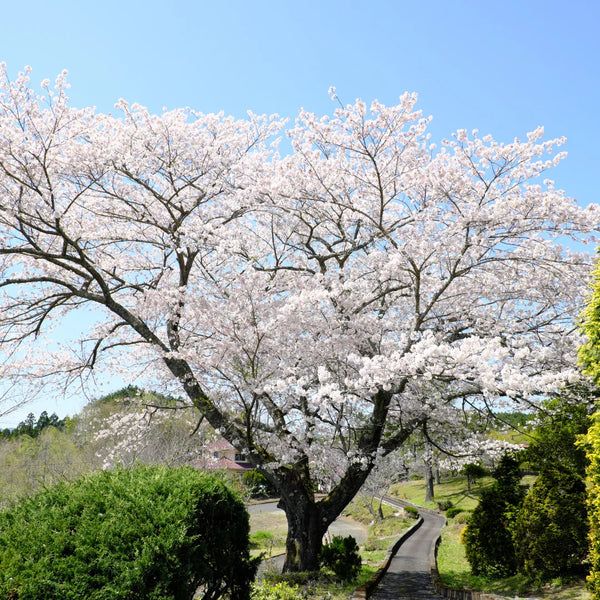
A dwarf cherry tree in a large container is one of the most spectacular spring sights a garden can offer. The blossom — white or pale pink, appearing before the leaves — is abundant and genuinely beautiful. By summer, the fruit ripens to deep red, and while birds are enthusiastic competitors for it, netting a container tree is considerably easier than protecting a full-sized orchard.
Compact self-fertile varieties such as ‘Stella’, ‘Sunburst’, and ‘Morello’ (the latter an acid cherry ideal for cooking) perform very well in containers on the Gisela 5 rootstock. They require well-drained, fertile compost, regular watering during the growing season, and annual feeding in spring with a balanced fertiliser. Repot every two to three years to refresh the compost and check the root system.
Cherry trees in pots can be moved to take advantage of the best sun in your garden, and they are easier to protect from late frosts — a particular advantage in spring when the blossom is vulnerable.
Container size: Minimum 50 cm; 60 cm or larger for best fruit production
Best for: Temperate gardens, patio planting (USDA zones 4–8)
8. Camellia — Camellia japonica or Camellia × williamsii
Camellia is perhaps the most rewarding evergreen tree for container growing in acid-soil gardens — or rather, for gardeners who do not have acid soil in the ground. In a pot, the compost can be specified precisely, making it straightforward to provide the ericaceous (acidic) growing medium that camellias require. This opens up camellia growing to any gardener, regardless of what soil type lies beneath.
Camellias flower from late winter through spring depending on variety, producing blooms in shades of red, pink, white, and every combination between. The flowers are striking and long-lasting, and the dense, glossy, dark green foliage provides strong structure throughout the year. They grow slowly to moderately, making them patient and manageable container specimens.
Use ericaceous compost, water with rainwater wherever possible (tap water in hard water areas raises soil pH and causes yellowing), and feed with an ericaceous fertiliser in spring and summer. Protect flower buds from severe frost in late winter with fleece if necessary.
Container size: 40–60 cm; increase pot size every two to three years
Best for: Gardens with alkaline soil; sheltered positions in temperate climates (USDA zones 6–10)
9. Dwarf Pear — Pyrus communis on Quince C Rootstock
Dwarf pears on Quince C rootstock make excellent container trees for patios and terraces. They flower in spring with attractive white blossom, produce full-sized and fully flavoured fruit in late summer and autumn, and have attractive foliage that turns gold and orange before falling. Varieties such as ‘Conference’, ‘Concorde’, and ‘Williams’ Bon Chrétien’ all perform well when container-grown.
Like container apples, pears benefit from a loam-based compost for long-term growing stability, regular watering and feeding during the growing season, and annual mulching of the compost surface to conserve moisture. Most pear varieties need a cross-pollination partner, so consider planting two compatible varieties in neighbouring containers if fruit production is a priority.
Pears are slightly less forgiving of poor soil conditions than apples, so attention to compost quality and drainage pays dividends. With good care, a container pear tree can remain productive and attractive for many years.
Container size: 50–60 cm diameter; a substantial container supports better cropping
Best for: Temperate gardens, patio and courtyard planting (USDA zones 4–7)
10. Crab Apple — Malus sylvestris or ornamental cultivars
The ornamental crab apple is an excellent choice for a medium-to-large container in a garden setting. It offers four distinct seasons of interest: spring blossom (white, pink, or deep red depending on variety), summer foliage, autumn fruit in shades of red, orange, or yellow, and attractive bare winter branching. Few container trees deliver value across all four seasons with such consistency.
Varieties suited to container growing include ‘Golden Hornet’ (yellow fruits that persist through winter), ‘Evereste’ (heavy crops of orange-red fruits), and ‘John Downie’ (larger orange and red fruits excellent for jelly making). All are reasonably compact and adapt to container life provided drainage is good and watering is consistent.
Crab apples also provide useful cross-pollination for nearby apple trees, so a crab apple container placed near a container apple makes good practical sense as well as looking handsome.
Container size: 50–60 cm; increase as required
Best for: Year-round ornamental interest; temperate gardens (USDA zones 4–8)
11. Dwarf Peach — Prunus persica ‘Bonanza’ or ‘Pix Zee’
The dwarf peach varieties bred specifically for container culture are compact, self-fertile, and genuinely productive in a pot. ‘Bonanza’ reaches around 1.2 to 1.5 meters, produces full-sized, richly flavoured peaches, and covers itself in pink blossom in early spring — one of the finest spring displays any container tree can offer. ‘Pix Zee’ is slightly larger but similarly well suited to pot growing.
Dwarf peaches need full sun and good drainage. They are self-fertile, which removes the need for a pollination partner and simplifies container growing considerably. In cooler climates, protect the blossom from late frosts with a temporary fleece cover in early spring, as cold damage to the flowers will eliminate the year’s crop.
Peach leaf curl, a common fungal disease, can be managed by applying a copper-based fungicide in late winter and keeping the foliage dry during the period when buds are breaking.
Container size: 40–50 cm; repot every two to three years
Best for: Sunny, sheltered positions; warm temperate gardens (USDA zones 5–9)
12. Photinia — Photinia × fraseri ‘Red Robin’
Photinia ‘Red Robin’ is not often thought of as a container tree, but it performs very well in a large pot when grown as a standard (a tree with a clear stem and a rounded head). The vivid red young foliage that appears each spring and after each trim provides extended seasonal colour that few other evergreen trees can match. As a container standard, it creates a clean, formal presence in a courtyard or on a terrace.
It grows at a moderate rate, tolerates most soil types, and requires relatively little maintenance beyond an annual trim and regular watering. In containers, it benefits from a loam-based compost and feeding through the growing season. In cold winters, some leaf damage may occur, but the plant recovers reliably in spring with the flush of new red growth.
Container size: 50–60 cm for a standard specimen
Best for: Formal garden schemes, courtyard planting; temperate climates (USDA zones 7–9)
13. Wisteria — Wisteria sinensis or Wisteria floribunda (trained as standard)
Wisteria trained as a container standard is one of the most extraordinary sights a garden can offer in late spring. The cascading clusters of violet, purple, or white flowers, hanging from a clear stem into a weeping canopy, are genuinely spectacular in a way that photographs rarely do justice.
In a pot, wisteria can be positioned precisely where its flowering will have the greatest impact, and moved aside once the display fades.
Training wisteria as a standard requires patience and consistent pruning — it is a project of several years — but the results justify the investment of time. Alternatively, grafted or pre-trained standard wisterias are available from specialist nurseries.
Container-grown wisteria needs regular feeding with a high-potassium fertiliser through the growing season, consistent moisture, and full sun to flower well.
Container size: 50–60 cm minimum; wisteria is a vigorous plant and benefits from a generous container
Best for: Sunny gardens; sheltered positions in temperate climates (USDA zones 4–9)
14. Dwarf Pomegranate — Punica granatum var. nana
The dwarf pomegranate is a compact, ornamental, and productive tree that thrives in containers. It reaches around 1 to 1.5 meters, produces vivid orange-red flowers throughout summer, and in warm climates sets small but edible fruit in autumn. In cooler climates, the fruit may not ripen fully outdoors, but the flowering display is impressive enough to justify the tree regardless.
Dwarf pomegranates are highly drought-tolerant, prefer full sun, and need very well-drained compost. They tolerate some root restriction, making them a good fit for container culture. In USDA zones 7 and above, they can live outside year-round in a sheltered position. In colder zones, bring the container indoors to a bright, frost-free space in winter.
The ornamental appeal of the dwarf pomegranate — compact form, exotic-looking flowers, and glossy leaves — makes it an excellent focal point in a container display, particularly on a sun-drenched terrace.
Container size: 30–50 cm; avoids the need for a large container
Best for: Sunny gardens, Mediterranean-style planting (USDA zones 7–11)
15. Acer Griseum — Paperbark Maple
The paperbark maple is one of those trees that every gardener who encounters it wants to grow. The peeling, cinnamon-coloured bark — which curls back to reveal fresh copper-red layers beneath — is one of the most beautiful and distinctive features of any garden tree. Add to this the outstanding autumn colour (brilliant orange and red) and the naturally compact, slow-growing form, and you have a tree that is perfectly suited to container culture.
Acer griseum grows slowly to around 4 to 8 meters over many decades, but in a container it remains manageable for a very long time. It prefers well-drained, slightly acidic to neutral compost, adequate moisture, and a position in partial shade or dappled sunlight. The bark is most dramatic in winter, when the warm tones catch low light against a pale sky — a reminder that the best container trees offer something worth looking at in every season.
Container size: 40–60 cm; a wide, stable pot suits the tree’s eventual weight
Best for: Gardens where year-round bark interest is valued; temperate climates (USDA zones 4–8)
General Care for Trees in Pots
Choosing the Right Compost
The compost used in a container tree’s pot is the foundation of its health. A loam-based compost such as John Innes No. 3 is generally the best long-term choice for trees, as it holds structure, retains nutrients more consistently than peat-based mixes, and provides the weight and stability that prevents tall trees in pots from toppling. For acid-loving species — camellias, Japanese maples — use ericaceous compost.
Watering
Container trees dry out far faster than those in the ground, particularly during warm or windy weather. During the growing season, check the compost moisture every day or two, and water thoroughly when the top few centimetres feel dry. In winter, most deciduous trees need very little water; evergreens need modest moisture throughout. Overwatering in winter is a more common cause of container tree death than drought.
Feeding
Nutrients in container compost are depleted faster than in open ground, simply because there is less soil volume and regular watering leaches nutrients out through the drainage holes. Feed container trees with a balanced liquid fertiliser every two to four weeks through the growing season (spring to late summer). From late summer onward, reduce or stop feeding to allow growth to harden before winter.
Repotting
Most container trees benefit from repotting every two to three years. This can mean moving up to a slightly larger pot, or — for trees that have reached their final desired container size — refreshing the compost while root-pruning to keep the root system manageable. Root pruning sounds alarming, but removing up to a third of the root mass when refreshing the compost is a well-established practice that keeps container trees healthy and well-proportioned for decades.
Winter Care
In cold climates, the roots of container trees are more vulnerable to freezing than those of trees in the ground, because the pot provides less insulation than surrounding soil. Wrap the pot in bubble wrap, hessian, or fleece during very cold spells. Move frost-sensitive species — citrus, olive, fig — into a frost-free greenhouse or conservatory for winter. Grouping containers together also helps, as the thermal mass of several pots provides mutual protection.
Final Thoughts
Growing trees in pots in a garden opens up possibilities that fixed, open-ground planting cannot always provide. It gives the gardener control — over soil conditions, placement, seasonal arrangement, and the scale of what is grown. It makes exotic and tender species accessible to gardeners in cool climates. And it brings a sense of proportion and maturity to small spaces that ground-level planting alone rarely achieves.
The 15 trees in this guide represent a wide range of characters, climates, and purposes — from the sculptural beauty of the Japanese maple to the productive generosity of a well-tended container apple, from the Mediterranean charm of an olive to the winter drama of a paperbark maple’s peeling bark. Each one is genuinely suited to container life and will reward the commitment that growing in a pot requires.
Start with one. Give it the right pot, the right compost, and the right amount of attention. Watch it grow. There is a quiet, particular pleasure in a tree that owes its presence entirely to the care you have given it.
References
- Royal Horticultural Society (RHS) — Trees and Shrubs in Containers. The RHS provides comprehensive, research-supported guidance on growing trees and shrubs in containers, including compost selection, watering, feeding, repotting, and species recommendations for different garden situations. https://www.rhs.org.uk/plants/types/trees/growing-trees-in-containers
- University of California Cooperative Extension — Container Gardening: Trees and Woody Plants. This UC Cooperative Extension guide covers the principles of growing woody plants and trees in containers, including root management, soil mix formulation, and care practices for sustained growth and productivity in pot culture. https://anrcatalog.ucanr.edu/
- Penn State Extension — Growing Fruit Trees in Containers. Penn State’s horticultural extension provides detailed guidance on selecting and growing dwarf and semi-dwarf fruit trees in containers, covering rootstock selection, container sizing, fertilisation, and pest management for backyard gardeners. https://extension.psu.edu/growing-fruit-trees-in-containers
- University of Florida IFAS Extension — Citrus Culture in the Home Landscape. This University of Florida publication covers the growing requirements of container citrus trees in detail, including cultivar selection, soil and nutrient management, pest and disease control, and winter care for dwarf citrus in containers. https://edis.ifas.ufl.edu/publication/CH080
- North Carolina State University Extension — Japanese Maples in the Landscape and Container. NC State’s horticultural extension offers research-backed guidance on selecting and growing Japanese maple varieties, with specific sections on container culture, soil requirements, and seasonal care for Acer palmatum and related species. https://plants.ces.ncsu.edu/plants/acer-palmatum/

Tim M Dave is a gardening expert with a passion for houseplants, particularly cacti and succulents. With a degree in plant biology from the University of California, Berkeley, he has vast experience in gardening. Over the years, he has cultivated a vast collection of desert plants and learned a great deal about how to grow and care for these unique companions.