15 Stunning Trees with Red Flowers: Identification, History and Care Tips
Trees with red flowers bring fiery elegance to any landscape. Their vibrant blooms create stunning focal points, attracting pollinators and admiration alike. Whether you’re designing a tropical paradise, a cozy backyard, or a public park, these trees offer beauty and ecological value.
This guide explores 15 trees with red flowers, detailing their scientific names, USDA Hardiness Zones, color variations, sun exposure, mature size, lifespan, toxicity, history, and comprehensive care tips. Let’s discover these crimson treasures!
1. Royal Poinciana (Delonix regia)
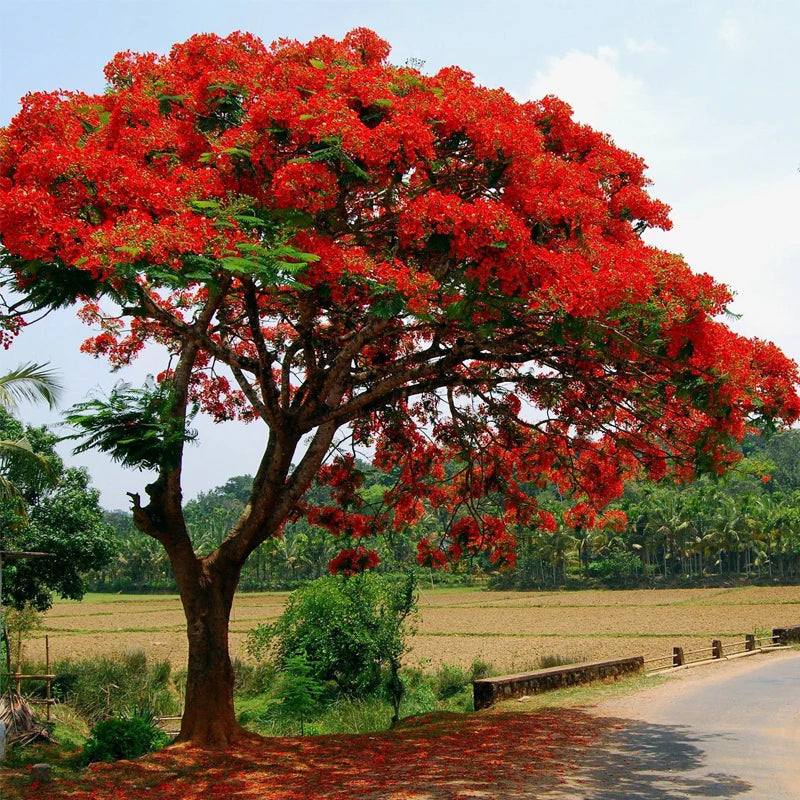
The Royal Poinciana, often called the Flamboyant Tree, is a tropical showstopper. Its clusters of brilliant red-orange flowers bloom profusely in summer, creating a canopy of fire. Native to Madagascar, this deciduous tree has feathery, fern-like leaves and a wide, umbrella-like crown.
Its pods hang like ornaments, adding interest after blooms fade. The tree’s shade makes it a favorite for tropical patios and streets.
History
Originating in Madagascar’s dry forests, the Royal Poinciana was discovered in the 19th century by botanist Wenceslas Bojer. It was named after Phillippe de Longvilliers de Poincy, a 17th-century governor who loved exotic plants. Its striking beauty led to its spread across tropical regions, from the Caribbean to Australia.
Today, this tree is a symbol of summer in places like Miami and Rio de Janeiro, often planted in parks and along boulevards.
Features
- Scientific Name: Delonix regia
- USDA Hardiness Zone: 10-12
- Color Variation: Red, orange, rarely yellow
- Sun Exposure: Full sun
- Mature Size: 20-40 feet tall, 40-60 feet wide
- Lifespan: 50-60 years
- Toxicity: Non-toxic to humans and pets
Care Details
Plant in well-draining, sandy, or loamy soil with a pH of 5.5-6.5. Dig a hole twice as wide as the root ball. Water deeply twice a week during the first year, then reduce to once every 10 days in dry seasons. Apply a balanced 10-10-10 NPK fertilizer in early spring.
In late winter, prune dead or crossing branches to maintain shape and improve air circulation. Mulch with 2-3 inches of organic matter to retain moisture and suppress weeds. Young trees, particularly in cooler zones, need from frost. Use burlap wraps.
Additionally, monitor for scale insects and treat with neem oil if needed. Stake young trees to support their wide canopy during establishment.
Companion Planting and Landscape Uses
Pair with low-growing plants like lantana or hibiscus to complement its tropical vibe. Use as a specimen tree in large lawns or as a shade provider in patios. Its wide spread suits open spaces, but avoid planting near structures due to invasive roots.
2. Red Flowering Dogwood (Cornus florida ‘Rubra’)
The Red Flowering Dogwood is a graceful North American native. Its pinkish-red bracts (specialized leaves mistaken for flowers) bloom in spring, surrounding tiny yellow true flowers. The tree’s tiered branches create a layered look, and its scarlet fall foliage adds seasonal drama.
Red berries attract birds, enhancing its ecological value. It’s perfect for small yards or woodland gardens.

History
Native to eastern North America, the Red Flowering Dogwood has been cherished since pre-colonial times. Native Americans used its roots and bark for medicinal purposes, treating fevers and wounds. Its wood was prized for tool handles due to its strength.
The ‘Rubra’ cultivar, with its reddish bracts, was developed in the 20th century for ornamental use. It’s now a staple in American gardens, symbolizing spring renewal.
Features
- Scientific Name: Cornus florida ‘Rubra’
- USDA Hardiness Zone: 5-9
- Color Variation: Pink to deep red
- Sun Exposure: Full sun to partial shade
- Mature Size: 15-30 feet tall, 15-25 feet wide
- Lifespan: 80-100 years
- Toxicity: Berries are toxic to humans if ingested
Care Details
Plant in rich, well-draining, slightly acidic soil (pH 5.5-6.0). Choose a site with morning sun and afternoon shade in hotter climates. Water deeply weekly during establishment, ensuring soil stays moist but not waterlogged. Apply a 2-inch layer of mulch to retain moisture and regulate soil temperature.
In late winter, prune to remove deadwood and shape the tree. Use a slow-release, acid-loving fertilizer (12-4-8 NPK) in spring. Protect from drought stress with consistent watering. Monitor for anthracnose and powdery mildew; improve air circulation to prevent fungal issues. Avoid planting in heavy clay soils.
Companion Planting and Landscape Uses
Pair with azaleas, rhododendrons, or ferns for a woodland aesthetic. Use as an understory tree in larger landscapes or a focal point in small yards. Its fall color complements evergreens like pines or hollies.
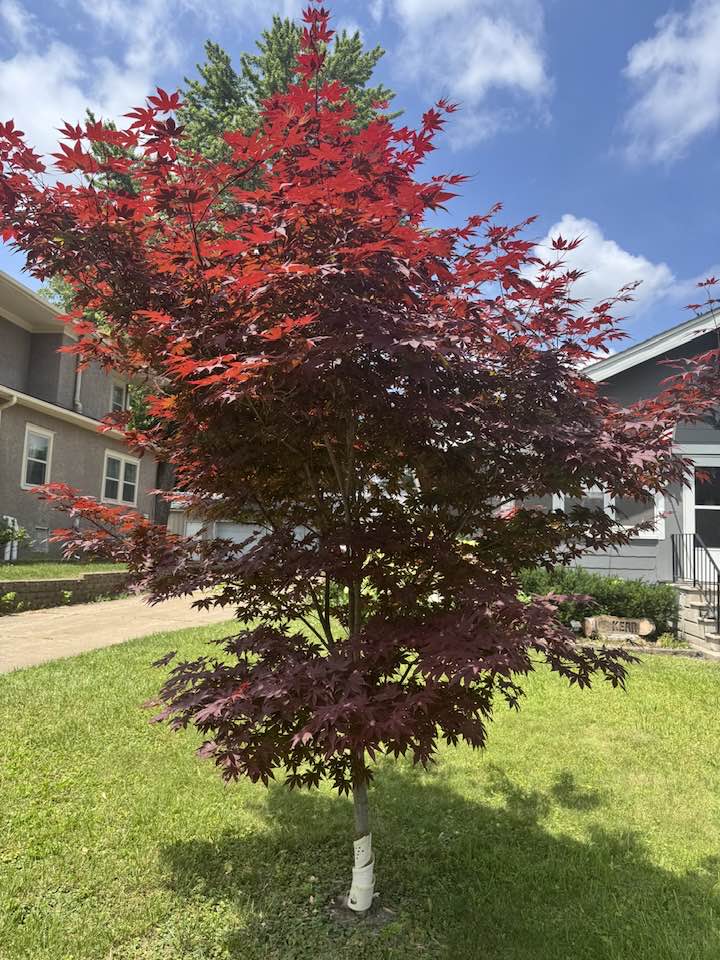
3. Red Maple (Acer rubrum)
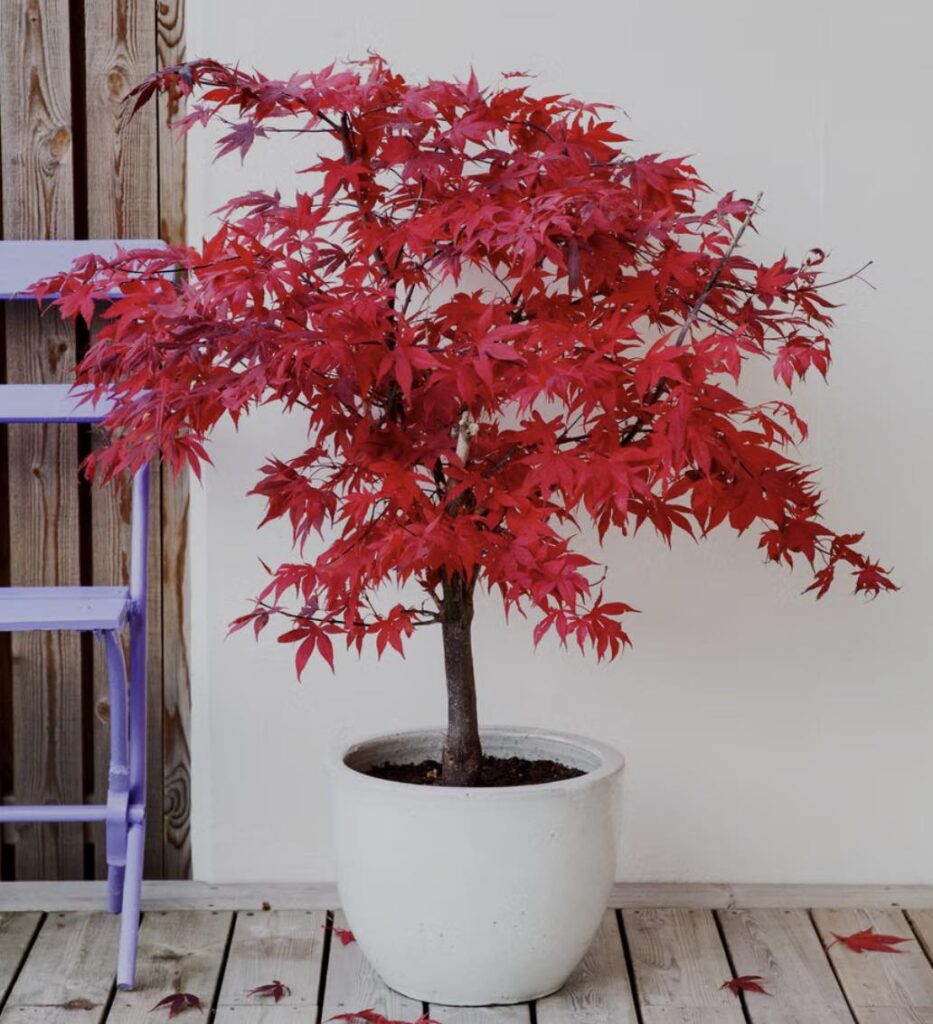
The Red Maple is a versatile North American tree with small, red flowers in early spring. Its blooms appear before leaves, creating a delicate red haze. The tree’s iconic red fall foliage and smooth gray bark make it a year-round beauty.
Adaptable to various soils, it’s a favorite for urban and suburban landscapes. Its fast growth ensures quick impact.
History
Red Maples have thrived in North America for millennia, from Canada to Florida. Native Americans used its sap for syrup and its bark for dyes. European settlers adopted it for furniture and firewood. Its red flowers and foliage earned it the name “Scarlet Maple” in early botanical records.
Today, it’s one of the most planted trees in the U.S., valued for its adaptability and vibrant color.
Features
- Scientific Name: Acer rubrum
- USDA Hardiness Zone: 3-9
- Color Variation: Red to reddish-orange
- Sun Exposure: Full sun to partial shade
- Mature Size: 40-70 feet tall, 25-45 feet wide
- Lifespan: 80-100 years
- Toxicity: Non-toxic, but wilted leaves are toxic to horses
Care Details
Plant in moist, well-draining soil with a pH of 4.5-6.5. Tolerates clay, loam, or sandy soils. Water deeply every 7-10 days during the first two years. Apply a balanced 10-10-10 fertilizer in early spring every other year. Prune in late winter to remove dead or weak branches and maintain structure.
Additionally, mulch with 3 inches of wood chips to conserve moisture. Stake young trees in windy areas. Monitor for leafhoppers, aphids, or verticillium wilt; treat pests with insecticidal soap. Avoid planting in compacted or waterlogged soil.
Companion Planting and Landscape Uses
Pair with viburnum or witch hazel for contrasting fall colors. Use as a shade tree in large yards or parks. Its height suits expansive landscapes but avoid planting near power lines.
4. Flame Tree (Brachychiton acerifolius)
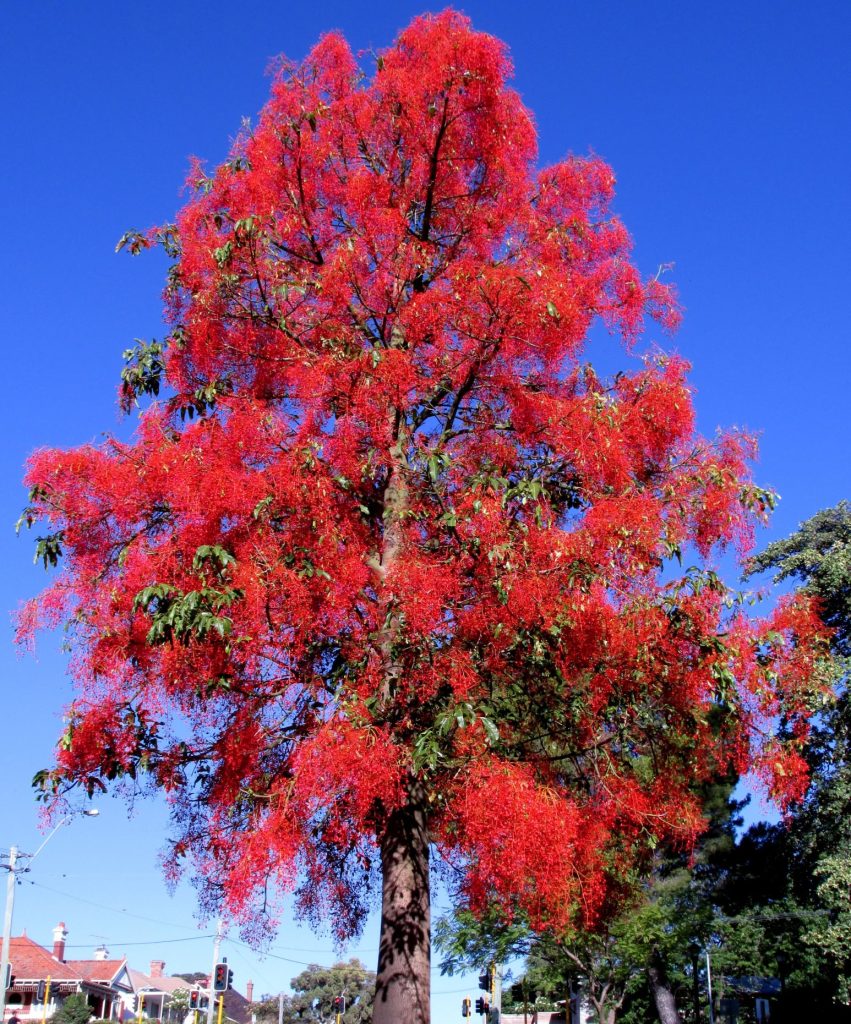
The Flame Tree, native to Australia, lights up landscapes with its scarlet, bell-shaped flowers. These vibrant blooms appear in late spring to summer, covering the tree in a fiery display. Its glossy green leaves and smooth trunk add to its appeal.
The tree’s drought tolerance makes it ideal for warm, dry climates. It’s a striking choice for streetscapes or large gardens.
History
The Flame Tree has been a cherished part of Australian landscapes for centuries. Indigenous Australians used its wood for tools and its seeds as a food source after careful preparation. European settlers introduced it to global horticulture in the 19th century.
Its vivid blooms made it a favorite in Mediterranean and subtropical regions. Today, it’s a popular ornamental in California, Arizona, and Australia.
Features
- Scientific Name: Brachychiton acerifolius
- USDA Hardiness Zone: 9-11
- Color Variation: Bright red
- Sun Exposure: Full sun
- Mature Size: 30-60 feet tall, 20-40 feet wide
- Lifespan: 50-70 years
- Toxicity: Seeds may be toxic if ingested
Care Details
Plant in well-draining, loamy soil with a pH of 6.0-7.0. Water deeply weekly during the first year, then only during prolonged droughts. Apply a low-nitrogen fertilizer (5-10-10 NPK) in spring to boost flowering. Prune in late winter to remove dead branches and shape the canopy.
Mulch with 2 inches of organic material to retain moisture. While young, protect from frost using burlap wraps. Monitor for borers or fungal root rot; ensure good drainage to prevent issues. Stake young trees to support their growth. Avoid overwatering to prevent root rot.
Companion Planting and Landscape Uses
Pair with drought-tolerant plants like lavender or agave for a low-maintenance garden. Use as a focal point in large yards or along streets for shade and color. Its height and spread make it unsuitable for small spaces.
5. Red Bottlebrush (Callistemon citrinus)
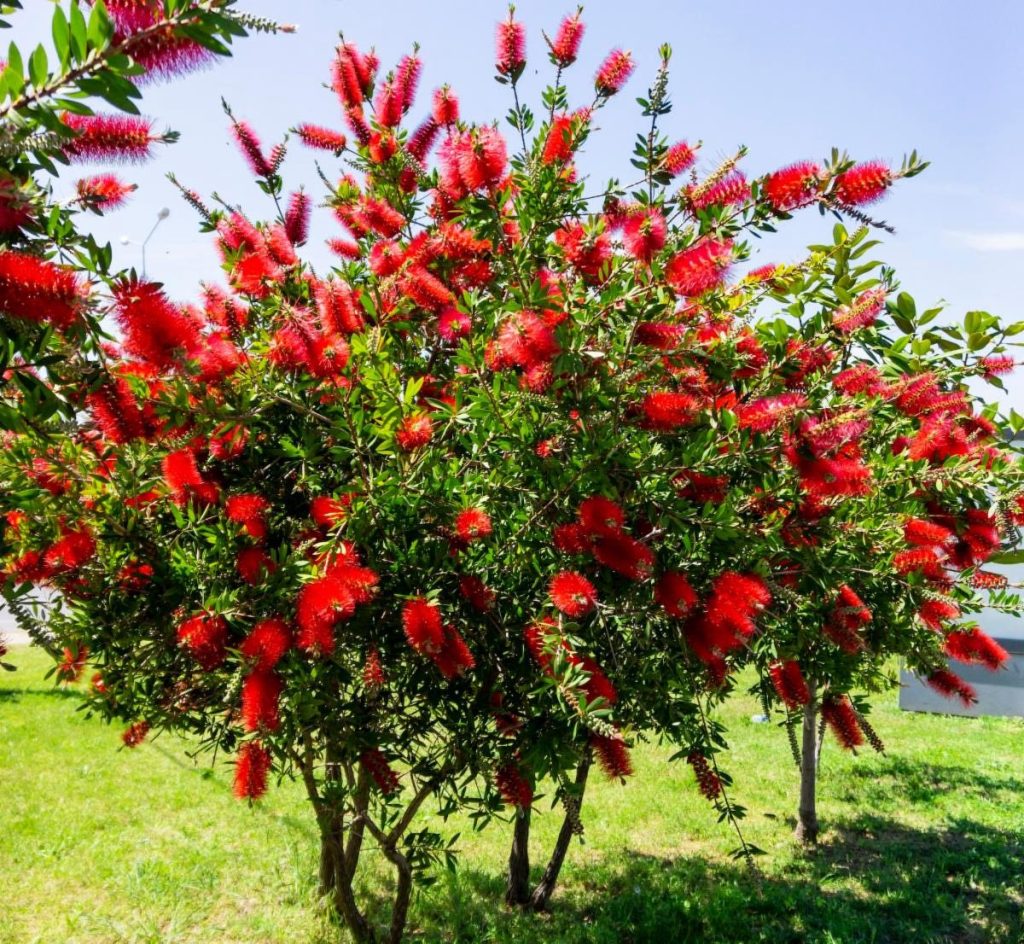
The Red Bottlebrush is an Australian evergreen with brush-like red flowers. These blooms, resembling bottle brushes, appear in spring and summer, attracting hummingbirds and bees. Its narrow, gray-green leaves and compact size make it versatile for hedges or small trees.
The tree’s drought tolerance suits arid climates. Its unique flowers add a playful touch to gardens.
History
Native to Australia’s coastal regions, the Red Bottlebrush was used by Indigenous peoples for its fibrous wood. European botanists introduced it to Europe in the 18th century, where it became a greenhouse favorite.
Its adaptability to poor soils and dry conditions made it a global ornamental. It’s now common in California, Florida, and Mediterranean gardens, symbolizing resilience and beauty.
Features
- Scientific Name: Callistemon citrinus
- USDA Hardiness Zone: 8-11
- Color Variation: Red, occasionally pink
- Sun Exposure: Full sun
- Mature Size: 10-20 feet tall, 10-15 feet wide
- Lifespan: 20-40 years
- Toxicity: Non-toxic
Care Details
Plant in well-draining, slightly acidic soil (pH 5.5-6.5). Water weekly during establishment, then sparingly once established. Apply a phosphorus-rich fertilizer (5-10-5 NPK) in spring to enhance blooming. Prune lightly after flowering to encourage bushiness and remove deadwood.
Mulch with pine bark to maintain soil acidity. Tolerates coastal conditions and salt spray. Protect from hard freezes with frost cloth. Monitor for spider mites; treat with insecticidal soap. Avoid waterlogged soils to prevent root issues.
Companion Planting and Landscape Uses
Pair with salvia or kangaroo paw for a vibrant, pollinator-friendly garden. Use as a hedge, screen, or specimen tree in small yards. Its compact size fits urban gardens or patios.
6. Texas Scarlet Quince (Chaenomeles speciosa ‘Texas Scarlet’)
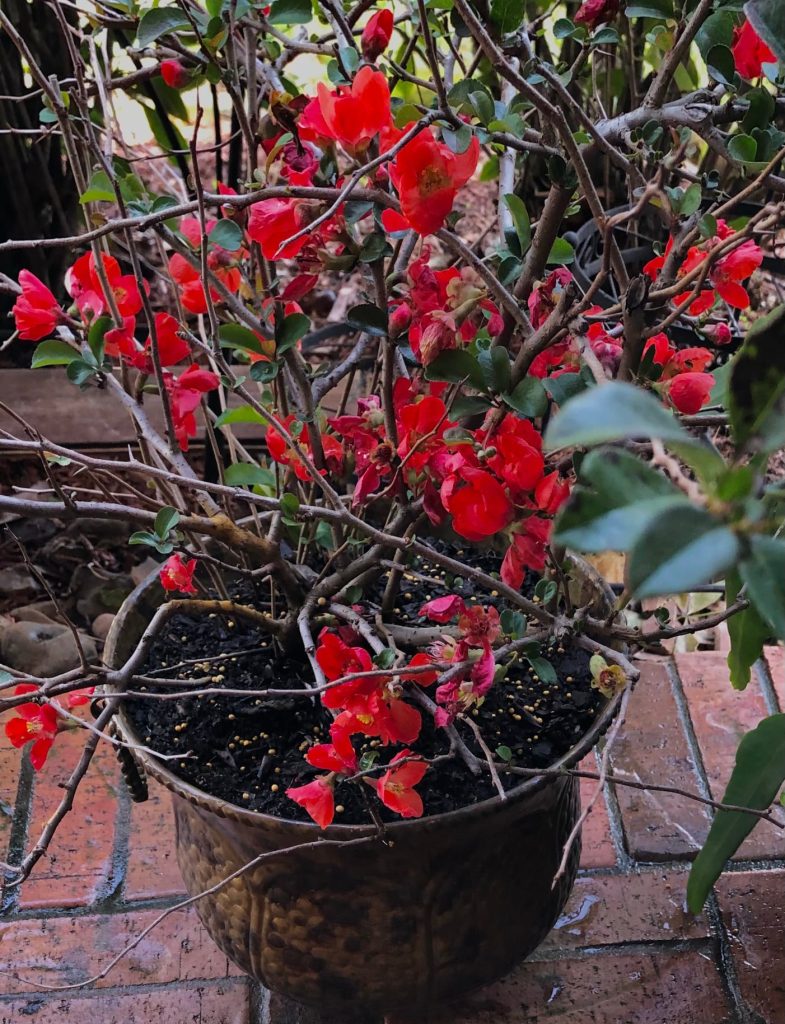
The Texas Scarlet Quince is a compact, shrub-like tree with vivid red-orange flowers. Its early spring blooms appear before the leaves, creating a bold display. The glossy green foliage turns yellow in fall, and its thorny branches add security.
This deciduous plant produces small, edible fruits used in jellies. It’s ideal for small gardens or borders.
History
The Chaenomeles genus originated in East Asia, where it was cultivated for centuries. Japanese gardeners prized its flowers and fruit, using the latter for preserves. Introduced to Europe in the 19th century, the ‘Texas Scarlet’ cultivar was bred for its intense red blooms and compact size.
Its popularity in Texas and southern states stems from its heat tolerance and early flowering.
Features
- Scientific Name: Chaenomeles speciosa ‘Texas Scarlet’
- USDA Hardiness Zone: 5-9
- Color Variation: Red to orange-red
- Sun Exposure: Full sun
- Mature Size: 3-6 feet tall, 3-6 feet wide
- Lifespan: 40-50 years
- Toxicity: Seeds may be toxic if ingested
Care Details
Plant in well-draining, loamy soil with a pH of 6.0-7.0. Water regularly during the first year, then during dry spells. Apply a balanced fertilizer (10-10-10 NPK) in early spring. Prune after flowering to maintain shape and remove suckers.
Make sure to mulch with 2 inches of compost to retain moisture. This tree tolerates drought once established. Monitor for fireblight and treat with copper-based fungicides. Protect from late frosts to preserve blooms. Deadhead spent flowers to encourage fruit production.
Companion Planting and Landscape Uses
Pair with early-blooming bulbs like daffodils or tulips for a spring show. Use as a low hedge, border, or foundation planting. Its thorns make it a natural barrier near property lines.
7. Red Silk Cotton Tree (Bombax ceiba)
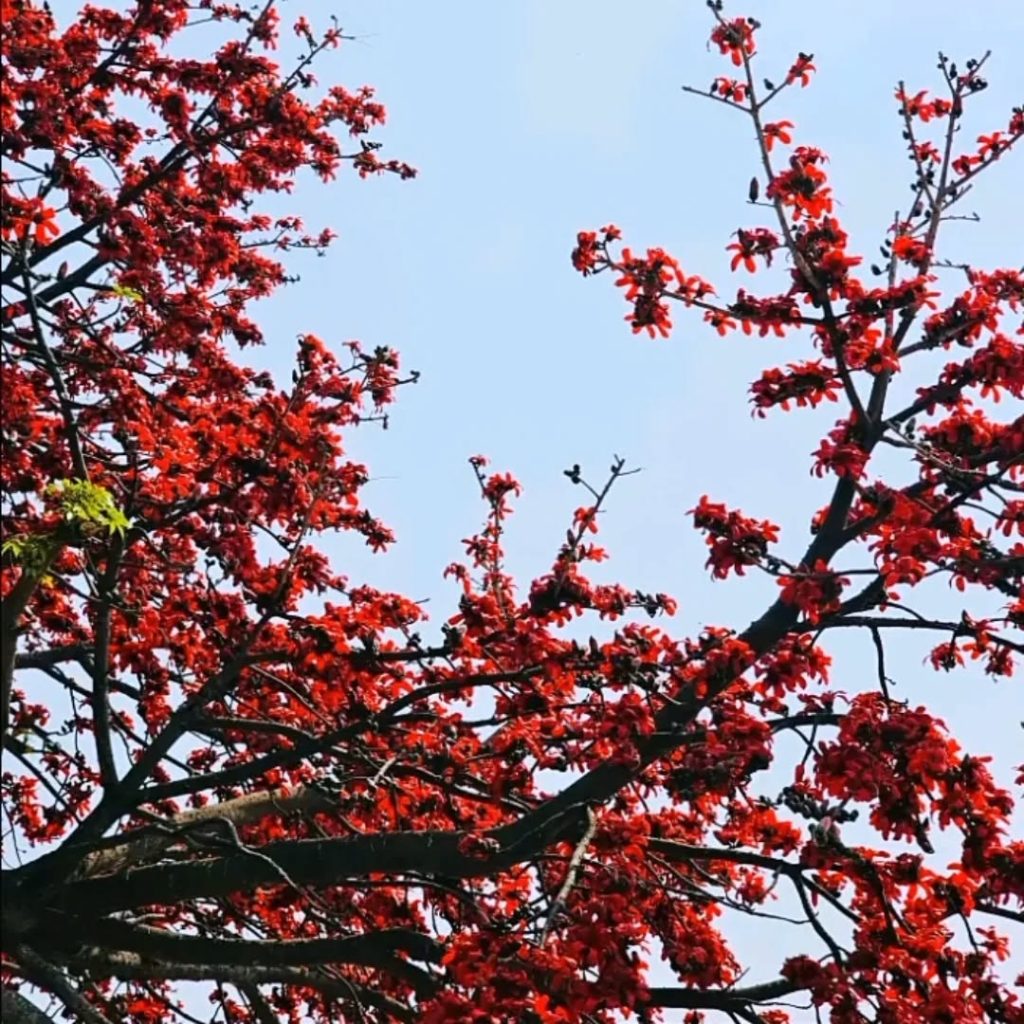
The Red Silk Cotton Tree is a tropical giant with large, waxy red flowers. Its late winter to early spring blooms attract birds and bees. Native to Asia, it has a spiny trunk and broad canopy, providing ample shade. The tree’s cotton-like seeds float through the air, adding whimsy. It’s a majestic choice for large tropical landscapes.
History
Native to South and Southeast Asia, the Red Silk Cotton Tree is sacred in many cultures. In India, it’s associated with spiritual rituals, and its wood is used for furniture. Introduced to tropical regions in the 19th century, it became a symbol of strength and beauty. Its fluffy seeds were once used to stuff pillows. Today, it’s a popular ornamental in warm climates.
Features
- Scientific Name: Bombax ceiba
- USDA Hardiness Zone: 10-12
- Color Variation: Red, rarely pink
- Sun Exposure: Full sun
- Mature Size: 60-100 feet tall, 30-50 feet wide
- Lifespan: 100+ years
- Toxicity: Non-toxic
Care Details
Plant in well-draining, fertile soil with a pH of 6.0-7.5. Water deeply twice a week during establishment, then weekly during dry seasons. Apply a balanced fertilizer (10-10-10 NPK) in early spring. Prune in late winter to remove dead branches and control size.
Consider mulching with 3 inches of organic matter to retain moisture. While it etablishes, protect it from frost with burlap wraps. Monitor for root rot in poorly drained soils. Stake young trees to prevent wind damage. This tree can grow large, so avoid planting near buildings.
Companion Planting and Landscape Uses
Pair with tropical plants like bird of paradise or ginger for a lush look. Use as a shade tree in large parks or estates. Its height and spread require ample space, making it unsuitable for small yards.
8. Coral Tree (Erythrina crista-galli)
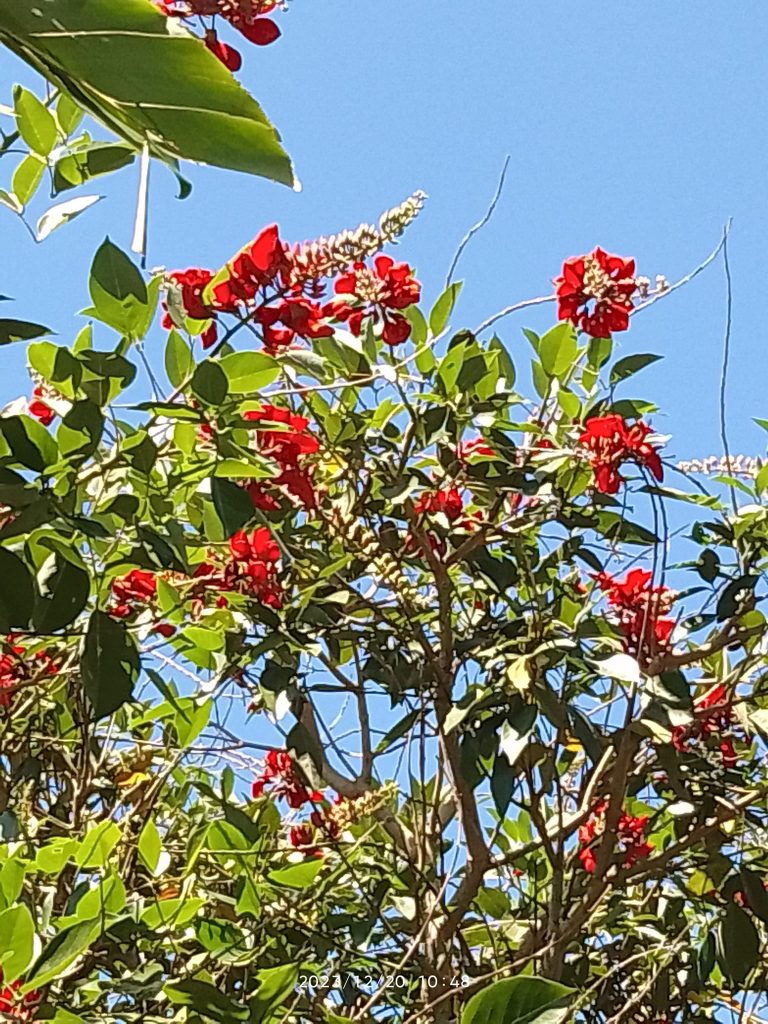
The Coral Tree, native to South America, boasts vibrant red flower spikes. Its summer blooms attract hummingbirds and butterflies. The deciduous tree reveals a sculptural form in winter, with twisted branches. Its heart-shaped leaves add softness to its bold structure. It’s perfect for warm-climate gardens or as a patio tree.
History
The Coral Tree is Argentina’s national tree, symbolizing resilience. Indigenous South Americans used its wood for carvings and its seeds for jewelry. Introduced to Europe in the 18th century, it became a garden favorite in Mediterranean climates. Its striking blooms and drought tolerance made it popular in California and Australia.
Features
- Scientific Name: Erythrina crista-galli
- USDA Hardiness Zone: 9-11
- Color Variation: Bright red
- Sun Exposure: Full sun
- Mature Size: 15-30 feet tall, 10-20 feet wide
- Lifespan: 30-50 years
- Toxicity: Seeds and leaves are toxic if ingested
Care Details
Plant in well-draining, sandy loam soil (pH 6.0-7.0). Water weekly during the first year, allowing the soil to dry between waterings. Apply a high-phosphorus fertilizer (5-10-5 NPK) in spring. Prune in winter to shape and remove deadwood.
Mulch with 2 inches of bark to conserve moisture. Protect young trees from frost with frost cloth in cooler zones. Monitor for aphids and scale; use neem oil for control. Stake young trees for stability. Avoid overwatering to prevent fungal issues.
Companion Planting and Landscape Uses
Pair with salvia or penstemon for a pollinator-friendly garden. Use as a specimen tree in courtyards or near patios. Its compact size suits medium-sized yards.
9. Red Buckeye (Aesculus pavia)
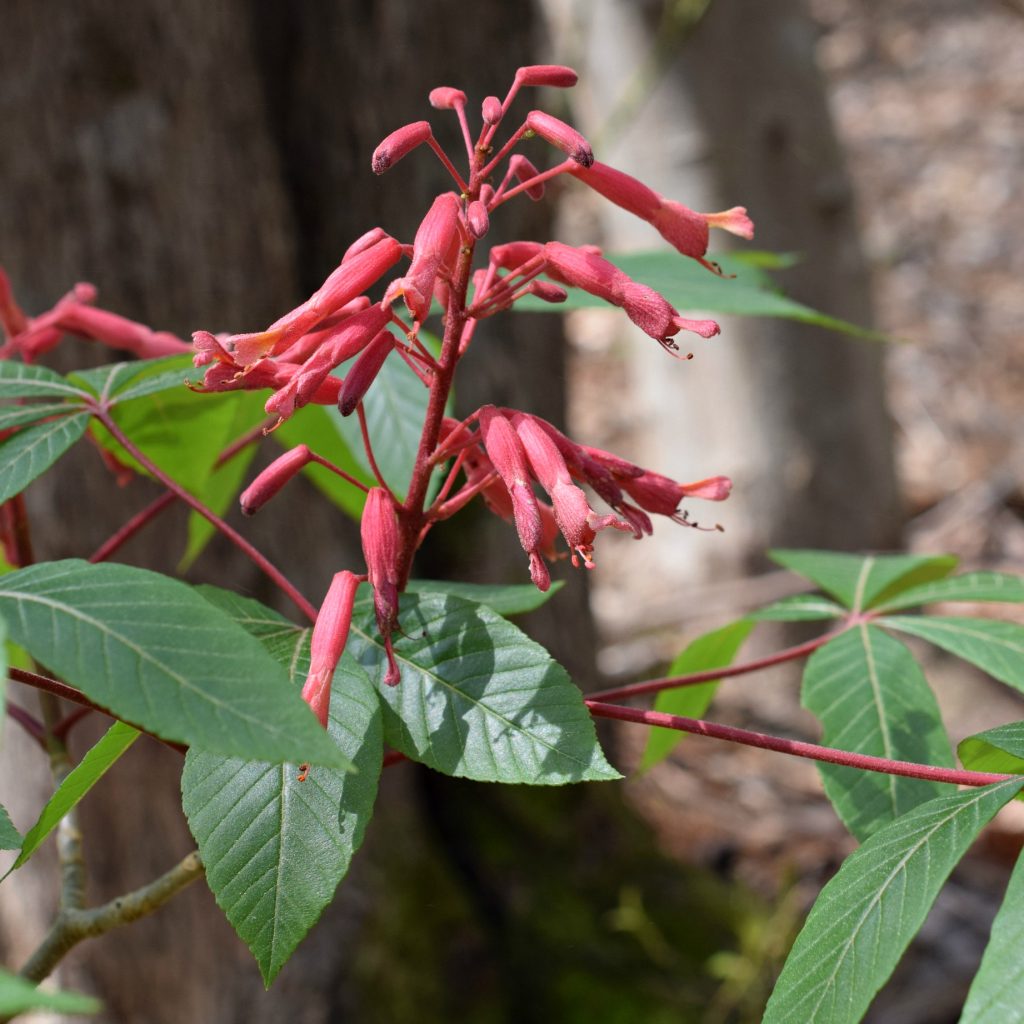
The Red Buckeye is a small North American tree with tubular red flowers. Its spring blooms attract hummingbirds and bees. The palmate leaves turn yellow in fall, adding seasonal color. Its rounded canopy provides light shade. This tree is ideal for woodland gardens or small landscapes.
History
Native to the southeastern U.S., the Red Buckeye was used by Native Americans for fish poison and medicinal teas. Its seeds were carried as good luck charms. European settlers planted it as an ornamental in the 18th century. Its early blooms made it a spring favorite in colonial gardens. Today, it’s valued for its wildlife benefits and compact size.
Features
- Scientific Name: Aesculus pavia
- USDA Hardiness Zone: 4-8
- Color Variation: Red to pinkish-red
- Sun Exposure: Full sun to partial shade
- Mature Size: 10-20 feet tall, 10-20 feet wide
- Lifespan: 40-60 years
- Toxicity: Seeds and leaves are toxic to humans and pets
Care Details
Plant in moist, well-draining soil with a pH of 5.5-6.5. Water deeply weekly during dry periods. Apply a slow-release fertilizer (10-10-10 NPK) in early spring. Prune in late winter to maintain shape and remove suckers.
Mulch with 2 inches of compost to retain moisture. Tolerates shade but blooms best in full sun. Monitor for leaf scorch in hot climates; provide afternoon shade. Treat aphids with insecticidal soap. Avoid waterlogged soils to prevent root rot.
Companion Planting and Landscape Uses
Pair with hostas or columbines for a shaded woodland garden. Use as an understory tree or a focal point in small yards. Its early blooms complement late-spring perennials.
10. Chinese Flame Tree (Koelreuteria bipinnata)
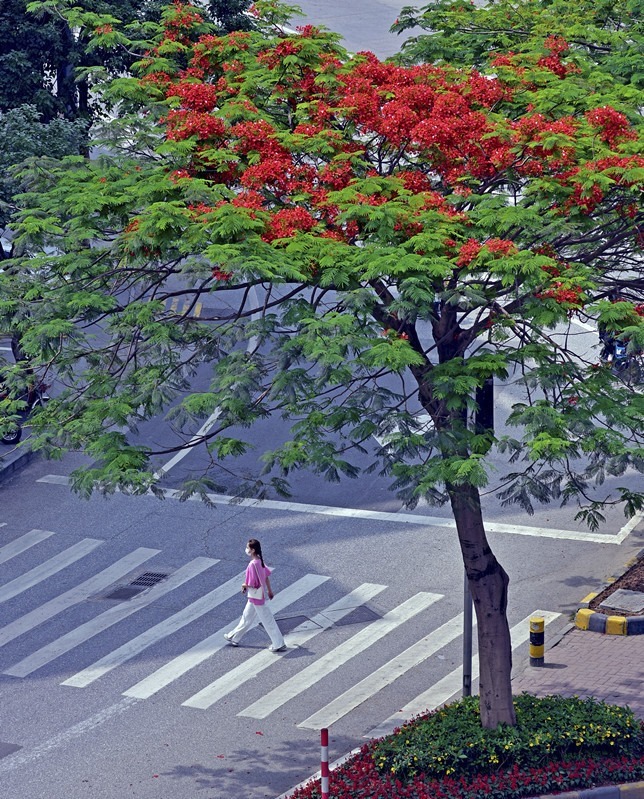
The Chinese Flame Tree is a deciduous tree with red seed pods resembling flowers. Its yellow summer blooms give way to these vibrant pods, creating a two-season display. The feathery leaves turn golden in fall, enhancing its appeal. Native to Asia, it’s drought-tolerant and urban-friendly. It’s a great choice for warm climates.
History
Originating in China, the Chinese Flame Tree was used in traditional medicine for its seeds. Introduced to Europe in the 18th century, it became a popular ornamental in Mediterranean climates. Its colorful pods and adaptability made it a favorite in California and Texas. It symbolizes prosperity in Chinese culture.
Features
- Scientific Name: Koelreuteria bipinnata
- USDA Hardiness Zone: 7-10
- Color Variation: Red seed pods, yellow flowers
- Sun Exposure: Full sun
- Mature Size: 20-40 feet tall, 20-40 feet wide
- Lifespan: 50-70 years
- Toxicity: Non-toxic
Care Details
Plant in well-draining soil with a pH of 6.0-7.5. Water moderately during the first two years, then only during droughts. Apply a balanced fertilizer (10-10-10 NPK) in spring. Prune in winter to shape and remove root suckers.
Mulch with 2 inches of wood chips to conserve moisture. This tree tolerates urban pollution and poor soils. Protect from frost in cooler zones. Monitor for scale insects; treat with horticultural oil. Stake young trees to support their structure.
Companion Planting and Landscape Uses
Pair with ornamental grasses or salvia for a low-maintenance landscape. Use as a street tree or shade provider in medium-sized yards. Its pods add visual interest to fall gardens.
11. Scarlet Oak (Quercus coccinea)
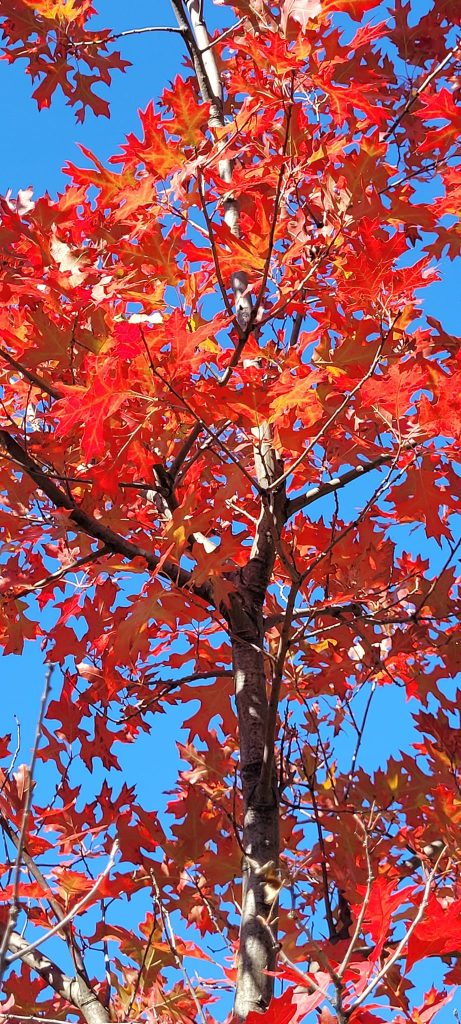
The Scarlet Oak is a stately North American native with small red flowers in spring. Its brilliant red fall foliage overshadows the blooms, creating a spectacular autumn display. The tree’s open canopy and smooth bark add elegance. It’s ideal for large landscapes or parks. Its acorns feed wildlife like squirrels and deer.
History
Native to eastern North America, the Scarlet Oak was a vital resource for Native Americans, who used its acorns for food and its wood for construction. Colonial settlers valued its timber for shipbuilding. Its vibrant fall color made it a landscaping favorite in the 19th century. Today, it’s planted for shade and ecological benefits.
Features
- Scientific Name: Quercus coccinea
- USDA Hardiness Zone: 4-9
- Color Variation: Red flowers, vibrant red fall leaves
- Sun Exposure: Full sun
- Mature Size: 50-80 feet tall, 40-50 feet wide
- Lifespan: 100-150 years
- Toxicity: Acorns are toxic if ingested in large amounts
Care Details
Plant in well-draining, acidic soil (pH 4.5-6.0). Water deeply during establishment, then during prolonged droughts. Apply a slow-release fertilizer (10-10-10 NPK) every other spring. Prune in late winter to remove dead branches and maintain shape.
Mulch with 3 inches of pine straw to retain moisture. Scarlet Oak tolerates drought once established. Monitor for oak wilt and treat with fungicides if needed. Avoid compacted soils. Stake young trees in windy areas.
Companion Planting and Landscape Uses
Pair with dogwoods or redbuds for a layered woodland look. Use as a shade tree in large yards or parks. Its fall color complements evergreens like cedars or spruces.
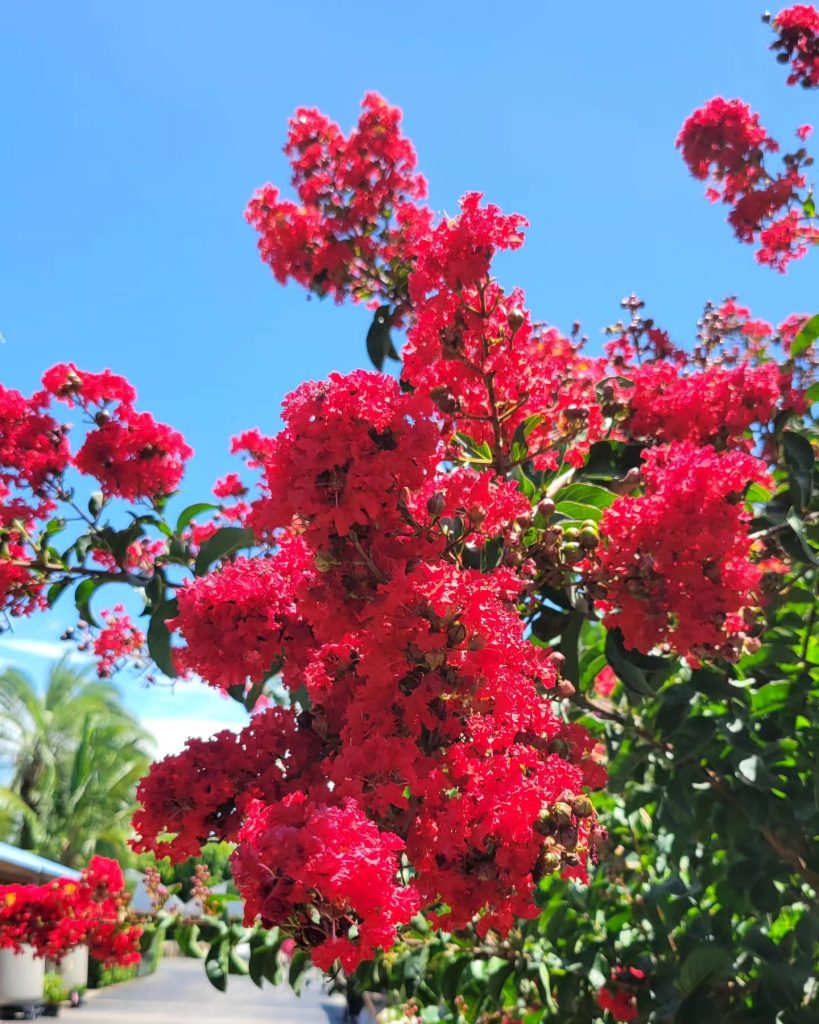
12. Red Crape Myrtle (Lagerstroemia indica ‘Red Rocket’)
The Red Crape Myrtle is a small tree with vibrant red flower clusters. Its summer blooms last for weeks, attracting pollinators. The peeling, cinnamon-colored bark adds winter interest. Its compact size and heat tolerance make it a southern favorite. The glossy leaves turn orange-red in fall.
History
Crape Myrtles originated in Asia and were introduced to Europe in the 18th century. The ‘Red Rocket’ cultivar, bred in the U.S., is known for its intense red blooms and disease resistance. It became popular in southern states for its long blooming season and low maintenance. It’s a symbol of summer in the American South.
Features
- Scientific Name: Lagerstroemia indica ‘Red Rocket’
- USDA Hardiness Zone: 6-9
- Color Variation: Bright red
- Sun Exposure: Full sun
- Mature Size: 10-20 feet tall, 10-15 feet wide
- Lifespan: 50-75 years
- Toxicity: Non-toxic
Care Details
Plant in well-draining soil with a pH of 5.5-6.5. Water weekly during the first year, then during droughts. Apply a high-phosphorus fertilizer (5-10-5 NPK) in spring to boost blooms. Prune in late winter to encourage flowering and remove suckers.
Additionally, mulch with 2 inches of bark to retain moisture. Monitor for powdery mildew; ensure good air circulation. Crape Myrtles tolerate heat and urban conditions. Avoid over-pruning to maintain natural shape.
Companion Planting and Landscape Uses
Pair with daylilies or black-eyed Susans for a colorful summer garden. Use as a specimen tree, hedge, or container plant. Its size fits small yards or patios.
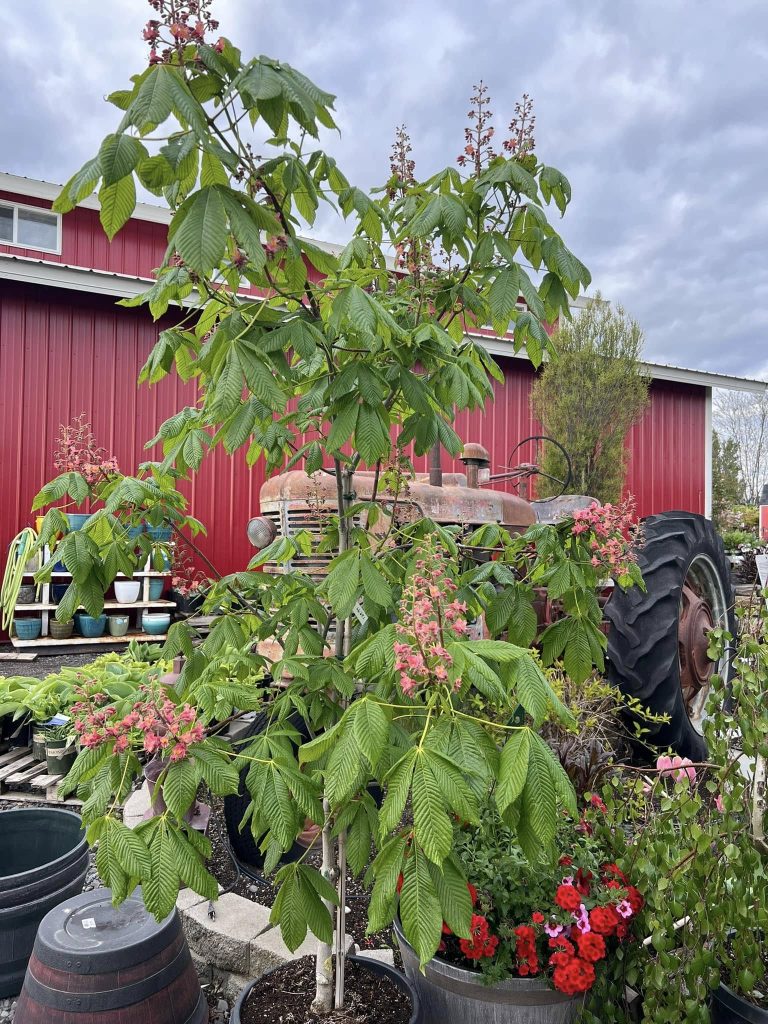
13. Red Horsechestnut (Aesculus × carnea)
The Red Horsechestnut is a hybrid with showy red flower panicles. Its late spring blooms attract bees and butterflies. The broad canopy provides dense shade, and the palmate leaves turn yellow in fall. This tree is a stunning focal point for medium-sized landscapes. Its smooth bark adds winter interest.
History
A cross between Aesculus hippocastanum and Aesculus pavia, the Red Horsechestnut was developed in Europe in the 19th century. It was bred for its vibrant flowers and urban tolerance. Popular in Victorian gardens, it spread to North America as a shade tree. Its resistance to some pests makes it a reliable choice today.
Features
- Scientific Name: Aesculus × carnea
- USDA Hardiness Zone: 5-8
- Color Variation: Red to pinkish-red
- Sun Exposure: Full sun to partial shade
- Mature Size: 30-40 feet tall, 30-40 feet wide
- Lifespan: 60-80 years
- Toxicity: Seeds are toxic to humans and pets
Care Details
Plant in moist, well-draining soil with a pH of 6.0-7.0. Water deeply weekly during dry spells. Apply a balanced fertilizer (10-10-10 NPK) in early spring. Prune in winter to shape and remove deadwood. Mulch with 3 inches of compost to retain moisture.
Avoid waterlogged soils to prevent root rot. Additionally, monitor for leaf spot diseases; improve air circulation. Stake young trees for stability. This tree tolerates partial shade but blooms best in the sun.
Companion Planting and Landscape Uses
Pair with hydrangeas or hostas for a shaded garden. Use as a shade tree in lawns or near patios. Its size suits medium to large yards.
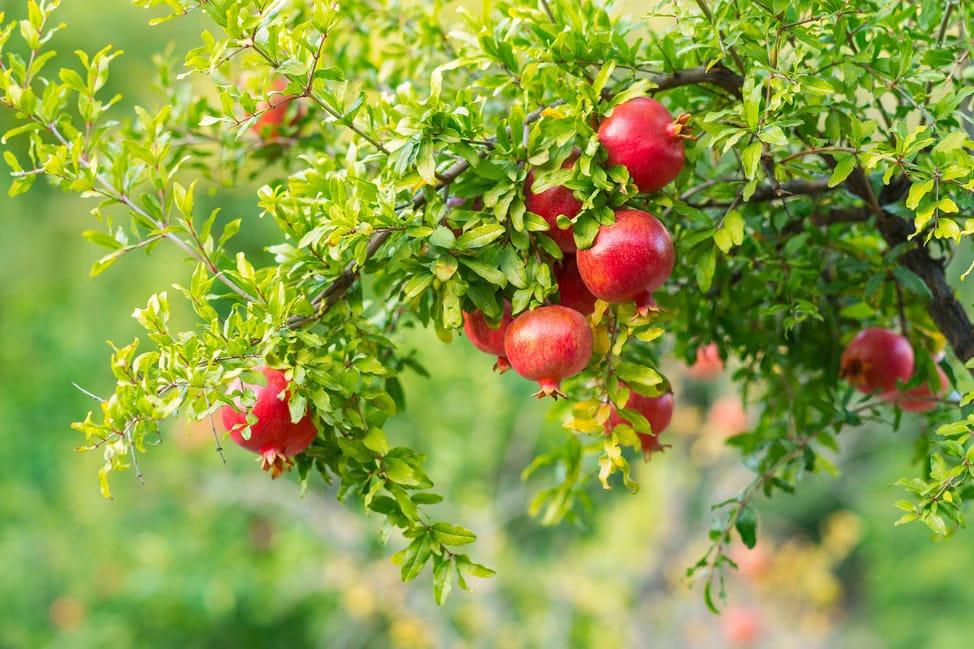
14. Pomegranate Tree (Punica granatum)
The Pomegranate Tree produces vivid red-orange flowers in summer. Its glossy leaves and edible fruits add to its appeal. Native to the Middle East, this small tree is both ornamental and productive. Its compact size makes it ideal for small gardens or containers. The flowers attract pollinators, enhancing biodiversity.
History
Pomegranates have been cultivated for over 4,000 years in the Middle East. They symbolized fertility and abundance in ancient cultures. The Greeks associated them with Persephone, and they appear in biblical texts.
Introduced to Europe during the Roman era, they reached the Americas with Spanish settlers. Today, they’re grown for fruit and beauty in warm climates.
Features
- Scientific Name: Punica granatum
- USDA Hardiness Zone: 7-10
- Color Variation: Red to orange-red
- Sun Exposure: Full sun
- Mature Size: 10-20 feet tall, 10-15 feet wide
- Lifespan: 50-100 years
- Toxicity: Non-toxic, but unripe fruit may cause stomach upset
Care Details
Plant in well-draining, loamy soil with a pH of 5.5-7.0. Water regularly, allowing soil to dry slightly between waterings. Apply a balanced fertilizer (10-10-10 NPK) in spring. Prune in late winter to shape and remove suckers.
Additionally, mulch with 2 inches of compost to retain moisture. Protect from frost with frost cloth. Monitor for fruit flies; use sticky traps. Deadhead spent flowers to encourage fruit production. This plant tolerates drought once established.
Companion Planting and Landscape Uses
Pair with lavender or rosemary for a Mediterranean vibe. Use in edible gardens, patios, or as a hedge. Its fruit and flowers add dual purpose to small spaces.
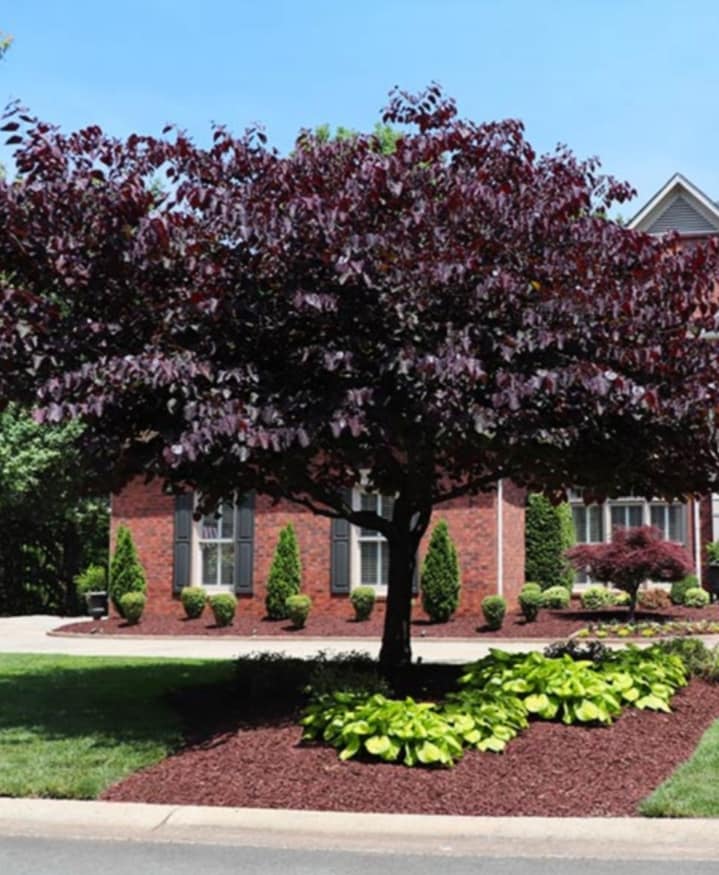
15. Redbud (Cercis canadensis ‘Forest Pansy’)
The Redbud ‘Forest Pansy’ is a small tree with reddish-purple flowers. Its early spring blooms line bare branches, creating a stunning effect. The heart-shaped, burgundy leaves turn purple-green in summer. This deciduous tree’s compact size suits urban gardens. Its fall foliage adds golden hues.
History
Native to North America, Redbuds were used by Native Americans for basket weaving. The ‘Forest Pansy’ cultivar, bred in the 20th century, emphasizes its purple foliage and vibrant blooms. It became a favorite for modern landscapes due to its size and color. It symbolizes renewal in many cultures.
Features
- Scientific Name: Cercis canadensis ‘Forest Pansy’
- USDA Hardiness Zone: 5-9
- Color Variation: Reddish-purple to pink
- Sun Exposure: Full sun to partial shade
- Mature Size: 20-30 feet tall, 15-25 feet wide
- Lifespan: 30-50 years
- Toxicity: Non-toxic
Care Details
Plant in well-draining soil with a pH of 6.0-7.5. Water weekly during the first two years, then during droughts. Apply a balanced fertilizer (10-10-10 NPK) in spring. Prune after flowering to maintain shape and remove deadwood.
Additionally, mulch with 2 inches of bark to retain moisture. Redbud tolerates shade but blooms best in sun. Monitor for canker disease; remove affected branches. Stake young trees in windy areas. Avoid waterlogged soils.
Companion Planting and Landscape Uses
Pair with spring bulbs like crocuses or early ferns for a layered effect. Use as a specimen tree or understory in larger landscapes. Its size fits small to medium yards.
General Care Tips for Trees with Red Flowers
- Choose a location with appropriate sun exposure and space for mature size. Avoid planting near structures if roots are invasive.
- Test soil pH and amend with compost or sulfur as needed. Ensure good drainage with sand or gravel for heavy soils.
- Water deeply during establishment (1-2 years). Reduce frequency for drought-tolerant species. Use drip irrigation for efficiency.
- Apply slow-release or organic fertilizers in spring. Avoid high-nitrogen formulas to prevent excessive leaf growth over blooms.
- Prune in late winter or after flowering to shape and improve health. Remove suckers and deadwood to prevent disease.
- Apply 2-3 inches of organic mulch to retain moisture and suppress weeds. Keep mulch away from the trunk to avoid rot.
- Inspect regularly for aphids, scale, or fungal issues. Use neem oil, insecticidal soap, or fungicides as needed.
- Wrap young trees in burlap or frost cloth in cooler zones. Mulch roots heavily to insulate against freezes.
Suggested For You:
15 Stunning Trees with White Flowers: Identification Features and Care Tips
10 Small Flowering Trees for Your Front Yard: Perfect Picks for USA Homes
Understanding The Eastern Redbud Tree: History, Care Details and Common Problems
Understanding Money Tree: History, Care Details and Common Problems
Understanding The Weeping Cherry Tree: History, Care Details, and Common Problems
Final thoughts
Trees with red flowers are not only beautiful, but they also attract pollinators like bees, hummingbirds, and butterflies, supporting local ecosystems. Their vibrant blooms enhance curb appeal and create focal points. Many provide shade, fruit, or wildlife food, adding functionality. Their seasonal changes, like fall foliage or peeling bark, ensure year-round interest.
References
- USDA Plant Hardiness Zone Map. (2023). planthardiness.ars.usda.gov
- Basic Plant Care: Understanding Your Plant’s Needs. Oklahoma State University Extension. (2020). extension.okstate.edu
- 12 Beautiful Dogwood Trees and Shrubs. The Spruce. (2022). www.thespruce.com
- How to Grow and Care for a Jacaranda Tree. The Spruce. (2024). www.thespruce.com
- 6 USDA Zone 9 Hardy Trees That Tolerate Full Sun. Treevitalize.com. (2024). treevitalize.com
- Zone 10 Plants: Top Perennials, Shrubs, & Trees. Garden Design. (2024). www.gardendesign.com
- Pomegranate: History and Cultivation. University of California Agriculture. (2023). ucanr.edu
- Native American Uses of Trees and Plants. Smithsonian Institution.

Tim M Dave is a gardening expert with a passion for houseplants, particularly cacti and succulents. With a degree in plant biology from the University of California, Berkeley, he has vast experience in gardening. Over the years, he has cultivated a vast collection of desert plants and learned a great deal about how to grow and care for these unique companions.