15 Fast Growing Trees for Backyard Privacy: Living Screen to Block Neighbours View
Backyard privacy is essential for enjoying your outdoor space comfortably. Many homeowners face direct views from neighbors’ windows, decks, or upper stories, which can make relaxing on a patio, gardening, or spending time with family feel exposed.
A natural solution lies in using trees to create a living screen. Trees offer a superior alternative to traditional fences in many ways. Beyond blocking neighbors’ views, trees reduce noise, filter air, and create shade. Additionally, they add natural beauty, and often cost less than building or maintaining a fence.
Here are 15 fast-growing trees that work well for creating natural privacy in a backyard. They include evergreens like Thuja ‘Green Giant’, Leyland Cypress, and Eastern Red Cedar, which can shoot up 3–5 feet per year under good conditions. Let’s explore more:

1. Thuja ‘Green Giant’ (Green Giant Arborvitae)
Scientific name: Thuja plicata × standishii ‘Green Giant’
USDA Zones: 5–8
Color variation: Rich, dark green foliage year-round.
Sun exposure: Full sun to partial shade (at least 4–6 hours of direct sun daily for best density).
Mature size: 50–60 feet tall and 12–20 feet wide, though it can be kept narrower with pruning.
Lifespan: 50–100+ years with proper care.
Toxicity: Generally non-toxic to humans and pets, though ingestion of large amounts could cause mild stomach upset in animals.
Thuja ‘Green Giant’ is one of the most popular choices for backyard privacy. This is because it combines rapid growth with excellent density and disease resistance. This hybrid evergreen develops into a tall, pyramidal shape with soft, scale-like foliage that stays vibrant green through all seasons.
People often plant Green Giants in staggered rows or straight lines to offer a reliable natural barrier against neighbors, streets, or unsightly views. Spacing them 5–8 feet apart creates a solid hedge effect.
These trees adapt to various soil types as long as drainage is good. They also resist common pests like bagworms better than some other arborvitae. In ideal conditions, they can add 3–5 feet per year, providing noticeable privacy within just a few seasons.
2. Leyland Cypress (Cupressocyparis leylandii)
Scientific name: × Cupressocyparis leylandii
USDA Zones: 6–10
Color variation: Bright to medium green foliage; some cultivars show bluish tones.
Sun exposure: Full sun (6+ hours); tolerates light shade but may thin out.
Mature size: 60–70 feet tall and 15–25 feet wide if unpruned.
Lifespan: 20–40 years (shorter than some evergreens due to potential disease issues).
Toxicity: Mildly toxic if ingested; can cause irritation in pets or humans.
Leyland Cypress has long been a go-to for fast privacy because of its extraordinary growth rate and ability to form thick, dense hedges. This evergreen conifer features feathery, soft needles in a dense branching pattern that blocks views effectively from ground level up.
Often used for tall screens, Leylands grow 3–4 feet annually in good conditions, sometimes more in warm, humid climates. Plant them 6–10 feet apart for hedges. They prefer well-drained soil and regular watering early on, but become quite drought-tolerant later.
Pruning keeps them dense and at desired heights—many owners top them at 20–30 feet for manageability. Drawbacks include susceptibility to canker diseases in stressed conditions. So good airflow and avoiding overwatering help longevity.
3. Emerald Green Arborvitae (Thuja occidentalis ‘Smaragd’)
Scientific name: Thuja occidentalis ‘Smaragd’
USDA Zones: 3–8
Color variation: Bright emerald green that holds well in winter without browning.
Sun exposure: Full sun to partial shade.
Mature size: 12–15 feet tall and 3–4 feet wide.
Lifespan: 40–60 years.
Toxicity: Non-toxic in small amounts, but large ingestion may cause issues.
Emerald Green Arborvitae offers a narrower profile than many privacy trees. This makes it suitable for smaller backyards or along fences where space is limited. Its compact, columnar form and bright foliage create a neat, formal look while still providing solid screening.
This variety grows 1–2 feet per year, slower than giants but dense from the start. Space 3–4 feet apart for hedges. It thrives in moist, well-drained soil and tolerates urban conditions. Its narrow shape means less pruning, and it resists winter burn better than broader arborvitaes.
Emerald Green Arborvitae is great for foundation planting or narrow borders. It typically adds year-round green without overwhelming small spaces.
4. Nellie Stevens Holly (Ilex ‘Nellie R. Stevens’)
Scientific name: Ilex aquifolium × Ilex pernyi ‘Nellie R. Stevens’
USDA Zones: 6–9
Color variation: Dark green leaves; bright red berries in fall/winter.
Sun exposure: Full sun to partial shade.
Mature size: 15–25 feet tall and 10–15 feet wide.
Lifespan: 50+ years.
Toxicity: Berries and leaves are toxic to humans and pets if ingested.
Nellie Stevens Holly is a perfect choice among fast-growing trees for backyard privacy, thanks to its dense, broadleaf evergreen foliage. This popular hybrid—crossing English holly (Ilex aquifolium) and Chinese holly (Ilex cornuta)—forms a vigorous, pyramidal to conical shape that fills in quickly.
This tree grows at a faster pace of 2–3 feet per year under good conditions, reaching a mature size of 15–30 feet tall and 8–25 feet wide. Space plants 5–6 feet apart for a thick hedge or screen. The dense branching and glossy, dark green, spiny leaves create an impenetrable barrier year-round.
Unlike many hollies, ‘Nellie R. Stevens’ is partially self-fertile, producing abundant bright red (or orange-red) berries even without a male pollinator nearby—though planting one (like Ilex cornuta ‘Edward J. Goucher’) boosts fruit set for extra winter appeal and bird attraction.
Nellie Stevens Holly thrives in USDA Zones 6–9, preferring full sun to partial shade. It adapts to various well-drained soils, including slightly acidic to clay types. It’s also drought-tolerant once established, salt-tolerant for coastal spots, and handles urban pollution well.
5. American Pillar Arborvitae (Thuja occidentalis ‘American Pillar’)
Scientific name: Thuja occidentalis ‘American Pillar’
USDA Zones: 3–8
Color variation: Deep green.
Sun exposure: Full sun.
Mature size: 25–30 feet tall, 3–4 feet wide.
Lifespan: 40–60 years.
Toxicity: Generally non-toxic.
American Pillar Arborvitae, also marketed as Full Speed A Hedge, is valued as a fast-growing privacy solution for backyards with limited space. This narrow, columnar evergreen cultivar delivers dense, year-round screening without spreading wide or overwhelming narrow spaces.
It grows rapidly, typically reaching 20–30 feet tall while staying only 3–4 feet wide. Ensure close planting (3–5 feet apart) to create a seamless, solid green wall quickly. In just a few years, it can provide substantial height and density for effective visual barriers, noise reduction, and wind protection.
Hardy in USDA Zones 3–8, American Pillar Arborvitae handles cold winters exceptionally well. It also tolerates heat, humidity, and a range of soils (preferring moist, well-drained conditions). Full sun promotes the thickest growth, though it accepts partial shade with slightly less density.
6. Eastern Red Cedar (Juniperus virginiana)
Scientific name: Juniperus virginiana
USDA Zones: 2–9 (extremely hardy across much of North America)
Color variation: Blue-green to gray-green foliage; small bluish-purple “berries” (actually cones) appear in fall/winter on female plants, adding subtle interest.
Sun exposure: Full sun (6+ hours daily); tolerates some light shade but becomes thinner.
Mature size: 30–50 feet tall and 8–20 feet wide, though columnar cultivars stay narrower.
Lifespan: 100–300+ years in ideal settings; many live centuries.
Toxicity: Generally non-toxic to humans but mildly toxic to pets if large quantities are ingested (can cause vomiting), but rarely a serious issue.
Eastern Red Cedar stands out as a tough, native evergreen that’s excellent for natural privacy hedges or windbreaks, especially in tougher conditions. It forms a dense, conical to columnar shape with scale-like foliage that provides solid screening from the ground up. Its aromatic wood repels some insects naturally.
This tree thrives in poor, rocky, or dry soils where others struggle. This typically makes it ideal for rural or suburban backyards with less-than-perfect conditions. It grows 1–2 feet per year initially but picks up speed once established, often reaching hedge-worthy height in 5–10 years.
Space plants 6–10 feet apart for a tight screen. They need little pruning beyond shaping young trees for density. This tree is drought-tolerant after the first few years. It also resists most pests and diseases better than many conifers.
Birds love the berries, turning your privacy row into a mini wildlife habitat. Avoid planting near apple trees, as it can host cedar-apple rust (though resistant cultivars exist). Overall, it’s a low-maintenance plant for long-term, reliable seclusion.
7. Wax Myrtle (Morella cerifera / Myrica cerifera)
Scientific name: Morella cerifera (syn. Myrica cerifera)
USDA Zones: 7–10 (thrives in the Southeast and coastal areas)
Color variation: Olive to dark green leaves; waxy grayish berries on female plants in fall/winter (used historically for candles).
Sun exposure: Full sun to partial shade.
Mature size: 10–20 feet tall and 8–15 feet wide; can be pruned to stay smaller.
Lifespan: 30–50 years or more with good care.
Toxicity: Berries and leaves mildly toxic if ingested in large amounts (can cause stomach upset).
Wax Myrtle is a versatile broadleaf evergreen that grows quickly into a multi-stemmed small tree or large shrub. Its dense, aromatic foliage creates a thick barrier, and it handles coastal or poor soils remarkably well.
Often used for natural hedges or windbreaks, it grows 2–3 feet per year and fills in densely without much effort. Plant 4–6 feet apart for screening. It tolerates salt spray, wet or dry soils, and even occasional flooding.
The leaves release a pleasant spicy scent when crushed, and the berries attract birds. Prune lightly to encourage bushiness; it responds well to shearing for a formal look. Low pest issues make it easygoing, though scale insects can appear in humid spots.
8. Italian Cypress (Cupressus sempervirens)
Scientific name: Cupressus sempervirens
USDA Zones: 7–11 (prefers warm, dry climates)
Color variation: Deep green to blue-green scale-like foliage year-round.
Sun exposure: Full sun.
Mature size: 40–60 feet tall and only 5–10 feet wide.
Lifespan: 50–100+ years; some historic specimens are centuries old.
Toxicity: Non-toxic to humans and pets.
Italian Cypress brings a dramatic, Mediterranean flair with its tall, narrow columnar form. It is ideal for tight spaces or formal privacy lines along property edges. The dense, dark foliage creates a striking vertical screen without spreading wide.
Growth averages 2–3 feet per year.. Space 3–5 feet apart for a hedge-like wall. It needs well-drained soil and tolerates drought once established, making it perfect for hot, sunny backyards. Minimal pruning is required due to its natural shape, though occasional trimming keeps it neat.
Italian Cypress is resistant to many pests, although spider mites can bother in dry conditions. Its elegant silhouette adds architectural interest while blocking views effectively in tight spaces. Not ideal for cold winters or wet soils, but in suitable zones, it provides timeless, low-care privacy.
9. Deodar Cedar (Cedrus deodara)
Scientific name: Cedrus deodara
USDA Zones: 6–9
Color variation: Blue-green to silvery-green needles; new growth lighter.
Sun exposure: Full sun to partial shade.
Mature size: 40–70 feet tall and 30–40 feet wide (younger plants denser for screening).
Lifespan: 100+ years.
Toxicity: Generally non-toxic.
Deodar Cedar offers graceful, weeping branches and soft needles, growing into a majestic screen or specimen for larger yards. This true cedar features soft, pendulous branches draped with fine, needle-like foliage in attractive blue-green to silvery-green tones.
Young trees create a dense, pyramidal form that broadens with age. Its weeping habit and aromatic needles add a soothing, ornamental quality while forming an effective natural screen. It grows moderately fast—typically 1–3 feet per year, reaching a mature size of 40–70 feet tall (or up to 80+ feet) and 20–40 feet wide.
For privacy, it’s best used as a windbreak, corner planting, or spaced screen (10–15 feet apart) in spacious yards. The evergreen foliage ensures year-round coverage, reducing noise and providing wildlife habitat.
Suited to USDA Zones 6–9 (best in 7–9 for heat tolerance), it prefers full sun to partial shade and well-drained soil . Deodar Cedar is generally low-maintenance. It needs little pruning beyond removing dead branches and resists many pests.
10. Blue Point Juniper (Juniperus chinensis ‘Blue Point’)
Scientific name: Juniperus chinensis ‘Blue Point’
USDA Zones: 4–11
Color variation: Powdery blue-green.
Sun exposure: Full sun.
Mature size: 10–12 feet tall and 5–6 feet wide.
Lifespan: 40–60 years.
Toxicity: Mildly toxic if ingested.
Blue Point Juniper is a compact, reliable evergreen that shines for medium-height backyard privacy. This popular cultivar of Chinese juniper forms a dense, broad pyramidal shape with glowing silvery-blue to blue-green foliage, creating an attractive screen that blocks neighbors’ views effectively without taking up much horizontal space.
It grows at a moderate rate of about 6–12 inches per year,, reaching a mature size of 10–12 feet tall (occasionally up to 15 feet) and 4–6 feet wide. Its naturally symmetrical, upright habit makes it ideal for planting in rows or groups—space them 4–6 feet apart for a solid hedge that fills in densely from the base.
The scale-like needles provide year-round color and coverage, helping reduce sight lines, noise, and wind while adding a modern, cool-toned accent to the yard.
Hardy in USDA Zones 4–9, the Blue Point Juniper thrives in full sun (for the best blue hue and density) and well-drained soil, tolerating drought, heat, and a range of conditions once established. It needs little pruning beyond light shaping and resists many pests common to junipers.
11. Lombardy Poplar (Populus nigra ‘Italica’)
Scientific name: Populus nigra ‘Italica’
USDA Zones: 3–9
Color variation: Bright green leaves turning yellow in fall.
Sun exposure: Full sun.
Mature size: 40–60 feet tall and 10–15 feet wide.
Lifespan: 15–30 years (short-lived).
Toxicity: Non-toxic.
Lombardy Poplar is a classic fast-growing deciduous option for backyard privacy. This tree is prized for its dramatic, narrow columnar shape that creates a tall, upright “living wall” quickly. This male clone of the black poplar features branches that grow parallel to the trunk to form a solid privacy screen.
It grows exceptionally fast—often 3–6 feet per year, reaching a mature height of 40–70 feet (commonly 40–50 feet) with a spread of only 10–15 feet. Planting them 5–8 feet apart allows for a tight screen that provides substantial height and seasonal privacy in just a few years.
Hardy in USDA Zones 3–9 (sometimes listed to 2–10), it prefers full sun and rich, moist, well-drained soils but adapts to various conditions, including clay or alkaline types. It tolerates occasional wet periods but dislikes prolonged wet feet.
Lifespan is short—typically 15–30 years (rarely longer)—due to high susceptibility to diseases like canker (often untreatable), pests (borers, aphids, scale), and root suckering that can invade nearby areas. So, many experts caution against it for long-term backyard use.
12. Hybrid Willow (Salix hybrids)
Scientific name: Salix hybrids (various)
USDA Zones: 4–9
Color variation: Bright green leaves.
Sun exposure: Full sun.
Mature size: 30–50 feet tall and wide.
Lifespan: 30–50 years.
Toxicity: Non-toxic.
Hybrid Willow, commonly known as Austree Hybrid Willow, is one of the fastest-growing options for backyard privacy. This deciduous hybrid—typically a cross between white willow (Salix alba) and corkscrew willow (Salix matsudana) does well especially in moist or wetter sites.
Growth is faster, often 6–10 feet per year (sometimes up to 15 feet in ideal conditions). It can form a tall, dense screen that blocks neighbors’ views in as little as 1–2 seasons. This tree develops an upright to slightly spreading form with bright green, lance-shaped leaves that turn yellow in fall before dropping.
Mature size reaches 35–70 feet tall (commonly 40–50 feet) and 15–30 feet wide, though pruning keeps it hedge-like. Plant them 3–10 feet apart (closer for dense privacy hedges, staggered rows for thicker barriers) to form a quick “green wall” for seclusion, windbreaks, or noise reduction.
Hardy in USDA Zones 4–9 (some sources note 3–9), it thrives in full sun to partial shade and prefers consistently moist to wet soils. So, it’s perfect near ponds, streams, or low-lying areas. Generally, low-maintenance once established, but it needs ample moisture early on for peak speed.
13. Cryptomeria japonica ‘Radicans’ (Japanese Cedar)
Scientific name: Cryptomeria japonica ‘Radicans’
USDA Zones: 5–9
Color variation: Rich green.
Sun exposure: Full sun to partial shade.
Mature size: 30–40 feet tall and 15–20 feet wide.
Lifespan: 50+ years.
Toxicity: Non-toxic.
Cryptomeria japonica ‘Radicans’ (Japanese Cedar, also called Radicans Cryptomeria) is a fast-growing evergreen conifer that serves as an excellent choice for backyard privacy screens. This tree offers a softer, more graceful alternative to denser options like arborvitae or cypress.
It features soft, feathery, awl-shaped foliage in rich blue-green to dark green tones that holds color well through winter with minimal bronzing. Growth pace is faster, 3–4 feet per year (sometimes 3–5 feet in ideal conditions), developing a narrow pyramidal to columnar habit.
Japanese Cedar matures to 30–40 feet tall (up to 50 feet in some cases) and 15–20 feet wide. Space plants 8–12 feet apart for a dense hedge or screen. Its dense branching fills in from the base, creating a solid natural barrier that reduces sight lines, noise, and wind while adding elegant texture to the landscape.
Hardy in USDA Zones 5–9, it prefers full sun to partial shade and moist, well-drained, slightly acidic soils. It tolerates heat, humidity, and some clay but dislikes wet feet. Low-maintenance once established, it needs consistent moisture when young, minimal pruning (late winter if shaping), and resists many pests.
14. River Birch (Betula nigra ‘Heritage’)
Scientific name: Betula nigra ‘Heritage’
USDA Zones: 4–9
Color variation: Green leaves; golden fall color.
Sun exposure: Full sun to partial shade.
Mature size: 40–70 feet tall and 40–60 feet wide.
Lifespan: 50–100 years.
Toxicity: Non-toxic.
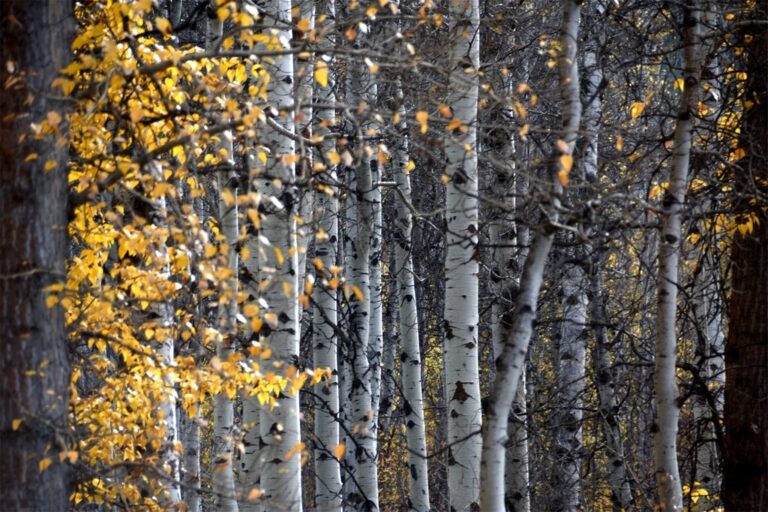
River Birch, also known as Heritage River Birch, is a fast-growing deciduous tree that adds seasonal privacy to backyards while delivering standout ornamental appeal through its striking exfoliating bark. This improved cultivar of the native river birch features denser branching and better disease resistance.
It grows quickly—typically 3–5 feet per year—reaching a mature size of 40–70 feet tall (often 40–60 feet) and 30–50 feet wide, with a pyramidal shape when young that rounds out over time. For privacy, plant 10–20 feet apart in groups or rows to form a loose, tall hedge or windbreak.
Although its dense summer foliage provides good coverage to block neighbors’ views during the growing season, it drops leaves in winter, reducing year-round screening compared to evergreens.
Hardy in USDA Zones 4–9 (one of the more heat-tolerant birches), it prefers full sun to partial shade and thrives in moist, slightly acidic soils. It tolerates wet conditions, clay, occasional flooding, and even some urban pollution.
The glossy dark green leaves turn brilliant golden-yellow in fall, while the bark peels in curling sheets of cinnamon, salmon-pink, reddish-brown, and creamy white, offering winter interest and texture.
15. Dawn Redwood (Metasequoia glyptostroboides)
Scientific name: Metasequoia glyptostroboides
USDA Zones: 5–8
Color variation: Soft green summer; russet fall.
Sun exposure: Full sun.
Mature size: 70–100 feet tall and 20–30 feet wide.
Lifespan: 100+ years.
Toxicity: Non-toxic.
Dawn Redwood stands out as a unique fast-growing deciduous conifer for backyard privacy. It’s often called a “living fossil” since it was rediscovered in China after being known only from fossils. This graceful tree features soft, feathery, needle-like foliage arranged oppositely on short branches.
This tree grows rapidly, typically 2–3 feet per year (sometimes more in moist conditions), developing a tall, pyramidal to conical form that matures to 70–100 feet tall (or more in ideal sites) and 20–30 feet wide at the base, with a flared, buttressed trunk adding character.
For privacy, it’s suited to larger yards as a specimen, windbreak, or spaced screen (15–25 feet apart). Its height quickly blocks higher neighbor views, while the dense summer canopy provides good coverage, though bare branches in winter mean less year-round seclusion than evergreens.
Hardy in USDA Zones 5–8, it thrives in full sun and moist, well-drained soils. It tolerates wet, even waterlogged conditions like floodplains, making it ideal for low-lying or boggy backyards where many trees struggle. Low-maintenance once established, it needs consistent moisture early on and resists most pests.
Suggested For You:
20 Flowering Trees with White Flowers in Spring
15 Low-Maintenance Maple Tree Varieties for Small Yards (Names and Pictures)
15 Stunning Trees with Blue Flowers: A Complete Guide
15 Common Types of Jacaranda Trees: A Comprehensive Guide
15 Fast Growing Shade Trees for Garden: A Complete Guide
Final thought
These 15 options give a range of choices for different climates. To succeed, assess your site’s sun exposure, soil drainage, and climate zone first. Additionally, choose species suited to your area, plant them properly (with room to mature), and water consistently during establishment. In a few seasons, a thoughtful tree screen can transform an open backyard into a private oasis.

Tim M Dave is a gardening expert with a passion for houseplants, particularly cacti and succulents. With a degree in plant biology from the University of California, Berkeley, he has vast experience in gardening. Over the years, he has cultivated a vast collection of desert plants and learned a great deal about how to grow and care for these unique companions.