11 Common Thuja Green Giant Trees Problems: Identification and Quick Solutions
Thuja Green Giant (Thuja standishii × plicata) is one of the most popular fast-growing privacy trees in North America. It is hardy, dense, and relatively easy to grow. But even this resilient tree has its vulnerabilities.
If you have noticed yellowing foliage, dying branches, or stunted growth, you are not alone. Many gardeners struggle silently with these exact issues.
This guide covers every major problem that affects Thuja Green Giants — from root diseases to pest infestations — and how to address them effectively.
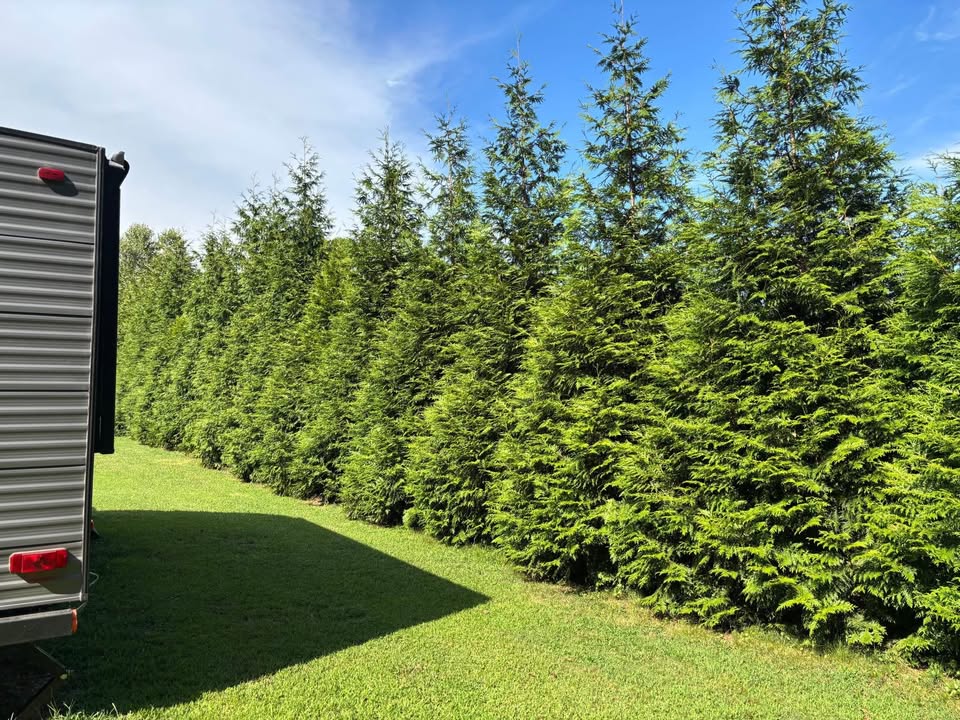
Before we dive in, lets briefly understand what this tree is all about:
| Scientific Name | Thuja standishii × plicata |
| Common Name | Thuja Green Giant, Green Giant Arborvitae |
| Type | Evergreen conifer |
| Mature Height | 40–60 feet |
| Mature Width | 12–20 feet |
| Growth Rate | 3–5 feet per year |
| USDA Hardiness Zones | 5–9 |
| Sun Requirement | Full sun to partial shade |
| Soil Preference | Moist, well-drained, slightly acidic |
| Drought Tolerance | Moderate |
| Primary Uses | Privacy screens, windbreaks, specimen planting |
| Common Problems | Root rot, bagworms, spider mites, tip blight, winter burn |
Thuja Green Giant Problems
I have seen homeowners plant dozens of these trees along a fence line, only to watch them decline one by one within three years. The pain of losing a well-established privacy hedge is unbearable — both emotionally and financially.
Early identification of problems is the single most important step in saving your trees.
1. Root Rot — The Silent Killer
Root rot is arguably the most serious problem affecting Thuja Green Giants. It is caused primarily by the water mold Phytophthora species, which thrive in waterlogged or poorly drained soils.
Symptoms to watch for:
- Yellowing or browning foliage from the bottom upward
- Wilting despite adequate watering
- Soft, dark, or mushy roots
- A foul smell from the soil near the base
Why it happens: Thuja Green Giants cannot tolerate standing water. Planting in compacted clay soils or low-lying areas creates the perfect environment for root rot to develop.
What to do:
- Improve soil drainage before planting by amending with coarse sand and compost
- Avoid overwatering, especially during cooler months
- Apply a fungicide labeled for Phytophthora (e.g., mefenoxam or phosphonate-based products) at the early stages
- In severe cases, remove and destroy infected trees to prevent spread
Unfortunately, once root rot reaches an advanced stage, recovery is rarely possible. Prevention through proper site selection and drainage management is the most effective strategy.
2. Bagworms — A Defoliating Pest That Blends Right In
Bagworms (Thyridopteryx ephemeraeformis) are one of the most damaging insect pests of Thuja Green Giants. They construct distinctive silken bags covered in plant debris, making them easy to overlook until populations are dangerously high.
Symptoms:
- Small, cone-shaped bags hanging from branches
- Brown or dead branch tips
- Thinning foliage, especially in the upper canopy
- Entire sections of the tree stripped of needles in heavy infestations
The biology matters here: Female bagworms never leave their bags. They lay hundreds of eggs inside, which overwinter and hatch in late spring. By midsummer, populations can explode rapidly.
Control options:
- Hand-picking in fall or early spring (before eggs hatch) is the most effective non-chemical method
- Apply Bacillus thuringiensis (Bt) or spinosad-based insecticides when larvae are small (late May to early June in most regions)
- Use pyrethroid insecticides for heavier infestations
- Do not wait. Bagworms are far easier to control when caught early
3. Spider Mites — Tiny Pests With Devastating Impact
Spider mites, particularly the spruce spider mite (Oligonychus ununguis), are a common and often underdiagnosed problem on Thuja Green Giants.
Why they are tricky: Spider mites are barely visible to the naked eye. By the time you notice visible damage, the infestation may already be severe.
Symptoms:
- Stippled, bronze, or dusty-gray foliage
- Fine webbing between branches
- Premature needle drop
- General dullness or lack of color
When they strike: Spruce spider mites prefer cool weather and are most active in spring and fall. Hot, dry summers often suppress populations — but stressed trees remain vulnerable year-round.
Management strategies:
- Spray foliage with a strong stream of water to knock mites off branches — this is surprisingly effective
- Apply horticultural oil or insecticidal soap, ensuring thorough coverage of all foliage
- Use miticide applications (e.g., bifenazate or abamectin) for heavy infestations
- Avoid excessive nitrogen fertilization, which stimulates tender new growth that mites prefer
4. Tip Blight and Canker Diseases
Several fungal pathogens can cause tip blight and canker formation on Thuja Green Giants. Pestalotiopsis and Kabatina species are among the most common culprits.
Symptoms:
- Brown or gray discoloration of shoot tips
- Dead branch sections surrounded by otherwise healthy foliage
- Small black fruiting bodies visible on affected tissue
- Girdled stems with sunken, discolored bark
Contributing factors:
- Mechanical wounds from pruning tools
- Hail damage or winter injury
- Stressed trees with weakened immune responses
How to manage it:
- Prune infected branches back to healthy tissue using sterilized tools (clean blades with 70% isopropyl alcohol between cuts)
- Apply copper-based fungicides as a preventative during wet spring weather
- Improve air circulation around trees to reduce moisture retention on foliage
- Avoid overhead irrigation
5. Winter Burn and Desiccation Damage
Despite being cold-hardy to USDA Zone 5, Thuja Green Giants are still vulnerable to winter burn — a physiological disorder rather than a true disease.
What causes it: During winter, evergreen foliage continues to lose moisture through transpiration. When the ground is frozen, roots cannot replace that moisture. Combined with dry winds and bright winter sun, this causes widespread foliage browning.
Symptoms:
- Brown, tan, or reddish discoloration of foliage, particularly on the south and west-facing sides
- Damage concentrated on the outer canopy and exposed branch tips
- Symptoms become visible in late winter or early spring
Prevention and recovery:
- Apply anti-desiccant sprays (such as Wilt-Pruf) in late fall before temperatures drop below freezing
- Water trees deeply before the ground freezes in autumn
- Apply a 3–4 inch layer of mulch around the root zone to help retain soil moisture
- Erect burlap windbreaks on the windward side for young or recently transplanted trees
The good news: unlike disease damage, winter burn is often superficial. Many trees recover on their own by late spring as new growth flushes through.
6. Transplant Shock
Newly planted Thuja Green Giants frequently experience transplant shock, particularly when planted in summer or when the root ball is disturbed during installation.
Symptoms:
- Yellowing or browning foliage shortly after planting
- Wilting despite regular watering
- Little to no new growth in the first season
Key causes:
- Planting too deep — the root flare must remain visible above soil level
- Inadequate watering during the establishment period (first 1–2 years)
- Poor soil preparation
- Planting during extreme heat
Best practices for planting:
- Plant in early fall or spring when temperatures are moderate
- Water deeply two to three times per week for the first growing season
- Never plant deeper than the nursery container depth
- Avoid heavy fertilization in the first year — let roots establish first
7. Armillaria Root Rot (Honey Fungus)
Different from Phytophthora, Armillaria root rot is caused by Armillaria mellea and related species. This fungus spreads through the soil via underground rhizomorphs (root-like structures) and is particularly destructive.
How to identify it:
- Creamy-white mycelial fans beneath the bark at the base of the tree
- Honey-colored mushrooms appearing at the base in fall
- Gradual decline with yellowing foliage and dieback
The challenge with Armillaria: There is no curative treatment once a tree is infected. Management focuses on preventing spread — removing infected stumps and root material to eliminate the food source for the fungus.
8. Nutrient Deficiencies and Soil pH Issues
Thuja Green Giants prefer a slightly acidic soil pH of 6.0–6.8. When soil pH falls outside this range, nutrient uptake becomes impaired even when those nutrients are present in the soil.
Common deficiency symptoms:
- Nitrogen deficiency: Pale green or yellow foliage overall; slow growth
- Iron deficiency (chlorosis): Yellow foliage with green veins, especially on new growth — common in alkaline soils
- Magnesium deficiency: Yellowing of older, inner needles
What to do:
- Conduct a soil test before applying any fertilizer — this is the foundation of informed plant care
- Use a slow-release, balanced fertilizer (e.g., 10-10-10) in early spring
- Amend alkaline soils with elemental sulfur to lower pH gradually
- Apply chelated iron for persistent chlorosis in high-pH soils
9. Cercospora Blight
Cercospora blight (Cercospora thujina) is a fungal disease that primarily affects the inner and lower portions of arborvitae, including Thuja Green Giant.
Symptoms:
- Browning and dropping of inner needles, starting from the bottom of the tree
- Gradual thinning of the interior canopy
- Small tan or brown spots on affected foliage
Management:
- Improve air circulation through proper spacing — plant Thuja Green Giants at least 5–6 feet apart for hedges
- Apply fungicides containing chlorothalonil or copper hydroxide during wet weather
- Remove and dispose of fallen infected debris to reduce the fungal spore load
10. Deer and Animal Damage
While Thuja Green Giants are considered somewhat deer-resistant compared to other arborvitae, they are not immune — especially in areas with high deer pressure.
Signs of animal damage:
- Ragged browsing on lower branches
- Stripped bark near the base (from deer rubbing antlers or voles girdling roots beneath mulch)
- Asymmetrical growth on one side
Protective measures:
- Install wire mesh cages or tree tubes around young trees
- Apply deer repellents regularly, especially during winter when food is scarce
- Keep mulch pulled 3–4 inches away from the trunk to discourage vole activity
11. Improper Pruning Damage
Many homeowners unknowingly damage their Thuja Green Giants through incorrect pruning. Unlike broadleaf shrubs, conifers do not regenerate well from old wood.
The golden rule: Never cut back into brown, needle-free wood. Thuja Green Giants will not produce new growth from bare wood, leaving permanent dead zones.
Best pruning practices:
- Prune lightly in late spring after new growth flushes
- Use clean, sharp tools to avoid tearing and creating entry points for disease
- Limit pruning to the outer green growth only
- Shape trees gradually over multiple seasons rather than in one drastic cut
General Care Tips to Prevent Most Problems
Most Thuja Green Giant problems are preventable through consistent, informed care:
- Choose the right site: Full sun, well-drained soil, away from areas prone to standing water
- Space trees correctly: 5–8 feet apart for a tight hedge; more for specimen trees
- Mulch properly: 3–4 inches of organic mulch helps regulate soil moisture and temperature
- Water deeply but infrequently once established — this encourages deep root development
- Monitor regularly: Walk your tree line monthly during the growing season
Healthy trees are naturally more resistant to most pests and diseases. The majority of serious problems I have seen start with a stressed, poorly sited tree.
When to Call a Specialist
Some problems are beyond the reach of DIY treatment. Consider consulting a certified arborist (ISA-certified) if:
- More than 30% of the canopy shows dieback or discoloration
- You suspect Armillaria or advanced Phytophthora infection
- Tree roots are near a foundation, septic system, or utility line
- The tree poses a safety risk due to structural decline
Final Thoughts
Thuja Green Giants are excellent trees — fast-growing, versatile, and beautiful. But they are not invincible. Understanding the problems that can affect them puts you in a far better position to protect your investment and enjoy a healthy, thriving privacy screen for decades.
Catch problems early. Act quickly. And never underestimate the value of good drainage and proper site preparation. Those two factors alone will prevent the majority of Thuja Green Giant problems before they ever start.
References
- Penn State Extension — Arborvitae Diseases https://extension.psu.edu/arborvitae (Covers fungal diseases, blights, and management strategies for arborvitae species including Thuja.)
- Clemson Cooperative Extension — Arborvitae Problems https://hgic.clemson.edu/factsheet/arborvitae/ (Comprehensive fact sheet on pests, diseases, and cultural problems affecting arborvitae in home landscapes.)
- University of Florida IFAS Extension — Thuja plicata https://edis.ifas.ufl.edu/publication/ST621 (Overview of Western Red Cedar and hybrid arborvitae growth habits, site requirements, and care.)
- NC State Extension — Thuja Green Giant Plant Profile https://plants.ces.ncsu.edu/plants/thuja-standishii-x-plicata/ (Detailed plant profile including known pest and disease concerns, cultural requirements, and landscape use.)
- University of Connecticut IPM — Bagworm Management on Conifers https://ipm.uconn.edu/documents/raw2/html/bagworm.php (In-depth resource on bagworm biology, identification, and integrated pest management strategies for conifers.)

Tim M Dave is a gardening expert with a passion for houseplants, particularly cacti and succulents. With a degree in plant biology from the University of California, Berkeley, he has vast experience in gardening. Over the years, he has cultivated a vast collection of desert plants and learned a great deal about how to grow and care for these unique companions.