Thuja Green Giant Arborvitae Spacing: How to Get It Right When Planting
When it comes to planting Green Giant arborvitae, most gardeners focus on the wrong things first. They think about soil, fertilizer, watering schedules, and whether the nursery tag looks right.
Those things matter. But spacing is the single most consequential decision in the entire planting process — and it is the one mistake you simply cannot undo without starting over.
Plant your Green Giants too close together, and within five to eight years you will have a crowded, poorly ventilated row of trees competing for light, water, and nutrients. The result is thinning lower foliage, increased disease pressure, and a hedge that looks dense from above but bare at the base.
Plant them too far apart, and you will wait a decade for your privacy screen to close in — assuming it ever does completely.
I have spoken with landscapers who spend a significant portion of their client consultations correcting the aftermath of poor spacing decisions. The good news is that getting it right is straightforward once you understand the principles involved. This article covers everything you need.
Understanding Green Giant’s Growth Habit: The Foundation of Proper Spacing
Before any spacing decision can be made intelligently, you need to understand how Green Giant actually grows.
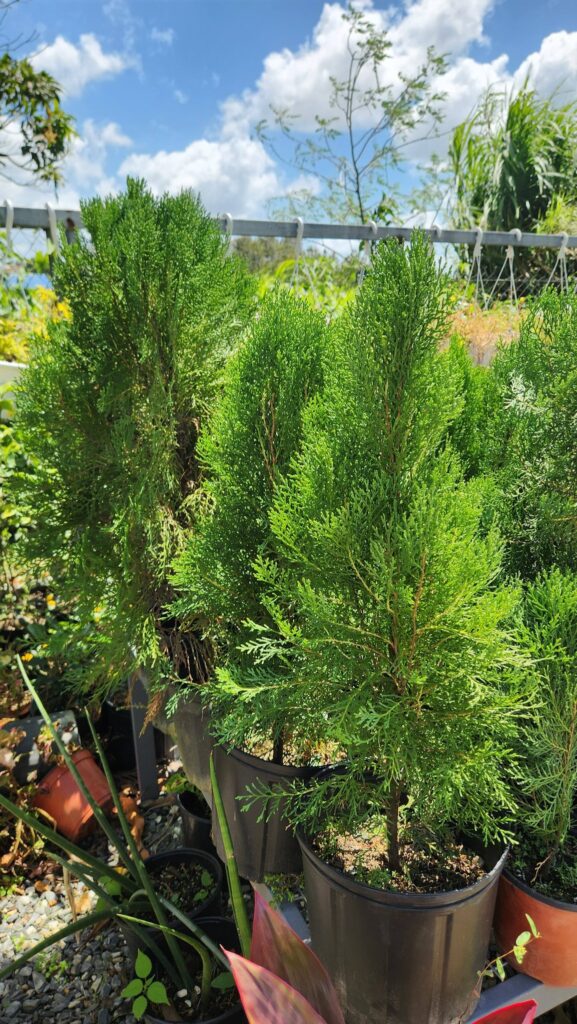
Green Giant arborvitae is a hybrid between Thuja standishii (Japanese Arborvitae) and Thuja plicata (Western Red Cedar). This hybrid parentage gives it exceptional vigor and one of the fastest growth rates of any evergreen tree sold in the American nursery trade.
Under good conditions, Green Giant grows 3 to 5 feet per year — sometimes more in the first several years after establishment. Within ten years, a tree planted as a 5-foot nursery specimen can easily be 30 to 40 feet tall.
At maturity, Green Giant reaches 40 to 60 feet in height and 12 to 20 feet in width. That width figure is where most spacing mistakes originate. Gardeners look at a 4-foot-wide nursery plant and space it accordingly — completely forgetting that it will one day be 15 feet wide.
Always space based on mature width, not current size. That principle is the foundation of every recommendation in this article.
| Scientific Name | Thuja standishii × plicata |
| Common Name | Green Giant Arborvitae, Giant Green Thuja |
| Mature Height | 40–60 feet (12–18 m); occasionally taller |
| Mature Width | 12–20 feet (3.6–6 m) |
| Growth Rate | Fast — 3 to 5 feet per year |
| USDA Hardiness Zones | 5–9 |
| Spacing for Privacy Screen | 5–6 feet apart (center to center) |
| Spacing for Windbreak | 8–10 feet apart (center to center) |
| Spacing for Specimen Planting | 15–20 feet from other plants/structures |
| Spacing from Fence or Wall | Minimum 6–8 feet |
| Spacing from Home Foundation | Minimum 10–15 feet |
| Spacing from Property Line | Minimum 5–8 feet (check local ordinances) |
| Planting Depth | Same level as nursery container |
| Planting Width | 2–3× the width of the root ball |
| Best Planting Time | Early spring or early fall |
| Soil pH Preference | 6.0–8.0 |
| Sun Requirements | Full sun to partial shade |
| Lifespan | 40–60+ years |
Spacing for a Privacy Screen: The Most Common Use Case
The overwhelming majority of Green Giant arborvitae are purchased for one specific purpose: creating a tall, dense privacy screen. This is where Green Giant truly excels, and where precise spacing guidance matters most.
The Standard Recommendation: 5 to 6 Feet Apart
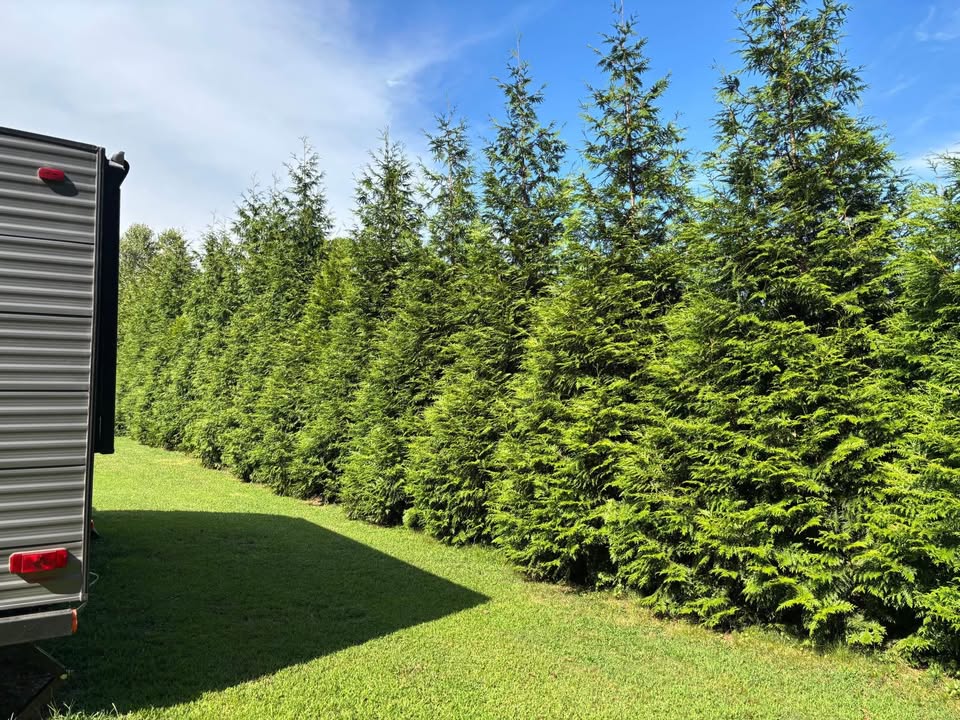
For a solid, visually impenetrable privacy screen, most horticulturists and experienced landscapers recommend planting Green Giants 5 to 6 feet apart, measured center to center.
At this spacing, the trees will begin touching and overlapping within three to five years, creating a continuous wall of green. The screen will be dense from top to bottom and will require no additional filling in.
This spacing is the sweet spot between too close (which causes long-term crowding problems) and too far apart (which delays privacy by years).
Why Not Closer?
It is tempting to plant at 3 or 4 feet apart to speed up coverage. Some nurseries even recommend this. The short-term result looks impressive — a tight, dense screen very quickly.
But the long-term consequences are significant. Trees planted at 3 to 4 feet apart will be severely overcrowded within seven to ten years. The interior branches will die from lack of light. Root systems will compete intensely for water and nutrients. The lower portions of the hedge will thin out and become sparse.
You will eventually face a difficult choice: remove every other tree (a major disruption and expense) or live with a declining hedge. Neither option is appealing.
What About 8 Feet Apart?
Spacing at 8 feet works well for a less formal privacy screen where some gaps at lower levels are acceptable, or where the trees are on a large property with plenty of depth. At this spacing, the trees will still close in eventually, but it will take longer — typically seven to ten years for significant overlap.
For most homeowners who want genuine visual privacy within a reasonable timeframe, 8-foot spacing is too generous. Stick with 5 to 6 feet for the best balance.
Double-Row Planting for Faster Coverage
If you need maximum privacy in the shortest possible time, consider a staggered double-row planting. In this approach, trees are planted in two parallel rows, with trees in the second row offset (staggered) between the trees in the first row.
For a double-row planting:
- Space trees 8 to 10 feet apart within each row
- Leave 6 to 8 feet between the two rows
- Offset each row by half the within-row spacing
This creates faster ground-to-sky coverage than a single row and ultimately produces a denser, more wind-resistant screen. It does require more plants and more land depth — typically at least 12 to 15 feet of total planting width.
Spacing for a Windbreak or Sound Barrier
Green Giant arborvitae is one of the best windbreak trees available for the mid-Atlantic, Southeast, and upper South. Its dense, year-round foliage and rapid height gain make it highly effective at reducing wind speed and buffering noise.
For windbreak purposes, spacing can be more generous than for a privacy screen — typically 8 to 10 feet apart. The goal of a windbreak is to slow wind rather than create a visual wall, so some gaps between mature trees are acceptable and actually improve airflow management.
For a more substantial windbreak on large properties — farmsteads, rural homesites, or acreages — a multi-row configuration is often used:
- Row 1 (outermost, facing prevailing wind): Deciduous trees or lower-growing shrubs
- Row 2 (middle): Green Giant arborvitae at 10-foot spacing
- Row 3 (innermost): Additional evergreens or specimen trees
This layered approach captures and deflects wind at multiple heights, significantly increasing the effectiveness of the windbreak compared to a single row.
Spacing for Specimen and Accent Planting
Not every Green Giant is planted in a row. Many gardeners choose this tree as a bold vertical accent in a larger landscape — framing a driveway entrance, anchoring a corner of the yard, or creating a focal point in a mixed border.
For specimen planting, the key question is simple: how much room will a 15-foot-wide, 50-foot-tall tree need in your specific location?
The general rule for specimen Green Giants is to allow at least 15 to 20 feet of clearance on all sides from other large plants, structures, and utility lines. This ensures the tree can develop its full, symmetrical canopy without competition or obstruction.
For driveway entrance framing, two Green Giants planted one on each side of the entrance look striking. Allow at least 10 feet from the driveway edge to each tree’s center, and make sure the mature spread will not overhang the driveway or block sightlines for vehicles.
Spacing from Structures: The Numbers That Protect Your Home
This is one of the most frequently overlooked aspects of arborvitae planting, and the consequences of getting it wrong can be serious and expensive.
Distance from the Home Foundation
Green Giant should never be planted closer than 10 feet from a home’s foundation — and 15 feet is a safer target for most situations.
At 10–15 feet, the mature tree’s root system and canopy will not directly contact the structure. Closer than that, and you risk roots interfering with buried utilities or foundation drainage, branches rubbing against siding or rooflines, and trapped moisture creating conditions favorable to mold and wood rot.
If your available planting zone between the property line and the house is narrower than 10 feet, Green Giant is not the right tree. Consider Thuja occidentalis ‘Emerald Green’ or another compact columnar evergreen instead.
Distance from a Fence
A fence may seem like it defines the planting edge — but the tree’s mature canopy will extend well beyond that fence, and the root system will extend even further.
Plant Green Giant at least 6 to 8 feet from any fence line. This ensures adequate root development space, prevents the canopy from overhanging a neighbor’s property prematurely, and allows access for maintenance from both sides.
Planting immediately against a fence — a common mistake — leads to one-sided growth, trunk rubbing, and difficulty accessing the space between tree and fence as the plants mature.
Distance from Underground Utilities
Before planting any large tree, always call 811 (in the United States) — the national “Call Before You Dig” service — to have underground utilities marked. This is not just good practice; in most states it is legally required.
Green Giant’s root system can extend 2 to 3 times the width of the canopy. Planted near buried water lines, irrigation systems, or electrical conduits, the roots can cause costly damage over time.
As a general rule, plant no large tree — Green Giant included — within 10 feet of any buried utility line.
Distance from Power Lines
Green Giant at 50 feet tall and a power line at 30 feet is a serious problem waiting to happen. Do not plant Green Giant within 25 feet of overhead power lines under any circumstances. Contact your utility company for specific clearance requirements in your area.
Distance from the Property Line
This one carries legal implications. Many municipalities, counties, and HOA communities have specific ordinances governing how close trees and large shrubs can be planted to property lines.
Before planting, check your local zoning ordinances or HOA rules. In the absence of specific local regulations, a general best practice is to plant Green Giant at least 5 to 8 feet from any property line — accounting for the fact that a 15-foot-wide canopy will eventually extend several feet past that line regardless.
Good neighbor relations are worth protecting. Having an honest conversation with adjacent property owners before planting a row of 50-foot trees along a shared boundary is always the right approach.
Spacing for Different Soil and Site Conditions
The standard spacing recommendations above assume reasonably good soil — well-drained, moderately fertile, and at a neutral to slightly acidic pH. When site conditions differ, spacing adjustments may be warranted.
Poor or Compacted Soil
In heavy clay or compacted soils, root development is restricted. Trees grow more slowly and may not reach their full size potential. In these conditions, you might tighten spacing by 1 to 2 feet to compensate for slower growth and achieve coverage within a reasonable timeframe.
However, the more effective long-term solution is to amend the soil before planting rather than rely on tight spacing to compensate for poor conditions. Adding organic matter, improving drainage, and loosening compacted soil will produce healthier, faster-growing trees than any spacing adjustment alone.
Sandy or Droughty Soil
Sandy soils drain quickly and hold fewer nutrients. Green Giant planted in sandy conditions grows more slowly and may be slightly smaller at maturity. Standard spacing of 5 to 6 feet for privacy screens still applies, but plan on more consistent irrigation during establishment and through dry summers.
Partial Shade Conditions
Green Giant performs best in full sun but tolerates partial shade reasonably well. In shaded conditions, trees grow more slowly and may be slightly less dense.
In partial shade, tighten spacing by 1 foot compared to full-sun recommendations, to compensate for the reduced density of shaded foliage and slower canopy development.
How to Plant Green Giant Arborvitae Correctly
Spacing is only part of the equation. Proper planting technique ensures that correctly spaced trees actually thrive.
Digging the Hole
Dig the planting hole 2 to 3 times wider than the root ball and exactly as deep as the root ball’s height — no deeper.
Planting too deep is one of the leading causes of arborvitae decline. When the root flare (the area where the trunk meets the root system) is buried below soil level, it creates conditions for crown rot, bark decay, and long-term structural weakness.
The root flare should be visible at or slightly above finished soil grade. If you can see where the trunk begins to widen and flare outward, you have the right depth.
Backfilling
Use the native soil removed from the hole to backfill around the root ball. Do not add heavy amounts of compost or peat directly into the planting hole — this creates a “bowl” effect where roots stay confined to the amended zone rather than spreading into surrounding native soil.
Light incorporation of compost (no more than 20–25% by volume) into the backfill is acceptable and can help in very poor soils.
Watering at Planting
After backfilling, water thoroughly — enough to fully saturate the root zone and settle any air pockets around the roots. Then water again two to three days later.
During the first growing season, water deeply once or twice a week in the absence of significant rainfall. Deep, infrequent watering encourages roots to grow downward and outward, building drought resilience over time.
Shallow, frequent watering produces shallow roots that are vulnerable to drought stress and wind throw.
Mulching
Apply 2 to 3 inches of organic mulch — wood chips, shredded bark, or pine straw — in a circle extending at least 3 feet from the trunk in every direction.
Keep mulch pulled back 2 to 3 inches from direct contact with the trunk. Mulch piled against the bark traps moisture and creates conditions favorable to rot and pest entry.
Mulch conserves soil moisture, moderates soil temperature, suppresses competing weeds, and gradually improves soil structure as it breaks down. It is one of the highest-value, lowest-cost practices in tree establishment.
Staking
Newly planted Green Giants generally do not require staking unless the site is exposed to high winds or the root ball is unusually small relative to the canopy.
If staking is necessary, use soft, flexible ties and two stakes positioned outside the root ball on opposite sides. Remove stakes after one growing season — extended staking prevents the trunk from developing the necessary strength to support itself.
Common Spacing Mistakes and How to Avoid Them
Spacing Based on Current Size
The number one error. A 4-foot nursery plant sitting in a gallon container looks harmless. Spacing decisions must be based on mature size — 12 to 20 feet wide and 40 to 60 feet tall — not what the plant looks like today.
Planting Against the Fence Line
Planting Green Giant directly against a fence or property line seems logical — it maximizes your land use. In reality, it restricts root development on one side, creates maintenance access problems, and causes the tree to grow unevenly toward available light.
Always maintain at least 6 to 8 feet of clearance from any fence or boundary.
Ignoring Utility Lines and Easements
This mistake can result in forced removal by your utility company — at your expense — or serious property damage from root intrusion. Always check for underground and overhead utilities before planting.
Spacing Too Tightly for Speed
Planting at 2 to 3 feet apart to get fast privacy coverage is a false economy. The crowding problems that develop within five to ten years — thinning lower foliage, disease pressure, root competition — will cost far more in remediation than the time saved.
Not Accounting for Neighboring Structures
That detached garage that currently seems distant? In fifteen years, a row of Green Giants may be shading it completely, contributing moisture issues, and dropping debris on its roof. Think ahead about how the mature trees will interact with every structure on and adjacent to your property.
Best Time to Plant Green Giant Arborvitae
Timing affects establishment success and should inform planting decisions even if spacing is correct.
Early spring (once the ground has thawed and before intense summer heat) is the preferred planting window in most climates. Trees have the full growing season ahead to establish roots before facing winter stress.
Early fall (six to eight weeks before the first expected hard frost) is the second-best option. Soil is still warm, which supports root growth, and cooler air temperatures reduce transplant stress. Avoid late fall planting — trees may not have enough time to establish before ground freeze.
Midsummer planting is possible but requires vigilant irrigation and is more stressful on newly planted trees. It is not recommended when alternatives exist.
How Long Until Green Giant Provides Full Privacy?
This is the question every buyer asks. The honest answer depends on several variables: starting plant size, soil quality, climate, and how closely the trees are spaced.
As a general timeline for trees planted at 5 to 6 feet apart from 4 to 6-foot nursery specimens:
- Year 1–2: Trees establish root systems; visible growth begins
- Year 3–4: Trees reach 10–15 feet tall; branches begin touching
- Year 5–7: Continuous canopy at 15–25 feet; meaningful privacy established
- Year 10+: Full, dense screen at 30–40+ feet; essentially impenetrable
Planting larger nursery specimens (6–8 feet or B&B trees) compresses this timeline somewhat and is worth the additional cost if early privacy is a priority.
Final Thoughts
Green Giant arborvitae is one of the most rewarding trees a homeowner can plant — fast, beautiful, low-maintenance, and capable of transforming a bare, exposed yard into a private, sheltered landscape within just a few years.
But all of that potential is contingent on one thing being done correctly from the very beginning: spacing.
Space them at 5 to 6 feet apart for a privacy screen. Give them 10 to 15 feet of clearance from your home. Respect property lines and utility easements. Plant them at the right depth. And then be patient — because trees this good are worth waiting for.
Get the spacing right, and Green Giant arborvitae will reward you with decades of beauty, privacy, and structural presence that few other plants can match.
References
- NC State Extension — Thuja standishii × plicata (Green Giant Arborvitae) North Carolina State University Cooperative Extension Plant Toolbox https://plants.ces.ncsu.edu/plants/thuja-standishii-x-plicata/
- University of Florida IFAS Extension — Planting and Establishing Trees Environmental Horticulture Department, University of Florida Institute of Food and Agricultural Sciences https://edis.ifas.ufl.edu/publication/EP001
- University of Wisconsin-Madison Division of Extension — Arborvitae in the Landscape Horticulture Extension, University of Wisconsin-Madison https://hort.extension.wisc.edu/articles/arborvitae/
- Penn State Extension — Selecting Trees for Your Landscape College of Agricultural Sciences, The Pennsylvania State University https://extension.psu.edu/selecting-trees-for-your-landscape
- University of Maryland Extension — Planting Trees and Shrubs Home & Garden Information Center, University of Maryland https://extension.umd.edu/resource/planting-trees-and-shrubs

Tim M Dave is a gardening expert with a passion for houseplants, particularly cacti and succulents. With a degree in plant biology from the University of California, Berkeley, he has vast experience in gardening. Over the years, he has cultivated a vast collection of desert plants and learned a great deal about how to grow and care for these unique companions.