Understanding Taiwan Cherry (Prunus campanulata): History, Features, Problems, and More
The Taiwan Cherry, Prunus campanulata, is a deciduous to semi-evergreen ornamental flowering tree native primarily to Taiwan, southern Japan (including the Ryukyu Islands), and parts of southern China.
It is also widely known by several other common names, including the Bell-Flowered Cherry, the Formosan Cherry, and the Carmine Cherry — each name pointing to a distinct feature of the tree.
“Campanulata” is derived from the Latin campana, meaning bell — a direct reference to the distinctive bell-shaped, tubular flowers that distinguish this species from virtually all other ornamental cherries, whose flowers are flat and open.
It belongs to the Rosaceae family and the Prunus genus, placing it alongside other cherries, plums, peaches, and almonds. But within that genus, it occupies an unusual ecological position: it evolved in subtropical and warm-temperate environments, not the cool mountain forests that shaped most ornamental cherries.
That subtropical origin explains everything distinctive about this tree — its winter bloom time, its vivid colour, its love of warmth, and its limited cold hardiness.
Key Characteristics at a Glance
Mature Height: 20 to 30 feet (6 to 9 metres) in most cultivation settings, occasionally taller in ideal conditions.
Mature Spread: 15 to 25 feet (4.5 to 7.5 metres), forming a rounded to spreading canopy.
Growth Rate: Fast — often 24 inches or more per year under good conditions.
Bloom Time: Mid-winter to early spring — typically January through March depending on location and climate. It is the earliest-blooming ornamental cherry commonly available.
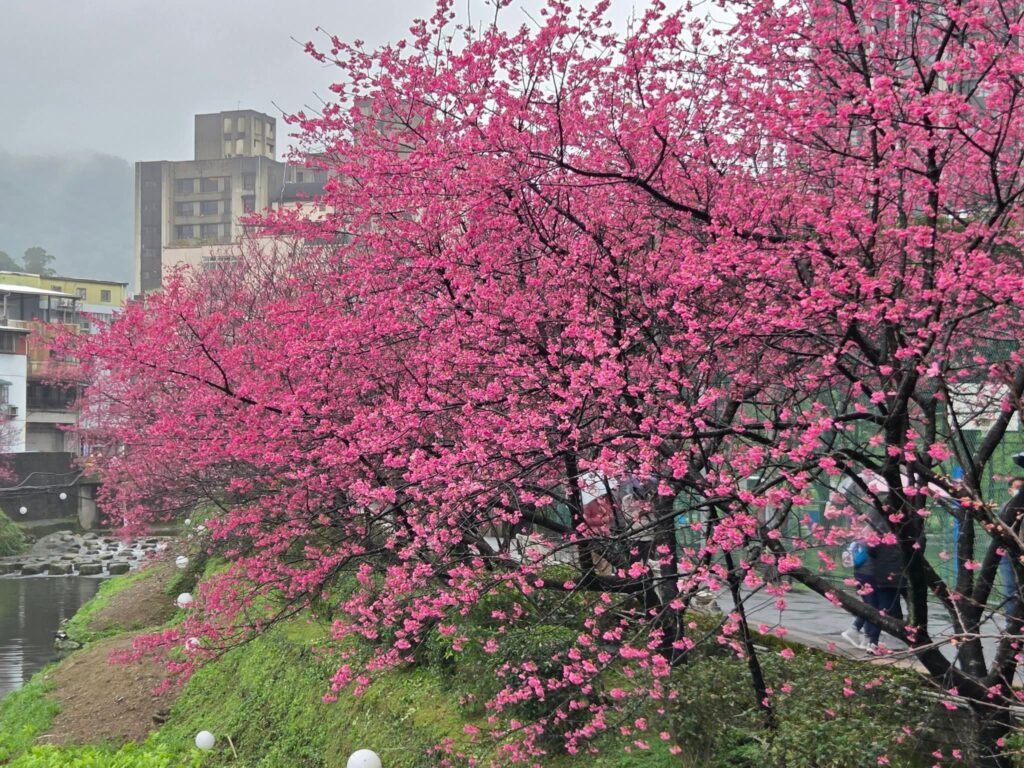
Flower Colour: Deep carmine-rose to magenta-pink. The flowers are tubular-bell shaped and far more vivid and saturated in colour than any other commonly grown ornamental cherry.
Foliage: Oval to elliptic, medium green leaves. Semi-evergreen in mild climates — the tree may retain most of its leaves through winter before dropping them just as flowering begins. In cooler parts of its range, it is fully deciduous.
Fruit: Small, dark red to black cherries (drupes) that ripen in late spring and early summer, attractive to birds.
Bark: Smooth, grey-brown to reddish-brown, with horizontal lenticels typical of the cherry family.
USDA Hardiness Zones: 7b to 9, with the best performance in Zones 8 and 9. In Zone 7, it requires a sheltered microclimate.
Chilling Hours: Critically, Taiwan Cherry requires very few chilling hours — the period of cold temperatures needed to break dormancy and trigger flowering. Most estimates suggest fewer than 200 hours below 45°F (7°C), compared to 600 to 1,000 hours needed by many temperate cherry varieties. This is what makes it uniquely valuable in warm-winter climates.
Origins and Natural History
Prunus campanulata has been cultivated as an ornamental tree in Taiwan and Japan for centuries. In Taiwan, it is culturally significant — the cherry blossom season in Taiwan’s mountain regions, centred on this species, is a major annual event that draws visitors from across Asia. The mountain town of Wulai and the Alishan forest recreation area are particularly famous for their Taiwan Cherry displays in February.
In Japan, the species grows naturally on the warmer Ryukyu Islands (Okinawa and the surrounding chain), where it blooms in January and is celebrated as the first cherry blossom of the Japanese year. The Nago Cherry Blossom Festival in Okinawa, typically held in late January, is one of Japan’s earliest cherry blossom celebrations.
Western horticulture began paying serious attention to this species in the 20th century, primarily because of its value as a parent in hybridisation programmes for low-chill ornamental cherries. The famous Okame Cherry (Prunus incisa × campanulata) is perhaps its most celebrated hybrid offspring, combining campanulata‘s vivid colour and early bloom with incisa‘s greater cold hardiness.
In recent decades, as climate change has altered winter patterns in many temperate regions, interest in Prunus campanulata has grown considerably. Gardeners in historically mild regions — the American South, the Pacific Coast, the Gulf States, southern Europe, Australia, and New Zealand — are discovering that this species performs where other cherries fail.
Why Choose Taiwan Cherry?
For gardeners in the right climate, the reasons are compelling.
It blooms when nothing else does. A January or February flowering tree is not a novelty — it is a genuinely useful landscape asset. In gardens where most ornamental trees produce colour in April through June, the Taiwan Cherry covers a period of the calendar that is otherwise almost entirely bare.
The flower colour is unique. No other commonly grown ornamental cherry matches the deep carmine-rose of Prunus campanulata. Its flowers are not pale pink. They are not blush. They are vivid, saturated, and immediately visible from a distance — a quality that makes this tree a dominant focal point rather than a soft background element.
It thrives in warm-winter climates. Most ornamental cherries require significant cold to perform well — they are temperate trees through and through. Taiwan Cherry is the exception. It is the ornamental cherry of choice for gardens from coastal California to Florida, from southern Spain to subtropical Australia, where winter temperatures rarely fall enough for other cherries to bloom reliably.
It grows fast. In the right conditions, Taiwan Cherry establishes and reaches flowering size quickly — a practical benefit for gardeners who want results on a reasonable timescale.
Wildlife value is high. The early flowers provide a critical nectar source for pollinators emerging in late winter, when food sources are scarce. The fruit feeds birds in early summer.
Ideal Growing Conditions
Sunlight
Full sun is essential. Taiwan Cherry requires at least six to eight hours of direct sunlight daily for best flowering and healthy growth. In shaded conditions, flowering is reduced, the canopy becomes sparse, and disease pressure increases.
Select the most open, sun-exposed position available. This is not a tree that tolerates being tucked into corners or planted under larger trees.
Soil
Taiwan Cherry is adaptable to a range of soil types, including sandy, loamy, and moderately clay soils, provided drainage is adequate. It performs best in moist, well-drained, slightly acidic to neutral soil (pH 5.5 to 7.0).
Like virtually all ornamental cherries, it does not tolerate waterlogged or persistently wet soil. Root rot is the primary cause of decline in poorly drained plantings. If your site holds water after rainfall, improve drainage or select a raised or sloping position.
It shows reasonable tolerance of poor soils — more so than many ornamental cherries — and can perform acceptably in lean, well-drained soils without heavy amendment.
Water
Consistent moisture is important during the establishment period — typically the first one to two growing seasons. Water deeply and infrequently to encourage deep root development. Once established, Taiwan Cherry has moderate drought tolerance, though it benefits from supplemental irrigation during extended dry periods.
Avoid prolonged drought during summer, which stresses the tree and can affect the following winter’s flowering. A well-watered tree going into autumn sets flower buds more reliably.
Temperature and Climate
Taiwan Cherry performs best in USDA Zones 7b to 9. It requires a climate with mild winters — not because it cannot tolerate some cold, but because it needs very few chilling hours to break dormancy and bloom.
In climates with cold, snowy winters (Zone 6 and below), the tree may survive but will not bloom reliably because it either cannot accumulate sufficient dormancy triggers or, conversely, breaks dormancy too early and suffers frost damage.
In very warm climates (Zone 10 and above), flowering may be erratic because insufficient chilling hours are accumulated even at these low levels. The ideal climate is one with cool but not cold winters — regular temperatures between 32°F and 50°F (0°C to 10°C) for a period of weeks, followed by a mild late winter.
Planting Instructions
Best planting time: Late autumn to early spring — before the tree enters active growth. Container-grown trees can be planted throughout the year with adequate irrigation.
Site preparation: Choose an open, well-drained site in full sun. If the soil is heavy clay, incorporate organic matter to improve structure and drainage before planting.
Planting hole: Dig a hole two to three times the width of the root ball, and no deeper than the height of the root ball. The root flare — where the trunk base widens — must sit at or slightly above the surrounding soil grade. Planting too deep is a common and serious mistake with all ornamental cherries.
Backfill: Use the original excavated soil without added fertiliser or rich compost in the planting hole. This encourages roots to explore outward into native soil rather than remaining within an enriched zone.
Mulching: Apply a 2 to 3 inch layer of organic mulch over the root zone, keeping it at least 6 inches clear of the trunk. Mulch retains soil moisture, moderates soil temperature, and suppresses competing weeds.
Initial watering: Water thoroughly immediately after planting and maintain consistent moisture through the first growing season.
Fertilisation
Taiwan Cherry does not require intensive feeding. In reasonably fertile garden soil, a single spring application of a balanced slow-release fertiliser is typically sufficient — or may not even be necessary in rich soils.
Use a balanced formulation such as 10-10-10, applied according to label rates. Avoid high-nitrogen products, which stimulate excessive leafy growth at the expense of flowers and can increase aphid pressure.
If the tree shows signs of nutrient deficiency — yellowing foliage, slow growth, or poor flowering — a soil pH test is the first step. Nutrient uptake problems are often caused by pH imbalance rather than genuine nutrient shortage.
Pruning
Taiwan Cherry develops a naturally attractive, rounded canopy and requires minimal intervention when given adequate space.
Prune immediately after flowering — late winter to early spring, as soon as the blossoms fade. This timing preserves next season’s flower buds, which form through spring and summer on the current year’s growth, and minimises wound exposure during the wetter, cooler parts of the year.
Focus pruning on the three Ds: dead, damaged, and diseased wood. Remove these cleanly to healthy wood, cutting just outside the branch collar.
Thin for airflow by removing crossing branches and inward-growing shoots from dense areas of the canopy. Good air movement reduces fungal disease pressure, which is a consistent challenge in warm, humid climates.
Avoid heavy or topping cuts. Large wounds heal slowly on cherries and are common entry points for wood-rotting fungi and borers. If size is a long-term concern, choose the right tree for the available space rather than managing an oversized specimen with repeated heavy pruning.
Pests and Diseases
Taiwan Cherry is generally vigorous and reasonably resilient, but shares the pest and disease vulnerabilities common to the Prunus genus.
Common Pests
Aphids are the most frequent spring pest, clustering on soft new growth and causing leaf curl and sticky honeydew deposits. Natural predators, insecticidal soap, or strong water sprays manage most infestations effectively.
Scale insects can establish on branches, particularly in humid climates. Horticultural oil applied during the dormant season before flowering is an effective control measure.
Shot-hole borer (Xylosandrus spp. and related beetles) can be problematic in warm climates, boring into weakened or stressed trees. Maintaining tree vigour through proper watering and avoiding trunk injuries is the most effective prevention.
Common Diseases
Brown rot blossom blight (Monilinia spp.) is a relevant concern given the winter bloom period — cool, damp conditions during flowering are ideal for this fungus, which causes rapid browning and collapse of flowers and young shoots. Good air circulation, avoiding overhead irrigation, and fungicide applications at bud swell in high-risk years reduce impact.
Bacterial canker (Pseudomonas syringae) causes sunken, dark lesions on bark and branch dieback. It enters through pruning wounds and natural openings. Prune during dry weather, sterilise tools, and avoid wounding the bark to reduce risk.
Powdery mildew can affect foliage in humid conditions, producing a white powdery coating on leaf surfaces. Improving air circulation through the canopy and choosing open, breezy planting sites reduces incidence.
Landscape Uses
Taiwan Cherry is a versatile tree with a distinct and valuable role in warm-climate gardens.
As a specimen tree, it is unmatched in warm-winter climates. A single mature Taiwan Cherry in full January bloom in a lawn or courtyard creates a genuinely dramatic focal point — the kind of display that stops people in their tracks.
In subtropical and warm-temperate gardens, where the standard palette of spring-blooming ornamental trees (including most ornamental cherries) fails to perform, Taiwan Cherry fills a critical seasonal role. It brings the cultural and aesthetic associations of cherry blossom to climates that would otherwise have none.
As a street and park tree, it performs well in suitable climates, offering rapid establishment, seasonal colour impact, and reasonable tolerance of urban conditions. Several municipalities across Hawaii, Florida, California, and the Gulf States have used it in public plantings with strong results.
Combined with winter-blooming plants, it creates outstanding seasonal combinations. Camellias, winter jasmine, early narcissus, and ornamental grasses all make natural companions that complement the tree’s vivid bloom without competing with it.
As a wildlife support tree, its early flowers provide nectar for bees, butterflies, and hummingbirds in late winter when resources are scarce. The fruit in early summer provides food for fruit-eating birds.
Taiwan Cherry in Different Climates
Pacific Coast (California, Oregon): Taiwan Cherry performs very well in the mild-winter, warm-summer coastal climate of California, particularly in the Central Valley and Southern California. Reliable February bloom is typical. In cooler, foggier coastal zones, performance varies.
Southeastern United States (Florida, Georgia, Gulf Coast): This is arguably the most promising region in North America for Taiwan Cherry. Mild winters and long warm summers suit it perfectly. It has become an important ornamental tree in Florida landscapes precisely because most other ornamental cherries refuse to bloom there.
Hawaii: Taiwan Cherry blooms reliably in Hawaii’s subtropical climate and is widely planted across the islands. Upcountry Maui at higher elevations, where there is slightly more winter chill, produces particularly reliable displays.
Southern Europe and the Mediterranean: The mild Mediterranean climate — cool, damp winters and warm, dry summers — is very well suited to this species. It blooms in February across coastal Spain, Portugal, and Italy with excellent effect.
Australia and New Zealand: In warm-temperate areas of both countries, Taiwan Cherry has become an increasingly popular ornamental tree, valued precisely for its ability to provide cherry blossom colour in climates where other cherries cannot.
Frequently Asked Questions
Why is my Taiwan Cherry not blooming? The most common causes are insufficient chilling hours (climate too warm even for this low-chill species), excessive shade, over-fertilisation with nitrogen, or drought stress in the preceding summer that affected flower bud formation.
How cold can Taiwan Cherry tolerate? It can survive brief temperature dips into the mid-teens Fahrenheit (-9°C), particularly if hardened off gradually. Sustained cold below 10°F (-12°C) will cause significant damage. In Zone 7, sheltered microclimates near south-facing walls can extend viability.
Is Taiwan Cherry the same as Japanese cherry blossom? No. The famous Japanese sakura cherry blossom experience is dominated by Prunus × yedoensis (Yoshino Cherry) and various Prunus serrulata cultivars — different species that bloom in April in most of Japan. Taiwan Cherry blooms weeks earlier and in a different colour range.
How long do the flowers last? Bloom typically lasts one to two weeks at peak, with the full flowering season spanning two to four weeks from first bud to last petal. Cool temperatures extend the display; warm weather shortens it.
Does it need much water once established? Moderate water is beneficial, especially in summer. It is not a drought-specialist, but established trees tolerate dry periods better than newly planted specimens.
Suggested For You:
Understanding Kojo-no-mai (Prunus incisa ‘Kojo-no-mai’): History, Features, Problems, Care, and More
Understanding Kanzan Cherry (Prunus serrulata ‘Kanzan’): History, Features, Problems, Care, and More
Final Thoughts
The Taiwan Cherry occupies a singular position in the ornamental tree world. It is the flowering cherry for climates that other cherries have abandoned — the one that blooms in January, that delivers vivid colour in the depths of winter, that makes cherry blossom culture accessible to gardeners from Florida to coastal California to the Mediterranean coast.
For those in the right climate, it is not simply a good ornamental tree. It is the best ornamental cherry available for their conditions — the one that does what no other can.
Plant it where its winter flowers will be visible from indoors. Give it sun, decent drainage, and room to develop. Then, on a grey morning in late January or early February, watch what happens. Few trees earn their place in a garden so immediately, or so memorably.
References
- North Carolina State University Extension – Prunus campanulata Plant Profile https://plants.ces.ncsu.edu/plants/prunus-campanulata/
- University of Florida IFAS Extension – Flowering Cherry Trees for Florida Landscapes https://edis.ifas.ufl.edu/publication/EP172
- University of Hawaii at Manoa – Ornamental Trees for Hawaii: Prunus campanulata https://www.ctahr.hawaii.edu/oc/freepubs/pdf/OF-39.pdf
- Arnold Arboretum of Harvard University – Cherry Collection and Prunus Research https://arboretum.harvard.edu/plants/highlighted-plants-and-collections/cherry-collection/
- University of California Agriculture and Natural Resources – Ornamental Cherries in California Landscapes https://ucanr.edu/sites/gardenweb/files/183873.pdf

Tim M Dave is a gardening expert with a passion for houseplants, particularly cacti and succulents. With a degree in plant biology from the University of California, Berkeley, he has vast experience in gardening. Over the years, he has cultivated a vast collection of desert plants and learned a great deal about how to grow and care for these unique companions.