Sweetbay Magnolia (Magnolia virginiana): Identification, Problems, Cultivation, and More
Some trees earn their place in the garden through sheer spectacle. Others earn it through quiet, consistent beauty — season after season, year after year. Sweetbay magnolia (Magnolia virginiana) belongs to the second group. It does not overwhelm. It enchants.
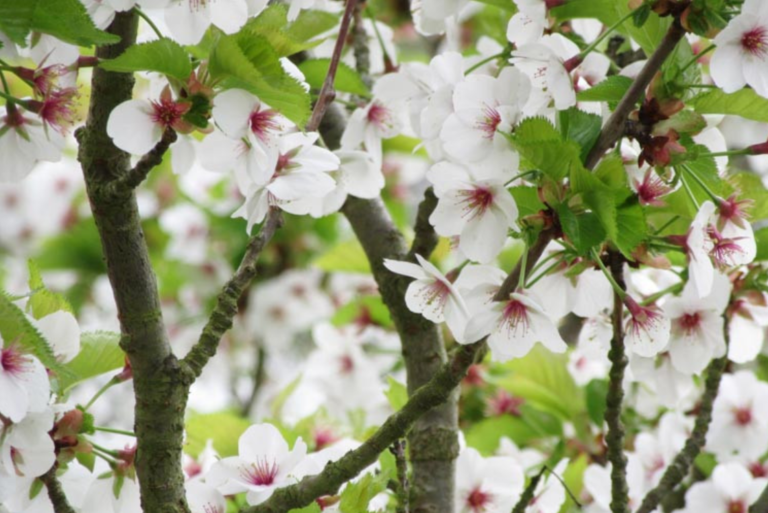
With creamy white flowers that fill the air with a vanillalike sweetness, silvery-green leaves that shimmer in a breeze, and an easy-going temperament that most magnolias simply do not share, Magnolia virginiana is one of North America’s most underappreciated native trees.
This comprehensive guide covers everything — from its botanical background and native range to precise care instructions, landscape uses, and the best cultivars available today.
What Is Sweetbay Magnolia? Botanical Identity and Overview
Magnolia virginiana belongs to the ancient family Magnoliaceae — a plant lineage so old that it predates bees. Its flowers were originally pollinated by beetles, which explains their robust, thick-petalled structure.
The common name “sweetbay” comes from its resemblance to the bay laurel (Laurus nobilis) — both share similar leaf shape and aromatic foliage. In some regions, it is also called swamp magnolia, white bay, or beaver tree — a name derived from the historical use of its roots as bait in beaver traps.
Magnolia virginiana is native to the eastern United States, ranging from Massachusetts and Long Island in the north, south along the coastal plain to Florida, and west to eastern Texas. It is one of the first magnolias ever described by European botanists, with records dating to the late 1600s.
In fact, it was among the first North American trees sent to European horticulturists, and it has been cultivated in Britain since around 1688.
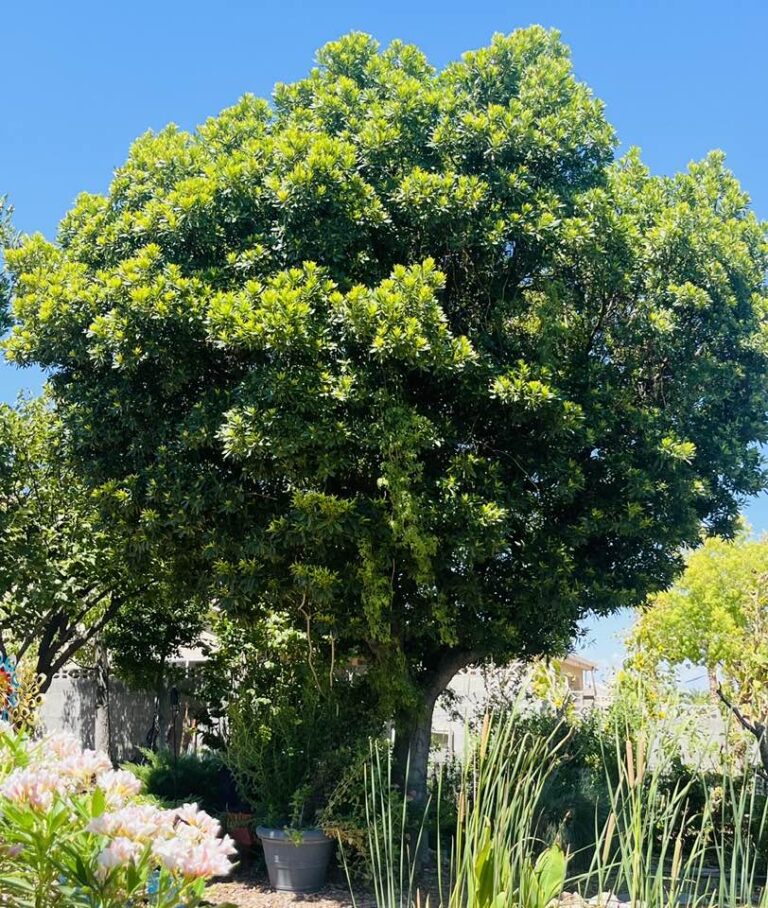
In the wild, it is highly variable. In the northern part of its range, it grows as a deciduous or semi-evergreen shrub or small tree, typically reaching 3 to 6 metres. In the warm, humid Deep South — particularly in Florida and the Gulf States — it grows as a fully evergreen tree, sometimes reaching 20 to 28 metres in height.
This natural variability has given rise to two recognised subspecies:
- Magnolia virginiana var. virginiana — the northern, deciduous form
- Magnolia virginiana var. australis — the southern, evergreen form
Why Choose Sweetbay Magnolia? The Case for This Native Tree
There is a reason horticultural experts and native plant advocates consistently recommend sweetbay magnolia. It offers an impressive combination of qualities that few ornamental trees can match.
Year-round appeal:
- Spring and summer flowers — creamy white, lemon-vanilla scented blooms from late spring through summer, often over a period of several weeks
- Attractive foliage — glossy dark green above, silvery-white beneath; leaves catch and reflect light beautifully
- Autumn interest — deciduous and semi-evergreen forms display warm yellow to golden tones before leaf fall
- Winter structure — the smooth grey bark and persistent red seed cones add quiet interest in the dormant season
Ecological value:
- Flowers support native pollinators, particularly beetles and small bees
- Red seeds in autumn attract birds including migratory songbirds, wild turkeys, and red-eyed vireos
- Dense branching provides nesting cover for birds
- As a native plant, it supports the broader web of local wildlife in ways that exotic ornamentals simply cannot
Adaptability: Unlike many ornamental trees, sweetbay magnolia tolerates wet, boggy, and poorly drained soils — conditions that would kill most other specimen trees. This makes it invaluable in rain gardens, low-lying areas, and sites where drainage improvement is impractical.
I have seen it planted along the edge of a small garden pond, its silvery leaves catching the light above the water’s surface — an image I have never forgotten.
Native Habitat: Understanding the Plant’s Natural Environment
Sweetbay magnolia grows naturally in a wide range of habitats, but it shows a clear preference for moist, low-lying areas. You will find it most commonly in:
- Pocosins and bay forests — low, shrubby wetlands of the Atlantic and Gulf coastal plains
- Streambanks and floodplains — along waterways where seasonal flooding occurs
- Edges of freshwater swamps and marshes
- Moist ravine slopes and upland areas with high soil moisture
This wetland affinity is important for gardeners to understand. Sweetbay magnolia is not a strictly aquatic plant — it does not grow in standing water permanently — but it tolerates wet periods that would cause dieback or root rot in most other landscape trees.
Its natural associates include red maple (Acer rubrum), swamp tupelo (Nyssa sylvatica), Atlantic white cedar (Chamaecyparis thyoides), and various native ferns and sedges — all of which can serve as excellent companion plants in the garden.
Climate and Hardiness: Where Does It Grow?
Sweetbay magnolia is one of the hardiest magnolias available. The northern var. virginiana is reliably hardy to USDA Hardiness Zone 5, and some selections have shown tolerance into Zone 4b.
The southern var. australis is less cold-hardy, performing best in Zones 7 through 10.
General hardiness range: USDA Zones 5 to 10 (varies by subspecies and cultivar).
Beyond the United States, sweetbay magnolia is grown successfully in:
- The United Kingdom — Zones 8 and 9, in sheltered positions with adequate moisture
- Western Europe, particularly in maritime climates in France, Belgium, and the Netherlands
- New Zealand — in cooler, wetter parts of the South Island
In cooler climates outside its natural range, selecting the appropriate cultivar is important. Northern-origin plants and cold-hardy named cultivars will outperform southern-origin stock in colder gardens.
Sunlight Requirements: Full Sun to Partial Shade
One of sweetbay magnolia’s most valuable traits is its tolerance of partial shade. While it flowers most prolifically in full sun, it is one of the few magnolias that performs well — and maintains an attractive, healthy appearance — when receiving as little as three to four hours of direct sunlight daily.
This shade tolerance makes it useful in:
- Woodland garden settings under high canopy
- North-facing or east-facing borders where other flowering trees struggle
- Urban gardens with buildings or established trees that cast significant shade
In dense shade, flowering is reduced and the plant may become slightly lax and open in form. For the best balance of foliage health and flower display, dappled sunlight to light partial shade is ideal — conditions that mimic the natural forest edge where sweetbay thrives in the wild.
In hotter climates (Zones 8 to 10), afternoon shade is beneficial, reducing heat stress and prolonging individual flower display.
Soil Preferences: A Tree That Breaks the Rules
Here is where Magnolia virginiana genuinely distinguishes itself from almost every other ornamental tree in cultivation: it thrives in wet, poorly drained soils.
Most trees, including most other magnolias, suffer root rot and decline in waterlogged conditions. Sweetbay not only tolerates this — it was selected by natural processes to excel in it.
Soil preferences:
- pH: 4.5 to 6.5 — slightly to moderately acidic; performs best in naturally acidic soils
- Texture: loamy, sandy, or clay-rich soils all work, provided some organic matter is present
- Drainage: tolerates poor drainage and periodic flooding; also adapts well to average, well-drained garden soils
- Organic matter: naturally occurs in humus-rich, organically active soils; benefits from mulching in garden settings
In alkaline soils, sweetbay magnolia, like most magnolias, may develop chlorosis — iron deficiency expressed as yellowing between the veins of younger leaves. Correct with chelated iron or gradual acidification using elemental sulfur.
Importantly, sweetbay magnolia also adapts well to ordinary, well-drained garden soils — so if your soil is not boggy, do not be discouraged. Its wet-soil tolerance is an advantage, not a requirement.
Watering: Establishment and Long-Term Needs
The sweetbay magnolia’s natural affinity for moist conditions means it is less demanding than many ornamental trees during dry periods, once established. That said, the establishment period still requires attention.
During the first two years:
- Water deeply and thoroughly once or twice a week during warm, dry weather
- Do not allow the root zone to dry out completely — the roots are not adapted to prolonged drought
- Mulch heavily (7 to 10 cm of organic mulch) to conserve soil moisture and regulate temperature
Once established:
- Sweetbay magnolia is moderately drought-tolerant in average soils
- In hot, dry climates (Zones 8 to 10), supplemental irrigation during summer is beneficial
- In its natural range, established plants are largely self-sufficient except in exceptional drought conditions
For gardeners using sweetbay magnolia in rain gardens or bioswales, it is an excellent choice — it handles both the wet periods following rainfall and the drier periods between rain events, making it functionally ideal for stormwater management plantings.
Planting Sweetbay Magnolia: Getting It Right from the Start
Like all magnolias, Magnolia virginiana has fleshy, brittle roots that are easily damaged during transplanting. The younger and smaller the plant at planting, the better it typically establishes. Container-grown plants are preferred over balled-and-burlapped specimens where possible.
Step-by-step planting guide:
- Select the right site — consider mature size, light requirements, and proximity to structures; allow generous space for the canopy to develop
- Dig a wide, shallow hole — two to three times the width of the root ball, and no deeper than the root ball itself
- Check root flare — the base of the trunk should sit at or slightly above finished soil level; planting too deeply is one of the most common and damaging mistakes
- Position the plant and backfill — use the original soil; avoid adding excessive compost to the backfill, which can create drainage problems around the root ball
- Water deeply immediately after planting — settle the soil around the roots and eliminate air pockets
- Mulch generously — apply a 7 to 10 cm layer of organic mulch from just outside the trunk flare to the edge of the planting hole and beyond
Best planting time: early spring in cooler climates; autumn planting is effective in warmer regions.
Avoid planting in midsummer heat if possible. If you must plant in summer, increase watering frequency and consider temporary shade cloth for the first few weeks.
Fertilising: Light Feeding for a Native Tree
Sweetbay magnolia, as a native species adapted to relatively low-fertility wetland soils, does not require heavy feeding. Over-fertilising encourages rapid, soft growth that is more vulnerable to pest damage and frost.
Recommended approach:
- Apply a slow-release, acid-forming fertiliser (formulated for azaleas, camellias, or ericaceous plants) in early spring, once per year
- Use rates at the lower end of label recommendations for established trees
- Young trees in their first two to three years benefit from slightly more generous feeding to support establishment
- Do not fertilise after midsummer — late growth is vulnerable to autumn frosts
In naturally rich, organic soils, additional fertilisation may be unnecessary altogether. Watch the foliage: healthy, deep green leaves with strong growth indicate adequate nutrition. Pale leaves, slow growth, or reduced flowering suggest the need for supplemental feeding.
Pruning: Minimal Intervention for Best Results
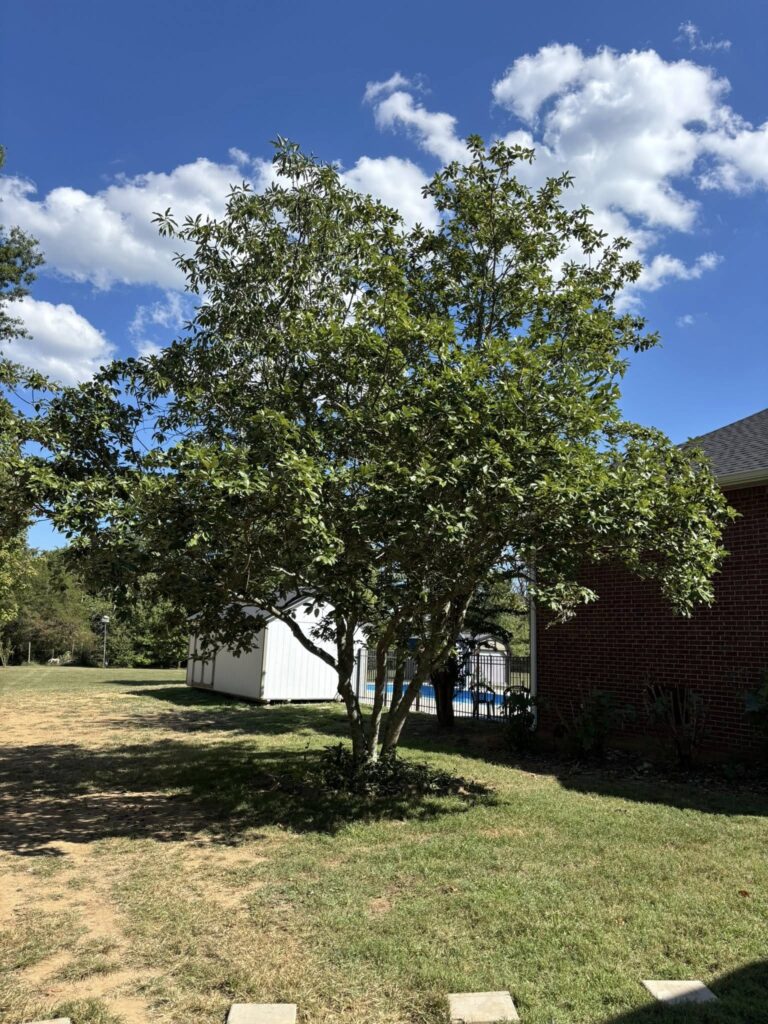
Sweetbay magnolia develops a naturally graceful multi-stemmed or single-trunked form, depending on the individual plant and how it is managed. In most garden settings, very little pruning is required.
What to do:
- Remove dead, damaged, or diseased branches in late winter or early spring
- Remove crossed or rubbing branches to improve air circulation
- If a single-trunk form is desired, select the strongest central leader early and remove competing stems gradually over two to three years
- Lightly shape young plants to establish the desired structure while stems are still flexible
What to avoid:
- Heavy pruning — magnolias do not compartmentalise wounds well; large cuts invite disease and slow healing
- Pruning in late summer or autumn — this removes developing flower buds and stimulates new growth that may be frost-damaged
- Topping — this destroys the natural form and invites decay
Multi-stemmed forms are particularly attractive in naturalistic and woodland garden settings, so resist the urge to force a single-trunk shape unless it is genuinely required for the planting design.
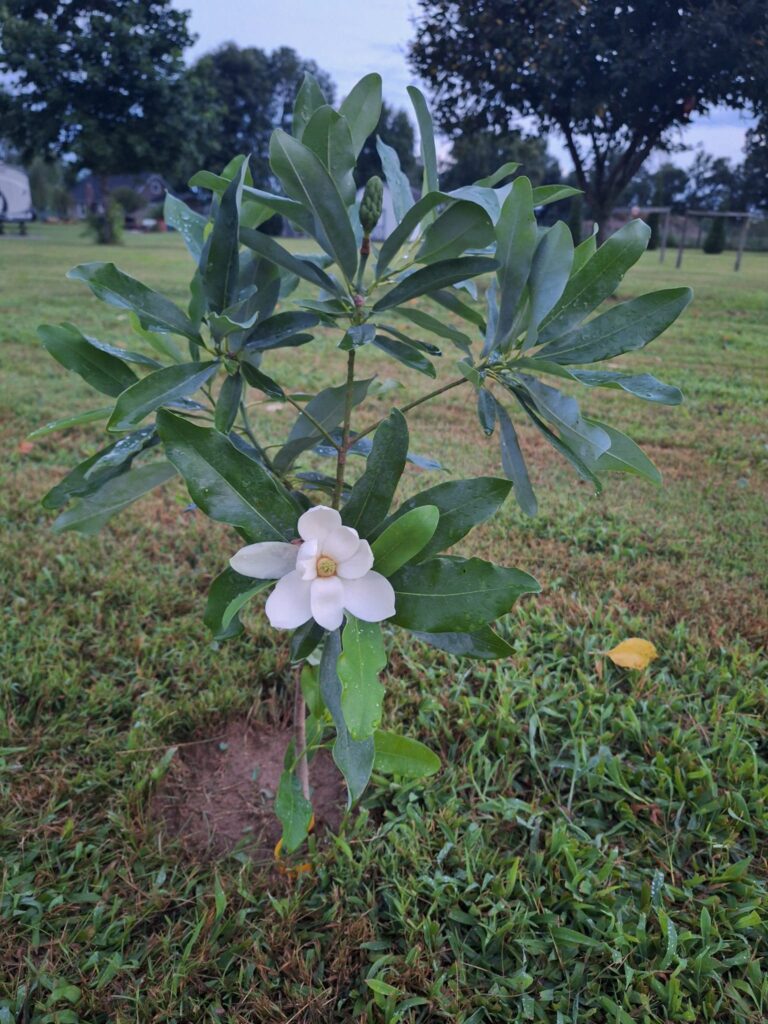
Best Cultivars of Magnolia virginiana
Plant breeders and nurseries have selected several excellent cultivars of Magnolia virginiana that offer superior ornamental qualities, greater cold-hardiness, or more compact growth for smaller gardens.
| Cultivar | Key Features | Hardiness |
| ‘Jim Wilson’ (Moonglow®) | Upright, columnar form; vigorous; excellent for small gardens; semi-evergreen | Zone 5 |
| ‘Henry Hicks’ | Fully evergreen even in the north; strong performer; named after an influential American nurseryman | Zone 5–6 |
| ‘Ned’s Northern Belle’ | Excellent cold-hardiness; compact size; good for Zone 5 gardens | Zone 5 |
| ‘Green Shadow’ | Broadly upright; very good evergreen retention in winter; floriferous | Zone 6 |
| ‘Sweet Thing’ | Dwarf selection; compact and bushy; ideal for small spaces or containers | Zone 6 |
| ‘Satellite’ | Upright and narrow; excellent for screening; very large flowers | Zone 5–6 |
‘Henry Hicks’ is particularly worth singling out. Selected specifically for its ability to retain its leaves through northern winters, it performs like a southern var. australis tree even in cooler climates — a remarkable trait for a native plant of this genus.
Sweetbay Magnolia in Landscape Design
The design versatility of sweetbay magnolia is one of its greatest strengths. It adapts to a wide range of landscape contexts and garden styles.
- As a specimen tree: planted in a lawn or courtyard setting, its elegant multi-stemmed form and silvery foliage make a refined, year-round statement.
- In woodland gardens: at home beneath high canopy or at the shaded edge of woodland, where it can grow naturally alongside ferns, native azaleas, and wildflowers.
- In rain gardens and bioswales: its tolerance of periodic flooding makes it one of the very best trees for stormwater management plantings and low-lying areas prone to temporary ponding.
- Along waterways: planted beside ponds, streams, and lakes, where its silvery leaves shimmer above the water and birds are attracted by its seed display.
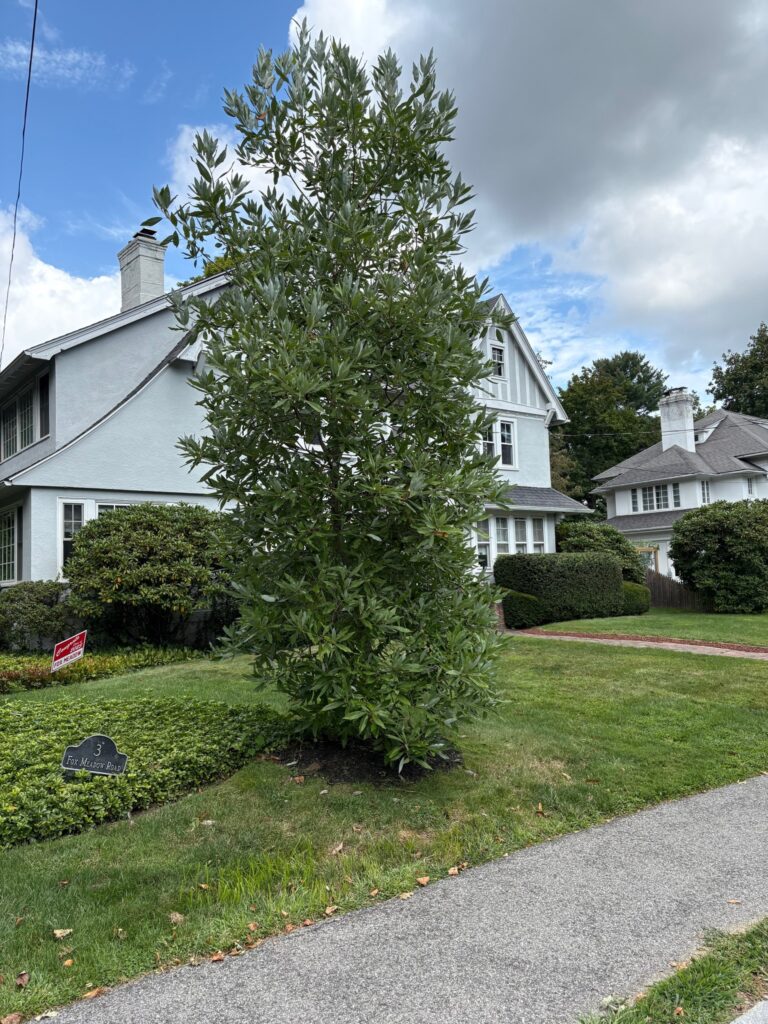
- As a screen or privacy planting: upright cultivars like ‘Moonglow’ and ‘Satellite’ create effective semi-evergreen screens without the bulk of larger evergreen trees.
- In naturalistic landscapes: for gardeners pursuing native plant and pollinator garden designs, sweetbay magnolia is a cornerstone species — beautiful, ecologically functional, and authentically regional.
Common Pests and Diseases
Sweetbay magnolia is notably less troubled by pests and diseases than many ornamental trees. Its native origins mean it coexists with local insects and pathogens that have evolved alongside it for millennia.
Scale insects — both magnolia scale (Neolecanium cornuparvum) and obscure scale can occasionally affect sweetbay. Look for waxy brown bumps on stems and honeydew-coated leaves. Treat with dormant horticultural oil in late winter.
Magnolia borer (Megacyllene thomsonii) — larvae tunnel into the wood of young or stressed trees. Maintain plant health through proper watering and mulching; healthy trees are far less susceptible.
Verticillium wilt — a soil-borne fungal disease causing branch dieback. Avoid wounding the roots and trunk; remove and destroy affected branches.
Leaf spots — fungal spots occasionally appear in humid conditions. Generally cosmetic on established trees; improve air circulation and clean up fallen debris.
Chlorosis — as noted, a nutrient problem in alkaline soils rather than a pest or disease. Correct the soil pH or apply chelated iron.
Overall, sweetbay magnolia is one of the lower-maintenance ornamental trees available to gardeners in its hardiness range.
Frequently Asked Questions
Is sweetbay magnolia evergreen? It depends on the climate and the individual plant. In the Deep South (Zones 8 to 10), it is fully evergreen. In the mid-Atlantic and transition zones (Zones 6 to 7), it is semi-evergreen
How fast does sweetbay magnolia grow? It grows at a moderate rate — typically 30 to 60 centimetres per year under good conditions. Vigorous cultivars like ‘Moonglow’ grow slightly faster.
Can I grow sweetbay magnolia near a pond or stream? Absolutely. It is one of the best ornamental trees for waterside planting. It tolerates periodic flooding and its graceful form reflects beautifully over water.
Does sweetbay magnolia smell nice? Yes — this is one of its most celebrated qualities. The flowers carry a distinctive lemon-vanilla fragrance, described by many gardeners as sweeter and lighter than the heavier scent of Southern magnolia (M. grandiflora). A mature sweetbay in flower on a warm summer evening is genuinely extraordinary.
How do I choose between sweetbay magnolia and Southern magnolia? The two species suit different contexts. Southern magnolia is larger, more dramatic, and better for formal or statement planting — but it needs good drainage, full sun, and plenty of space.
Sweetbay magnolia is smaller, more adaptable, shade-tolerant, and thrives in wet soils. For most residential gardens, sweetbay is the more practical choice.
A Final Word
Magnolia virginiana is, in my opinion, one of the most genuinely useful native trees in American horticulture — and one of the most under-planted. It does not demand perfect conditions. It does not need the sunniest spot or the finest, well-drained soil. It grows in difficult places with grace, flowers with quiet elegance, and supports the ecosystem around it with every season it grows.
If you are looking for a tree that is beautiful, ecologically valuable, adaptable, and low-maintenance, sweetbay magnolia deserves to be at the top of your list.
Plant it thoughtfully, give it time to establish, and it will reward you — and the birds, beetles, and butterflies that share your garden — for generations.
References
- University of Florida IFAS Extension – Magnolia virginiana: Sweetbay Magnolia https://edis.ifas.ufl.edu/publication/ST402
- North Carolina State University Extension – Magnolia virginiana Plant Profile https://plants.ces.ncsu.edu/plants/magnolia-virginiana/
- Virginia Cooperative Extension, Virginia Tech – Magnolia virginiana Dendrology Fact Sheet https://dendro.cnre.vt.edu/dendrology/syllabus/factsheet.cfm?ID=40
- University of Connecticut Plant Database – Magnolia virginiana: Sweetbay Magnolia https://hort.uconn.edu/detail.php?pid=253
- Clemson University Cooperative Extension – Magnolia Diseases and Insect Pests https://hgic.clemson.edu/factsheet/magnolia-diseases-insect-pests/

Tim M Dave is a gardening expert with a passion for houseplants, particularly cacti and succulents. With a degree in plant biology from the University of California, Berkeley, he has vast experience in gardening. Over the years, he has cultivated a vast collection of desert plants and learned a great deal about how to grow and care for these unique companions.