Sweet Acacia (Vachellia farnesiana): Identification, Cultivation, Uses, Problems, and More
There are some plants that quietly earn their place in the world. Vachellia farnesiana — commonly known as Sweet Acacia — is one of them.
Walk past it on a warm afternoon, and the scent alone will stop you in your tracks. The flowers smell like a mix of violet, vanilla, and something warmer — something ancient. It is no surprise that the fragrance industry has used this plant for centuries, or that indigenous communities across three continents have relied on it for medicine, food, and timber.
This article covers everything you need to know about Sweet Acacia: its taxonomy, ecology, traditional uses, cultivation, and its global relevance today. Whether you are a botanist, a gardener, a researcher, or simply curious, this guide has something for you.
What Is Sweet Acacia? Taxonomy and Classification
Sweet Acacia belongs to the legume family (Fabaceae), subfamily Mimosoideae. Its full scientific name is Vachellia farnesiana (L.) Wight & Arn., though it was formerly — and still widely — referred to as Acacia farnesiana.
The reclassification from Acacia to Vachellia came after a landmark taxonomic revision in 2005, which reorganised the old Acacia genus into several distinct genera. Today, the name Vachellia farnesiana is the accepted standard in most scientific literature, though you will still find the older name used in many field guides and databases.
Basic classification:
- Kingdom: Plantae
- Order: Fabales
- Family: Fabaceae
- Genus: Vachellia
- Species: V. farnesiana
- Common names: Sweet Acacia, Huisache, Cassie, Needle Bush, Perfume Acacia, Popinac
The species epithet farnesiana honours the Farnese family of Rome, in whose garden the plant was reportedly first cultivated in Europe in the early 1600s.
Physical Description: What Does It Look Like?
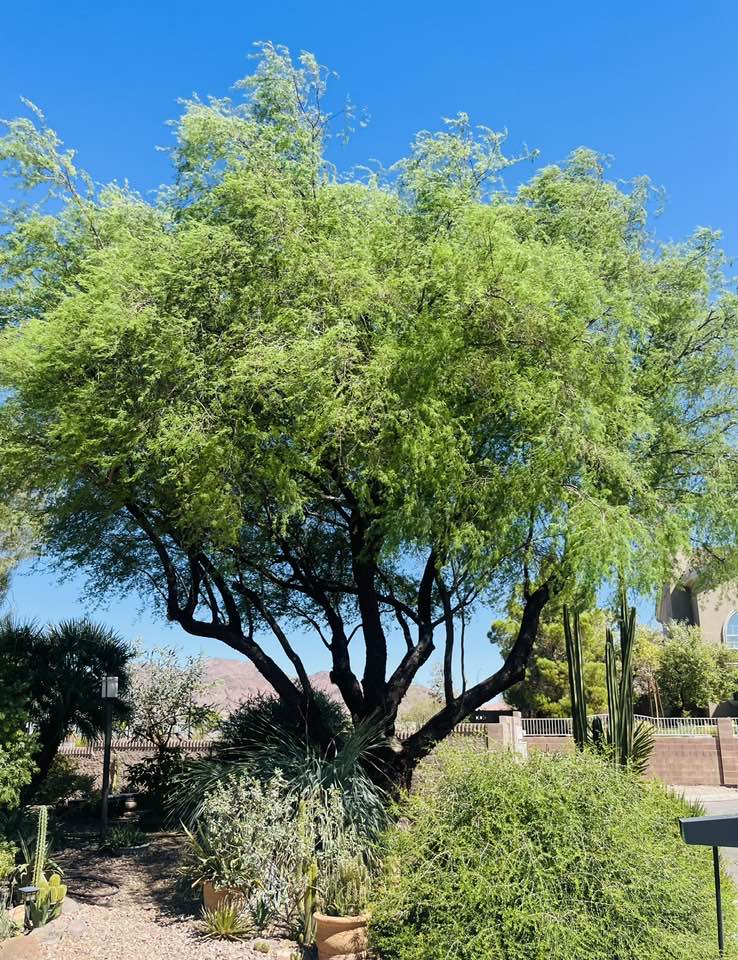
Sweet Acacia is a multi-stemmed shrub or small tree, typically reaching 2 to 8 metres in height, though it can grow taller in ideal conditions. Some mature specimens in tropical regions exceed 10 metres.
Key features include:
- Bark: Grey-brown, rough, and often fissured on older stems
- Branches: Armed with paired, straight, white thorns (stipular spines) — a hallmark of the species
- Leaves: Bipinnate (twice-divided), feathery, and bright green; each leaf carries 2–8 pairs of pinnae, each with 10–25 pairs of tiny leaflets
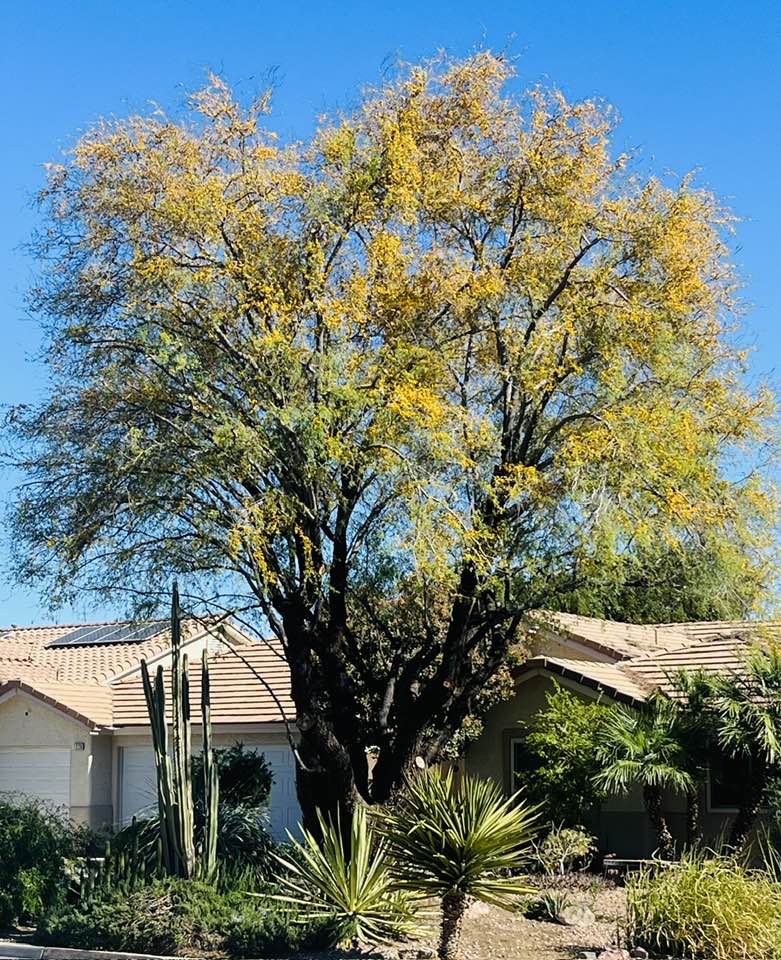
- Flowers: Bright golden-yellow, spherical pompom-like heads (2–10 mm in diameter), borne in clusters of 2–5; intensely fragrant
- Flowering period: Primarily late winter to spring, but it can flower multiple times per year in warm climates
- Fruit: A cylindrical, dark brown to nearly black pod, 4–7 cm long, slightly curved, containing 6–10 seeds
- Seeds: Oval, hard, and olive-green to brown
The flower clusters are what most people remember — small yellow globes that look like tiny suns against the green foliage. Up close, the fragrance is extraordinary.
Native Range and Global Distribution
The native origin of Vachellia farnesiana is somewhat debated. Most botanists agree it is native to tropical America, particularly the Caribbean and parts of Central and South America. Some studies suggest the American Southwest and northern Mexico as part of its original range.
Today, however, it has become one of the most widely distributed shrubby legumes on Earth.
Where does Sweet Acacia grow?
- Americas: Texas (USA), Mexico, Caribbean islands, Central America, northern South America
- Africa: East Africa, West Africa, North Africa, southern Africa
- Asia: India, Pakistan, Sri Lanka, Southeast Asia, China
- Australia: Naturalised in parts of Queensland and New South Wales
- Mediterranean: Introduced in France, Spain, and Italy — particularly around Grasse, the centre of the European perfume industry
- Pacific Islands: Hawaii and other island chains
It thrives across USDA Hardiness Zones 9–11, tolerating temperatures down to about −6°C (21°F) when established. In warmer climates, it is virtually evergreen.
Ecology and Habitat
One of Sweet Acacia’s most defining traits is its resilience. It is a pioneer species — one of the first to colonise disturbed, degraded, or dry land.
Preferred growing conditions:
- Soil: Sandy, loamy, clay, or rocky soils; tolerates poor, degraded, and saline soils
- Water: Drought-tolerant once established; thrives in arid and semi-arid regions
- Sunlight: Full sun
- Altitude: Sea level up to approximately 1,800 metres
- Rainfall: 150–1,500 mm annually, though it can survive outside this range
The plant fixes atmospheric nitrogen through root nodules, enriching degraded soils. This makes it ecologically valuable — but also difficult to control once established.
Pollinators and wildlife: The flowers attract honeybees, native bees, butterflies, and various insects. Birds use the dense, thorny branches for nesting. The pods are consumed by deer, peccaries, goats, and cattle.
The Fragrance Industry: Sweet Acacia and Perfumery
This is where Sweet Acacia truly earns its reputation.
The flowers contain a complex essential oil rich in benzyl alcohol, methyl salicylate, farnesol, geraniol, linalool, and anisaldehyde. This combination produces a scent that perfumers describe as warm, floral, powdery, and slightly spiced.
In the fragrance industry, the flowers are processed in the Grasse region of southern France, where Vachellia farnesiana has been cultivated since the 17th century. The traditional extraction method used is enfleurage (cold fat extraction), though modern producers now primarily use solvent extraction to produce an absolute known commercially as “cassie absolute” or “cassie concrete”.
Cassie absolute is prized for:
- Its rarity and complexity
- Its fixative properties — it helps anchor other fragrance notes
- Its versatility — used in violet, rose, and oriental perfume compositions
Some of the world’s most celebrated perfumes have historically included cassie absolute in their formulations. It is a luxury ingredient. A kilogram of cassie absolute can cost thousands of dollars, given the labour-intensive harvesting process.
The Grasse region in France remains the global hub for cassie production, though Morocco, Egypt, and India also produce the absolute in smaller quantities.
Traditional and Medicinal Uses
Long before European perfumers discovered Sweet Acacia, indigenous and rural communities around the world had developed extensive uses for the plant.
In Traditional Medicine
Bark and roots have been used to treat:
- Dysentery and diarrhoea
- Skin infections and wounds
- Toothache (bark chewed or applied)
- Fever and inflammation
Leaves and pods have been applied as poultices for skin ailments, and infusions made from the flowers have been used in some cultures for headaches and as mild sedatives.
Gum from the bark — similar to gum arabic — has been used as an adhesive, a food thickener, and a treatment for sore throats.
Research published by institutions including the University of Florida and various Indian agricultural universities has explored the antimicrobial, antifungal, and anti-inflammatory properties of compounds found in the plant. Tannins, flavonoids, and alkaloids are among the bioactive compounds identified.
It is important to note that traditional uses should not substitute professional medical advice. Always consult a qualified healthcare provider before using any plant-based remedy.
As Food
The flowers are edible and are sometimes used to flavour confectionery, syrups, and liqueurs. In parts of Mexico and Central America, the young pods and seeds are consumed.
The gum is edible and has been used as a food additive in some regions.
Agroforestry and Land Use
Sweet Acacia is widely used in agroforestry systems, particularly in semi-arid and degraded landscapes.
Key agroforestry roles:
- Nitrogen fixation: As a legume, it enriches soils depleted of nutrients, making it useful in reclamation and restoration projects
- Windbreaks and hedgerows: Its thorny branches make it an effective live fence and windbreak
- Fodder: Pods, leaves, and young shoots are palatable to livestock, particularly goats and cattle
- Tannin production: The pods and bark are rich in tannins used in leather processing
- Timber and fuelwood: The hard, dense wood burns slowly and is used for charcoal and firewood
- Soil conservation: Deep root systems help bind loose soil and reduce erosion
In parts of India and sub-Saharan Africa, Sweet Acacia has been promoted in land rehabilitation projects because it establishes quickly on bare, degraded land and provides multiple benefits simultaneously.
Invasive Potential: A Note of Caution
No honest discussion of Sweet Acacia is complete without addressing its invasive tendencies.
In parts of Australia, South Africa, Hawaii, and other regions where it was introduced, Vachellia farnesiana has spread aggressively. It competes with native vegetation, reduces biodiversity in grasslands, and forms dense, nearly impenetrable thickets.
The plant produces large quantities of hard-coated seeds that remain viable in the soil for decades. Animals eat and disperse the pods widely. Once established in a new environment, it is very difficult to eradicate.
Management strategies typically include:
- Mechanical removal (cutting and uprooting)
- Targeted herbicide application (particularly to cut stumps)
- Biological control research (still largely in early stages)
- Repeated follow-up treatments over several years
The Global Invasive Species Database lists Sweet Acacia among species requiring monitoring in sensitive ecosystems. Before planting Sweet Acacia, always check whether it is classified as invasive in your local region.
Cultivation and Care
For those in appropriate climates, Sweet Acacia is a rewarding garden plant — low-maintenance, fast-growing, and visually striking.
Growing from Seed
The seeds have a hard coat that inhibits germination. To improve germination rates:
- Soak seeds in hot water (not boiling) for 24 hours, or
- Lightly scarify the seed coat with sandpaper before planting
Sow in well-draining potting mix, keep moist, and expect germination within 1–3 weeks in warm conditions.
Planting and Establishment
- Choose a sunny position with well-drained soil
- Water regularly during the first year; reduce watering once established
- Avoid waterlogged soils, which can cause root rot
- Fertiliser is generally unnecessary, as the plant fixes its own nitrogen
Pruning
Sweet Acacia responds well to pruning after flowering. Regular pruning keeps it compact and encourages denser growth. When pruning, wear thick gloves — the thorns are sharp and can cause injury.
Pests and Diseases
Sweet Acacia is generally resistant to pests and diseases. Occasional issues include:
- Scale insects and mealybugs on young stems (treat with horticultural oil)
- Root rot in poorly drained soil
- Caterpillar damage on leaves (minor and usually self-resolving)
Sweet Acacia in Different Cultures
The relationship between humans and this plant spans centuries and continents.
In southern Texas and Mexico, the plant is called Huisache (from the Nahuatl huixachi), and it holds deep cultural significance. Spring in South Texas is announced by the bloom of Huisache — a golden wash across the landscape that locals recognise with the same affection as cherry blossoms in Japan.
In France, Sweet Acacia is called cassie, and the flowers were once carried by women in the Grasse region who worked in the fields at dawn to harvest the blooms before the heat dissipated the fragrance.
In India, the plant is known as Vilayati Babool (foreign babool) and has been used in Ayurvedic and Unani medicine systems.
In parts of East Africa, the dried pods and bark are sold in local markets for their tannin content, used in traditional leather curing.
Scientific Research and Modern Applications
Research into Vachellia farnesiana has grown considerably in recent decades.
Current areas of active investigation include:
- Antimicrobial properties: Extracts from leaves and bark have shown activity against Staphylococcus aureus, E. coli, and various fungi in laboratory studies
- Phytoremediation: Its ability to grow on contaminated and degraded soils makes it a candidate for phytoremediation research
- Bioactive compounds: Flavonoids such as kaempferol and quercetin, along with tannins and alkaloids, are under investigation for pharmaceutical applications
- Fragrance biotechnology: Researchers are exploring the biosynthetic pathways of the flower’s volatile compounds, with implications for sustainable fragrance production
The plant also serves as a model species in studies of drought tolerance and nitrogen fixation mechanisms in legumes.
Conservation Status
Globally, Vachellia farnesiana is not threatened. On the contrary, its adaptability and wide distribution mean that conservation concern runs in the opposite direction in many regions — how to manage its spread rather than protect it.
However, in specific areas where endemic varieties or chemotypes exist, localised conservation attention may be warranted. The genetic diversity within the species across its native American range has not been fully documented, and some populations may be distinctive.
Final Thoughts
Vachellia farnesiana is a plant of contradictions. It is beautiful and invasive, useful and hard to control, ancient and still being discovered. Its golden flowers perfumed the courts of Renaissance Italy. Its roots hold together the fragile soils of semi-arid Africa. Its compounds are being tested in modern pharmaceutical labs.
It is the kind of plant that rewards attention. The more you learn about it, the more remarkable it becomes.
Whether you encounter it in a Texan meadow, a French perfume catalogue, an Indian herbal remedy guide, or an Australian invasive species list — you are meeting the same extraordinary tree.
References
- University of Florida, Institute of Food and Agricultural Sciences (UF/IFAS) — Edis Database Vachellia farnesiana (Sweet Acacia) — Plant Identification and Uses https://edis.ifas.ufl.edu/publication/ST060
- Purdue University — NewCROP (New Crop Resource Online Program) Perfume Plants: Acacia farnesiana and Cassie Absolute https://hort.purdue.edu/newcrop/duke_energy/Acacia_farnesiana.html
- USDA Natural Resources Conservation Service (NRCS) — PLANTS Database Vachellia farnesiana (L.) Wight & Arn. — Distribution, Ecology, and Classification https://plants.usda.gov/home/plantProfile?symbol=VAFA
- University of Hawaii at Manoa — College of Tropical Agriculture and Human Resources Invasive Plant Species Profile: Acacia farnesiana https://www.ctahr.hawaii.edu/c/documents/AcaciaFarnesiana.pdf
- FAO (Food and Agriculture Organization of the United Nations) — Agroforestry Database Vachellia farnesiana — Agroforestry Uses, Nitrogen Fixation, and Soil Improvement https://www.fao.org/forestry/34381/en/

Tim M Dave is a gardening expert with a passion for houseplants, particularly cacti and succulents. With a degree in plant biology from the University of California, Berkeley, he has vast experience in gardening. Over the years, he has cultivated a vast collection of desert plants and learned a great deal about how to grow and care for these unique companions.