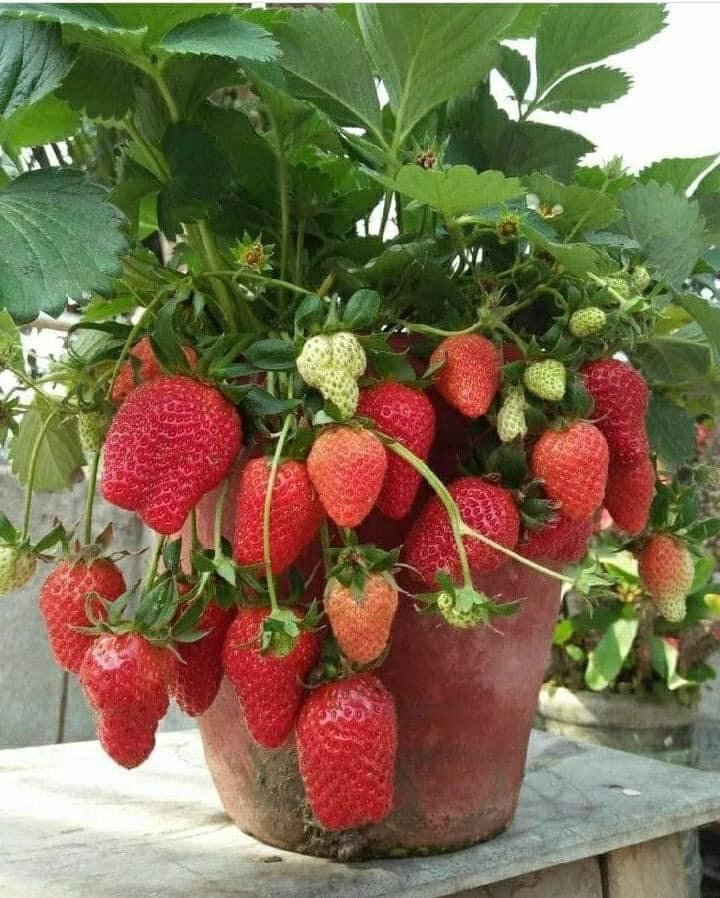
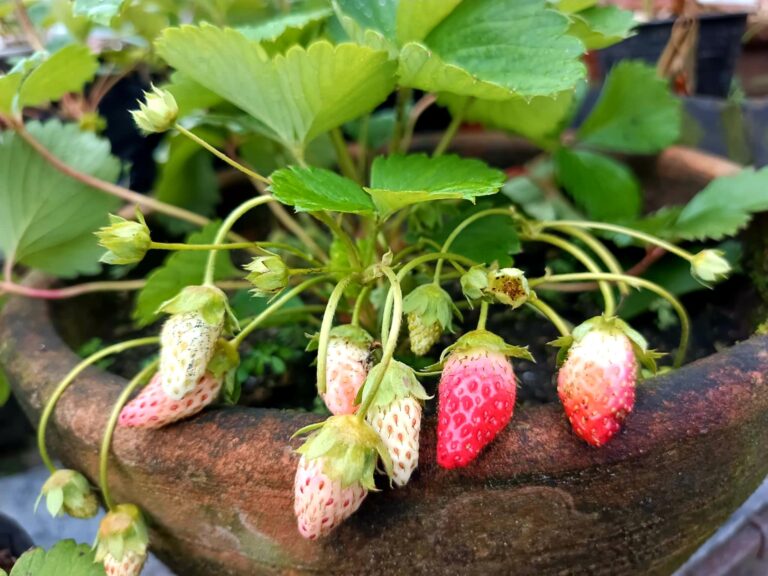
From Patio to Harvest: The Best Strawberry Pot Planting Ideas That Actually Work
There is something deeply satisfying about picking a strawberry you grew yourself. It is warmer, sweeter, and somehow more real than anything from a supermarket shelf. The good news is that you do not need a large garden to experience that. A strawberry pot can produce an impressive harvest on a balcony, patio, doorstep, or windowsill.
But here is where many gardeners go wrong: they buy a beautiful terracotta strawberry jar, plant it up, and watch it slowly struggle. The plants at the top thrive. The pockets halfway down dry out. The ones at the bottom stay waterlogged. Within a season, disappointment sets in.
This guide is here to change that outcome. Whether you are a first-time container gardener or someone who wants to finally get strawberry pots right, the ideas and guidance below will take you through everything.
What Is a Strawberry Pot, and Why Use One?
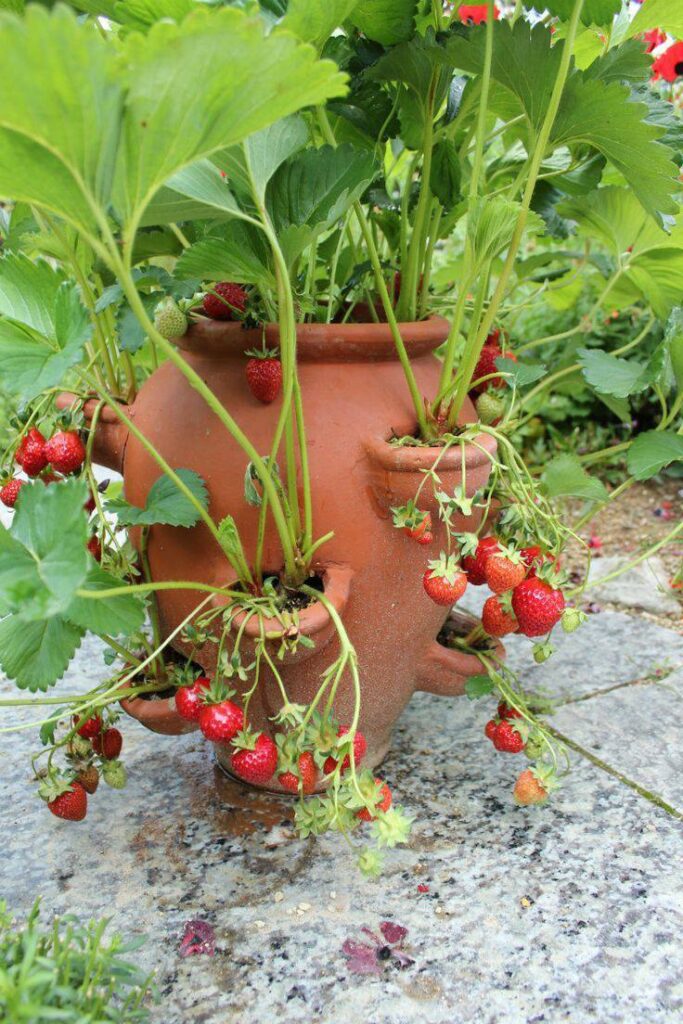
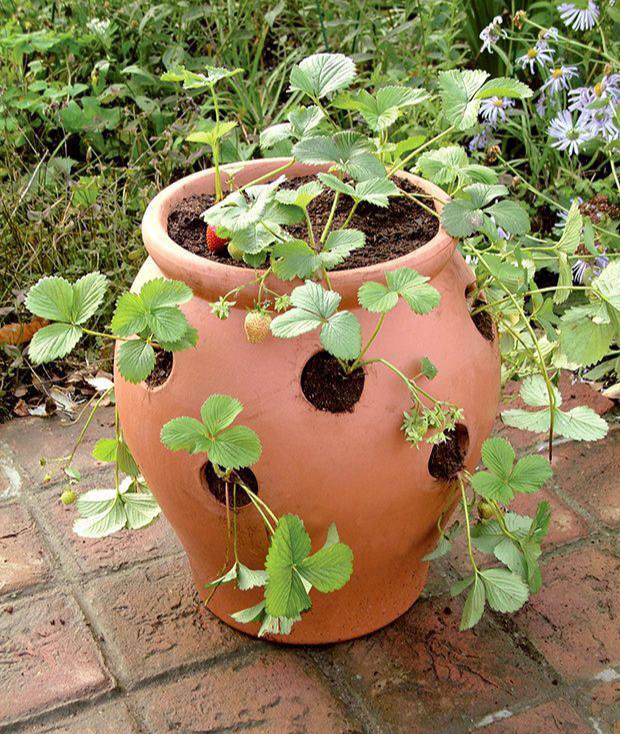
A strawberry pot is a tall, vase-shaped container with multiple small openings, called pockets or pouches, built into its sides. Plants grow from both the top and the side pockets, which allows you to fit a surprisingly large number of plants into a compact vertical footprint.
The appeal is real. Strawberry pots save space, improve air circulation around fruits, and keep berries off the ground — which reduces rot and pest damage. They are also visually striking. A well-planted strawberry jar in full fruit is one of the most charming sights in a container garden.
That said, strawberry pots are not the only option. Many of the planting ideas in this article apply equally well to hanging baskets, window boxes, raised planters, tiered towers, and repurposed household items. The principles remain the same regardless of the container.
Choosing the Right Strawberry Variety for Containers
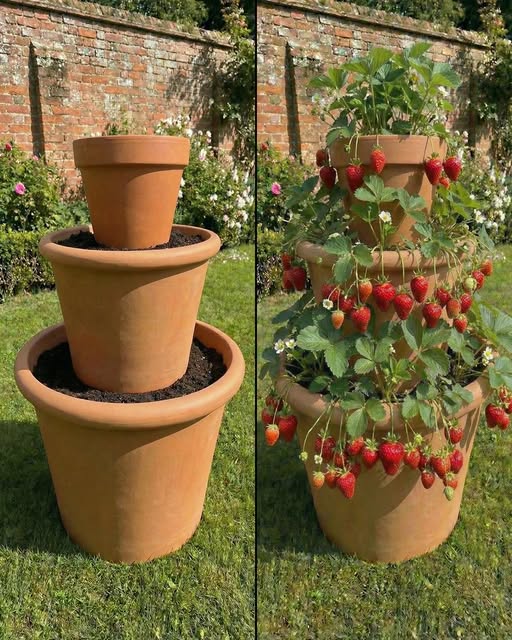
Before selecting a pot, choose your variety. Not all strawberries perform equally well in containers, and matching variety to container type makes an enormous difference in yield and ease of care.
Everbearing Varieties
Everbearing strawberries produce two to three flushes of fruit per season — typically in spring, again in midsummer, and once more in early fall. For container gardeners, this is often the most rewarding choice because the harvest is extended rather than concentrated into one intense period.
Popular everbearing varieties suited to pots include:
- Albion — large, firm berries with excellent flavor; heat-tolerant and widely recommended for warm climates
- Seascape — reliable producer in coastal and mild-climate regions; good disease resistance
- Quinault — soft, very sweet berries; excellent for Pacific Northwest climates
Day-Neutral Varieties
Day-neutral strawberries produce fruit continuously from late spring through early frost, largely independent of day length. They tend to produce smaller individual berries than June-bearing types, but the continuous yield suits container gardening well since there is always something to harvest.
- Tristar — classic day-neutral with excellent flavor; good for mountain and northern climates
- Everest — vigorous, compact habit that suits smaller pockets
June-Bearing Varieties
June-bearing varieties produce one large, concentrated crop in late spring or early summer. They are excellent for fresh eating and preservation, but their single harvest window is less ideal for containers unless the visual display between harvests matters to you. Varieties like Chandler and Camarosa work well in warmer regions.
Alpine Strawberries
Do not overlook alpine strawberries (Fragaria vesca). These compact, runnerless plants produce small, intensely flavored berries continuously from summer through fall. They are arguably the best variety for the side pockets of a traditional strawberry jar.
This is because their compact root systems fit the limited soil volume perfectly, and they do not send out runners that crowd neighboring pockets.
Selecting Your Container
Here are my go-to options:
Classic Terracotta Strawberry Jars
The traditional strawberry jar is terracotta — fired clay with a warm, earthy appearance that looks beautiful in almost any garden setting. Terracotta breathes, which is good for root health, but it also dries out faster than plastic or glazed ceramic.
In a hot climate or during peak summer, a terracotta strawberry jar may need watering once or even twice a day.
Choose a jar that is at least 12 inches wide at the base and 16 to 20 inches tall for best results. Taller jars with more pockets look impressive but require careful attention to ensure the lower pockets receive adequate water — a challenge we will address in the watering section.
Glazed Ceramic Containers
Glazed ceramic pots retain moisture longer than unglazed terracotta. They come in a wide range of colors and styles, making them excellent choices when the container itself is part of a designed outdoor space. Their weight makes them stable in wind, which is a practical advantage for taller plantings. The trade-off is that they are heavy and can crack in hard freezes.
Plastic Strawberry Towers and Pocket Planters
Plastic vertical planters and fabric pocket planters are lightweight, affordable, and surprisingly effective. Modern versions often include built-in irrigation channels. They are ideal for renters, balcony gardeners, and anyone who needs to move containers indoors for winter.
The best fabric pocket planters promote excellent air pruning of roots, which results in a more fibrous, healthy root system.
Hanging Baskets
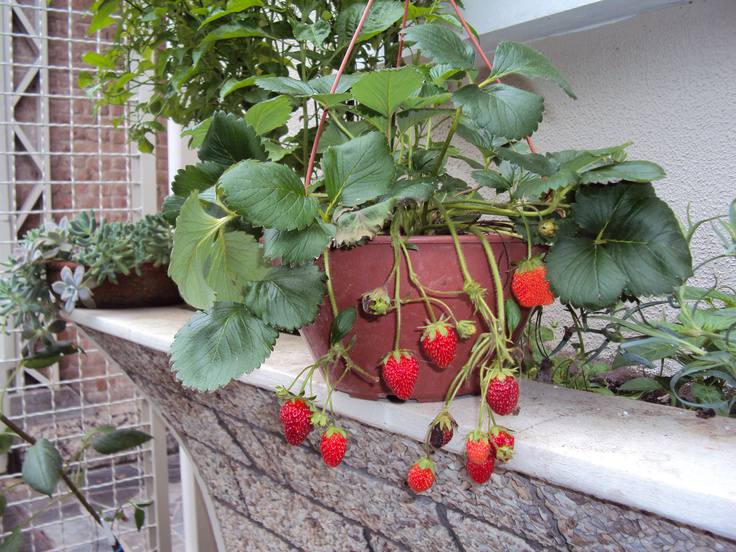
A 12- to 14-inch hanging basket planted with three to five strawberry plants is one of the most productive and visually appealing options available. The trailing growth habit of most strawberry varieties suits hanging baskets naturally — runners cascade over the sides and, in everbearing types, produce flowers and fruit along their length.
Hanging baskets dry out quickly, so a moisture-retaining liner (coir or sphagnum moss) is essential.
Repurposed and Upcycled Containers
Some of the most charming strawberry plantings I have seen used nothing more than a wooden crate lined with landscape fabric, a row of galvanized buckets hung along a fence, or a vintage colander suspended from a shepherd’s hook.
Any container with drainage holes and a minimum depth of 8 inches can grow strawberries.
Repurposed containers include:
- Wooden pallets stood vertically and lined with landscape fabric
- Stacked terracotta pots of decreasing size (a tiered effect)
- Wine barrels cut in half
- Old rain boots or rubber wellies (charming near an entrance)
- Metal livestock troughs for a farmhouse aesthetic
How to Plant a Strawberry Pot: Step-by-Step
Getting the planting process right from the start saves considerable frustration later. Follow these steps for a traditional strawberry jar, and adapt them for other container types as needed.
Step 1: Prepare a Central Irrigation Column
This single step is the most important for success with a tall strawberry jar. Cut a length of PVC pipe (1 to 1.5 inches in diameter) to the height of the jar. Drill small holes every 2 to 3 inches along the length. Cap the bottom. Insert this pipe vertically in the center of the jar before adding soil.
When you water, pour directly into the top of this pipe. Water will seep out through the holes at every level, ensuring even moisture distribution from top to bottom. Without this, the lower pockets are almost always underwatered.
Alternatively, a length of rolled window screen or a tube of landscape fabric filled with gravel serves the same function.
Step 2: Choose the Right Potting Mix
Never use garden soil in a container. It compacts quickly, drains poorly, and suffocates roots. Use a high-quality commercial potting mix designed for containers. For strawberries specifically:
- Choose a mix with perlite or coarse sand for drainage
- Add a slow-release granular fertilizer to the mix at planting time
- If the mix is very lightweight, add 10 to 15% compost to improve water retention and nutrition
A slightly acidic pH of 5.5 to 6.5 is ideal for strawberries. Most quality potting mixes fall within this range naturally.
Step 3: Fill and Plant in Layers
Begin filling the jar with potting mix up to the level of the first set of pockets. From outside the jar, carefully insert a plant into each pocket — thread the roots in first, spreading them gently, then firm the surrounding soil.
The crown of the plant (the junction between roots and leaves) must sit at soil level — never bury the crown, and never leave it exposed above the soil surface. Both mistakes impair growth and invite disease.
Continue filling soil to the next level of pockets and repeat. Once the jar is filled to the top, plant the remaining plants in the top opening.
Step 4: Water Thoroughly After Planting
Water slowly and deeply immediately after planting, both through the top surface and through the central irrigation pipe. Watch for any soil settling and top off as needed. A light layer of mulch over the top opening (straw, pine needles, or shredded bark) helps retain moisture.
Creative Strawberry Pot Planting Ideas
Now for the part many gardeners find most enjoyable — the design and creative combination possibilities.
1. The Pure Strawberry Jar
Sometimes simplicity is best. Planting a single variety of everbearing strawberry throughout all pockets and the top creates a unified, lush display that is heavy with flowers and fruit from late spring through fall. Alpine varieties are particularly beautiful this way — their fine-textured foliage and continuous small fruits create an almost cottage-garden effect.
2. The Mixed Variety Display
Plant two or three different strawberry varieties in a single large jar for a longer harvest window and visual variety. Choose varieties that ripen at slightly different times — for example, a June-bearer in the top position for early heavy fruiting, with everbearing types in the side pockets for continuous summer production.
3. Strawberries with Companion Herbs
Strawberry jars do not have to be exclusively strawberries. Some herbs make excellent companion plants and benefit from the same growing conditions. Consider planting thyme, chives, or low-growing basil in a few of the side pockets alongside strawberries.
Thyme is particularly compatible — it is drought-tolerant, has a complementary trailing habit, and is said to improve strawberry flavor when grown nearby.
Avoid herbs with high water demands (such as mint or parsley) in the same jar, as they will compete for moisture in ways that disadvantage the strawberries.
4. Strawberries with Edible Flowers
For a pot that is beautiful and edible, plant nasturtiums or violas in the top of the jar alongside your strawberries. The flowers are fully edible (a lovely garnish for the berries themselves), and the trailing growth of nasturtiums creates a cascading effect over the sides.
The cheerful color contrast between orange flowers and red fruit is genuinely delightful.
5. A Tiered Tower of Stacked Pots
If you do not have a traditional strawberry jar, create a tiered planter by stacking terracotta pots of decreasing size — a 14-inch pot at the base, a 10-inch pot in the middle, and a 6-inch pot at the top, each filled with soil and planted with strawberries.
The cascading growth across multiple levels creates a dramatic vertical display. This design is also easier to water evenly than a traditional tall jar.
6. Hanging Baskets in a Row
Three or four hanging baskets planted with strawberries and hung at slightly different heights along a fence or pergola beam create a stunning living wall effect. As runners trail downward from each basket and bear fruit, the visual effect becomes almost theatrical.
Use matching basket styles for a formal look, or mismatched vintage containers for a relaxed, cottage garden feel.
7. The Window Box Strawberry Garden
A window box at least 8 inches deep planted with a row of everbearing strawberries — spaced 6 to 8 inches apart — is one of the most practical and beautiful uses of windowsill space. Facing a south or southwest window is ideal in the Northern Hemisphere.
The strawberries receive maximum sunlight, and the harvests are steps away from the kitchen. Add a few trailing lobularia (sweet alyssum) at the corners for a finished, designed look.
8. The Patio Statement Planter
For gardeners who want a single, striking focal point on a patio or entrance, a large glazed ceramic container — 18 to 24 inches wide — planted thickly with a mix of strawberries, trailing thyme, violas, and a single accent plant such as a small ornamental grass creates a four-season display that looks intentional and designed rather than purely productive.
Watering, Feeding, and Ongoing Care
Watering
Consistent moisture is non-negotiable for strawberry production. Irregular watering — alternating between dry and wet — causes poor fruit set, small berries, and increased susceptibility to disease.
- Check soil moisture daily in warm weather. The top inch of soil should feel barely moist — not dry, not soggy.
- Water slowly at the base of plants; avoid wetting the foliage, which promotes fungal disease.
- Consider a drip irrigation system or self-watering insert for larger pots, especially during summer travel.
Feeding
Strawberries in containers exhaust their potting mix nutrients faster than in-ground plants. Feed every two to three weeks during the growing season with a balanced liquid fertilizer (such as 10-10-10) or a fertilizer with a slightly higher potassium content to support flower and fruit development. Avoid excess nitrogen, which promotes leafy growth at the expense of fruit.
Once the harvest season winds down (late summer or early fall for everbearing varieties), reduce feeding to allow the plants to harden off before winter.
Renovation and Winter Care
At the end of the growing season, trim back old foliage to about 3 inches above the crown. Remove runners unless you want them to root and propagate new plants.
In cold climates (Zone 6 and below), move containers to an unheated garage or shed for winter — the roots are more vulnerable to freezing in containers than in the ground. In milder climates, containers can remain outdoors with a layer of straw mulch for insulation.
Replace or divide plants every two to three years. Strawberry plants are most productive in their second year; productivity declines significantly after the third year.
Common Mistakes to Avoid
- Planting in too little soil depth. Less than 8 inches of depth restricts roots and reduces yield. Always choose a container with adequate volume.
- Burying the crown. If the crown is covered, the plant will rot. If it is too exposed, it will dry out. Keep it exactly at soil level.
- Ignoring the lower pockets. Without a central irrigation channel, lower pockets in tall jars are chronically underwatered. Install the PVC pipe system from the start.
- Overfeeding with nitrogen. Too much nitrogen produces large, lush plants with very little fruit. Balance matters.
- Choosing the wrong location. Strawberries need at least 6 to 8 hours of direct sunlight daily. A shaded balcony will produce disappointing results regardless of every other variable.
Frequently Asked Questions
How many strawberry plants fit in a standard strawberry pot?
A typical 12- to 16-inch strawberry jar accommodates 6 to 10 plants — one in each side pocket and two to three in the top opening.
Can strawberry pots stay outdoors year-round?
In zones 7 and warmer, yes. In colder climates, move containers to a protected location (unheated garage, shed, or covered porch) once temperatures drop below 20°F (-6°C).
Why are my strawberry pot plants not producing fruit?
The most common reasons are insufficient sunlight, excessive nitrogen, or plants that are too old (over three years). Check your light conditions first — this is the most frequently overlooked factor.
Do I need to remove runners from a strawberry pot?
In most cases, yes. Runners divert energy from fruit production. Remove them unless you are propagating new plants intentionally.
Suggested For You:
You Can Grow Strawberries from a Strawberry — Here Is Exactly How to Do It
Understanding Types of Strawberries: Varieties, Flavors, and Which One to Grow
15 Easy Vegetables to Plant and Harvest This Summer: Best Varieties That Grow Fast in Heat
Final Thoughts
A well-planted strawberry pot is one of the most rewarding projects in container gardening. It is not complicated — but it does reward attention to the details that matter: good drainage, correct planting depth, even watering, and adequate sunlight. Get those fundamentals right, and the container itself almost becomes secondary.
Start with a variety suited to your climate, invest in quality potting mix, and install that central irrigation pipe. Those three steps alone will put your strawberry pot miles ahead of most. The rest — the creative combinations, the companion planting, the design choices — is the enjoyable part.
And when that first warm, sun-ripened berry comes off the plant in your own hands, you will understand exactly why people keep growing strawberries in pots year after year.
References
- Poling, E. B. (1993). Strawberries. North Carolina State University Cooperative Extension. https://content.ces.ncsu.edu/strawberries
- Strand, L. L. (2008). Integrated Pest Management for Strawberries. University of California Agriculture and Natural Resources. https://ipm.ucanr.edu/PMG/selectnewpest.strawberries.html
- Kelley, K. M., & Deppen, B. (2019). Growing Strawberries in Home Gardens. Penn State Extension. https://extension.psu.edu/growing-strawberries-in-home-gardens
- Strik, B. C. (2006). Growing Strawberries in Your Home Garden. Oregon State University Extension Service. https://catalog.extension.oregonstate.edu/ec1307
- Warmund, M. (2020). Container Gardening with Strawberries. University of Missouri Extension. https://extension.missouri.edu/publications/g6135

Tim M Dave is a gardening expert with a passion for houseplants, particularly cacti and succulents. With a degree in plant biology from the University of California, Berkeley, he has vast experience in gardening. Over the years, he has cultivated a vast collection of desert plants and learned a great deal about how to grow and care for these unique companions.