Understanding Star Magnolia (Magnolia stellata): History, Identification, Uses, Problems, Cultivation and More
Every spring, before most gardens have awakened from winter, before the forsythia has fully opened and the daffodils have reached their peak, one plant stops people mid-stride on sidewalks, garden paths, and suburban streets across the temperate world.
The Star Magnolia (Magnolia stellata) blooms so early, so abundantly, and so purely that it feels less like a plant flowering and more like a declaration — winter is over, and something beautiful has arrived to prove it.
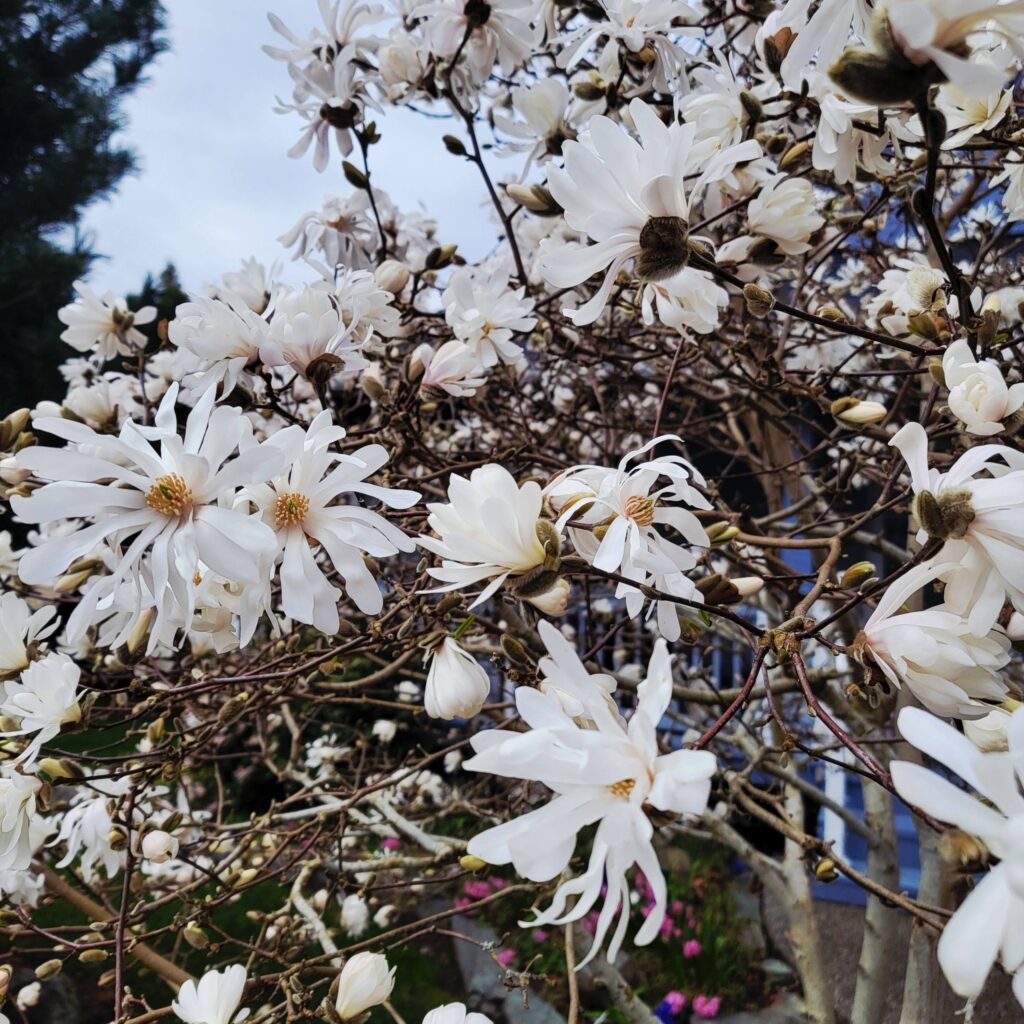
The flowers are unlike those of any other common garden plant. Each blossom carries 12 to 18 or more narrow, strap-shaped white petals — sometimes flushed with pink — radiating outward in a loose, star-like formation from a central boss of stamens.
Dozens, sometimes hundreds, of these flowers open simultaneously on bare branches in late February through April, depending on climate, before a single leaf has emerged. The effect is unforgettable. A mature Star Magnolia in full bloom on a clear March morning is one of the finest sights in temperate horticulture.
This guide covers everything worth knowing about the Star Magnolia — its botany, natural history, cultural requirements, landscape value, best cultivars, common problems, and how to grow it successfully wherever temperate gardening is practiced.
Before we dive in, here is a quick reference summary about this beautiful plant.
| Feature | Detail |
| Scientific Name | Magnolia stellata |
| Family | Magnoliaceae |
| Common Names | Star Magnolia, Starry Magnolia |
| Native Range | Central Honshu, Japan (restricted wild population) |
| Mature Height | 15–20 feet (cultivar-dependent) |
| Mature Spread | 10–15 feet |
| Growth Rate | Slow (1–2 feet/year) |
| Flower Color | White; pink forms available |
| Tepal Count | 12–18 (species); up to 32+ in some cultivars |
| Bloom Time | Late February–April (before leaf emergence) |
| Fragrance | Mild, fresh, lightly sweet |
| Hardiness Zones | USDA Zones 4–8 |
| Soil | Moist, well-drained, slightly acidic (pH 5.5–7.0) |
| Light | Full sun to partial shade |
| Best Cultivar | ‘Royal Star’ (general purpose) |
| Wildlife Value | Early pollinators; limited fruit for birds |
What Is the Star Magnolia?
The Star Magnolia is a flowering shrub-tree belonging to the family Magnoliaceae — one of the oldest angiosperm plant families, with fossil records extending back over 95 million years. The genus Magnolia includes approximately 300 species distributed across Asia and the Americas.
The Star Magnolia’s scientific name, Magnolia stellata, carries its most important descriptor directly. Stellata comes from the Latin stella, meaning “star” — a precise and accurate reference to the star-shaped floral form created by its many spreading tepals.
A botanical note on terminology: the Star Magnolia does not produce true petals and sepals as separate structures. Instead, all floral parts are undifferentiated and are correctly called tepals — a technical point worth knowing when reading botanical literature, though the word “petals” is commonly used in garden writing.
The species was first described scientifically from cultivated material in Japan, where it had been grown in gardens for centuries before Western botanists formally documented it. Its natural wild population was only discovered later in the mountains of Honshu, Japanres.
In the wild, Magnolia stellata is a rare and geographically restricted species, growing in a small area of wet forest margins and streamside habitats in central Honshu. This natural rarity makes its status in cultivation all the more remarkable.
Common names, though few, are clear and evocative:
- Star Magnolia — the universal standard, referring to the star-shaped flowers
- Starry Magnolia — a poetic variant used occasionally in British horticulture
- Star-Flowered Magnolia — a more descriptive form used in some older texts
Natural History and Conservation Status
In its native habitat in central Japan, Magnolia stellata is classified as a vulnerable species by the Japanese Ministry of the Environment. Its natural range is extremely limited — covering a relatively small area of wet woodland margins, often in association with stream systems in mountain valleys.
The wild population is estimated at fewer than 1,000 mature individuals, and it faces ongoing threats from habitat loss, hybridization with the closely related Kobushi Magnolia (Magnolia kobus) in areas where the two species grow in proximity, and the collection pressure.
This conservation context adds a layer of significance to the Star Magnolia’s cultivation history. A plant that is genuinely rare in nature has been propagated into millions of garden specimens worldwide — one of the more interesting inversions in the history of ornamental horticulture.
The relationship between M. stellata and M. kobus (Kobushi Magnolia) has been a subject of botanical debate. Some authorities treat Star Magnolia as a variety or subspecies of M. kobus rather than a full species — it is sometimes listed as Magnolia kobus var. stellata.
For practical garden purposes, the distinction is academic. The plant known as Star Magnolia in nurseries and gardens worldwide is consistent in appearance and horticultural character.
Physical Characteristics
Size and Form
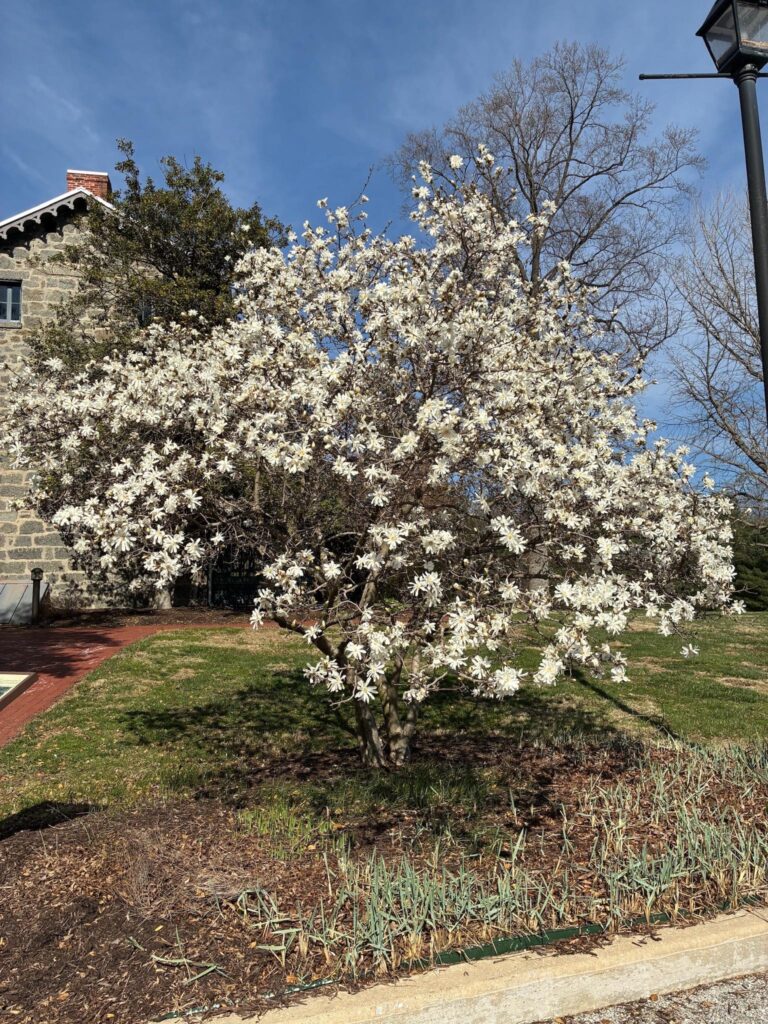
The Star Magnolia is a slow-growing, multi-stemmed large shrub to small tree, typically reaching 15 to 20 feet (4.5–6 meters) in height and 10 to 15 feet (3–4.5 meters) in spread at maturity, though growth rates and ultimate size vary significantly by cultivar and growing conditions.
It grows slowly — adding perhaps 1 to 2 feet per year in good conditions — but this slow pace is part of what makes it such a manageable, long-lived garden plant. Unlike faster-growing trees that quickly outscale their intended space, the Star Magnolia remains proportionate in smaller gardens for decades.
The form is broadly rounded to oval, with multiple stems arising from the base in a shrubby habit. Over time, with minimal management, it develops into a vase-shaped to rounded mass of arching stems covered in flowers every spring.
In older specimens or those trained as a small tree by removing lower stems, the Star Magnolia develops a more tree-like character with a defined trunk — a form that suits formal garden settings.
Bark and Stems
The bark is smooth, gray, and relatively featureless — not a primary ornamental feature, but clean and unobtrusive. The flower buds are the winter show: they are large, fuzzy, and covered in silky, silver-gray hair — particularly visible and attractive through the winter months.
These fuzzy buds are an important winter identification feature and a genuine ornamental asset in their own right. Through January and February, they gradually swell and lengthen as bloom time approaches, building anticipation across weeks.
Leaves
The leaves emerge after the flowers, which is typical of early-blooming magnolias and central to their visual impact. Flowers on bare branches create the clean, uncluttered display that makes early magnolias so striking — there is no competing foliage to dilute the effect.
The leaves are simple, alternate, and obovate to elliptical — narrow at the base and broader toward the tip. They measure 2 to 4 inches (5–10 cm) in length, dark green and somewhat glossy above, paler below.
The foliage is clean and unexceptional in summer — serviceable rather than spectacular — which is perfectly appropriate for a plant whose primary ornamental contribution is made in spring.
There is no significant fall color. The leaves turn yellowish-green and drop relatively early in autumn without producing a noteworthy display. This is simply not the tree’s season.
The Flowers — Everything This Plant Is About
The flowers are the entire reason for growing Star Magnolia, and they more than justify the plant’s existence.
Each individual flower is 3 to 4 inches (7–10 cm) across, composed of 12 to 18 tepals in the standard species — though some cultivars carry significantly more. The tepals are narrow and strap-shaped, spreading outward from the center in a loose, star formation. They are white, sometimes flushed pink on the outside, particularly when emerging from the bud, and pure white when fully open.
The flowers are mildly fragrant — not the overwhelmingly heady scent of some magnolias, but a clean, fresh, lightly sweet fragrance that is pleasant without being intrusive. On warm spring days, a mature plant in full bloom carries its fragrance several feet in still air.
Blooming occurs on bare stems before leaf emergence — typically from late February through April, depending on climate, latitude, and individual microclimate. This timing is simultaneously the plant’s greatest asset and its most significant vulnerability.
The greatest asset: flowers on leafless branches against a blue spring sky are visually clean and dramatic in a way no summer-blooming plant can replicate. The stark white of the blossoms against bare gray stems is one of horticulture’s most elegant combinations.
The greatest vulnerability: early flowers are susceptible to late frost damage. A hard frost after bloom has begun can brown and destroy the flowers in a single night — a disappointment that gardeners in zones with unpredictable late frosts know too well.
This is not a reason to avoid the plant. It is a reason to site it thoughtfully — in a slightly protected location that slows the rate of bud development in early spring.
Landscape and Garden Uses
The Star Magnolia’s combination of early season impact, manageable size, and adaptability to a wide range of conditions makes it one of the most versatile flowering shrub-trees available to temperate gardeners.
Spring Specimen Planting
The most common and most effective use is as a single specimen plant in a prominent garden location — the end of a garden path, the corner of a border, the focal point visible from a primary window. Positioned this way, the spring flowering becomes a seasonal event that the whole household anticipates.
The best viewing positions are those where the plant is seen against a dark background — a hedge, a fence, a dark wall, or a stand of evergreens — which allows the white flowers to read with maximum clarity against a contrasting backdrop.
Foundation and Border Planting
The slow growth and predictable size of most cultivars makes Star Magnolia one of the safer choices for foundation planting near buildings — it will not quickly outgrow its space or threaten structures with aggressive roots. It works well at the corner of a house or anchoring the end of a mixed shrub border.
Small Garden and Urban Use
For small gardens, courtyard gardens, and urban residential plots, the Star Magnolia is genuinely one of the best choices available. It provides enormous spring impact from a plant that occupies a relatively modest permanent footprint — a quality that is rare and valuable in space-limited settings.
Container cultivation is possible for the first several years, making it accessible to gardeners with patios, terraces, and rooftops who have no ground space available.
Mass Planting
In larger settings — parks, corporate landscapes, institutional grounds — mass plantings of Star Magnolia create extraordinary spring spectacles. Three to five plants in a loose grouping bloom simultaneously and create a combined effect significantly greater than any single specimen.
Companion Planting
The Star Magnolia’s early bloom time creates natural companion planting opportunities with other early-season plants. Effective combinations include:
- Hellebores (Helleborus spp.) — bloom simultaneously, creating a ground-level complement to the flowering branches above
- Snowdrops and early daffodils — flower beneath the magnolia canopy as it blooms
- Winter aconite (Eranthis hyemalis) — carpets the ground in yellow as the magnolia opens above
- Muscari (Grape Hyacinth) — follows Star Magnolia slightly, extending the spring sequence
- Japanese maples — provides outstanding summer and autumn interest after the magnolia’s spring moment has passed
Best Cultivars and Varieties
Decades of selection and breeding have produced an outstanding range of Star Magnolia cultivars, offering variation in flower size, tepal count, pink intensity, plant size, and bloom timing.
White-Flowered Cultivars
- ‘Royal Star’ — one of the most widely grown cultivars; larger flowers than the species with 25 to 30 tepals; blooms about two weeks later than species, reducing frost risk; vigorous and reliable; one of the best general-purpose selections available
- ‘Centennial’ — very large flowers, up to 5.5 inches; 28 to 32 tepals; developed at the Arnold Arboretum for its 1872–1972 centennial; exceptional flower size
- ‘Waterlily’ — double-flower form with 30 or more tepals; elegant, full appearance; slower growing; one of the finest double-flowered selections
- ‘Snowdrift’ — compact, neat form; pure white flowers; good choice for smaller spaces
Pink-Flowered Cultivars
- ‘Jane Platt’ — perhaps the finest pink-flowered Star Magnolia; strongly pink buds open to pale pink flowers; many tepals; widely considered the best pink cultivar in production
- ‘Rosea’ — the standard pink form; buds deep pink, fading to pale blush on opening; widely available
- ‘Pink Stardust’ — deeper, more persistent pink than ‘Rosea’; good color even in full sun
Compact and Dwarf Cultivars
- ‘Kikuzaki’ — very large, fully double flowers on a compact plant; outstanding flower quality
- ‘Keiskei’ — dwarf form reaching 6 to 8 feet; excellent where space is very limited
- ‘Chrysanthemiflora’ — strongly pink, double flowers; compact habit
For most gardeners seeking a first Star Magnolia, the cultivar ‘Royal Star’ offers the best combination of flower quality, later bloom timing, reliable performance, and wide availability.
Hardiness and Climate Requirements
The Star Magnolia is hardy in USDA Zones 4 through 8 — a broad hardiness range that makes it accessible to gardeners across most of the temperate United States, Canada, Europe, and comparable climates worldwide.
Cold hardiness is excellent. The plant itself survives temperatures well below 0°F (−18°C) in Zone 4 without injury. The vulnerability is not to the plant — it is to the open flowers, which are damaged at temperatures below approximately 27°F (−3°C).
This distinction is critical: the plant is hardy; the flowers are not. Gardeners in zones with frequent late frosts need strategies to protect the bloom — discussed in the cultivation section — but should not confuse late frost damage with cold hardiness problems.
In the warmest parts of Zone 8 and in Zone 9, insufficient winter cold may prevent proper dormancy, resulting in reduced flower bud formation and irregular bloom. A minimum winter chilling requirement (temperatures below 45°F (7°C) for at least 1,000 cumulative hours per winter) must be met for reliable spring flowering.
Soil and Site Requirements
Soil
Star Magnolia performs best in deep, moist, well-drained, organically rich soils with a slightly acidic to neutral pH (5.5 to 7.0). Like most magnolias, it is sensitive to:
- Alkaline soils — causes iron chlorosis and poor vigor
- Waterlogged soils — leads to root rot and decline
- Heavy clay with poor drainage — combine improved drainage with organic amendment before planting
The ideal soil is similar to that preferred by azaleas and rhododendrons — loamy, moisture-retentive but never saturated, and rich in organic matter. Incorporating generous amounts of compost into the planting area before planting is one of the most effective steps a gardener can take.
Light
Full sun to partial shade. Full sun produces the most abundant flowering and most compact growth. Partial shade (3 to 4 hours of direct sun daily) is tolerated, but flowering will be reduced and the plant may become somewhat open and leggy.
Important note on afternoon shade: In the warmest parts of the hardiness range (Zones 7 and 8), some afternoon shade can reduce heat stress and extend flower longevity during bloom, which is particularly valuable when late cold snaps have already taken a toll.
Siting for Frost Protection
Because frost damage to open flowers is the most common disappointment with Star Magnolia, thoughtful siting significantly improves the experience of growing this plant.
Strategies that help:
- Avoid south-facing or west-facing walls that create a warm microclimate accelerating early bud break
- A north or northeast-facing site slows early development by a week or two, statistically reducing the chance of open flowers coinciding with the last hard frost
- Planting near a building or evergreen hedge provides a degree of frost protection through thermal mass and wind reduction
- Choosing later-blooming cultivars — such as ‘Royal Star’ — reduces frost risk by shifting the bloom window forward by one to two weeks
How to Plant and Grow Star Magnolia
Purchasing Plants
Buy from reputable nurseries carrying named cultivars from verified, healthy stock. Avoid purchasing very young seedlings of unknown provenance — cultivar characteristics only emerge reliably in vegetatively propagated (grafted or cutting-grown) plants, not in seedlings.
Container-grown plants transplant most reliably. Balled-and-burlapped specimens establish well if root balls are large and handled carefully. Very large balled-and-burlapped specimens are difficult to establish — medium-sized plants, 4 to 6 feet tall, typically establish better and catch up to larger transplants within a few seasons.
Planting Instructions
- Choose the site carefully — consider sun exposure, frost protection, viewing angle, and soil drainage before digging.
- Test and correct soil pH if necessary — pH above 7.0 should be addressed before planting.
- Amend generously with compost — incorporate a 4-inch layer across the entire planting area, not just the planting hole.
- Dig the hole two to three times wider than the root ball and no deeper.
- Set the root flare at grade — never plant magnolias deep. Deep planting is the single most common cause of poor establishment and long-term decline.
- Backfill with native amended soil. Avoid heavy fertilizer additions at planting time.
- Mulch with 3 to 4 inches of shredded wood or composted pine bark, extended well beyond the root ball. Keep mulch away from the trunk.
- Water thoroughly and maintain consistent moisture through the first two full growing seasons. Star Magnolia is particularly drought-sensitive during establishment.
Long-Term Care
Fertilize lightly in early spring with a balanced or slightly acid-forming fertilizer. Avoid heavy nitrogen applications, which promote lush foliage at the expense of flowers.
Prune minimally and only immediately after flowering, if needed. Pruning at other times removes flower buds for the following year. The natural form of Star Magnolia is attractive and requires little correction — resist the urge to reshape it aggressively.
Protect young plants from deer in areas with significant deer pressure — magnolia bark and stems are browsed.
Pests, Diseases, and Common Problems
Star Magnolia is generally healthy and trouble-free in appropriate conditions, with few serious pest or disease concerns.
Scale Insects
Magnolia scale (Neolecanium cornuparvum) is the most significant insect pest of magnolias broadly, and Star Magnolia is susceptible. Infestations appear as bumpy, waxy, brownish masses on stems.
Horticultural oil such as neem, applied in late winter before bud break, and again in late summer during the crawler stage, controls scale reliably.
Leaf Spot Diseases
Various fungal leaf spots can cause brown or black spotting on leaves in humid conditions. These are almost always cosmetic and do not require treatment on healthy plants. Improving air circulation through light thinning reduces incidence.
Frost Damage to Flowers
Already addressed above — not a disease, not a pest, not a cultivation error, but a natural consequence of early bloom time and unpredictable spring weather. Brown-edged flowers and dropping petals after a frost are temporary and cosmetic. The plant itself is unharmed and will flower normally the following year.
Verticillium Wilt
Verticillium albo-atrum and related soil-borne fungi occasionally cause branch dieback in magnolias. Remove affected branches, avoid replanting in heavily infested soil, and maintain tree vigor.
Iron Chlorosis
On alkaline soils, yellowing between veins while veins remain green signals iron deficiency. Correct soil pH for long-term resolution. Chelated iron applications provide temporary improvement.
Final Thoughts
The Star Magnolia occupies a singular position in the garden calendar. It blooms when almost nothing else does. It blooms with a purity and abundance that no spring competition quite matches. And it does this reliably, year after year, on a plant that asks very little once established — the right soil, decent drainage, adequate sun, and the occasional light pruning.
It is genuinely one of the most rewarding plants in temperate horticulture — and one of the few whose impact is so immediate and so concentrated that even non-gardeners stop and stare when it is in full bloom.
The vulnerability to late frost is real, and some years will bring disappointment. But even a partially frosted Star Magnolia in March, with some flowers browned and others still perfect and white against bare gray branches, is a more beautiful sight than most gardens offer at any time of year.
Plant it where you can see it from a window. Plant it where you will walk past it on your way out the door in the morning. Plant it where its moment — that two-week window of pure white spring glory — will not be missed.
You will not regret it.
References
- North Carolina State University Cooperative Extension — Magnolia stellata Plant Profile https://plants.ces.ncsu.edu/plants/magnolia-stellata/
- University of Florida IFAS Extension — EDIS — Magnolia stellata: Star Magnolia https://edis.ifas.ufl.edu/publication/ST389
- Virginia Tech Department of Forest Resources and Environmental Conservation — Dendrology Fact Sheet: Magnolia stellata https://dendro.cnre.vt.edu/dendrology/syllabus/factsheet.cfm?ID=418
- University of Connecticut Plant Database — Magnolia stellata — Star Magnolia https://hort.uconn.edu/detail.php?pid=226
- Missouri Botanical Garden — Plant Finder — Magnolia stellata https://www.missouribotanicalgarden.org/PlantFinder/PlantFinderDetails.aspx?taxonid=276887

Tim M Dave is a gardening expert with a passion for houseplants, particularly cacti and succulents. With a degree in plant biology from the University of California, Berkeley, he has vast experience in gardening. Over the years, he has cultivated a vast collection of desert plants and learned a great deal about how to grow and care for these unique companions.