25 Brilliant Flowering Shrubs With Yellow Flowers: Pictures and Identification
There is something deeply uplifting about yellow flowers. They carry warmth, energy, and a kind of visual generosity that few other colours can match. A garden with well-chosen flowering shrubs with yellow flowers feels alive — even in a grey winter season.
Yellow is also one of the most ecologically important flower colours. It signals nectar and pollen to bees and other pollinators. Choosing yellow-flowering shrubs is, in many ways, choosing to support the natural world while beautifying your outdoor space.
I have compiled this list after extensive research and personal observation across garden types and climates. These are 25 of the finest yellow-flowering shrubs — ranging from compact dwarf varieties to bold statement plants — with great information about each one.
1. Forsythia (Forsythia × intermedia)
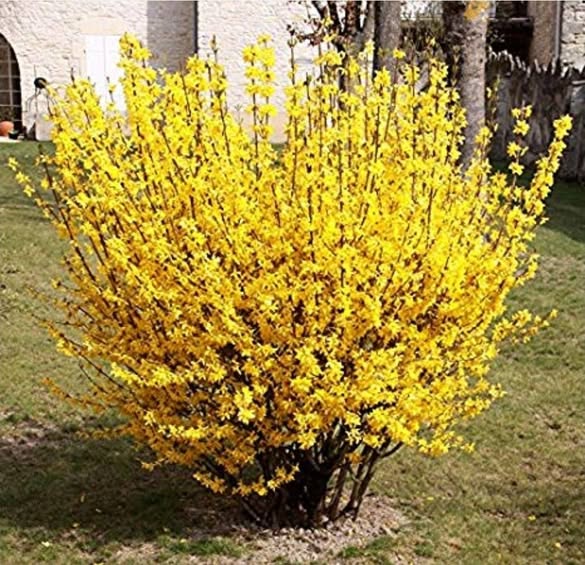
Forsythia is one of the first signs that winter is truly over. Bright yellow flowers cover every branch before a single leaf appears, creating a spectacular display in late winter to early spring.
This flowering shrub is extremely hardy, tolerating temperatures well below freezing, and grows vigorously in almost any soil. Forsythia makes an excellent informal hedge or specimen plant. Prune immediately after flowering — pruning at any other time removes the following year’s buds.
‘Lynwood Variety’ and ‘Week End’ are among the most reliable and floriferous cultivars.
2. Winter Jasmine (Jasminum nudiflorum)
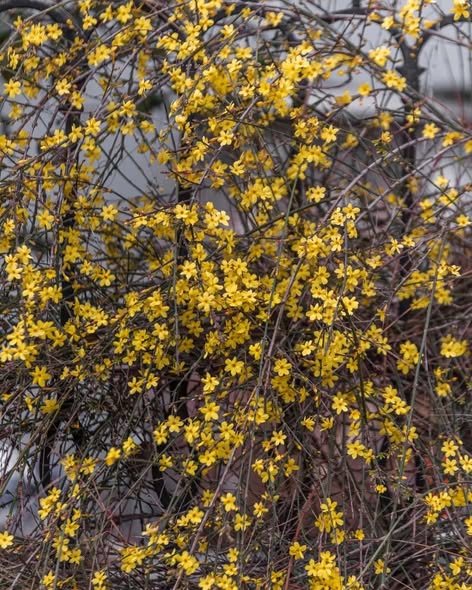
Do not be misled by the word “jasmine” — Winter Jasmine is technically a wall shrub that produces cheerful, bright yellow flowers on bare green stems from December through to February.
Unlike its summer-blooming relatives, it has no fragrance, but it delivers colour when almost nothing else will.
Winter Jasmine tolerates shade, poor soil, and north-facing walls with admirable resilience. Train it against a wall or fence, or allow it to cascade over a bank or raised bed. It is one of the most dependable winter-flowering shrubs in cultivation.
3. Witch Hazel (Hamamelis × intermedia)
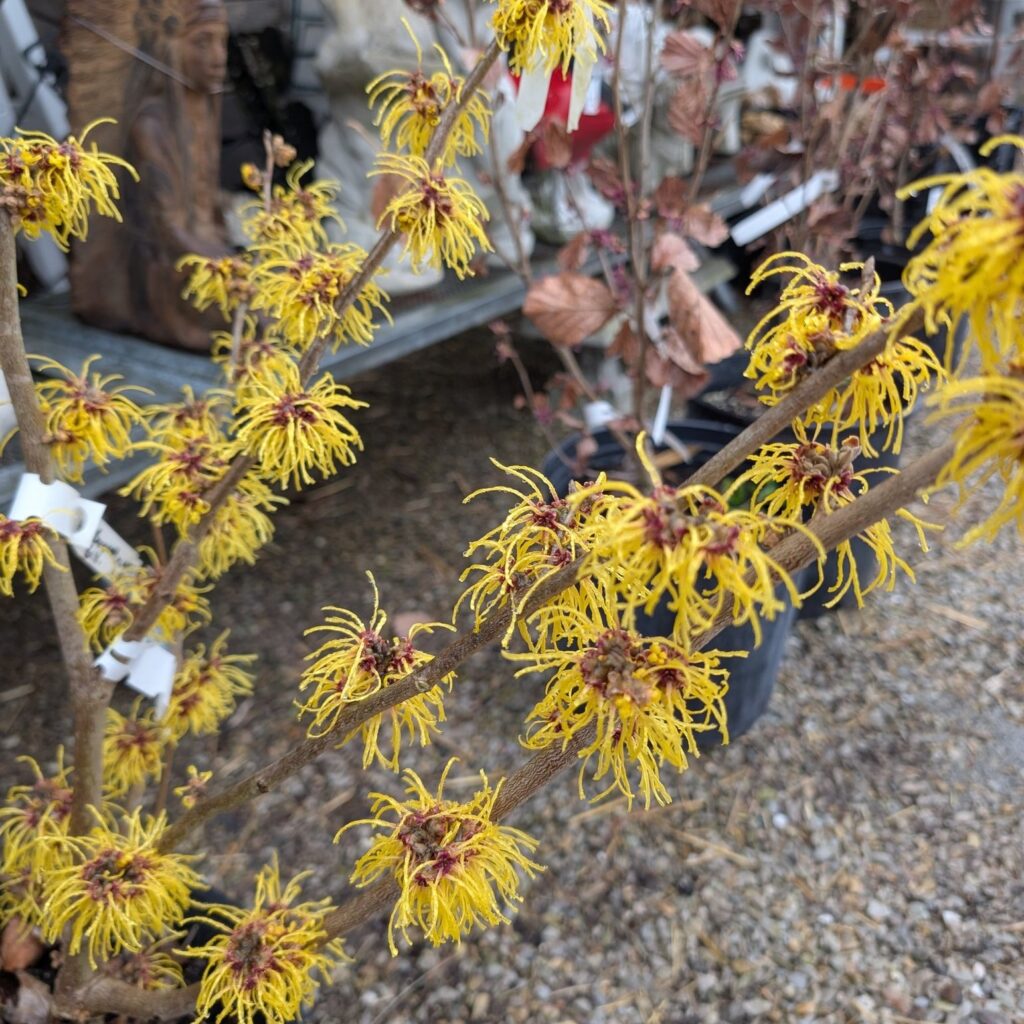
Witch Hazel is extraordinary. Its spidery, ribbon-like flowers appear in the depths of winter, sometimes pushing through light snow, in shades ranging from pale lemon to deep copper-gold. The flowers are fragrant, and the foliage turns brilliant orange and red in autumn.
It is a large, slow-growing shrub that prefers moist, slightly acidic, well-drained soil. Give it space — a mature Witch Hazel is a thing of genuine beauty. ‘Pallida’ (sulphur yellow) and ‘Arnold Promise’ (bright yellow) are two of the finest cultivars.
4. Kerria (Kerria japonica)
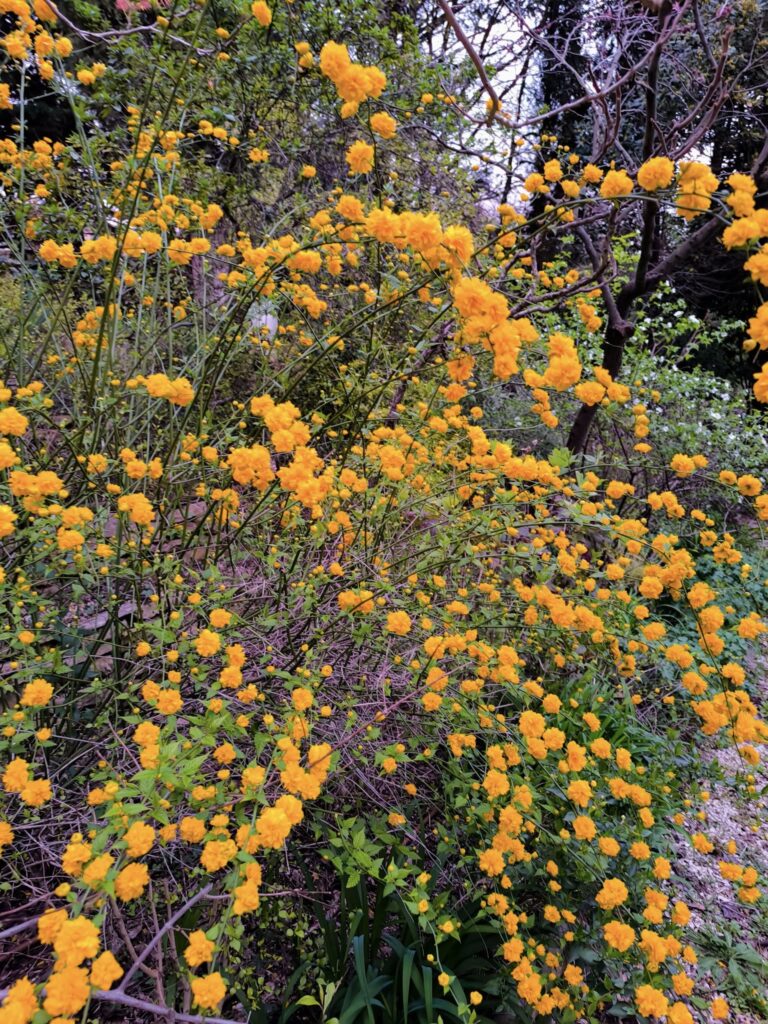
Kerria is a cheerful, informal shrub with bright golden-yellow pompom flowers in spring. It produces arching green stems that remain attractive through winter, adding year-round interest to the garden.
This shrub tolerates partial shade better than most yellow-flowering shrubs, making it a useful choice for north-facing borders or under light tree canopy. The double-flowered form, ‘Pleniflora’, is the most commonly grown and produces particularly full, round blooms.
5. Cornelian Cherry (Cornus mas)
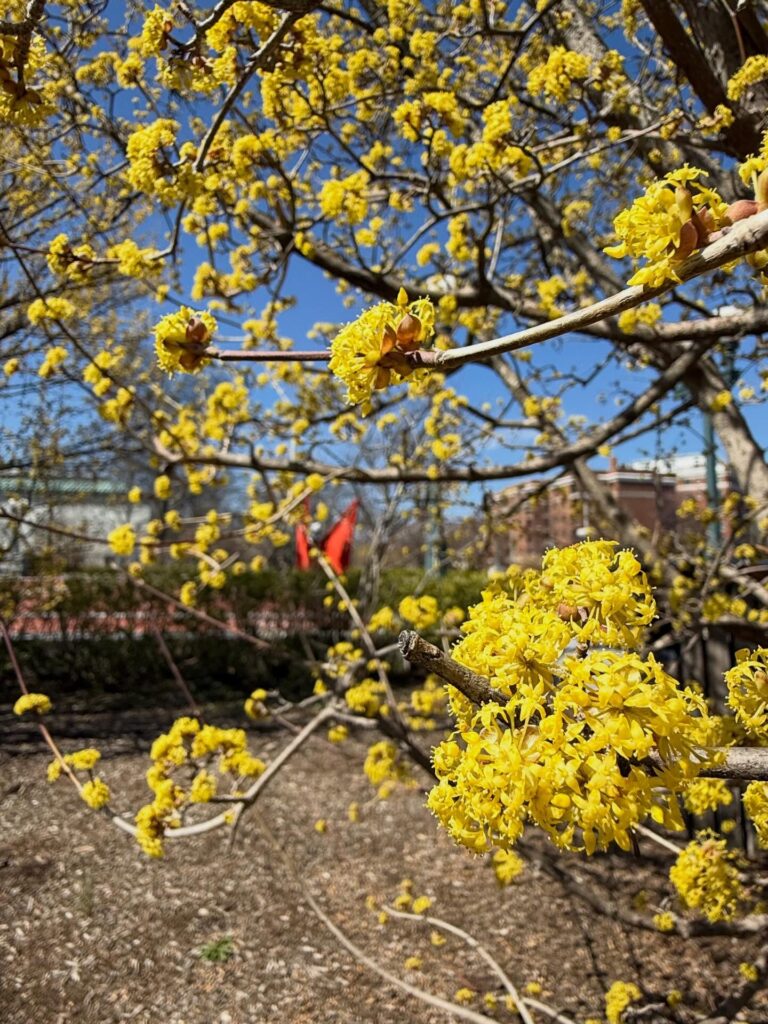
The Cornelian Cherry is a large, multi-stemmed shrub or small tree that produces clouds of tiny yellow flowers in late winter before the leaves emerge. The display is subtle but charming, and it coincides with a time when little else is in bloom.
In late summer, Cornelian Cherry produces edible, cherry-like red fruits that are rich in vitamin C. This dual-season appeal — flowers in February and fruit in August — makes it an excellent choice for productive gardens and wildlife-friendly planting.
6. Mahonia (Mahonia aquifolium and related species)
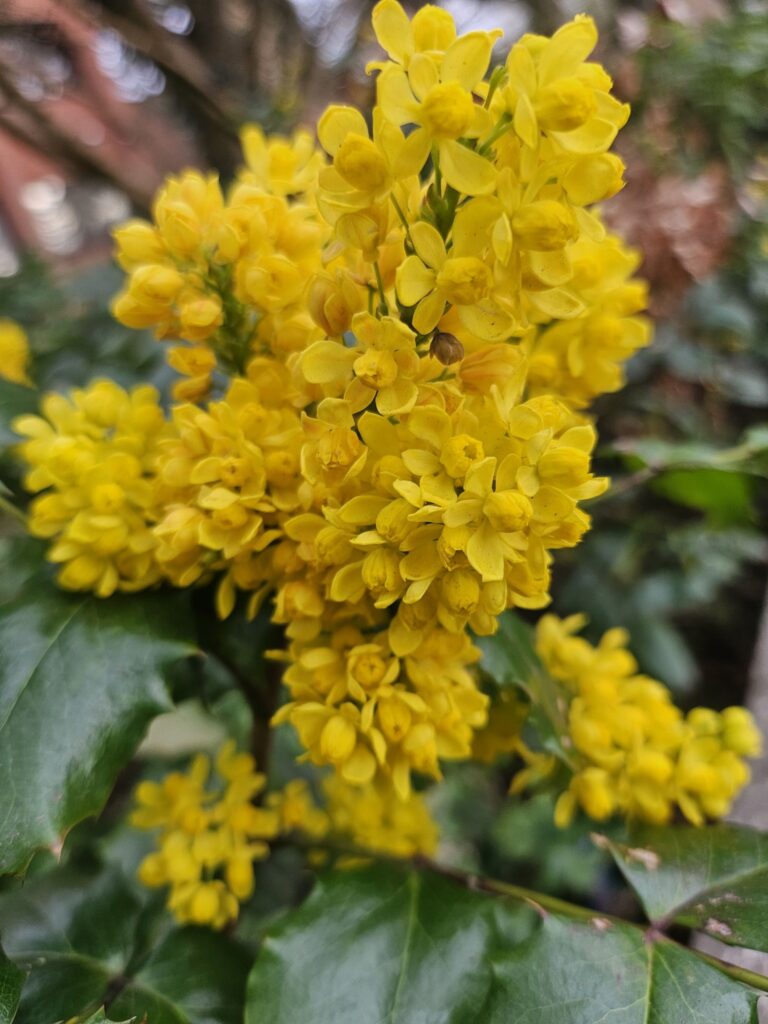
Mahonias are among the most structurally handsome of all evergreen shrubs, with bold, spiny, holly-like leaves and upright clusters of bright yellow flowers that appear in late winter to early spring. The flowers are followed by blue-black berries that birds adore.
Mahonia aquifolium (Oregon Grape) is the most commonly planted species, but Mahonia × media varieties such as ‘Charity’ and ‘Winter Sun’ produce larger, more dramatic flower spikes in November and December. They tolerate dry shade — a rare and valuable quality.
7. Potentilla / Shrubby Cinquefoil (Potentilla fruticosa)
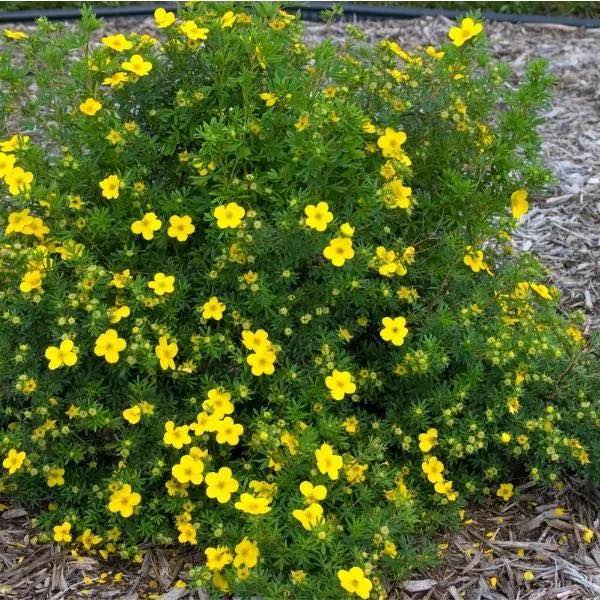
Shrubby Cinquefoil is one of the longest-flowering shrubs you can grow, producing small, buttercup-like yellow flowers from late spring all the way through to early autumn. Few other shrubs can claim such an extended season of bloom.
It is compact, hardy, and tolerates a wide range of conditions including poor soil, drought, and exposure. It works beautifully as a low hedge, in a rock garden, or at the front of a mixed border. ‘Goldfinger’ is a particularly reliable yellow cultivar.
8. St. John’s Wort (Hypericum spp.)
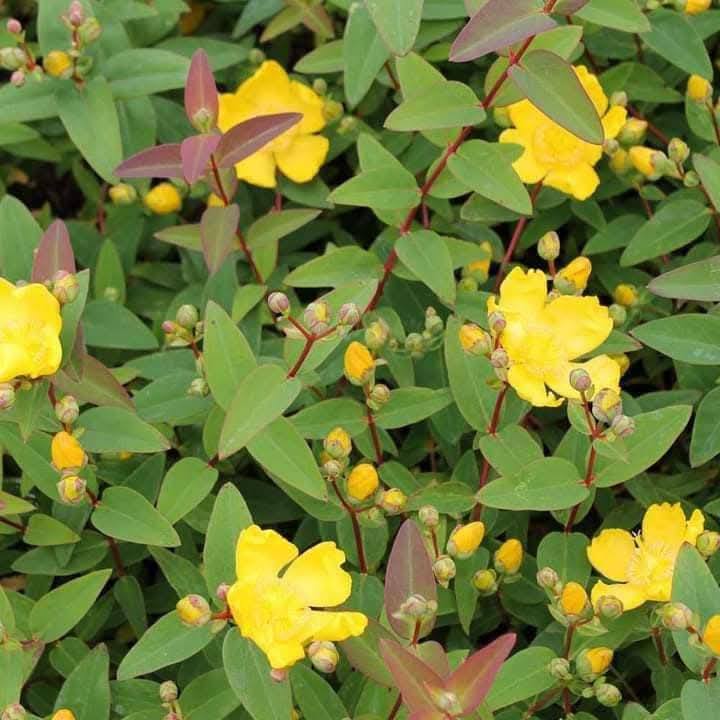
Hypericums are summer-flowering shrubs that produce large, five-petalled yellow blooms with prominent, brush-like stamens. They are followed by attractive berries — red, orange, or black depending on the species — that provide autumn interest.
Hypericum ‘Hidcote’ is the most popular cultivar, producing particularly large golden-yellow flowers over a long summer season. It tolerates a range of soils and partial shade, making it versatile for difficult spots. It is also used as ground cover on slopes where other plants struggle.
9. Broom (Cytisus scoparius)
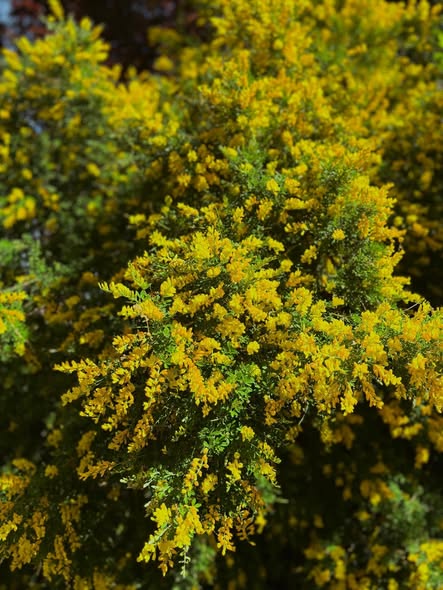
Common Broom puts on an extraordinary spring display. Its arching stems are completely smothered in pea-like yellow flowers in late spring, creating a vivid golden effect that is visible from a considerable distance.
It thrives in poor, sandy, well-drained soil and full sun. It can be short-lived, especially on rich or heavy soil, but it seeds freely and establishes quickly. Note that in some regions Broom is considered invasive — check local guidance before planting.
10. Spanish Broom (Spartium junceum)
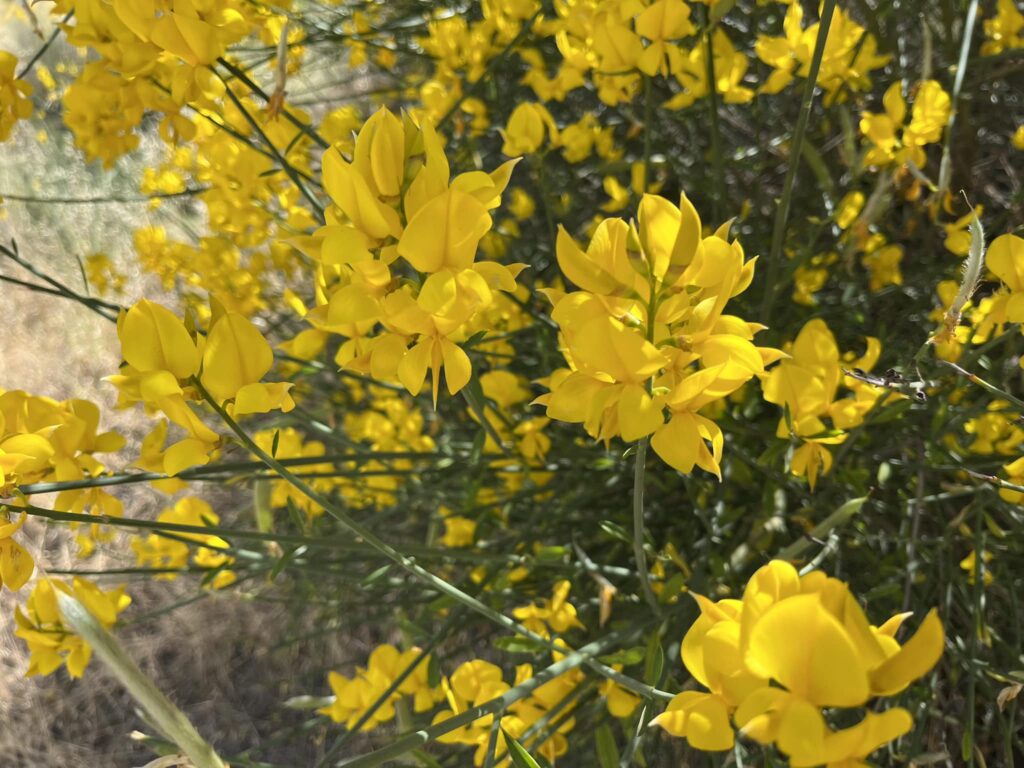
Spanish Broom is a taller, more robust relative of common Broom, producing clusters of richly fragrant, golden-yellow flowers from early summer through to autumn. The flowers smell sweetly of vanilla and honey, and they attract bees in large numbers.
It grows on almost any well-drained soil and tolerates coastal exposure, drought, and salt spray with ease. It can reach 3 metres in height and spreads to create a bold, architectural presence in the landscape.
11. Rose of Sharon — Yellow Varieties (Hypericum calycinum)
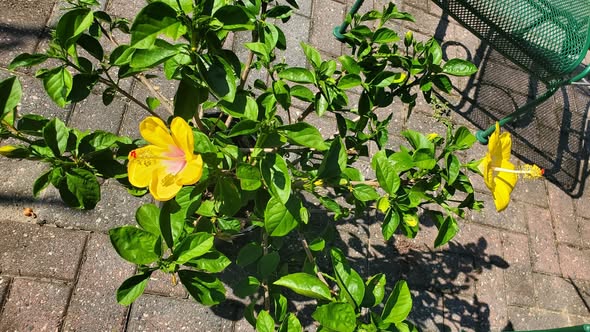
Sometimes called Aaron’s Beard, this low-growing, ground-covering Hypericum produces bright yellow flowers with dramatic golden stamens throughout summer. It spreads vigorously by underground stolons, making it one of the most effective weed-suppressing ground cover shrubs available.
It grows in sun or shade, on slopes, under trees, or in any awkward spot where little else will thrive. Cut it back hard in early spring every few years to refresh the foliage and encourage new growth.
12. Forsythia ‘Goldilocks’ (Forsythia ‘Goldilocks’)
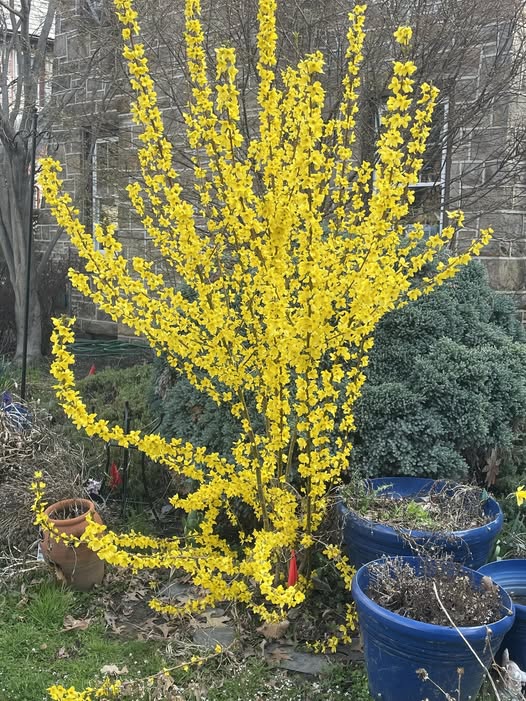
While standard Forsythia is already covered above, the compact dwarf cultivar ‘Goldilocks’ deserves its own mention for small garden situations. It grows to just 60–90 cm in height and spread, making it suitable for raised beds, containers, and small borders where full-sized Forsythia would be overwhelming.
The flower colour is equally vivid, and the habit is dense and tidy. This is the Forsythia for gardeners who love the bloom but lack the space for the species.
13. Yellow Azalea / Pontic Azalea (Rhododendron luteum)
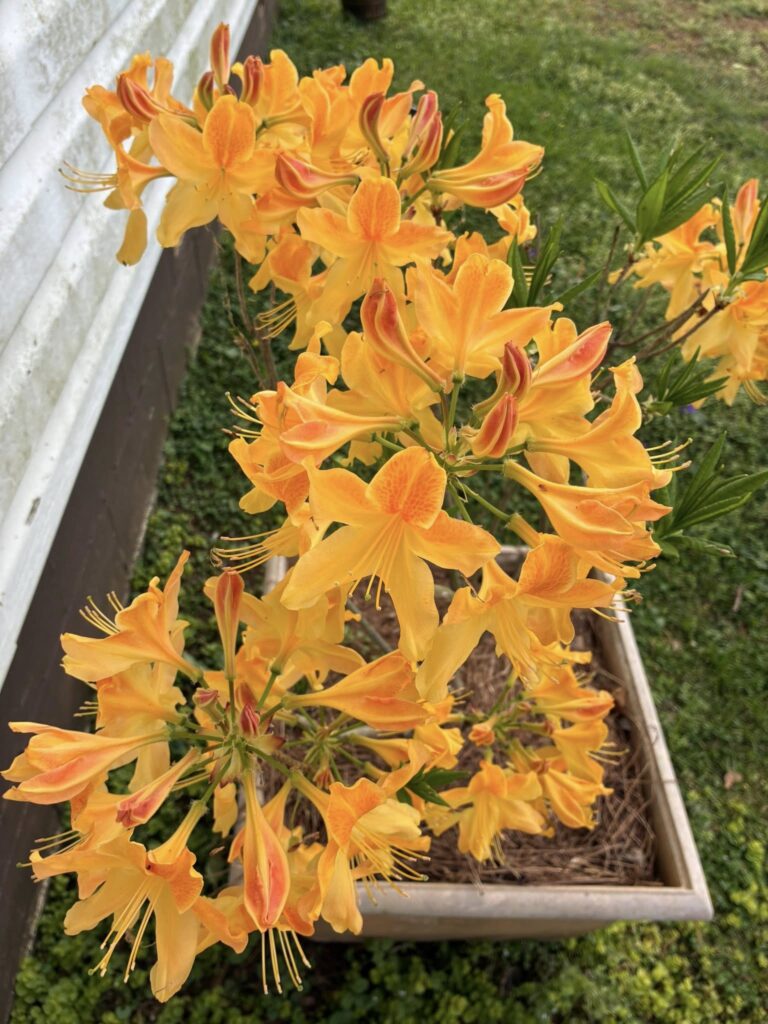
Most people associate azaleas with pink and red, but Yellow Azalea is one of the finest flowering shrubs in existence. Its clusters of funnel-shaped, rich golden-yellow flowers in late spring are intensely fragrant — a warm, honeysuckle-like scent that fills the air on a still afternoon.
It requires acidic, humus-rich, moist soil and partial shade. Autumn colour is exceptional — the leaves turn flame-orange and crimson before falling. This is a genuinely multi-season shrub of the highest garden value.
14. Laburnum (Laburnum × watereri ‘Vossii’)
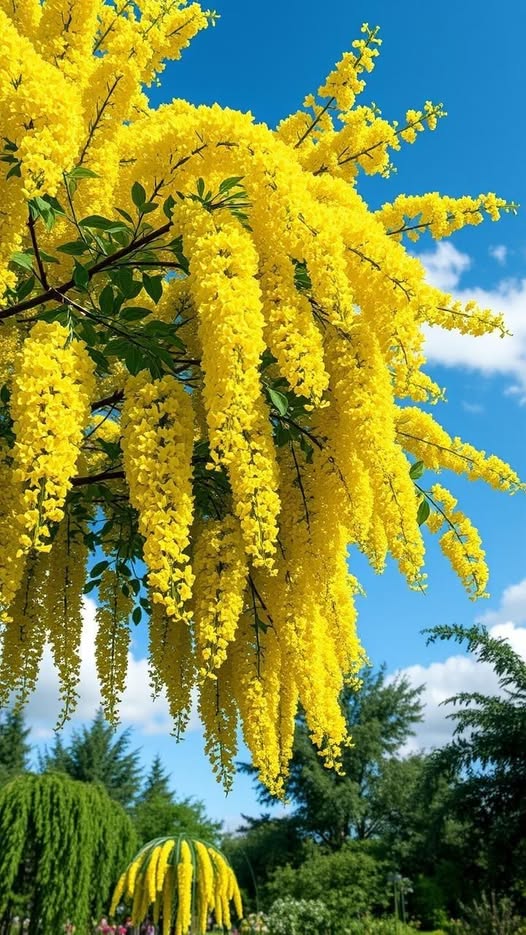
Laburnum is one of the most breathtaking of all yellow-flowering shrubs or small trees, producing long, pendulous clusters — called racemes — of golden-yellow pea flowers in late spring. A mature laburnum in full bloom is a jaw-dropping sight.
All parts of the plant are toxic if ingested, so it is not recommended for gardens with small children or grazing animals. However, in an appropriate setting, it is extraordinary. It is often trained into a tunnel or arch, creating a spectacular floral walkway.
15. Gorse (Ulex europaeus)
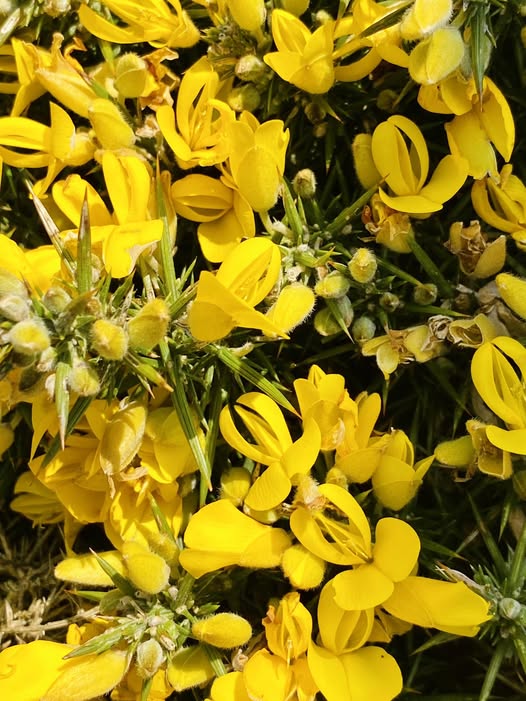
Gorse has a reputation for being difficult and even troublesome in some landscapes — but its coconut-scented, vivid yellow flowers are hard to argue with, especially in late winter when they appear on otherwise bare hillsides and heathland.
In a controlled garden setting, compact forms such as Ulex europaeus ‘Flore Pleno’ (the double-flowered form) are more manageable. Plant it in a sunny, exposed position in poor, well-drained soil. Avoid rich soil, which causes excessive growth.
16. Senecio / Brachyglottis (Brachyglottis ‘Sunshine’)
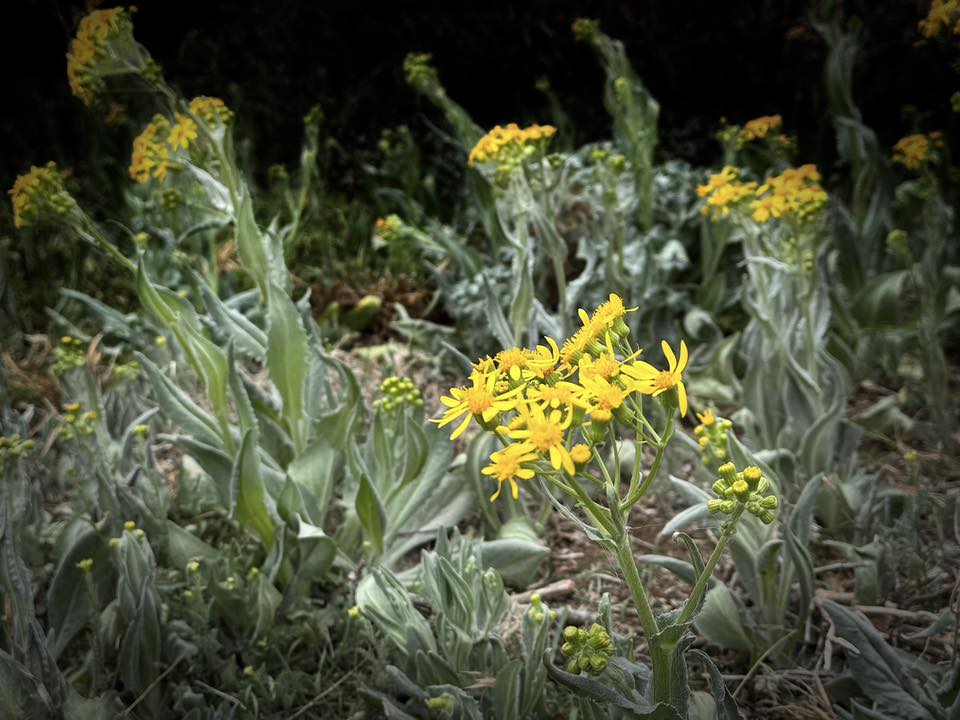
Brachyglottis ‘Sunshine’ — still commonly sold under the old name Senecio ‘Sunshine’ — is a valuable evergreen shrub with silver-grey foliage and bright yellow daisy-like flowers in summer. The foliage alone makes it worth growing.
It is excellent in coastal gardens and dry, sunny borders. Clip it lightly after flowering to maintain a compact shape. The silver leaves reflect light beautifully and provide a striking contrast with darker-leaved neighbours.
17. Jerusalem Sage (Phlomis fruticosa)
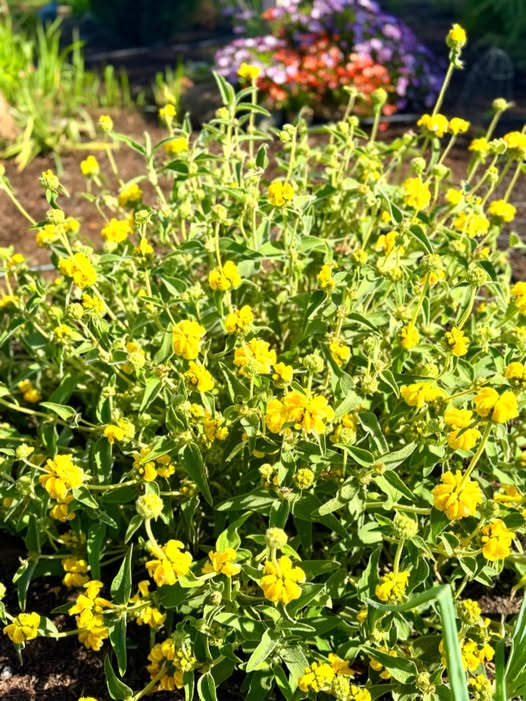
Jerusalem Sage is a striking Mediterranean shrub with large, felted silver-grey leaves and whorls of bright yellow, hooded flowers arranged at intervals up the stems in summer. It has a bold, sculptural quality that makes it a standout specimen plant.
It is extremely drought-tolerant and grows best in hot, sunny, well-drained positions. It will not perform well in cold, wet, heavy soil. Leave the old flower stems standing through winter — they provide structural interest and shelter for insects.
18. Genista (Genista lydia)
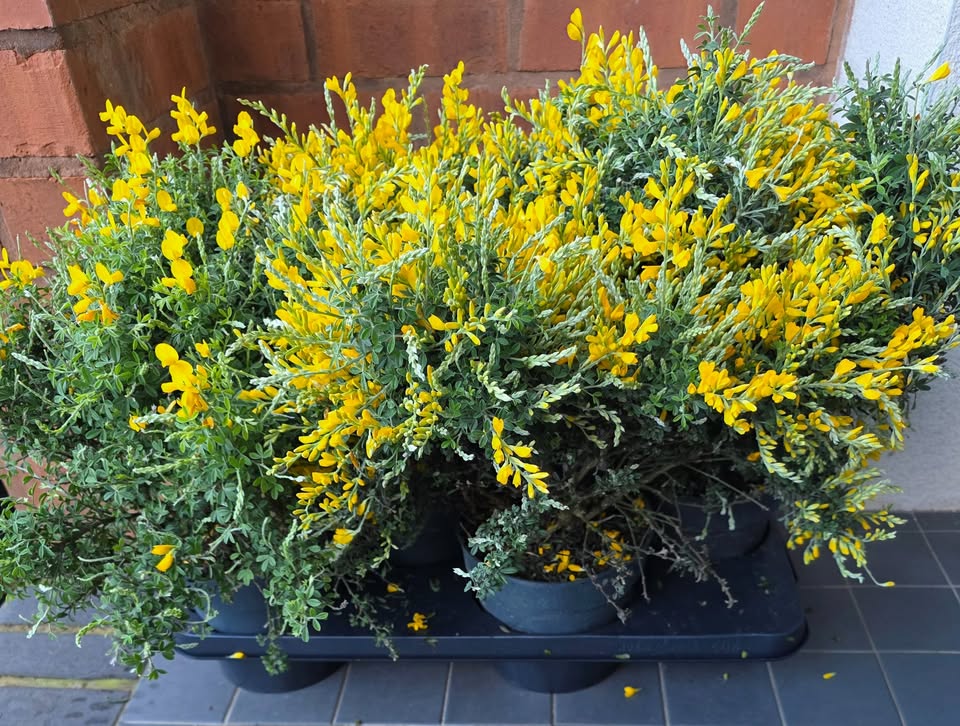
Genista lydia is a low, arching shrub that produces masses of small, bright yellow pea flowers in late spring. It is compact — typically reaching just 60 cm in height — and spreads gracefully over rocks, walls, and slopes.
It is a superb plant for rock gardens, raised beds, and the tops of retaining walls, where its stems can cascade freely. It requires very little care once established and is remarkably drought-tolerant.
19. Pineapple Broom (Cytisus battandieri)
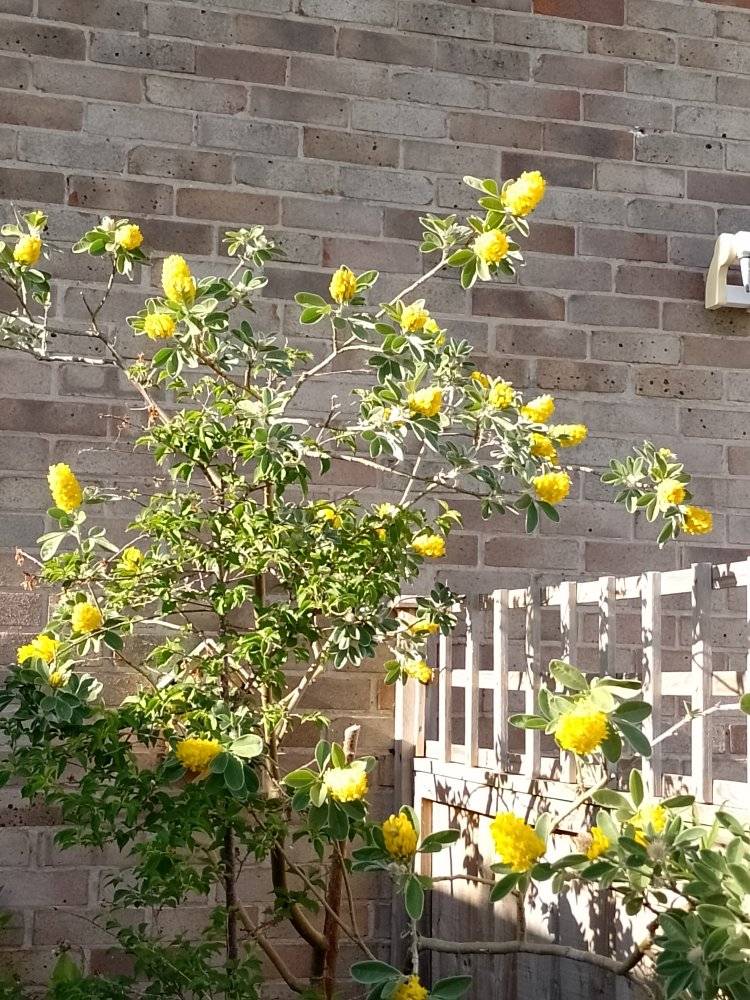
Pineapple Broom is a large, semi-evergreen shrub with silvery, trifoliate leaves and upright clusters of golden-yellow flowers in early summer. The flowers have a distinct and remarkable scent — warm, sweet, and strongly reminiscent of fresh pineapple.
It performs best when trained against a warm, sheltered wall where the reflected heat enhances both growth and fragrance. In colder climates, wall protection is essential for winter survival.
20. Trumpet Bush (Tecoma stans)
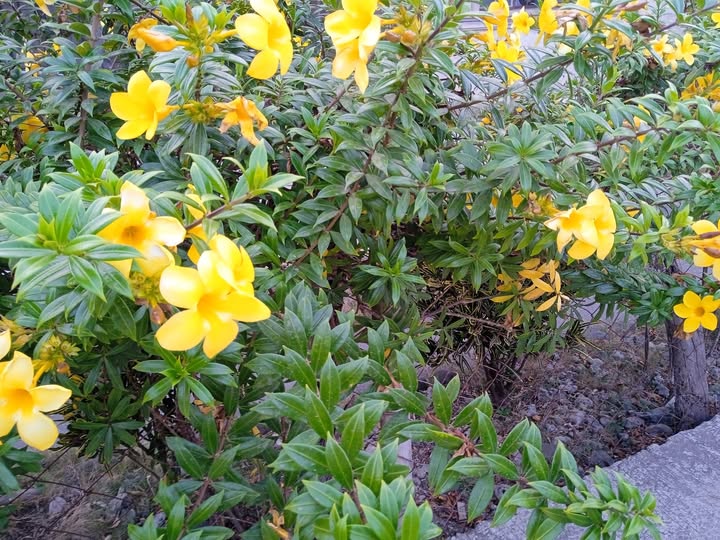
Yellow Trumpet Bush is a fast-growing, semi-evergreen shrub from the Americas that produces clusters of vivid, trumpet-shaped yellow flowers almost continuously from spring through to autumn in warm climates.
It performs best in zones 9–11 and requires full sun and well-drained soil. In cooler climates it can be grown in a large container and moved under cover for winter. It is a bold, tropical-looking shrub that adds genuine drama to warm garden settings.
21. Flannel Bush (Fremontodendron californicum)
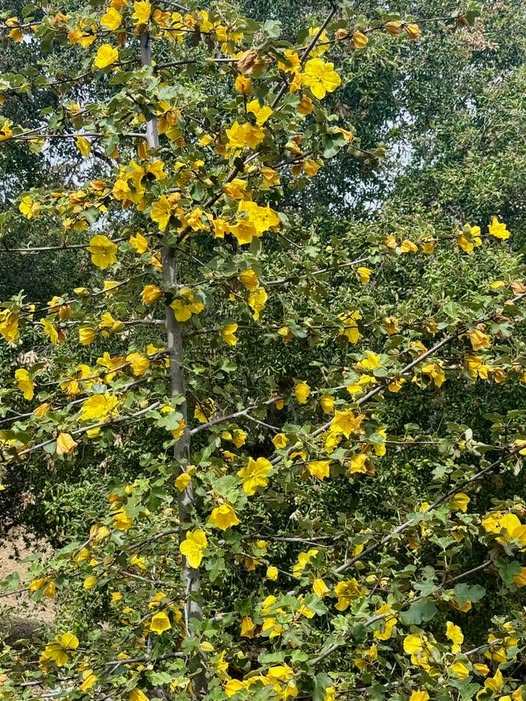
Flannel Bush is one of the most spectacular flowering shrubs from the American West, producing large, waxy, saucer-shaped golden-yellow flowers from spring to early summer against dark, lobed leaves. The blooms are not fleeting — a single plant can produce hundreds of flowers over several weeks.
It is strictly a dry-climate plant and will not tolerate wet, heavy soil or high summer humidity. In its ideal conditions — hot, dry, and sunny — it is truly magnificent. All parts of the plant carry fine hairs that can irritate skin, so handle with care.
22. Carolina Jessamine (Gelsemium sempervirens)
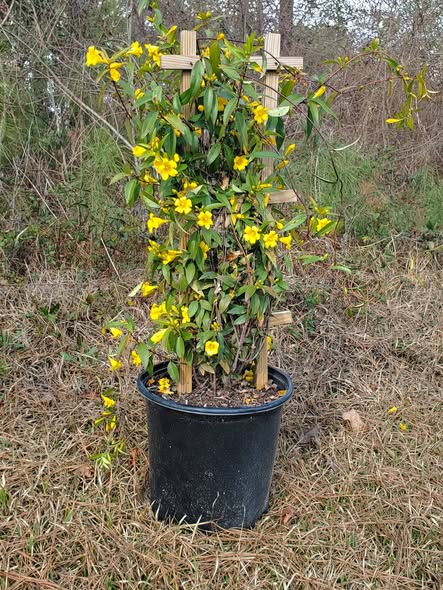
Carolina Jessamine is a twining, vine-like shrub that produces fragrant, trumpet-shaped yellow flowers in late winter and early spring. In mild climates, it may bloom almost year-round. It is often trained on fences, trellises, or walls, where it creates a cheerful golden curtain of colour.
This plant is highly toxic if ingested, but in the right garden setting it is among the most charming of all yellow-flowering plants. It is the state flower of South Carolina and is native to the southeastern United States.
23. Fremontia / California Flannel Bush — Dwarf Forms
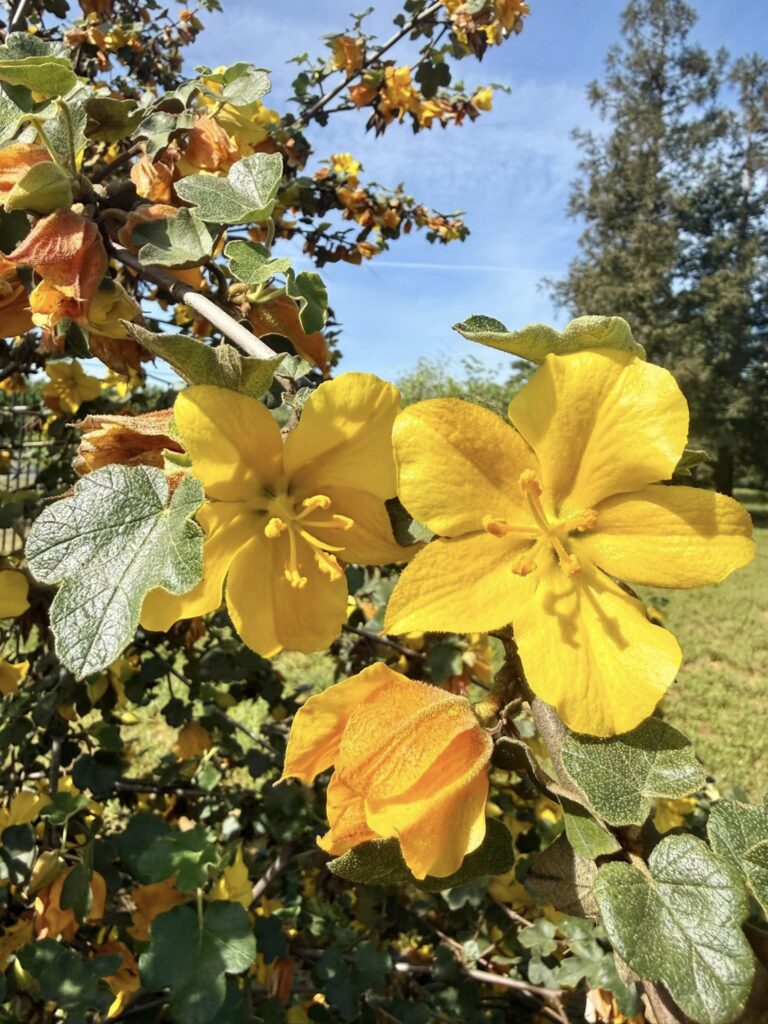
For gardeners with less space who admire Fremontodendron, compact cultivars such as ‘Pacific Sunset’ offer the same golden flower display in a more manageable size. These selections were developed specifically for residential gardens where the full species might outgrow its welcome.
Like the species, they demand excellent drainage and full sun. They are drought-tolerant in the extreme and actually perform better in poor, dry soil than in rich, well-watered beds.
24. Yellow Bird of Paradise (Caesalpinia gilliesii)
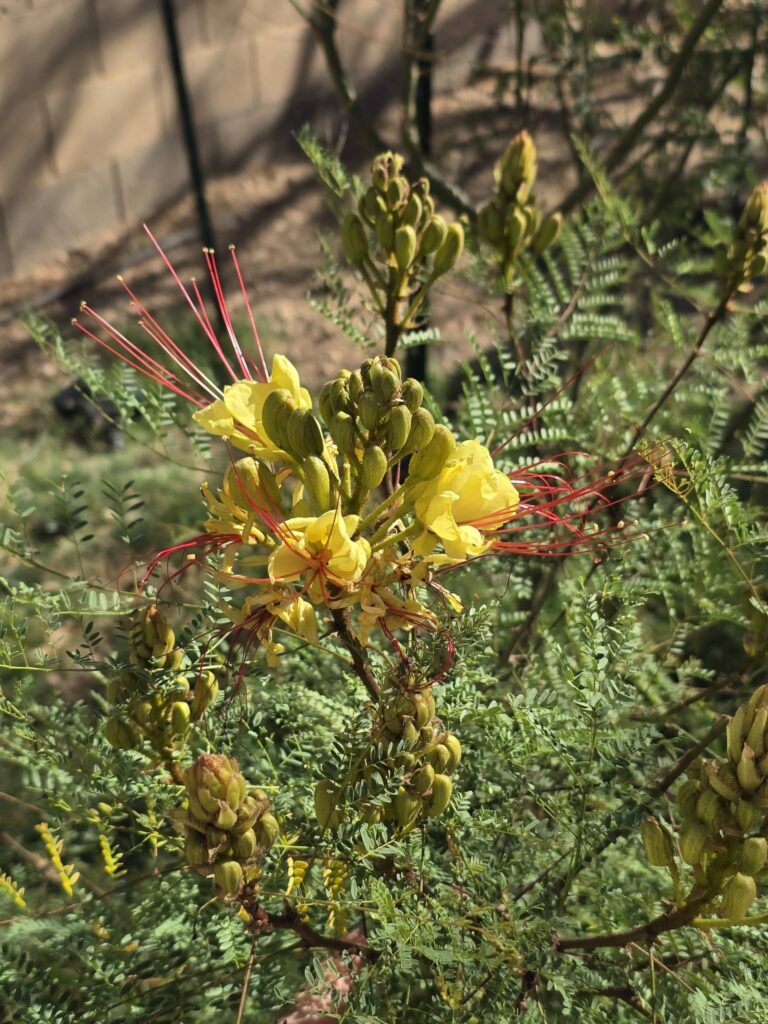
Yellow Bird of Paradise is a bold, open shrub with fine, feathery foliage and clusters of yellow flowers with striking red stamens that protrude dramatically from each bloom. It has a tropical appearance despite being surprisingly drought-tolerant and cold-hardy.
It thrives in hot, dry climates and is widely used in southwestern American landscapes. In garden settings it acts as a bold focal point, and it attracts hummingbirds throughout the flowering season.
25. Golden Currant (Ribes aureum)
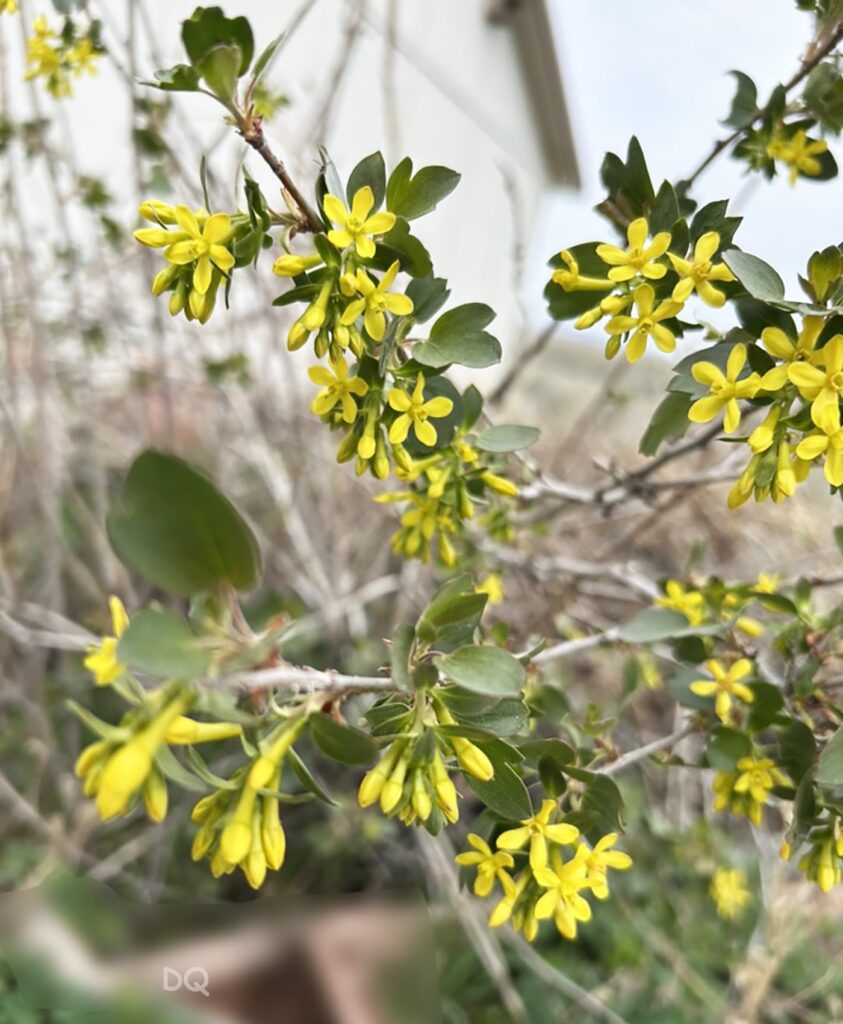
Golden Currant is a native North American shrub that produces clusters of small, fragrant, golden-yellow flowers in spring. The flowers have a sweet, clove-like scent and are followed by small berries that ripen through yellow, red, and finally black — each stage providing colour interest.
It is excellent for wildlife gardens, supporting native bees with its early-season flowers and birds with its summer fruit. It tolerates a wide range of soils and conditions, including drought, making it one of the most resilient and generous shrubs on this list.
Why Yellow-Flowering Shrubs Deserve a Place in Your Garden
- Yellow is universally visible. It stands out against green foliage, dark soil, stone walls, and even winter skies. Few colours perform as reliably across seasons and settings.
- Many yellow-flowering shrubs bloom early. Forsythia, Winter Jasmine, and Cornelian Cherry are among the first plants to flower each year, often appearing before the last frost has passed. This makes them invaluable for bringing colour to an otherwise bare garden.
- Yellow pairs beautifully with other colours. It lifts blue and purple companions, echoes warmth with oranges and reds, and creates a clean, fresh palette with white. Whether you garden in a formal or informal style, yellow works.
- They attract key pollinators. Bees and hoverflies are especially responsive to yellow blooms. A border filled with yellow-flowering shrubs supports local pollinator populations through multiple seasons.
How to Select the Right Yellow-Flowering Shrub for Your Space
Define your season of interest first
If you want colour in winter, Witch Hazel, Winter Jasmine, or Mahonia are your best choices. If summer colour matters most, look to Hypericum, Spanish Broom, or Trumpet Bush. Planning across seasons ensures the garden is never without interest.
Match plants to your climate honestly
Flannel Bush and Trumpet Bush are plants for warm, dry climates. Witch Hazel and Forsythia are fully cold-hardy and suit northern gardens. Choosing based on your actual conditions — not wishful thinking — will always produce better results.
Think about scale
Laburnum and Spanish Broom can reach 3–5 metres and need space. Potentilla, Genista, and dwarf Forsythia cultivars suit compact gardens. Always check the mature dimensions of a plant before purchasing.
Consider multi-season value
Cornelian Cherry gives winter flowers and summer fruit. Yellow Azalea gives spring flowers and autumn colour. Mahonia gives winter flowers and autumn berries. The best shrubs earn their place in the garden across more than one season.
General Care Tips for Yellow-Flowering Shrubs
Pruning correctly makes all the difference
Spring-flowering shrubs like Forsythia, Kerria, and Broom should be pruned immediately after flowering. Summer-flowering shrubs like Potentilla and Hypericum benefit from light pruning in early spring. Always remove dead, damaged, or crossing branches first.
Most yellow-flowering shrubs prefer good drainage
Waterlogged soil is the most common cause of failure. If your soil is heavy clay, improve it with grit and organic matter, or plant in raised beds.
Feeding should be light
A slow-release balanced fertiliser in spring is sufficient for most shrubs. Over-fertilising produces lush green growth at the expense of flowers, which is the opposite of what most gardeners want.
Mulching conserves moisture and suppresses weeds
Apply a 5–8 cm layer of bark mulch or well-rotted compost each spring. Keep it away from the stems of the plant to prevent rot.
Establish new shrubs carefully
Water regularly in the first year after planting, especially during dry spells. Once established, most yellow-flowering shrubs are remarkably self-sufficient.
Designing With Yellow-Flowering Shrubs
Yellow sits in a privileged position on the colour wheel. It works with almost everything.
- Combine with blue and purple for maximum contrast. Ceanothus, catmint, and salvias all pair beautifully with yellow Forsythia or Potentilla. The contrast is vibrant without being jarring.
- Layer with silver foliage for a warm, Mediterranean feel. Plants like Brachyglottis, Artemisia, or Stachys byzantina alongside Jerusalem Sage or Brachyglottis ‘Sunshine’ create a cohesive, drought-tolerant planting with wonderful texture.
- Use early bloomers to mark the transition from winter. Position Witch Hazel, Winter Jasmine, or Cornelian Cherry where they can be seen from a window. The view of yellow flowers on a cold February morning is genuinely mood-lifting.
- Plant en masse for impact. A drift of three to five Potentilla shrubs, or a row of Forsythia used as an informal hedge, makes a far stronger visual statement than isolated individual specimens.
Final Thoughts
Yellow-flowering shrubs are among the most rewarding plants in horticulture. They offer brightness, warmth, and ecological value across every season — from the first Witch Hazel flowers of January to the last Hypericum berries of December.
Choosing even two or three of these shrubs thoughtfully can transform a garden. The key is to select plants that suit your climate, your soil, and your space — and then let them do what they do naturally.
There is a particular joy in watching a bee disappear into the flowers of a Mahonia in February, or catching the vanilla scent of Spanish Broom drifting across the garden on a warm June evening. These are the small, genuine pleasures that yellow-flowering shrubs deliver year after year. They are, in every sense, worth growing.
References
- University of Florida IFAS Extension — Landscape Plants: Images, Identification, and Information https://hort.ifas.ufl.edu/woody/
- North Carolina State University Extension — Plant Toolbox: Shrubs and Flowering Plants https://plants.ces.ncsu.edu/find_a_plant/?lightReq=0&waterReq=0&maintenanceReq=0&plantType%5B%5D=shrub
- Royal Horticultural Society (RHS) — Shrubs: Choosing and Growing https://www.rhs.org.uk/plants/types/shrubs

Tim M Dave is a gardening expert with a passion for houseplants, particularly cacti and succulents. With a degree in plant biology from the University of California, Berkeley, he has vast experience in gardening. Over the years, he has cultivated a vast collection of desert plants and learned a great deal about how to grow and care for these unique companions.