25 Stunning Shrubs With Purple Flowers: Identification and Pictures
Purple is one of the most captivating colours in the plant kingdom. It carries a sense of mystery, elegance, and calm — and when it appears on a flowering shrub, it can completely change the mood of a garden.
Whether you are designing a formal landscape or simply want to add life to a bare corner of your yard, shrubs with purple flowers are among the most versatile and rewarding choices you can make.
I have spent considerable time researching and observing these plants across different climates and garden types. This article brings together 25 of the best flowering shrubs with purple blooms, covering their key features, growing requirements, and why they deserve a spot in your outdoor space.
The 25 Best Shrubs With Purple Flowers — Detailed Profiles
1. Butterfly Bush (Buddleja davidii)
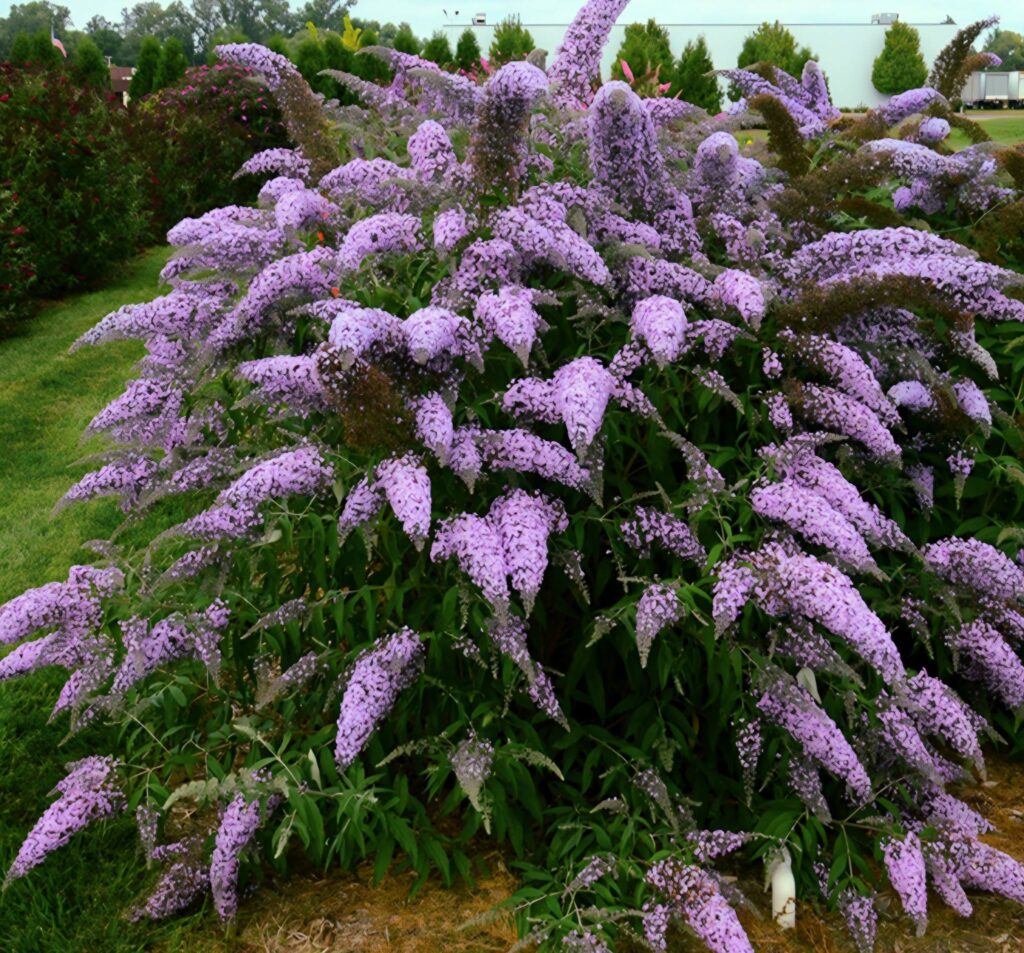
The Butterfly Bush is perhaps the most commonly planted purple-flowering shrub in temperate gardens — and for good reason. Its long, cone-shaped flower spikes bloom in shades ranging from deep violet to soft lilac, and they appear reliably from midsummer through to early autumn.
The fragrance is distinctive and sweet, drawing butterflies in extraordinary numbers. A single mature bush can attract dozens of butterfly species on a warm afternoon. It grows quickly and tolerates poor soil, making it a good choice for difficult spots.
Note: In some regions, particularly in the western United States, Buddleja can become invasive. Check with your local extension service before planting, or choose sterile cultivars such as ‘Blue Chip’ or ‘Miss Ruby’.
2. Lavender (Lavandula angustifolia)
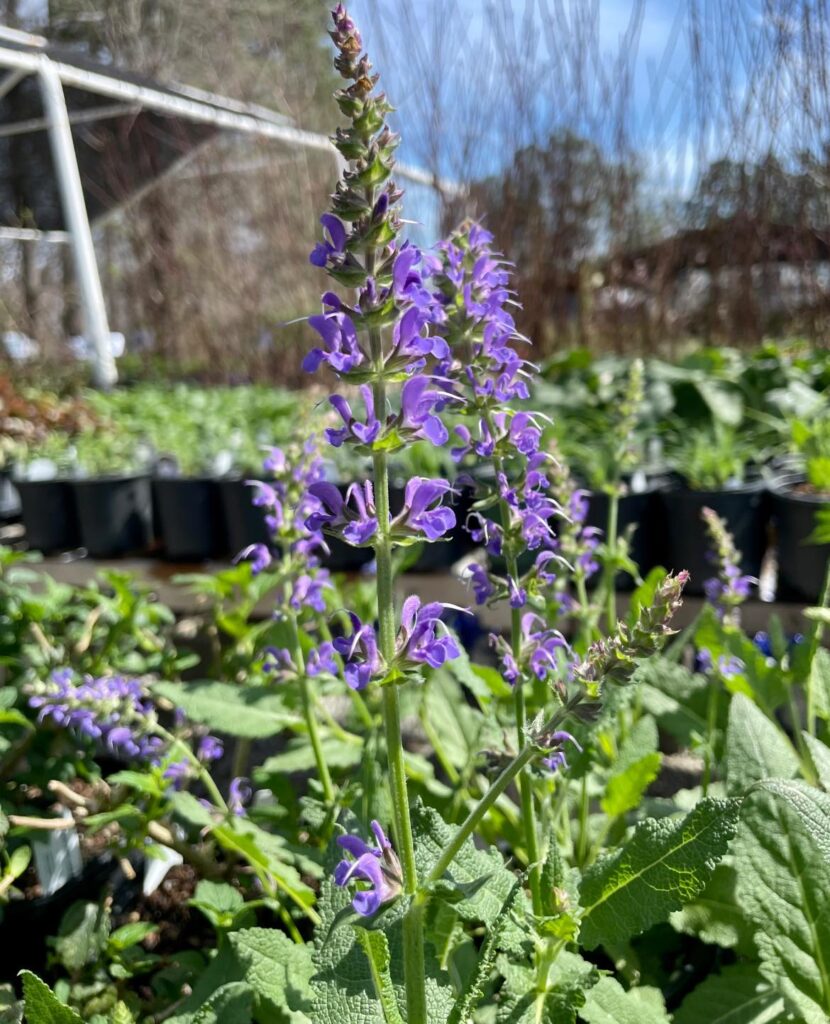
Few plants carry the same emotional weight as lavender. The sight of long purple spikes swaying in a summer breeze has become iconic, and its fragrance is recognised worldwide.
English lavender is the hardiest species and the most widely grown. It thrives in well-drained, slightly alkaline soil and full sun. Keep it compact by pruning lightly after the first flush of flowers.
This shrub is excellent as a low hedge, a container plant, or planted in drifts along pathways where visitors will brush against the stems and release the scent.
3. Lilac (Syringa vulgaris)
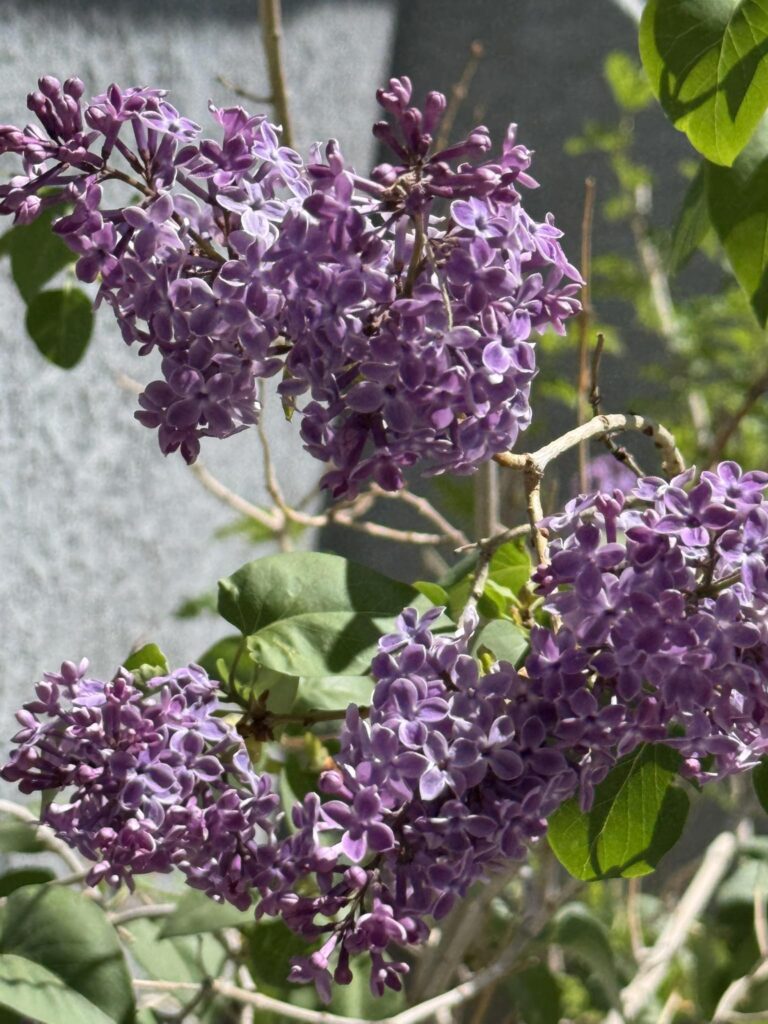
The lilac is a spring classic. Its clusters of tiny purple, violet, or mauve flowers produce one of the most beloved fragrances in horticulture. Flowering typically lasts two to three weeks in late spring, but the scent lingers far beyond that in memory.
Lilacs prefer cold winters to produce their best blooms. They are excellent as background shrubs or informal hedging, and many cultivars grow tall enough to serve as small trees.
Allow plenty of air circulation to prevent powdery mildew, and prune immediately after flowering to avoid removing next year’s buds.
4. Rhododendron (Rhododendron spp.)
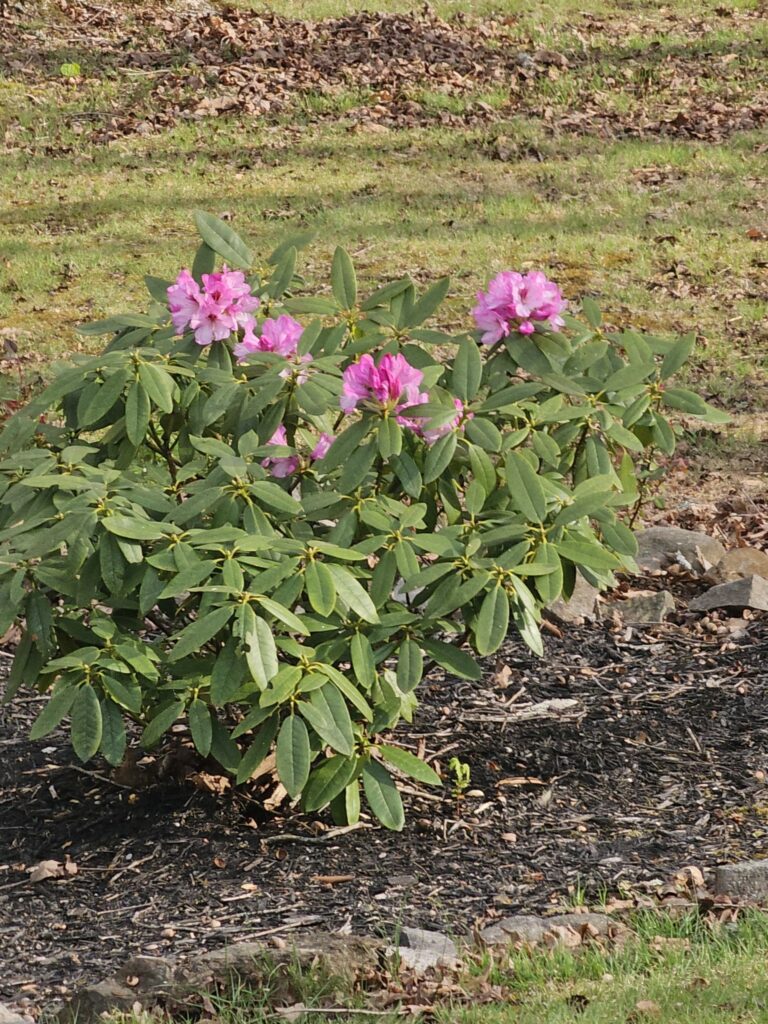
Rhododendrons represent one of the most diverse genera of flowering shrubs in the world, with thousands of cultivars in colours ranging from white to deep burgundy — and many beautiful purples in between.
They perform best in acidic, well-drained soil with dappled shade. Their large, glossy leaves provide year-round structure, and their spring flower clusters — called trusses — are spectacular in full bloom.
Choose the variety carefully based on your climate. Compact types such as ‘PJM’ suit smaller gardens and colder zones, while larger varieties thrive in mild, humid regions.
5. Blue Mist Shrub (Caryopteris × clandonensis)
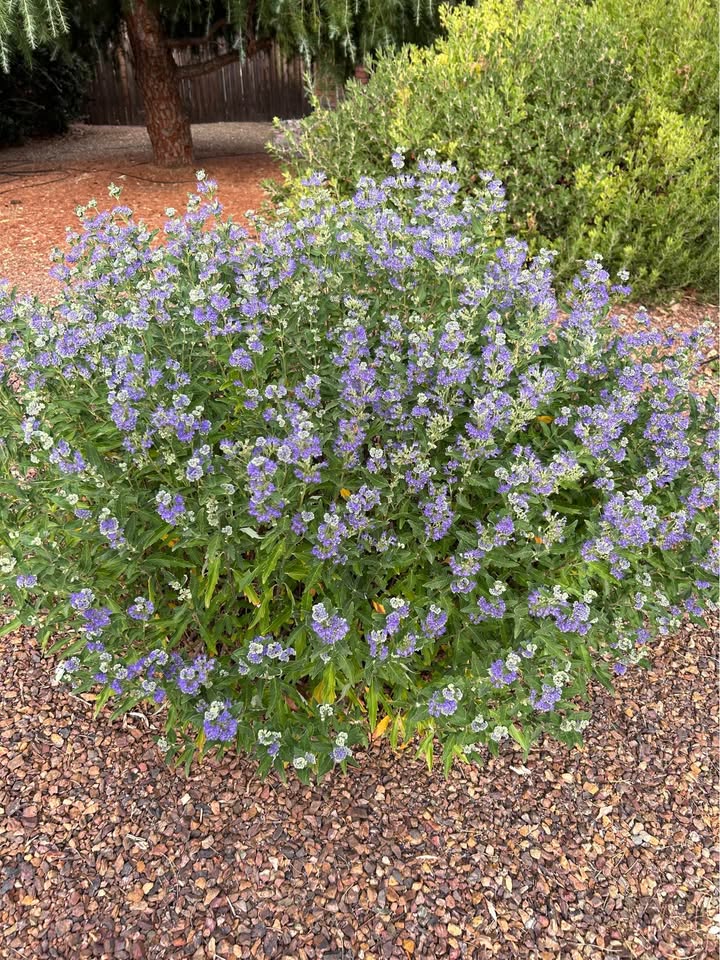
This compact, deciduous shrub earns its name from the haze of small blue-purple flowers that cover it in late summer and early autumn. It is one of the few shrubs that blooms reliably at this time of year, filling a gap when many other plants have already finished flowering.
Blue Mist Shrub grows best in full sun with well-drained soil. Cut it back hard in early spring to encourage fresh growth and a better flower display. It is also highly attractive to bees and other late-season pollinators.
6. Russian Sage (Perovskia atriplicifolia)
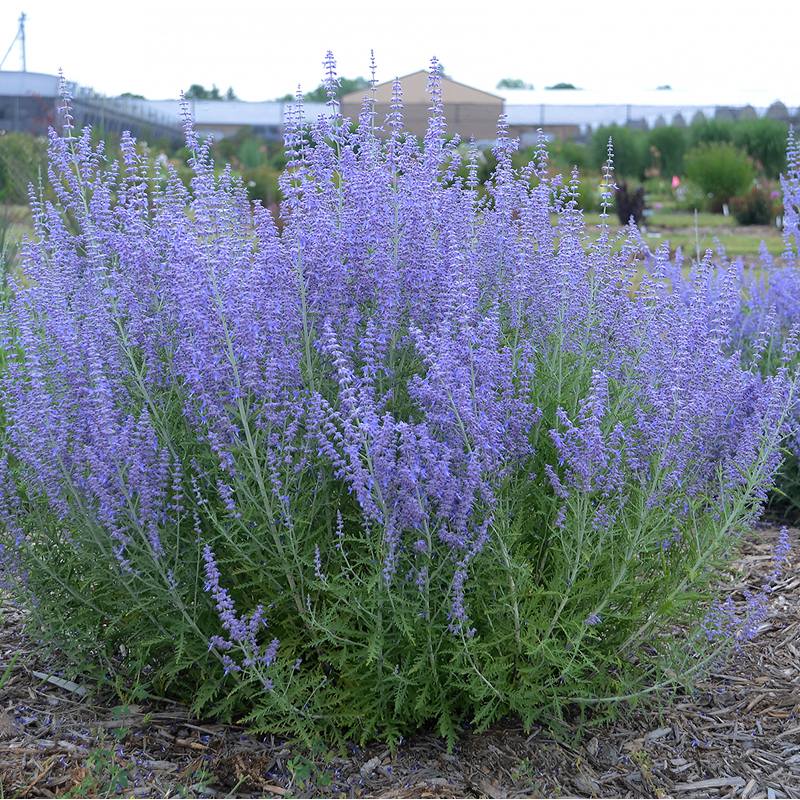
Russian Sage is not a true sage, but it belongs to the mint family and shares that characteristic aromatic quality. Its silvery stems and violet-blue flower spikes create a light, airy effect in the landscape.
It is exceptionally drought-tolerant once established and thrives in hot, sunny positions. This makes it one of the best choices for xeriscape gardens or areas with dry summers. The foliage remains attractive even when the plant is not in bloom.
7. Mexican Bush Sage (Salvia leucantha)
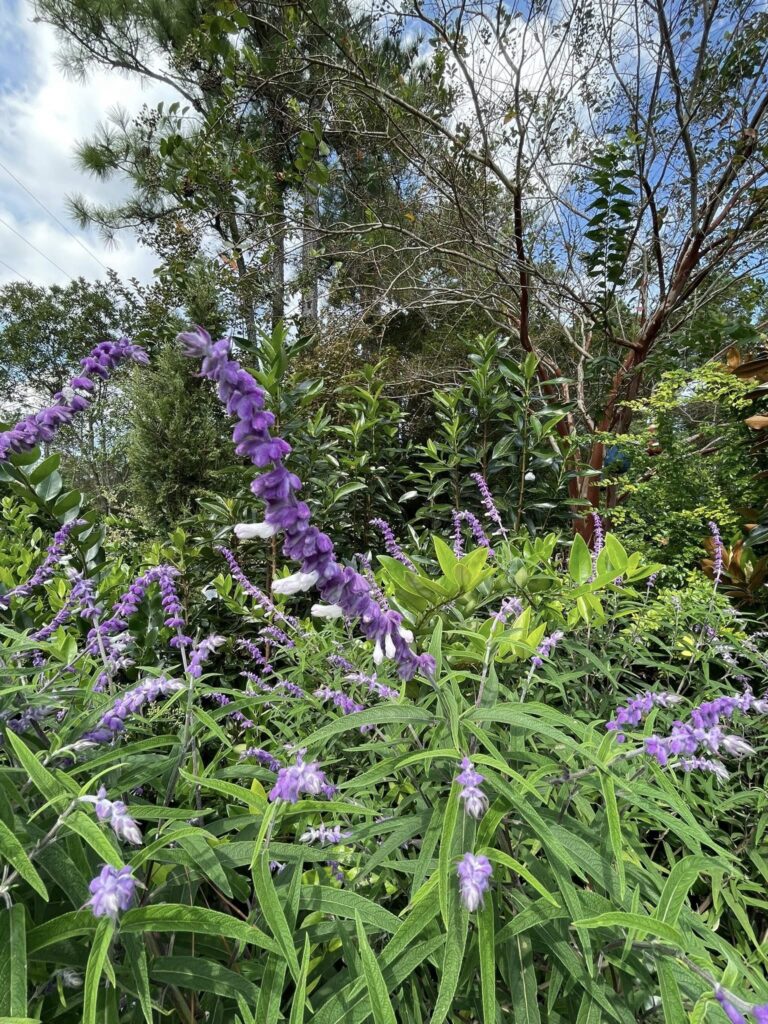
If you garden in a warmer climate, Mexican Bush Sage is a showstopper. Its long, arching branches are covered with velvety purple and white flower spikes from late summer through to winter, providing colour when many other shrubs have finished.
The Mexican bush sage grows fast and can reach over a metre tall in a single season. Hard frosts will kill it to the ground, but in zones 8 and above it regrows vigorously from the roots.
8. Vitex / Chaste Tree (Vitex agnus-castus)
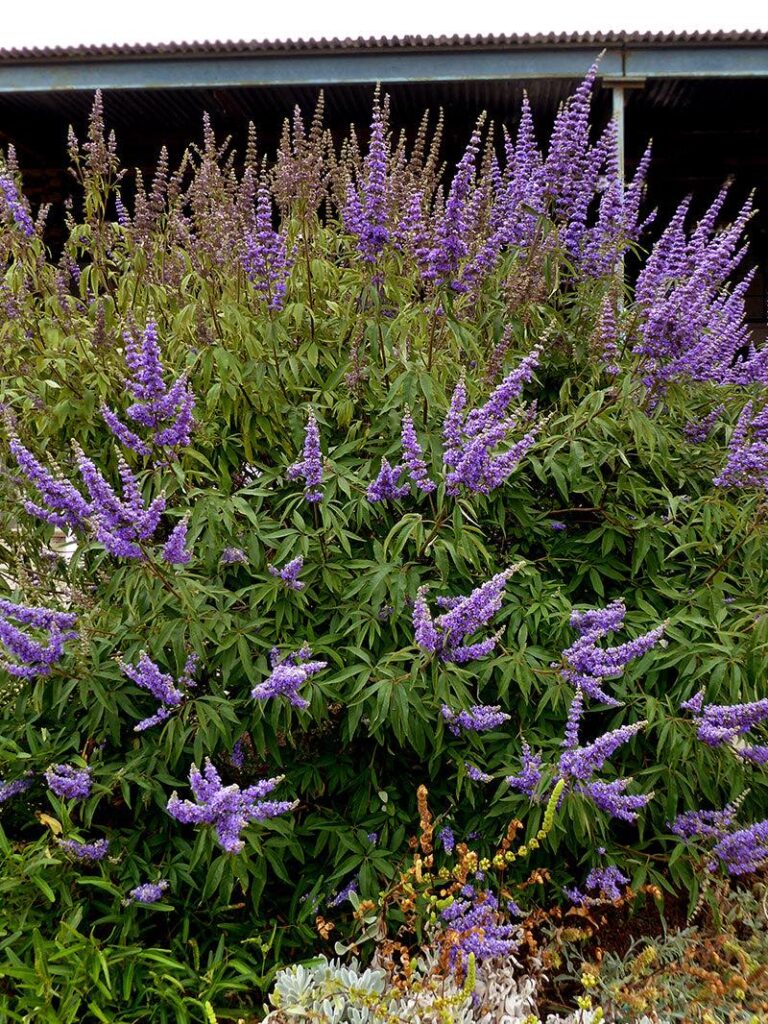
The Vitex is an underused gem. It produces elegant spikes of lavender-purple flowers at the tips of its branches throughout summer, resembling a lilac in appearance but blooming months later.
This beautiful shrub is aromatic, palmately divided leaves add textural interest, and the plant tolerates heat, drought, and poor soil with impressive resilience. It can be grown as a large shrub or trained into a small multi-stemmed tree.
9. Wisteria (Wisteria sinensis)
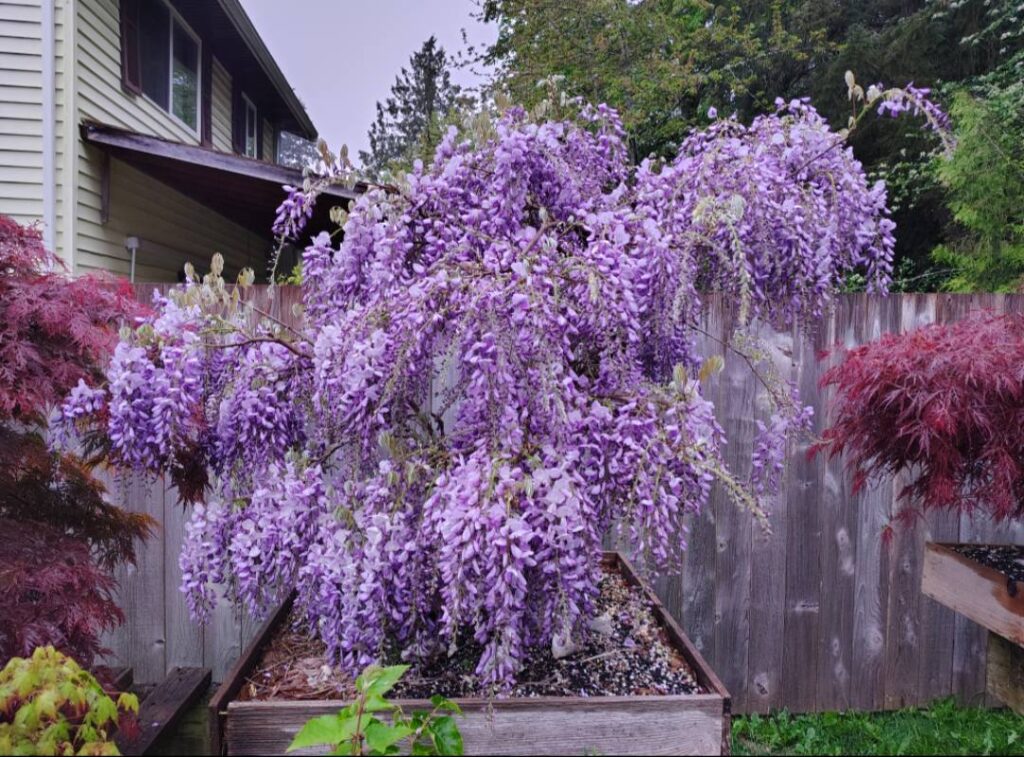
Wisteria is technically a vine, but it is often trained into standard (tree) or shrub form in garden settings. Its cascading clusters of purple-violet flowers in spring are among the most dramatic floral displays in the plant world.
This plant requires a strong support structure and benefits from twice-yearly pruning to keep it productive and manageable. Japanese wisteria (Wisteria floribunda) produces even longer flower clusters and is worth considering if you want maximum impact.
10. Beauty Bush (Kolkwitzia amabilis)
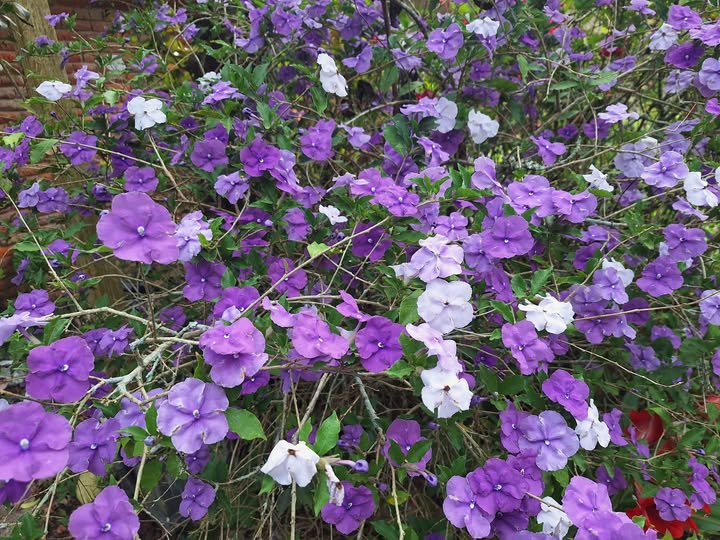
Beauty Bush produces arching branches covered in pink-purple tubular flowers in late spring, followed by bristly fruit clusters that persist into winter. It is one of those plants that deserves far more attention than it currently receives.
Hardy and adaptable, it performs well in a range of soil types and tolerates both heat and cold. Use it as a specimen plant or as part of a mixed shrub border.
11. Catmint (Nepeta × faassenii)
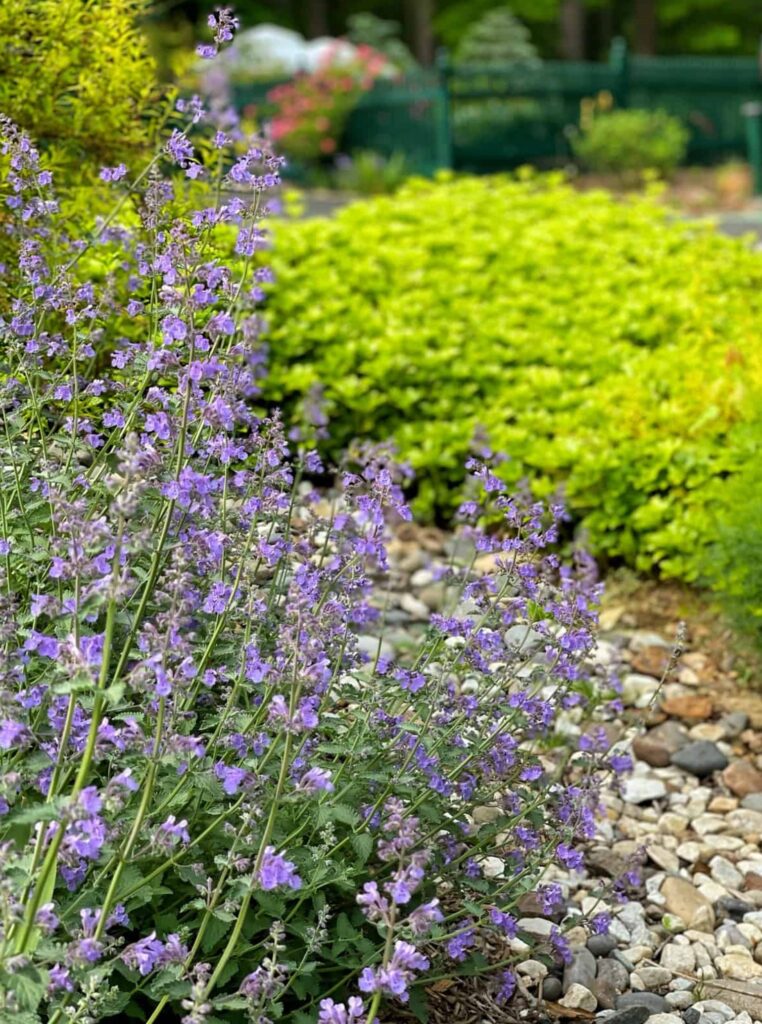
Catmint is a low-growing, spreading shrub that produces a continuous display of small lavender-blue flowers from late spring through to autumn, especially if cut back after the first flush.
It is exceptionally easy to grow. It tolerates poor soil, drought, and minimal attention, making it one of the best choices for low-maintenance gardens. As the name suggests, cats are fond of rolling in it — a charming observation if you share your garden with felines.
12. Camellia (Camellia japonica)
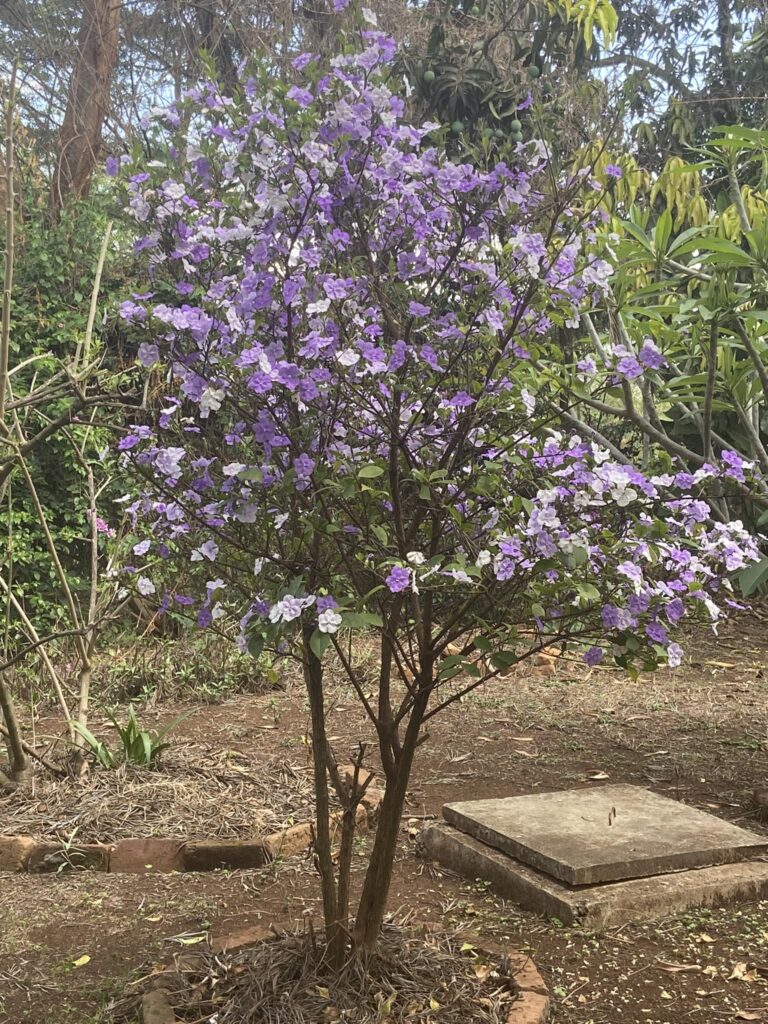
Camellias are best known for their red and pink flowers, but several purple and lavender varieties exist, including ‘Purple Dawn’ and ‘Midnight Magic’. These bloom in late winter to early spring when little else is flowering, providing exceptional garden value.
These shrubs prefer acidic, moist, well-drained soil and dappled shade. Once established, camellias are long-lived and require minimal maintenance beyond occasional pruning for shape.
13. Purple Sage (Salvia officinalis ‘Purpurascens’)
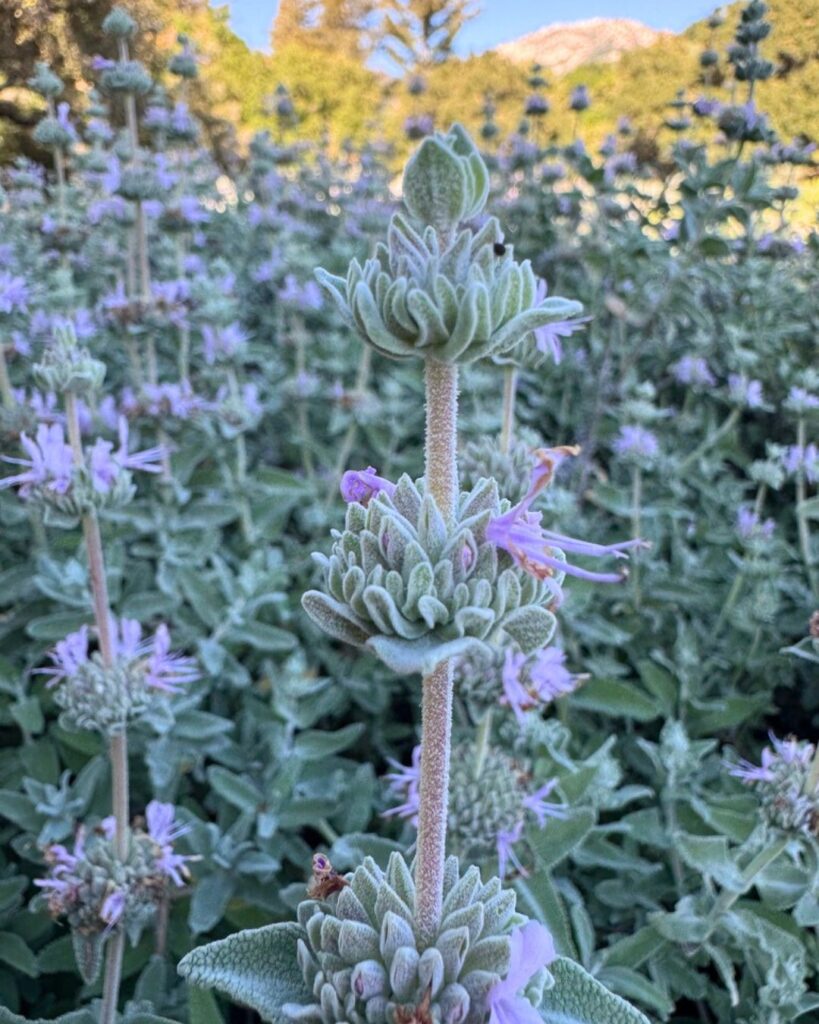
This culinary sage variety is grown as much for its deep purple foliage as its flowers. The violet-purple blooms appear in early summer and attract bees immediately. The leaves have the same culinary value as common sage and smell wonderful when brushed.
Purple sage grows as a compact, woody sub-shrub and is ideal for herb gardens, raised beds, or the front of a mixed border. Prune lightly each spring to keep it from becoming woody.
14. Smoke Bush (Cotinus coggygria)
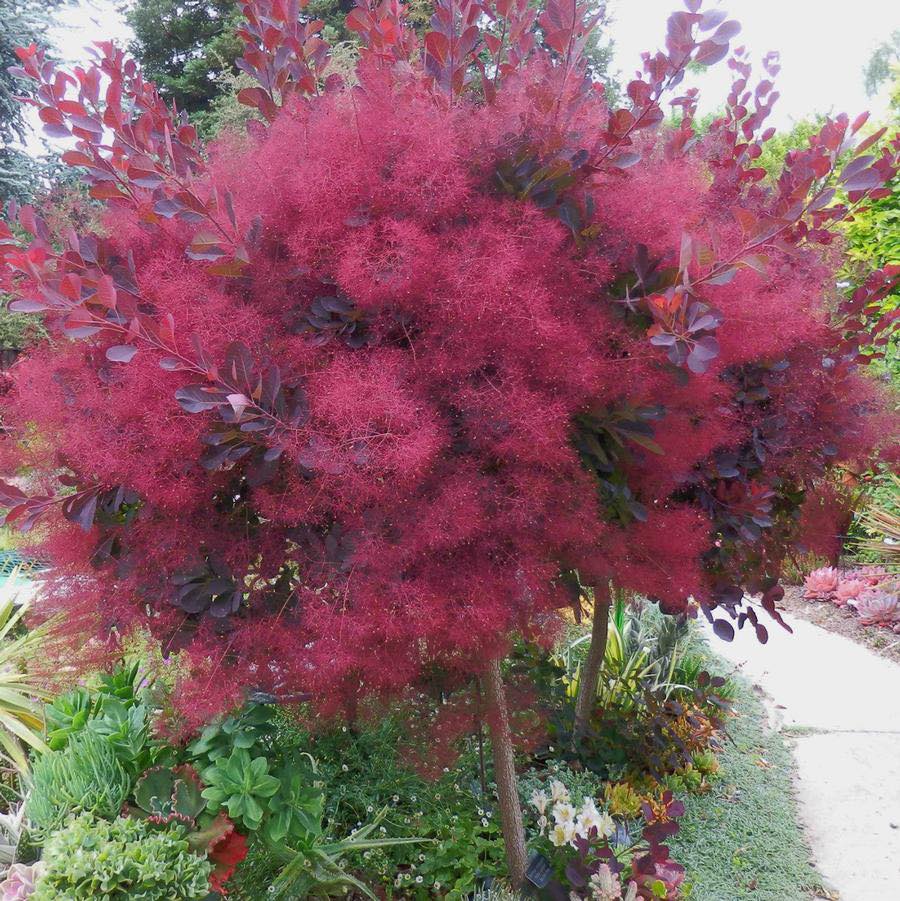
The Smoke Bush earns its name from the wispy, smoke-like flower plumes that appear in summer in shades of purple, pink, and grey. These are not the true flowers but rather elongated flower stalks covered in fine hairs that catch the light beautifully.
Purple-leaved cultivars such as ‘Royal Purple’ provide double value — dark foliage throughout the season and brilliant autumn colour. It is a bold structural plant that works well as a focal point.
15. Bluebeard (Caryopteris incana)
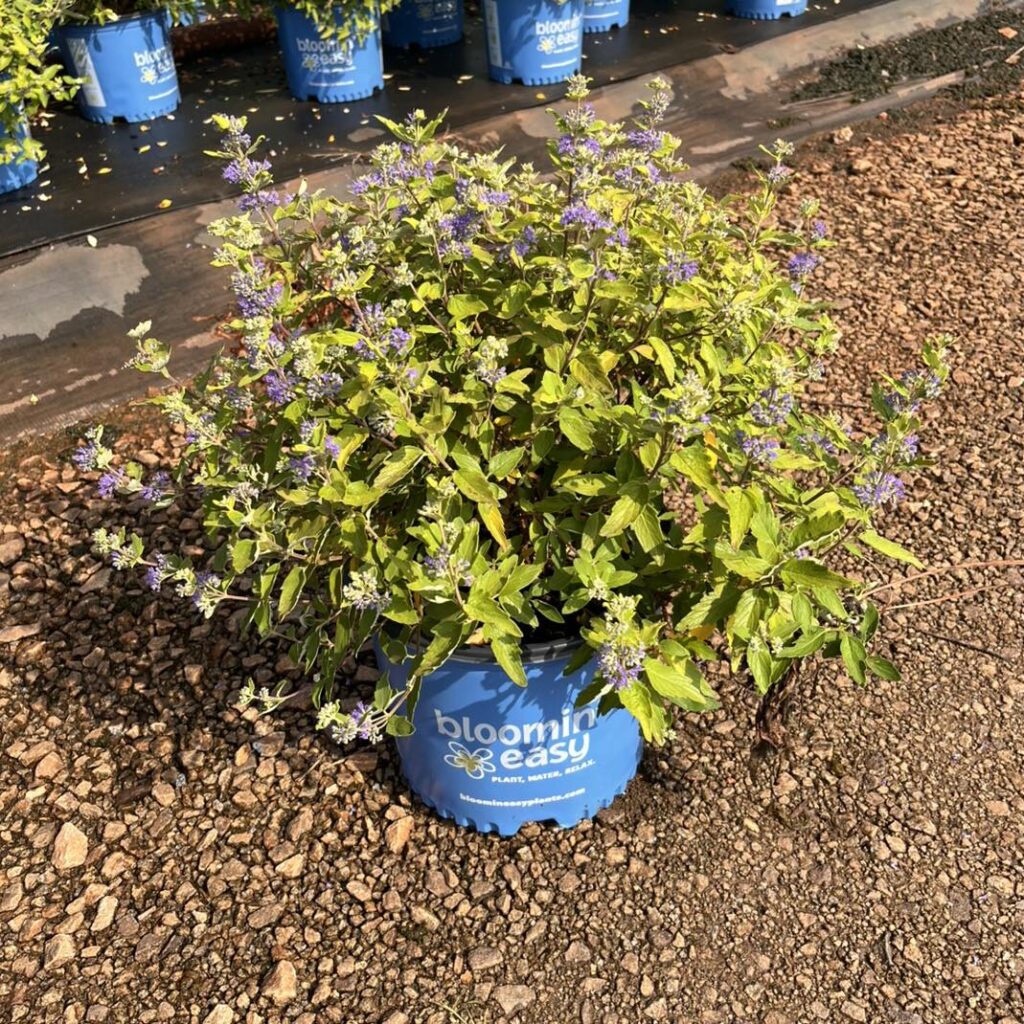
Similar to the Blue Mist Shrub but slightly larger, Bluebeard produces dense clusters of bright blue-purple flowers in late summer. It is a fast-growing, deciduous shrub that performs best in hot, dry conditions.
Its ability to bloom in late summer and early autumn makes it invaluable for maintaining colour in the garden when many other shrubs have finished. Prune it hard each spring for the best results.
16. Hebe (Hebe spp.)
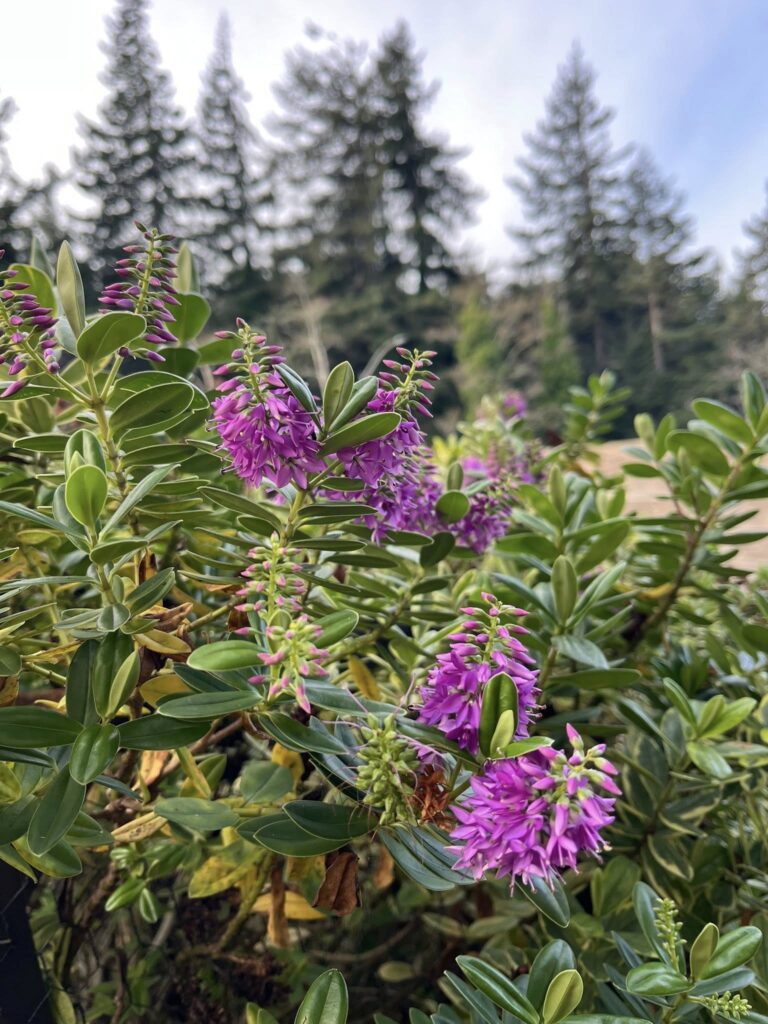
Hebes are evergreen shrubs native to New Zealand and represent an enormously diverse group. Purple and violet-flowering varieties such as Hebe ‘Autumn Glory’ and Hebe speciosa produce dense flower spikes over a long season.
They are excellent coastal plants, tolerating salt spray and wind. Compact varieties work well in containers, while larger types make effective hedging or border shrubs.
17. Mescal Bean (Sophora secundiflora)
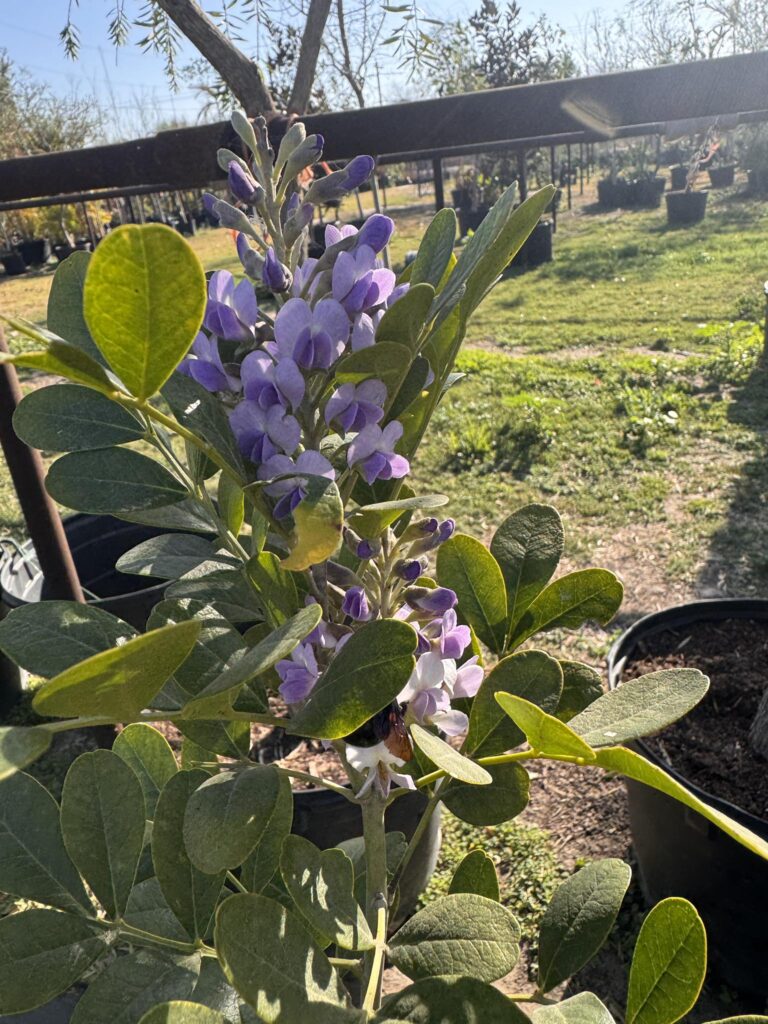
Mescal Bean is an impressive evergreen shrub from Texas and New Mexico that produces clusters of fragrant, deep violet-blue flowers in early spring. The flowers have a powerful, grape-like scent that carries across a garden on a warm day.
THis stunning shrub is slow-growing but extremely long-lived and drought-tolerant. Once established, it requires very little care. Use it as a specimen plant in warm, dry climates.
18. Spanish Lavender (Lavandula stoechas)
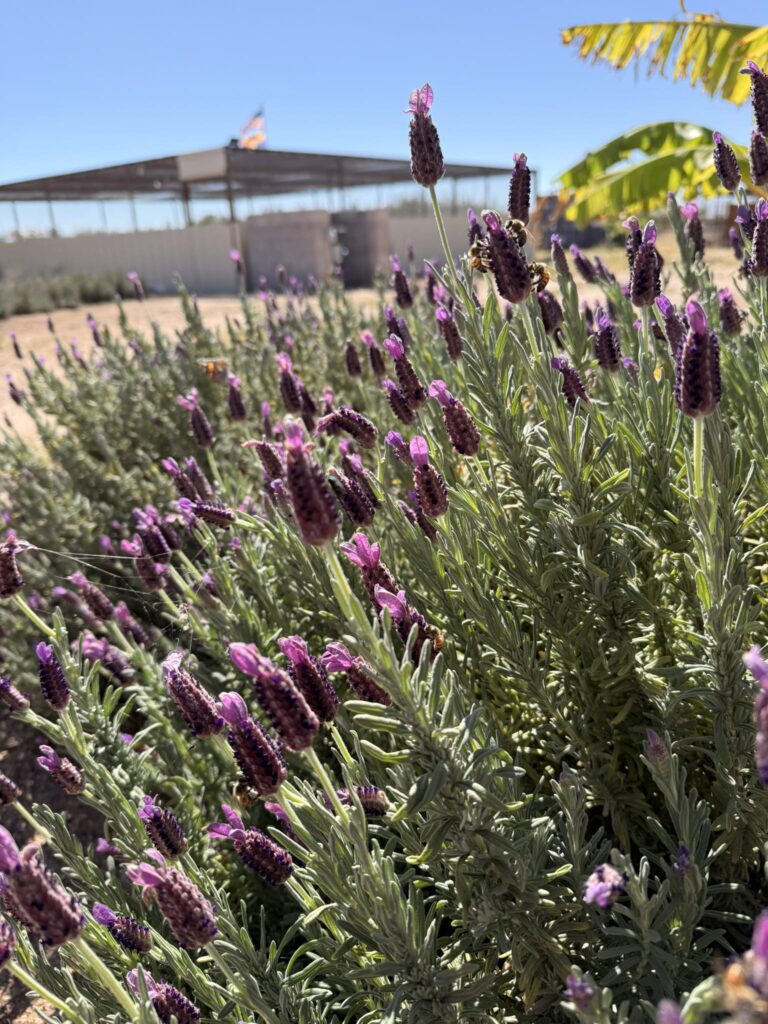
Spanish Lavender is distinctive among lavenders for its unusual flowers. Each flower head is topped with prominent purple “ears” or bracts that flutter in the breeze, giving the plant an almost decorative, crafted appearance.
This shrub blooms earlier than English lavender and is slightly less cold-hardy. In mild climates, it may flower twice in a season. It thrives in sandy, well-drained soil and full sun.
19. Indigo Bush (Amorpha fruticosa)
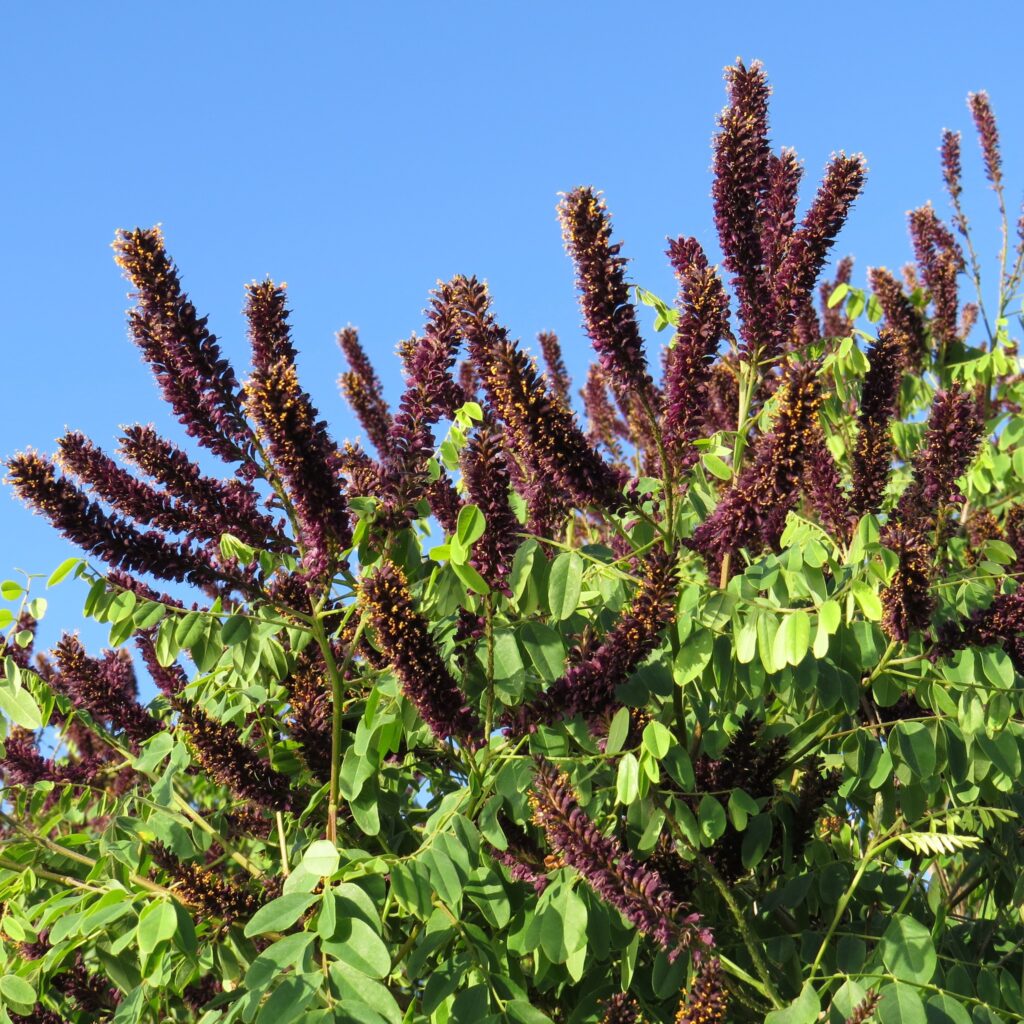
Indigo Bush is a native North American shrub that produces long, slender spikes of tiny dark purple flowers with bright orange anthers — a striking colour combination. It is a large, vigorous shrub that naturalises well along roadsides, stream banks, and disturbed ground.
This shrub helps fix nitrogen in the soil, making it a useful addition to garden areas that need improving. It also provides excellent wildlife habitat and supports native bees.
20. Beautyberry (Callicarpa bodinieri)
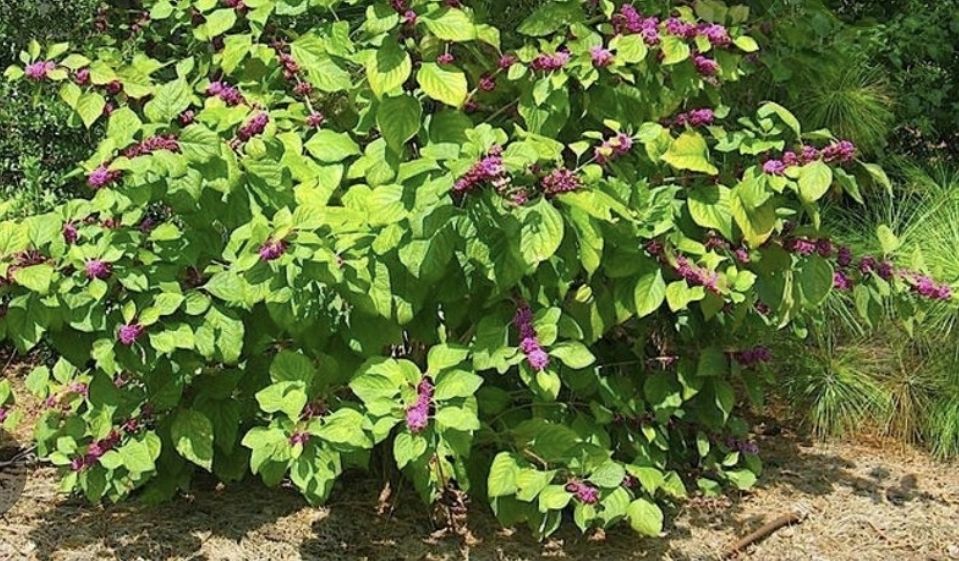
Beautyberry is grown primarily for its remarkable clusters of vivid violet-purple berries that appear in autumn and persist into winter. The flowers that precede them, produced in summer, are small but delicate pink-purple.
The berries are intensely coloured and genuinely electric in autumn light. Birds eventually eat them, so plant Beautyberry near a window where you can enjoy the seasonal display.
21. Wild Heliotrope (Phacelia tanacetifolia)
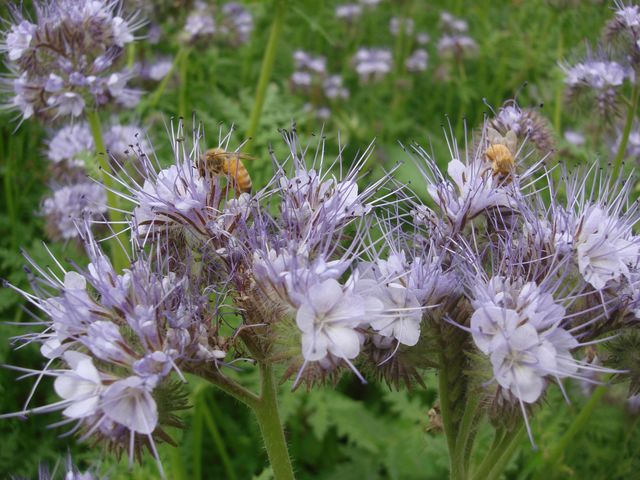
While often grown as an annual, Wild Heliotrope develops a semi-woody base in warm climates and is widely used in pollinator gardens and as a cover crop. Its soft lavender-purple flowers are irresistible to bees and appear from spring through summer.
Wild heliotrope self-seeds freely, which means it can naturalise in a garden with minimal effort. The finely divided leaves add a feathery texture that contrasts well with bolder-leaved plants.
22. Blue Potato Bush (Solanum rantonnetii)
The Blue Potato Bush is a fast-growing, semi-evergreen shrub that produces violet-blue flowers with yellow centres almost continuously from spring through to autumn. In frost-free climates, it may flower year-round.
This shrub responds well to pruning and can be trained as a standard, hedge, or container plant. In cooler zones, grow it in a pot and bring it indoors for winter protection.
23. Tibouchina (Tibouchina urvilleana)
Known as the Princess Flower or Glory Bush, Tibouchina is one of the most vividly purple-flowering shrubs in existence. Its large, saucer-shaped blooms are a rich, jewel-like royal purple, and they appear from summer through to autumn.
The leaves are velvety and covered in fine hairs, giving the whole plant a soft, textural quality. It prefers warm, humid climates and well-drained acidic soil. In colder areas, grow it in a heated greenhouse or conservatory.
24. Mallow (Lavatera spp.)
Tree Mallows are fast-growing shrubs that produce large, tissue-paper flowers in shades of purple, mauve, and pink throughout summer. They grow remarkably quickly — sometimes several feet in a single season — and fill gaps in a border fast.
They are excellent coastal plants and tolerate sandy, poor soils. Prune hard in spring to prevent them from becoming leggy, and expect a fresh, compact flush of growth and flowers each year.
25. Pride of Madeira (Echium candicans)
Pride of Madeira is a dramatic, architectural shrub native to the Canary Islands. Its enormous spikes of bright blue-purple flowers, which can reach 90 cm or more in height, bloom in spring and are spectacular against the silvery-green foliage.
It thrives in coastal gardens with mild winters and is exceptional as a specimen plant. Bees adore it. Once the flowering spikes fade, cut them off to encourage more growth. It is not fully frost-hardy but performs brilliantly in zones 9–11.
Why Choose Shrubs With Purple Flowers?
It is worth understanding why purple-flowering shrubs stand out.
- Purple attracts pollinators. Bees, butterflies, and hummingbirds are especially drawn to violet and lavender hues. Planting these shrubs supports local ecosystems in a meaningful way.
- They offer long seasonal interest. Many shrubs with purple blooms flower for weeks or even months. Some produce ornamental seed heads or coloured foliage that extends their visual appeal beyond the blooming season.
- Purple pairs beautifully with other colours. It contrasts sharply with yellow and orange, blends softly with pink and white, and creates drama when paired with silver or grey foliage.
How to Choose the Right Purple-Flowering Shrub for Your Garden
Consider your climate first
Many of the most spectacular purple shrubs — Tibouchina, Blue Potato Bush, Echium — are tropical or subtropical and will not survive hard frost. Be honest about your hardiness zone before you fall in love with a plant.
Think about size at maturity
A Wisteria trained into a shrub or a mature Lilac can reach 3 metres or more. Compact alternatives like Catmint, Lavender, or Blue Mist Shrub suit smaller spaces.
Match the plant to your soil
Rhododendrons and Camellias need acidic conditions. Russian Sage and Lavender demand good drainage. Indigo Bush tolerates wet, heavy ground. The right plant in the right place will always thrive with minimal input.
Plan for year-round interest
Combine spring-flowering shrubs like Lilac and Rhododendron with summer bloomers like Vitex and Russian Sage, and late-season plants like Beautyberry and Blue Mist Shrub to maintain colour from March through November.
Caring for Purple-Flowering Shrubs: General Tips
Pruning is one of the most important factors in keeping these shrubs productive. Most benefit from pruning immediately after flowering (spring bloomers) or in early spring before new growth starts (summer and autumn bloomers).
Feeding does not need to be excessive. A balanced, slow-release fertiliser in spring is usually sufficient. Over-feeding can produce lush foliage at the expense of flowers.
Watering requirements vary widely. Lavender, Russian Sage, and Vitex are drought-tolerant once established. Rhododendrons and Camellias need consistent moisture. Always water at the root zone and avoid wetting the foliage.
Mulching helps to retain moisture, regulate soil temperature, and suppress weeds. Apply a 5–7 cm layer of organic mulch around the base of each shrub each spring, keeping it away from the stems.
Final Thoughts
A garden filled with purple-flowering shrubs is never dull. The colour carries elegance without effort, and many of these plants are among the easiest to grow. Whether you choose the familiar comfort of Lavender or the bold spectacle of Tibouchina, you are investing in a display that will reward you season after season.
Start with one or two shrubs that suit your climate and space. See how they perform, observe the pollinators they attract, and enjoy the process. Gardening, at its best, is an act of optimism — and purple flowers, with their richness and depth, are a particularly beautiful expression of that.
References
- University of Florida IFAS Extension — Landscape Plants: Images, Identification, and Information https://hort.ifas.ufl.edu/woody/
- North Carolina State University Extension — Plant Toolbox: Shrubs https://plants.ces.ncsu.edu/find_a_plant/?lightReq=0&waterReq=0&maintenanceReq=0&plantType%5B%5D=shrub
- Royal Horticultural Society (RHS) — Shrubs: Growing Guide and Plant Profiles https://www.rhs.org.uk/plants/types/shrubs

Tim M Dave is a gardening expert with a passion for houseplants, particularly cacti and succulents. With a degree in plant biology from the University of California, Berkeley, he has vast experience in gardening. Over the years, he has cultivated a vast collection of desert plants and learned a great deal about how to grow and care for these unique companions.