Understanding Shirotae Cherry (Prunus serrulata ‘Mount Fuji’): History, Features, Problems, Care, and More
There is a particular kind of beauty that belongs to white. Not the bold statement of deep pink, not the romantic softness of blush — but pure, clean, luminous white. The Shirotae Cherry delivers that beauty in spring with a thoroughness that few ornamental trees can match.
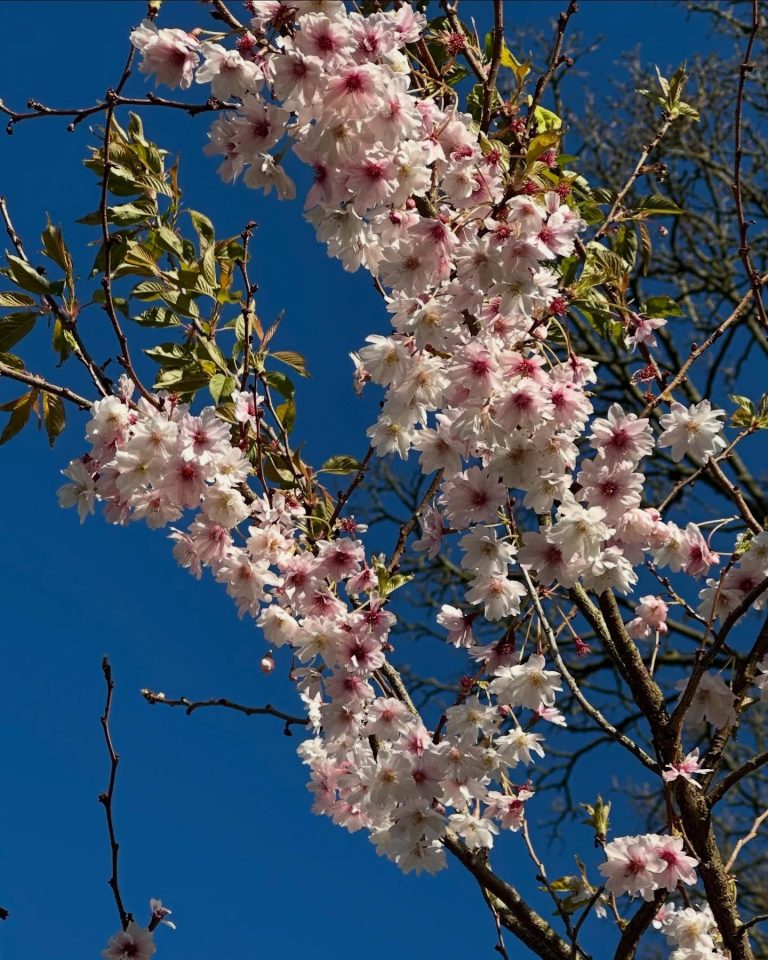
When it blooms in mid-spring, the long horizontal branches — which sweep outward and slightly downward in a way that is unlike almost any other ornamental cherry — are covered so densely with large, semi-double white flowers that the foliage beneath them almost disappears. From a distance, a mature Shirotae Cherry in full bloom looks less like a tree and more like a low-floating cloud.
I have admired many ornamental cherries over the years. The Shirotae holds a special place among them — not for drama or spectacle in the Kanzan sense, but for a composed, architectural elegance that feels genuinely refined.
This guide covers everything you need to know about Prunus serrulata ‘Shirotae’ — its origins, characteristics, growing requirements, care needs, landscape uses, and the distinct qualities that set it apart from every other white-flowered cherry in cultivation.
What Is the Shirotae Cherry?
Shirotae Cherry, Prunus serrulata ‘Shirotae’, is a deciduous ornamental flowering tree belonging to the Japanese flowering cherry species — one of the most culturally important and horticulturally diverse groups of ornamental trees in the world.
It is widely sold and listed under two names: ‘Shirotae’ and ‘Mount Fuji’. Both refer to the same cultivar. ‘Shirotae’ is the original Japanese name; ‘Mount Fuji’ is the name under which it was introduced and is most commonly sold in the United Kingdom, the United States, and much of Western Europe. The name references both the white flowers — shirotae (白妙) meaning “white cloth” or “dazzling white” in Japanese — and the iconic snow-capped peak that the flowering display is said to evoke.
It belongs to the sato-zakura group — the collective term for the cultivated ornamental Japanese cherries selected over centuries for specific ornamental qualities. Within this group, ‘Shirotae’ is distinguished by three characteristics that together make it unique: its horizontally spreading, almost tabular branch habit; its large, pure white to very pale pink semi-double flowers; and the lightly fragrant quality of its blossoms, which is relatively uncommon among sato-zakura cultivars.
It received the Royal Horticultural Society’s Award of Garden Merit, confirming its consistent, outstanding performance across a range of temperate garden settings.
Key Characteristics at a Glance
Mature Height: 15 to 20 feet (4.5 to 6 metres). Shirotae is notably lower-growing than many ornamental cherries, giving it a wide, spreading profile rather than a tall, vase-shaped one.
Mature Spread: 20 to 30 feet (6 to 9 metres) — often wider than it is tall at maturity. The horizontal branch habit produces a canopy that spreads significantly in all directions.
Growth Rate: Moderate — typically 12 to 18 inches per year.
Bloom Time: Mid-spring — April to early May in most temperate climates, coinciding with the heart of the main cherry blossom season.
Flower Colour: Pure white to the faintest blush-pink, with flowers that open white and occasionally carry a very slight pink tinge, particularly in bud. The flowers are large — up to 2 inches in diameter — and semi-double, with approximately 12 to 18 petals arranged in a loose, open form that is more elegant than the tightly packed double flowers of ‘Kanzan’.
Fragrance: Lightly fragrant — a mild, clean floral scent detectable at close range. This quality is uncommon among Japanese flowering cherries and adds an additional sensory dimension to the tree.
Foliage: Large, oval leaves with serrated margins. Young foliage emerges with a bronze-green tint before maturing to mid-green. Autumn colour develops in shades of orange and red.
Branch Habit: Strongly horizontal and spreading — the defining structural characteristic of this cultivar. Major branches extend almost parallel to the ground, creating a layered, architectural canopy of considerable visual interest even when the tree is not in flower.
Bark: Smooth, grey-brown with horizontal lenticels typical of the cherry family.
Fruit: Small, dark cherries may form after flowering but are not reliably produced. The semi-double flowers reduce but do not entirely eliminate fruit set.
USDA Hardiness Zones: 5 to 8.
Lifespan: Typically 20 to 30 years in landscape settings — slightly longer than some of the more intensively double-flowered cultivars.
Origins and Cultural Context
Prunus serrulata has been cultivated in Japan for over a thousand years. The tradition of hanami — flower-viewing beneath blooming cherry trees — is one of Japan’s most enduring cultural practices, and the sato-zakura cultivars, including ‘Shirotae’, are central to that tradition.
‘Shirotae’ was selected during the intensive Edo period (1603–1868) development of ornamental cherry cultivars and was introduced to Western horticulture in the early 20th century. It was among the cherries brought to Britain through the botanical exchanges of that era and became a favourite in British gardens partly because its white flowers and horizontal habit fitted naturally into the English garden aesthetic — particularly in the context of white garden designs and formal parkland settings that were fashionable in the early and mid-20th century.
The name ‘Mount Fuji’, under which it is widely sold in Western markets, connects the tree visually to Japan’s most iconic landscape — the white-capped volcanic peak that has defined Japanese artistic and cultural imagery for centuries. The comparison is apt: a mature Shirotae Cherry in full bloom, its wide, layered branches covered in white, does carry something of the quality of snow-covered horizontal surfaces seen in traditional Japanese landscape painting.
In Japan, white-flowered cherries hold a particular place in the sakura aesthetic — their purity and simplicity are considered by some to embody mono no aware, the Japanese philosophical concept of the bittersweet transience of beautiful things.
The Branch Habit: Understanding What Makes Shirotae Architecturally Unique
Among all the qualities that distinguish Shirotae Cherry, the horizontal branch structure deserves particular attention — because it shapes not just the tree’s appearance in spring, but its presence in the landscape across every season.
Where most ornamental cherry cultivars grow upward — vase-shaped when young, rounded in maturity — Shirotae’s primary branches extend almost horizontally from the main trunk, creating a series of flat, layered tiers that spread outward with age. The overall silhouette is low and wide, with the crown often broader than it is tall at full maturity.
This habit has several important implications for garden design and use.
It creates shade at a lower level than most ornamental trees of similar age, making it particularly effective at creating sheltered, intimate spaces beneath the canopy.
It creates a tiered visual effect that looks beautiful in all seasons — the horizontal layers of branches carry snow gracefully in winter, hold the spring blossom in broad horizontal sheets, and cast dappled shadow across the ground in summer.
It is visually prominent even without flowers. A mature Shirotae Cherry in winter — its bare horizontal branches forming a wide, low, tiered canopy — is an architecturally striking sight that contributes meaningfully to the winter garden.
It requires space. The spreading habit means that mature specimens can occupy a ground footprint of 20 to 30 feet in diameter. This is a tree for spaces that can accommodate width, not just height.
Why Choose Shirotae Cherry?
The case for Shirotae over other white-flowered ornamental cherries rests on several specific strengths.
The flowers are exceptionally large and beautiful. Semi-double white flowers up to 2 inches across, hanging in dense pendant clusters from horizontal branches, create a display of considerable elegance. The semi-double form — neither the simple single flower nor the tightly packed double — offers a middle ground that many gardeners find more graceful than either extreme.
It is fragrant. Most ornamental Japanese cherries are grown purely for visual effect. Shirotae’s mild, clean fragrance rewards planting near paths, seating areas, and windows — positions where the horizontal habit already makes it a practical and attractive choice.
The horizontal habit is architecturally distinctive. No other commonly available ornamental cherry offers the same low, wide, tiered canopy structure. For gardens where architectural interest and structure are as important as seasonal colour, Shirotae provides both.
White flowers offer design versatility. Deep pink cherries like ‘Kanzan’ demand careful colour coordination. White flowers work with almost any garden palette — they complement both cool and warm colour schemes and fit naturally into formal, contemporary, and naturalistic garden styles.
It performs across four seasons. Spring flowers, summer shade structure, autumn foliage colour, and the striking winter silhouette of the horizontal branches combine to give this tree genuine year-round value.
Ideal Growing Conditions
Sunlight
Full sun is preferred — at least six hours of direct sunlight daily for best flowering and canopy development. In good sun, the horizontal branch habit develops most cleanly and the flowering display is at its most prolific.
Shirotae tolerates partial shade better than some ornamental cherries, but flowering is noticeably reduced in positions receiving fewer than four hours of direct sun. The wide spreading habit means the tree also casts significant shade itself — this is worth considering when selecting planting companions beneath the canopy.
Soil
Performs best in moist, well-drained, moderately fertile, slightly acidic to neutral soil (pH 5.5 to 7.0). Adapts to loam, sandy loam, and well-drained clay but is intolerant of waterlogged or persistently wet conditions.
Root rot is the primary soil-related risk. Ensure the site drains freely after rainfall. In heavy clay soils, consider raised planting or soil amendment to improve drainage before planting.
Water
Consistent moisture during establishment — the first two to three growing seasons — supports rapid root development and reduces transplant stress. Water deeply and infrequently to encourage deep root growth.
Avoid overhead irrigation, which wets the foliage and flowers and promotes fungal disease. Drip irrigation or ground-level watering is preferable.
Once established, Shirotae has moderate drought tolerance. Consistent summer moisture supports flower bud formation for the following spring and maintains canopy health and vigour.
Climate
Hardy in USDA Zones 5 to 8. Late spring frosts can damage or destroy open flowers — a risk for any mid-spring-blooming cherry in gardens with variable late-season weather. The tree itself is not at risk, but a late frost can eliminate the year’s floral display.
Planting Instructions
Best planting time: Early spring before bud break, or autumn after leaf drop. Container-grown trees can be planted throughout the growing season with adequate post-planting irrigation.
Space planning: Given the spreading habit, plan for a mature spread of 20 to 30 feet before selecting the planting position. A tree planted too close to a building, boundary, or other large plants will either be constrained artificially or will create long-term management problems. The horizontal branches need room to develop fully.
Planting hole: Dig a hole two to three times wider than the root ball and only as deep as the root ball height. Set the tree so the root flare sits at or very slightly above the surrounding soil grade. Never plant the root flare below soil level — deep planting is one of the most damaging mistakes with ornamental cherries.
Backfill: Use original excavated soil without added fertiliser or rich compost in the planting hole. This encourages the roots to explore outward into the surrounding soil.
Mulching: Apply 2 to 3 inches of organic mulch over the root zone, keeping a 6-inch clearance around the trunk. Mulch conserves moisture, moderates soil temperature, and suppresses competing weeds across the wide root zone.
Initial watering: Water thoroughly at planting and maintain consistent moisture through the first full growing season.
Fertilisation
Shirotae does not require intensive feeding. A single spring application of balanced slow-release fertiliser — a 10-10-10 formulation or a dedicated tree and shrub product — is adequate for most garden soils. Apply at label-recommended rates based on canopy spread or trunk diameter.
High-nitrogen fertilisers should be avoided. They promote rapid, soft vegetative growth at the expense of flowering and create conditions more favourable to pests and fungal diseases.
In poor soils, a late-summer low-nitrogen feed supports flower bud development for the following season. In fertile garden soils, annual feeding may not be necessary at all once the tree is well established.
Pruning
Shirotae’s horizontal branch structure develops naturally and requires minimal intervention when given adequate space. The goal of pruning is structural health and airflow — not reshaping the tree’s inherent form.
Prune immediately after flowering — late spring as blossoms fade. This timing avoids removing next season’s flower buds, which form on current-year growth through summer and autumn.
Remove dead, damaged, and diseased wood cleanly just outside the branch collar. Then thin any crossing or crowding branches from the interior of the canopy to maintain airflow — important for reducing fungal disease pressure.
Do not attempt to restrict the horizontal spread through routine heading back. This destroys the tree’s defining characteristic and creates multiple large wounds that are slow to compartmentalise. If space is inadequate for a mature Shirotae, address this at the planning stage — not through repeated corrective pruning after planting.
Avoid pruning in autumn or winter, when wounds are most vulnerable to fungal and bacterial pathogens.
Pests and Diseases
Shirotae shares the pest and disease profile common to Prunus serrulata cultivars. Regular monitoring and good cultural practices — full sun, adequate drainage, good air circulation — are the most effective tools for maintaining tree health.
Common Pests
Aphids colonise soft new spring growth, causing leaf distortion and sticky deposits. Natural predators, insecticidal soap, or water sprays resolve most infestations. Monitor new growth closely in spring.
Tent caterpillars build communal silk nests in branch forks and can defoliate sections of the canopy rapidly. Remove nests manually while small, or apply Bacillus thuringiensis (Bt) to young larvae.
Cherry bark tortrix and related moth larvae can damage bark in urban settings. Protecting bark from mechanical damage and maintaining tree vigour are the most effective preventive measures.
Common Diseases
Brown rot blossom blight (Monilinia spp.) is a significant concern given the large, semi-double flowers of Shirotae, which can trap moisture in wet spring weather. Flowers brown and collapse rapidly under high fungal pressure. Good air circulation through the canopy and avoiding overhead irrigation are the primary preventive measures. Fungicide applications at the pink bud stage can protect the display in high-risk years.
Silver leaf disease (Chondrostereum purpureum) enters through pruning wounds and causes progressive branch dieback with a characteristic silvery leaf sheen. Prune only in dry weather and sterilise tools between cuts to reduce infection risk.
Black knot (Apiosporina morbosa) produces black, elongated galls on branches. Remove affected wood promptly, cutting at least 4 inches below visible symptoms.
Bacterial canker (Pseudomonas syringae) causes sunken bark lesions and dieback, most common after cold, wet springs. Protect bark from injury and prune during dry weather.
Landscape Uses and Design Applications
The combination of horizontal habit, white flowers, mild fragrance, and architectural winter silhouette makes Shirotae Cherry one of the most design-versatile ornamental cherries available.
As a specimen tree in a lawn or open space, a mature Shirotae is one of the most beautiful sights in the spring garden. Its wide, low canopy and the sheer abundance of white blossom create an effect that is both dramatic and refined — spectacular without being loud.
In white or silver garden designs, it is almost irreplaceable. The Sissinghurst-style white garden tradition — all-white or pale flowers combined with silver and grey foliage — finds a natural tree-layer anchor in the Shirotae Cherry, whose white flowers, pale young foliage, and grey-brown bark fit the palette completely.
As a canopy over a seating area or path, the horizontal spreading branches create a natural pergola-like structure, particularly effective in late spring when the canopy is dense with both flower and emerging leaf. The mild fragrance, perceptible from seated positions beneath the canopy, makes this use especially rewarding.
Combined with underplanting, the low, wide canopy creates a distinctive ground-level effect. White or pale spring bulbs — narcissus, white tulips, white camassias — directly beneath the canopy create a vertically unified white-on-white display that is one of the more quietly spectacular effects in spring garden design.
In parkland or large garden settings, a group planting of Shirotae Cherries along a vista or around an open lawn creates a flowing, horizontal composition that photographs beautifully and performs magnificently in the brief but brilliant spring window.
Four-Season Calendar
Spring (April–May): Peak flowering. Dense clusters of large, semi-double white flowers cover the horizontal branches. Mild fragrance is perceptible at close range. Bronze-green young foliage begins to emerge as the last flowers fall.
Summer (June–September): Mature dark green foliage fills the wide, horizontal canopy. The tiered structure creates layered shade below. Small fruits may develop and attract birds.
Autumn (October–November): Foliage turns orange to red before dropping. The autumn colour is not the primary ornamental feature, but it contributes warmly to the seasonal garden.
Winter (December–March): The bare horizontal branch structure becomes fully visible and is architecturally significant. The low, wide, tiered silhouette is striking in winter light — particularly against snow or after a light frost that outlines the branch edges in white.
Frequently Asked Questions
What is the difference between ‘Shirotae’ and ‘Mount Fuji’? They are the same cultivar. ‘Shirotae’ is the original Japanese name; ‘Mount Fuji’ is the trade name used predominantly in Western nursery markets. If you see either name, you are looking at the same tree.
How wide does Shirotae Cherry get? At full maturity, the spread can reach 20 to 30 feet — often wider than the tree is tall. This is not a compact tree in terms of horizontal footprint, and adequate space must be planned for at the outset.
Does it need a lot of maintenance? No. Beyond post-flowering pruning of dead and damaged wood and annual inspection for pests and diseases, it requires minimal intervention. Its spreading habit develops naturally and does not need regular shaping.
Is the fragrance strong? Mild to moderate — clearly perceptible at close range, particularly on still days. It is not a powerfully scented tree, but the fragrance is a genuine added quality that rewards planting near seating areas or paths.
How does it compare to Yoshino Cherry in white flower displays? Yoshino Cherry (Prunus × yedoensis) produces pale blush-white single flowers on an upright, broadly rounded tree that is larger and faster-growing. Shirotae produces larger, semi-double pure white flowers on a distinctly horizontal, spreading tree with architectural structure. Both are outstanding, but they serve different design purposes and create very different landscape effects.
Final Thoughts
The Shirotae Cherry — whether you know it as ‘Shirotae’ or ‘Mount Fuji’ — represents something important in the ornamental cherry canon: a tree that is as beautiful in its structure as in its flowers, and that delivers genuine garden value across every season.
It is not a tree for tight spaces or impatient gardeners. It needs room to spread, time to develop its horizontal character, and the willingness to plant for a future season rather than an immediate effect.
But for gardens that can accommodate it — and for gardeners who understand what they are waiting for — it is one of the finest ornamental trees in temperate horticulture. The white blossoms in April, the layered architecture in winter, the fragrance on a still spring morning — these are things that remain in the memory long after the season has passed.
Plant it well, give it space, and let time do the rest. The Shirotae Cherry rewards patience with a generosity that few ornamental trees can equal.
References
- North Carolina State University Extension – Prunus serrulata ‘Shirotae’ Plant Profile https://plants.ces.ncsu.edu/plants/prunus-serrulata/
- University of Connecticut Plant Database – Prunus serrulata Cultivars https://hort.uconn.edu/detail.php?pid=293
- Arnold Arboretum of Harvard University – Cherry Collection: Japanese Flowering Cherries and Sato-Zakura https://arboretum.harvard.edu/plants/highlighted-plants-and-collections/cherry-collection/
- Virginia Tech Dendrology – Prunus serrulata Fact Sheet https://dendro.cnre.vt.edu/dendrology/syllabus/factsheet.cfm?ID=106
- Pennsylvania State University Extension – Ornamental Cherry Tree Selection and Landscape Care https://extension.psu.edu/ornamental-cherry-trees

Tim M Dave is a gardening expert with a passion for houseplants, particularly cacti and succulents. With a degree in plant biology from the University of California, Berkeley, he has vast experience in gardening. Over the years, he has cultivated a vast collection of desert plants and learned a great deal about how to grow and care for these unique companions.