Serviceberry (Amelanchier spp.): Identification, Varieties, Cultivation, Issues, and More
If you had to design the perfect garden tree from scratch — one that blooms beautifully in spring, feeds wildlife in summer, blazes with colour in autumn, and holds quiet elegance in winter — you would end up with something very close to a Serviceberry.
Serviceberry (Amelanchier spp.) is one of North America’s most versatile and ecologically generous native plants. Yet it remains surprisingly overlooked — overshadowed by showier ornamentals, underestimated in nurseries, and underplanted in landscapes where it could thrive.
That is beginning to change. As interest in native plants grows — driven by pollinator decline, habitat loss, and a renewed appreciation for plants that give back to the ecosystem — Serviceberry is finally getting the recognition it deserves.
This article covers the full story: taxonomy, species diversity, ecology, edible uses, wildlife value, landscape applications, and how to grow Serviceberry successfully. Whether you are a gardener, a forester, a birder, or simply someone who wants to plant something meaningful, this guide is for you.
What Is Serviceberry? Taxonomy and Overview
Serviceberry is the common name for plants in the genus Amelanchier, belonging to the rose family (Rosaceae). The genus is closely related to apples, pears, hawthorns, and cherries — all members of the same family.
Scientific classification:
- Kingdom: Plantae
- Order: Rosales
- Family: Rosaceae
- Genus: Amelanchier Medik.
- Number of species: Approximately 20–25 (taxonomy is debated; hybridisation between species is common)
The name Amelanchier is derived from the Provençal French word amelanche, referring to the European species A. ovalis.
Common Names: Why So Many?
Serviceberry goes by a remarkable number of regional names, which can cause genuine confusion:
- Serviceberry — the most widely used common name in North America
- Shadbush / Shadblow — because it blooms when shad fish run up rivers in the Northeast
- Juneberry — because the fruits ripen in June across much of its range
- Saskatoon — the name used in Canada and the northern prairies, especially for A. alnifolia
- Sugarplum — an older, less common name
- Wild plum — used in some rural regions
All of these names refer to the same genus. The variation reflects just how widely distributed and regionally important this plant has been across North America.
Key Species: Which Serviceberry Is Which?
The genus Amelanchier is notoriously difficult to sort out taxonomically. Species hybridise freely, and many populations exist on a continuum between recognised species. That said, several species are well-established and horticulturally important.
Amelanchier canadensis — Canadian Serviceberry
A tall, multi-stemmed shrub or small tree reaching 6–10 metres. Native to the eastern United States and Canada, particularly in wetlands, stream banks, and woodland edges. Excellent for moist sites.
Amelanchier arborea — Downy Serviceberry
One of the largest species, reaching 6–12 metres as a small tree. Native to eastern North America from the Great Plains to the Atlantic coast. Produces one of the best autumn colour displays in the genus, with leaves turning deep orange, red, and burgundy.
Amelanchier laevis — Allegheny Serviceberry
A graceful, upright small tree reaching 4–10 metres. Distinguished by its reddish-purple young leaves in spring, which provide a striking contrast to the white flowers. Native to the Appalachians and northeastern North America.
Amelanchier alnifolia — Saskatoon Serviceberry
The dominant species of the northern prairies and Canadian West, reaching 1–5 metres. Widely cultivated for its large, sweet berries — it is the basis of a commercial berry industry in western Canada. Extremely cold-hardy, surviving temperatures to −40°C.
Amelanchier × grandiflora — Apple Serviceberry
A naturally occurring hybrid between A. arborea and A. laevis, widely grown as an ornamental. Produces large, showy flowers and good berry crops. Several cultivars have been developed from this cross, including the popular ‘Autumn Brilliance’ and ‘Princess Diana’.
Amelanchier stolonifera — Running Serviceberry
A low-growing, suckering shrub reaching 0.5–1.5 metres. Forms dense colonies via rhizomes. Useful for ground cover, slope stabilisation, and naturalising in dry, open areas.
Physical Description: How to Identify Serviceberry
Despite species variation, most Amelanchier share recognisable characteristics.
Flowers
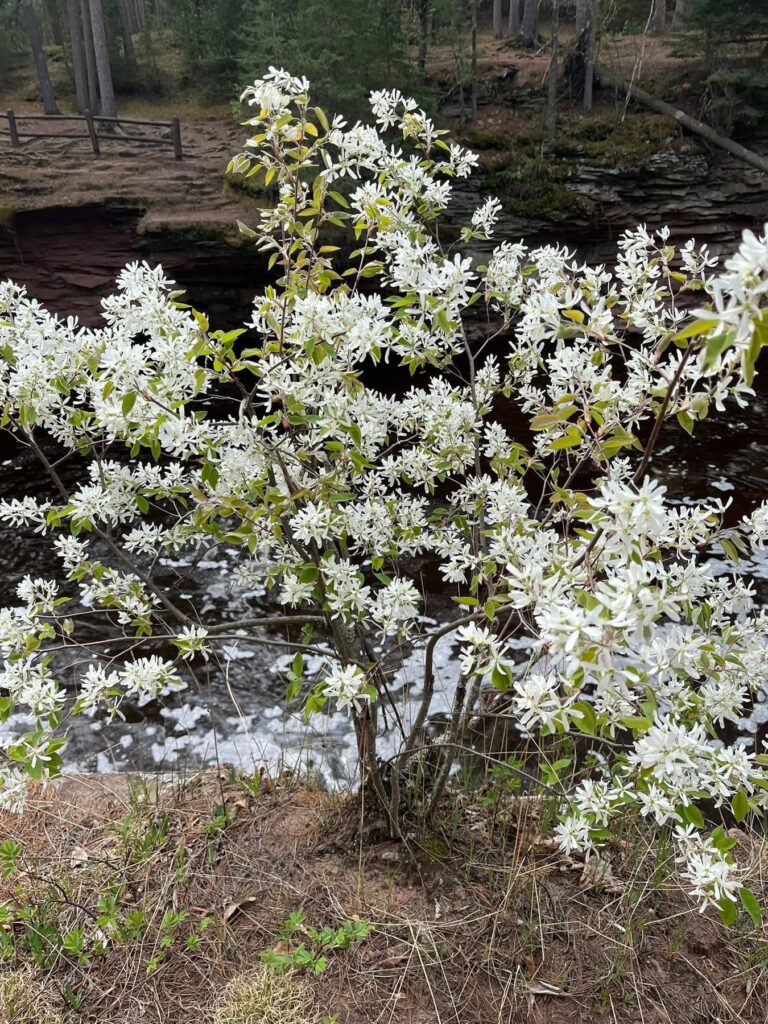
The flowers are white, five-petalled, and borne in elongated clusters (racemes), appearing in early to mid-spring — often before or just as the leaves emerge. Each petal is narrow and slightly strap-shaped, giving the flowers a delicate, almost windswept appearance. The bloom period is brief — typically one to two weeks — but extraordinarily beautiful.
Serviceberry is often the first native tree to flower in spring, sometimes blooming while patches of snow still remain on the ground. For that reason, its flowering is a genuine seasonal event in eastern North American forests.
Leaves
Leaves are simple, alternate, and oval to elliptical, with finely toothed margins. They are typically 3–7 cm long. In many species, young leaves emerge with a soft, downy texture and a reddish or bronze tint before maturing to green. Autumn colour is consistently excellent — ranging from golden yellow to fiery orange and deep red, depending on the species and site conditions.
Fruit
The fruit is a small, round, berry-like pome (technically a pome, not a true berry — like a miniature apple), 6–15 mm in diameter. It passes through green, red, and finally deep blue-purple to almost black when fully ripe. The calyx end of the fruit has a star-shaped crown of five small teeth, a useful identification feature.
Ripe Serviceberries have a mild, sweet flavour with a hint of almond from the seeds — one of the most pleasant tastes among native fruits.
Bark and Form
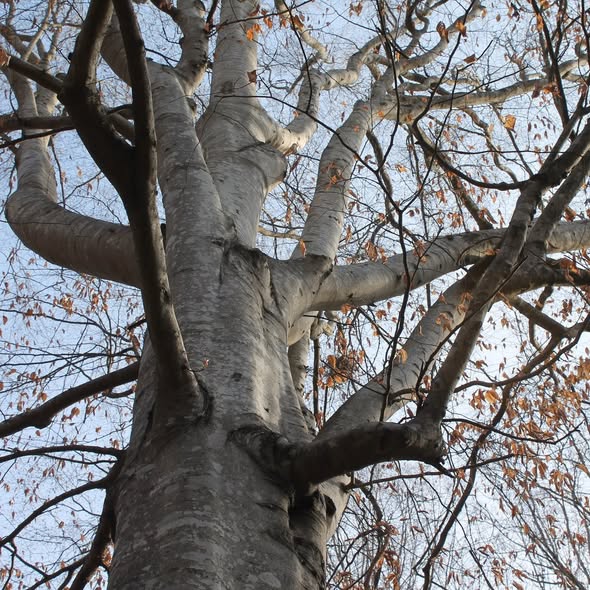
Bark is grey, smooth to lightly furrowed, sometimes with subtle vertical streaking. Multi-stemmed forms are common. In winter, the ascending, arching branch structure is graceful and identifiable.
Native Range and Natural Distribution
Amelanchier species are native across most of North America, from Alaska and northern Canada south to the Gulf Coast states, and from the Pacific coast to the Atlantic seaboard. No other flowering tree genus has a comparable native range on the continent.
General distribution by species group:
- Eastern species (A. arborea, A. canadensis, A. laevis): Appalachians, Great Lakes, Atlantic coast, southeastern Canada
- Prairie and western species (A. alnifolia): Great Plains, Rocky Mountains, Pacific Northwest, western Canada
- Widespread species (A. humilis, A. stolonifera): Disturbed areas, open woodlands, rocky outcrops across a broad northern range
Habitat preferences vary by species but generally include:
- Woodland edges and forest understories
- Stream banks and moist slopes
- Rocky outcrops and cliff edges
- Prairie margins and open shrublands
- Old fields and disturbed land
Serviceberry grows across USDA Hardiness Zones 2–9, making it one of the most cold-hardy flowering trees available to North American gardeners.
Ecological Role: A Wildlife Powerhouse
Few native plants match Serviceberry for concentrated ecological value. Its contributions to wildlife span every season.
Pollinators in Spring
Serviceberry flowers in the very early spring window when most other nectar sources are not yet available. This makes it critically important for:
- Native bees emerging from winter dormancy
- Honeybees in their first foraging flights
- Early butterflies such as the Eastern Comma and Mourning Cloak
- Flies and beetles that serve as early-season pollinators
In many regions, Serviceberry represents one of the few substantial pollen and nectar sources available in that narrow spring window before other trees leaf out. Its ecological timing is nearly perfect.
Birds and the Berry Crop
The berry crop is, if anything, even more ecologically important than the flowers.
Serviceberries ripen in late May through July — a period when many migrants are passing through and resident birds are raising young. The berries are soft, nutritious, and highly digestible. They are consumed by over 40 species of birds, including:
- Cedar Waxwings — perhaps the most famous Serviceberry enthusiasts; flocks can strip a tree bare in a single afternoon
- American Robins
- Baltimore Orioles
- Scarlet Tanagers
- Rose-breasted Grosbeaks
- Gray Catbirds
- Eastern Bluebirds
- Thrushes (Hermit, Swainson’s, Wood)
- Wild Turkeys
Mammals including bears, foxes, chipmunks, squirrels, deer, and raccoons also consume the berries. The seeds pass through digestive systems intact, making birds and mammals effective seed dispersers.
Caterpillar Host Plant
This is an area where Serviceberry truly shines and is increasingly recognised by ecologists. Amelanchier species support the larvae of over 100 species of moths and butterflies, including the larvae of:
- Viceroy butterfly (Limenitis archippus)
- Red-spotted Purple butterfly (Limenitis arthemis)
- Striped Hairstreak butterfly
- Numerous silk moths and underwing moths
Caterpillars are the foundation of forest food webs. Research by entomologist Dr. Doug Tallamy has shown that native oak and cherry trees are the most important caterpillar hosts — but Serviceberry ranks among the top-tier native plants for supporting insect life that, in turn, feeds nesting birds.
Edible Uses: Juneberries in the Kitchen
Serviceberries are not just wildlife food. They are delicious for people too — and have been an important food source for indigenous and rural communities across North America for thousands of years.
Flavour Profile
Ripe Serviceberries taste sweet and mild, with a subtle almond or cherry-like flavour from the seeds. The texture is soft and juicy. The flavour is often compared to a blueberry with a hint of marzipan. Unlike many wild berries, they are pleasant to eat raw straight from the branch.
Indigenous Food Traditions
Serviceberries hold deep cultural significance for many First Nations and Native American peoples. Among the most notable uses:
- Pemmican: The Cree, Lakota, Ojibwe, and many Plains nations dried Serviceberries and mixed them with dried meat and fat to make pemmican — one of the most calorie-dense and shelf-stable foods in indigenous North American cuisine. Pemmican was a staple of winter survival and long travel.
- Dried fruit: Berries were dried in the sun for winter storage, providing vitamin C and sweetness through cold months.
- Fresh eating and ceremony: In many cultures, the first Serviceberry harvest marked a seasonal celebration.
The Blackfoot people of the northern plains called the Saskatoon berry mis-ask-quah-toomina, from which the city of Saskatoon, Saskatchewan takes its name.
Culinary Uses Today
Fresh Serviceberries work well in:
- Jams, jellies, and preserves — the pectin content is moderate; combine with high-pectin fruit for firm set
- Pies and crumbles — use exactly as you would blueberries
- Muffins, pancakes, and quick breads
- Syrups and sauces — excellent over yoghurt, ice cream, or game meat
- Wine and fermented beverages
- Dried as raisins — sweet, chewy, and excellent in trail mix
In western Canada, Saskatoon berry products — jams, wines, pies, and fresh fruit — are a regional food industry. Pick-your-own Saskatoon orchards are common in Manitoba, Alberta, and Saskatchewan.
The main limitation with home harvesting is competition. Birds find the berries before most gardeners realise they are ripe. Netting is the most practical solution for anyone who wants a meaningful harvest.
Landscape and Garden Use
Serviceberry deserves a place in almost any landscape in North America. Its combination of ornamental value, ecological function, and adaptability makes it difficult to match.
Four-Season Appeal
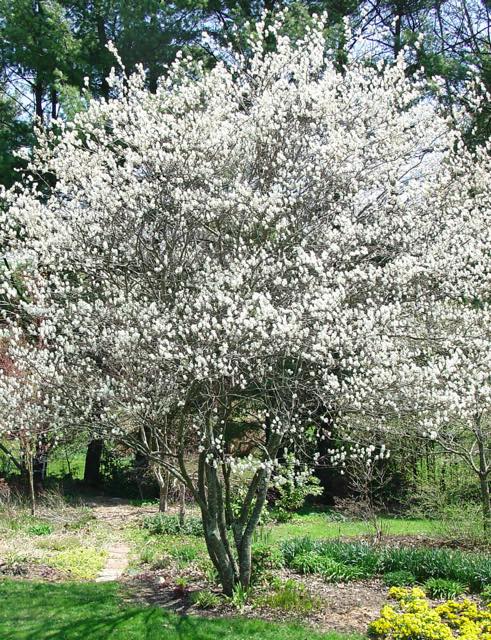
- Spring: Clouds of white blossom before the leaves fully emerge — one of the finest spring flowering displays of any native plant
- Summer: Clean, attractive foliage with a developing berry crop; deep green and untroubled by most pests
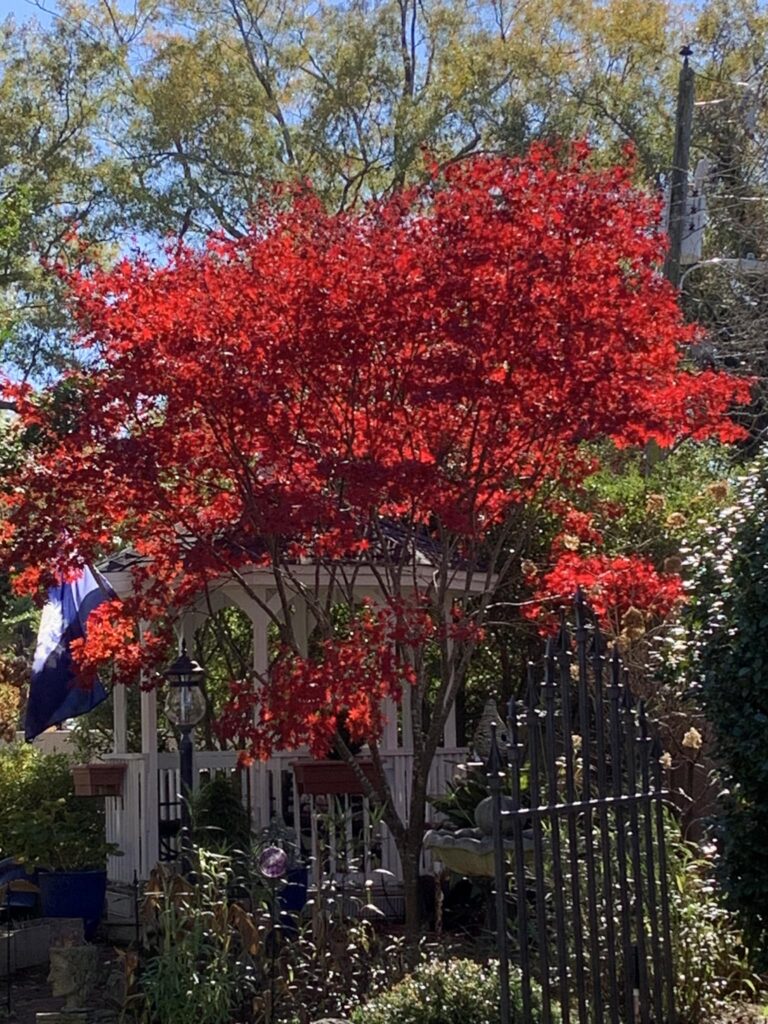
- Autumn: Brilliant orange, red, and burgundy foliage — consistently among the best autumn colour of any small tree
- Winter: Graceful, multi-stemmed form with smooth grey bark; persistent fruit stalks provide subtle structure
Landscape Applications
- Specimen tree in lawn or garden borders — works at small to medium scale
- Multi-stem clump — a naturalistic, elegant form for mixed borders and woodland edges
- Understory planting beneath larger trees — Serviceberry tolerates partial shade well
- Screening and hedgerows — A. canadensis and A. alnifolia form effective multi-stem screens
- Rain gardens and moist areas — A. canadensis tolerates seasonal wet conditions
- Dry, rocky slopes — A. stolonifera and A. alnifolia tolerate poor, dry soils
- Urban and street planting — the hybrid cultivars, particularly A. × grandiflora types, tolerate urban conditions reasonably well
Recommended Cultivars
Several cultivars have been selected for improved ornamental performance:
- ‘Autumn Brilliance’ (A. × grandiflora): Exceptional autumn colour; consistent, vigorous growth; widely available
- ‘Princess Diana’ (A. × grandiflora): Upright form; brilliant red autumn foliage; excellent berry crop
- ‘Ballerina’ (A. × grandiflora): Large flowers; good berry crop; red-bronze young leaves
- ‘Regent’ (A. alnifolia): Compact form (1.2 m); heavy berry crop; excellent for small gardens and edible landscapes
- ‘Smokey’ (A. alnifolia): Canadian selection for large, sweet berries; commercial fruit production variety
Growing Serviceberry: Cultivation Guide
Serviceberry is genuinely easy to grow once basic requirements are met.
Soil and Site
- Soil: Adaptable; prefers moist, well-drained, slightly acidic to neutral soils (pH 5.5–7.0); tolerates clay, sandy loam, and rocky soils
- Sunlight: Full sun produces the best flowering, berry crop, and autumn colour; tolerates partial shade
- Moisture: Moderate; most species tolerate brief drought when established; A. canadensis tolerates wet soils
Planting
- Plant container-grown or balled-and-burlapped stock in spring or autumn
- Water thoroughly at planting and during the first growing season
- Mulch around the base to retain moisture and suppress weeds — keep mulch away from the trunk
Watering and Feeding
- Water regularly in the first year; established plants need little supplemental water in most climates
- Fertiliser is generally unnecessary in adequate soils; excessive nitrogen promotes leafy growth at the expense of flowering and fruiting
- In poor soils, a light application of balanced slow-release fertiliser in spring is beneficial
Pruning
- Serviceberry requires minimal pruning
- Remove dead, damaged, or crossing branches in late winter before growth begins
- Multi-stem forms can be thinned selectively to improve structure and light penetration
- Avoid heavy pruning in summer, which reduces the following year’s flower buds
Pests and Diseases
Serviceberry is largely free of serious pests and diseases when grown in appropriate conditions. Occasional issues include:
- Cedar-apple rust (Gymnosporangium spp.): A fungal disease causing orange, powdery spots on leaves; most prevalent in areas with Eastern Red Cedar (Juniperus virginiana) nearby. Choose rust-resistant cultivars in affected regions.
- Fire blight (Erwinia amylovora): A bacterial disease affecting the rose family; causes blackened, “burned” shoot tips. Prune out affected growth promptly.
- Scale insects and aphids: Minor infestations; treatable with horticultural oil
- Leaf miners and sawflies: Cosmetic damage only; rarely require intervention
Conservation and Ecological Gardening
Planting Serviceberry is one of the most impactful acts an individual gardener can take for local ecological health.
Every Serviceberry planted in a suburban or urban landscape creates:
- A spring nectar source for early native bees
- A caterpillar host supporting breeding birds
- A fruit crop feeding dozens of bird species during migration
- Autumn colour that rivals any ornamental import
In an era of biodiversity decline, choosing a plant that gives back to the ecosystem — rather than simply decorating a yard — is both a practical and meaningful choice.
Serviceberry pairs beautifully in ecological plantings with other native companions: Wild Columbine (Aquilegia canadensis), Native Viburnums, Dogwoods (Cornus spp.), Wild Ginger (Asarum canadense), and Native Ferns — creating layered, wildlife-rich habitats that far outperform any conventional ornamental planting.
Final Thoughts
Amelanchier species offer something rare in horticulture: genuine, multi-dimensional value.
They are beautiful in every season. They feed people, birds, bees, and bears. They grow in a remarkable range of conditions, from Arctic prairie to humid Appalachian forest. They connect modern gardens to indigenous food traditions stretching back thousands of years.
If you have not yet planted a Serviceberry, now is the time to start. Give it a sunny spot, a little water in its first year, and some patience — and it will reward you, and the wildlife around you, for generations.
That, ultimately, is what the best plants do.
References
- USDA Forest Service — Silvics of North America Amelanchier spp. — Ecology, Range, and Silvical Characteristics of Serviceberry Species https://www.fs.usda.gov/database/feis/plants/shrub/amelanchier/all.html
- University of Florida, Institute of Food and Agricultural Sciences (UF/IFAS) — Edis Amelanchier arborea: Downy Serviceberry for Florida and Southern Landscapes https://edis.ifas.ufl.edu/publication/ST066
- University of Wisconsin–Madison — Wisconsin Horticulture Division of Extension Serviceberry (Amelanchier spp.) — Landscape Uses, Identification, and Cultivation https://hort.extension.wisc.edu/articles/serviceberry-amelanchier-spp/
- Cornell University — College of Agriculture and Life Sciences (CALS) / Growing Degree Days Native Shrubs and Small Trees for Wildlife: Amelanchier Genus Profile https://www.gardening.cornell.edu/homegardening/scene7e26.html
- USDA Natural Resources Conservation Service (NRCS) — PLANTS Database Amelanchier Medik. — Full Genus Profile: Classification, Distribution Maps, Ecological Data https://plants.usda.gov/home/plantProfile?symbol=AMEL

Tim M Dave is a gardening expert with a passion for houseplants, particularly cacti and succulents. With a degree in plant biology from the University of California, Berkeley, he has vast experience in gardening. Over the years, he has cultivated a vast collection of desert plants and learned a great deal about how to grow and care for these unique companions.