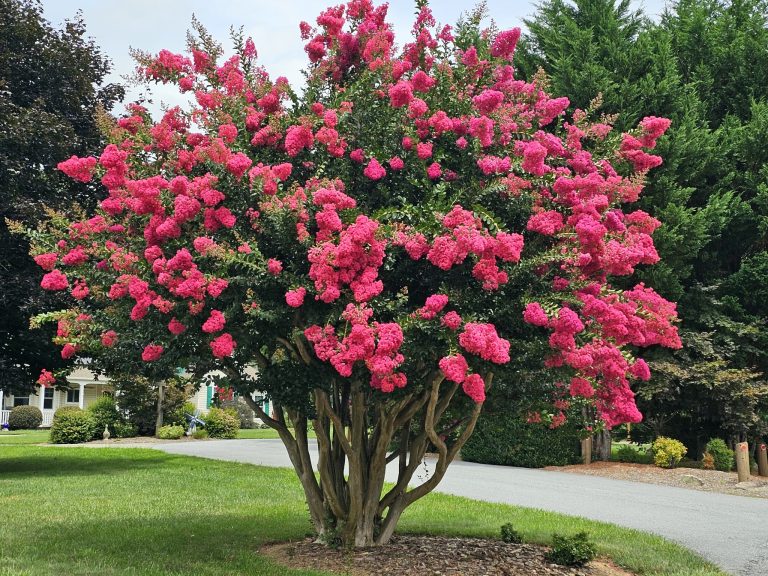
Royal Raindrops Crabapple Tree Pros and Cons: Everything You Need Before You Plant
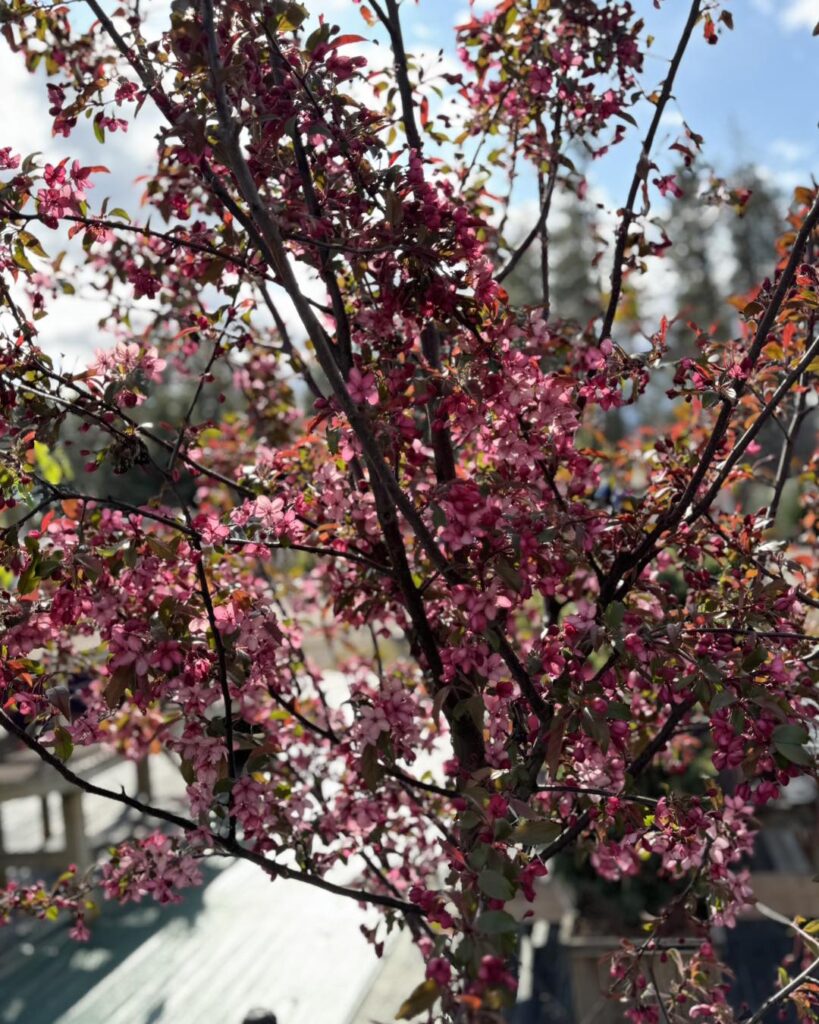
There is something almost theatrical about a Royal Raindrops crabapple tree in full bloom. The deep magenta-pink flowers, the cut-leaf purple foliage, the tiny persistent fruit that carry color well into winter — it is the kind of tree that makes neighbors stop and ask questions.
Royal Raindrops (Malus ‘JFS-KW5’) is a patented ornamental crabapple cultivar introduced by J. Frank Schmidt & Son Co., a respected Oregon nursery firm known for developing improved landscape trees.
It was selected and released in the early 2000s for its combination of deeply cut purple foliage, vivid flower color, and strong disease resistance — three traits rarely found together at this level of quality in a single cultivar.
What genuinely sets Royal Raindrops apart from other crabapples is its foliage. While most crabapples produce plain oval leaves that turn a forgettable green by summer, Royal Raindrops carries deeply lobed, finely cut leaves with a rich purple-red tone that persists through much of the growing season.
The overall effect is more like a Japanese maple than a typical crabapple — which makes it a much more versatile design element in the landscape.
It is upright-spreading in form rather than fully rounded, giving it a slightly more vertical presence that works well in tighter spaces where a wide-spreading tree would be problematic.
| Botanical Name | Malus ‘JFS-KW5’ (sold as Royal Raindrops®) |
| Common Name | Royal Raindrops Crabapple |
| Plant Type | Deciduous ornamental tree |
| Mature Height | 15–20 feet (4.5–6 m) |
| Mature Spread | 12–15 feet (3.6–4.5 m) |
| Growth Rate | Moderate — 12–18 inches per year |
| USDA Hardiness Zones | 4a – 8b |
| Flower Color | Deep pinkish-red to magenta |
| Bloom Time | Mid-spring (April–May) |
| Fruit Color | Bright red |
| Fruit Size | Approximately ¼ inch in diameter |
| Foliage Color | Deep purple-red (spring/summer), orange-red (fall) |
| Leaf Shape | Deeply cut (lobed), distinctive among crabapples |
| Sun Requirements | Full sun (minimum 6 hours daily) |
| Soil Preference | Well-drained, adaptable to varied pH |
| Water Needs | Moderate; drought-tolerant once established |
| Disease Resistance | High — excellent resistance to apple scab and fire blight |
| Wildlife Value | High — pollinators, songbirds |
| Lifespan | 40–60 years with proper care |
| Toxicity | Seeds mildly toxic if consumed in quantity |
Pros of the Royal Raindrops Crabapple Tree
Here is why this tree if a gem in many gardens and landscapes:
1. Spectacular and Long-Lasting Floral Display
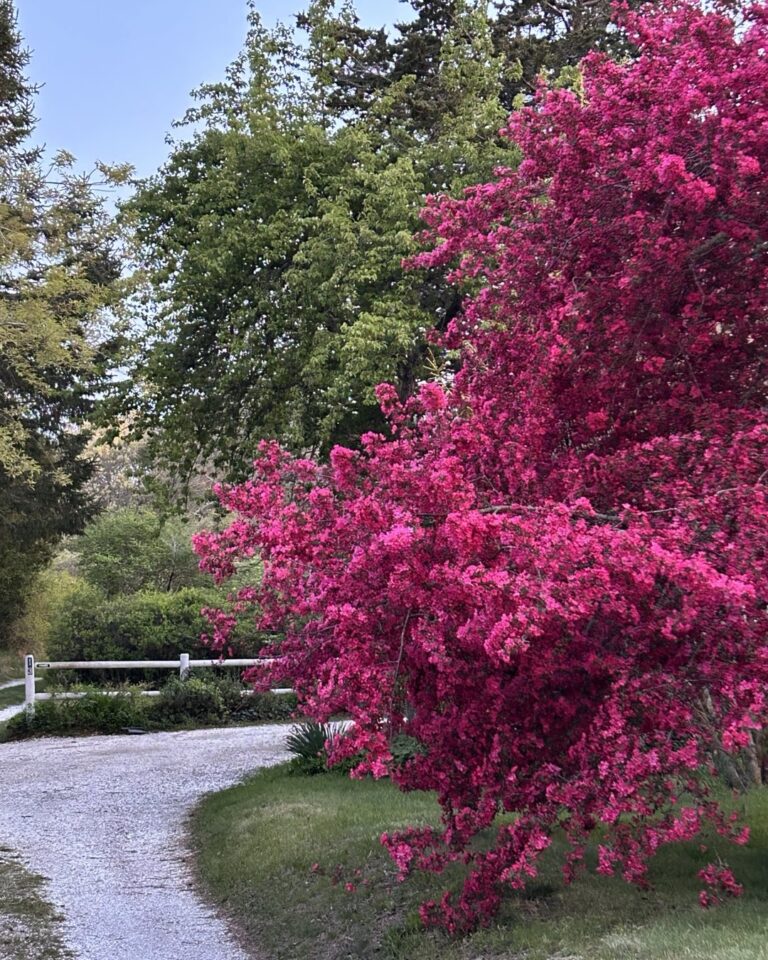
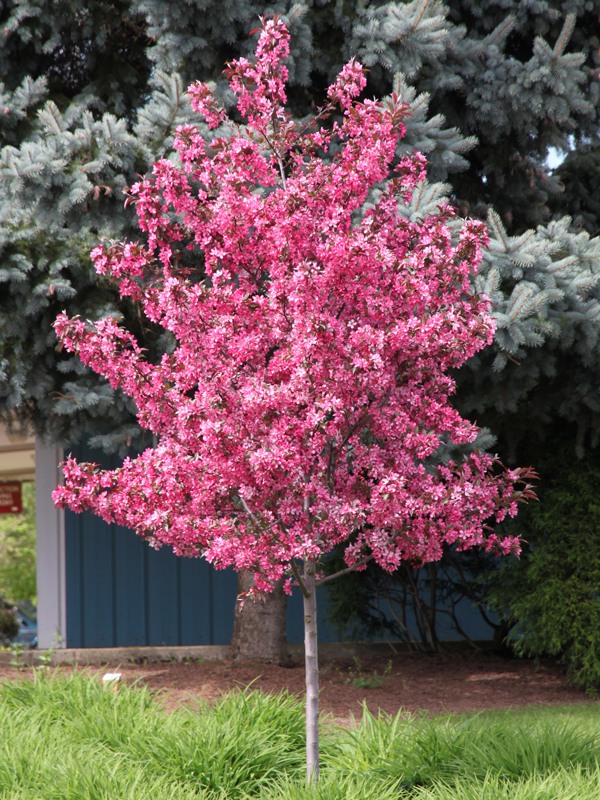
In mid-spring, Royal Raindrops produces an extraordinary abundance of deep pink to magenta flowers that smother every branch before the foliage fully expands. The visual effect is intense — clusters of rich color that can be seen from a considerable distance.
The blooms typically last two to three weeks. Because the unopened buds are a deep rose-red while the open flowers are bright pink, there is a pleasing range of color tones throughout the bloom period.
On a warm, sunny day, the fragrance is noticeable and pleasant — something that photographs cannot quite capture.
For pure flowering impact among small trees in its size class, Royal Raindrops is genuinely difficult to beat.
2. Exceptional Purple Foliage Through the Growing Season
This is the tree’s most distinctive and commercially significant trait. The deeply cut, lobed leaves emerge in spring as a vivid purple-red and, unlike many purple-leaved plants that fade to bronze-green under summer heat, Royal Raindrops retains strong purple coloration through much of summer.
This persistent foliage color means the tree remains a visual asset in the landscape from May through October — not just for a few weeks in spring. Landscape designers use it as a foliage anchor, much as they would use a purple-leaved Japanese maple, but in a more cold-hardy, disease-resistant package.
In autumn, the foliage shifts to orange-red tones before drop, adding yet another seasonal shift.
3. Outstanding Disease Resistance
Disease resistance is where ornamental crabapple selection has advanced most dramatically over the past 40 years. Royal Raindrops rates excellent for resistance to apple scab (Venturia inaequalis) and very good to excellent for resistance to fire blight (Erwinia amylovora)
These two diseases historically made crabapples a maintenance burden. It also shows good resistance to cedar-apple rust and powdery mildew. University evaluations and arboretum trials have consistently confirmed these ratings over multiple seasons and geographies.
For gardeners who remember older crabapple varieties losing half their leaves to scab by August, this level of resistance is genuinely transformative. You can plant Royal Raindrops without building a spray schedule into your maintenance routine.
4. Unique Cut-Leaf Foliage Texture
The deeply lobed leaf shape is not merely decorative — it creates a finer texture in the landscape than most crabapples, and it catches light differently throughout the day, adding movement and depth to plantings.
When backlit by afternoon sun, the purple leaves have an almost luminous quality.
This textural distinction makes Royal Raindrops an effective contrast plant alongside bold-textured shrubs and perennials. It earns its place in sophisticated landscape designs, not just in average suburban yards.
5. Persistent, Wildlife-Friendly Fruit
Royal Raindrops produces ¼-inch bright red fruits that persist on the branches well into winter. These small fruits are enormously valuable to birds, including cedar waxwings, robins, American robins, and mockingbirds, which rely on persistent fruit as a food source during cold months when other options are scarce.
The small fruit size is an advantage — they are less messy when they drop, and they are consumed more quickly by wildlife. This makes Royal Raindrops a more wildlife-friendly choice than cultivars producing larger, less palatable fruits that accumulate on the ground.
6. Upright-Spreading Form Fits Tighter Spaces
Unlike rounded crabapples that spread as wide as they are tall, Royal Raindrops has an upright-spreading habit, reaching 15–20 feet tall but spreading only 12–15 feet wide at maturity.
This narrower profile makes it more practical for smaller lots, side yards, and locations near structures where a wide-spreading tree would eventually become problematic.
It also works well when planted in rows or small groupings, where its more vertical profile creates a coherent visual rhythm without the trees crowding each other unnecessarily.
7. Excellent Cold Hardiness
Rated for USDA zones 4a through 8b, Royal Raindrops covers a broad geographic range — from northern Minnesota and southern Canada to the mid-Atlantic states and into the upper South.
This wide adaptability, combined with its disease profile, makes it one of the most widely recommended ornamental crabapples in North American horticulture today.
It handles late spring frosts reasonably well, and established trees show good wind resistance as well, making it a practical choice for exposed sites.
8. Four-Season Landscape Interest
It takes genuine effort to find a small ornamental tree that contributes meaningfully to the landscape in all four seasons. Royal Raindrops manages it:
- Spring: Masses of deep pink-magenta bloom
- Summer: Rich purple-red, finely cut foliage
- Autumn: Orange-red fall color and ripening red fruit
- Winter: Persistent bright red fruits on bare branches, providing structure and wildlife value
This sustained seasonal performance is what justifies the tree’s growing popularity among landscape designers and discerning homeowners.
9. Low Maintenance Once Established
After the critical first two to three growing seasons — during which consistent moisture is important — Royal Raindrops becomes a genuinely low-maintenance tree. It does not require regular fertilization, routine spraying, or heavy pruning under normal conditions.
The naturally attractive form requires only occasional corrective pruning to remove dead wood, crossing branches, or basal suckers. For busy homeowners who want a high-impact tree without high-maintenance demands, this is a meaningful practical advantage.
10. Strong Pollinator Support
The abundant, nectar-rich flowers make Royal Raindrops an important spring food source for honeybees, native bumblebees, and several species of native solitary bees. In many neighborhoods, ornamental trees are among the earliest substantial pollen and nectar sources after winter — something that matters considerably for bee colony health in early spring.
Planting Royal Raindrops is, in a small but real way, an act of ecological support. That is worth noting.
Cons of the Royal Raindrops Crabapple Tree
Fair assessment requires acknowledging the limitations. Royal Raindrops has several, and they are worth knowing before you commit.
1. Short Bloom Window
The magnificent spring flower display lasts only two to three weeks. In warmer-than-average springs, this window can compress to as little as ten days. If you are hoping for a tree that blooms for months, this is not it.
The solution, for gardeners who want sustained color, is to pair Royal Raindrops with other bloomers that carry the season before and after — such as early bulbs, forsythia, or later-blooming perennials.
2. Fruit Drop Can Create Mess Near Hard Surfaces
While the small fruits are less problematic than larger crabapple varieties, they do drop in late winter and spring as birds consume and scatter them. Near patios, sidewalks, or driveways, this can create a minor cleanup issue and temporarily slippery surfaces.
The practical solution is to site the tree at least 10–15 feet from any hard surface you need to keep clean. This is simple to plan at planting time but inconvenient to address after the tree is established.
3. Full Sun is Non-Negotiable
Royal Raindrops performs well only in full sun — a minimum of six hours of direct sunlight daily, and ideally more. In partial shade, the purple foliage color fades significantly, flowering is reduced, and the tree becomes more vulnerable to fungal diseases due to reduced air circulation and lower light levels.
For gardeners with heavily shaded yards, this tree will not reach its potential and is not the right choice.
4. Requires Careful Establishment Watering
In its first two to three growing seasons, Royal Raindrops needs consistent moisture to develop its root system. During periods of drought or heat stress in establishment years, supplemental irrigation is important.
Trees that experience significant drought stress during establishment often show reduced vigor for years afterward.
This is not unusual among ornamental trees — but gardeners who expect zero care after planting may be caught off guard.
5. Susceptibility to Certain Insects
Despite strong disease resistance, Royal Raindrops is not immune to insect pressure. Aphids, scale insects, and Japanese beetles are the most common pests.
Japanese beetles, in particular, can cause significant foliar damage in regions where they are established, defoliating portions of the canopy during heavy pressure years.
Monitoring in late spring and early summer allows for early intervention. In high Japanese beetle regions, this is a real and recurring maintenance consideration.
6. Not Suited to Poorly Drained Sites
Like all crabapples, Royal Raindrops does not tolerate waterlogged soil. Planting in low-lying areas where water pools after rain will lead to root rot and long-term decline. In areas with heavy clay soil and poor internal drainage, amending the planting site or choosing a different tree is the wiser course.
Raised planting — slightly mounding the soil at the planting site — can help in marginally problematic sites, but truly wet sites should be avoided.
7. Surface Root Development in Restricted Soil Volumes
In compacted urban soils or small planting cutouts, Royal Raindrops, like most crabapples, may develop surface roots as it matures. These can be a nuisance in lawn areas and can eventually disrupt adjacent paving if tree roots are given insufficient soil volume.
Providing adequate soil volume — and avoiding planting in severely compacted, restricted sites — significantly reduces this problem.
8. Seeds Are Mildly Toxic
The seeds, like those of all members of the Rosaceae family, contain cyanogenic glycosides — compounds that are mildly toxic if consumed in quantity.
While accidental poisoning from incidental contact is very unlikely, households with small children or pets who might consume fallen fruit should be aware of this and either site the tree accordingly or manage fallen fruit promptly.
9. Moderate Fruit Persistence — Not the Best for Winter Interest
Compared to crabapple cultivars specifically selected for persistent fruiting — such as Sugar Tyme or Donald Wyman — Royal Raindrops offers only moderate fruit persistence.
Birds tend to consume the small, bright red fruits relatively early in winter, which means that by January or February, the winter fruit display may already be gone.
For gardeners who specifically want persistent winter fruit as a design element, this is worth considering when comparing cultivars.
10. Not Suitable for Zones Below 4a
Despite broad cold hardiness, Royal Raindrops is not recommended for areas colder than USDA zone 4a. In extreme northern climates — northern Minnesota, much of Canada, and comparable regions — hardier alternatives may be more appropriate.
Growing Royal Raindrops Crabapple
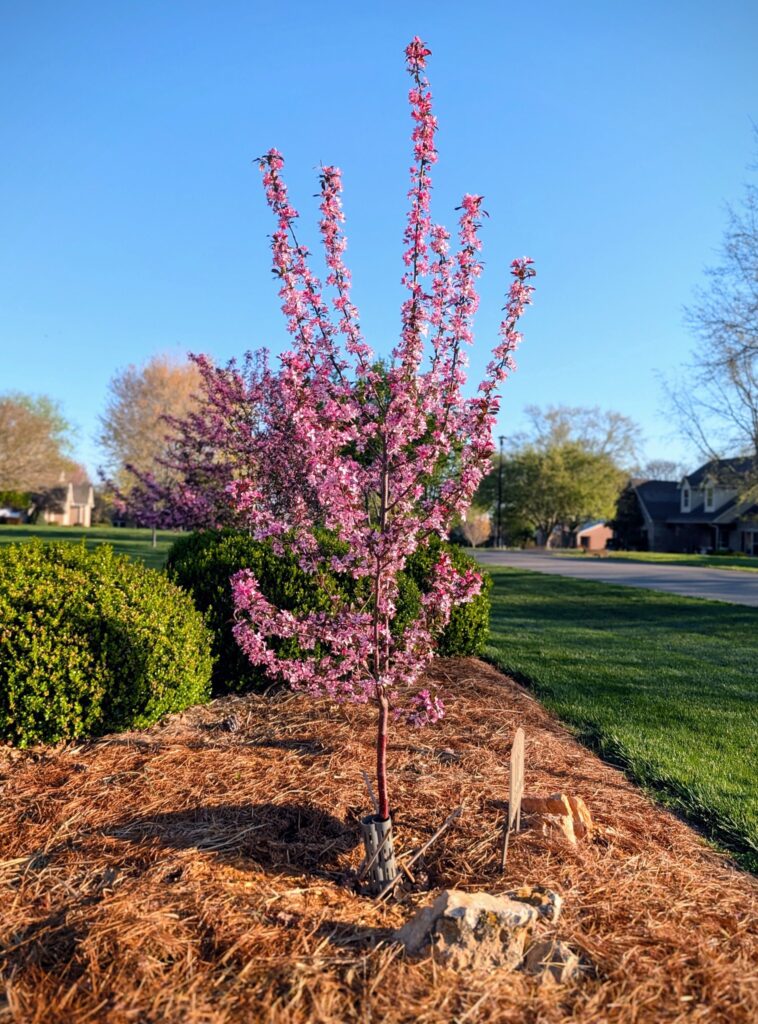
Siting: Choose a location with full sun and well-drained soil. Allow for the tree’s mature size — 15–20 feet tall and 12–15 feet wide — with at least 10–15 feet of clearance from structures, sidewalks, and other trees.
Planting: Dig a hole two to three times the width of the root ball but no deeper. Set the tree so the root flare sits at or just above ground level. Backfill with native soil — avoid amending the backfill heavily, as this can discourage roots from extending into native soil.
Mulching: Apply a 3-inch layer of organic mulch in a ring beneath the canopy, keeping mulch several inches away from the trunk. This conserves moisture, moderates soil temperature, and suppresses competing grass.
Watering: Water deeply once or twice per week during the first growing season, tapering off as the tree becomes established. After two to three seasons, supplemental irrigation is only needed during extended drought.
Pruning: Minimal pruning is needed. Remove dead, damaged, or crossing branches in late winter. Remove any root suckers promptly as they appear. Avoid heavy pruning in summer, which encourages soft regrowth that is more vulnerable to fire blight.
Fertilization: Established trees rarely need fertilization. If growth seems sluggish, a light application of balanced, slow-release fertilizer in early spring is appropriate. Avoid high-nitrogen fertilizers that produce excessive soft growth.
Royal Raindrops vs. Other Popular Crabapple Cultivars
| Cultivar | Height | Foliage Color | Disease Resistance |
| Royal Raindrops | 15–20 ft | Deep purple-red | Excellent |
| Prairie Fire | 15–20 ft | Bronze-green | Excellent |
| Adirondack | 10–12 ft | Dark green | Excellent |
| Sugar Tyme | 15–18 ft | Dark green | Excellent |
| Camelot | 8–10 ft | Purple | Good |
| Louisa | 10–15 ft | Green | Good |
Royal Raindrops occupies a clear niche: it is the best-foliaged, most texturally distinctive crabapple at its size, combining cut-leaf purple foliage with excellent disease resistance and strong flower display. The trade-off is moderate fruit persistence compared to some alternatives.
Landscape Uses: Where Royal Raindrops Excels
Specimen planting: A single Royal Raindrops in a prominent lawn position creates a visual focal point throughout the entire growing season, not merely at bloom time.
Mixed borders: Its purple foliage contrasts effectively with yellow-green perennials and shrubs — think Spiraea ‘Goldflame’, ornamental grasses, and yellow-leaved hostas.
Street trees and parkways: Its upright-spreading form and moderate width make it practical for many municipal planting strips, though local regulations on tree proximity to pavement should always be checked.
Row planting: Used in groups of three or five, Royal Raindrops creates a unified seasonal display along driveways or property boundaries that is visually stronger than any single specimen.
Near patios and outdoor seating areas: Given adequate fruit-drop clearance, the tree provides excellent filtered shade and seasonal interest in social spaces.
Common Questions About Royal Raindrops Crabapple
Does Royal Raindrops crabapple fruit attract deer? Yes. Deer will browse fallen fruit and may feed on young bark and foliage. In high-deer-pressure landscapes, protecting young trees with fencing during the first few years is advisable.
How do you keep Royal Raindrops healthy long-term? Proper siting — full sun, good drainage, adequate space — is the foundation of long-term health. Beyond that, annual monitoring for pests and occasional corrective pruning in late winter covers most bases.
Can Royal Raindrops be grown in containers? It is possible in large containers as a young specimen, but it is not well-suited to permanent container culture. The mature root system and size require in-ground planting for long-term health.
Is the fruit of Royal Raindrops edible for humans? Technically yes, but the fruit is very tart and small, making it impractical for eating fresh. It can be used in jellies and preserves, though this is rarely done with ornamental crabapple fruits.
Final Thoughts
Royal Raindrops is one of the most visually distinctive ornamental trees available for temperate landscapes. Its combination of cut-leaf purple foliage, vivid spring flowers, good disease resistance, and four-season interest is genuinely exceptional — particularly at its mature size of 15–20 feet, where few trees offer comparable design versatility.
Its limitations — the short bloom period, need for full sun, and moderate fruit persistence — are real but manageable. They require thoughtful planting decisions, not ongoing compromise.
If you have a sunny site, adequate space, and a desire for a tree that will draw attention and reward observation throughout the year, Royal Raindrops deserves serious consideration. It is not a perfect tree. But in the right location, it comes impressively close.
Suggested For You:
Prairie Fire Crabapple Tree Pros and Cons: What You Should Know Before Planting
10 Common Crabapple Tree Problems and How to Fix Them

Tim M Dave is a gardening expert with a passion for houseplants, particularly cacti and succulents. With a degree in plant biology from the University of California, Berkeley, he has vast experience in gardening. Over the years, he has cultivated a vast collection of desert plants and learned a great deal about how to grow and care for these unique companions.