Why Are the Leaves on My Rose Bush Turning Yellow? (Causes and Solutions)
There is something quietly heartbreaking about walking into your garden and finding your rose bush looking unwell. The blooms may still be there, but the leaves — once a rich, healthy green — are now turning yellow and dropping.
If you have been asking yourself “why are the leaves on my rose bush turning yellow?”, you are not alone. It is one of the most common concerns among rose growers, from beginners to experienced gardeners.
The good news is this: yellowing leaves on rose bushes, while concerning, are almost always diagnosable and treatable. The cause is rarely mysterious once you know what to look for.
This guide will walk you through every significant reason rose leaves turn yellow, how to identify each one, and what to do about it — followed by a guide to the growing conditions your roses truly need to thrive.
Start Here: Not All Yellowing Is a Crisis
Before anything else, take a moment to observe the pattern of yellowing. Where on the plant is it occurring? How quickly is it spreading? Are there spots, discoloration, or soft texture involved?
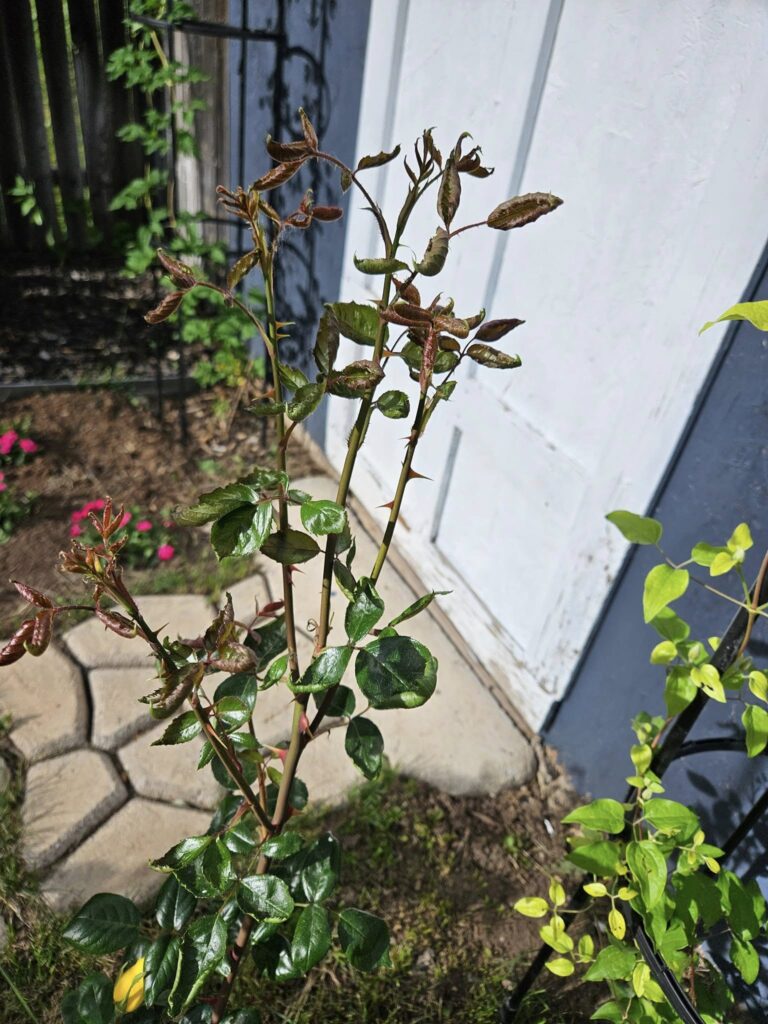
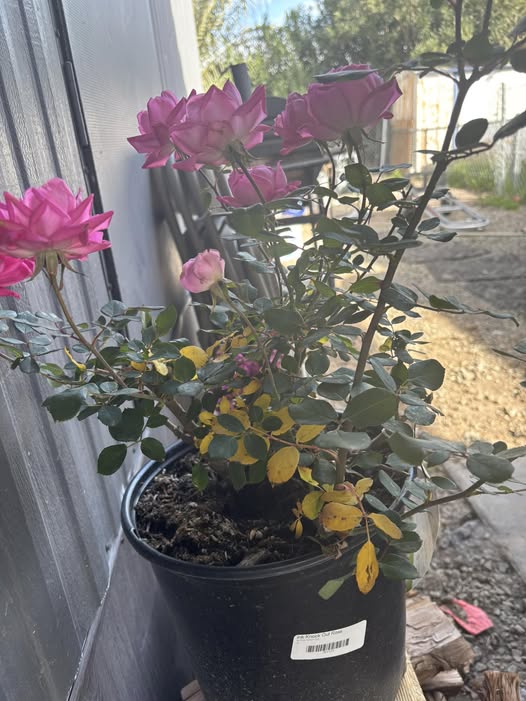
If the yellowing is confined to the oldest, lowest leaves at the base of the plant, and the rest of the bush looks strong and healthy, this may simply be natural leaf senescence — the normal process by which a plant sheds its oldest foliage. Roses do this regularly, particularly during periods of heat stress or at the end of the growing season.
However, if the yellowing is widespread, spreading upward or inward, affecting younger leaves, or accompanied by spots and leaf drop — something else is going on. The sections below will help you find the answer.
Common Reasons Rose Bush Leaves Turn Yellow
1. Black Spot Disease — The Leading Cause of Yellow Rose Leaves
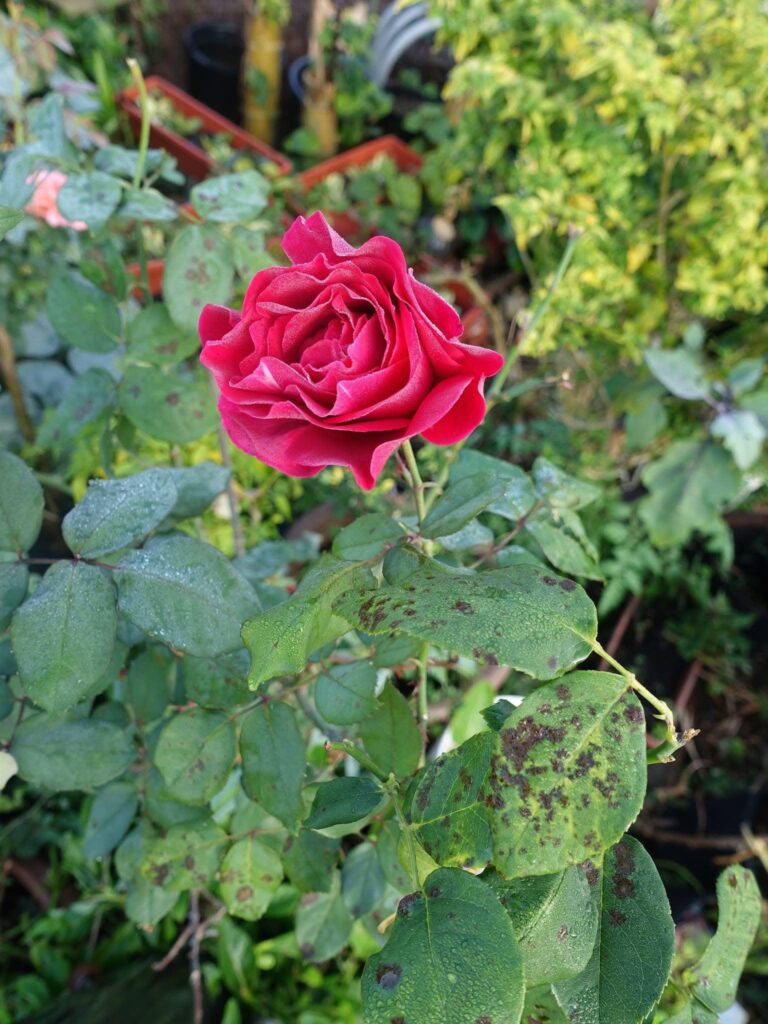
If there is one disease that rose gardeners encounter more than any other, it is black spot (Diplocarpon rosae). Despite its name, the yellowing of leaves is often the first thing you notice — the black spots may be small or already present on the yellowing tissue.
Black spot is a fungal disease that thrives in warm, wet conditions. It spreads through water splash, infected soil, and contaminated tools. The classic symptoms are circular black spots with fringed or feathery edges on the upper surface of the leaf. The surrounding leaf tissue turns bright yellow, and the leaf drops prematurely. Heavily infected plants can lose most of their foliage by midsummer.
Left unmanaged, black spot weakens the plant significantly over repeated seasons, reducing its ability to bloom and making it more susceptible to other stressors.
What you can do:
Remove and dispose of all infected leaves — do not compost them, as the fungal spores survive and reinfect. Avoid overhead watering; water at the base of the plant early in the morning so the foliage stays dry.
Apply a fungicide labeled for black spot — either a conventional product or an organic option such as neem oil or copper-based spray — beginning in early spring and continuing every 7 to 14 days during wet weather. Choose disease-resistant rose varieties when replanting.
2. Overwatering and Poor Drainage
Overwatering is one of the most common cultural mistakes made with roses, and it is a significant cause of yellowing leaves. When rose roots sit in waterlogged soil for extended periods, oxygen is excluded from the root zone. Roots begin to suffocate and deteriorate, losing their ability to absorb water and nutrients.
Paradoxically, the plant shows signs of drought stress — including yellow leaves — even though the soil is wet.
Overwatering-related yellowing tends to affect the plant more broadly, rather than being confined to a specific area. The soil may feel constantly wet, and the roots, if examined, may appear brown, slimy, or with an unpleasant odor.
Heavy clay soils that retain water longer than ideal create the same problem, even when the watering schedule itself is reasonable.
What you can do:
Reduce watering frequency. Roses generally need deep watering once or twice a week, depending on climate and soil type — not daily. Always check soil moisture before watering by pressing a finger 2 to 3 inches into the soil. If the soil still feels moist, wait. If drainage is a structural problem due to clay soil, amend with organic matter such as compost or aged bark, and consider raised beds for better drainage control.
3. Underwatering and Heat Stress
On the other side, roses that do not receive enough water — particularly during hot summer weather — will also show yellowing leaves. The yellowing from drought stress often begins at the leaf margins and tips, and the leaves may feel dry or papery rather than soft.
This is common in regions with hot summers, or when roses are planted in sandy soils that drain very quickly. Container-grown roses are particularly vulnerable to drying out rapidly in warm weather.
What you can do:
Water deeply rather than frequently. When you do water, apply enough to penetrate at least 12 to 18 inches into the soil, encouraging deep root development. A 3-inch layer of organic mulch around the base of the plant helps retain soil moisture, moderate soil temperature, and reduce water evaporation significantly.
4. Iron Chlorosis — A pH Problem in Disguise
Iron chlorosis is a condition that confuses many rose growers because the soil often contains adequate iron — yet the plant behaves as though it has none. The reason is soil pH.
Roses prefer slightly acidic soil with a pH between 6.0 and 6.5. When soil pH rises above this range — which is common in regions with alkaline or limestone-rich soils — iron becomes chemically unavailable to plant roots, even when present in sufficient quantities.
The visual symptom is distinctive: the leaf tissue between the veins turns yellow while the veins themselves remain green. This pattern, called interveinal chlorosis, is one of the clearest indicators of iron or manganese deficiency caused by high soil pH. It typically appears on younger, newer leaves first.
What you can do:
Test your soil pH using an inexpensive kit or through your local cooperative extension service. If the pH is above 6.5, lower it gradually using soil sulfur or acidifying fertilizers. As a short-term fix, chelated iron foliar sprays can restore leaf color within days. However, correcting the pH is the only lasting solution.
5. Nitrogen Deficiency
Nitrogen is the primary nutrient responsible for healthy green leaf color and vigorous growth. When nitrogen is lacking, rose leaves turn uniformly pale yellow or yellow-green, typically starting with the older, lower leaves and progressing upward as the plant draws nitrogen from older tissue to support new growth.
This is especially common in roses grown in sandy soils that leach nutrients quickly, or in plants that have not been fertilized for an extended period. Excessive rainfall can also flush nitrogen from the soil faster than the plant can absorb it.
What you can do:
Apply a balanced rose fertilizer or a nitrogen-rich fertilizer according to package directions. Organic options such as blood meal, fish emulsion, or well-composted manure work well and improve soil structure over time.
Be careful not to over-apply nitrogen — excessive amounts encourage lush but weak, aphid-prone growth at the expense of flowering.
6. Spider Mites
Spider mites are tiny, sap-sucking pests that cause significant damage to rose foliage, yet they are often overlooked because of their small size. A spider mite infestation initially presents as fine, pale stippling across the leaf surface — tiny yellow or white dots caused by the mites puncturing individual cells.
As the infestation progresses, leaves may turn entirely yellow, then brown, and drop. In heavy infestations, fine webbing becomes visible on the undersides of leaves and between stems. Spider mites thrive in hot, dry conditions and can multiply rapidly, especially when beneficial predatory insects have been eliminated by pesticide use.
What you can do:
Check the undersides of leaves regularly, particularly during warm, dry spells. A strong jet of water from a hose, directed at the undersides of leaves, physically removes large populations effectively.
Insecticidal soap or neem oil applied every seven days for several weeks manages infestations well. Avoid broad-spectrum insecticides, which kill the natural predators — like ladybugs and predatory mites — that keep spider mite populations in check.
7. Rose Mosaic Virus
Rose mosaic virus is a viral disease that produces distinctive mottled, yellow patterns on rose leaves. Unlike fungal yellowing, which tends to be uniform or spot-based, viral yellowing creates irregular, wavy or banded yellow patterns alongside normal green tissue — giving the leaf a mosaic appearance. The veins may appear yellow while surrounding tissue remains green, or vice versa.
The virus is transmitted primarily through infected budwood during propagation — meaning many purchased plants are already infected at the point of sale. It does not spread from plant to plant through soil or water contact in the garden.
Infected plants often bloom and grow reasonably well in mild seasons, but show increased stress during hot weather. There is no cure.
What you can do: When purchasing roses, buy from reputable nurseries that source virus-tested, certified stock. If a plant is confirmed to have mosaic virus, the only real option is removal and replacement. Avoid propagating cuttings from infected plants, as this perpetuates the virus.
8. Root Rot (Phytophthora and Pythium)
Root rot caused by water mold pathogens — particularly Phytophthora species — is a serious condition that leads to progressive yellowing and wilting of rose foliage. The plant may look as though it is dying of thirst even when the soil is moist, because the rotted roots can no longer function.
Symptoms include yellowing leaves that become limp, stunted growth, and eventual collapse of the entire plant. Pulling the plant from the soil often reveals dark brown or black, water-soaked roots that fall apart easily.
Root rot is most common in poorly drained soils and is frequently triggered or worsened by overwatering.
What you can do:
Remove the plant, trim away all diseased roots with sterilized pruners, and allow cut surfaces to dry before replanting in fresh, well-draining soil. Drench the new planting area with a phosphonate-based fungicide.
If root rot is a recurring problem in a particular garden area, raised beds or soil remediation may be necessary for long-term success.
9. Natural Shading and Insufficient Light
Roses are sun-loving plants. They need a minimum of six hours of direct sunlight daily to grow vigorously and maintain healthy foliage. When planted in partial or heavy shade, roses cannot photosynthesize efficiently.
Over time, leaves yellow as chlorophyll production declines, and the plant becomes increasingly weak and susceptible to disease.
Yellowing from insufficient light tends to affect the interior and lower portions of the plant first — areas that receive the least sun. The plant may also produce fewer blooms, with longer, weaker stems reaching toward the light source.
What you can do:
If possible, transplant shade-affected roses to a sunnier location in early spring or autumn. If relocation is not an option, selective pruning of nearby trees or shrubs to let in more light can make a meaningful difference.
In situations where shade is unavoidable, choose shade-tolerant rose varieties such as certain rugosa or climbing rose types.
10. Transplant Shock
If your rose bush was recently moved or planted, yellowing leaves in the weeks following may simply be transplant shock. The disruption of the root system temporarily limits the plant’s ability to take up water and nutrients, and it responds by shedding older foliage to reduce the demand on stressed roots.
This is usually a self-limiting problem. The plant stabilizes and begins to produce new, healthy growth once roots are re-established.
What you can do:
After transplanting, water consistently and deeply. Avoid fertilizing for at least four to six weeks, as fertilizer salts can further stress damaged roots. Apply mulch to retain moisture and moderate soil temperature.
Remove any flower buds that form immediately after transplanting — redirecting energy to root development rather than reproduction helps the plant recover faster.
11. Pesticide and Herbicide Damage
Chemical drift or misapplication of herbicides and pesticides can cause rapid, severe yellowing of rose foliage. Herbicides — particularly those containing glyphosate or hormone-based active ingredients — can drift onto roses from nearby applications and cause dramatic yellowing, distortion, or browning of leaves within days.
Pesticide damage tends to produce more uniform yellowing or browning across exposed leaf surfaces, sometimes accompanied by leaf curl or tissue death at the margins.
What you can do:
When applying any herbicide near roses, choose calm days to prevent drift, shield the rose bush if necessary, and apply at low pressure. If exposure has already occurred, rinse the foliage thoroughly with water, prune heavily damaged growth, and provide optimal care to help the plant recover. Most roses will grow out of mild herbicide exposure over time.
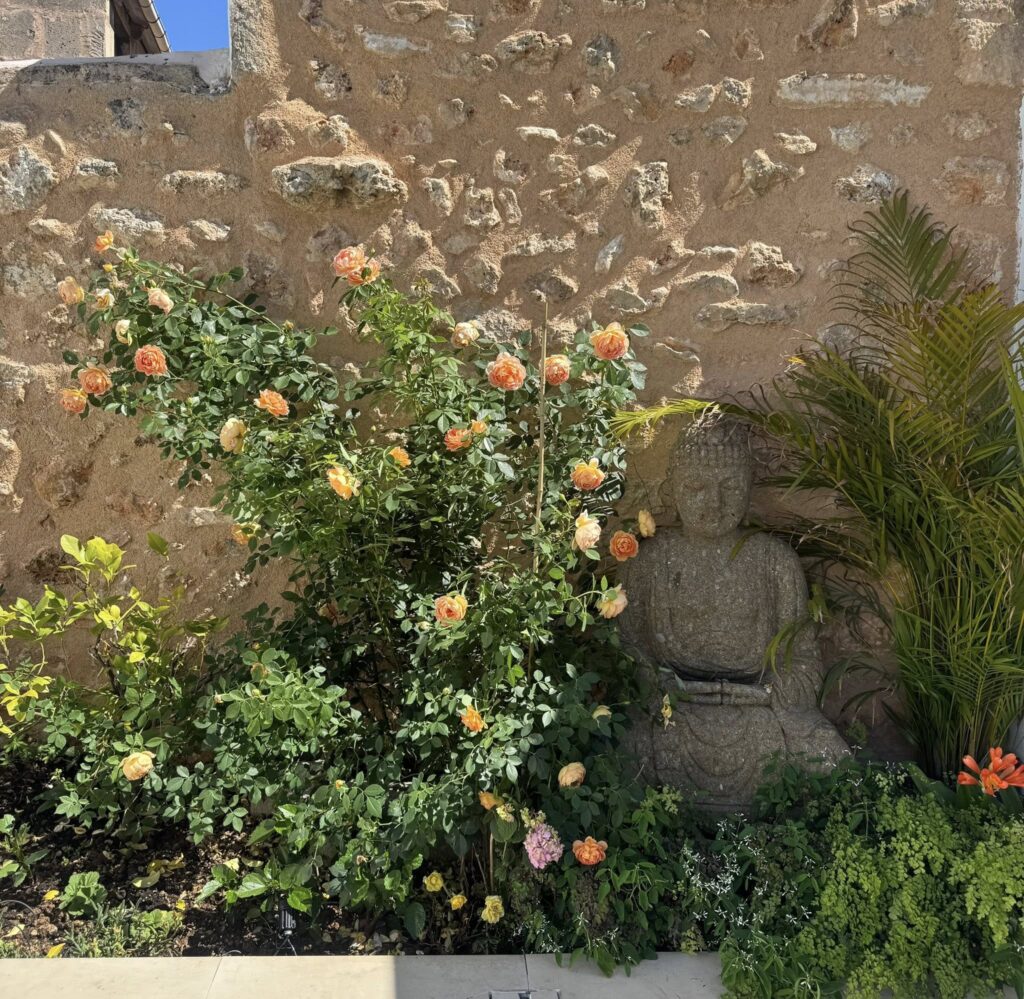
The Right Growing Conditions for a Healthy Rose Bush
Now that the causes are clear, it is worth outlining the ideal conditions that help roses stay healthy and minimize the risk of the problems described above. Think of this as the foundation every rose bush needs.
Sunlight: Roses Are Sun Worshippers
Roses perform best with six to eight hours of direct sunlight per day. Morning sun is particularly valuable because it dries dew from the foliage quickly, reducing fungal disease pressure. While some varieties tolerate partial shade, they will never perform as well as roses grown in full sun. Site selection is one of the most important decisions you make when planting a rose.
Soil: Well-Drained, Fertile, and Slightly Acidic
Roses prefer loamy, well-draining soil with a pH of 6.0 to 6.5. Heavy clay soils benefit from generous amendment with compost, aged bark, or horticultural grit to improve drainage and aeration. Sandy soils benefit from organic matter additions to improve water and nutrient retention.
Before planting, conduct a soil test. This single step can prevent many of the nutrient and pH-related yellowing problems discussed above by identifying deficiencies and imbalances before they become established issues.
Watering: Deep and Consistent
Water deeply, at the base of the plant, once or twice per week rather than frequent shallow watering. Deep watering encourages roots to grow downward, making plants more drought-tolerant and structurally stable. Always water in the morning rather than the evening to allow foliage to dry during the day.
Avoid overhead sprinklers for roses if possible — wet foliage is an invitation for fungal disease, particularly black spot.
Mulching: Simple and Highly Effective
A 2 to 3-inch layer of organic mulch — such as shredded bark, wood chips, or composted material — applied around the base of the rose bush (but not touching the stem directly) provides multiple simultaneous benefits. It retains soil moisture, moderates soil temperature, suppresses weeds, and reduces soil splash that carries fungal spores onto lower leaves.
Refresh mulch annually as it breaks down and incorporates into the soil.
Fertilization: Regular but Balanced
Roses are heavy feeders during the growing season and benefit from regular fertilization. Begin feeding in early spring when new growth emerges and continue every four to six weeks through late summer. Stop fertilizing six to eight weeks before the first expected frost to avoid stimulating tender new growth that could be damaged by cold.
Use a fertilizer specifically formulated for roses, or a balanced general-purpose fertilizer. Incorporate organic matter — compost, well-rotted manure — into the soil annually to build long-term fertility and microbial health.
Pruning: Essential for Airflow and Vigor
Good pruning practices directly reduce disease pressure. Removing dead, damaged, and crowded canes improves air circulation within the bush, which is critical for keeping foliage dry and reducing fungal infection risk. Always prune with clean, sharp tools to avoid crushing canes or introducing pathogens through ragged cuts.
Prune in early spring when forsythia blooms, or when you see the first buds swelling. Remove any dead wood back to healthy, white-centered wood. Prune crossing canes and any that grow toward the center of the bush to keep an open, vase-shaped structure.
Pest and Disease Monitoring
Inspect your roses regularly — at least once a week during the growing season. Early detection of pests like spider mites, aphids, and sawfly larvae, as well as the first signs of black spot or powdery mildew, allows for intervention before problems escalate.
A few minutes of observation each week can prevent a situation that might otherwise require weeks of treatment to resolve.
Suggested For You:
Black Spots on Roses: What’s Really Causing Them
Your Rose Leaves Are Curling — And the Reason Is Closer Than You Think
Those Dark Spots on Your Rose Leaves Are Telling You Something — Here Is How to Listen
11 Reasons Why Orchid Leaves Turn Yellow ( And Fixes That Work)
Understanding Bare Root Fruit Trees: When and How to Plant Them
Final Thoughts
Yellowing rose leaves are a message from your plant, and learning to read that message is a skill that develops with attention and experience. The cause is rarely singular, and sometimes two or three factors combine to produce a problem that seems more complex than it actually is.
Work through the possibilities methodically. Start with the most common causes — black spot, watering issues, and soil pH — and rule them out one by one before looking at less common explanations. Make one change at a time where possible, so you can assess what is actually making a difference.
Roses are resilient plants. Given the right conditions and attentive care, most will recover from even significant stress and go on to produce the beautiful, fragrant blooms that make them worth every bit of effort.
References
- University of California Agriculture and Natural Resources (UC ANR) — Rose Problems: Diagnosing and Managing Common Issues https://ipm.ucanr.edu/PMG/GARDEN/PLANTS/rose.html
- Clemson University Cooperative Extension — Rose Diseases https://hgic.clemson.edu/factsheet/rose-diseases/
- Penn State Extension — Black Spot of Rose https://extension.psu.edu/black-spot-of-rose
- University of Minnesota Extension — Growing Roses in Minnesota https://extension.umn.edu/flowers/growing-roses
- North Carolina State University Extension — Rose Mosaic Virus https://content.ces.ncsu.edu/rose-mosaic

Tim M Dave is a gardening expert with a passion for houseplants, particularly cacti and succulents. With a degree in plant biology from the University of California, Berkeley, he has vast experience in gardening. Over the years, he has cultivated a vast collection of desert plants and learned a great deal about how to grow and care for these unique companions.