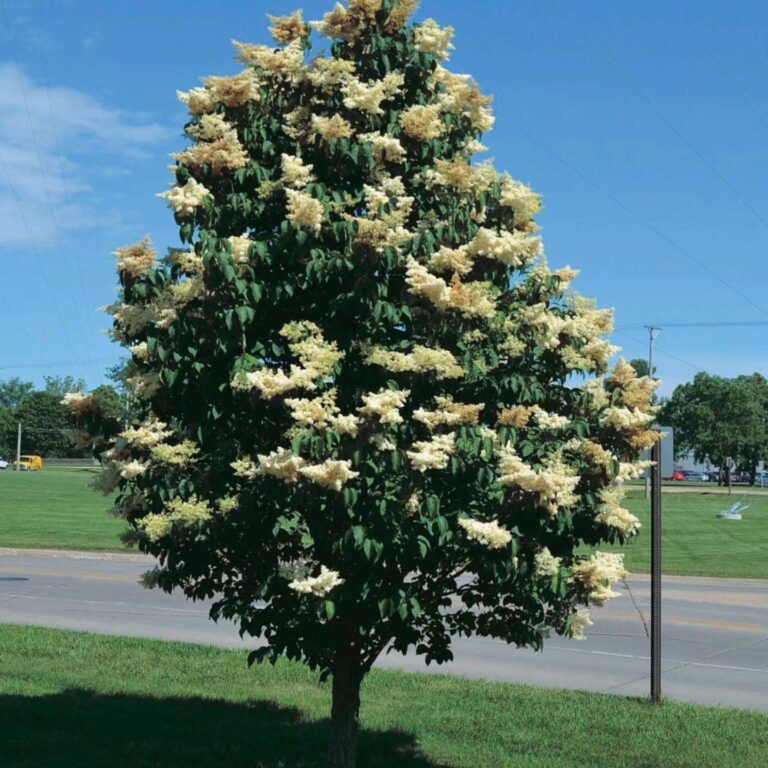
10 Common Rising Sun Redbud Tree Problems: Identification and How to Fix Them
The Rising Sun Redbud is a cultivar of the Eastern Redbud, which is native to eastern North America. It was specifically bred for its spectacular foliage — leaves that open in brilliant shades of orange and gold before transitioning to lime-green through summer.
This tree performs best in USDA Zones 5 through 9 and thrives in locations with some afternoon shade, especially in hotter climates. It is not a difficult tree to grow, but it is sensitive to a few specific conditions, and problems can develop quickly if warning signs are ignored.
| Common Name | Rising Sun Redbud |
| Scientific Name | Cercis canadensis ‘Rising Sun’ |
| Plant Type | Deciduous flowering tree |
| Mature Height | 12–15 feet |
| Mature Spread | 15–20 feet |
| USDA Hardiness Zones | 5–9 |
| Sun Requirements | Full sun to partial shade |
| Soil Preference | Well-drained, moist, slightly acidic |
| Bloom Season | Early to mid-spring (before leaves emerge) |
| Flower Color | Rosy-pink to lavender-pink |
| Foliage Color | Emerges golden-orange; matures to lime-green |
| Fall Color | Yellow |
| Lifespan | 20–30 years (with proper care) |
| Water Needs | Moderate; drought-tolerant once established |
| Growth Rate | Moderate (7–10 feet in first 5–6 years) |
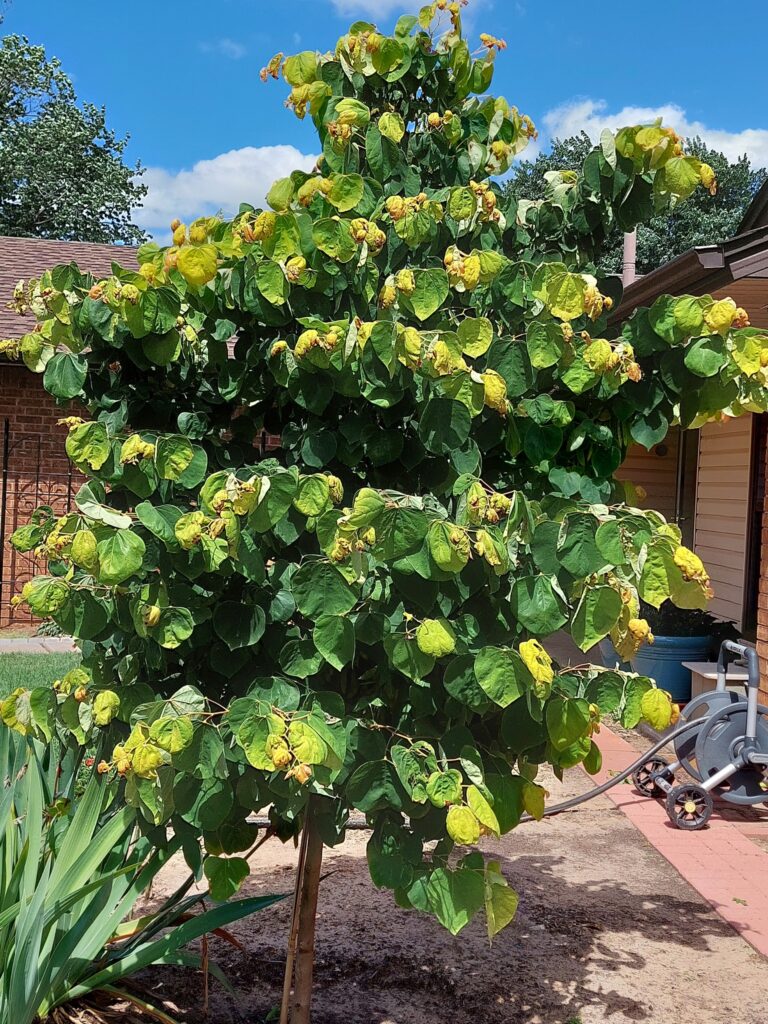
If you grow a Rising Sun Redbud in your yard, you already know how stunning it looks. The glowing golden foliage, the burst of pink flowers in spring, and the compact form make it one of the most eye-catching ornamental trees available today.
But like any living plant, it comes with its own set of challenges — and knowing them early can save your tree’s life.
This guide covers every major problem that affects the Rising Sun Redbud (Cercis canadensis ‘Rising Sun’), from fungal diseases and insect pests to environmental stress and root issues. Let’s look at each one of these challenges in details:
1. Verticillium Wilt — The Most Serious Threat
Of all the problems that affect the Rising Sun Redbud, Verticillium wilt is arguably the most dangerous. It is caused by a soil-borne fungus (Verticillium dahliae or Verticillium albo-atrum) that enters the tree through its roots and spreads through the vascular system, cutting off water and nutrient flow.
Symptoms to Watch For
- Sudden wilting of leaves on one or more branches
- Yellowing or browning of leaves, often on one side of the tree
- Brown or olive-green streaking visible in the sapwood when you cut a branch
- Branches dying back progressively, year after year
- General tree decline despite adequate watering
Why It Happens
The fungus lives in the soil for years — even decades — and can be introduced through infected soil, tools, or transplants. Redbuds are listed among the susceptible species, and once the infection takes hold, it is very difficult to reverse.
What You Can Do
There is no chemical cure for Verticillium wilt once a tree is infected. However, you can manage it:
- Prune out infected branches immediately, cutting well below the discoloration. Sterilize pruning tools between cuts with a 10% bleach solution.
- Fertilize moderately with a nitrogen-balanced fertilizer to encourage new growth without stressing the tree.
- Improve soil drainage since wet, compacted soils favor fungal growth.
- Do not replant another susceptible tree in the same spot if the original tree dies.
- Avoid wounding roots during lawn maintenance — wounds are prime entry points for the fungus.
In mild cases, trees can survive for many years with careful management. In severe cases, removal may be necessary.
2. Canker Diseases — Silent Wood Killers
Canker diseases are another serious concern for Rising Sun Redbuds. Several fungal pathogens — most notably Botryosphaeria species and Cercospora — can cause cankers, which are sunken, discolored, or cracked areas on the bark.
Symptoms
- Dark, sunken, or cracked patches on the bark of branches or the trunk
- Branches dying back from the tips
- Gum or sap oozing from affected areas
- Bark that appears water-soaked or discolored beneath the surface
Why It Happens
Canker fungi typically attack trees that are already stressed — by drought, poor planting, mechanical injury, or frost damage. Stress is the real culprit. A healthy, vigorous Redbud will usually fend off these pathogens on its own.
What You Can Do
- Prune infected branches back to healthy wood. Make clean cuts, and sterilize tools before and after each cut.
- Avoid heavy pruning in late summer or fall, which can stimulate growth that is susceptible to frost — a condition that invites canker infection.
- Water consistently during dry periods to prevent drought stress.
- Avoid causing bark wounds with lawn equipment.
- Apply a fungicide labeled for canker diseases as a protective measure in spring if your tree has a history of infection. Consult your local cooperative extension for recommended products.
3. Leaf Spot Diseases
Several fungal diseases cause leaf spots on Rising Sun Redbuds. The most common are Cercospora leaf spot and Mycosphaerella leaf spot.
Symptoms
- Small brown, tan, or purple-bordered spots on the leaves
- Spots that enlarge and merge, eventually causing leaves to yellow and drop early
- Defoliation in severe cases, usually by mid-to-late summer
Is It Dangerous?
In most cases, leaf spot diseases are not fatal. They are mainly cosmetic problems that reduce the visual appeal of the tree. However, repeated severe defoliation over several years can weaken the tree and make it more susceptible to other problems.
What You Can Do
- Rake and dispose of fallen leaves — do not compost them. Fungal spores overwinter in leaf debris.
- Improve air circulation by thinning crowded branches.
- Water at the base of the tree and avoid wetting the foliage.
- Apply a copper-based fungicide or other labeled product at bud break in spring if the disease was severe the previous year.
4. Root Rot — A Hidden Danger
Root rot, caused by Phytophthora species and other water molds, is a common problem in poorly drained soils. This is one of the most preventable problems, yet it remains one of the most common reasons Rising Sun Redbuds decline prematurely.
Symptoms
- Slow, general decline in tree health with no obvious above-ground cause
- Yellowing leaves that do not respond to fertilization or watering
- Wilting even when the soil is moist
- Small, stunted new growth
- Dark, mushy roots when examined
Why It Happens
Rising Sun Redbuds need well-drained soil above all else. They do not tolerate waterlogged conditions. Planting in low-lying areas, heavy clay soils, or spots where water collects after rain creates the perfect environment for root rot.
What You Can Do
- Improve drainage before planting by amending heavy clay soils with compost and coarse sand, or by planting in a raised area.
- Do not overwater — allow the soil to dry slightly between waterings.
- Avoid planting near downspouts, swales, or other drainage paths.
- Apply phosphonate-based fungicides (such as potassium phosphonate) as a soil drench for early-stage infections.
- In severe cases, the tree may not be salvageable, and replanting in a better-drained location is the only option.
5. Trunk Borers — Insects That Attack from Within
Several borer insects target Redbuds, with the most damaging being the Redbud Clearwing Borer (Synanthedon americana) and various Flatheaded Borers. These insects lay eggs in the bark, and their larvae tunnel through the wood, disrupting the tree’s vascular tissues.
Symptoms
- Small holes in the bark, often with sawdust-like frass (insect excrement) nearby
- Sap or gum oozing from bark
- Bark that sounds hollow when tapped
- Dieback of branches above the point of infestation
- Swollen or bumpy areas on the trunk
Why It Happens
Borers almost always target stressed or weakened trees. A healthy Redbud has enough vigor to resist or repel borer attacks. Trees stressed by drought, compacted soil, root damage, or recent transplanting are the most vulnerable.
What You Can Do
- Keep the tree healthy — this is the single most effective prevention strategy.
- Apply preventive insecticides containing permethrin or imidacloprid to the trunk and lower branches in late spring when adult moths are active.
- Remove and destroy heavily infested branches promptly.
- Avoid mechanical injury to the trunk during mowing and edging.
- Mulch properly — a 3–4 inch layer of organic mulch around the base reduces root stress.
6. Scale Insects
Scale insects are small, sap-sucking pests that attach themselves to branches, stems, and occasionally leaves. They are easy to overlook because of their inconspicuous, shell-like covering. Lecanium scales and Euonymus scales are occasionally found on Redbuds.
Symptoms
- Brown, tan, or grayish bumps on twigs and branches
- Yellowing or wilting leaves
- Sticky residue (honeydew) on branches and surrounding surfaces
- Sooty mold (black coating) growing on honeydew deposits
What You Can Do
- Apply horticultural oil in late winter or early spring, before new growth begins, to smother overwintering scale insects.
- Use insecticidal soap for light infestations during the growing season.
- For severe infestations, apply a systemic insecticide such as imidacloprid as a soil drench in early spring.
- Encourage natural predators such as parasitic wasps and lady beetles by minimizing broad-spectrum pesticide use.
7. Aphids
Aphids are among the most common insect problems for ornamental trees, and Redbuds are no exception. Though rarely life-threatening, large aphid populations can weaken young trees and create cosmetic problems.
Symptoms
- Clusters of small, soft-bodied insects (green, yellow, or black) on new growth and leaf undersides
- Curled or puckered leaves
- Sticky honeydew on leaves and surfaces beneath the tree
- Sooty mold development
What You Can Do
- Knock aphids off with a strong spray of water — this is often sufficient for small infestations.
- Apply insecticidal soap or neem oil for moderate infestations.
- Avoid excessive nitrogen fertilization, which promotes the lush, soft new growth aphids prefer.
- Allow natural predators — ladybugs, lacewings, and parasitic wasps — to do the work when possible.
8. Chlorosis — Yellow Leaves That Signal Nutrient Problems
If the foliage of your Rising Sun Redbud begins to turn yellow while the veins remain green, the tree is likely experiencing chlorosis — a nutrient deficiency, usually iron or manganese.
Why It Happens
Chlorosis in Redbuds is most often caused by high soil pH (alkaline soil), which limits the availability of iron and manganese even when these nutrients are present in the soil. Wet, poorly drained soils also contribute by creating conditions where roots cannot absorb nutrients efficiently.
What You Can Do
- Test your soil pH before and after planting. Redbuds prefer a slightly acidic pH of 6.0–7.0.
- Apply chelated iron or manganese as a foliar spray or soil drench for a faster response.
- Acidify the soil over time using sulfur amendments or acidifying fertilizers.
- Improve drainage to help roots function properly.
9. Transplant Shock
Many Rising Sun Redbud problems begin right at planting. Redbuds are notoriously sensitive to transplanting, and trees that are moved or improperly installed often struggle for the first one to two years.
Symptoms
- Wilting shortly after planting despite adequate watering
- Leaf scorch (brown, crispy leaf edges)
- Minimal new growth in the first growing season
- Leaf drop in summer
What You Can Do
- Plant in spring or early fall when temperatures are mild.
- Do not plant too deep — the root flare should sit slightly above soil level.
- Water deeply and consistently during the first two growing seasons, especially during dry spells.
- Apply 3–4 inches of mulch in a wide ring around the base, keeping it away from the trunk.
- Avoid fertilizing in the first year — let the tree focus its energy on root establishment.
10. Frost and Cold Damage
While the Rising Sun Redbud is rated for USDA Zones 5–9, late spring frosts can damage newly emerged foliage and flower buds. In colder regions, early warm spells can trigger premature growth that is then vulnerable to subsequent freezes.
Symptoms
- Blackened or wilted flowers and new leaves following a frost
- Dieback of branch tips
- Delayed leafing out in spring
What You Can Do
- Select a planting site with some wind protection and avoid frost pockets (low-lying areas where cold air settles).
- Do not fertilize late in the growing season, which can stimulate tender new growth going into winter.
- Wrap young trees in burlap for the first winter in Zone 5 or colder areas.
- In most cases, frost-damaged trees recover on their own. Remove dead growth once the danger of frost has passed.
General Care Tips to Prevent Most Problems
The best defense against all of the above is simply a healthy, well-maintained tree. Here is a summary of best practices:
- Plant in the right location — partial afternoon shade in hot climates, well-drained soil, and sheltered from strong winds.
- Water deeply but infrequently — deep watering encourages deep root growth, which makes trees more resilient.
- Mulch consistently — organic mulch regulates soil temperature, conserves moisture, and suppresses weeds.
- Prune at the right time — late winter to early spring, before new growth begins, is ideal. Avoid heavy pruning in late summer.
- Inspect regularly — catching problems early makes treatment far more effective.
- Avoid soil compaction — keep foot traffic, vehicles, and heavy equipment away from the root zone.
When to Call a Professional
Some situations call for expert help. Consider contacting a certified arborist if:
- Your tree shows signs of Verticillium wilt or extensive canker infection.
- You suspect a severe borer infestation deep in the trunk.
- The tree is declining rapidly with no obvious cause.
- You need to assess whether a damaged tree is worth saving or should be removed.
A professional arborist can diagnose the problem accurately and recommend the most targeted treatment, saving you time, money, and the tree itself.
Also Read: Eastern Redbud Tree Problems: Identifying and Solving Them
Final Thoughts
The Rising Sun Redbud is a remarkable tree — but like all remarkable things, it needs attention and care. Most problems are preventable with good planting practices and consistent maintenance.
When issues do arise, early identification is everything. The sooner you act, the better the chances of saving your tree and preserving that golden-orange glory that makes the Rising Sun Redbud so unforgettable.
I have seen trees that were on the verge of decline make full recoveries simply because someone paid attention and acted early. Your tree deserves that same commitment.
References
- NC State Extension — Plants for the Southeast Cercis canadensis (Eastern Redbud) — Plant Profile https://plants.ces.ncsu.edu/plants/cercis-canadensis/
- Clemson University Cooperative Extension — Home & Garden Information Center Redbud — HGIC 1018 https://hgic.clemson.edu/factsheet/redbud/
- University of Kentucky Cooperative Extension Service Verticillium Wilt of Trees and Shrubs — PPFS-OR-W-17 https://plantpathology.ca.uky.edu/files/ppfs-or-w-17.pdf

Tim M Dave is a gardening expert with a passion for houseplants, particularly cacti and succulents. With a degree in plant biology from the University of California, Berkeley, he has vast experience in gardening. Over the years, he has cultivated a vast collection of desert plants and learned a great deal about how to grow and care for these unique companions.