Red Maple (Acer rubrum): Identification, Growth Rate, Problems, and Cultivation Details
Walk through almost any neighbourhood in the eastern United States in early spring, and you will notice something before the grass greens or the first tulip opens. Small, vivid red clusters — flowers, not leaves — appear on bare branches while winter still lingers. That is Acer rubrum, the red maple, announcing itself months before most trees stir from dormancy.
It is a tree of year-round distinction. Red in flower in March. Green and full through summer. Blazing scarlet, orange, or gold in October. Even in winter, its reddish buds and twigs give the bare canopy a warm tone against grey skies.
This is why the red maple has become the most widely planted native shade tree in North America. But popularity does not always come with understanding. Many people plant it without knowing what it truly needs — or what it can truly offer. This guide changes that.
What Is Red Maple? Botanical Identity and Overview
Acer rubrum, commonly called the red maple, scarlet maple, or swamp maple, belongs to the family Sapindaceae. It is native to eastern North America, with one of the widest natural ranges of any tree on the continent — stretching from Newfoundland and Nova Scotia in the north, south to Florida, and west to Minnesota and eastern Texas.
The species name rubrum is Latin for “red” — a fitting tribute to a tree that displays red in nearly every season: red flowers in early spring, red fruit (samaras) in late spring, red leafstalks through summer, and brilliant red autumn foliage.
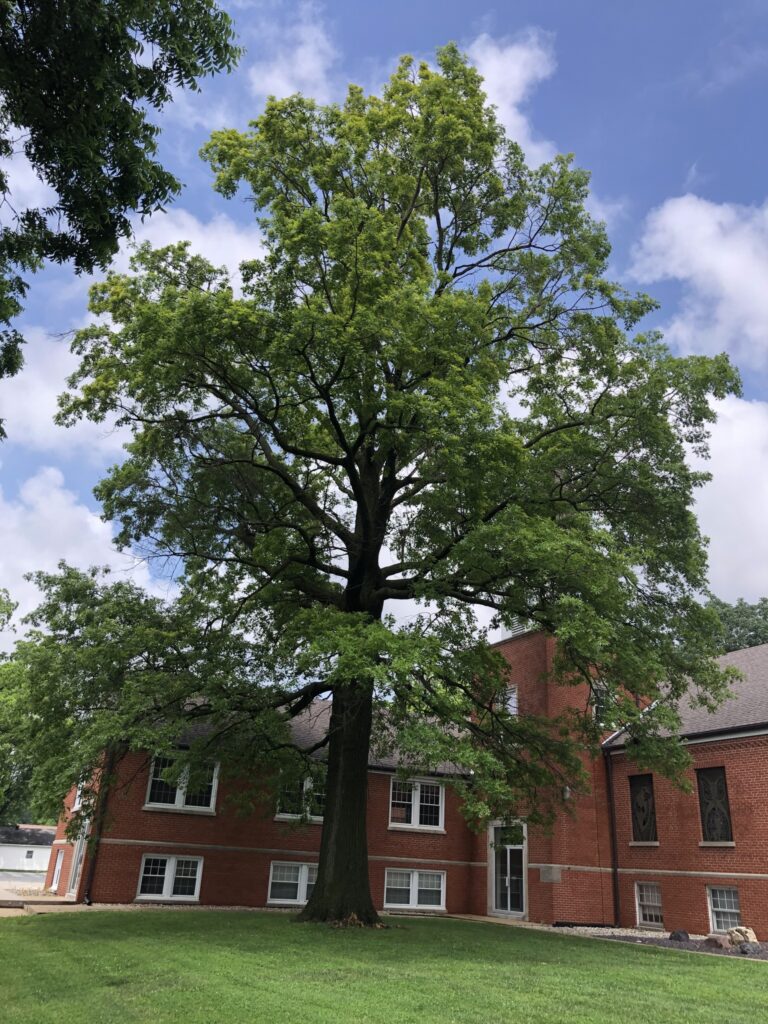
In the wild, mature red maples typically reach 18 to 27 meters (60 to 90 feet) in height with a crown spread of 9 to 15 meters (30 to 50 feet). Growth is relatively fast for a hardwood — 60 to 90 centimeters (2 to 3 feet) per year under good conditions — making it one of the faster-establishing native shade trees available.
The bark is smooth and grey on young trees, becoming darker and rougher — with narrow, scaly ridges — as the tree matures.
The Red Through Every Season: What Makes This Tree Special
Most trees earn their keep in one season. Red maple earns its keep in all four. That, more than anything, is what sets it apart.
Spring: Before the leaves emerge, red maple produces small but vivid red flowers in dense clusters. These appear in February or March across much of its range — sometimes while snow is still on the ground. The effect, on a mature tree, is genuinely striking. These early flowers are also a critical nectar source for native bees waking from winter dormancy.
Late Spring: The flowers give way to paired winged seeds (samaras), also tinged red or pink, which ripen and disperse on the wind by late spring — earlier than almost any other tree species. This early seed release means red maple seedlings can establish themselves in a single growing season.
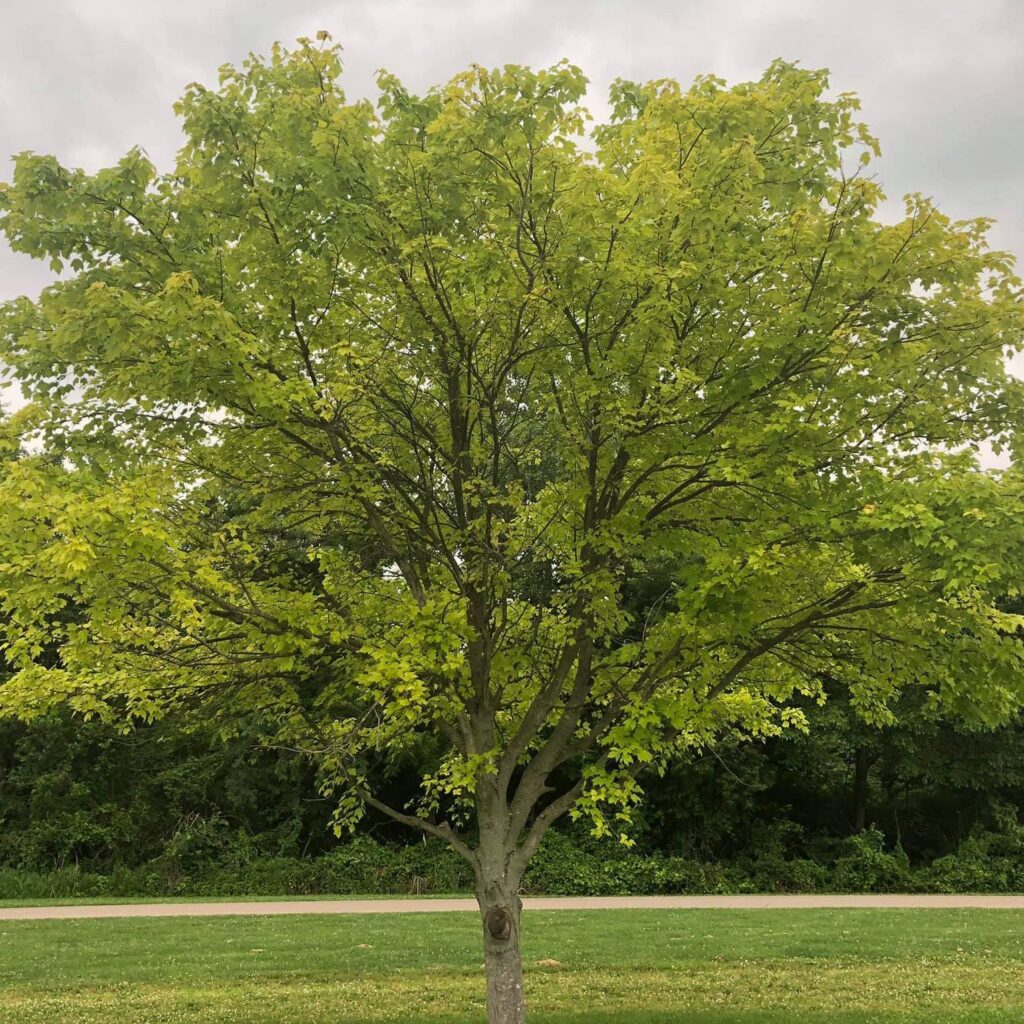
Summer: Dense, medium-green foliage provides generous shade. The leafstalks (petioles) remain distinctly reddish throughout summer — a quiet identifying feature even when the tree is in full leaf.
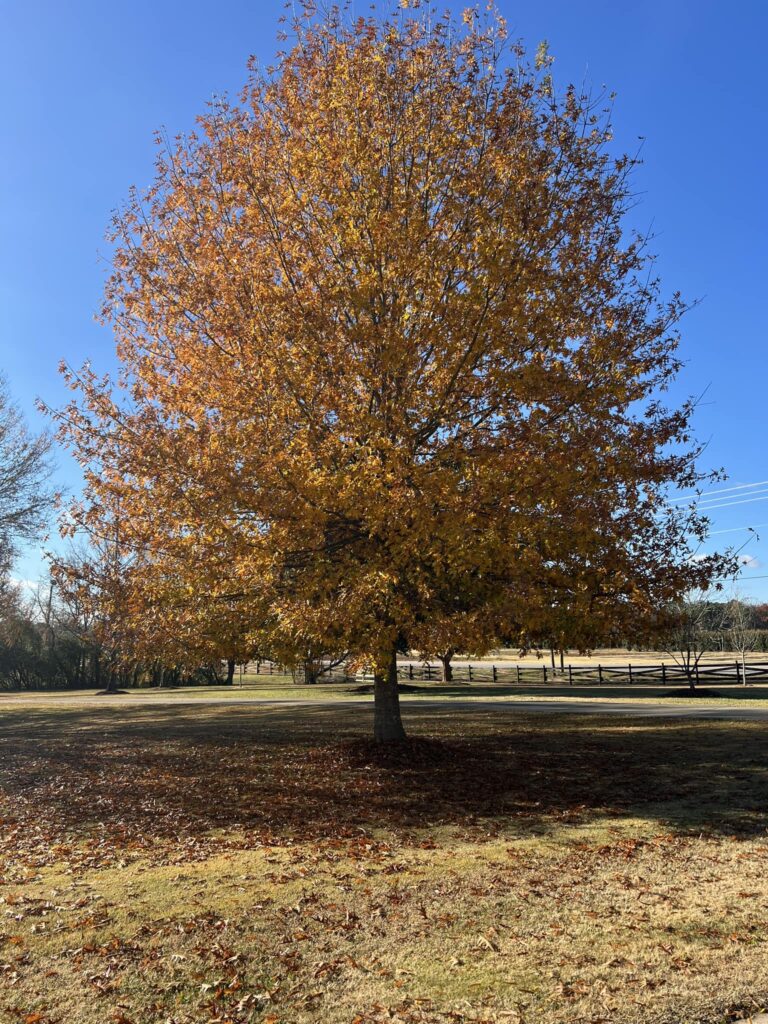
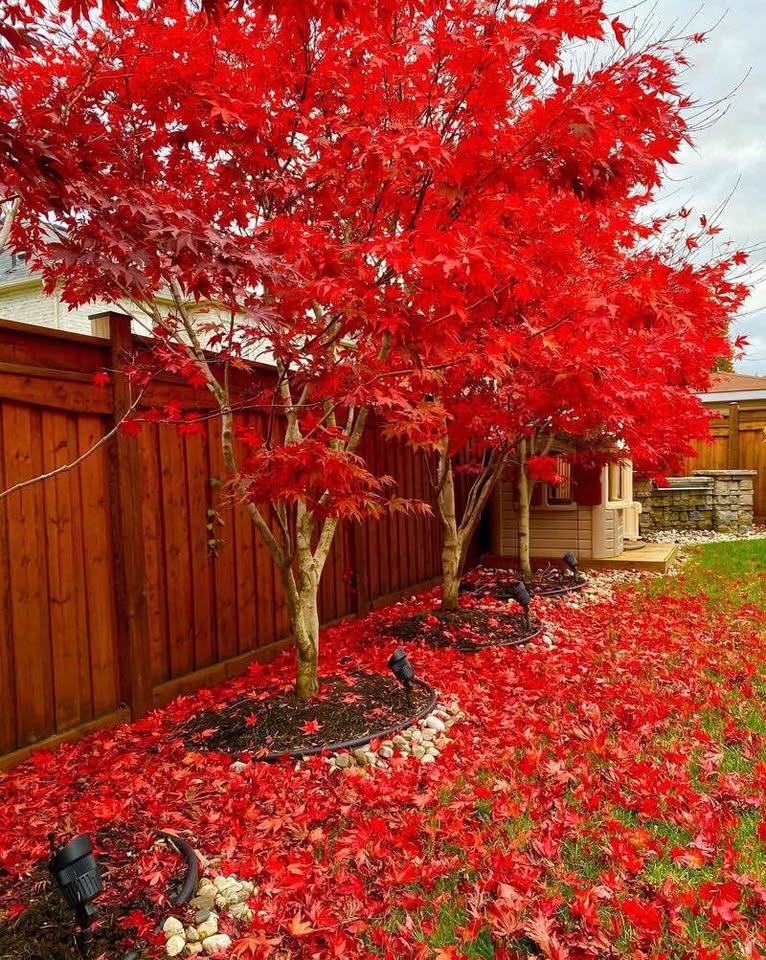
Autumn: This is the season most people associate with red maple, and rightly so. Depending on the individual tree and its genetics, autumn colour ranges from brilliant scarlet to orange-red, bright orange, and occasionally golden yellow. The display often begins earlier than sugar maple and can be equally spectacular.
Winter: The reddish buds and fine-textured twigs give the leafless tree a warm hue — subtle but appreciated against winter’s greys.
Natural Range and Ecological Importance
Few North American trees match the ecological breadth of Acer rubrum. It grows in an extraordinary variety of environments — from swampy lowlands to dry ridge tops, from sea level to elevations exceeding 1,800 meters (6,000 feet) in the southern Appalachians.
This adaptability reflects the species’ genetic diversity. Red maple populations in Florida have evolved under subtropical conditions. Those in Minnesota withstand Zone 3 winters. Those along the Atlantic Coast tolerate salt air and sandy soils. No single population represents the whole species — which has important implications for choosing planting stock.
Ecologically, Acer rubrum contributes significantly:
- Its early flowers provide one of the first pollen and nectar sources of the year for native bees, flies, and other early-emerging pollinators
- The seeds ripen early and are consumed by squirrels, chipmunks, and numerous bird species including finches, grosbeaks, and wild turkeys
- White-tailed deer browse heavily on red maple seedlings and young stems, particularly in winter
- The tree’s dense summer canopy shelters and nest sites for many bird species
- In wetland settings, red maple is a keystone species — stabilising streambanks, moderating water temperature, and contributing organic matter to aquatic systems
Red maple is also increasingly recognised as a climate-change-adaptive species. As forests across eastern North America change in composition due to warming, drought, and disturbance, red maple is one of the species expanding its dominance — a resilient successor in disturbed and warming landscapes.
Climate, Hardiness, and Adaptability
Red maple is one of the most climatically tolerant native trees in North America. It spans USDA Hardiness Zones 3 through 9 — a range that covers nearly the entire eastern half of the continent and many parts of the West where it has been introduced.
Unlike the sugar maple, which performs poorly in heat and drought, the red maple tolerates a much wider range of summer conditions. This is why it succeeds as a street and landscape tree in southern cities where sugar maple struggles.
However, red maple’s adaptability comes with a caveat: the source of the planting stock matters enormously. A red maple grown from seed collected in Florida will not survive a Minnesota winter. A tree of northern provenance planted in Georgia may struggle in the heat. Always choose cultivars or seed sources appropriate to your specific region.
In practice, this means selecting named cultivars for landscape use — these are vegetatively propagated (cloned) from individual trees selected for specific traits, ensuring consistent performance across a given climate range.
Soil Preferences: Wider Than Most Trees
One of the great practical virtues of red maple is its exceptional soil tolerance. Few large trees adapt as comfortably to such a wide range of soil conditions.
Red maple tolerates:
- Wet, poorly drained soils — it is genuinely swamp-adapted and will grow where most shade trees fail
- Dry, well-drained soils — established trees show reasonable drought tolerance
- Slightly acidic to moderately acidic soils — ideal pH is 4.5 to 6.5, but it manages somewhat outside this range
- Clay soils — better than most hardwoods
- Sandy, low-fertility soils — it survives, though growth is slower
Where it struggles:
- Highly alkaline soils (pH above 7.0) — this is red maple’s most significant limitation; in alkaline conditions, it develops iron and manganese deficiency chlorosis, showing characteristic yellowing between the leaf veins; this is a serious and persistent problem for red maples planted over limestone bedrock or in cities with alkaline irrigation water
For urban planting in alkaline soil areas, soil acidification with elemental sulfur, chelated micronutrient treatments, or selecting a more alkaline-tolerant species entirely are the main options. Prevention through site assessment before planting is far preferable to treatment after the fact.
Light Requirements
Red maple is a full-sun to partial-shade species. For the best growth rate, most vigorous health, and most reliable autumn colour, full sun — at least six hours of direct sunlight daily — is ideal.
In forest settings, red maple is classed as moderately shade-tolerant, meaning young trees can establish and persist under a partial canopy. However, trees growing in significant shade tend to be:
- Slower-growing and less vigorous
- Prone to a more open, irregular crown
- Less reliably colourful in autumn
For landscape planting where autumn colour is a priority, the best and most consistent displays come from trees in open, sunny positions.
Planting Red Maple: Getting the Start Right
A well-planted red maple establishes quickly and requires relatively little intervention once settled. The investment of care at planting pays dividends for decades.
Step-by-step planting guide:
- Select the right site — account for the tree’s mature size; allow clearance from buildings, utilities, and paved surfaces; red maple’s surface roots can eventually disrupt shallow paving
- Dig a wide, shallow hole — two to three times the diameter of the root ball, and no deeper than the root ball itself; shallow planting is a foundational principle for all maples
- Preserve the root flare — the point where the trunk base widens must sit at or just above the finished soil surface; buried root flares cause bark decay and long-term decline
- Backfill with native soil — do not enrich the backfill with large amounts of compost; it discourages roots from venturing into surrounding native soil
- Water immediately and deeply — soak the entire root zone at planting
- Mulch generously — apply 7 to 10 centimeters (3 to 4 inches) of shredded bark or wood chip mulch over the root zone, extending to the drip line if possible; keep mulch clear of the trunk
- Stake only if necessary — if the site is very exposed, stake loosely with soft ties for the first year only; remove stakes promptly to allow normal trunk movement and taper development
Best planting times: Early spring (before bud break) or early autumn (6 weeks before first hard frost).
Watering: Establishment and Beyond
During the first two to three years, red maple requires regular, deep watering during dry periods. The goal is to encourage deep root development — not to maintain a constantly moist soil surface.
Practical watering guidance:
- Water deeply — slowly and thoroughly, encouraging moisture to penetrate 30 to 45 centimeters (12 to 18 inches) into the soil
- In the first year, water once or twice weekly during dry periods
- In years two and three, gradually extend intervals, watering deeply every 10 to 14 days during drought
- Established trees (five years and older) are considerably drought-tolerant in cooler climates, though they benefit from supplemental watering during extended summer droughts
Adequate mulching dramatically reduces water demand by conserving soil moisture and moderating root zone temperature — another reason it is not optional.
Fertilising: When to Feed and When to Leave It
In naturalistic or rural settings with reasonable soil quality, established red maples rarely need supplemental fertilisation. Annual leaf decomposition sustains adequate nutrient cycling.
In urban and suburban settings — particularly those with compacted, disturbed, or impoverished soils — a modest annual fertilisation programme supports vigour and health.
Fertilising recommendations:
- Apply a slow-release, balanced granular fertiliser (such as 12-4-8 or 10-10-10) in early spring, before the new growing season begins
- For trees showing chlorosis in alkaline soils, supplement with chelated iron and manganese according to soil test results
- Do not over-fertilise — excessive nitrogen promotes fast, lush growth that is more susceptible to aphid attack and frost damage, and may actually reduce autumn colour intensity
- Avoid fertilising after midsummer — late-season feeding stimulates new growth that does not harden sufficiently before frost
A soil test every three to five years is the most reliable and cost-effective guide to what your specific soil needs.
Pruning Red Maple: Timing Is Everything
Red maple, like all maples, bleeds sap freely when pruned during late winter and early spring as temperatures rise. This sap bleeding is not harmful to the tree, but it can be messy and alarming if unexpected.
To minimise bleeding:
- Prune in late autumn or early winter — the tree is fully dormant, and sap pressure is lowest
- Alternatively, prune in mid to late summer, after the current season’s growth has hardened
What to prune:
- Dead, damaged, or diseased branches — these can be removed at any time of year
- Crossing or rubbing branches that may cause bark wounds
- Branches with narrow, V-shaped crotch angles — these are structurally weak and prone to splitting in storms; addressing these early in the tree’s life dramatically reduces long-term risk
- Suckers and water sprouts from the base or trunk
What to avoid:
- Lion’s-tailing — stripping inner branches and foliage, leaving dense growth only at the branch tips; this is structurally harmful and aesthetically damaging
- Removing more than 25% of the live canopy in a single season
- Flush cuts against the trunk — always cut just outside the branch collar to allow proper wound closure
Large pruning work on mature trees should always be carried out by a certified arborist (ISA certified). Improper cuts on large branches can introduce decay and create lasting structural problems.
Best Cultivars of Acer rubrum
Selecting a named cultivar rather than a seedling gives you predictability in form, autumn colour, and regional performance. The range of available red maple cultivars is extensive. These are among the most reliable and widely available.
| Cultivar | Key Features | Mature Height |
| ‘Autumn Blaze’ (× freemanii) | Exceptionally fast growth; brilliant orange-red colour; widely adapted | 15–18 m |
| ‘October Glory’ | Consistent deep red autumn colour; holds leaves late; excellent form | 12–18 m |
| ‘Red Sunset’ | Outstanding orange-red colour; great structure; heat-tolerant | 12–18 m |
| ‘Brandywine’ | Rich burgundy-red colour; seedless (female); good urban tolerance | 12–15 m |
| ‘Bowhall’ | Narrow, columnar form; ideal for restricted spaces | 12–15 m (4 m wide) |
| ‘Somerset’ | Compact; early colouring; good for smaller gardens | 9–12 m |
| ‘Sun Valley’ | Seedless; good symmetry; reliable red colour | 9–12 m |
A note on ‘Autumn Blaze’: Technically a hybrid between red maple and silver maple (Acer saccharinum), it is formally designated Acer × freemanii ‘Autumn Blaze’. It is one of the most widely planted maples in North America, valued for its exceptional growth rate and reliable autumn colour.
Common Problems: Identification and Solutions
Red maple is generally a tough, low-maintenance tree. However, several issues can affect it — most preventable with good site selection and cultural practice.
Chlorosis in Alkaline Soils
Symptoms: Yellowing leaves with green veins (interveinal chlorosis), particularly on new growth. Cause: Iron or manganese deficiency due to high soil pH locking out these nutrients. Solution: Soil acidification with elemental sulfur; chelated iron/manganese treatments; in severe cases, consider species replacement with a more alkaline-tolerant tree.
Verticillium Wilt
Symptoms: Sudden wilting and death of individual branches or large sections of the crown; streaked discolouration in the wood beneath the bark. Cause: Soil-borne fungus Verticillium dahliae or V. albo-atrum. Solution: No cure; remove affected branches well below the visible symptoms; avoid replanting susceptible species in infected soil; maintain overall tree vigour.
Tar Spot (Rhytisma acerinum and related species)
Symptoms: Large, raised black spots on leaf surfaces in summer and autumn. Cause: Fungal infection, usually cosmetic. Solution: Rake and dispose of fallen leaves to reduce the fungal reservoir; chemical treatment is generally unnecessary.
Aphids and Scale
Both are occasional nuisances. Aphids cluster on new growth and produce sticky honeydew. Scale insects appear as small, waxy bumps on bark. Natural predators — ladybirds, lacewings, parasitic wasps — usually control aphid populations without intervention. Severe scale infestations can be treated with horticultural oil in late winter.
Storm Damage
Red maple’s rapid growth can produce weak branch attachments if structural pruning is not carried out early. Proactive removal of narrow-angled crotches in young trees is the single most effective long-term risk management strategy.
Red Maple in Urban and Suburban Landscapes
Red maple’s tolerance of urban conditions — compacted soils, pollution, restricted root zones, and urban heat — makes it one of the most valuable street and parking lot trees in North America.
It is used extensively in:
- Street tree plantings — particularly where soil salt is not a major issue
- Parking lot islands — its tolerance of compaction and reflected heat is an advantage here
- Rain gardens and bioswales — its tolerance of wet soils makes it ideal in stormwater management plantings
- Residential shade trees — fast growth and reliable autumn colour make it a popular homeowner choice
- Restoration plantings — native and highly adaptable, it establishes readily in disturbed sites
One caution for urban use: red maple produces abundant seeds (samaras) that can become a nuisance in lawns and garden beds. Seedless female cultivars such as ‘Brandywine’ and ‘Sun Valley’ address this concern effectively.
Wildlife Value: A Tree Worth Keeping
Red maple’s wildlife value extends well beyond its well-known early flowers.
The dense summer canopy provides nesting and shelter for a wide range of bird species. Baltimore orioles frequently nest in the hanging outer branches of large red maples. Cavity-nesting birds — including woodpeckers, chickadees, and nuthatches — use older trees with natural cavities.
White-tailed deer browse heavily on red maple leaves and bark in winter when other food sources are scarce, sometimes causing significant damage to young plantation trees. Trunk protection with wire guards is advisable in high-deer-pressure areas for newly planted trees.
The early spring flowers are among the first available to native bees emerging from winter dormancy — a service of real ecological significance, particularly in fragmented landscapes where early forage is limited.
Frequently Asked Questions
Is red maple the same as sugar maple? No. They are related but distinct species. Sugar maple (Acer saccharum) is slower-growing, more demanding of cold winters and acidic soils, and yields the sap used for maple syrup. Red maple (Acer rubrum) is faster-growing, more widely adaptable, and generally better suited to urban conditions. Both can produce spectacular autumn colour, though their timing and colour range differ.
Can red maple be tapped for syrup? Yes, though it is rarely done commercially. Red maple sap has a lower sugar content than sugar maple — roughly 1.5% sucrose compared to 2% to 3% in sugar maple — meaning more sap is needed to produce the same volume of syrup. The season is also shorter, as red maple buds break earlier. Small-scale home tapping is entirely feasible.
Why is my red maple not turning red in autumn? Autumn colour in red maple is genetically variable — seedling-grown trees may colour yellow or orange rather than red. Named cultivars selected for red colour (such as ‘October Glory’ or ‘Red Sunset’) produce reliable red colour consistently. Weather also plays a role: the best red colour develops with warm, sunny days and cool nights in early autumn.
How far should I plant a red maple from my house? At least 6 to 9 meters (20 to 30 feet) for standard-sized cultivars. Surface roots can eventually extend well beyond the canopy and potentially lift paving. For narrow or columnar cultivars like ‘Bowhall’, 4 to 5 meters may be sufficient.
Does red maple tolerate wet soil? Yes — better than almost any other large shade tree. It is genuinely swamp-adapted and will grow in seasonally or even permanently wet soils where other hardwoods cannot survive.
Final Thoughts
Acer rubrum earns its place at the top of the native shade tree list honestly. It is fast-growing without being fragile. It is adaptable without being invasive. It is beautiful in every season without demanding constant attention.
Plant it in the right soil pH, give it full sun, protect its root zone with mulch, and prune it thoughtfully in its early years — and a red maple will reward you with decades of colour, shade, ecological value, and simple, quiet beauty.
Some trees make a garden. This one makes a landscape.
References
- North Carolina State University Extension – Acer rubrum: Red Maple Plant Profile https://plants.ces.ncsu.edu/plants/acer-rubrum/
- University of Florida IFAS Extension – Acer rubrum: Red Maple https://edis.ifas.ufl.edu/publication/ST025
- Virginia Cooperative Extension, Virginia Tech – Acer rubrum Fact Sheet https://dendro.cnre.vt.edu/dendrology/syllabus/factsheet.cfm?ID=1
- University of Minnesota Extension – Red Maple in the Landscape https://extension.umn.edu/trees-and-shrubs/red-maple
- Penn State Extension – Maple Problems: Diseases and Insect Pests of Maples https://extension.psu.edu/maple-problems

Tim M Dave is a gardening expert with a passion for houseplants, particularly cacti and succulents. With a degree in plant biology from the University of California, Berkeley, he has vast experience in gardening. Over the years, he has cultivated a vast collection of desert plants and learned a great deal about how to grow and care for these unique companions.