Pothos Cultivation: History, Care and Common Problems
Pothos (Epipremnum aureum) is my go-to for adding a splash of green to any space. Their heart-shaped leaves and easy-care nature make them perfect for beginners and seasoned plant parents alike. Whether you’re sprucing up your home or office, Pothos is a versatile, low-maintenance houseplant that thrives with minimal effort.
In this guide, I’ll walk you through everything you need to know about growing Pothos, from its fascinating history to practical care tips and troubleshooting common issues. Let’s dive into why this plant is a must-have and how you can keep it thriving!
A Brief History and Classification of Pothos
Pothos has a story that stretches back to the lush jungles of the South Pacific. Native to the Solomon Islands, this tropical vine has been charming people for centuries. It was first scientifically classified in the 19th century by botanists who were captivated by its resilience and beauty.
The name Epipremnum aureum comes from its golden-hued varieties, with “aureum” meaning “golden” in Latin. Over time, Pothos became a household favorite, especially in the mid-20th century when indoor plants surged in popularity.
The Origins of Pothos
Pothos thrives in the wild across Southeast Asia, Australia, and the Pacific Islands, where it climbs trees and sprawls across forest floors. In its native habitat, it can grow up to 40 feet, with leaves as big as dinner plates! Size may depend on the variety of photos.
Historically, indigenous communities used Pothos for decorative purposes and even in traditional remedies, though its medicinal use is less common today. Its nickname “Devil’s Ivy” comes from its near-indestructible nature. It’s tough to kill, even in low light or with neglect.
Scientific Classification
- Scientific Name: Epipremnum aureum
- Family: Araceae (same family as Philodendrons, Monsteras, and Peace Lilies)
- Genus: Epipremnum
- Common Names: Pothos, Devil’s Ivy, Golden Pothos, Money Plant, Taro Vine
- Native Range: Solomon Islands, Southeast Asia, Northern Australia
Pothos’ adaptability made it a global favorite. By the 1960s, it was a common sight in homes and offices, thanks to its ability to thrive under fluorescent lights. Today, it’s one of the most popular houseplants, celebrated for its beauty and air-purifying qualities.
Characteristics of Pothos
Pothos is a showstopper with its glossy, heart-shaped leaves and trailing vines. Here’s a detailed look at its key features:
- USDA Hardiness Zone: 10-12 (grown outdoors in tropical climates; indoors elsewhere)
- Color Variation: Green, variegated (yellow, white, cream). Popular cultivars include Marble Queen (white-green), Neon (bright lime), Jade (solid green), and Manjula (creamy white with green speckles).
- Sun Exposure: Low to bright indirect light; tolerates artificial lighting but avoids direct sun.
- Mature Size: Indoors, vines grow 6-10 feet; outdoors, up to 40 feet in ideal conditions.
- Lifespan: 5-10 years with proper care, though some plants live decades.
- Toxicity: Toxic to pets (cats, dogs) and humans if ingested, causing mouth irritation, vomiting, or digestive issues.
- Growth Habit: Trailing or climbing vine; can be trained on trellises or moss poles.
The leaves are waxy and smooth, giving Pothos a polished look. I love how its vines cascade over shelves or climb when given support. Its air-purifying abilities, documented in NASA’s Clean Air Study, make it a functional addition to any space.
Why I Fell in Love with Pothos
My first Pothos was a small cutting from a friend, and it’s been my plant companion for years. I named it “Ivy” (original, I know!), and it’s now a sprawling beauty draped across my bookshelf. What I adore most is its resilience. I’ve forgotten to water it for weeks, yet it bounces back with a little care.
Watching its vines grow longer each month feels like a small victory, and propagating cuttings is like creating mini plant babies. If you’re looking for a plant that’s equal parts stunning and forgiving, Pothos is it.
How to Care for Pothos – Growing Requirements
Caring for Pothos is so easy, it’s practically foolproof. Below, I’ll break down the essentials to keep your Pothos happy and healthy, with tips from my own experience.
Light Requirements for Pothos
Pothos thrives in bright, indirect light but can tolerate low-light conditions like a pro. I keep my Marble Queen near a north-facing window, where it gets soft, filtered light. It’s also happy under fluorescent office lights, making it perfect for workspaces.
Direct sunlight, however, is a no-go. It can scorch the leaves, leaving ugly brown spots. If your Pothos looks leggy or its variegation fades, it’s begging for more light. Move it to a brighter spot, but keep it out of harsh rays.
Pro Tip: Rotate your plant every few weeks to ensure even growth. I learned this the hard way when my Pothos started leaning toward the window!
Watering Pothos
Water when the top inch of soil feels dry—usually every 1-2 weeks. I stick my finger in the soil to check, or lift the pot to feel its weight (light means it’s time to water). Overwatering is the number one killer of Pothos, so make sure your pot has drainage holes.
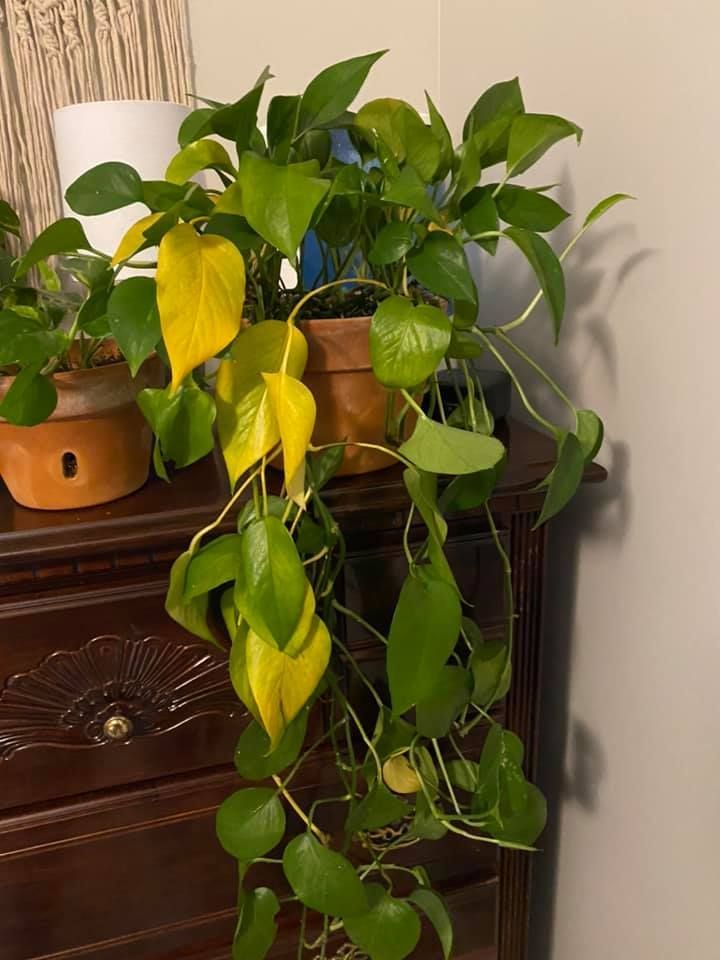
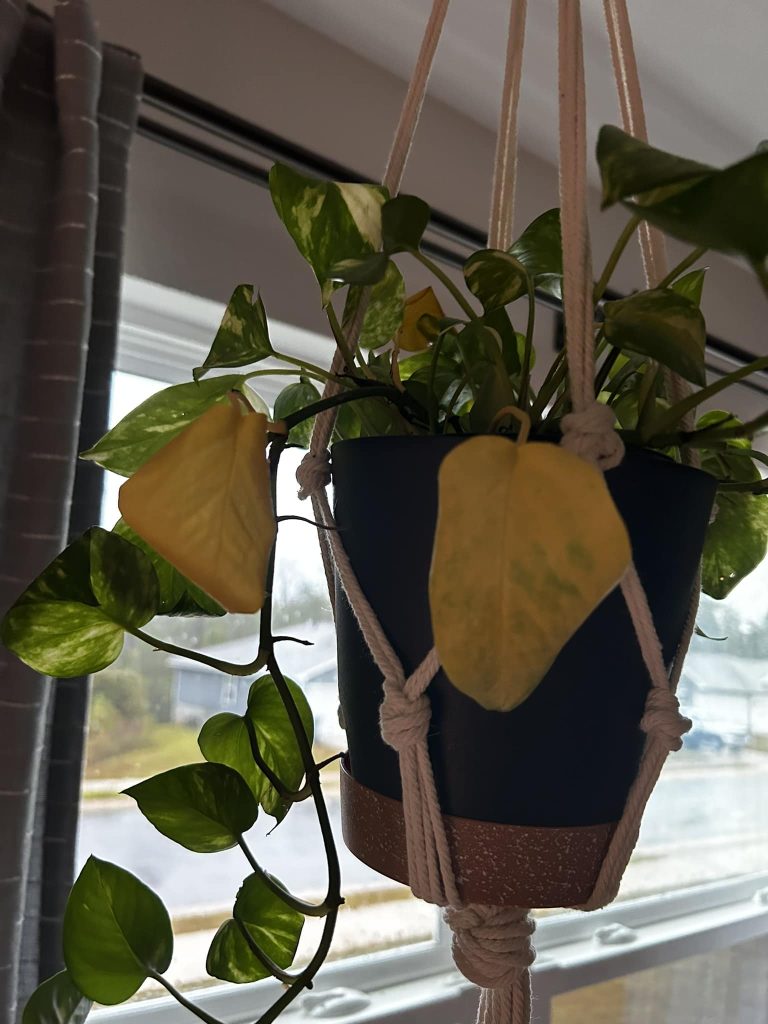
If the leaves turn yellow or feel mushy, you’re likely overdoing it. Underwatering is less common but can cause droopy, curling leaves.
My Routine: I water my Pothos every 10 days in summer and every 2-3 weeks in winter when it’s cooler. Always empty the saucer under the pot to avoid soggy roots.
Best Soil for Pothos
Pothos isn’t fussy about soil, but it loves a well-draining mix. I use a blend of peat moss, perlite, and bark for good aeration and drainage. You can buy pre-made potting mixes labeled for houseplants, or mix your own (2 parts potting soil, 1 part perlite, 1 part orchid bark).
Avoid heavy, clay-like soils that hold too much water, as they can lead to root rot.I mix my own soil to save money and ensure it’s light and fluffy. My Pothos has been thriving in this mix for years!
Temperature and Humidity
Pothos prefers temperatures between 65-85°F (18-29°C), which is typical for most homes. It can handle slight dips, but avoid placing it near drafty windows or air vents. Average household humidity (40-50%) is fine, but Pothos loves a bit of extra moisture.
In dry climates or during winter when heaters are on, I mist mine weekly or place it near a humidifier. You can also set the pot on a tray of pebbles with water for a humidity boost.
Winter Tip: Keep your Pothos away from cold windowsills. I lost a few leaves one winter because my plant was too close to a frosty window.
Fertilizing Pothos
Feed your Pothos monthly during spring and summer with a balanced liquid fertilizer (10-10-10 or 20-20-20). I dilute mine to half strength to avoid burning the roots. Skip fertilizing in fall and winter when growth slows. Overfertilizing can cause salt buildup, leading to brown leaf tips, so less is more.
My Hack: I use a diluted fish emulsion fertilizer every six weeks. It smells funky, but my Pothos loves it!
Pruning Pothos
Pruning keeps your Pothos full and healthy. I trim mine every few months to remove leggy vines and encourage bushier growth. Use clean, sharp scissors to cut just below a node (the small bump where leaves grow). Save the cuttings for propagation—it’s so easy!
Regular pruning also prevents the plant from getting too wild. I cut my Pothos to keep it compact for tabletop displays or let it trail for a dramatic effect.
Repotting Pothos
Repot every 1-2 years or when the roots outgrow the pot. I repotted my Marble Queen last spring, and it exploded with new growth! Choose a pot one size larger (1-2 inches wider) with drainage holes. Refresh the soil, trim any damaged roots, and give it a good watering after repotting.
Spring is the best time, as the plant is actively growing. My first repotting attempt was a mess—soil everywhere! Now I lay down a newspaper and work slowly to keep things tidy.
Propagating Pothos
Propagation is one of the most fun parts of growing Pothos. You can propagate in water or soil, and it’s practically foolproof. Here’s how I do it:
- Step 1: Cut a 4-6 inch stem below a node using clean scissors.
- Step 2: Remove the lower leaves to expose the node.
- Step 3: Place the cutting in a jar of water (nodes submerged) or plant directly in moist soil.
- Step 4: For water propagation, change the water weekly. Roots appear in 2-4 weeks.
- Step 5: Once roots are 2 inches long, plant in soil or keep in water permanently.
I have a whole shelf of baby Pothos plants from cuttings. It’s like a mini nursery, and I love gifting them to friends!
Common Problems and How to Fix Them
Even Pothos, the champion of resilience, can run into issues. Below are the most common problems I’ve faced and how to solve them.
1. Yellowing Leaves
- Cause: Overwatering, poor drainage, or too much direct sunlight.
- Solution: Check soil moisture—water only when the top inch is dry. Ensure the pot has drainage holes. Move the plant to indirect light if it’s getting scorched.
- My Fix: I overwatered my Neon Pothos once, and half the leaves turned yellow. I let the soil dry out completely and adjusted my watering schedule. It recovered in a month!
2. Brown, Crispy Leaf Tips
- Cause: Low humidity, underwatering, or fertilizer buildup.
- Solution: Increase humidity with misting or a pebble tray. Water consistently when the soil is dry. Flush the soil with water to remove excess fertilizer salts.
- My Tip: I noticed brown tips on my Jade Pothos during winter. A small humidifier nearby fixed it fast.
3. Leggy Growth
- Cause: Insufficient light, causing the plant to stretch toward the light source.
- Solution: Move to a brighter spot with indirect light. Prune long vines to encourage bushier growth.
- My Experience: My Pothos got leggy when I kept it in a dim corner. Moving it near a window and trimming it back worked wonders.
4. Pests
- Common Pests: Spider mites, mealybugs, scale, or fungus gnats.
- Solution: Wipe leaves with a damp cloth and mild soap. For stubborn pests, use neem oil or insecticidal soap. Check soil for gnats and let it dry out between waterings.
- My Story: Spider mites attacked my Neon Pothos last year. I sprayed it with neem oil weekly for a month, and they were gone!
5. Root Rot
- Cause: Overwatering or poor drainage, causing roots to rot.
- Solution: Remove the plant, trim black or mushy roots, and repot in fresh, well-draining soil. Adjust watering habits to prevent recurrence.
- Lesson Learned: I lost a Pothos to root rot early on. Now I’m obsessive about checking drainage and never let the pot sit in water.
6. Fading Variegation
- Cause: Low light, especially for variegated varieties like Marble Queen or Manjula.
- Solution: Move to brighter, indirect light. Variegation may not return to affected leaves, but new growth will be vibrant.
- My Hack: I moved my Manjula to a spot with filtered morning light, and its creamy patterns popped again.
Popular Pothos Cultivars
Pothos comes in a variety of stunning cultivars, each with unique colors and patterns. Here’s a deep dive into the most popular ones, with care tips for each.
Golden Pothos
- Appearance: Green leaves with yellow variegation.
- Care: Tolerates low light but needs bright indirect light for vibrant variegation.
- Why I love it: This classic is my go-to for beginners. Its golden streaks add warmth to any room.
Marble Queen
- Appearance: Creamy white and green variegation, sometimes almost white.
- Care: Needs brighter light than Golden Pothos to maintain variegation. Avoid overwatering.
- My experience: My Marble Queen is a diva—it demands bright light but rewards me with stunning leaves.
Neon Pothos
- Appearance: Bright, lime-green leaves that glow in any space.
- Care: Thrives in moderate to bright light. Less variegation to worry about.
- Fun fact: My Neon Pothos is the star of my office—it’s like a burst of sunshine!
Manjula Pothos
- Appearance: Creamy white leaves with green speckles and wavy edges.
- Care: Prefers bright, indirect light and slightly higher humidity. Slow grower.
- My Tip: Be patient with Manjula—it’s worth the wait for those gorgeous leaves.
Jade Pothos
- Appearance: Solid deep green leaves, no variegation.
- Care: The most low-light tolerant of all Pothos varieties. Perfect for dark corners.
- Why I Love It: My Jade Pothos thrives in my basement with minimal light—it’s a trooper!
Pearls and Jade
- Appearance: Small leaves with white and green variegation, often with grayish tones.
- Care: Similar to Marble Queen but more compact. Needs bright light.
- Styling Idea: I grow mine in a small pot on my desk—it’s like a mini masterpiece.
Advanced Pothos Care Techniques
Once you’ve mastered the basics, you can take your Pothos game to the next level with these advanced techniques.
Training Pothos to Climb
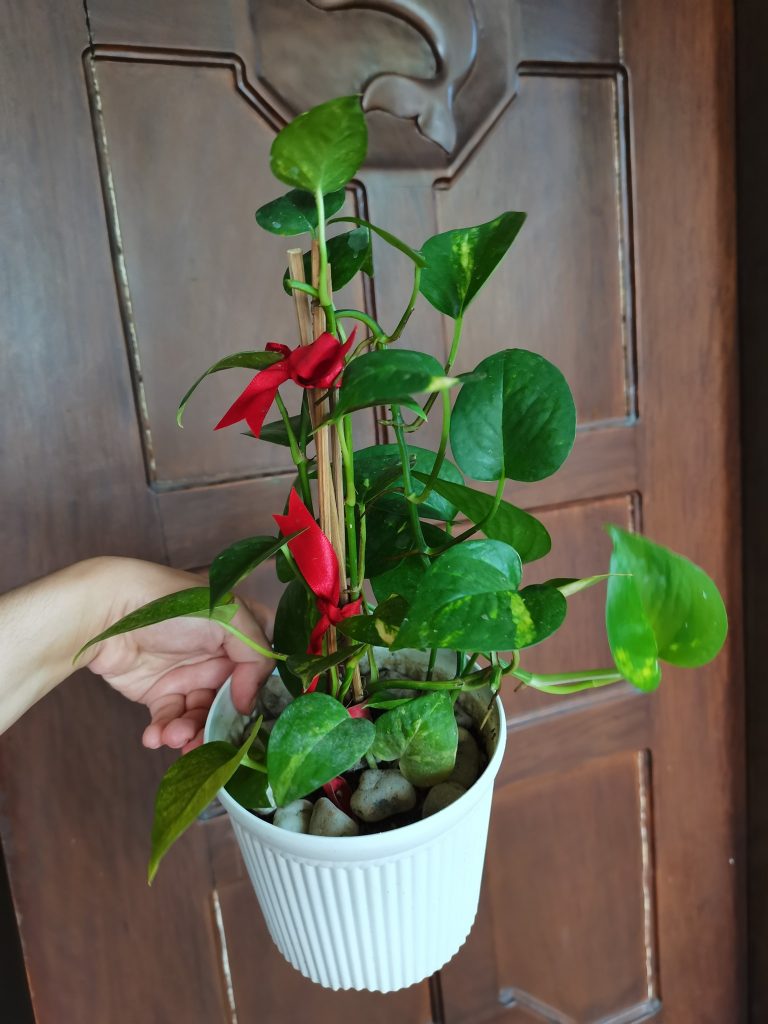
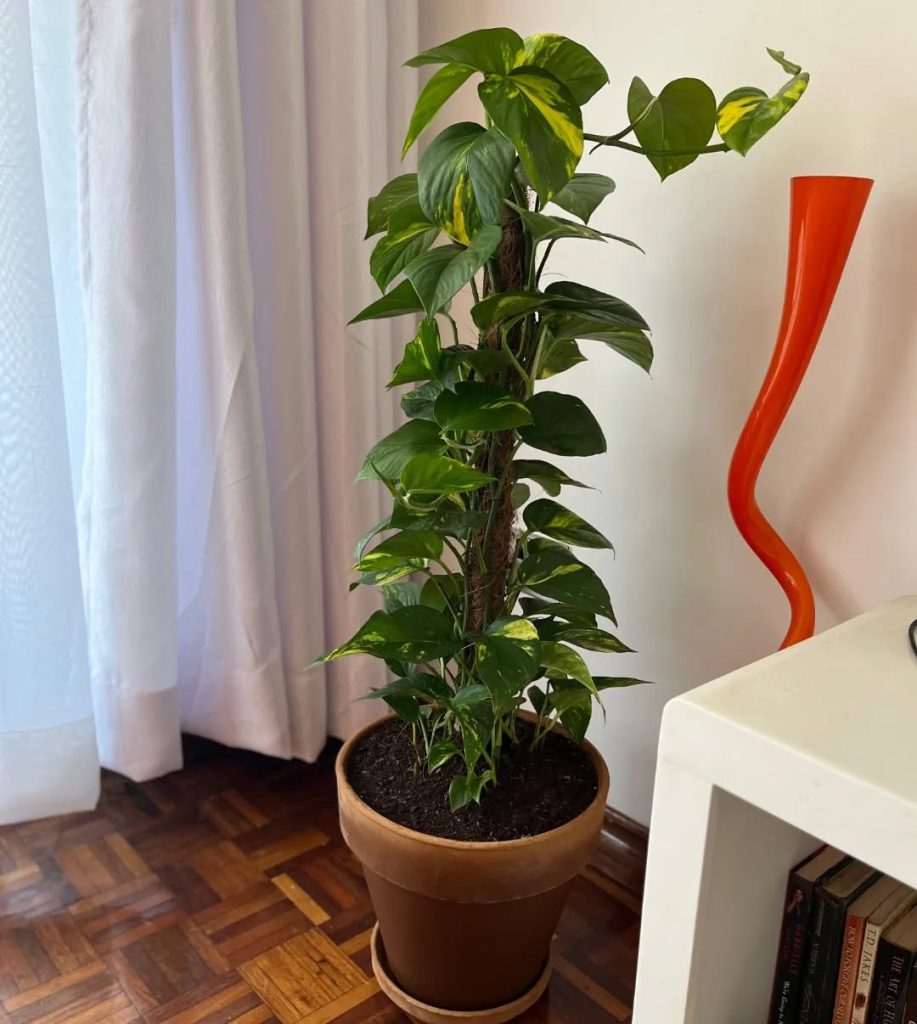
Pothos loves to climb in the wild, so why not recreate that indoors? Use a moss pole, trellis, or even a DIY support made from bamboo stakes. Secure the vines gently with plant ties. I trained my Golden Pothos on a moss pole, and it’s now a stunning vertical feature in my living room.
How-To Do It
- Insert a moss pole into the pot during repotting.
- Mist the pole to keep it moist, encouraging aerial roots to attach.
- Tie vines loosely to guide growth upward.
Growing Pothos in Water
Pothos can live in water indefinitely, making it perfect for hydroponic setups. I have a Neon Pothos in a glass vase, and it’s been thriving for over a year. Change the water weekly, use filtered water to avoid mineral buildup, and add a drop of liquid fertilizer monthly.
Tip: Use a clear container to monitor root health, but add decorative stones to block light and prevent algae.
Creating a Pothos Topiary
For a show-stopping display, shape your Pothos into a topiary. Use a wire frame (like a heart or sphere) and wrap the vines around it, securing with ties. Prune regularly to maintain the shape. I made a heart-shaped topiary for my sister’s wedding, and it was a hit!
Growing Pothos in a Terrarium
Pothos thrives in the humid, enclosed environment of a terrarium. Choose a compact variety like Pearls and Jade. I have a small terrarium with a Jade Pothos, moss, and fairy lights—it’s like a tiny jungle on my coffee table.
Terrarium Tips
- Use a glass container with a lid for high humidity.
- Trim vines regularly to prevent overcrowding.
- Monitor for mold and ensure good airflow.
Creative Ways to Display Pothos
Pothos is a decor dream, thanks to its trailing vines and lush foliage. Here are some ideas to showcase your plant:
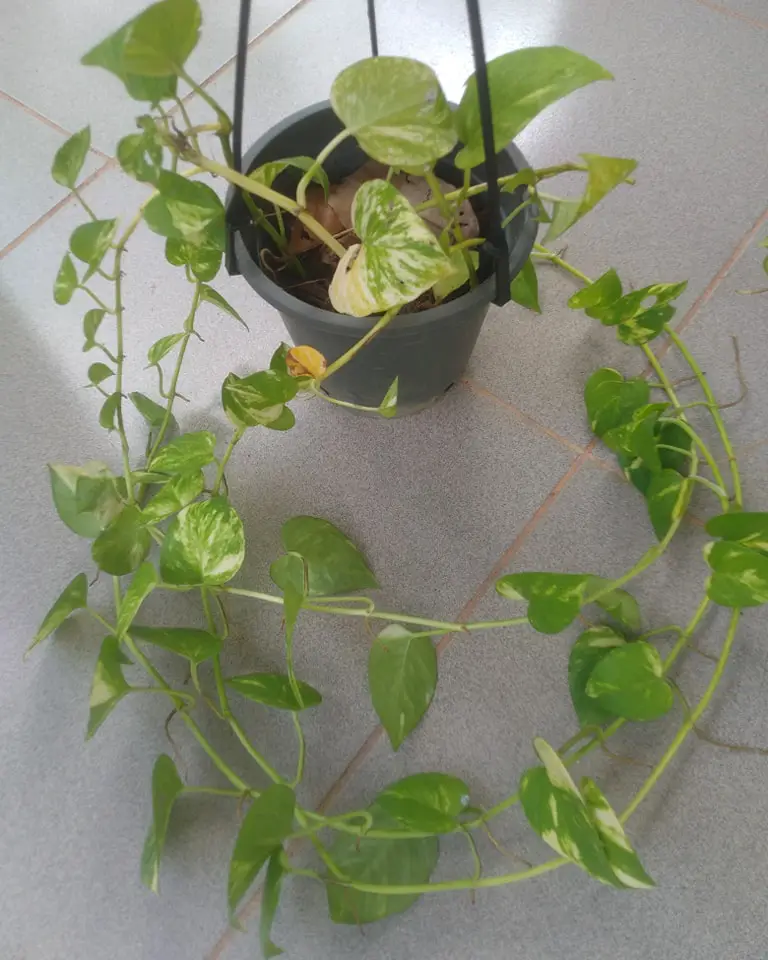
- Hanging baskets: Let vines cascade from a macramé hanger. My Golden Pothos looks stunning in a woven basket above my kitchen island.
- Bookshelf drapes: Drape vines over shelves for a cozy, green curtain effect.
- Wall art: Pin vines to a corkboard or trellis for a living wall. I created a heart-shaped wall display with my Neon Pothos.
- Tabletop centerpiece: Keep a compact Pothos in a decorative pot as a dining table focal point.
- Propagation station: Display cuttings in glass jars for a chic, minimalist look.
My Favorite: I have a Manjula Pothos trailing across my fireplace mantel—it’s like a green garland that never wilts!
Pothos in Biophilic Design and Air Purification
Pothos isn’t just pretty—it’s functional. NASA’s Clean Air Study (1989) found that Pothos removes indoor air pollutants like formaldehyde, benzene, and carbon monoxide. This makes it a star in biophilic design, which integrates nature into living spaces to boost well-being.
I’ve noticed a calmer vibe in my home since adding Pothos to every room. Its ability to thrive in low light also makes it ideal for offices or apartments with limited windows.
Fun Fact: In Feng Shui, Pothos is believed to bring wealth and positive energy when placed in the southeast corner of a room. I tried this with my Jade Pothos, and while I’m not a millionaire yet, it sure looks great!
Seasonal Care Calendar for Pothos
To keep your Pothos thriving year-round, follow this seasonal care guide:
- Spring: Repot if needed, start monthly fertilizing, and prune to shape. Increase watering as growth resumes.
- Summer: Water regularly, mist for humidity, and provide bright indirect light. Watch for pests in warm weather.
- Fall: Reduce watering and stop fertilizing. Move away from drafty windows.
- Winter: Water sparingly, maintain humidity, and avoid cold drafts. Check for brown leaf tips.
My Routine: I check my Pothos weekly in summer for pests and give it a good shower to clean the leaves. In winter, I cut back to biweekly checks.
Troubleshooting Case Studies
Here are real-life examples of Pothos problems I’ve encountered or heard about from plant friends, with solutions:
Case 1: Droopy Pothos
- Problem: A friend’s Golden Pothos was wilting despite regular watering.
- Diagnosis: Root rot from overwatering.
- Solution: We repotted it, trimmed mushy roots, and switched to a well-draining mix. It bounced back in weeks.
Case 2: Faded Marble Queen
- Problem: My Marble Queen lost its white variegation.
- Diagnosis: Too little light.
- Solution: I moved it to a brighter spot near an east-facing window, and new leaves came in beautifully variegated.
Case 3: Pest Infestation
- Problem: A coworker’s Pothos had sticky leaves and tiny webs.
- Diagnosis: Spider mites.
- Solution: We wiped the leaves with soapy water and applied neem oil. The plant recovered fully.
Frequently Asked Questions (FAQs)
Q: How fast does Pothos grow?
A: Pothos grows 12-18 inches per month in ideal conditions (bright light, warm temperatures). I’ve seen my Neon Pothos double in size over a summer!
Q: Can Pothos grow in water permanently?
A: Yes! I’ve kept cuttings in water for years. Change the water weekly and add a drop of fertilizer monthly for best results.
Q: Is Pothos safe for pets?
A: No, it’s toxic to cats and dogs, causing mouth irritation or vomiting if ingested. I keep mine on high shelves away from my curious cat.
Q: Why is my Pothos losing variegation?
A: Low light is usually the culprit. Move it to brighter, indirect light to restore vibrant patterns.
Q: How do I propagate Pothos?
A: Cut a 4-6 inch stem below a node, remove lower leaves, and place in water or soil. Roots form in 2-4 weeks. I love watching the roots grow in a glass jar!
Q: Can Pothos survive in low light?
A: Absolutely! Jade Pothos is especially tolerant. My basement Pothos thrives with just a lamp.
Q: How often should I repot Pothos?
A: Every 1-2 years or when roots are crowded. I repot in spring for best growth.
Q: Why are my Pothos leaves curling?
A: Curling usually means underwatering or low humidity. Check the soil and mist the leaves if needed.
Suggested For You:
Pothos vs Philodendron: Key Differences Every Plant Owner Should Know
10 Proven Ways to Make Pothos Fuller: Tips for Thick, Lush Growth
Are Pothos Toxic to Cats? What Every Pet Owner Must Know
Understanding Overwatered Pothos: Signs + How to Save The Plant
9 Reasons Your Pothos Leaves are Turning Yellow + How to Fix
Final Thoughts
Pothos is more than just a plant—it’s a lifestyle. Its lush vines, vibrant colors, and easy-care nature make it a joy to grow. Whether you’re propagating cuttings, training it to climb, or using it to brighten your decor, Pothos brings life to any space.
I’ve learned so much from my Pothos journey, from mastering watering schedules to creating stunning displays. With the tips in this guide, you’re ready to grow a thriving Pothos that’ll be the envy of every plant lover.
References
- Royal Horticultural Society. (2023). Epipremnum aureum Care Guide. rhs.org.uk.
- NASA Clean Air Study. (1989). Interior Landscape Plants for Indoor Air Pollution Abatement.
- University of Florida IFAS Extension. (2022). Pothos: A Low-Maintenance Houseplant. edis.ifas.ufl.edu.
- ASPCA. (2023). Toxic and Non-Toxic Plants: Pothos. Retrieved from aspca.org.
- Missouri Botanical Garden. (2023). Epipremnum aureum Plant Profile.

Tim M Dave is a gardening expert with a passion for houseplants, particularly cacti and succulents. With a degree in plant biology from the University of California, Berkeley, he has vast experience in gardening. Over the years, he has cultivated a vast collection of desert plants and learned a great deal about how to grow and care for these unique companions.