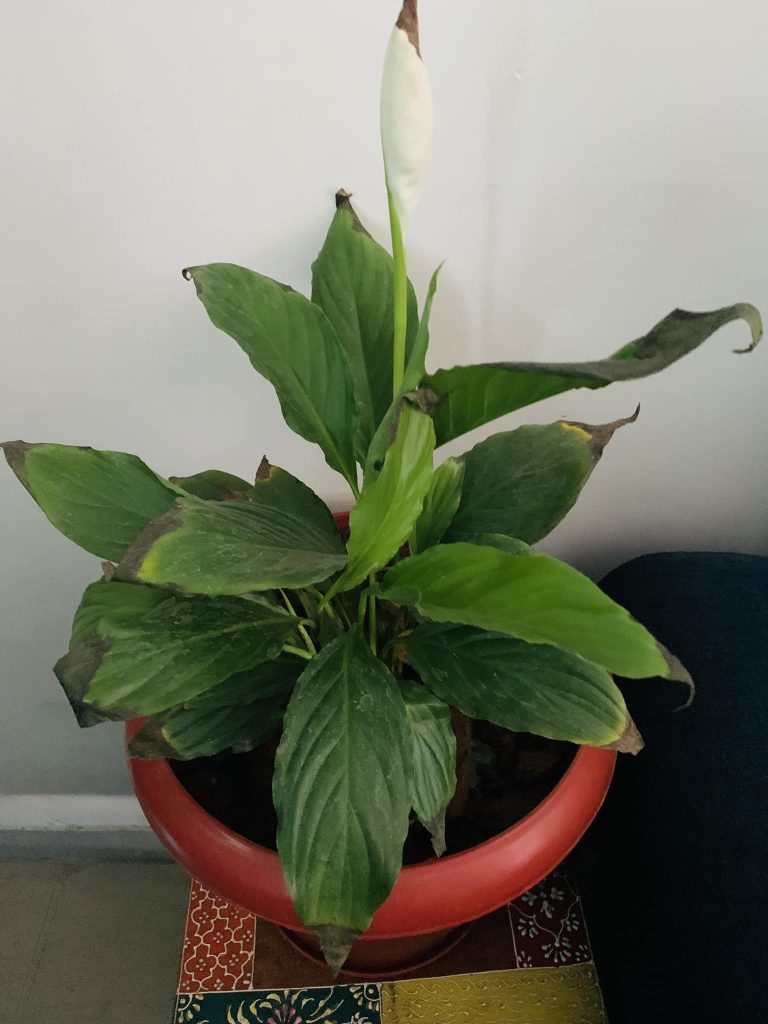
7 Reasons Your Peace Lily Flowers Are Turning Green (And What to Do)
Peace lilies are among the most beloved houseplants in American homes. With their elegant white “flowers” (technically specialized leaf bracts called spathes) and glossy dark green foliage, they bring a touch of the tropics to living rooms, offices, and bedrooms across the country.
But what happens when those pristine white blooms suddenly turn green? If you’ve ever stared at your peace lily in confusion, wondering “Why is my flower turning green?”, you’re not alone.
I’ve been growing peace lilies for over 15 years — from my first apartment in Chicago to my current home in North Carolina — and I’ve seen this phenomenon more times than I can count.
At first, I panicked. Was my plant dying? Did I overwater it? Was it getting too much light?
The truth is far less dramatic — and actually quite fascinating. In this guide, we’ll explore why peace lily flowers turn green, what it means for your plant’s health, and how to prevent it.

What Are Peace Lily “Flowers” Anyway?
Before we dive into the green flower mystery, let’s clarify a common misconception: peace lilies don’t have true flowers.
What we call the “white flower” is actually a specialized leaf called a spathe, and the tiny yellowish structures on the spike (spadix) are the real flowers. The spathe starts out white to attract pollinators in its native rainforest habitat, then transitions through cream, light green, and finally dark green as it ages.
Key Fact: The green color in peace lily “flowers” is chlorophyll—the same pigment that makes leaves green—revealing itself as the spathe matures.
This natural color change is perfectly normal. But when it happens too early, too dramatically, or across all new blooms, that’s when you need to pay attention. The table below gives a quick summary of what happens and how to troubleshoot.
| Symptom | Likely Cause | Quick Fix |
| New blooms open green | Genetics or overfertilization | Check cultivar; reduce fertilizer |
| Old blooms green, new ones white | Normal aging | Do nothing—enjoy! |
| All blooms pale green + leggy | Low light | Increase indirect light |
| Green blooms + brown leaf tips | Sun stress or hard water | Move + use filtered water |
| Green blooms + salt crust on soil | Overfertilization | Flush soil thoroughly |
Why your Peace Lily Flowers are Turning Green
Here are common reasons for this issue.
1. Natural Aging (The #1 Reason—And It’s a Good Thing!)
Your peace lily’s white spathe isn’t a flower that stays white forever. It’s a modified leaf designed to attract pollinators in the wild. Once pollination is done (or in your home, when no pollinators show up), the plant says, “Job complete!” and recycles the spathe.
This usually takes 4 to 6 weeks from when the bloom first opens. It happens in stages as follows:
- Stage 1: The white color fades to cream.
- Stage 2: Chlorophyll (the green pigment in leaves) slowly appears.
- Stage 3: The spathe turns fully green and starts photosynthesizing—like a bonus solar panel for the plant!
What to do
- Leave green spathes alone—they’re feeding the plant!
- Only cut them off when they turn brown and crispy, using clean scissors at the base of the stem.
- Want more white blooms? Give bright, indirect light (more on that soon).
2. Too Much Direct Sunlight (The “Sunburn” Effect)
Peace lilies grow under tall rainforest trees in nature. They love light, but hate direct sun. Harsh rays bleach the spathe and trigger early greening as a stress response. American hot spots for this problem include:
- South- or west-facing windows (especially in Texas, Arizona, or California)
- Patios or sunrooms during summer
- Near glass doors where heat builds up
Warning signs
- Spathes turn greenish-white or yellowish-green
- Brown scorch marks on leaves
- Wilting even when soil is moist
How to fix it
- Move your plant 3–6 feet back from the window.
- Add a sheer curtain to filter light.
- Consider the North or east window, or 5–8 feet from a south window.
Pro tip for hot states (AZ, NV, NM):
Use a light meter app on your phone. Aim for 400–800 foot-candles (bright but not blinding). Anything over 1,000 = too much!
3. Not Enough Light (The “Living in a Cave” Problem)
In dim rooms, your peace lily struggles to make energy. It can still bloom, but new spathes often open pale, weak, or already tinged green because the plant lacks the power to produce pure white pigment. Common low-light zones in U.S. homes include:
- Basements, hallways, or offices with fluorescent lights
- North-facing rooms in winter (especially in northern states like Minnesota or Michigan)
- Apartments with small windows
Tell-tale signs
- Long, stretched-out stems (reaching for light)
- Small, floppy, or pale green spathes
- No blooms for 6+ months
How to fix it
- Relocate your plant to a brighter spot (but avoid direct sun).
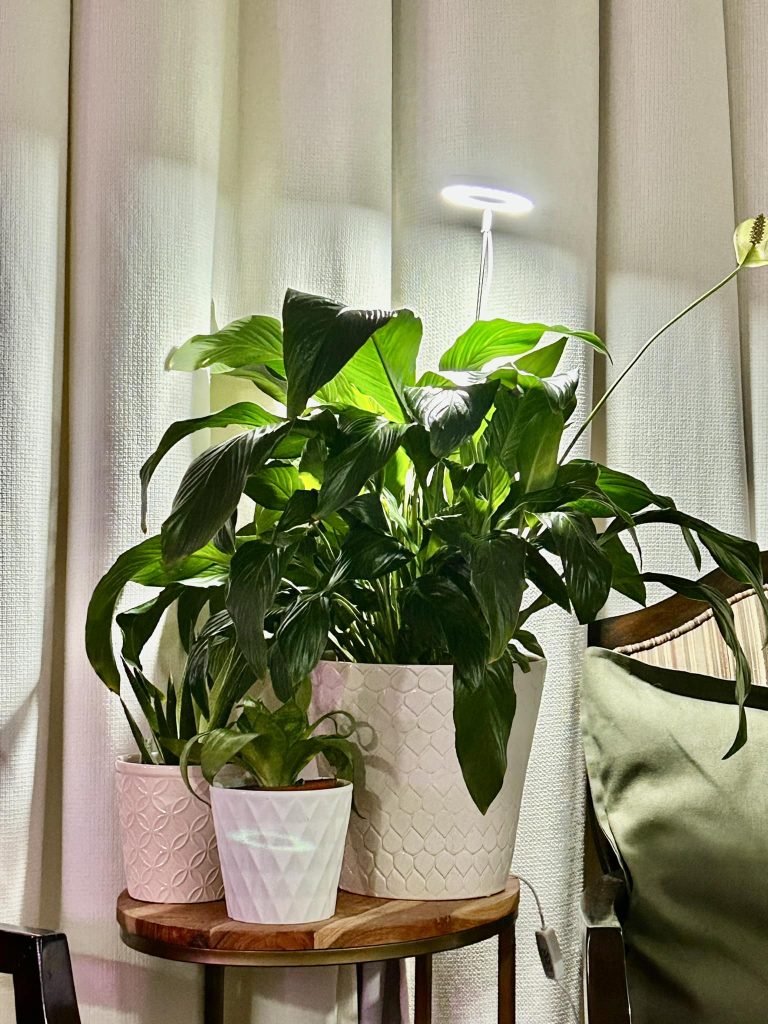
- Add a grow light and aim for 12–14 hours per day. Place 12–18 inches above the plant
4. Overfertilizing (Feeding It Too Much “Junk Food”)
Many gardeners grab Miracle-Gro or all-purpose plant food (often 24-8-16 or higher). Peace lilies are light feeders—they get overwhelmed easily. Too much fertilizer, especially nitrogen, tells the plant: “Grow leaves, not flowers!” The spathe starts acting like a leaf and turns green early.
Signs you’re overdoing it
- Dark green, oversized leaves
- Green or small spathes
- White crust on soil (salt buildup)
- Brown leaf tips
How to fix it
- Stop fertilizing immediately.
- Flush the soil. Pour distilled or rainwater through the pot until it runs clear (about 3x the pot volume).
- Wait 6–8 weeks before feeding again—and then use ¼ strength of a balanced fertilizer (like 10-10-10).
5. Temperature Swings (Too Hot, Too Cold, or Too Dry)
Peace lilies are tropical—they want steady, comfy conditions. Extreme temps mess with pigment production and cause green or droopy spathes. Ideal range includes:
- Day: 65–80°F (18–27°C)
- Night: Above 60°F (15°C)
Common U.S. trouble spots:
| Problem | Where It Happens | Fix |
| Cold drafts | Near windows in NY, IL, MI | Move 2–3 feet away |
| Hot, dry air | Near heaters in CO, UT | Use a pebble tray |
| AC vents | In FL, TX summers | Redirect airflow |
How to fix it
- Use a digital thermometer/hygrometer to monitor humidity.
- Keep humidity 40–60%. There are several ways to achieve this. Using a pebble tray (Fill with water, set pot on top), a humidifier (Great for dry winter homes), and misting.
6. It’s Just the Variety! (Some Peace Lilies Are Naturally Green-ish)
Not all peace lilies are pure white. Some cultivars have genetically pale or green-tinged spathes—and that’s okay!
Popular varieties that often turn green:
| Variety | Spathe Color | Where You’ll Find It |
| ‘Mauna Loa’ | Creamy → light green | Walmart, Lowe’s |
| ‘Domino’ | Variegated leaves, green-white spathes | Specialty nurseries |
| ‘Sensation’ | Large, ages to pale green | Big box stores |
| ‘Picasso’ | White with green veins | Online or local shops |
What to do
- Check the tag or Google your variety.
- Accept a little green—it’s part of their charm!
7. Water Quality (The Silent Saboteur)
Tap water in many U.S. cities contains chlorine, fluoride, or minerals that build up in soil. This can stress the plant, causing green spathes + brown leaf tips.
High-risk areas
- Florida, Arizona, Nevada: Hard water (high calcium/magnesium)
- Most cities: Chlorinated municipal water
Signs
- White crust on the soil
- Brown leaf edges
- Green or stunted spathes
How to fix it
- Use rainwater or distilled water.
- Let tap water sit for 24 hours to evaporate chlorine
- Use a filter (removes some minerals)
Bonus: Repot every 1–2 years in fresh, peat-based potting mix to prevent buildup.

How to Encourage Snow-White Peace Lily Blooms
Follow this proven routine I’ve used successfully in three different U.S. climate zones:
Step 1: Optimize Light
- Place your peace lily near the east or north window
- Use a grow light if natural light is limited.
- Rotate the plant weekly for even growth
Step 2: Water Correctly
- Water when the top 1–2 inches of soil are dry
- Use room-temperature water
- Ensure excellent drainage (no saucers with standing water)
Step 3: Feed Sparingly
- Fertilize March–September only
- Use ¼ strength balanced fertilizer every 6–8 weeks
- Flush soil every 3 months
Step 4: Maintain an Ideal Environment
- 65–80°F day, 60°F+ night
- 40–60% humidity
- No drafts
Step 5: Prune Strategically
- Remove fully green or brown spathes at the base
- Cut yellow leaves to reduce stress
Step 6: Repot Every 2 Years
- Use a peat-based, well-draining mix
- Pot size should be 1–2 inches larger than the root ball
- Spring repotting is the best
Peace Lily Care by U.S. Region (Customized Tips)
Peace lily care and maintenance requirements can broadly vary based on your regional climatic conditions. Here are tips that can help you achieve your goals.
| Region | Light Tip | Water Tip | Temperature Tip |
| Northeast (NY, PA) | North window + grow light in winter | Use dechlorinated water | Keep away from cold windows |
| Southeast (FL, GA) | Sheer curtains on south windows | Water frequently, ensure drainage | Avoid AC vents |
| Midwest (IL, OH) | East window ideal | Check soil weekly | Use humidifier in winter |
| Southwest (AZ, NM) | Avoid west sun, use grow light | Use distilled water | Mist daily or use pebble tray |
| West Coast (CA, OR) | North or east window | Monitor for root rot | Stable temps year-round |
| Mountain States (CO, UT) | South window with sheer curtain | Low humidity—use humidifier | Protect from heater drafts |
Final Thoughts
Here’s the truth I’ve learned after years of growing peace lilies: green flowers are not a failure—they’re a phase.
A peace lily with a mix of white, cream, and green spathes is a mature, thriving plant doing exactly what nature intended. Your job? Provide the right light, water, and care so it keeps producing those stunning white blooms year after year.
References
- University of Florida IFAS Extension. (2023). Peace Lily (Spathiphyllum) Care. https://edis.ifas.ufl.edu/publication/EP579
- Missouri Botanical Garden. (n.d.). Spathiphyllum wallisii.
https://www.missouribotanicalgarden.org/PlantFinder/PlantFinderDetails.aspx?taxonid=276124 - Clemson Cooperative Extension. (2022). Houseplant Problems: Peace Lily.
https://hgic.clemson.edu/factsheet/peace-lily/ - American Society for the Prevention of Cruelty to Plants (ASPCP). (2024). Top 10 Houseplant Myths. https://www.aspcp.org/myths
- Royal Horticultural Society (RHS). (2023). Spathiphyllum: Indoor Care.
https://www.rhs.org.uk/plants/spathiphyllum/growing-guide

Tim M Dave is a gardening expert with a passion for houseplants, particularly cacti and succulents. With a degree in plant biology from the University of California, Berkeley, he has vast experience in gardening. Over the years, he has cultivated a vast collection of desert plants and learned a great deal about how to grow and care for these unique companions.