Peace Lily Cultivation: Your Ultimate Guide to Growing This Elegant Houseplant
I still remember the day I brought my first peace lily home. Its glossy, dark green leaves and delicate white blooms caught my eye at a local nursery, and I was instantly hooked. That little plant, a Spathiphyllum wallisii, became my gateway into the world of houseplants.
Over the years, I’ve learned that peace lilies are not only perfect for beginners but also for seasoned plant parents alike. Their ability to thrive in low light and signal when they need water (those dramatic droopy leaves!) makes them a dream for busy plant parents like me.
In this comprehensive guide, I’ll share everything I’ve discovered about growing peace lilies—from their fascinating history to detailed care tips. Let’s dive in!
The Origins of the Peace Lily
Peace lilies have a rich history that takes us to the lush rainforests of Central and South America. Native to countries like Colombia, Venezuela, and parts of the Caribbean, these plants thrive in the warm, humid canopy of tropical forests.
They were first documented in the 19th century by European botanists exploring the Americas. Gustav Wallis, a German plant collector, is credited with introducing the peace lily to Europe in the 1870s. From then on, it quickly became a darling of Victorian-era homes.
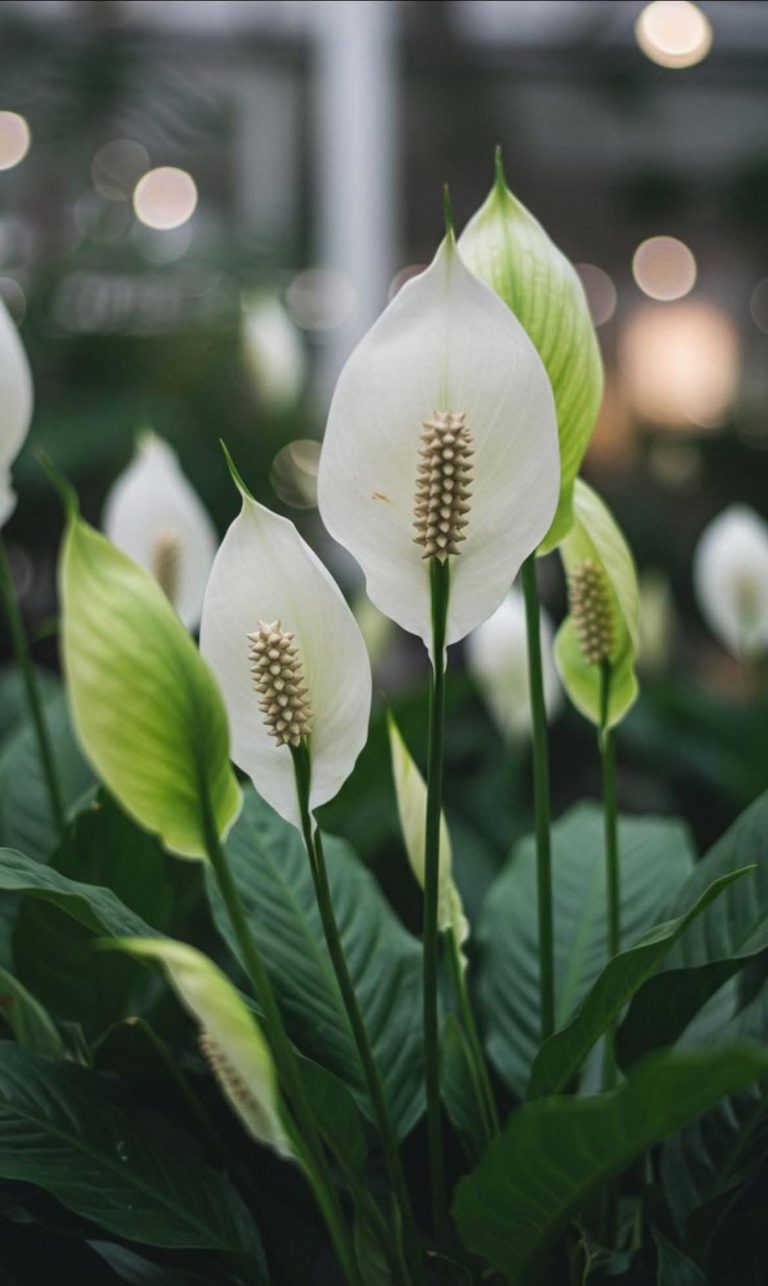
The name “peace lily” comes from their white, hood-like blooms, which resemble a flag of peace. But here’s a fun fact: those “flowers” aren’t true flowers! They’re specialized leaf bracts called spathes that surround a spike of tiny flowers called the spadix.
This unique feature makes peace lilies stand out among other houseplants. Over time, their beauty and low-maintenance nature made them a favorite in homes and offices worldwide.
Scientific Classification
As a plant nerd, I get excited about taxonomy. Peace lilies belong to the Araceae family, which includes other popular houseplants like pothos, monstera, and anthurium. Their genus is Spathiphyllum, and there are over 40 species within this genus, each with its own charm.
Here are some of the most common varieties you’ll encounter:
- Spathiphyllum wallisii: The classic peace lily, compact with abundant blooms. This is the one I started with!
- Spathiphyllum ‘Mauna Loa’: A larger variety with bigger leaves and showy flowers, perfect for statement pieces.
- Spathiphyllum ‘Domino’: A variegated stunner with white-splashed leaves that add a pop of contrast.
- Spathiphyllum ‘Sensation’: One of the largest varieties, reaching up to 6 feet in ideal conditions.
Despite their name, peace lilies aren’t true lilies (from the Liliaceae family). They’re more closely related to philodendrons and caladiums. Knowing this helps me appreciate their unique place in the plant world.

Characteristics of the Peace Lily
Peace lilies are the perfect blend of beauty and resilience. Here’s what makes them stand out, based on my observations and research:
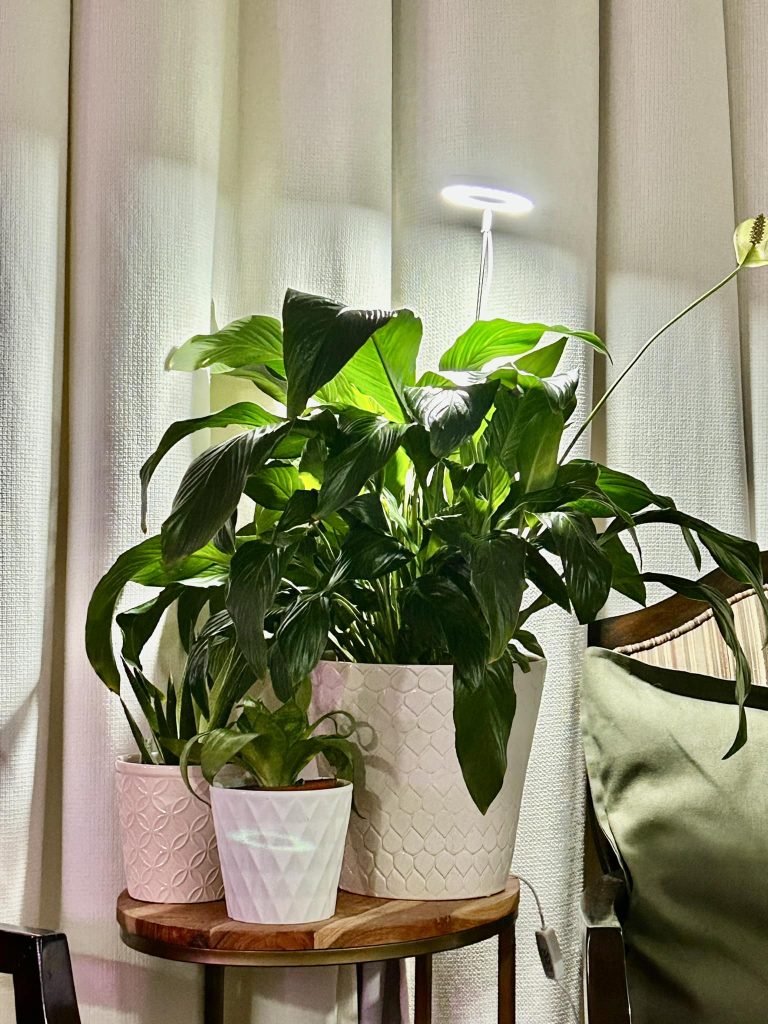
- Leaves: Dark green, glossy, and lance-shaped, growing in a rosette pattern. They can reach 12–18 inches long, though larger varieties like ‘Sensation’ can have leaves up to 2 feet long. The glossy finish makes them look polished and vibrant.
- Blooms: The white, hood-like spathes sit on long stalks and can last for weeks, sometimes months. They bloom most often in spring and summer but can flower year-round with the right care. I love how the blooms add a touch of elegance to any room.
- Size: Compact varieties stay around 1–2 feet tall, while larger ones can grow to 3–6 feet. My ‘Mauna Loa’ is about 3 feet tall and makes a bold statement in my living room.
- Air-purifying qualities: According to NASA’s Clean Air Study, peace lilies can filter toxins like benzene, formaldehyde, and carbon monoxide from the air. I feel good knowing my plants are working hard to keep my home’s air clean!
- Toxicity: A word of caution: Peace lilies are toxic to pets and humans. If ingested, they can cause mouth irritation, nausea, or stomach upset. I keep mine on a high shelf away from my curious cat.
How to Care for Your Peace Lily
Caring for a peace lily is straightforward, but a few key practices will ensure it thrives. Below, I’ll share my tried-and-true care routine, backed by advice from trusted sources like the University of Florida IFAS Extension.
Light: Finding the Perfect Balance
Peace lilies are low-light superstars, which is why they’re perfect for any dimly lit apartment. They thrive in indirect light, such as near a north-facing window or a few feet from an east- or west-facing window with sheer curtains.
Too much direct sunlight can scorch their leaves, leaving brown, crispy spots. I made this mistake early on, placing my peace lily in a south-facing window, and the leaves suffered within days.
If your home is very dark, don’t worry—peace lilies can tolerate fluorescent lighting. However, complete darkness won’t do; they need some light to photosynthesize. If your peace lily isn’t blooming, it might be craving more light.
I moved mine closer to a window with filtered light, and within a month, it rewarded me with new blooms.
Pro Tip: Rotate your peace lily every few weeks to ensure even growth, as it tends to lean toward the light.
Watering: The Art of Moderation
Watering is where I’ve had to fine-tune my skills. Peace lilies like consistently moist soil but hate being waterlogged. Here’s my watering routine:
- Check the soil: I stick my finger about an inch into the soil. If it’s dry, it’s time to water. If it’s still moist, I wait a day or two.
- Watch for drooping: Peace lilies are dramatic when thirsty. Droopy leaves are their way of saying, “Help, I need water!” After a good drink, they perk up within hours—it’s like watching a plant resurrection.
- Use room-temperature water: Cold water can shock the roots, so I let tap water sit out overnight.
- Ensure proper drainage: Always use a pot with drainage holes, and empty the saucer afterward to prevent root rot.
Overwatering is a common mistake. My first peace lily developed yellow leaves because I was too eager with the watering can. Now, I water every 7–10 days, depending on the season and humidity. In winter, I cut back slightly since the plant grows more slowly.
Soil and Potting: Setting the Foundation
Peace lilies aren’t fussy about soil, but they thrive in a well-draining, peat-based potting mix. I use a blend of standard potting soil, perlite, and a bit of orchid bark for extra aeration and drainage. If you’re buying a pre-made mix, look for one labeled for houseplants or aroids.
Repotting every 1–2 years is highly recommended as it keeps your peace lily healthy. I repotted mine last spring when I noticed roots circling the pot and poking out of the drainage holes—a sure sign it was root-bound. Here’s how to do it:
- Choose a pot one size larger (for example, from a 6-inch to an 8-inch pot).
- Gently remove the plant, shaking off excess soil.
- Tease apart any tangled roots, being careful not to break them.
- Place in the new pot with fresh soil, and water thoroughly.
Repotting can also be a chance to divide your peace lily for propagation (more on that later).
Humidity and Temperature: Mimicking the Tropics
Peace lilies hail from humid rainforests, so they love moisture in the air. My home tends to be dry, especially in winter, so I mist my peace lilies a couple of times a week or place them near a humidifier.
Another trick I use is grouping them with other plants to create a humid microclimate. You can also set the pot on a tray of pebbles filled with water. Just make sure the pot isn’t sitting directly in the water.
If the leaf edges turn brown, low humidity is often the culprit. I learned this when my ‘Domino’ started showing brown tips during a dry spell. A small humidifier fixed the issue within a week.
Keep your peace lily in temperatures between 65–80°F (18–27°C). They don’t like drafts or sudden temperature swings. So, avoid placing them near air vents, heaters, or open windows in winter.
Fertilizing: A Little Goes a Long Way
Fertilize your peace lilies every 6–8 weeks during spring and summer with a balanced, water-soluble fertilizer (like 20-20-20) diluted to half strength. Over-fertilizing can burn the leaves, leaving brown, crispy edges, so I err on the side of caution.
In fall and winter, I skip fertilizing since the plant’s growth slows down. One time, I got overzealous with fertilizer, and my peace lily’s leaves started yellowing. I flushed the soil with water to remove excess salts, and the plant recovered. Less is more when it comes to feeding!
Pruning and Cleaning: Keeping It Tidy
To keep my peace lilies looking their best, prune off yellow or brown leaves with clean, sharp scissors. This not only improves their appearance but also encourages new growth. Also, wipe the leaves with a damp cloth every month to remove dust.
When the blooms start to fade, turning green or brown, snip them off at the base of the stalk. This redirects energy to new growth and encourages more flowers. It’s like giving your plant a little haircut!
Common Problems and How to Fix Them
Even with the best care, peace lilies can face challenges. Below, I’ll share the most common issues I’ve encountered and how to solve them, with insights from Clemson Cooperative Extension.
1. Yellow Leaves
Peace lily yellow leaves can result from overwatering, underwatering, or too much light.
Solution
- Overwatering: Check the soil. If it’s soggy, let it dry out before watering again. Ensure the pot has drainage holes, and empty the saucer.
- Underwatering: If the soil is bone-dry, water thoroughly and adjust your schedule to water more consistently.
- Too much light: Move the plant to a shadier spot with indirect light.
I once overwatered my peace lily, thinking it needed more love. The yellow leaves were a wake-up call to check the soil first!
2. Brown Leaf Tips
Brown leaf tips can be caused by low humidity, over-fertilizing, or fluoride in tap water.
Solution
- Increase humidity by misting, using a humidifier, or placing the pot on a pebble tray.
- Cut back on fertilizer if you’ve been feeding too often.
- Use distilled or filtered water if your tap water is high in fluoride or chlorine. I switched to filtered water for my peace lilies, and the brown tips stopped appearing.
3. No Blooms
Lack of blooms can result from insufficient light, lack of nutrients, or a young plant.
Solution
- Move the plant to a brighter spot with indirect light. My ‘Mauna Loa’ started blooming after I placed it near an east-facing window.
- Fertilize lightly during the growing season to provide nutrients.
- Be patient—young plants may take a year or two to mature enough to bloom.
4. Drooping Leaves
The issue of drooping leaves can stem from thirst, overwatering, or root rot.
Solution
- If the soil is dry, water thoroughly. The plant should perk up within a few hours.
- If the soil is wet and the plant is still drooping, check for root rot. Gently remove the plant from the pot, trim away any mushy, black roots, and repot in fresh, well-draining soil.
- I saved a droopy peace lily by catching root rot early and repotting it. It was a close call!
5. Pests: Unwelcome Guests
Peace lilies can attract pests like spider mites, mealybugs, or aphids. I dealt with spider mites on my ‘Domino’ last year—tiny webs and stippled leaves were the telltale signs. Here’s how I handle pests:
- Spider Mites: Spray the plant with a mix of water and a few drops of mild dish soap. Rinse after a few hours. Repeat every 3–5 days until the mites are gone.
- Mealybugs: Dab them with a cotton swab soaked in rubbing alcohol.
- Aphids: Blast them off with a strong stream of water or use insecticidal soap.
For stubborn infestations, I use neem oil, diluted according to the label. Always isolate the affected plant to prevent pests from spreading. For more pest control tips, visit University of California Agriculture and Natural Resources.
6. Wilting Despite Watering
Despite watering, your peace lily wilting can result from root rot, poor drainage, or compacted soil.
Solution
- Check the roots for rot and repot if needed.
- Ensure the pot has drainage holes and the soil isn’t too compact.
- I once had a peace lily that wilted despite regular watering. Repotting it in fresh soil with better drainage saved the day.
7. Green or Brown Blooms
Blooms naturally turn green as they age, or brown if they’re spent. The solution is to snip off green or brown blooms to encourage new flowers. If the plant consistently produces green blooms, it might be getting too much fertilizer—cut back.
Propagation: Growing Your Peace Lily Collection
One of the joys of peace lilies is how easy they are to propagate. I’ve successfully divided my plants to create new ones, and it’s a rewarding process. Here’s how to do it:
Division Method
- Choose the right time: Spring is ideal, as the plant is actively growing.
- Remove the plant: Gently take the peace lily out of its pot. Shake off excess soil to expose the roots.
- Separate the clumps: Look for natural divisions in the root system, where the plant has formed separate crowns (clusters of leaves with roots). Gently tease them apart with your hands or use a clean, sharp knife.
- Pot the divisions: Plant each division in its own pot with fresh, well-draining soil. Water thoroughly and place in indirect light.
- Care for the new plants: Keep the soil moist and avoid direct sunlight for a few weeks while the new plants establish.
I divided my ‘Spathiphyllum wallisii’ last year and ended up with three healthy plants. It felt like a plant parent win!
Growing in Water
You can also grow peace lily divisions in water, which I’ve experimented with for a minimalist look:
- Place a division with healthy roots in a jar of distilled water.
- Change the water weekly and add a drop of liquid fertilizer every month.
- Keep in indirect light. The roots will grow, and the plant can live in water indefinitely, though it may not bloom as often.
Advanced Tips for Peace Lily Enthusiasts
If you’re like me and want to take your peace lily care to the next level, here are some advanced techniques:
- Encourage blooming: Commercially, growers use gibberellic acid to induce flowering. While I don’t recommend this for home use, you can mimic the effect by providing bright, indirect light and fertilizing sparingly during the growing season.
- Experiment with varieties: I recently added a ‘Domino’ for its variegated leaves and a ‘Sensation’ for its massive size. Try different varieties to create a diverse collection.
- Monitor soil pH: Peace lilies prefer slightly acidic soil (pH 5.8–6.5). I use a pH meter to ensure optimal conditions, especially for my larger plants.
- Control temperature fluctuations: Use a thermometer to monitor the room’s temperature, especially if you live in a region with cold winters. I keep a small space heater nearby during chilly months to maintain a cozy 70°F.
- Hydroponics: For a modern twist, try growing your peace lily hydroponically. I’ve seen stunning results with this method, though it requires more attention to water quality.
Troubleshooting Rare Issues
Occasionally, peace lilies throw curveballs. Here are some less common problems I’ve encountered or read about:
- Fungal infections: Overly wet soil can lead to fungal issues like leaf spot (small, dark spots on leaves). Improve air circulation and reduce watering. Fungicides may be needed for severe cases.
- Salt buildup: White crust on the soil surface indicates fertilizer or mineral buildup. Flush the soil by running water through it for a few minutes, then reduce fertilizer use.
- Leggy growth: If your peace lily looks sparse or stretched, it’s likely not getting enough light. Move it to a brighter spot or supplement with a grow light.
FAQs About Peace Lilies
Here are answers to common questions I’ve heard from fellow plant lovers.
Q: Are peace lilies safe for pets?
A: No, peace lilies are toxic to cats, dogs, and humans if ingested, causing mouth irritation, nausea, or vomiting. Keep them out of reach. For pet-safe plants, check ASPCA’s list of non-toxic plants.
Q: How often should I water my peace lily?
A: Water when the top inch of soil is dry, typically every 7–10 days. Adjust based on light, humidity, and season.
Q: Why isn’t my peace lily blooming?
A: It likely needs more indirect light or nutrients. Move it to a brighter spot and fertilize lightly during spring and summer. Young plants may also take time to mature.
Q: Can peace lilies grow in water?
A: Yes, they can be grown hydroponically. Change the water weekly and add diluted fertilizer monthly.
Q: How do I propagate a peace lily?
A: Divide the plant during repotting. Separate the root clumps, ensuring each has roots and leaves, and pot them separately.
Q: Why are my peace lily’s leaves turning black?
A: Black leaves often indicate overwatering or cold damage. Check the roots for rot and move the plant to a warmer spot.
Q: Can peace lilies survive outdoors?
A: In USDA zones 10–11, peace lilies can grow outdoors in shaded, humid areas. Elsewhere, keep them indoors to protect from cold.
My Personal Peace Lily Journey
When I started growing peace lilies, I was a nervous beginner, convinced I’d kill them within weeks. But their forgiving nature made it easy to learn. My first plant, a small Spathiphyllum wallisii, taught me to read its signals. Drooping leaves meant water, yellow leaves meant I was overwatering.
Now, I have three peace lilies in my home: a classic wallisii, a variegated ‘Domino,’ and a towering ‘Mauna Loa.’ Each adds a touch of elegance to my space, and watching their blooms unfurl feels like a small victory.
One of my favorite moments was when my ‘Domino’ bloomed for the first time. It was a reminder that patience pays off. Sharing my plants with friends through propagation has also been a joy. It’s like spreading a little piece of my plant love.
Conclusion
Growing a peace lily is a journey filled with small joys. Their resilience, beauty, and air-purifying qualities make them a must-have for any home. By following the care tips in this guide—proper lighting, watering, humidity, and troubleshooting—you’ll have a thriving peace lily that brings life to your space.
I hope my personal stories and practical advice inspire you to start your own peace lily adventure. Whether you’re a beginner or a seasoned plant parent, these plants have a way of stealing your heart. Grab a peace lily from your local nursery or online, and let it transform your home.
For more plant care resources, explore the Royal Horticultural Society, the Missouri Botanical Garden, or Penn State Extension.

Tim M Dave is a gardening expert with a passion for houseplants, particularly cacti and succulents. With a degree in plant biology from the University of California, Berkeley, he has vast experience in gardening. Over the years, he has cultivated a vast collection of desert plants and learned a great deal about how to grow and care for these unique companions.