15 Low-Maintenance Maple Tree Varieties for Small Yards (Names and Pictures)
Japanese maples (Acer palmatum cultivars) are loved worldwide because of their spectacular colors, shapes, and adaptability to various landscapes. Wide varieties have non-invasive roots, making them ideal for limited spaces like urban gardens, patios, or front yards.
Here are 15 low-maintenance varieties well-suited to small yards.
1. Crimson Queen Japanese Maple (Acer palmatum dissectum ‘Crimson Queen’)
Crimson Queen Japanese Maple stands out as one of the most reliable and beautiful weeping laceleaf varieties for small gardens, patios, or as a focal point near entryways. This dwarf cultivar delivers stunning, finely cut foliage that maintains rich color through the seasons.
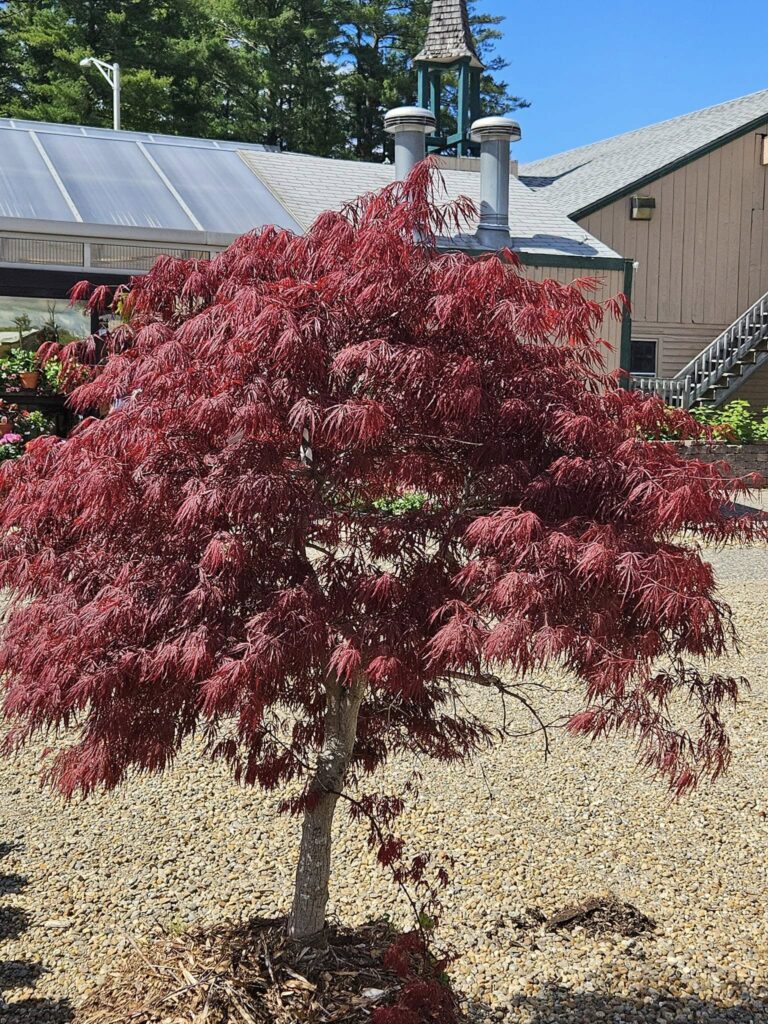
Scientific name: Acer palmatum var. dissectum ‘Crimson Queen.’
USDA Zones: 5–8 (some sources note success into zone 9 with afternoon shade and good moisture).
Color variation: Deep crimson-red new growth emerges in spring, holds burgundy-red through summer (rarely fading), and turns brilliant scarlet in fall for extended seasonal interest.
Sun exposure: Full sun to partial shade; in northern areas, it handles full sun well, while southern or hotter zones benefit from afternoon protection to prevent leaf burn and preserve color intensity.
Mature size: 8–10 feet tall and 10–12 feet wide (sometimes listed as 8–10 feet tall, 10–15 feet wide); forms a dense, mounded, broadly spreading weeping shape.
Lifespan: 60–80+ years with proper care; many Japanese maples of this type live decades longer in ideal settings.
Toxicity: Generally non-toxic to humans and pets.
This low-branching tree features delicate, thread-like, dissected leaves on arching branches. Inconspicuous red spring flowers give way to small winged samaras. It grows moderately (about 12–24 inches per year), reaching maturity in 10–20 years.
Crimson Queen adapts to moist, well-drained, slightly acidic soils and tolerates urban conditions better than many laceleafs. It shows good heat tolerance and minimal pest issues when sited properly.
Prune lightly in late winter if needed to shape or remove dead wood (avoid heavy cuts or spring pruning to prevent sap bleeding). Mulch to retain moisture, water regularly during establishment, and protect from strong winds.
2. Viridis (Waterfall) Japanese Maple (Acer palmatum dissectum ‘Viridis’)
Viridis (Waterfall) Japanese Maple ranks as a timeless favorite among weeping laceleaf varieties. It is prized for its elegant cascading form and bright green foliage that delivers reliable seasonal beauty in small gardens, near water features, or as a shaded patio accent.
Scientific name: Acer palmatum var. dissectum ‘Viridis.’
USDA Zones: 5–8 (some sources note success into zone 9 with afternoon shade and consistent moisture).
Color variation: Bright fresh green dissected leaves in spring and summer; turns golden-yellow to orange-red in fall for a glowing autumn display.
Sun exposure: Full sun to partial shade; in cooler northern climates, it tolerates full sun well, but in hotter southern or warmer zones, afternoon shade helps prevent leaf scorch and maintains vibrant color.
Mature size: 6–10 feet tall (often 8–12 feet in ideal conditions) and 8–12 feet wide (sometimes up to 10–14 feet); develops a dense, broadly weeping, mounded shape over time.
Lifespan: 50–80+ years with proper care; Japanese maples like this can thrive for decades or longer in suitable environments.
Toxicity: Generally non-toxic to humans and pets, though large ingestion might cause mild stomach upset in animals (rare and minor).
This graceful tree features delicate, thread-like foliage on arching branches. Small reddish flowers appear in spring, followed by winged samaras. Growth is moderate (about 6–12 inches per year), reaching maturity in 15–25 years.
Viridis adapts to moist, well-drained, slightly acidic soils and performs best with protection from strong winds and intense midday sun in hot areas. It shows good resistance to common pests when properly sited. Generally, it’s a low-maintenance maple variety.
Light prune in late winter (if needed) to shape or remove dead wood. Avoid heavy cuts or spring pruning to minimize sap bleeding. Mulch around the base to retain moisture, water regularly during establishment, and enjoy its effortless charm year-round in compact spaces.
3. Orangeola Japanese Maple (Acer palmatum dissectum ‘Orangeola’)
Orangeola Japanese Maple is a standout weeping laceleaf variety, celebrated for its dynamic, multi-season color show and better heat tolerance than many similar cultivars. This vigorous dissectum brings cascading elegance to small gardens, rockeries, or as a specimen near patios.
Scientific name: Acer palmatum var. dissectum ‘Orangeola.’
USDA Zones: 5–9 (excels in warmer areas within this range with some afternoon shade in zone 9).
Color variation: Bright orange-red new growth in spring; summer leaves mature to green with reddish-orange undertones (often showing two-tone effects from new flushes); fall explodes into brilliant fiery orange-red.
Sun exposure: Full sun to partial shade; handles full sun well in cooler climates, but benefits from afternoon protection in hotter zones to avoid scorch and enhance color.
Mature size: 6–10 feet tall (often 8–10 feet) and 6–10 feet wide (sometimes broader); forms a low, spreading, strongly pendulous mound with arching branches.
Lifespan: 50+ years with good care; many laceleaf Japanese maples endure for decades in suitable conditions.
Toxicity: Generally non-toxic to humans and pets. Large ingestion may cause mild stomach upset in animals.
This tree features finely dissected, thread-like leaves on long, cascading shoots. This caretaes a fountain-like form with layered growth for added depth. Small spring flowers lead to winged samaras. Moderate growth (about 12–24 inches per year) makes it manageable.
Orangeola prefers moist, well-drained, slightly acidic soil and protection from strong winds. It resists common pests better in proper sites. Prune lightly in late winter if shaping is needed. Mulch for moisture retention, water consistently during establishment, and enjoy its vibrant display.
4. Twombly’s Red Sentinel Japanese Maple (Acer palmatum ‘Twombly’s Red Sentinel’)
Twombly’s Red Sentinel Japanese Maple offers a rare columnar form among Japanese maples. It is an excellent choice for narrow spaces, small yards, patios, entryways, or containers. This vigorous upright cultivar provides consistent red foliage and a tidy, dense habit that fits tight landscapes perfectly.
Scientific name: Acer palmatum ‘Twombly’s Red Sentinel.’
USDA Zones: 5–8 (some sources note success into zone 9 with afternoon shade and good moisture).
Color variation: Rich burgundy-red to deep red foliage emerges in spring, holds vibrant color through summer (even in heat), and turns fiery crimson-red in fall; bare stems darken to blood-red in winter for added interest.
Sun exposure: Full sun to partial shade; it tolerates full sun well (even in hotter climates) for brighter color, but partial shade helps in very warm areas to prevent any potential scorch.
Mature size: 10–15 feet tall (often 10–12 feet) and 5–8 feet wide (typically 4–6 or 6–8 feet); develops a narrow, columnar to upright pyramidal shape.
Lifespan: 50–80+ years with proper care; many Japanese maples in this style live for decades or longer under good conditions.
Toxicity: Generally non-toxic to humans and pets. Large ingestion might cause mild stomach upset in animals.
This tree features palmate leaves on ascending branches, creating a compact, sentinel-like silhouette with year-round appeal. Small spring flowers lead to winged samaras. Moderate growth rate keeps it manageable.
Twombly’s Red Sentinel adapts to moist, well-drained, slightly acidic soils and shows good heat and disease resistance. Light prune in late winter (if needed) for shape or dead wood removal. Mulch to retain moisture, water consistently during establishment, and enjoy its narrow elegance and bold color in limited spaces.
5. Seiryu Japanese Maple (Acer palmatum ‘Seiryu’)
Seiryu Japanese Maple (Acer palmatum ‘Seiryu’) stands out as the only upright laceleaf cultivar among Japanese maples. It offers a unique vertical form that brings delicate, dissected foliage to small yards, narrow beds, or as a striking accent without the typical weeping spread.
Scientific name: Acer palmatum ‘Seiryu’ (or Acer palmatum var. dissectum ‘Seiryu’)
USDA Zones: 5–8 (some sources extend to 9 with afternoon shade and consistent moisture).
Color variation: Lime-green to bright green dissected leaves with reddish tips in spring; matures to medium green in summer; turns spectacular gold, yellow, orange, and crimson-red in fall for vibrant seasonal color.
Sun exposure: Full sun to partial shade; tolerates full sun well (even in warmer areas) for best density, but afternoon shade helps prevent scorch in hot climates.
Mature size: 10–15 feet tall (up to 20 feet in ideal conditions) and 8–12 feet wide; forms an upright, pyramidal to vase-shaped habit with ascending branches.
Lifespan: 50–80+ years with proper care; many Japanese maples thrive for decades or longer in suitable settings.
Toxicity: Generally non-toxic to humans and pets, though large ingestion might cause mild stomach upset in animals (rare and minor).
This tree features finely cut, lace-like palmate leaves on sturdy upright branches, creating a light, open silhouette with layered texture. Small reddish spring flowers lead to winged samaras. Moderate to vigorous growth (12–18 inches per year) keeps it manageable.
Seiryu prefers moist, well-drained, slightly acidic soils and protection from strong winds. It shows good heat and sun tolerance compared to other laceleafs. Prune lightly in late winter (if needed) for shape or dead wood. Mulch for moisture, and water consistently during establishment.
6. Paperbark Maple (Acer griseum)
Paperbark Maple is a captivating small tree renowned for its stunning exfoliating bark that peels out. Thin, papery curls of cinnamon-orange to copper-red reveal contrasting inner layers. This provides exceptional winter interest when little else shines in the garden.
Scientific name: Acer griseum
USDA Zones: 4–8 (thrives in cooler climates; some success in zone 9 with protection).
Color variation: Dark green trifoliate leaves with silvery-gray undersides in summer; turns vibrant orange-red to bronze-burgundy in fall (often one of the last maples to color); bark peels year-round for cinnamon-red tones.
Sun exposure: Full sun to partial shade; full sun enhances fall color intensity, while partial shade softens it but still performs well.
Mature size: 20–30 feet tall (up to 35–40 feet in ideal conditions) and 15–25 feet wide; upright oval to rounded form with slender branching.
Lifespan: 60–100+ years; slow growth contributes to longevity in suitable sites.
Toxicity: Generally non-toxic to humans and pets. Large ingestion might cause mild upset in animals, but rare and minor.
This tree features compound trifoliate leaves (3–5 inches long) and small greenish flowers in spring, followed by winged samaras that persist into winter. Growth is slow (about 12 inches per year), reaching maturity over decades.
Paperbark Maple adapts to various well-drained soils (including clay, loam, sand) with average moisture and pH tolerance. It dislikes prolonged drought. Few pests or diseases trouble it when properly sited.
Prune lightly in late winter only if needed for shape or dead wood. Mulch to conserve moisture, water during dry spells in establishment, and enjoy its beauty and striking bark. This slow-growing species suits small yards, courtyards, or as a specimen near paths.
7. Trident Maple (Acer buergerianum)
Trident Maple (Acer buergerianum) earns praise as a tough, adaptable small to medium tree, often overlooked yet ideal for urban yards, streetsides, or compact gardens where resilience matters. Native to eastern China, Korea, and Japan, it combines attractive exfoliating bark with vibrant fall color.
Scientific name: Acer buergerianum
USDA Zones: 5–9 (thrives widely, including in urban heat).
Color variation: Glossy dark green three-lobed leaves (triangular, forward-pointing) in summer; fall brings variable but usually striking shades of red, orange, and sometimes yellow; bark exfoliates to reveal orange-brown inner layers for year-round interest.
Sun exposure: Full sun to partial shade; full sun promotes the best density and fall color intensity, though it handles some shade well.
Mature size: 20–35 feet tall (often 25–30 feet) and 15–30 feet wide; rounded to oval upright form with a moderate, slow-to-medium growth rate.
Lifespan: 60–100+ years; its durability supports long-term presence in landscapes.
Toxicity: Generally non-toxic to humans and pets. Large ingestion might cause mild stomach upset in animals, but rare and minor.
This tree features distinctive trident-shaped leaves (2–4 inches long) and small greenish-yellow spring flowers followed by winged samaras. Exfoliating bark develops on mature trunks, adding textured appeal in winter.
Trident Maple prefers well-drained, slightly acidic to neutral soils but tolerates a broad range, including clay and occasional dryness once established. Few pests or diseases affect it significantly.
Prune lightly in late winter only if shaping or dead wood removal is needed. Mulch to retain moisture, water during establishment, and benefit from its seasonal beauty..
8. Amur Maple ‘Hot Wings’ (Acer tataricum subsp. ginnala ‘Hot Wings’)
Amur Maple ‘Hot Wings’, also known as Acer tataricum ‘GarAnn’, shines as a tough, compact multi-stemmed small tree or large shrub. It is prized for its eye-catching bright red samaras (“helicopters”) that appear in late summer and persist, contrasting vividly against dark green foliage—creating a “blooming” effect when many trees fade.
Scientific name: Acer tataricum subsp. ginnala ‘Hot Wings’ (or Acer tataricum ‘GarAnn’)
USDA Zones: 4–10 (highly adaptable, including high elevations up to 8,150 feet; excels in cooler to moderate climates).
Color variation: Glossy dark green lobed leaves in summer; outstanding scarlet-red to orange-red fall foliage; brilliant cherry-red samaras from late summer into fall for extended display.
Sun exposure: Full sun to partial shade; full sun maximizes samara color and fall intensity, though it tolerates light shade well.
Mature size: 15–20 feet tall (some sources note up to 25 feet) and 15–20 feet wide (often 15–18 feet); rounded to oval form, multi-stemmed or trainable as a single trunk.
Lifespan: 50–70+ years; durable with moderate growth rate.
Toxicity: Generally non-toxic to humans and pets. Seeds may cause mild stomach upset if large amounts are ingested by animals, but issues are rare and minor.
This tree features three-lobed leaves (with an elongated central lobe) and small yellowish spring flowers. It tolerates drought, alkaline soils, clay, wind, salt spray, and deer better than many maples. This selection suits small yards, hedges, accents, or urban spots needing hardy, low-care color.
Prune lightly in late winter for shape if desired. Plant in well-drained soil, water during establishment, and enjoy its rugged reliability and bold seasonal highlights.
9. Hedge Maple (Acer campestre)
Hedge Maple (Acer campestre) proves a dependable, low-profile choice for small to medium yards, hedges, or urban settings. Its dense, rounded form and tolerance for tough conditions make it exceptionally perfect. This tree has long been used for hedging (hence the name), but shines as a single specimen or natural screen.
Scientific name: Acer campestre
USDA Zones: 5–8 (some sources note hardiness into zone 4 or 9 with protection).
Color variation: Small, dark green lobed leaves in summer; turns soft golden-yellow to amber in fall (subtle but attractive); smooth gray bark develops shallow fissures with age.
Sun exposure: Full sun to partial shade; performs best in full sun for denser growth and brighter fall color, though it handles considerable shade without complaint.
Mature size: 25–35 feet tall and 20–30 feet wide (often stays 20–25 feet in cultivation); rounded to oval crown with compact branching; can be pruned smaller for hedges.
Lifespan: 50–100+ years; slow to moderate growth supports long-term reliability.
Toxicity: Generally non-toxic to humans and pets.
This tree features small (2–4 inch) palmate leaves with rounded lobes and winged samaras that spin in fall. It tolerates poor soils, compaction, pollution, drought once established, salt spray, and wind. This makes it a go-to for city lots or roadside planting.
Few pests or diseases bother it seriously. Prune in late winter for shape, size control, or hedge form if desired. Plant in well-drained soil, water during establishment, and benefit from its tough, attractive presence with almost no ongoing effort in compact landscapes.
10. Brandywine Red Maple (Acer rubrum ‘Brandywine’)
Brandywine Red Maple offers one of the most reliable and spectacular fall displays among red maples. Its intense, long-lasting color makes it a standout for medium-sized yards, lawns, or as a shade tree in residential settings.
Scientific name: Acer rubrum ‘Brandywine’
USDA Zones: 4–9 (very cold-hardy; performs well across a broad range).
Color variation: Medium to dark green leaves in summer (often with bluish undertones); fall color begins brilliant red in mid-autumn, gradually shifting to deep red-purple over 14+ days for extended, eye-catching brilliance.
Sun exposure: Full sun to partial shade; full sun maximizes fall intensity and overall vigor, though it tolerates some shade.
Mature size: 35–50 feet tall (often 25–35 feet in many landscapes) and 25–40 feet wide (typically narrower, 15–25 feet in cultivation); oval to rounded crown with upright branching.
Lifespan: 50–80+ years; as a red maple cultivar, it offers good longevity with proper siting.
Toxicity: Generally non-toxic to humans and pets.
This native cultivar features lobed leaves and small red spring flowers. Fast to moderate growth provides quick shade. It adapts to moist to wet soils (tolerates clay and occasional flooding) but prefers well-drained sites.
Prune in late winter or summer (avoid spring to prevent sap bleeding). Water during establishment, mulch for moisture, and enjoy its dependable beauty and hands-off nature. This male selection from the U.S. National Arboretum avoids messy seedlings while offering superior pest tolerance.
11. Coral Bark Japanese Maple ‘Sango-kaku’ (Acer palmatum ‘Sango-kaku’)
Coral Bark Japanese Maple ‘Sango-kaku’ captivates with its brilliant coral-red young branches that glow vividly in winter. This upright cultivar adds year-round interest to small to medium yards, as a specimen tree, near patios, or against dark backgrounds where its stems stand out dramatically.
Scientific name: Acer palmatum ‘Sango-kaku’ (also spelled ‘Sangokaku’)
USDA Zones: 5–8 (some success in zone 9 with afternoon shade and moisture).
Color variation: Light green to yellow-green leaves in spring/summer (sometimes with reddish edges); fall turns bright yellow, red-purple, or bronze; young bark shines coral-red to pink (intensifies in cold weather), fading to gray on older wood.
Sun exposure: Full sun to partial shade; full sun in cooler climates boosts bark color and vigor, while partial shade (especially afternoon protection) prevents scorch in hotter areas.
Mature size: 20–25 feet tall (up to 30 feet over decades) and 15–20 feet wide; upright, vase-shaped to rounded form with twiggy branching.
Lifespan: 50–80+ years with good care; many Japanese maples endure decades or longer in proper conditions.
Toxicity: Generally non-toxic to humans and pets.
This tree features palmate leaves (4–5 inches) and small reddish spring flowers followed by winged samaras. Moderate growth (about 12–18 inches per year) makes it manageable. It prefers moist, well-drained, slightly acidic soil and wind protection.
Light prune in late winter (if needed) for shape or dead wood. Mulch to retain moisture, water consistently during establishment, and enjoy its striking winter bark and colorful foliage in compact landscapes.
12. Inaba Shidare Japanese Maple (Acer palmatum dissectum ‘Inaba Shidare’)
Inaba Shidare Japanese Maple impresses with its vigorous weeping form and rich, long-lasting purple-red foliage. It creates a dramatic focal point for small gardens, rockeries, or shaded patios where its cascading branches create elegant movement and bold color.
Scientific name: Acer palmatum var. dissectum ‘Inaba Shidare’
USDA Zones: 5–9 (more heat- and cold-tolerant than many laceleaf types; thrives with protection in extremes).
Color variation: Deep purple-red new growth emerges in spring, holds burgundy to purple-red through summer (one of the best color-retainers among dissectums), and turns bright crimson-red in fall for extended vibrancy.
Sun exposure: Full sun to partial shade; handles full sun well (even in warmer zones) for intense color, but afternoon shade helps prevent scorch in hot climates.
Mature size: 6–10 feet tall (often 8–10 feet) and 8–15 feet wide (sometimes 10–12 feet); forms a rounded, upright but strongly cascading, weeping mound with layered branches.
Lifespan: 50–80+ years with proper care; sturdy for a laceleaf Japanese maple.
Toxicity: Generally non-toxic to humans and pets.
This cultivar features deeply cut, lacy palmate leaves (up to 6 inches) on pendulous shoots, creating a fountain-like silhouette with dense texture. Small reddish spring flowers lead to winged samaras. Moderate to fast growth for a dissectum (12–24 inches per year) adds presence quickly.
Inaba Shidare prefers moist, well-drained, slightly acidic soil and wind protection. It shows good humidity and disease resistance when sited properly. Prune lightly in late winter (if needed) for shape or dead wood. Mulch to retain moisture, water consistently during establishment.
13. Summer Red Maple (Acer rubrum cultivar)
Summer Red Maple brings vibrant, multi-season color to medium yards, lawns, or as a shade tree, with new growth emerging burgundy-red in spring for an eye-catching start before settling into dark green (often purplish-tinged) summer foliage. This improved red maple cultivar offers reliable fall interest and adapts well to various conditions.
Scientific name: Acer rubrum ‘Summer Red’ (or ‘HOSR’)
USDA Zones: 4–8 (some sources note 3–9; broad adaptability from cold winters to warmer southern areas).
Color variation: Bright burgundy-red new leaves in spring; matures to dark purplish-green in summer; fall displays a mix of yellow, orange, purple, and red for fiery, extended color.
Sun exposure: Full sun to partial shade; full sun enhances spring emergence and fall intensity, though it tolerates some shade.
Mature size: 35–40 feet tall (up to 45 feet in ideal sites) and 20–25 feet wide; upright oval to rounded form with good branching.
Lifespan: 50–80+ years; typical for red maples, with potential for longer in favorable conditions.
Toxicity: Generally non-toxic to humans and pets, although wilted leaves can be toxic to horses and some livestock if large amounts are ingested.
This fast-growing native features lobed leaves and small red spring flowers followed by winged samaras. It tolerates moist to wet soils (including clay and occasional flooding) but prefers well-drained sites. Prune in late winter or summer (avoid spring to prevent sap bleeding).
14. Vine Maple (Acer circinatum)
Vine Maple (Acer circinatum) brings a natural, woodland charm to small shaded yards and understory plantings, where its multi-stemmed habit and graceful form create soft structure without overwhelming space. Native to the Pacific Northwest of North America, this understory tree thrives in cool, moist environments and offers excellent fall color in low-light settings.
Scientific name: Acer circinatum
USDA Zones: 6–9 (best in cooler, humid climates; marginal in hotter, drier areas without protection).
Color variation: Bright green rounded leaves (7–9 lobes) in spring/summer; turns brilliant shades of orange, red, scarlet, and sometimes purple in fall—one of the most vivid native maples for autumn.
Sun exposure: Partial to full shade; prefers dappled or filtered light under taller trees, though it tolerates some morning sun; too much direct sun can cause leaf scorch in warmer zones.
Mature size: 15–25 feet tall (often 10–20 feet in cultivation) and 15–25 feet wide; multi-stemmed, shrub-like to small tree with arching, layered branches forming a rounded or irregular crown.
Lifespan: 50–80+ years; slow to moderate growth supports longevity in woodland conditions.
Toxicity: Generally non-toxic to humans and pets. Large ingestion might cause mild stomach upset in animals, but it is rare and minor.
This species features broad, palmate leaves (up to 6 inches) and small reddish-purple spring flowers followed by winged samaras. It spreads slowly by layering or suckers in moist soil. Vine Maple prefers rich, moist, well-drained acidic soils and tolerates wet conditions better than most maples.
Few pests trouble it in native-like sites. Prune lightly in late winter for shape or to remove suckers if desired. Mulch to retain moisture, water during dry spells, and enjoy its subtle elegance and stunning fall show.
15. Dwarf JapDwarf Japanese Maple ‘Sharp’s Pygmy’ (Acer palmatum ‘Sharp’s Pygmy’)
Dwarf JapDwarf Japanese Maple ‘Sharp’s Pygmy’brings exquisite miniature elegance to small gardens, rockeries, containers, and bonsai displays. Its ultra-compact, dense habit and intricate branching provide refined structure without taking up space.
This dwarf cultivar, discovered as a witch’s broom mutation by Jim Sharp in the 1980s, thrives in protected settings and offers subtle seasonal interest in even the tiniest landscapes.
Scientific name: Acer palmatum ‘Sharp’s Pygmy’
USDA Zones: 5–9 (protect from harsh winter winds and intense summer sun in hotter areas).
Color variation: Small palmate leaves (5 lobes, coarsely toothed) emerge chartreuse-green with pink or red edges in spring; mature to clean medium green in summer; turn brilliant orange, scarlet, crimson, and yellow in fall—one of the most vivid dwarfs for autumn color.
Sun exposure: Partial shade preferred; morning sun with afternoon protection is ideal to prevent leaf scorch; tolerates more shade than many Japanese maples but colors best with some filtered light.
Mature size: 3–5 feet tall and wide (often stays 2–4 feet for many years); very slow-growing, forming a tight, rounded or mounded shape with fine, twiggy branches.
Lifespan: 50+ years; extremely slow growth ensures long-term suitability for small spaces.
Toxicity: Generally non-toxic to humans and pets. Large ingestion might cause mild stomach upset in animals, but rare and minor.
This cultivar features tiny palmate leaves (1–2 inches) and inconspicuous reddish spring flowers followed by small winged samaras. It prefers rich, moist, well-drained acidic soil and consistent moisture. Few pests trouble it when sited properly.
Prune lightly in late winter for shape if desired. Mulch to retain moisture, water during dry spells, and enjoy its delicate, bonsai-like charm and stunning fall show.
Suggested For You:
15 Fast Growing Trees for Backyard Privacy: Living Screen to Block Neighbours View
15 Stunning Trees with Blue Flowers: A Complete Guide
15 Common Types of Jacaranda Trees: A Comprehensive Guide
15 Fast Growing Shade Trees for Garden: A Complete Guide
20 Best Flowering Trees for Garden UK: A Complete Guide
Conclusion
These maples bring beauty without demanding much effort. Choose based on your zone, light, and desired color. Plant in well-drained soil and water regularly until established for best results.

Tim M Dave is a gardening expert with a passion for houseplants, particularly cacti and succulents. With a degree in plant biology from the University of California, Berkeley, he has vast experience in gardening. Over the years, he has cultivated a vast collection of desert plants and learned a great deal about how to grow and care for these unique companions.