Understanding Majesty Palm: History, Size, Problems, Growing, and Maintenance (Indoors and Outdoors)
There is something undeniably regal about a majesty palm. The moment one enters a room — its long, arching fronds fanning outward in graceful curves — the entire atmosphere shifts. It feels more alive, more tropical, more complete.
The majesty palm (Ravenea rivularis) is one of the most recognisable and widely grown palms in the world. Whether placed beside a sunny living room window, used to anchor a hotel lobby, or planted in a warm outdoor garden, this plant commands attention without demanding it.
But despite its widespread popularity, many growers struggle with it. Yellowing leaves, stunted growth, and pest problems are common complaints — almost always the result of misunderstood care.
This guide covers everything you need to know: the plant’s origins, growth habits, ideal conditions, watering needs, common problems, and much more. If you have ever wondered how to keep a majesty palm truly thriving, you are in the right place.
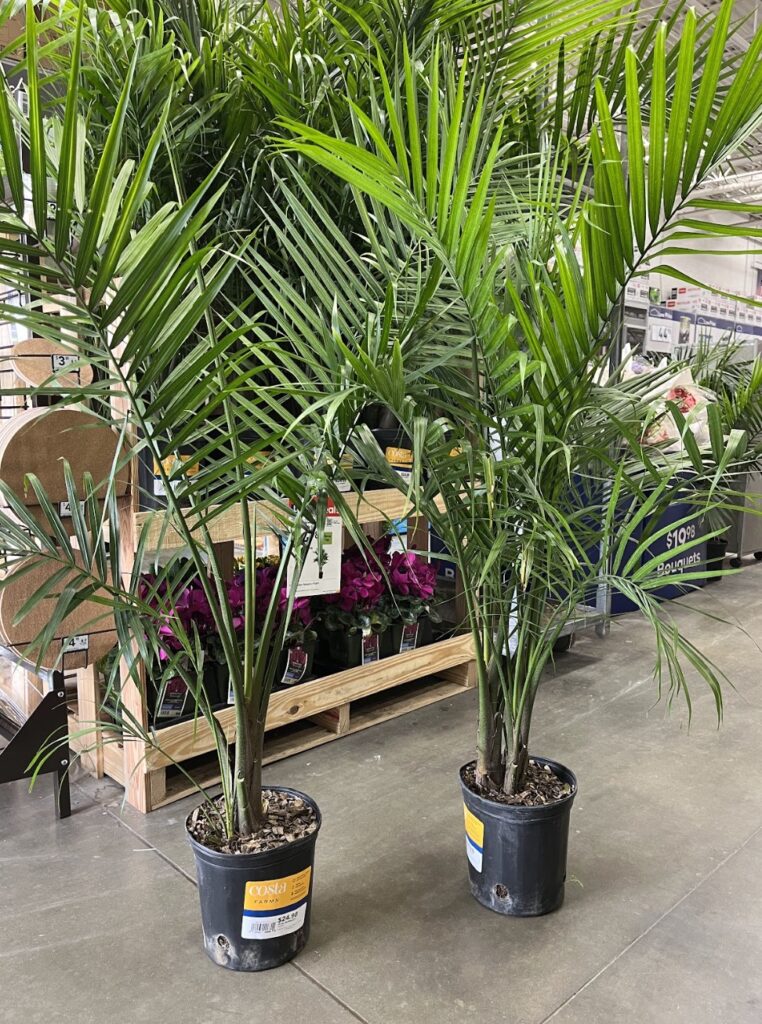
What Is a Majesty Palm? Taxonomy and Origin
The majesty palm belongs to the family Arecaceae, the palm family, and is classified under the genus Ravenea. Its full scientific name is Ravenea rivularis, where rivularis comes from the Latin word for “riverbank” — a clue to where it naturally grows.
It is native to Madagascar, specifically to the riverbanks and humid lowland forests along watercourses. In its natural habitat, it can grow to heights of 30 to 40 metres (nearly 100 feet), forming towering columns topped with cascading fronds.
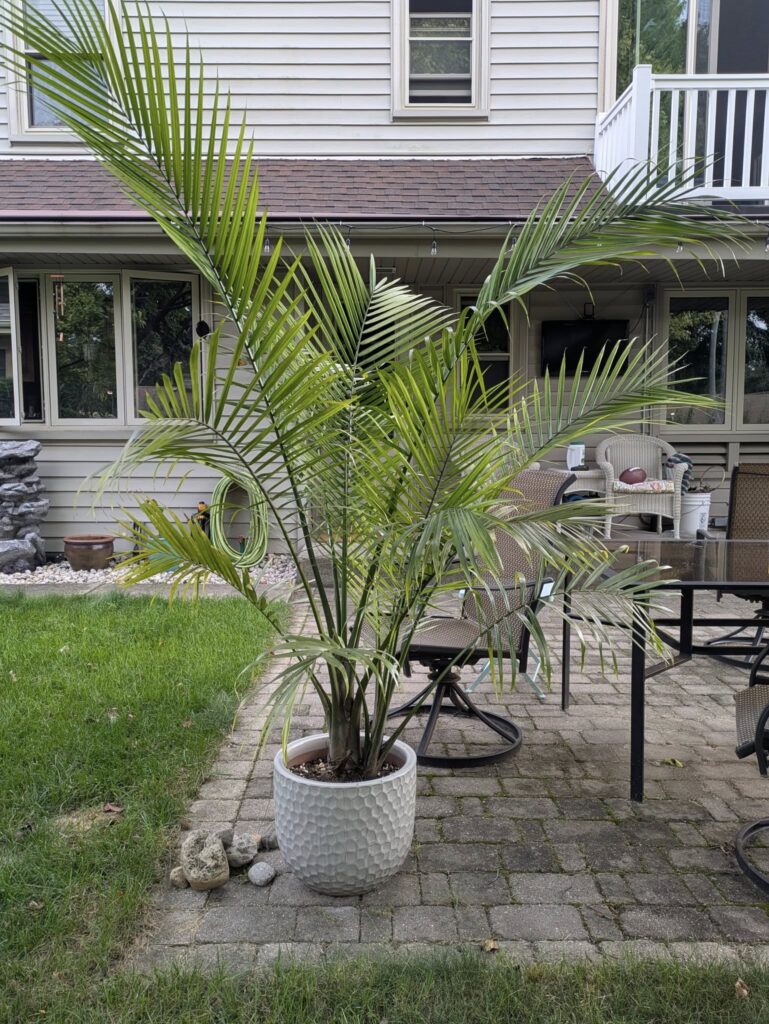
In cultivation — especially indoors — growth is far more modest. A potted majesty palm typically reaches 1.8 to 3 metres (6 to 10 feet) over several years, making it a manageable yet impressive houseplant.
What most people do not know is that Ravenea rivularis is listed as vulnerable on the IUCN Red List of Threatened Species. Habitat destruction in Madagascar has significantly reduced wild populations, which makes responsible cultivation all the more meaningful.
Physical Characteristics: What the Majesty Palm Looks Like
Understanding how a majesty palm looks — and how it grows — helps you spot problems early and appreciate its natural beauty.
Trunk
Young plants have little visible trunk. As the plant matures, a grey-green, ringed trunk develops, marked by the scars of old frond bases. These rings give the trunk a textured, sculptural quality that many growers find attractive in its own right.
Fronds
The fronds are arguably the star of the show. Each one is pinnate (feather-shaped), composed of many narrow, sword-like leaflets arranged along a central rachis. A mature frond can reach 1.5 to 2 metres in length.
The fronds are a rich, deep green — slightly glossy on the upper surface. They arch gracefully outward and downward from the crown, creating the characteristic fountain silhouette that distinguishes this palm.
Growth Habit
Majesty palms are single-trunked, meaning they do not produce offshoots or clumping stems the way some other palms do. Growth is from the central terminal bud — the “heart” of the palm. Damage to this bud is fatal, which is why handling should always be done with care.
In ideal conditions, a healthy majesty palm produces 2 to 5 new fronds per year indoors, and significantly more when grown outdoors in a warm climate.
Ideal Growing Conditions for the Majesty Palm
Getting the conditions right is the single most important factor in majesty palm care. This is a plant that originated near tropical riverbeds — it evolved in warmth, moisture, and filtered sunlight.
Light Requirements
Light is non-negotiable for the majesty palm. This is one of the most common misunderstandings. Many growers assume it is a low-light palm because it is sold as an indoor plant. It is not.
The majesty palm thrives in bright, indirect light. In a home or office, this means placing it near a south- or east-facing window where it receives several hours of bright, filtered sunlight each day.
- Outdoors: Full sun to partial shade is ideal. In tropical or subtropical climates (USDA Hardiness Zones 9–11), it can handle direct sun once established.
- Indoors: Avoid placing it in deep shade. Low light leads to pale fronds, slow growth, and a weakened plant that becomes highly susceptible to pests.
If natural light is limited, supplemental grow lights can make a significant difference. A full-spectrum LED grow light positioned 30–60 cm above the plant for 10–12 hours daily can substitute reasonably well.
Temperature
The majesty palm is a warm-climate plant and does not tolerate cold well.
- Ideal range: 18°C to 27°C (65°F to 80°F)
- Minimum temperature: 10°C (50°F) — below this, growth slows dramatically and cold injury can occur
- Never expose it to frost — even a light frost can damage fronds and kill the terminal bud
Outdoors, it is best suited to USDA zones 9b to 11. In cooler climates, it must be grown in a container that can be moved indoors during winter.
Humidity
Here is something worth saying directly: majesty palms love humidity. This is where many indoor growers fall short.
The natural riverbank habitat of Ravenea rivularis is highly humid. In the typical home, especially in winter when heating systems dry out the air, humidity levels drop well below what this palm prefers.
Aim for relative humidity of 50% or higher. Strategies to achieve this include:
- Placing a humidifier near the plant
- Setting the pot on a pebble tray filled with water (ensure the base of the pot sits above the water level)
- Grouping it with other tropical houseplants to create a more humid microclimate
- Misting the fronds lightly — though this alone is usually insufficient
Brown, crispy frond tips are often the first sign that humidity is too low. Address this early rather than waiting until significant browning has occurred.
Watering the Majesty Palm: Finding the Balance
Watering is where most growers go wrong — in both directions.
The majesty palm evolved beside rivers, so it does not tolerate drought well. But it also does not want to sit in waterlogged soil, which causes root rot.
The goal is consistently moist soil that is never sodden.
How Often to Water
There is no single universal answer, because it depends on pot size, soil type, light levels, and season. A better approach is to check the soil rather than follow a rigid schedule.
Water when the top 2–3 cm (about 1 inch) of soil feels dry to the touch. In warm, sunny conditions during the growing season (spring and summer), this might mean watering every 5–7 days. In winter, this may stretch to 10–14 days.
Water Quality
This matters more than most people realise. Majesty palms are sensitive to fluoride and chlorine, which are commonly found in municipal tap water. Over time, these chemicals can cause frond tip burn — the browning of leaf tips that is so often misattributed to humidity alone.
Whenever possible, use:
- Filtered water
- Rainwater (an excellent choice)
- Distilled water
If tap water is all you have, let it sit uncovered overnight before using it. This allows much of the chlorine to dissipate.
Signs of Overwatering vs. Underwatering
| Symptom | Likely Cause |
| Yellow lower fronds, mushy stem base | Overwatering / root rot |
| Dry, crispy frond tips | Underwatering or low humidity |
| Wilting fronds, dry soil | Underwatering |
| Pale, yellowing new growth | Possible overwatering or nutrient deficiency |
Root rot is the leading killer of potted majesty palms. If the soil stays wet for extended periods and the lower stem feels soft or smells musty, act quickly: remove the plant from its pot, trim any black or brown roots, allow the root ball to dry slightly, and repot in fresh, well-draining soil.
Soil and Potting: Getting the Foundation Right
The right soil makes water management far easier.
Majesty palms need a well-draining, slightly acidic growing medium. A commercial palm potting mix is a good starting point. You can also create your own by combining:
- 2 parts standard potting soil
- 1 part coarse perlite or pumice (for drainage)
- 1 part coarse sand
Avoid using heavy, clay-based soils or mixes designed for cacti (too dry). The goal is a medium that holds some moisture but drains freely so roots never sit in standing water.
Pot Selection
Always choose a pot with drainage holes — this is not optional. A pot without drainage will always lead to root rot, regardless of how carefully you water.
Terracotta pots are an excellent choice for majesty palms because they are porous and allow excess moisture to evaporate through the pot walls. Plastic pots retain moisture longer, which can work in dry, hot environments but requires more careful watering in cooler settings.
Do not over-pot. A pot that is too large holds more soil than the roots can absorb, leading to prolonged moisture and, ultimately, root rot. When repotting, move up only one pot size at a time — typically 5 cm (2 inches) larger in diameter.
Fertilising the Majesty Palm
In its natural habitat, the majesty palm grows in nutrient-rich, alluvial soils deposited by rivers. In a pot, nutrients are limited and must be replenished regularly.
Feed your majesty palm with a balanced, slow-release palm fertiliser during the active growing season (spring through summer). Look for a fertiliser with a ratio such as 8-2-12 or similar, formulated specifically for palms, which includes magnesium and manganese — two micronutrients that palms commonly become deficient in.
Frequency
- Spring and summer: Feed every 4–6 weeks with a liquid palm fertiliser, or apply a slow-release granular fertiliser once at the start of the season
- Autumn and winter: Reduce or stop feeding entirely — the plant’s growth slows and it cannot absorb nutrients efficiently
Avoid over-fertilising. Excess fertiliser salts accumulate in the soil and can burn roots and frond tips. If you notice crusty white deposits on the soil surface, flush the soil thoroughly with water to leach out excess salts.
Magnesium and Manganese Deficiency
These are worth mentioning separately because they are so common in container-grown palms.
- Magnesium deficiency presents as yellowing of the older (lower) fronds, often with a distinctive yellow band along the margins while the centre remains green.
- Manganese deficiency (also called “frizzle top”) causes new growth to emerge stunted, narrow, and necrotic — it looks withered before it even fully opens.
Both can be treated with targeted supplementation. Epsom salt (magnesium sulphate) dissolved in water and applied as a soil drench or foliar spray can correct magnesium deficiency. Manganese deficiency requires a manganese sulphate application.
Repotting the Majesty Palm
Majesty palms grow slowly, so they do not need frequent repotting. Plan to repot every 2–3 years, or when you notice roots growing out of the drainage holes or circling visibly at the soil surface.
The best time to repot is spring, as the plant enters its active growing period and recovers more quickly from the disturbance.
When repotting:
- Water the plant thoroughly 24 hours before repotting — a hydrated plant handles the stress better
- Gently ease the root ball out of the pot, supporting the base of the stem
- Shake off some of the old soil and inspect roots, trimming any that are dead or circling
- Place in the new pot with fresh palm mix and firm gently around the roots
- Water well and keep out of direct sun for 1–2 weeks while it settles
Avoid disturbing the roots more than necessary. Majesty palms are moderately sensitive to root disturbance, and excessive handling can set growth back significantly.
Common Pests and Diseases (Problems)
No plant guide is complete without addressing the problems that growers actually face. Majesty palms are susceptible to several common pests and diseases, particularly when conditions are suboptimal.
Spider Mites
This is the most common pest of indoor majesty palms, particularly in dry conditions. Spider mites are tiny arachnids — barely visible to the naked eye — that feed on plant cells, causing a characteristic stippled, faded appearance on fronds.
Look for fine webbing on the undersides of fronds as a diagnostic clue.
Treatment: Increase humidity immediately (spider mites thrive in dry air), then treat with:
- Neem oil spray (diluted, applied to all frond surfaces)
- Insecticidal soap
- A strong jet of water to dislodge mites physically
Repeat treatments every 5–7 days for at least three cycles to break the egg-to-adult lifecycle.
Scale Insects
Scale insects appear as small, brown, waxy bumps on fronds and stems. They feed by piercing plant tissue and extracting sap, weakening the plant over time.
Treatment: Remove visible scale by hand using a cotton swab dipped in rubbing alcohol, then apply neem oil or horticultural oil spray. Systemic insecticides can be used in severe infestations.
Mealybugs
Mealybugs are soft-bodied, white, cottony insects that cluster in leaf axils and along frond midribs. They excrete honeydew, which can lead to secondary sooty mould fungal growth.
Treatment: Rubbing alcohol on a cotton swab, followed by repeated neem oil or insecticidal soap applications.
Root Rot (Phytophthora and Pythium species)
Root rot is a fungal/oomycete disease caused by overwatering and poor drainage. Symptoms include yellowing fronds, a soft or discoloured stem base, and a musty smell from the soil.
Prevention is far better than treatment. Ensure excellent drainage, avoid overwatering, and never let the pot sit in standing water. Once root rot is established, the plant must be repotted immediately with affected roots removed and the remaining roots treated with a fungicide.
Leaf Spot Diseases
Various fungal and bacterial pathogens can cause dark spots, streaks, or lesions on fronds. These are often associated with overwatering, poor air circulation, or excessive moisture on the foliage.
Treatment: Remove affected fronds, improve air circulation, and apply a copper-based fungicide if the problem persists.
Pruning and Maintenance
Pruning a majesty palm is straightforward, but there are a few critical rules to follow.
Only remove fronds that are fully dead or dying. Do not prune green or even partially yellow fronds — green fronds are still photosynthesising and contributing to the plant’s energy reserves. Removing healthy fronds stresses the plant unnecessarily.
When a frond is fully brown and dry, cut it cleanly at the base using sharp, sterile pruning shears. Always sterilise cutting tools with rubbing alcohol before use to prevent disease transmission.
Never cut the top or central bud of a majesty palm. This is the single growing point of the plant. Removing it kills the palm immediately and irreversibly.
Growing Majesty Palm Outdoors
In warm climates (USDA Zones 9b–11, or equivalent tropical and subtropical regions), the majesty palm makes a stunning landscape plant.
Outdoor planting tips:
- Choose a location with full sun to partial shade — at least 4–6 hours of direct sun per day promotes vigorous growth
- Plant in well-drained soil enriched with organic matter; avoid low-lying areas where water pools
- Water regularly during the establishment period (first 1–2 years), then reduce frequency as the tree becomes established
- Fertilise with a palm-specific slow-release granular fertiliser three times per year (spring, summer, and early autumn)
- Mulch around the base to retain moisture and regulate soil temperature, keeping mulch away from direct contact with the trunk
In suitable climates, outdoor majesty palms grow significantly faster than their indoor counterparts and can reach impressive heights within a decade.
Majesty Palm as an Indoor Plant: Honest Expectations
I want to be candid here, because I think honesty serves growers better than optimism.
The majesty palm is not the easiest indoor plant. It has genuine needs — ample light, high humidity, consistent moisture, good drainage — that are difficult to meet fully in many homes. It is not a “set it and forget it” plant.
That said, millions of people grow it successfully indoors with beautiful results. The key is understanding the plant’s needs, meeting them as closely as possible, and adjusting when something goes wrong.
Realistic expectations for indoor growing:
- Growth will be slow — typically 1–3 new fronds per year in suboptimal indoor conditions
- Some lower frond yellowing is normal as older fronds age out
- Frond tip browning is common and is usually manageable with better humidity and water quality, not a sign of inevitable decline
- The plant can live for decades with appropriate care — some indoor specimens are 10–20 years old
Do not be discouraged by slow growth or minor issues. The majesty palm rewards patience and attentive care with a beauty that few other houseplants can match.
Propagation: Can You Grow Majesty Palm from Seed?
The majesty palm is propagated from seed — there is no other practical method. It does not produce offsets or suckers that can be divided, unlike many other palms.
Seeds are occasionally available from specialist palm nurseries or online suppliers. Propagation is slow and requires specific conditions:
- Fresh seeds germinate best — palm seeds lose viability quickly, so use seeds that are as fresh as possible
- Soak seeds in warm water for 24–48 hours before planting
- Sow in a warm, moist medium (such as peat moss and perlite) at a soil temperature of 27–32°C (80–90°F)
- Germination can take 1–6 months — patience is essential
- Maintain consistent moisture and warmth throughout the germination period
For most home growers, purchasing a nursery-grown plant is far more practical. But if you enjoy the challenge, germinating majesty palm from seed is a deeply rewarding project.
Majesty Palm Varieties and Related Species
While Ravenea rivularis is by far the most commonly cultivated species, the genus Ravenea includes approximately 20 species, all native to Madagascar or the Comoros Islands.
A few worth knowing:
- Ravenea glauca: A smaller species with blue-green fronds, highly sought after by palm collectors
- Ravenea hildebrandtii: A slender, graceful palm suited to subtropical gardens
- Ravenea louvelii: A rare, critically endangered species found only in a small area of Madagascar
Within Ravenea rivularis itself, there are no widely recognised cultivars, though plants do show some variation in frond colour intensity and growth rate.
Environmental and Conservation Significance
It is easy to buy a majesty palm at a garden centre without thinking about where it comes from. But the story behind this plant carries weight.
Wild populations of Ravenea rivularis are declining. The primary threat is habitat destruction — Madagascar has lost an estimated 90% of its original forests, and the riparian habitats where this palm grows are particularly vulnerable to agriculture and development.
When purchasing a majesty palm, buy from reputable nurseries that grow their stock from seeds rather than wild-harvesting. Ask questions. Responsible horticulture makes a difference.
Growing this plant thoughtfully — and helping it thrive — is in its own small way a form of appreciation for a species under pressure in the wild.
Quick-Reference Care Summary
| Care Factor | Requirement |
| Light | Bright, indirect light; 4–6 hours daily minimum |
| Temperature | 18–27°C (65–80°F); no frost tolerance |
| Humidity | 50%+ preferred |
| Watering | Consistently moist; never waterlogged |
| Soil | Well-draining palm mix, slightly acidic |
| Fertiliser | Palm fertiliser, spring–summer only |
| Repotting | Every 2–3 years, in spring |
| Common Pests | Spider mites, scale, mealybugs |
| USDA Outdoor Zone | 9b–11 |
| Mature Height (outdoor) | Up to 30–40 metres |
| Mature Height (indoor) | 1.8–3 metres |
Frequently Asked Questions About Majesty Palm
Why are my majesty palm leaves turning yellow? Yellowing leaves can result from overwatering, underwatering, low light, nutrient deficiency (especially magnesium), or natural ageing of older fronds. Check soil moisture first, then assess light levels and feeding.
How fast does a majesty palm grow? Indoors, growth is slow — roughly 30–60 cm (1–2 feet) per year in good conditions. Outdoors in a warm climate with full sun, fertilisation, and regular water, growth is considerably faster.
Can majesty palms survive indoors? Yes, but they need bright light, adequate humidity, and consistent care. They are not low-maintenance houseplants, but they are manageable with the right approach.
Is the majesty palm toxic to pets? Good news for pet owners: the majesty palm is considered non-toxic to cats and dogs according to the ASPCA. It is a pet-safe plant choice.
Why is my majesty palm not growing new fronds? Slow or absent new growth is almost always a light problem indoors. Move the plant closer to a window or supplement with grow lights. Nutrient deficiency and pot-bound roots can also slow new growth.
Can I put my majesty palm outside in summer? Yes — in fact, a summer outdoors in a sheltered, bright spot can do wonders for a majesty palm. Move it outside once temperatures reliably stay above 15°C (60°F) and avoid exposing it to sudden direct sun if it has been growing indoors. Transition it gradually over 1–2 weeks.
Suggested For You:
20 Different Types of Palm Trees: Identification, Features, and Care
Weeping Cherry Blossom Tree: Varieties, and Care Tips for a Stunning Landscape Feature
Understanding Cherry Blossom Tree: Types, History and Full Growing Details
The Japanese Black Pine Bonsai (Pinus thunbergii): History, Styling, and Growth Requirements
The Japanese White Pine (Pinus parviflora): History, Features and Growth Requirements
Coconut Tree vs Palm Tree: Differences, Similarities, and Everything You Need to Know
Final Thoughts
A well-cared-for majesty palm is more than a houseplant or a garden feature. It is a living connection to one of the world’s most biodiverse islands. It is a reminder that nature’s architecture — those sweeping, arching fronds — is something no interior designer can fully replicate.
Yes, it asks more of you than a pothos or a snake plant. It wants good light. It wants moisture in the air. It wants clean water and well-drained soil and a little attention each week.
But give it those things, and it gives back in abundance. There is a reason people return to the majesty palm again and again — through failed attempts and fresh starts, through brown tips and new fronds — because the reward is simply that good.
Start with the right conditions, watch for the early signs of trouble, and adjust as you learn the plant. That is the essence of growing any great palm — and the majesty palm more than any other deserves the patience.
References
The following peer-reviewed and institutional academic sources provide additional in-depth information on majesty palm cultivation, palm ecology, and related topics:
- University of Florida IFAS Extension — Palm Production and Landscape Management https://edis.ifas.ufl.edu/topic_palms
- Clemson University Cooperative Extension — Palms for South Carolina https://hgic.clemson.edu/factsheet/palms/
- North Carolina State University Extension — Ravenea rivularis Plant Profile https://plants.ces.ncsu.edu/plants/ravenea-rivularis/
- University of Hawaii at Manoa — Cooperative Extension Service: Tropical Ornamental Palms https://www.ctahr.hawaii.edu/site/research.aspx
- University of California Agriculture and Natural Resources — Integrated Pest Management: Palm Pests and Diseases https://ipm.ucanr.edu/PMG/PESTNOTES/pn74148.html

Tim M Dave is a gardening expert with a passion for houseplants, particularly cacti and succulents. With a degree in plant biology from the University of California, Berkeley, he has vast experience in gardening. Over the years, he has cultivated a vast collection of desert plants and learned a great deal about how to grow and care for these unique companions.