25 Stunning Types of Magnolia Trees: Size, Hardiness, and Growing Conditions
Magnolias are among the oldest flowering plants on Earth. Records suggest they existed over 95 million years ago — long before bees evolved. Their flowers were designed to attract beetles instead.
Today, there are over 200 recognized species in the Magnoliaceae family. They range from compact shrubs to towering trees. Some are evergreen; others are deciduous. Some bloom in late winter; others wait until early summer.
What unites them all is that unmistakable beauty — those wide, waxy petals in shades of white, pink, purple, and cream.
Whether you are planning a garden or simply exploring the world of ornamental trees, this guide covers 25 popular types of magnolia trees — their unique features, growth habits, and ideal growing conditions.
Different Types of Magnolia Trees
Let’s explore different magnolia varieties:
1. Southern Magnolia (Magnolia grandiflora)
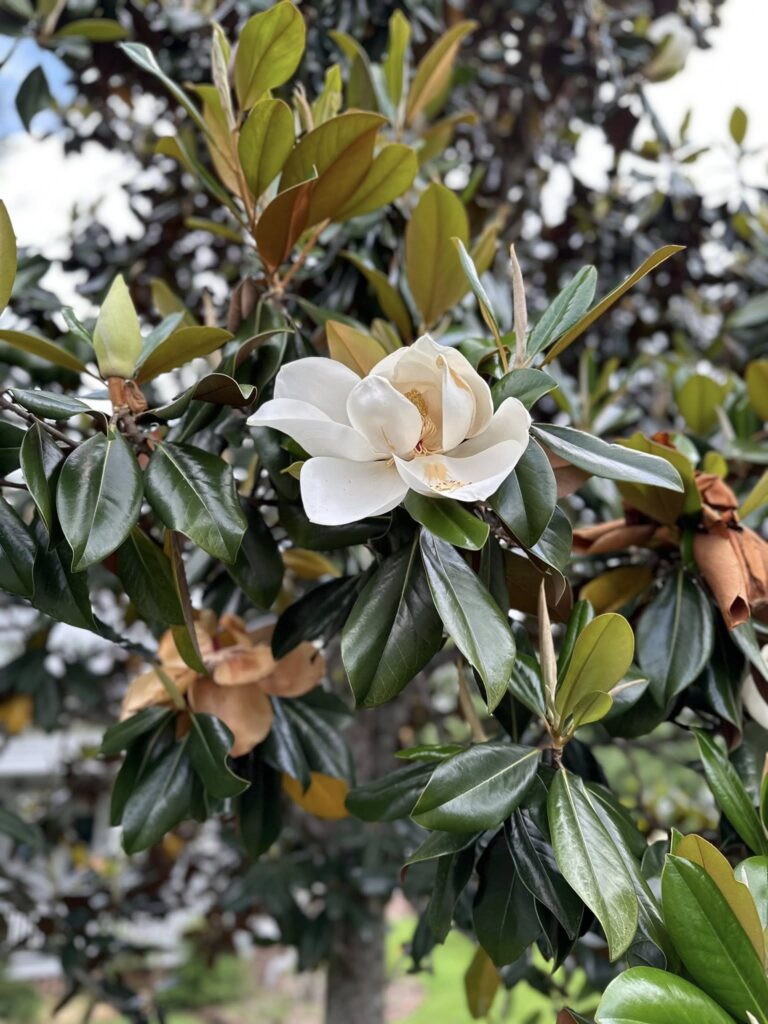
The Southern Magnolia is arguably the most iconic magnolia tree in the world. Native to the southeastern United States, it is a large evergreen tree that can grow up to 80 feet tall.
Its flowers are creamy white, often reaching 12 inches in diameter, and release a powerful lemon-like fragrance. The leaves are thick, glossy, and dark green on top — with a rusty-brown underside that adds texture to the tree even when it is not in bloom.
It thrives in USDA hardiness zones 7 to 9 and prefers full sun with well-drained, slightly acidic soil.
2. Star Magnolia (Magnolia stellata)
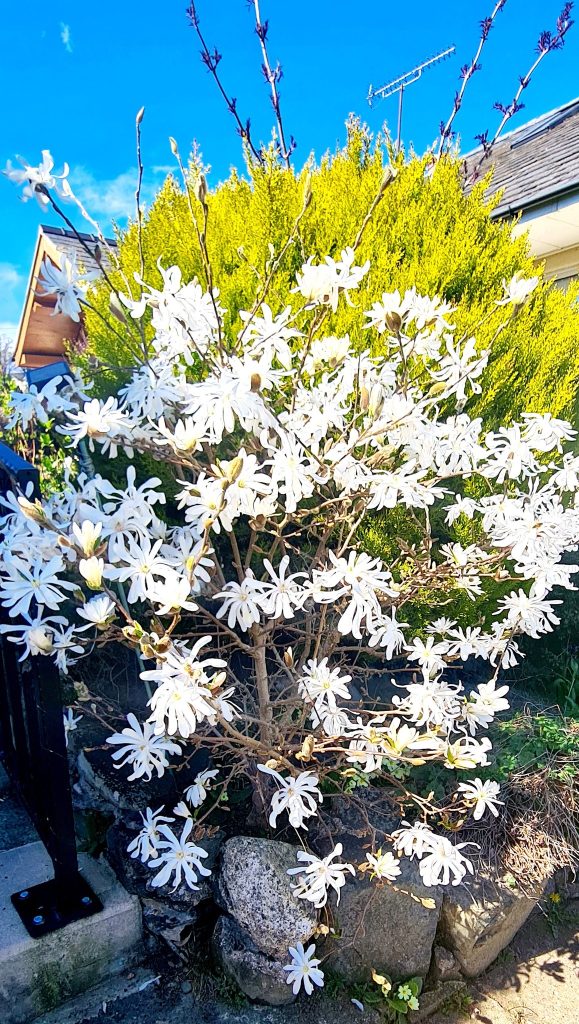
The Star Magnolia is a compact, slow-growing tree that rarely exceeds 15 to 20 feet. It is one of the earliest bloomers — often flowering in late February or early March before its leaves appear.
The flowers have 12 to 18 narrow, strap-like petals that spread outward in a star shape, usually white or soft pink. This makes it a favourite for smaller gardens and urban landscapes.
It does well in zones 4 to 8, making it one of the more cold-hardy magnolia types.
3. Saucer Magnolia (Magnolia × soulangeana)
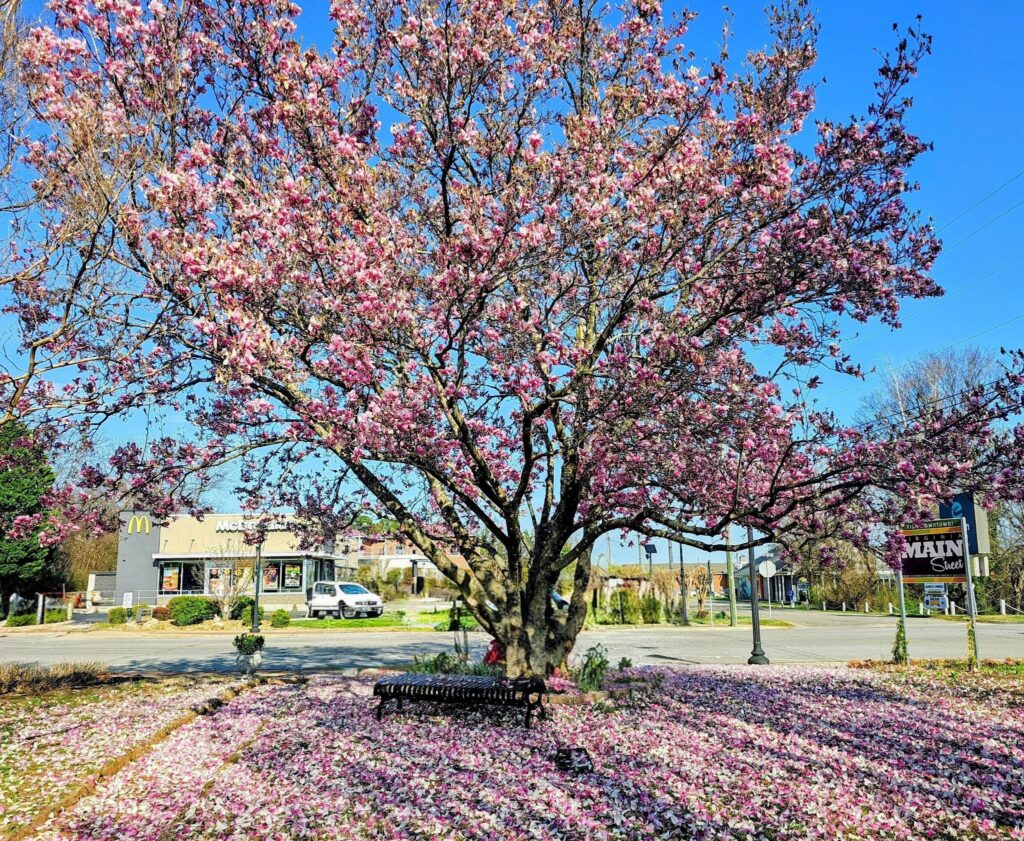
The Saucer Magnolia is a hybrid between M. denudata and M. liliiflora. It is one of the most widely planted ornamental trees in temperate regions worldwide.
Its large, cup-shaped blooms — hence the name — come in shades of white, pink, and deep purple-pink. The tree typically grows 20 to 30 feet tall and blooms before the leaves emerge in early spring.
One downside: its early flowers are vulnerable to late frosts. Still, few sights compare to a Saucer Magnolia in full bloom. It thrives in zones 4 to 9.
4. Sweetbay Magnolia (Magnolia virginiana)
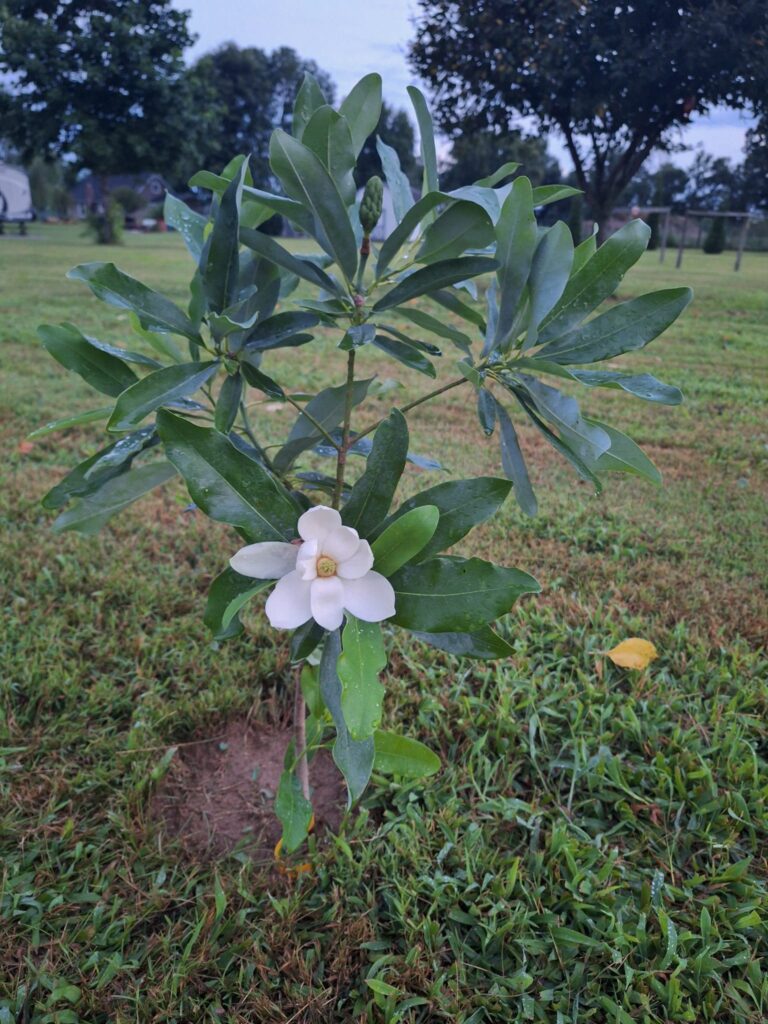
The Sweetbay Magnolia is a versatile, semi-evergreen tree native to the eastern United States. In warmer climates it remains evergreen; in cooler areas, it sheds its leaves.
The flowers are creamy white with a pleasant vanilla-lemon scent, typically appearing from late spring through summer. The tree reaches 10 to 35 feet, depending on the climate.
It is one of the most adaptable magnolias — tolerating wet soils and even occasional flooding. Ideal for zones 5 to 10.
5. Japanese Magnolia (Magnolia kobus)
The Japanese Magnolia originates from Japan and Korea. It is a medium to large deciduous tree, growing up to 30 feet, with white or faintly pink flowers that appear in early spring.
The blooms are smaller than those of the Saucer Magnolia but are produced in impressive numbers on mature trees. It is a parent species for several popular hybrids, including the Loebner Magnolia.
It’s best suited for zones 5 to 8.
6. Bigleaf Magnolia (Magnolia macrophylla)
As the name suggests, the Bigleaf Magnolia has the largest leaves of any native North American tree — sometimes measuring up to 32 inches long and 12 inches wide.
The flowers are equally dramatic, reaching up to 16 inches across, making them among the largest blooms of any temperate tree.
It is a deciduous tree growing 30 to 50 feet tall, with creamy white flowers that have a light fragrance.
It prefers zones 5 to 8 and sheltered spots, as its large leaves can be damaged by wind.
7. Cucumber Tree (Magnolia acuminata)
The Cucumber Tree is one of the hardiest and tallest magnolia species, native to eastern North America. It can grow up to 90 feet tall, making it more of a shade tree than a flowering ornamental.
Its flowers are greenish-yellow to creamy white, and less showy than other magnolias. However, its cone-like fruit, which resembles a cucumber when young, gives it a unique appeal. It is commonly used in hybrid breeding programs to add cold hardiness.
This variety is suitable for zones 3 to 8.
8. Loebner Magnolia (Magnolia × loebneri)
The Loebner Magnolia is a hybrid of M. kobus and M. stellata. It combines the cold hardiness of both parents with elegant, fragrant flowers.
The blooms are white to pale pink with narrow petals, similar to the Star Magnolia but larger. Trees typically grow 15 to 30 feet and are excellent for smaller residential gardens.
It is one of the most cold-tolerant magnolias, thriving in zones 4 to 8.
9. Lily Magnolia (Magnolia liliiflora)
Native to China, the Lily Magnolia is a large shrub or small tree, rarely exceeding 12 feet. Its flowers are deep purple-pink on the outside and white inside — they are shaped like lily blooms, giving the tree its name.
It blooms in mid to late spring, which means its flowers are less susceptible to frost damage compared to early-blooming magnolias.
The Lily Magnolia is a parent of many popular Little Girl hybrid cultivars. It grows best in zones 5 to 8.
10. Anise Magnolia (Magnolia salicifolia)
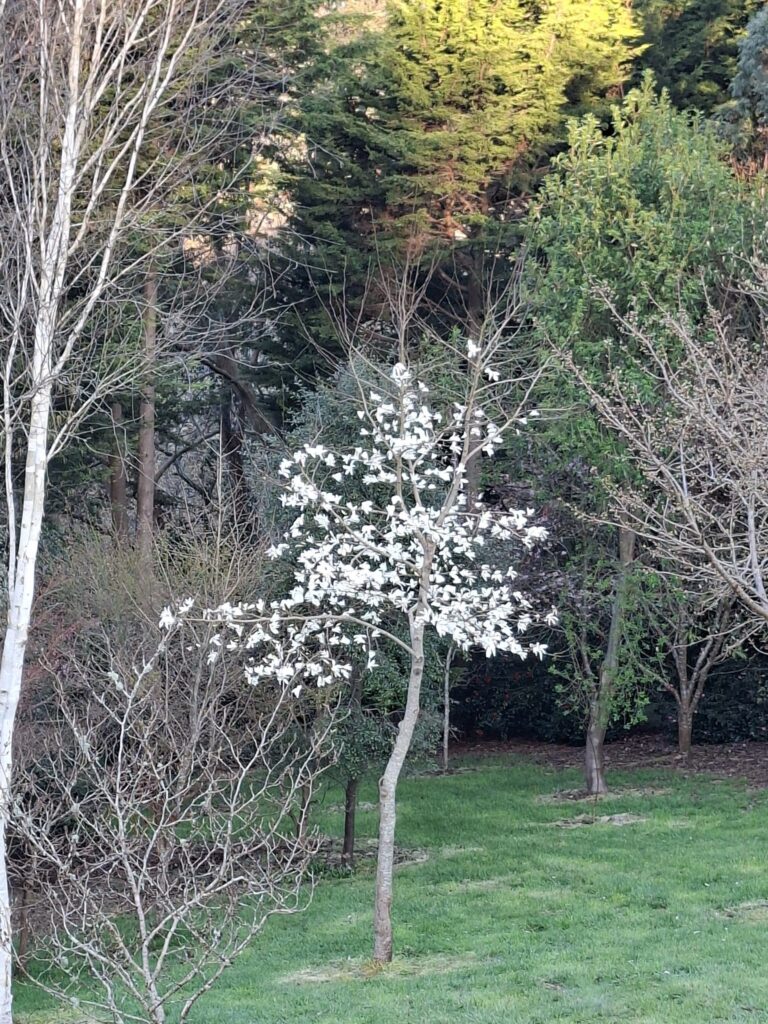
The Anise Magnolia comes from Japan and is known for its willow-like leaves and a pleasant anise fragrance when the bark or leaves are crushed.
The flowers are white and appear in early spring before the leaves. The tree is narrowly upright, growing up to 30 feet, which makes it ideal for tight planting spaces.
It performs well in zones 5 to 8 and prefers moist, well-drained acidic soil.
11. Umbrella Magnolia (Magnolia tripetala)
The Umbrella Magnolia is a native North American deciduous tree, growing 15 to 30 feet. Its large leaves — up to 24 inches long — radiate from branch tips in a pattern that resembles the ribs of an umbrella.
Its flowers are creamy white and strongly scented, though some find the fragrance unpleasant. The cone-like fruit turns bright red in late summer, offering ornamental interest.
Umbrella magnolia is best for zones 5 to 8 in naturalized or woodland gardens.
12. Fraser Magnolia (Magnolia fraseri)
The Fraser Magnolia is another native North American species, found in the Appalachian Mountains. It grows 20 to 40 feet tall and bears large white flowers up to 10 inches wide in late spring.
One distinguishing feature is its ear-like lobes at the base of each leaf, which set it apart from other magnolias at a glance. It prefers zones 5 to 8 and woodland conditions with partial shade.
13. Oyama Magnolia (Magnolia sieboldii)
The Oyama Magnolia is a elegant, late-blooming species from East Asia. Unlike most magnolias, it blooms after the leaves have fully emerged — typically from late spring through summer.
The flowers are nodding, white, and cup-shaped, with a striking crimson staminal cone at the centre. They are smaller than many magnolia blooms but are produced over a long period.
The tree grows 10 to 15 feet and is ideal for zones 6 to 8.
14. Yulan Magnolia (Magnolia denudata)
The Yulan Magnolia has been cultivated in China for over 1,000 years. It holds great cultural significance and is the official city flower of Shanghai.
The flowers are pure white and cup-shaped, appearing before the leaves in early spring. They have a soft, sweet fragrance. The tree grows 30 to 40 feet tall and blooms profusely when mature.
Hardy in zones 6 to 9, it is also an important parent species in the breeding of Saucer Magnolia.
15. Wilson’s Magnolia (Magnolia wilsonii)
Wilson’s Magnolia is a graceful, multi-stemmed shrub or small tree from western China, reaching up to 20 feet. Its flowers are white, pendulous, and saucer-shaped, with a central boss of red stamens that creates a striking contrast.
The blooms appear in late spring to early summer, after the leaves emerge. It prefers zones 7 to 9 and partial shade in hotter climates.
16. Japanese Big Leaf Magnolia (Magnolia obovata)
Also called the Whitebark Magnolia, this Japanese native is a large deciduous tree, growing up to 50 feet. Its leaves are enormous — up to 18 inches long — and its creamy white flowers are intensely fragrant.
The flowers appear after the leaves emerge in late spring and are followed by bright red cone-like fruit clusters. This variety is suited to zones 5 to 8.
17. Purple Lily Magnolia (Magnolia liliiflora ‘Nigra’)
A cultivar of the Lily Magnolia, ‘Nigra’ is prized for its deep wine-purple flowers that are more richly coloured than the species. The blooms appear in mid-spring and often continue sporadically into summer.
It grows as a dense, multi-stemmed shrub, reaching about 10 to 12 feet. It is widely used in borders and foundation plantings.
Purple lily magnolia thrives in zones 5 to 8.
18. Galaxy Magnolia (Magnolia ‘Galaxy’)
Galaxy is a popular hybrid magnolia developed by the U.S. National Arboretum, a cross between M. liliiflora ‘Nigra’ and M. sprengeri ‘Diva’.
It produces large, reddish-purple to pink flowers in mid-spring, after the risk of frost has passed. The tree grows in a single-trunk, pyramidal form, reaching 20 to 30 feet — well suited to street and specimen planting.
This type of magnolia is suitable for zones 5 to 9.
19. Ann Magnolia (Magnolia‘Ann’)
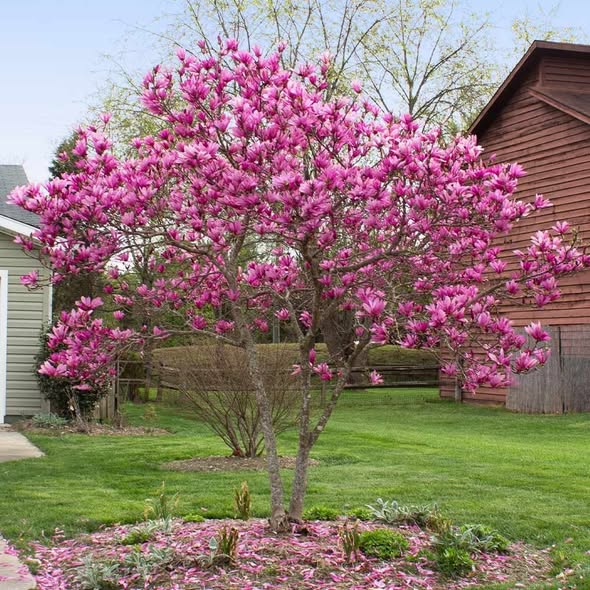
‘Ann’ is one of the Little Girl hybrids, developed by the U.S. National Arboretum in the 1950s and 1960s. It was bred specifically to bloom later in spring, reducing frost damage to its buds.
The flowers are reddish-purple on the outside, lighter inside, and the tree remains compact — usually 8 to 10 feet tall and wide.
It is one of the best magnolias for small gardens. It grows perfectly in zones 4 to 8.
20. Betty Magnolia (Magnolia ‘Betty’)
Another Little Girl hybrid, ‘Betty’ is known for its large, fragrant, deep reddish-purple flowers with up to 12 petals. It blooms in mid-spring and may rebloom lightly in summer.
The shrub-like form grows 10 to 15 feet, making it versatile for hedges, borders, or specimen planting. It is widely available in garden centres across the United States and Europe.
This variety is hardy in zones 4 to 8.
21. Jane Magnolia (Magnolia ‘Jane’)
‘Jane’ is perhaps the most popular of the Little Girl hybrids. It blooms in mid to late spring — one of the latest in the group — helping it avoid frost damage.
The flowers are red-purple outside and white-pink inside, with a light fragrance. The compact size (10 to 15 feet) and late bloom make it a reliable, low-maintenance choice for home gardens. It is suitable for zones 4 to 8.
22. Little Gem Magnolia (Magnolia grandiflora‘Little Gem’)
‘Little Gem’ is a dwarf cultivar of the Southern Magnolia, developed in North Carolina. It offers all the beauty of the species — glossy leaves, fragrant white flowers — in a much more manageable size of 15 to 20 feet.
Unlike many magnolias, it blooms as early as two years after planting, while the standard Southern Magnolia can take a decade. It can also be trained as a hedge or espalier.
This tree is ideal for zones 7 to 9.
23. Bracken’s Brown Beauty (Magnolia grandiflora ‘Bracken’s Brown Beauty’)
This cultivar is valued not just for its fragrant white flowers but also for the rich cinnamon-brown undersides of its leaves, which add colour and texture throughout the year.
It is more cold-hardy than the standard Southern Magnolia, performing well in zones 5 to 9. The tree grows 30 to 50 feet and has a dense, formal appearance that suits formal garden designs.
24. Edith Bogue Magnolia (Magnolia grandiflora ‘Edith Bogue’)
‘Edith Bogue’ is one of the most cold-hardy cultivars of Southern Magnolia, able to survive temperatures as low as -24°C (-11°F) under the right conditions.
Introduced in the 1950s after surviving harsh New Jersey winters, it grows in zones 6 to 9 — well north of the typical range for M. grandiflora. The flowers are large and pure white, and the tree maintains a narrow, upright form.
25. Merrill Magnolia (Magnolia × loebneri ‘Merrill’)
‘Merrill’ is one of the finest Loebner Magnolia cultivars, known for its prolific blooming even on young plants. The flowers are white, semi-double, and fragrant — appearing in early to mid-spring before the leaves.
The tree grows 20 to 25 feet in a rounded, spreading shape and is particularly cold-hardy, thriving in zones 3 to 8.
It is an excellent street tree and specimen plant, widely used in North American and European landscapes.
Quick Comparison Table
| Magnolia Type | Size | Bloom Time | USDA Zones |
| Southern Magnolia | Up to 80 ft | Spring–Summer | 7–9 |
| Star Magnolia | 15–20 ft | Late Winter/Early Spring | 4–8 |
| Saucer Magnolia | 20–30 ft | Early Spring | 4–9 |
| Sweetbay Magnolia | 10–35 ft | Late Spring–Summer | 5–10 |
| Japanese Magnolia | Up to 30 ft | Early Spring | 5–8 |
| Bigleaf Magnolia | 30–50 ft | Late Spring | 5–8 |
| Cucumber Tree | Up to 90 ft | Spring | 3–8 |
| Loebner Magnolia | 15–30 ft | Early Spring | 4–8 |
| Lily Magnolia | Up to 12 ft | Mid-Late Spring | 5–8 |
| Anise Magnolia | Up to 30 ft | Early Spring | 5–8 |
| Umbrella Magnolia | 15–30 ft | Late Spring | 5–8 |
| Fraser Magnolia | 20–40 ft | Late Spring | 5–8 |
| Oyama Magnolia | 10–15 ft | Late Spring–Summer | 6–8 |
| Yulan Magnolia | 30–40 ft | Early Spring | 6–9 |
| Wilson’s Magnolia | Up to 20 ft | Late Spring | 7–9 |
| Japanese Bigleaf | Up to 50 ft | Late Spring | 5–8 |
| Purple Lily Magnolia | 10–12 ft | Mid-Spring | 5–8 |
| Galaxy Magnolia | 20–30 ft | Mid-Spring | 5–9 |
| Ann Magnolia | 8–10 ft | Mid-Spring | 4–8 |
| Betty Magnolia | 10–15 ft | Mid-Spring | 4–8 |
| Jane Magnolia | 10–15 ft | Mid-Late Spring | 4–8 |
| Little Gem | 15–20 ft | Spring–Summer | 7–9 |
| Bracken’s Brown Beauty | 30–50 ft | Spring–Summer | 5–9 |
| Edith Bogue | Up to 50 ft | Spring–Summer | 6–9 |
| Merrill Magnolia | 20–25 ft | Early-Mid Spring | 3–8 |
How to Choose the Right Magnolia for Your Garden
With 25 options to consider, the choice can feel overwhelming. Here are a few practical questions to guide your decision:
What is your climate zone? Cold-hardy types like ‘Merrill’, Cucumber Tree, and ‘Ann’ work better in northern gardens. Southern Magnolia and Sweetbay prefer warmer regions.
How much space do you have? Small gardens benefit from compact types like Star Magnolia, Jane, or Little Gem. Large properties can accommodate the Bigleaf Magnolia or Cucumber Tree.
When do you want blooms? Star and Saucer Magnolias bloom very early in spring. Oyama Magnolia and Sweetbay Magnolia bloom much later, extending the season into summer.
Do you want evergreen or deciduous? Southern Magnolia, Sweetbay (in warm climates), and Little Gem are evergreen. Most other species are deciduous.
Are you worried about late frosts? The Little Girl hybrids — ‘Ann’, ‘Betty’, and ‘Jane’ — were specifically bred to bloom late enough to avoid frost damage.
General Care Tips for Magnolia Trees
Most magnolias are low-maintenance once established. Here are key care principles:
- Soil: Magnolias prefer moist, well-drained, slightly acidic soil (pH 5.5–6.5). They dislike waterlogged roots.
- Sunlight: Most prefer full sun but tolerate partial shade, especially in hotter climates.
- Watering: Young trees need regular watering during their first two to three years. Mature trees are relatively drought-tolerant.
- Pruning: Prune magnolias sparingly, ideally right after blooming. They do not regenerate well from heavy pruning.
- Fertilising: A slow-release, balanced fertiliser in early spring supports healthy growth without forcing excessive shoot growth.
- Mulching: Apply a 3 to 4 inch layer of organic mulch around the base to retain moisture and regulate soil temperature. Keep mulch away from the trunk.
Final Thoughts
Magnolias reward patience. Most take a few years to establish and bloom freely. But when they do — there is genuinely nothing else quite like it in a garden.
Whether you choose the towering grandeur of a Southern Magnolia, the delicate star-shaped blooms of M. stellata, or the compact reliability of a Little Girl hybrid, you are adding one of nature’s most extraordinary trees to your landscape.
Take your time selecting the right variety. The right magnolia, in the right spot, can last a lifetime — and then some.
References
- Clemson Cooperative Extension – Magnolias https://hgic.clemson.edu/factsheet/magnolia/
- NC State Extension – Magnolia grandiflora Plant Profile https://plants.ces.ncsu.edu/plants/magnolia-grandiflora/
- University of Florida IFAS Extension – Southern Magnolia (Magnolia grandiflora) https://edis.ifas.ufl.edu/publication/ST395
- University of Georgia Extension – Landscape Plants for Georgia https://extension.uga.edu/publications/detail.html?number=B987
- Penn State Extension – Landscape Trees and Shrubs https://extension.psu.edu/trees-and-shrubs

Tim M Dave is a gardening expert with a passion for houseplants, particularly cacti and succulents. With a degree in plant biology from the University of California, Berkeley, he has vast experience in gardening. Over the years, he has cultivated a vast collection of desert plants and learned a great deal about how to grow and care for these unique companions.