Understanding Kojo-no-mai (Prunus incisa ‘Kojo-no-mai’): History, Features, Problems, Care, and More
Not every beautiful thing needs to be large. The Kojo-no-mai is proof of that. This small, slow-growing ornamental cherry reaches perhaps four feet in a decade, twisting its branches into a graceful, irregular structure that looks ancient long before it actually is.
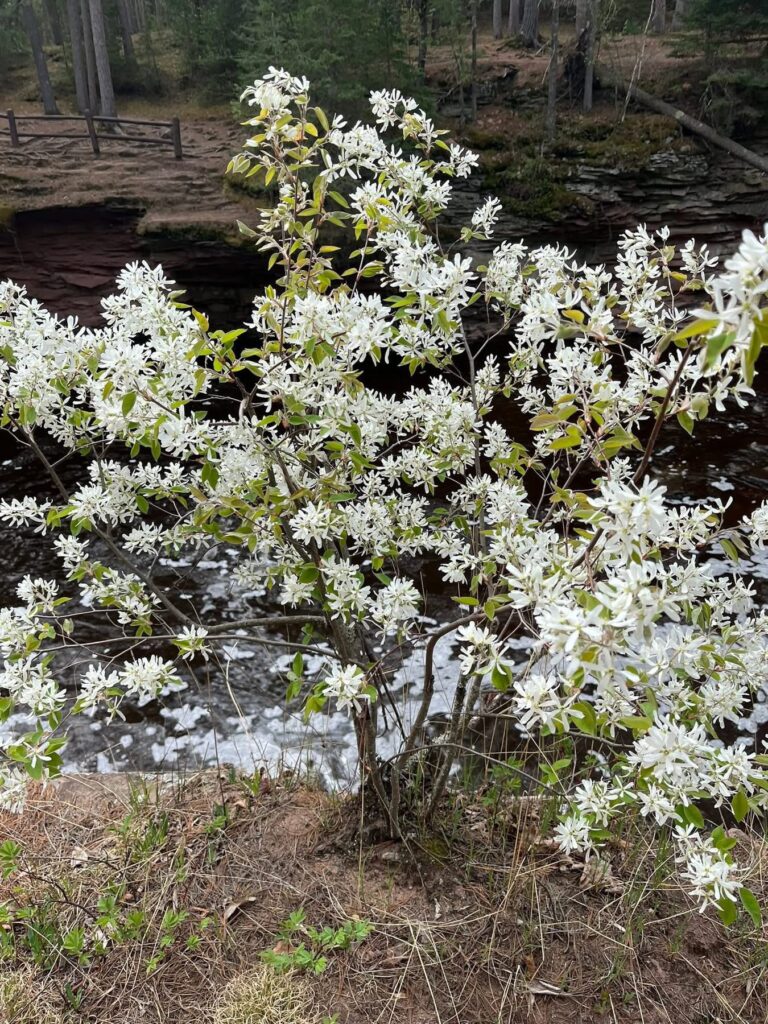
In early spring, before a single leaf appears, it covers those contorted branches with delicate white to pale pink blossoms so fine and so numerous that the whole plant seems to dissolve into a cloud of flower.
The first time I saw a well-grown Kojo-no-mai in a large container, I genuinely stopped walking. It was February. The garden around it was bare and grey. And this small tree — barely waist-high — was in full bloom, every twisted twig lined with tiny, exquisite flowers, the structure beneath them as beautiful as the blossoms themselves.
That combination of flower and form, at a scale that works in the smallest garden, is precisely what makes this plant one of the most sought-after ornamental cherries in cultivation.
What Is Kojo-no-mai?
Kojo-no-mai, Prunus incisa ‘Kojo-no-mai’, is a compact, slow-growing deciduous shrub or small tree selected from the Fuji Cherry species — Prunus incisa — which is native to the slopes of Mount Fuji and the surrounding mountain ranges of central Honshu, Japan.
The name “Kojo-no-mai” (胡蝶の舞) translates from Japanese as “butterfly dance” or “dance of the butterflies” — a poetic reference to the delicate, fluttering appearance of its pale blossoms, which move gently in the lightest breeze like wings in motion.
It is classified as a dwarf or compact ornamental cherry, a category that immediately separates it from the large-growing ornamental cherries most commonly associated with the genus. Where Prunus serrulata ‘Kanzan’ reaches 30 feet and Prunus sargentii can exceed 40 feet at maturity, Kojo-no-mai typically reaches 4 to 8 feet tall and wide over many years of slow, graceful growth.
The plant received the Royal Horticultural Society’s Award of Garden Merit — one of the highest endorsements in horticulture — confirming its exceptional and consistent performance across a range of garden settings. It is one of the very few ornamental cherries to earn this recognition for container and small garden use specifically.
Key Characteristics at a Glance
Mature Height: 4 to 8 feet (1.2 to 2.4 metres), with very slow growth over many years.
Mature Spread: 4 to 8 feet (1.2 to 2.4 metres), forming an irregular, broadly spreading mound.
Growth Rate: Slow — typically 4 to 8 inches per year. This is not a tree for impatient gardeners, but the slow growth is integral to the plant’s character.
Bloom Time: Very early spring — February to March in most temperate climates, making it one of the earliest-flowering ornamental cherries available.
Flower Colour: Pale blush-pink to white, deepening very slightly to soft pink at the base of the petals. Flower buds are a deeper pink before opening, providing a two-tone effect as the plant comes into bloom.
Flower Form: Single, five-petalled, small and delicate — approximately 0.5 to 0.75 inches in diameter. The flowers are carried singly or in pairs along the length of the branches before the leaves emerge.
Foliage: Small, finely serrated, oval to diamond-shaped leaves. Young foliage emerges with a bronze-red flush before maturing to dark green. Autumn colour is excellent — orange, red, and crimson tones that are vivid for the plant’s modest size.
Branch Structure: Distinctly twisting and zigzagging — the branches change direction at each node, creating the contorted, irregular framework that gives the plant its extraordinary winter silhouette.
USDA Hardiness Zones: 5 to 8, with some sources noting Zone 4b tolerance in sheltered positions.
Container Suitability: Exceptional. Kojo-no-mai is widely regarded as one of the best ornamental cherry trees for container cultivation, and it is commonly grown as a bonsai or patio specimen.
Origins and Botanical Context
Prunus incisa — the Fuji Cherry — grows naturally in the subalpine zones of central Japan, particularly on the volcanic slopes of Mount Fuji and in the Fuji Five Lakes region. It is one of the parent species of the Okame Cherry (Prunus incisa × campanulata), valued for its cold hardiness, early bloom time, and compact growth relative to many other Prunus species.
The cultivar ‘Kojo-no-mai’ was selected from this species for its unusually compact habit, its distinctly contorted branching, and its early and prolific flowering. It was introduced to Western horticulture in the second half of the 20th century and quickly established itself as a favourite among gardeners with limited space — particularly in the United Kingdom, where small garden culture and an appreciation for Japanese-influenced garden aesthetics made it a natural success.
Its bonsai suitability was recognised early. The twisting branch structure, the small leaves, the early flowers, and the slow growth all made it an ideal candidate for bonsai training — and it remains one of the most popular flowering trees used in outdoor bonsai and patio display work.
The species name incisa refers to the deeply incised, sharply toothed leaf margins — a botanical detail that distinguishes it from many other Prunus species with smoother-margined leaves.
Why Kojo-no-mai Is Exceptional
There are compact ornamental plants, and then there is Kojo-no-mai. Several qualities combine to make it genuinely exceptional rather than merely small.
It offers four distinct seasons of interest. Spring flowers before the leaves. Bronze young foliage. Summer green with small fruit. Brilliant autumn colour. And in winter — the bare, twisting, sculptural branch structure that is arguably the plant’s most beautiful state. Very few plants perform ornamentally in all four seasons at this level.
The branch structure is inherently artistic. The zigzagging, contorted habit is not a disease or deformity — it is a genetically stable characteristic that becomes more pronounced and more beautiful with age. A fifteen-year-old specimen has a branch framework of genuine sculptural quality, similar to aged bonsai material.
It is scale-appropriate for modern gardens. The trend toward smaller gardens, urban outdoor spaces, terraces, and rooftops has created enormous demand for plants that deliver ornamental impact at a human scale. Kojo-no-mai does precisely this — it is beautiful, complex, and seasonally interesting in a footprint of a few square feet.
It blooms exceptionally early. February and March flowers provide garden colour at a time when almost nothing else is in bloom. Combined with early bulbs and winter-flowering shrubs, a Kojo-no-mai anchors a compelling early-season planting scheme.
It ages magnificently. Unlike many garden plants that degrade with age, Kojo-no-mai becomes more beautiful over time. Older specimens have gnarled, complex branch frameworks of real character — plants that look as though they have a history, even in relatively young gardens.
Ideal Growing Conditions
Sunlight
Full sun to partial shade — Kojo-no-mai is more tolerant of partial shade than most ornamental cherries. In full sun (six or more hours daily), flowering is most prolific and autumn colour most vivid. In partial shade (three to five hours of direct sun), it still performs well and may benefit from some protection from the harshest afternoon sun in hotter climates.
This shade tolerance makes it genuinely useful in garden positions that would exclude most other ornamental cherries — north-facing borders (in the Northern Hemisphere), the shaded sides of courtyards, or partially sheltered positions under the dappled canopy of larger trees.
Soil
Prefers moist, well-drained, humus-rich, slightly acidic to neutral soil (pH 5.5 to 7.0). It performs well in loam, sandy loam, and well-structured clay loam. Like all Prunus species, it is intolerant of waterlogged or persistently wet soil.
In containers, use a quality, free-draining potting compost mixed with additional perlite or grit to ensure excellent drainage. Container-grown plants dry out more quickly than those in the ground and need more attentive watering, particularly during the growing season.
Water
Consistent moisture is important during establishment in the ground — typically the first one to two growing seasons. Once established, the plant has moderate drought tolerance.
For container-grown specimens, watering attentiveness is more critical. Containers can dry out rapidly in warm or windy conditions, and drought stress in summer directly affects the formation of flower buds for the following spring. During the growing season, check soil moisture regularly and water thoroughly when the top inch of compost feels dry.
In winter, container-grown specimens should be watered much less frequently but should never be allowed to dry out completely — the roots must not desiccate even during dormancy.
Climate
Hardy in USDA Zones 5 to 8. The species Prunus incisa is among the colder-hardier ornamental cherries, and ‘Kojo-no-mai’ reflects this — it tolerates winter temperatures of approximately -20°F (-29°C) in Zone 5.
Late frost damage to open flowers is a genuine risk given the very early bloom time. Flowers may be damaged or destroyed by hard late-winter frosts, but the plant itself is not threatened. New buds will not form until the following year, however, so a badly frost-damaged bloom means a lost season of flowers.
In colder gardens, a slightly sheltered position — near a wall, on a south-facing slope — helps protect early flowers without compromising the sun or drainage requirements.
Container Growing: The Full Guide
Container culture is where Kojo-no-mai truly excels, and it deserves detailed guidance.
Container selection: Choose a container that is proportionate — slightly larger than the root ball at planting, with room for one to two years of growth before repotting. Ensure generous drainage holes. Terracotta containers suit the aesthetic and have the added advantage of being porous, which reduces waterlogging risk, but they require more frequent watering in warm weather.
Compost: Use a good-quality, free-draining compost. A mixture of loam-based compost (such as John Innes No. 3 in the UK) with 20 to 30% added perlite or horticultural grit provides the drainage and structural stability that container-grown trees need.
Repotting: Repot every two to three years in early spring before growth resumes. At repotting, prune the roots lightly to prevent the plant from becoming pot-bound. Use fresh compost. Over time, a large, well-established container specimen may be maintained for many years in the same large pot with regular root pruning.
Feeding: Container plants exhaust available nutrients more quickly than ground-planted specimens. Apply a balanced slow-release fertiliser in spring and a low-nitrogen feed in late summer to support flower bud development for the following season. Avoid high-nitrogen feeds in late summer or autumn, which encourage soft growth vulnerable to frost damage.
Winter protection for containers: In Zone 5 and 6, container-grown specimens are more vulnerable to hard winter cold than those planted in the ground, because the roots have less soil insulation. Move containers to a sheltered position — against a wall, under an overhang, or into an unheated greenhouse — during the coldest weeks. Alternatively, wrap the pot in bubble wrap or hessian to insulate the root ball.
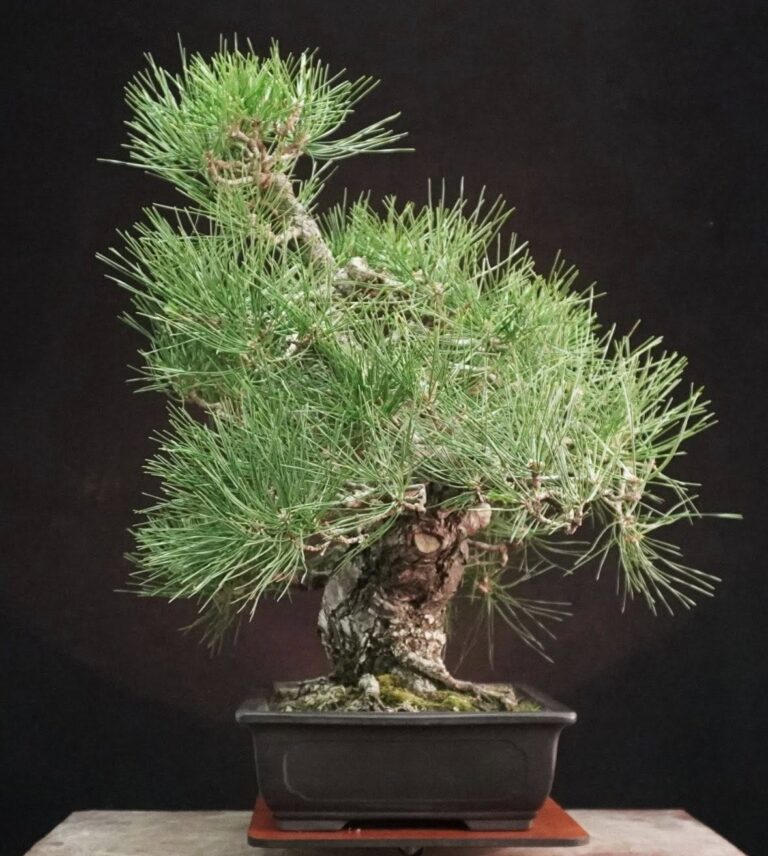
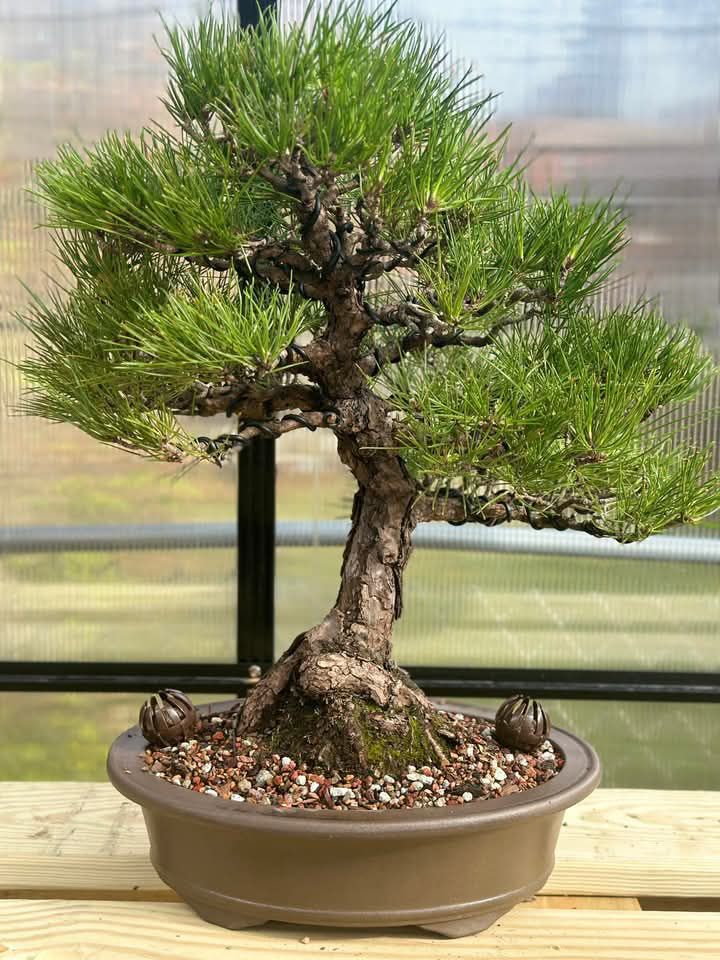
Bonsai cultivation: Kojo-no-mai is widely used as outdoor bonsai material. If training as bonsai, use bonsai-specific techniques for root pruning, branch wiring, and pot selection. The plant’s naturally twisting habit often reduces the need for heavy wiring — the inherent structure is already aesthetically interesting without aggressive intervention.
Planting in the Ground
Best planting time: Early spring before growth resumes, or autumn after leaf drop. Container-grown stock can be planted throughout the growing season with adequate irrigation.
Hole preparation: Dig a hole two to three times wider than the root ball and only as deep as the root ball height. The root flare must sit at or very slightly above the surrounding soil grade.
Backfill: Use original excavated soil, well-mixed with organic matter if the soil is particularly poor or heavy. Unlike larger trees, Kojo-no-mai benefits from modest soil improvement at planting in poor conditions, though excessive enrichment of the planting hole is still best avoided.
Mulching: Apply 2 to 3 inches of organic mulch over the root zone, keeping it clear of the main stems. Mulch conserves moisture, moderates soil temperature, and suppresses competing weeds — all particularly valuable for a slow-growing plant that benefits from reduced competition.
Pruning
Kojo-no-mai requires very little pruning. Its naturally contorted, irregular form is part of its ornamental value, and heavy intervention disrupts the character that makes it distinctive.
Prune immediately after flowering in spring, if any pruning is needed. Remove dead, damaged, or diseased wood. Lightly thin any branches that are genuinely crowding the centre of the plant.
Resist the urge to tidy it into a neat shape. The zigzagging, irregular branching is not something to correct — it is the plant’s defining characteristic. Pruning to impose a rounder or more uniform outline removes the very quality that makes Kojo-no-mai exceptional.
For bonsai-trained specimens, pruning follows the specific discipline of bonsai practice — beyond the scope of general garden guidance, but widely documented in specialist bonsai literature.
Pests and Diseases
Kojo-no-mai shares the pest and disease vulnerabilities of the broader Prunus genus but is generally considered a robust and resilient cultivar.
Aphids are the most routine pest, clustering on new spring growth. Natural predators or insecticidal soap manage most infestations effectively.
Shothole disease (Stigmina carpophila) causes small, circular holes in leaves as infected tissue falls out. It is primarily cosmetic and rarely threatens the plant seriously. Improving air circulation and avoiding overhead watering reduces incidence.
Brown rot blossom blight (Monilinia spp.) can affect flowers in cool, wet early-spring conditions. The early bloom time of Kojo-no-mai means it flowers when damp weather is common. Good air circulation and avoiding overhead watering reduce risk.
Root rot is the most serious threat to container-grown specimens, caused by overwatering or poor drainage. Check drainage carefully and water only when necessary — container plants are far more vulnerable to root rot than ground-planted specimens.
Landscape and Garden Uses
On a terrace or patio, a container-grown Kojo-no-mai is one of the finest seasonal display plants available. In early spring bloom, placed near a seating area or doorway, it creates an intimate, jewel-like effect that larger garden trees cannot replicate at this scale.
In a small or urban garden, it provides ornamental cherry performance in a footprint that allows other plants to coexist comfortably. A ground-planted specimen in a mixed border or woodland edge planting contributes at every season without dominating the space.
As a focal point in a Japanese-inspired garden, the contorted branch structure, the delicate early flowers, and the fine autumn colour make it one of the most culturally appropriate plants for gardens designed around Japanese aesthetic principles.
As bonsai or patio bonsai, it is among the finest flowering trees available for display. A well-trained, aged specimen in a quality pot is a work of living art that becomes more beautiful with each passing year.
Combined with other early-spring plants — hellebores, snowdrops, early narcissus, and winter aconites at ground level — it creates layered early-season interest that celebrates the return of light and warmth with quiet, genuine beauty.
Frequently Asked Questions
How big does Kojo-no-mai get? Typically 4 to 8 feet tall and wide at full maturity, reached over many years of slow growth. A ten-year-old specimen may be 3 to 4 feet in each direction. It is reliably compact for the full duration of its lifespan.
Can it be grown indoors? No. Kojo-no-mai is a deciduous, cold-hardy outdoor plant that requires a period of winter dormancy triggered by cold temperatures. It cannot be grown as a houseplant.
Why does my Kojo-no-mai not bloom much? Insufficient sunlight is the most common cause. While it tolerates partial shade, very low light levels significantly reduce flowering. Also check that the plant is not drought-stressed in summer — this affects bud formation for the following year.
Is it suitable for beginners? Yes, in the ground. Container culture requires more attentive watering and feeding than ground planting, but it is not technically demanding. The most common mistake is overwatering container specimens.
How does it differ from other compact cherries? The combination of genuinely dwarf size, contorted branch structure, early bloom time, and excellent autumn colour in a single plant is unique. Other compact cherries may offer one or two of these qualities; Kojo-no-mai offers all four.
Final Thoughts
The Kojo-no-mai is not a tree that announces itself from a distance. It rewards the gardener who looks closely — who notices the twist of each branch, the pink flush of each bud before it opens, the brief perfection of the full flower display, the small leaves turning crimson in October, the bare winter framework that looks like something carved by time rather than grown in a garden.
For small gardens, containers, terraces, courtyards, and anyone who appreciates beauty at an intimate scale, it is one of the most rewarding ornamental plants in cultivation. It asks for good drainage, adequate sun, and patient observation. In return, it gives something different and beautiful in every season of every year.
Plant one where you will pass it daily. Give it the space and the light it needs. Then watch what it does, slowly and beautifully, over the years.
References
- North Carolina State University Extension – Prunus incisa Plant Profile https://plants.ces.ncsu.edu/plants/prunus-incisa/
- University of Connecticut Plant Database – Prunus incisa https://hort.uconn.edu/detail.php?pid=292
- Arnold Arboretum of Harvard University – Cherry Collection: Species Cherries and Compact Cultivars https://arboretum.harvard.edu/plants/highlighted-plants-and-collections/cherry-collection/
- Virginia Tech Dendrology – Prunus incisa Fact Sheet https://dendro.cnre.vt.edu/dendrology/syllabus/factsheet.cfm?ID=105
- Pennsylvania State University Extension – Ornamental Cherry Trees: Selection, Planting, and Care https://extension.psu.edu/ornamental-cherry-trees

Tim M Dave is a gardening expert with a passion for houseplants, particularly cacti and succulents. With a degree in plant biology from the University of California, Berkeley, he has vast experience in gardening. Over the years, he has cultivated a vast collection of desert plants and learned a great deal about how to grow and care for these unique companions.